MagLove: The best magazine covers this week (9 October 2015)

MediaSlut (@MediaSlut)’s choice of the best international magazine covers this week:

  • Bike
  • Inked
  • Pacific Standard
  • The New York Times Magazine
  • The Paris Review

INTERNATIONAL

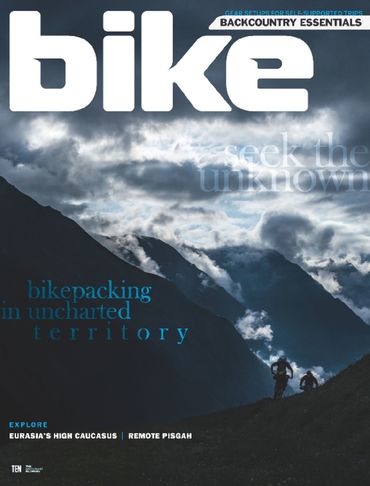
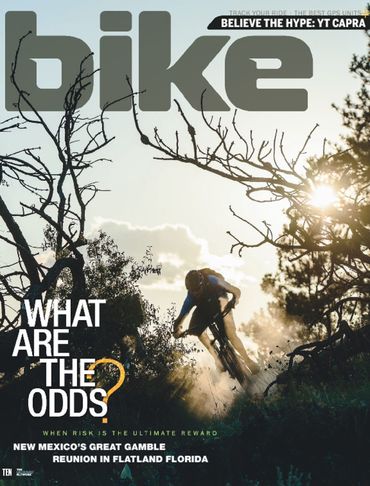
Bike, September/October and November 2015

Bike, September/October 2015Bike, November 2015
Brilliant biking photography definitely sets this magazine apart from others! I mean, even I’m tempted to start pedalling if it means my next Facebook profile or banner picture could be this awesome…


Inked, November/December 2015

Inked, November/December 2015Inked usually shows off the hottest and best tattoos, and it still does. But don’t get a fright (like I did), as it’s not a 100% tattoo cover this time around… Madelyn Lance is an artist, but she hasn’t taken it to the extreme of inking her face as well. Definitely a striking cover in celebration of upcoming Halloween or Day of the Dead in Mexico [learn more about the Day of the Dead by watching the gorgeously animated movie, The Book of Life — ed-at-large]!

Read the interview with her and see her beautiful pictures (and body!), or follow her on Instagram.


Pacific Standard, September/October 2015

Pacific Standard, September October 2015From the beautiful previous covers to the sad and shocking. Definitely not a cover I would like to keep on my coffee table, but hey, sometimes the shock-factor is what is needed…


The New York Times Magazine, 4 and 11 October 2015

The New York Times Magazine, 4 October 2015The New York Times Magazine, 11 October 2015
The followers of this column will probably start thinking I’m being paid by The New York Times Magazine team to feature its covers, as I do so almost every odd week! But how could I not when all of them are just so brilliant and striking in their own-right! I honestly don’t know how they can pull it off week after week…

Read the Nicki Minaj article.


The Paris Review, Fall 2015

The Paris Review, Fall 2015It’s definitely the image that makes this cover, as it causes one to think about the meaning and the story behind this little girl. To me, she’s been wiping her tears so often that she’s actually lost her “identity”… A powerful image, setting the tone for a strong issue.


Find a cover we should know about? Tweet us at @Marklives and @MediaSlut.
Want to view all the covers at a glance?
See our MagLove Pinterest board!


MediaSlutMagLove by @MediaSlut is a regular slot featuring the best local and international magazine covers every week, recognising well thought-out, powerful and interesting (and hopefully all three-in-one) covers and celebrating the mix of pragmatism, creativity and personal taste that created each of them. The (for now anonymous) blogger behind MediaSlut knows way too much for his own good about media in South Africa, magazines in particular. His mission is to show when SA magazines fail but, most importantly, also when they succeed. If you’re looking for a library about SA magazines and news, this is your one-stop pitstop.

— MarkLives’ round-up of top ad and media industry news and opinion in your mailbox every Monday and Thursday. Sign up here!

Media Future: Your personal weather station

by Arthur Goldstuck (@art2gee) The technology for forecasting the weather has been getting more and more local in recent years. Now it’s personal.

When Crowded House, one of the rock sensations of the late 20th century, sang the lyrics, “Everywhere you go, always take the weather with you,” they weren’t referring to a gadget. But their song about the effect of one’s attitude on one’s environment is an apt metaphor in a world of smartphones, apps and gadgets that can monitor every element of the human and natural elements.

For a few years now, we’ve had a semblance of carrying the weather with us, thanks to apps like AccuWeather, which have become a standard feature on smartphones.

Two years ago, a company called Netatmo took the concept a step further, when they launched a personal weather station at the Consumer Electronics Show in Las Vegas. It comprised two tubular devices, one for indoor and a weatherproof one for outdoor monitoring, with the two connecting to each other and to a smartphone or computer via Wi-Fi.

It’s surprising that, for a weather-obsessed country like South Africa, it has taken so long for the device to arrive here. It’s now being distributed locally by the Core Group, meaning it will be available in all iStores. Eventually, all electronics outlets should stock it.

The big question will be, of course, whether it does much more than AccuWeather. Will consumers be able to justify a gadget costing more than R2500, when they can instead have a free app that does the job reasonably well?

The answer lies in how much more Netatmo offers, and how easily it does so. We ran it through the Gadget Five-question User Test to answer these and other questions consumers will have before reaching for their wallets.

Ease of use

It’s easy enough to set up, although it requires a number of steps, some of which don’t quite live up to the ease-of-use promise. For example, the outdoor module requires batteries to be fitted into a decidedly unfriendly battery compartment, which uses screws to be fitted in place. A lot like they used to do in the mid-20th century. However, the ease of set-up, either via a downloadable application on a computer or an app on a smartphone, more than makes up for this. The two modules integrate seamlessly with a home Wi-Fi network. Once set up, the app and application deliver vital statistics seamlessly and without further intervention.

General performance

The weather station begins monitoring the environment the moment set-up is complete, and starts delivering data on aspects of the home and its immediate surrounds that might never have been considered before. From actual humidity level to what the humidity probably feels like to noise levels to carbon dioxide concentration in the home, it is almost a case of too much information, but that would be a matter of the needs, interests and benefits that the user perceives.

Add value to your life

Whether the weather and environment in tiny detail adds value is a question of how much data you want about the world around you. This will become very much a matter of what kind of data personality you are. Those who love activity monitors like the Fitbit are the most likely candidates, as it will add yet another layer of data on all the health and activity information being monitored, collected and analysed.

From a weather forecast and monitoring point of view, the device will come into its own for anyone with specialist weather or temperature monitoring needs. It would be exceedingly useful for all the South African restaurants that serve red wine at room temperature due to their lack of understanding of what the term actually means for wine (it’s in fact average European room temperature, 16 degrees, rather than any temperature to which a room is heated). More likely, though, it would be used for people looking for an extra edge in keeping a cigar or wine collection in perfect conditions. Serious gardeners may also find it gives them an extra edge. No doubt, there are numerous specialist purposes that will see the device succeed in niche markets.

Innovation

The level of innovation in the device lies in the extent to which it integrates environmental measurements that cannot be offered or matched by local weather stations. Carbon dioxide levels in the air inside the house and the noise level in the environment are the two key variables that will enter the user’s life once the Netatmo Weather Station is activated. Of course, that also means the user has to learn what terms like ppm (particles per million, in reference to carbon dioxide levels) and db (decibels) really mean.

My home showed a measure of 315ppm, compared to a general carbon dioxide concentration level in the Earth’s atmosphere reaching 400ppm this year, according to NASA. 350ppm is regarded as an upper safety level, which suggests the air is cleaner indoors than outdoors. So much for convincing the kids how much healthier it is to be outdoors!

More seriously, what it does reveal is that so-called greenhouse gases are not evenly distributed. If someone regards these measure as important, the Netatmo will help them make key decisions about their living and working environments.

Value for money

The Netatmo Weather Station for Smartphone is not cheap. In the USA it retails for between $140 and $170, so that a poor Rand exchange rate means it makes for a seriously expensive set of devices in South Africa. However, for those who already are inveterate gadget geeks, or have strong professional or hobbyist reasons for having this kind of data at their fingertips, it is well worth the investment.

In summary, not only can you now take the weather with you, but your entire environment.

Arthur Goldstuck

Arthur Goldstuck heads up World Wide Worx (www.worldwideworx.com) and is editor-in-chief of Gadget. He is a consulting editor to MarkLives and our media tech columnist. Follow him on Twitter on @art2gee. This article has been republished from Gadget.


— MarkLives’ round-up of top ad and media industry news and opinion in your mailbox every Monday and Thursday days. Sign up here!

AMPS: Latest media audience data (2015A)

by SAARF. The second-last instalment* of SAARF’s All Media and Products Survey, the country’s largest national survey after the Census, has been released. Among info on demographics, banking habits, and product and brand consumption, SAARF AMPS Jun 15 (2015A) provides audience data on South Africa’s media for July 2014–June 2015.

The current survey is AMPS Jun 15, the previous is AMPS Dec 14, and the year previous is AMPS Jun 14.

Print: newspapers

The downward trend continues for newspapers. The medium’s current average issue readership (AIR) of 44.9%, or 17.172m adults, is statistically stable on the previous period, but it is nonetheless lower than the 46.3% seen a year ago (AMPS Jun 14). Newspapers lost readers in the Western Cape, Cape Town, the Cape Town fringe, Limpopo and Durban, as well as in LSM 8-10.

Currently, the main driver of the medium’s downward creep is the daily sector, which posted a statistically significant decline: from 28.6% in AMPS Dec 14 to 27.3% currently. These declines came from losses in the Western Cape, Cape Town, Limpopo and metros. The Daily Voice’s decline from 1.4% to 1.1% also played a role. (No other dailies showed significantly changed readerships.)

As with total newspapers, weeklies remained stable at 29.4%, albeit with a slight downward trend, despite overall losses in the Western Cape, Cape Town fringe, Durban and Pietermaritzburg, and a loss of readership for Rappor t(down from 3.3% to 2.8%) and Son op Sondag (down from 1.3% to 1.0%).

New measure introduced for newspapers

AMPS Jun 15 provides the first six-month data for the new six-day measure for daily newspapers. This new measure records readership from Monday to Saturday, instead of Monday to Friday. It was introduced from January 2015 for those newspapers which felt that their weekday and Saturday titles were being confused due to their having identical mastheads.

Four newspapers with identical mastheads elected to move from the five-day daily measure to the six-day: Beeld, Die Burger, Pretoria News and Volksblad.

The measure is at present a hybrid, combining Monday to Saturday AIR data for the first six months of 2015 with the Monday to Friday data of July–December 2014; it is therefore not comparable with previous measures.

Print: magazines

Despite being on a downward trend with overall losses of readers in Limpopo and Durban, and losses in three frequency categories, average issue readership of total magazines remained statistically stable on the previous survey, at 45.8%.

  • Frequency categories showing a statistically significant decline on AMPS Dec 14 were:
    Any monthly: down from 36.3% to 34.7%
  • Any store magazine (based on own/household copies): down from 19.0% to 16.9%, and
  • Any subscriber magazine (excludes store magazines): down from 16.6% to 15.5%.

Other categories remained stable: any weekly (23.2%); any fortnightly (3.6%); any alternate monthly (4.5%); and any quarterly (1.1%).

Gains in three titles offset losses posted by four others. On the up are Compleat Golfer and Longevity (both up from 0.1% to 0.2%); and Move!(from 5.2% to 6.0%). Titles on the losing end are Baba & Kleuter and Habitat (both down from 0.2% to 0.1%); DStv (16.4% to 15.3%); and Jet Club (11.3% to 9.6%).

Television

Thanks to the continued growth of the DStv platform, total TV viewing — stable at 92.2% — has been able to withstand the declines that came through for three of South Africa’s terrestrial channels.

SABC 1 lost a statistically significant percentage of seven-day viewers, with its audience base declining from 78.4% in AMPS Dec 14 to 76.9% (all data includes terrestrial and satellite viewing). Seven-day viewing of SABC 2 dropped from 73.2% to 72.1%, while SABC 3 remained stable on 55.8%.

After gains made in AMPS Dec 14, e.tv’s numbers have now declinedfrom 68.6% to 67.0%, returning the channel to almost exactly the same position it was in a year ago in AMPS Jun 14.

On the satellite side, DStv once again posted stronger figures over the previous period: up from 37.7% to 39.3%, thanks particularly to gains made in the Western Cape and Cape Town, and the addition of more female viewers.

Radio

Radio listening shows little change, with total listening levels steady at 92.2%. Total commercial/PBS listening levels are 88.8%. Total community listening is trending up, with current levels at 25.9%.

OOH

There is little movement in the out-of-home sector; the only statistically significant change in exposure levels is a decline from 65.4% to 62.4% for street pole advertising (past seven days).

Cellphone access and internet usage

Though not a statistically significant increase, access to cellphones continues to trend up; currently 89.3% of adults have cellphone access. The highest access is 95.4% in LSM 8-10, followed by 90.1% access in LSM 5-7, and 80.7% in LSM 1-4.

The gaps are wider when it comes to internet usage, though it is extremely positive how much growth has been experienced, particularly at the bottom of the LSM scale over the space of just one year. Seven-day internet usage in LSM 1-4 has risen significantly over the previous period, from 13.4% to 16.6%, a figure which is just over 120% higher than it was in AMPS Jun 14 (7.5%).

Seven-day usage in LSM 5-7 has risen from 34.7% in AMPS Dec 14 to 38.0% currently, and from 69.4% to 71.9% in LSM 8-10.

Internet usage has risen across all measured time periods — yesterday, seven days and four weeks — with seven-day usage currently at 41.7%, up from 38.6% previously.

Cinema

There is no statistically significant movement in the cinema arena. Attendance up to four weeks is 3.4% amongst the general population, a slight improvement on the previous period, though not a statistically significant one.

In the LSM 9-10 bracket, attendance up to four weeks has been trending down and is currently at 11.7%. (This LSM bracket also watches the latest movies at home; 8.0% rented a movie on DStv’s Box Office over a four-week period.)

AMPS population update

AMPS Jun 2015 uses a population figure updated to the 2015 IHS estimates. This update, which sees the adult population increase by 1.6%, has had a relatively minor impact on the survey.

The AMPS universe is now 38.259m after an addition of 594 000 adults aged 15+. Of these additional adults, more come from metro areas than rural, and more than half live in Gauteng, specifically Johannesburg, the Reef and Pretoria. The group is also slightly skewed towards men, is largely 35+, and predominantly black, making the final overall proportion of whites smaller.

The household population increases by 3.0% from 15.236m to 15.686m, an increase of 450 000 households.

*The new Establishment Survey aims to replace AMPS — but funding for that new model is still being secured.

— MarkLives’ round-up of top ad and media industry news and opinion in your mailbox every Monday and Thursday. Sign up here!
AdForum Worldwide Summit: Networks embracing change

by Johanna McDowell (@jomcdowell) NEW YORK CITY: A slight respite for the consultants on Day 3 of the 2015 AdForum Worldwide Summit (two hours of freedom in the afternoon) gave us time to have a break, catch up on emails or have other meetings.

All of the consultants here have been busy with work in their respective countries; there seem to be less pitches and more relationship/collaboration/training work being done by our community. The IAS has seen the same trend and commented on it in South Africa; I also think that the economy’s unpredictable nature and recovery are playing a role in this.


But there is no shortage of agency choices — and the good news is that the network agencies are embracing change as much as the newer startups. There is no question that the main visuals we are seeing in terms of organograms consist of the overlap between tech and creative, and this is where the agencies intend to focus.

Mullen Lowe Group

First up on Wednesday was the Mullen Lowe Group, with CEO Alex Leikikh explaining why he pursued the merger of his agency, Mullen, with long-term industry stalwart, Lowe. Mullen on its own enjoyed 76% growth in the past six years — something of a record — and it needed to expand globally. The resultant agency network, which has offices in 90 countries and 6 400+ employees, is active in 65 markets. We met the top team and learned about the concept of the great “rebundling”, which will see ATL, digital (Profero), media and activation all in one place, enabling the agency to help clients maximise the brand, rather than the channel. The agency revealed a great deal more about its plans but did ask us to keep things under wraps while the internal communications for the agency group is under way. We felt very privileged to be in on the news upfront.

Mirum

Next was Mirum, the global tech group of agencies within the JWT group. Mirum is the amalgamation of 11 different digital agencies started up by their founders and sold into JWT. Our own Quirk is one of these agencies, which will gradually be rebranded Mirum as part of the new process [however, Quirk’s head of marketing, Greg Schneider, denied that Quirk will be rebranded when queried by MarkLives — ed-at-large].

Mirum talked about business transformation, marketing innovation and commerce ie building relationships. Along with many of the digital groups, Mirum is enabling connectivity within the traditional agency set up and also sees itself as competing with just about everyone ie agencies, platforms, tech companies etc. It is a complex world for marketers — making our role as intermediaries even more important in terms of navigation.


Walton Isaacson

The third agency was Walton Isaacson, a local North America agency, whose one owner is the famed Magic Johnson. — It has offices in various parts of the country and an interesting proposition for brands that want to reach ethnic minorities with diverse backgrounds.

KBS+

The final agency of the day was KBS+, part of the MDC Group and apparently expanding globally. We met with them for presentations and dinner, and I will report on them tomorrow.


Best
Johanna
@jomcdowell @agencyselection
#adforumsummit


Johanna McDowellJohanna McDowell (@jomcdowell) is managing director of the Independent Agency Search and Selection Company (IAS), which stands at the forefront of the complex world of agency selection in South Africa, and she is one of the few experts driving this mediation and advisory service in SA and globally. Twice a year she attends AdForum Worldwide Summits as an international consultant, which helps her lead the SA advertising industry forward to keep in line with international trends and remain competitive.


— MarkLives’ round-up of top ad and media industry news and opinion in your mailbox every Monday and Thursday. Sign up here!

Brand Politics: Talk is cheap

by Alistair Mackay (@almackay) Nothing seems to have done more to shift the narrative and catch the world’s attention on the Syrian refugee crisis than that heart-breaking photograph of a dead child on the beaches of the Mediterranean.

“A picture is worth a thousand words” goes the idiom, but it’s worth a whole lot more than that. Many campaigners, civil rights groups, politicians and ordinary citizens had been working to get European governments to respond more quickly and humanely to the refugee crisis, but it wasn’t until that picture had horrified the world that anyone seems willing to listen. The famous Hector Pietersen photograph had a similar effect in the battle against apartheid.

Pictures can show people what is actually going on, thereby cutting through all the hype and the propaganda. They have emotional impact (we’re primarily visual creatures), but they make or break trust, too.

Show, don’t tell

One of the first lessons for aspiring novelists is: show, don’t tell. Don’t go on and on describing something when you can just write what happens in the scene. Paradoxically, the emotional impact upon the reader is stronger if you write what the characters do, rather than how they feel. I think it’s a good lesson for marketers, too.

So much of marketing is describing how wonderful a product is — going on and on about its benefits. At the end of the day, consumers want to see the brand promise; they don’t want to hear it described. A picture of reality will matter much more than whatever your campaign has been saying.

A few examples

Volkswagen’s reputation is in tatters. After spending millions of dollars on environmental marketing over the last few years — and in particular, the message of “clean-diesel technology” — it has emerged that the car manufacturer fitted cheat devices on its diesel cars to trick the US Environmental Protection Agency into passing its engines in emissions tests. These devices sense when the car is being subjected to a test, and lower the emissions accordingly. Volkswagen diesel engines actually emit, it turns out, up to 40 times the legal limit of nitrogen oxide.

The financial impact of this scandal on VW will be in the billions of euros, and the brand has been hugely damaged precisely because the picture emerging is not the story the company has been telling.

At the other end of the scale, another car manufacturer seems to understand the importance of demonstrating your proposition. Lexus, to demonstrate “amazing in motion” actually went and created a hoverboard. A real, working hoverboard straight out of a science fiction movie. It could have just found a clever way of saying it does amazing in motion. Instead, it did something extraordinary.

The real world matters

The social media age has led many marketers to devote huge amounts of resources to social media marketing, and rightfully so. But digital media is not a vacuum: people online still need to talk about actual things that are happening in the real world: news, global events, amazing things they have seen for themselves.

You can’t build a successful brand with sexy campaigns alone. The real-world matters much more to your customers. It’s obvious that, if the product doesn’t deliver, consumers won’t be fooled for long. But there are plenty of other real world things that marketers tend to neglect because they’re not as much fun as creating an amazing campaign, but that they need to get right before a campaign can do anything:

  • customer service and experience
  • delivery time
  • queue times, and
  • call centre support.

In sheer volume of pictures taken, you can never hope to compete with every one of your consumers with a smartphone. The picture that shifts the narrative about your brand is probably not going to come from your office, so you need to ensure the world at which your consumers are looking is telling a positive story.

Focus on action

Lexus’s hoverboard captured the world’s attention because it built something unbelievable. Red Bull now regularly amazes the world with jumps from space, globally synched motor races, and extreme sports events. These are brands that are actually doing amazing, not just buying media for words they’ve written.

Soon, even the most inspiring rags-to-riches stories, like the kind we see in beer and whiskey ads, will ring hollow if the brands behind them aren’t actually doing things to help their target markets achieve those aspirations. Hansa’s famous Vuyo campaign inspired entrepreneur Miles Kubheka to start a real-world Vuyo’s business empire. But imagine Hansa had done that before it made the ad?!

Could Bell’s fund or found adult-learning centres for fathers just like this one?


Anyone can take a picture of your business and the world it touches. For marketing to succeed in the future, it has to go well beyond talking about the products and services to ensuring that everything the business touches delights consumers, employees and the general public.


Alistair MackayAlistair Mackay (@almackay) is a writer and marketing strategist. He spent many years at Yellowwood, a leading strategy consultancy, and has worked in politics as the digital media manager for South African political party, the Democratic Alliance. He believes marketing has the power to be both good for business and social change in South Africa. He contributes the monthly “Brand Politics” column, exploring lessons brands can learn and apply from politics, to MarkLives.


— MarkLives’ round-up of top ad and media industry news and opinion in your mailbox every Monday and Friday. Sign up here!

Talk Africa: Trendy cellular TVCs in Kenya

by Remon Geyser (@remongeyser) The Springleap creative panel in Kenya has recently noticed a few interesting brand communication strategies from the cellular industry worth discussing, in particular, Airtel Kenya’s new TVC that quickly trended with local consumers. This provides us with an opportunity to learn how local Kenyan brands are stirring conversation.

Airtel Smartika Na 5X

First, let’s take a quick look at what Airtel Kenya did: Entitled “Airtel Smartika Na 5X”, the brand encouraged consumers signed onto competing networks to switch. The brand did this by creating a humorous scene and, ultimately, offering customers additional airtime if they were to call for a specific amount of time. This ‘promotional’-based execution resonated well with Kenyans, and would be universally appreciated by many consumers. In addition, a few lucky subscribers were entered into a draw to win one of 50 cars — daily.

The advert entices consumers by stating that they will receive bonus airtime if they continue to call for a certain amount of time. The audience is made privy to this by the colourful red bubbles that pop up as the actor talks for a certain amount of time; this is a striking element aimed at keeping the attention on-brand.

The TVC has gained popularity thanks to its humour and strategic use of vernacular language, as well as the impressive art direction. However, our panel stresses that being relevant has been the winning factor. The casting and acting seem to have worked well in this particular ad. Also, the brand produced a similar TVC last year, using the same actors (offering bonus airtime, too) —helping in creating familiarity with the campaign and, in turn, promoting brand linkage.

Our panel stresses that the ultimate objective (to garner more subscribers) is yet to be realised; more time is needed to uncover its impact. The biggest competitor, Safaricom, is still in the lead with overall market share in the country.

Once again, the winning creative element — emphasised by our creatives — is the highly saturated and eye-catching animated bubble that indicated the actor has received bonus airtime from Airtel. Everybody enjoys appealing graphics and visual aspects of an ad, as this is often the first thing that consumers are strategically made aware of.

As previously mentioned, using the same actors over time is great for brand linkage, but is also a strategic way to ensure that the attention is kept on the brand and its advertised service or product. In addition, last year’s TVC only offered free airtime, whereas the latest one is offering 50 lucky consumers a car each. The possibility of winning a life-changing product could only entice more consumers to engage with the TVC and eventually switch to Airtel Kenya.

Competitor brand activity

The competitor landscape is very fierce for cellular brands. There are regular TVCs from key players in the local industry, advertising better and better deals:

Safaricom, the leading mobile network in Kenya, recently released its latest TVC, “This is For You”. The advert dives into the heart of Kenyans by appealing to patriotic citizens, and communicating a message that seems to say, ‘Safaricom has got something to offer for every single Kenyan.’

Orange is known for offering a wide range of services, including fixed-line installation, broadband internet, mobile money transfer — under both GSM and CDMA platforms. The brand’s latest ad, “Stretch Your Limits”, plays around the concept of endurance and pushing oneself into new heights.

Insights

According to our Kenyan panel, Kenyans like working-class heroes, everyday blue-collar people — people who are no different to themselves, and have an interesting story to tell. Kenyans also seem to respond well to stories that have a “rags-to-riches” concept attached to an ad. This may be beneficial for local brands, especially since so many South African celebrities have gone through a similar progression.

Although this ad has been well-received by our creatives, our panel does place emphasis on the need to focus on other service offerings, eg, mobile money exchange, which is in high demand right now in Kenya.


Interested in South African trends?
10% discounted subscription rate for MarkLives readers!

Every month, Springleap provides an oversight of local trends in the South African market, sourced from among its 22 000 African creatives, with new country specific reports planned for a number of key African and Middle Eastern markets. Pricing for accessing this trend platform starts at as little as R270 a month.

Readers must use the promo code “MarkLives10” to access their discount.


Remon Geyser 2015

Remon Geyser (@remongeyser) is a burger fanatic, wine connoisseur and eSports enthusiast (yes, a fancy term for playing computer games). He is also the research lead for Springleap, heading up a new global creative research division while obscurely attempting a PhD. Springleap provides instant creative expert feedback to rock marketing ROI. Remon contributes the new weekly “Talk Africa” column, covering Pan-African trends, on MarkLives.com.


— MarkLives’ round-up of top ad and media industry news and opinion in your mailbox every Monday and Thursday. Sign up here!

AdForum Worldwide Summit: The agency of the future

by Johanna McDowell (@jomcdowell) NEW YORK CITY: By Day 2, interesting trends began emerging already at the 2015 AdForum Worldwide Summit NYC.

It is clear that the agency of the future is the one which can identify the needs and desires of the potential audiences for brands and products, and enable those audiences to have authentic interaction with those brands on platforms which are also authentic to both audience and brand. There were a couple of agencies on Day 2 which are already doing this. More on that later.

The other major observation is that agencies are starting to invest back into their businesses in terms of top people, as well as technology. This indicates a possible return to the confidence levels that we saw before the 2007 market crash. This is also leading to lots of changes at top levels in agencies — with one of the favourite digital natives in recent years, R/GA — losing several of its top people to these newly emerging powerhouses.

Publicis North America

The first agency visit was to Publicis North America, which is literally moving into its new building and has grown dramatically in the past 12 months, from 650 people to 1000+. It is clear that the agency is enjoying organic growth from its existing clients, plus new business wins with new clients such as Cadillac, Sears, Heineken, Sheraton and Kmart. The agency is seeing a much greater level of diversity in the kinds of briefs it receives from clients — a greater focus on solving business problems, as opposed to just communication problems.

Publicis is once again investing heavily into its digital growth, ensuring that is has a deep digital differentiator in its NURUN system — producing “digital might” on a global level.

You & Mr Jones

We then moved on to You & Mr Jones, the business created by David Jones, formerly CEO of HAVAS, in which US$350 million has been invented. The first “Global Brand Technology Group” is the new positioning, and Jones has identified correctly the disruption in the market which will ensure that agencies of the future will be more about audience and creating meaningful connection, and less about branding for branding’s sake. A lot of the plans are still under wraps but we were given a glimpse of what is intended to be very much a “start-up culture” group. OneYoungWorld, a movement that Jones helped create while at HAVAS, is still a part of his life and again more will be revealed in the new connection.


Possible

An agency we met a few years ago as a digital startup, Possible is now WPP-owned and is very firmly positioned for the new era where digital, ATLs, consultancies and online platforms converge or collide. Again, it is all about knowing where your audience is and creating meaningful content for them. Possible is one of the few agencies that Uber has allowed to use its platform for a campaign for a liqueur called St Germain, along with social media platform Periscope.

With 800 employees in North America, Possible has expanded across the world and has kept its staff churn at 7.9%, well below the industry norm of 22%. As more than 50% of ots business now coming from WPP agencies, Possible prides itself in having a highly collaborative and flexible culture able to manage the “horizontality” required in the WPP network. The remainder of its new business comes from client referral but Possible certainly wants to be pitching more for new clients that it wants to target.

The Martin Agency

We moved on to The Martin Agency which we met last year and which this year celebrates 50 years of being in business. With a high degree of commitment to the craft of ideas and advertising, this agency believes that craft matters more today than ever before. Two major creative appointments and a soft launch last year in London are positioning Martin as an agency to watch closely as it unfolds its plans.

It is also determined to have fun in its agency; life is not only about hard work.

PI&C

PI&C — an implementation agency, independent, fast — was our next stop. An agency run entrepreneurially by experienced people who have no intention of ever using time sheets to aid their billing processes, they are determined and have proven that they can run their business on a project-management basis with a strong commitment to production values and excellence. Preferring to focus on content production at minimum cost to clients, PI&C has certainly worked out how to deliver for its clients and is charting a new course within its sector.

iCrossing

And, finally, we met with iCrossing, part of the Hearst Group, and now led by Nick Brien, previously global CEO of McCann. iCrossing has been in the digital space for 15 years and, as part of Hearst, have a strong understanding of the value of editorial. The synergy between its stellar magazine lineup, which includes Cosmo and Popular Mechanics, and iCrossing’s digital capabilities is positioning this business as one which will be able to connect with consumers on many levels — going back to the point of understanding audiences and delivering authentic content. Brien talked about taking agencies “from admakers to cultural engineers” — a quote he attributes to the current Cosmo editor.

 
Six agencies (for want of a better term) in a day — showing us the way in which clients and agencies are operating at speed in this new environment.

I cannot wait for Day 3’s lineup.

Best
Johanna
@jomcdowell @agencyselection
#adforumsummit


Johanna McDowellJohanna McDowell (@jomcdowell) is managing director of the Independent Agency Search and Selection Company (IAS), which stands at the forefront of the complex world of agency selection in South Africa, and she is one of the few experts driving this mediation and advisory service in SA and globally. Twice a year she attends AdForum Worldwide Summits as an international consultant, which helps her lead the SA advertising industry forward to keep in line with international trends and remain competitive.


— MarkLives’ round-up of top ad and media industry news and opinion in your mailbox every Monday and Thursday. Sign up here!

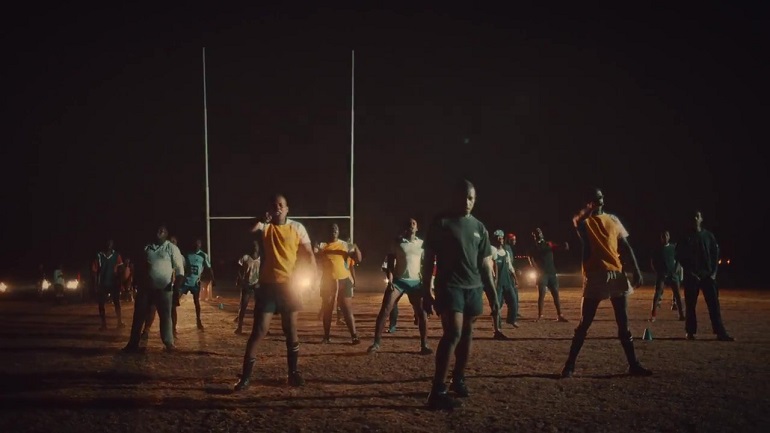
Ad of the Week: Viva Land Rover and Soweto Rugby Club

by Oresti Patricios (@orestaki) Despite the shock loss against Japan in the ongoing Rugby World Cup 2015, South Africa has the enviable reputation of being one of the strongest players in the field, and that game played with an oval ball is an important part of our country’s heritage and identity. What’s vital to the future of rugby is that brands invest in the development of this much-loved sport.

That’s why I’m delighted to tell you all that this week’s Ad of the Week is Land Rover, a worldwide sponsor of rugby, and that locally the company is using this opportunity to give support to grassroots rugby projects. It’s great that this British-born brand is not only developing rugby in the UK, but also in places as far afield as Italy, Ireland and, of course, SA.

The Soweto Rugby Club is the subject of a YouTube ad that both publicises Land Rover’s involvement in SA rugby and acts as a great mini-documentary about the kasi team. The doccie not only uncovers the fighting spirit of The Soweto Rugby, but there’s the bonus of a Zulu-inspired Haka. Fierce — just imagine a Zulu-inspired Haka going down at an international fixture.

Rugby war cry

Since the Rugby World Cup’s debut in 1987, when the tournament was co-hosted by Australia and New Zealand, tradition has become a big part of the ritual. And given that the Kiwis were one of the first hosts, there’s nothing more exciting to witness than New Zealand’s rugby war cry, or ‘haka’.

A war haka was traditionally performed by Māori warriors before going into battle, and is meant to be an intimidating spectacle. It is essentially a song and dance, performed for various reasons, and there are haka for celebrations, funerals and welcoming ceremonies.

Land Rover Rugby Grassroots Stories Soweto Rugby Club screengrab 02The All Blacks first brought the haka to world prominence in the 1888/1889 ‘New Zealand Native Football Team’ tour of the ‘Home Nations’ (England, Ireland, Scotland and Wales), and was subsequently adopted by the national team in 1905. Since then, a couple of versions of the haka have done the rounds, with two versions becoming the staple of the All Blacks. The team alternates between the two: one is called Ka Mate (which translated means “‘tis death”), the other called the Kapa o Pango (which can be literally translated to “team in black”).


At the 2011 tournament, again held in NZ, some teams orchestrated a response. The French linked arms and formed an arrow, slowly advancing to face the chanting All Blacks. The International Rugby Board fined the team for advancing to within 10m of the All Blacks. The Welsh stood in a solid, unflinching row, creating a standoff situation that lasted several minutes. Referee Jonathan Kaplan almost had to get down on his knees and beg to get the teams to take up their positions and play the game.

Strong Zulu tradition

What does this have to do with the Soweto Rugby Club? There is a strong tradition of war cries in Zulu heritage, too, and in the Landrover mini-doccie on YouTube we witness this fledgling club using a traditional warcry that they refer to as their haka.

Soccer is by far the most popular sport in the former township, but many other sports have grown their adherents. During apartheid, rugby was perceived as very much a ‘white’ sport, being played from high school and upwards at government and private schools alike, and receiving sponsorship in abundance for events such as the Craven Week. When SA hosted the Rugby World Cup in 1995, Nelson Mandela famously donned the Springbok jersey and in that moment (some say) opened up the game to all South Africans.

The mini-documentary is filmed at different times of day and night. The main interview is with one of the players, who simply explains what the Soweto Rugby Club haka means, both literally and symbolically. The charisma of the interviewee is balanced by the passion and energy of the training and match-playing visuals.

We deal in real

The ad forms part of Land Rover’s campaign, #wedealinreal, highlighting real people overcoming real-world situations.

The Soweto Rugby Club, which in a different era might have seemed out of place in this famous former township, is testament to the unifying power of sport. The players are proud of both their heritage and their rugby. And their warcry — their haka — symbolises their unity and fighting spirit.


Oresti Patricios

Ad of the Week, published on MarkLives every Wednesday, is penned by Oresti Patricios (@orestaki), the CEO of Ornico, a Brand Intelligence® firm that focuses on media, reputation and brand research. If you are involved in making advertising that is smart, funny and/or engaging, please let Oresti know about it at info@ornicogroup.co.za.


— MarkLives’ round-up of top ad and media industry news and opinion in your mailbox every Monday and Thursday. Sign up here!

Green Sky Thinking: Save us from our lack of self-control

by Colwyn Elder (@colwynelder) If you’ve ever stood in a supermarket checkout queue and experienced a toddler (yours or otherwise) in full-blown meltdown because of being refused tantalising eye-level confectionary within arms’ reach, you probably understand — if not welcome — Woolworths’ recent decision to remove all sweets and chocolates from checkout queues.

Often known as the “guilt aisle” or “walk of temptation”, Woolworths say the move reflects its commitment to providing alternatives for children and adults, and is part of its bigger Good Food Journey, a drive towards providing customers with better food choices. What these choices are remain to be seen, but Woolworths says it will engage customer opinion through panel discussions and focus groups to establish what their preferred alternatives for checkout aisles are.

Emotional Kid by David Castillo Dominici courtesy of FreeDigitalPhotos.net
Image by David Castillo Dominici courtesy of FreeDigitalPhotos.net

Pester power and impulse buying

Pester power and impulse buying are as much a part of retail marketing as Rx.99 price points and buy-one-get-one-free special offers, so putting customer wellbeing ahead of sales will make people happy, right? Yet not everyone seems pleased by these apparent good intentions. Negative customer commentary falls into one of two camps:

  • a growing weariness of political correctness from worthy corporates telling people how to live their lives, and secondly
  • a rather scathing telling off of parents who can’t control or say “no” to their offspring.

Whatever your view, there is no denying that too much sugar negatively impacts our health, contributing to health issues such as obesity, diabetes and tooth decay. This knowledge is well-known and widespread. Equally, we acknowledge the importance of healthy eating, so why does it remain so difficult for us to eat well? It’s all about self-control.

Why people make irrational decisions

The school of behavioural economics looks at why people make irrational decisions. One of these reasons is termed “present bias”, the human tendency to continue with the routines of the present, rather than making changes. Linking closely to this is “temporal discounting”, our irrational tendency to weight present rewards (that delicious chocolate bar) more heavily than future ones (long-term health). This is why our good intentions — to quit smoking, join a gym, or eat more healthily — remain just that, and the best time to start is always tomorrow… only tomorrow never comes.

Adding insult to the injury of our lack of self-control, we also tend to pay little attention to the small cumulative consequences of our repeated actions, such as the effect of sugary beverages on our weight, or the cumulative health effect of smoking. A little bit of what you fancy can’t hurt, no? Even when the pack tells us that “smoking kills”? Yes, although numbers are in decline, people continue to smoke in spite of increasingly graphic pack warnings, increasing taxes on cigarettes, and even increasing limitations on where you can smoke.

Libertarian paternalism is the idea that it is both possible and legitimate for private and public institutions to steer people’s choices and behavior while respecting their freedom of choice. Provided, of course, it’s in the public interest, and the government ban on smoking in public areas is probably the best example of this. Tobacco is addictive, but leading public health figures will tell you sugar is as well, and there is a similar call for products with high-sugar content to carry both taxation and health warnings, not dissimilar to cigarettes.

Product placement

Product placement is a powerful retail-marketing technique, and moving sweets from checkouts will hopefully go some way toward saving us from our own lack of self-control. We say “no” to our children because we want to do what’s best for them, yet all too often we can’t say no to ourselves.


Colwyn ElderStrategic consultant Colwyn Elder (@colwynelder) brings a global perspective to the issue of sustainability, having lived and worked in London, Tokyo, Amsterdam and Cape Town. She contributes the monthly “Green Sky Thinking” column on sustainability issues to MarkLives.


— MarkLives’ round-up of top ad and media industry news and opinion in your mailbox every Monday and Thursday. Sign up here!

AdForum Worldwide Summit: Data-inspired creativity

by Johanna McDowell (@jomcdowell) NEW YORK CITY: Day 1 of the 2015 AdForum Worldwide Summit saw us visiting a total of  eight agencies — three network agencies and five independents — which has to be a record!

Wunderman

First up was Wunderman, which has undergone a rapid transformation, with a whole new top leadership in place and a commitment to creative levels, as well as its historical data expertise. There is much focus on collaboration, and a belief that it should be providing “data-inspired creativity” to the consumer. It is blessed with long-term client relationships and the new thinking that the chief data officer of any agency now probably has the “sexiest job in the world”, according to Forbes magazine.

Johanna McDowell with BBDO global CEO, Andrew Robertson
Johanna McDowell with BBDO global CEO, Andrew Robertson.

BBDO

Then it was on to BBDO, whose research keeps informing it that, while rational thinking might produce the strongest messages, emotions produce the strongest actions. We experienced a brilliant presentation from global CEO Andrew Robertson, where we learned about the effect of dopamine (confidence boosting and addictive) and oxytocin (bonding, warm feelings, trust and love) and why it is so important to have both of them in advertising campaigns.

Case studies for Wrigley “Origami” and Pedigree Dog Food “feed the good” are perfect examples of emotions producing great reaction and results to brands, and Robertson has ensured that we understand the importance of crafting of advertising. These campaigns have to be thought about and developed, and that managing risk does not mean that clients should only “pursue certainty” when evaluating a campaign idea.

Work & Co, Fancy

Five shorter sessions followed, with agencies Work & Co (mainly digital and mostly ex-HUGE) which has grown 100% in the last 12 months and employs 98 people, having started up in 2013. Then it was the all-women-owned and -run Fancy, an agency committed to advancing the lives of women in every advertising assignment that the agency gets.

MyersBizNet

A media industry overview from MyersBizNet gave us a great insight into what is happening in the media industry, why there have been so many global media reviews (driving down costs), and why the industry is not commenting on the issues regarding transparency and rebates.

Big Spaceship

A 15-year-old agency, Big Spaceship was born at the early stages of the digital revolution and has seen the changes through time with a range of clients, including YouTube, and a philosophy that everyone is creative and everyone takes responsibility within the agency — no layering.

Cool Brands

Cool Brands, an agency without offices but with two partners (one from Sao Paulo and one from Amsterdam), travels the world and works with “curators” in 30 countries — a refreshing approach to the industry.

Cheil Worldwide

And, finally, Cheil Worldwide, which treated us to a series of experiences in order to illustrate its product innovation via its Global Creative Product Council, its Tu:Hon philosophy (which is the ability to see things in a new way), its whole new leadership, too, and its commitment to building a Network for Now. While always seen as Samsung’s in-house agency, Cheil has successfully broken away from that positioning through mergers and acquisitions, and a new approach to leadership and development.

The evening ended with an excellent Korean style dinner but, with the “soul in Seoul” provided by Ghetto Gastro of New York, 30 consultants had a suitably busy start to what will be a highly informative and demanding week.

More tomorrow!

Best
Johanna
@jomcdowell @agencyselection
#adforumsummit


Johanna McDowellJohanna McDowell (@jomcdowell) is managing director of the Independent Agency Search and Selection Company (IAS), which stands at the forefront of the complex world of agency selection in South Africa, and she is one of the few experts driving this mediation and advisory service in SA and globally. Twice a year she attends AdForum Worldwide Summits as an international consultant, which helps her lead the SA advertising industry forward to keep in line with international trends and remain competitive.


— MarkLives’ round-up of top ad and media industry news and opinion in your mailbox every Monday and Thursday. Sign up here!

Online CPD Courses Psychology Online CPD Courses Marketing analytics software Marketing analytics software for small business Business management software Business accounting software Gearbox repair company Makeup artist