Ad of the Week: How to sell a sporty car brand

by Oresti Patricios (@orestaki) Admakers International’s new TVC for Opel, showcasing the Mokka X SUV, is stylish visual poetry that celebrates the 4×4 as much as it does the beauty of the South African countryside.

I have said it before, and I am going to say it again, car ads can enter a realm of sameness. You know exactly what I am talking about — when advertisers get lost in the styling, comfort, speed and power of the vehicle, and forget about what makes the brand great. But, every now and then, a car ad comes along that makes one sit up and take notice. This is it. Boasting originality, a fresh approach and beauty, the television commercial for Opel’s Mokka X sets its own standard for vehicle marketing.

The #MokkaMoments campaign, conceived by Admakers International for Opel, and executed by its in-house TV production company, Young Gun Films, showcases the German car brand’s SUV. The 30-second broadcast TV ad covers three storylines, and these are fleshed out individually in 45-seconders produced for the web. All are directed by Dirk van Niekerk.


Pinterest icon View all the Ads of the Week at a glance on our #AdoftheWeek Pinterest board!
YouTube icon Watch our 2017 #AdoftheWeek playlist on YouTube


Now let me tell you a little bit more about the ads.

The first storyline follows four friends as they load their decked-out bicycles onto the Mokka’s roof-rack and then set off through the city of Cape Town to the famed “Moonlight Mass Night Cycle”. This is an event that takes place every full moon where cycling enthusiasts get together to ride together through the city. People dress in crazy costumes and decorate their bikes with LED lights — it’s a social event, rather than a race.

The next storyline is of a mother taking her son to his first soccer match. It’s a long trip that passes along the Cape shoreline. It’s full of feel-good imagery that doesn’t only include the incredible countryside but also shows the moment the young boy scores a goal, much to the delight of his cheering mother.

The third storyline follows two families, in two Mokka X cars, who are taking a road trip. The one car’s laden with a canoe and a bicycle, and the other is pulling a trailer. The scenery is typical of SA’s wide open spaces and wild places. This story finds its end with the two families camping at a peaceful spot by a lake.

The 30-second TV commercial is driven by an original piece of music that speaks of travelling and enjoying life, while the web-ads are narrated by the main character, reminiscing about special, unforgettable times. It’s not often that advertisers get songs created for ads, particularly in the car market, and I think the music is a definite contributor to the success of this ad. It’s likely to be something that people will want to download or hear more of.

The cinematography is equally noteworthy, and each scene is perfectly framed. The night scenes glisten with atmosphere, and the scenic shots celebrate the beauty of our country. The cars are always the hero of the stories, and all the necessary shots are there but without being intrusive or dominating the ad: you get to see the built-in GPS, touchscreen media centre, plush interior and, of course, the sleek and stylish exterior but these don’t intrude on the story line.

According to the brand’s publicity material, Opel had the option of simply repurposing a German ad for SA but, happily, the decision was made to portray the car in a SA setting. Smart move! The local flavour certainly makes the ad relevant, and it will resonate more fully with its target audience. It makes sense as one of this country’s most-magnificent assets is its great outdoors.

For many people thinking of purchasing an SUV, one of the appealing features is the idea of being able to go anywhere, in comfort and with absolute reliability. The visuals in this TV commercial don’t just illustrate this but celebrate it.

Congrats to Admakers International and Young Guns Films for an original, bright and refreshing production. Certainly makes me want to take a second look at the Opel Mokka.

Credits

Agency: Admakers International
Production: Young Gun Films
Director, DOP & post-production: Dirk van Niekerk
Producer: Michelle Nel
Gaffer: Robert Wisniewski
Camera assistant: Kirk Morgan
AD: Nic Eve
Account director: OJ van Jaarsveld
Music for 30” and 45” TVC written and produced by Sonar Studios, Dirk van Niekerk and Amy May Roux
Music performed by Amy May Roux
Engineered by Chris Querido at Sonar Studios


Oresti PatriciosAd of the Week, published on MarkLives every Wednesday, is penned by Oresti Patricios (@orestaki), the CEO of Ornico, a Brand Intelligence® firm that focuses on media, reputation and brand research. If you are involved in making advertising that is smart, funny and/or engaging, please let Oresti know about it at info@ornicogroup.co.za.

— Sign up now for the MarkLives email newsletter every Monday and Thursday, now including headlines from the Ramify.biz company newsroom service!

Multisensorial marketing — the visual aspect

by Marguerite de Villiers. Red is the warmth of the sun on your skin. It is the sweet taste of strawberries and perfumed scent of roses on Valentine’s Day. It is spicy food that numbs your tongue. It is the bitterness of hate and anger. Red is passion. It is the feeling of love and heartache. Red is strength and power and energy. It is dangerous and threatening. It is dancing with the lady in red. It is standing too close to the fire. It is the blood of war. It is the crunch of autumn leaves and waking up on Christmas day. Red is loud. It is the nostalgia evoked by drinking a cold glass of Coca Cola, eating Kellogg’s cereal for breakfast like you used to as a kid, and sharing a bucket of KFC with friends. It is riding in the trusted family Toyota, and watching the news on CNN. Red is familiar, bold, and loyal.

These are just some of the ways that multisensorial marketers could describe something without actually referring directly to what it looks like. They are able to describe something innately visual through the use of the other senses: what it feels, tastes, smells, and sounds like.

“Meet South Africa” (a tourism brand) immerses the viewer in the world of South African sensory experiences — the feeling of sand between your toes, salty ocean air on your face, the rush of surfing, and the intricate detail of textured art; the rhythmic sound of drum and dance and language; the earthy aroma and taste of wine and fruit. This is a multisensorial experience of SA that doesn’t depend solely on sight.

Things unseen

This is not to say that the visual is unimportant. The use of colours and symbols in marketing establishes an affiliation with, and recognition of, a particular brand. It evokes particular emotions and invokes certain images. According to a colour theory, red and yellow are believed to activate hunger and encourage excitement — no wonder there are so many food chains that incorporate those colours into their branding or outlet design.

Similarly so, we are able to recognise a brand purely by looking at the outline or silhouette of their familiar logos. Some brands make use of the Gestalt theory — the understanding that our minds are able to piece together individual parts of an image to make sense of the image as a whole.

Spain’s Christmas Lottery and Leo Burnett developed a beautifully composed digital campaign in 2015. It is a short animated film that features Justino, a night-time security guard at a mannequin factory. The film tells a story through visual means — scenery, facial expressions, photographs, props, and more — with subtle music and background sounds. The lack of audio narrative leaves the story open to interpretation and the viewer looks for visual clues to piece it all together, proving that sometimes the most powerful messages are those that we have to uncover ourselves.

Colour-blind

Shortly after the dust settled around a debate about the colour of a particular dress (which the South African Salvation Army incorporated into a message about the issue of abuse), Coca-Cola launched a teaser campaign for Coca-Cola Life. The dress debate revealed the differences in how people perceive things. This, along with a general advertising trend of social inclusion, encouraged Coca-Cola in Denmark to develop an Ishihara image (a type of image used to test colour-blindness) with a hidden message in it. Only 5% of the population could read the word LIFE amid the green and brown blobs. The campaign was well-received as it encouraged audience engagement by appealing to their curiosity. “Our idea is based on the premise of engaging many by targeting the few.”

https://youtu.be/-iP-kE3PJhc

As marketers, we’re often too quick to resort to simple visual representations, rather than enriching our descriptions with other sensory depictions. The challenge is to balance the visual with other senses in order to tell a more holistic story.


Marguerite de VilliersMarguerite de Villiers is an anthropologist at strategic marketing consultancy, Added Value.

“Motive” is a by-invitation-only column on MarkLives.com. Contributors are picked by the editors but generally don’t form part of our regular columnist lineup, unless the topic is off-column.

— Sign up now for the MarkLives email newsletter every Monday and Thursday, now including headlines from the Ramify.biz company newsroom service!

Shelf Life: Net#work BBDO transforms Tusker campaign

Cheryl Hunter (shelflife at marklives.com)’s weekly pick of all things new — product, packaging, design, insight, food, décor and more!

  • Net#work BBDO’s new story for Tusker beer
  • The Foschini Group and WumDrop geolocate delivery
  • New national beer day for South Africa

Tusker talks to togetherness

Higher-purpose marketing continues to be a strong brand strategy, with a new Kenyan ad for Tusker beer — created by South African agency Net#work BBDO — showing how this can result in great storytelling for the brand.

https://youtu.be/XKg6UGAURYI

Kenya comprises 42 official tribes with deep divisions running through communities. As the national brew, Tusker Lager took it as its higher purpose to inspire and encourage unity throughout Kenyan society, with 2017 elections in mind.

According to Net#work BBDO creative director, Tim Beckerling, initial research into finding real-life stories of ordinary Kenyans accomplishing extraordinary things with the help and support of one another let them to Kaki Gondi. Gondi operates a music production company called Flag 42 Studios, which offers free studio time to anyone who wants to record their music, regardless of background or tribe.

“We worked with Kaki to develop this idea, and we visited about half of the different communities. During our visits, which took place over about a two-week period, we sampled sounds from each community, including vocals, instruments and the sounds of their daily lives, with the help of three audio experts who were present with us for the whole shoot and intimately involved in the post-production process.”

https://youtu.be/Vw8HsgYPDfU

The team created a song based on a local ’70s hit, by Slim Ali, called “You Can Do It”: “Working with a young rising Kenyan rap star named Wangeshi, we brought a contemporary edge to the whole thing in collaboration with another South African music producer named Sibot.”  The result is a new tag line for Tusker — “Here’s to the Us in every Tusker” — demonstrating that unity is present in the brand name itself, a good fit for the strategic aim of togetherness.

The films were shot by novice Dan Mace, who had never previously filmed a commercial.

networkbbdo.co.za • Facebook • Twitter
eabl.com


Smart delivery

Swift online delivery is set to grow in 2017 and The Foschini Group (TFG) is aiming to get ahead of the pack through the introduction of Deliver 2 Me: a convenient delivery solution that uses geolocation services to avoid the need for specific street delivery addresses.

The service was tested during December 2016 and will soon be available in major centres across SA, making TFG the first retailer locally to apply delivery technology in this manner.

In partnership with delivery service WumDrop, testing included delivering parcels to a tourist on Table Mountain, a surfer on Blouberg Beach, a hipster moving between Long Street and Mzoli’s (requiring a location change) and, finally, to a mom strolling along Sea Point Promenade.

Brent Curry, chief information officer at TFG, says, “This delivery solution is now live in Cape Town and we plan to expand the service to Johannesburg and Durban in the next couple of months. Deliver 2 Me uses a geolocation tracking system, similar to what the Uber app uses, allowing customers to pinpoint their exact location for delivery but without having to download an app onto their phone.”

The TFG eMall hosts 11 linked stores, meaning customers may cross shop all online brands and check out in one bag. Stores currently online are @home, Anatomy, Duesouth, Duesouth Escapes, Fabiani, Foschini For Beauty, hi, Markham, Relay Jeans, Sportscene, and Totalsports.

tfg.co.za • Facebook


Celebrating beer

SA beer lovers are coming together to celebrate the beverage with the first South African National Beer Day on Saturday, 4 February 2017.

South African National Beer Day logoSays creator and beer writer, Lucy Corne, “It is about people coming together to enjoy a beer and celebrate the diversity of beer in SA. While there is an International Beer Day, which is celebrated to some extent in SA, this is a northern hemisphere initiative timed to fall within their summer. While beer drinking is a year-round pastime, nothing quite demands a cold beer like a hot, sunny South African day.”

There is no one large event; it’s up to brewers, bar owners, restaurateurs and distributors to decide what they will do to mark the event and introduce as many people as possible to new styles of beer.

Go to facebook.com/SANBeerDay for the events listed to date across the country.

Facebook • Twitter


Cheryl HunterShelf Life is MarkLives.com’s weekly column covering all things new. Notify us of yours at shelflife at marklives dot com. Want to sponsor Shelf Life? Contact us here.

Cheryl Hunter (@cherylhunter) has written for the South African media, marketing and advertising industries for more than 15 years. A former editor of M&M in Independent Newspapers and contributor to Bizcommunity, AdFocus, AdReview and the Ad Annual, she has also produced for various television networks and currently consults on communication strategy and media liaison.

— Sign up now for the MarkLives email newsletter every Monday and Thursday, now including headlines from the Ramify.biz company newsroom service!

Motive: Research and the power of empathy

by Kate Snyder. Empathy is a critical, yet commonly overlooked, tool for businesses, stretching all along the spectrum from research to strategy execution.

Empathy is one of the most fundamental emotions we share on this planet and, arguably, what makes us human. It’s a vital component to our relationships, both at home and at work, and is something all of us, the whole world, could use more of right now. When we both cognitively and emotionally understand another person’s experiences, it means that we can truly walk in their shoes, and feel what they feel.

Authentic interactions

These days, consumers are expecting authentic interactions with brands. This forms part of a larger, global trend where humanity, transparency, and care are expected to be integral parts of any brand’s products and communications plans. Take Unilever, for example, which found that its Sustainable Living Brands performed 30% better than the rest of the brands in its portfolio.

In order to understand what people really want and need, we have to experience what they experience, and empathy helps us to uncover these human truths. As researchers, we typically get caught between the big data (quantitative) vs small data (qualitative) paradigms, where numbers and statistics are often prioritised over one-on-one, human-level engagement with real consumers. What we learn when we talk to people about their emotions, rather than studying numbers on a graph, are the deeper reasons and explanations behind consumer behaviour.

This human-centred approach requires us to reframe our business question — not, “What must I do to increase sales?” but, “What can I create to solve people’s problems?” We have to know who our customers, what is important to them, and what drives their decisions. This kind of adjustment in our thinking can lead us to better designs, smarter solutions, and more-authentic communication with our consumers.

Fundamental

Implementing empathy as a tool within consumer research is a practice that is fundamental to the way anthropologists have been looking at and analysing the world around us. First, it requires seeing, not just visually, but looking at the bigger picture of the communities, societies or worlds that our consumers live within. We have to understand the structures and expectations that guide much of the way we interact with one another.

Secondly, we have to be able to listen, not just to what consumers tell us, but also what they don’t tell us. Reading between the lines of what people say and do is where a vast majority of insights arise from. When we can put ourselves in the shoes of others, we can more easily pick up on the anomalies between what someone says that they dream of one day and where their real needs and desires lie. It’s also important to ask the right kinds of questions, such as allowing someone to tell you a story and really describe their lives, rather than plainly telling you.

Finally, actively immersing ourselves in the lives of other people is necessary to insightful learning about consumers’ behaviours. This means opening yourself up enough to gain another’s trust and then joining them in their daily lives. A lot of us find it difficult to describe our most-mundane activities, but there are often rich insights to uncover when you’re participating yourself.

Call to action

We are all complex beings, not just statistics, and empathising with one another’s humanness may help us to have better outputs overall. Connecting with consumers and really understanding what we all want and need can only be a strong call to action in the minds of all of us — marketers and consumers alike.


Kate SnyderOriginally from the US, Kate Snyder is head of anthropology at Instant Grass International (IGI), which has a free report on the power of empathy. As a researcher and strategist, she helps brands and organisations to better understand cultural and human behaviour throughout the African continent. Kate is s especially interested in how individuals and cultures shape one another — how cultural pretexts often dictate individual beliefs and behaviours but, equally, how we all individually play a role in shaping and changing cultural constructs.

“Motive” is a by-invitation-only column on MarkLives.com. Contributors are picked by the editors but generally don’t form part of our regular columnist lineup, unless the topic is off-column.

— Sign up now for the MarkLives email newsletter every Monday and Thursday, now including headlines from the Ramify.biz company newsroom service!

Motive: My better, branded self

by Tenielle Maris. From the fancy juicer with all the bells and whistles to the exercise bike collecting dust in your garage (that you swore you would use twice a day, every day), we buy into those brands that best facilitate our own personal quest for a new, shinier and improved self.

With the promise of the new year — and the allure that comes along with ‘starting over’ — we humans get caught up in the pursuit of a better year ahead: one that is determined by a myriad of predefined New Year resolutions. Whatever your thing — improved expenses, home renovation, a healthier lifestyle or anything that empowers you to simply be better — these all fulfil the same human desire for self-improvement.

Betterment consumer trend

Betterment is the consumer trend that encapsulates this very thinking. According to Trendwatching, it is the quest for improved lives through brand and product choices that create efficiencies and enhance lifestyles. To take this a step further, consumers have now begun to associate their own personal self-improvement or ‘reinvention’ with their contribution to making the world a better place. And, in a time where activism has become virtual (what we have come to know as ‘slacktivism’), consumers look to brands to make the world a better place.

Sounds like a far stretch? Not at all. In a 2015 study of 29 international markets and 30 000 respondents, 84% of 30 000 people surveyed across 29 international markets — including India and China — believe brands have the ability to effect more positive change than governments (Branding Strategy Insider 2015).

“Reconciliation brands” is the global trend that encapsulates how, more than ever, brands have the power to help consumers become their ultimate self: “Ever more aware of rising social tensions and historic inequalities, consumers are looking to brands and businesses to take meaningful action that brings people together, heals divides, rights wrongs and promotes harmony” (Trendwatching 2016).

Examples

Unilever’s multi-brand Bright Future campaign is a shining example of the good being done by Dove and Persil to build Unilever’s profile as a reconciliation brand. In hugely commoditised categories, brands are giving consumers a value proposition like never before: one that directly feeds into their eternal quest for self-actualisation.

Affordable UK retail chain, Lidl, wanted to change perceptions around the quality of its produce, during the most-indulgent and -selfish time of the year. Instead of adopting the same tear-jerking storytelling tactics of other big supermarket players, the brand decided to take a unique stance that was arguably more likely to have stood out from the fluffy pieces consumers have come to expect over Christmas.

https://www.youtube.com/watch?v=U_EpArNL20w

Smart brands are the ones that realise that consumers are starting to become more aware of how their brand choices impact the world around them and, in turn, respond with some big-picture-thinking, behaviour-shifting creativity. There’s no better time to do just that than when they’re actively thinking about reinventing themselves. According to Forbes, only 8% of people actually achieve their New Year resolutions. This fear, of not wanting to fail, is a need state that marketers and advertisers need to connect with, in a way that makes someone feel better simply by being associated with that brand.

Something meaningful

In a time where more and more advertising campaigns are being created with a much-bigger objective in mind — to improve lives or solve bigger societal issues — brands need to be bold and intuitive enough to come up with something that actually means something, and makes a person (and possibly the world) a better place.


Tenielle MarisTenielle Maris is strategic director at TTL agency, 34°, in Johannesburg. Beginning her career in branding and communications, she has spent the last decade in the marketing industry where she has worked upon big brands spanning the African continent. Having found her passion in understanding what drives human beings to connect with particular brands, her time is spent getting up close and personal with the people whom brands are trying to connect with.

“Motive” is a by-invitation-only column on MarkLives.com. Contributors are picked by the editors but generally don’t form part of our regular columnist lineup, unless the topic is off-column.

— Sign up now for the MarkLives email newsletter every Monday and Thursday, now including headlines from the Ramify.biz company newsroom service!

Salary Survey 2017: Who earns what in adland & marketing in South Africa

by MarkLives (@marklives) Recruitment agency, Ad Talent, has released its 2017 salary survey for the communications industry. This annual survey is not intended to be prescriptive, but is a report on what this specific recruiter has experienced over the course of the last year.

Ad talent logoIt was compiled using figures:

  • of actual placements made by Ad Talent
  • from salary information obtained from all candidates interviewed from January 2016 to December 2016
  • from salary information obtained from candidates who have submitted their CVs to the recruiter
  • using cost to company (CTC) figures, and
  • using the average salaries per sector

The survey notes that salaries vary significantly, depending on many factors, including size of the company, desirability to work for a particular company, and status. Salaries for media-sales roles vary significantly, depending on the commission structure / incentives. Years of experience references time spent in that particular position and NOT total working experience.

Advertising agencies

0–2 yrs (light)

2–5 yrs (medium)

5–9 yrs (heavyweight)

Managing Director

Johannesburg R85 000 – R95 000 R95 000 – R140 000 R140 000+
Cape Town R77 000 – R87 000 R87 000 – R115 000 R115 000+
Deputy MD
Johannesburg R73 000 – R85 000 R85 000 – R95 000 R95 000+
Cape Town R70 000 – R75 000 R75 000 – R89 000 R89 000+

Client Service/Business Unit Director

Johannesburg R49 000 – R54 000 R54 000 – R59 000 R59 000+
Cape Town R40 000 – R45 000 R45 000 – R55 000 R55 000+

Group Account Director

Johannesburg R45 000 – R50 000 R50 000 – R54 000 R54 000+
Cape Town R38 000 – R42 000 R42 000 – R48 000 R48 000+

Account Director

Johannesburg R33 500 – R36 500 R36 500 – R46 000 R46 000+
Cape Town R29 000 – R33 000 R33 000 – R43 000 R43 000+

Account Manager

Johannesburg R20 000 – R24 000 R24 000 – R33 500 N/A
Cape Town R15 000 – R19 000 R19 000 – R27 000 N/A

Account Executive

Johannesburg R10 000 – R13 000 R13 000 – R20 000 N/A
Cape Town R9 000 – R11 000 R11 000 – R17 000 N/A

Project Manager

Johannesburg R22 000 – R26 000 R26 000 – R36 000 R36 000+
Cape Town R19 000 – R26 000 R26 000 – R36 000 R36 000+

Operations

Johannesburg R45 000 – R55 000 R55 000 – R75 000 R75 000+
Cape Town R44 000 – R54 000 R54 000 – R64 000 R64 000+

Production

Johannesburg R9 000 – R17 500 R17 500 – R35 000 R35 000+
Cape Town R8 500 – R16 000 R16 000 – R29 000 R29 000+

Traffic

Johannesburg R11 000 – R17 000 R17 000 – R32 000 R32 000+
Cape Town R10 000 – R16 000 R16 000 – R29 000 R29 000+

Strategic Planning Director

Johannesburg R53 000 – R65 000 R65 000 – R80 000 R80 000+
Cape Town R45 000 – R60 000 R60 000 – R78 000 R78 000+

Strategic Planner

Johannesburg R15 000 – R25 000 R25 000 – R43 000 R43 000+
Cape Town R13 000 – R20 000 R20 000 – R38 000 R38 000+


Digital

0–2 yrs (light)

2–5 yrs (medium)

5–9 yrs (heavyweight)

Strategist

Johannesburg R17 000 – R29 000 R29 000 – R47 000 R47 000+
Cape Town R18 000 – R28 000 R28 000 – R43 000 R43 000+

Project Manager

Johannesburg R24 500 – R30 000 R30 000 – R37 000 R37 000+
Cape Town R20 000 – R28 000 R28 000 – R40 000 R40 000+

Social Media Brand Manager

Johannesburg R17 000 – R24 000 R24 000 – R38 000 R38 000+
Cape Town R15 000 – R19 000 R19 000 – R27 000 R27 000+

Social Media and Analytics Specialist

Johannesburg R19 000 – R29 000 R29 000 – R46 000 R46 000+
Cape Town R17 000 – R25 000 R25 000 – R39 000 R39 000+

Social Media Community Manager

Johannesburg R13 000 – R17 500 R17 500 – R32 000 N/A
Cape Town R10 000 – R16 000 R16 000 – R23 000 N/A

Content Manager

Johannesburg R14 000 – R20 000 R20 000 – R30 000 R30 000+
Cape Town R10 000 – R16 000 R16 000 – R22 000 R22 000+


Creative: Traditional

0–2 yrs (light)

2–5 yrs (medium)

5–9 yrs (heavyweight)

Group/Executive Creative Director

Johannesburg N/A N/A R100 000+
Cape Town N/A N/A R85 000+

Creative Director

Small Studio Med-Large Agency (2 – 5yrs) Med-large Agency (5yrs+)
Johannesburg R48 000 – R68 000 R55 000 – R75 000 R75 000+
Cape Town R37 000 – R48 000 R48 000 – R62 000 R62 000+

Head of Design

Small Studio Med-Large Agency (0 – 5yrs) Med-large Agency (5yrs+)
Johannesburg R35 000 – R50 000 R50 000 – R55 000 R55 000+
Cape Town R27 000 – R35 000 R35 000 – R45 000 R45 000+

Creative Group Head

Small Studio Med-Large Agency (0 – 5yrs) Med-large Agency (5yrs+)
Johannesburg R35 000 – R45 000 R45 000 – R53 000 R53 000+
Cape Town R25 000 – R32 000 R32 000 – R43 000 R43 000+

Designer

Johannesburg R10 000 – R16 000 R16 000 – R30 000 R30 000+
Cape Town R10 000 – R14 000 R14 000 – R25 000 R25 000+

Art Director

Johannesburg R11 000 – R17 000 R17 000 – R35 000 R35 000 – R53 000
Cape Town R10 000 – R15 000 R15 000 – R30 000 R30 000 – R45 000

Copywriter

Johannesburg R9 500 – R17 000 R17 000 – R35 000 R35 000 – R65 000
Cape Town R10 000 – R15 000 R15 000 – R25 000 R25 000 – R50 000

Head of DTP/Studio Manager

Johannesburg R27 000 – R32 000 R32 000 – R35 000 R35 000 – R48 000
Cape Town R20 000 – R25 000 R25 000 – R30 000 R30 000 – R45 000

DTP Operator

Johannesburg R9 500 – R16 000 R16 000 – R25 000 R25 000 – R38 000
Cape Town R8 000 – R15 000 R15 000 – R20 000 R20 000 – R35 000


Creative: Digital

0–2 yrs (light)

2–5 yrs (medium)

5–9 yrs (heavyweight)

Digital Art Director

Johannesburg R13 000 – R18 000 R18 000 – R35 000 R35 000 – R50 000
Cape Town R13 000 – R16 000 R16 000 – R30 000 R30 000 – R40 000

Digital Designer/Multimedia Designer

Johannesburg R13 000 – R18 000 R18 000 – R35 000 R35 000 – R48 000
Cape Town R13 000 – R16 000 R16 000 – R30 000 R30 000 – R40 000

User Experience (UX) Designers

Johannesburg R16 000 – R25 000 R25 000 – R38 000 R38 000+
Cape Town R13 000 – R20 000 R20 000 – R35 000 R35 000+

User Interface (UI) Designers

Johannesburg R16 000 – R25 000 R25 000 – R38 000 R38 000+
Cape Town R13 000 – R20 000 R20 000 – R35 000 R35 000+

Full-stack Developer

Johannesburg R12 500 – R20 000 R20 000 – R35 000 R35 000 – R50 000
Cape Town R12 000 – R17 000 R17 000 – R25 000 R25 000 – R45 000

Front-end Developer

Johannesburg R12 500 – R18 000 R18 000 – R34 000 R34 000 – R52 000
Cape Town R10 000 – R15 000 R15 000 – R25 000 R25 000 – R45 000

Back-end Developer

Johannesburg R18 000 – R22 000 R22 000 – R45 000 R45 000+
Cape Town R17 000 – R22 000 R22 000 – R40 000 R40 000+


Marketing

0–2 yrs (light)

2–5 yrs (medium)

5–9 yrs (heavyweight)

Head of Digital and Insights Marketing

Johannesburg N/A R50 000 – R63 000 R63 000+
Cape Town N/A R45 000 – R55 000 R55 000+

CRM and Loyalty Manager

Johannesburg N/A R37 000 – R48 000 R48 000+
Cape Town N/A R33 000 – R44 000 R44 000+

Online Marketing Manager

Johannesburg N/A R32 000 – R44 000 R44 000+
Cape Town N/A R27 000 – R33 000 R33 000+

Marketing Director/Group Marketing Head/Head of Brand

Johannesburg R75 000 – R83 000 R83 000 – R140 000 R140 000+
Cape Town R60 000 – R74 000 R74 000 – R125 000 R125 000+

Marketing Manager/Group Brand Manager

Johannesburg R50 000 – R53 000 R53 000 – R75 000 R75 000+
Cape Town R44 000 – R50 000 R50 000 – R60 000 R60 000+

Brand/Product Manager

Johannesburg R20 000 – R29 000 R29 000 – R49 000 R49 000+
Cape Town R18 000 – R28 000 R28 000 – R45 000 R45 000+

Brand/Marketing Assistant

Johannesburg R12 500 – R19 000 R19 000 – R33 000 N/A
Cape Town R12 000 – R18 000 R18 000 – R25 000 N/A


Corporate Communications

0–2 yrs (light)

2–5 yrs (medium)

5–9 yrs (heavyweight)

Communications Director

Johannesburg R37 000 – R55 000 R53 000 – R75 000 R63 000 – R130 000
Cape Town R32 000 – R42 000 R42 000 – R62 000 R62 000 – R100 000

Communications Manager

Johannesburg R28 000 – R38 000 R38 000 – R65 000 R65 000 – R85 000
Cape Town R23 000 – R34 000 R34 000 – R43 000 R43 000 – R70 000

Communications Officer/Consultant

Johannesburg R20 000 – R28 000 R28 000 – R40 000 R40 000 – R44 000
Cape Town R16 000 – R26 000 R26 000 – R32 000 R32 000 – R41 000

Events Manager

Johannesburg R25 000 – R32 000 R32 000 – R38 000 R38 000 – R65 000
Cape Town R20 000 – R28 000 R28 000 – R33 000 R33 000 – R60 000

Events Coordinator

Johannesburg R18 000 – R22 000 R22 000 – R30 000 R30 000+
Cape Town R15 000 – R20 000 R20 000 – R27 000 R27 000+

Internal Communications Manager

Johannesburg R27 000 – R32 000 R32 000 – R45 000 R45 000 – R75 000
Cape Town R22 000 – R28 000 R28 000 – R38 000 R38 000 – R50 000


PR Consultancies

0–2 yrs (light)

2–5 yrs (medium)

5–9 yrs (heavyweight)

Managing Director

Johannesburg R65 000 – R75 000 R75 000 – R80 000 R80 000 – R130 000
Cape Town R55 000 – R65 000 R65 000 – R70 000 R70 000 – R110 000

Account Director

Johannesburg R35 000 – R41 000 R41 000 – R50 000 R50 000 – R65 000
Cape Town R31 000 – R36 000 R36 000 – R41 000 R41 000 – R50 000

Account Manager

Johannesburg R25 000 – R30 000 R30 000 – R36 000 R36 000+
Cape Town R22 000 – R26 000 R26 000 – R31 000 R31 000+

Account Executive

Johannesburg R16 000 – R21 000 R21 000 – R24 000 N/A
Cape Town R14 000 – R19 000 R19 000 – R21 000 N/A

Public Relations Assistant

Johannesburg R10 000 – R14 000 R14 000 – R19 000 N/A
Cape Town R8 500 – R13 000 R13 000 – R18 000 N/A

Sponsorship Manager

Johannesburg R22 000 – R30 000 R30 000 – R45 000 R45 000 – R75 000
Cape Town R20 000 – R25 000 R25 000 – R38 000 R38 000 – R60 000


Media

0–2 yrs (light)

2–5 yrs (medium)

5–9 yrs (heavyweight)

Media Director

Johannesburg R35 000 – R41 000 R41 000 – R50 000 R50 000 – R75 000
Cape Town R27 000 – R35 000 R35 000 – R46 000 R46 000 – R70 000

Media Planner

Johannesburg R27 000 – R30 000 R30 000 – R40 000 R40 000 – R50 000
Cape Town R20 000 – R25 000 R25 000 – R33 000 R33 000 – R43 000

Media Buyer

Johannesburg R16 000 – R21 000 R21 000 – R30 000 R30 000 – R40 000
Cape Town R12 000 – R15 000 R15 000 – R22 000 R22 000 – R35 000

Media Strategist

Johannesburg R28 000 – R32 000 R32 000 – R45 000 R45 000 – R75 000
Cape Town R22 000 – R27 000 R27 000 – R37 000 R37 000 – R65 000

Media Sales Executive

Johannesburg R22 000 – R27 000 R27 000 – R37 000 R37 000+
Cape Town R20 000 – R25 000 R25 000 – R35 000 R35 000+

Media Sales Director

Johannesburg R35 000 – R40 000 R40 000 – R48 000 R48 000 – R90 000
Cape Town R30 000 – R35 000 R35 000 – R45 000 R45 000 – R70 000

Media Sales Digital

Johannesburg R27 000 – R32 000 R32 000 – R45 000 R45 000+
Cape Town R20 000 – R27 000 R27 000 – R35 000 R35 000+

Digital Media Strategist

Johannesburg R30 000 – R35 000 R35 000 – R50 000 R50 000+
Cape Town R27 000 – R32 000 R32 000 – R42 000 R42 000+

See also


— Sign up now for the MarkLives email newsletter every Monday and Thursday, now including headlines from the Ramify.biz company newsroom service!

Traditional trade and the R250bn opportunity

by Kim Penstone. With so many household brands fixated on the holy grail of being listed in the Shoprites, Pick n Pays and Spars of this world, it is worth considering for a moment that R1 of every R5 spent in South Africa happens in the so-called ‘traditional trade’ (‘traditional trade’ or TT is defined as an over-the-counter shopping experience, vs ‘modern trade’ which involves a browsing experience.). That means that 20% of the country’s spend takes place in what many think of as a spaza shop.

“Massive missed opportunity”

That figure is from research released by Nielsen South Africa at the beginning of 2016, which also revealed that the traditional trade industry accounts for R46bn annually, or 33% of all consumer-goods package sales in the country. It’s no wonder that Nielsen’s tagged this sector as a “massive missed opportunity” for many brands.

“95% of retail outlets in South Africa are classified as traditional trade outlets, with 48% of shoppers visiting an outlet up to four times a week,” says WHM Media managing director, Stuart Hoy. But Hoy is less interested in what is sold in-store than he is in what is sold on-store.

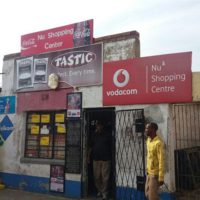
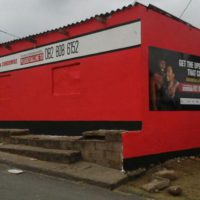
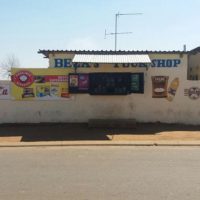
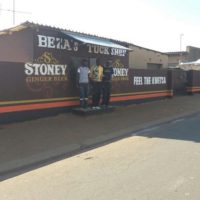
WHM Media is a specialist spaza-branding shop. The company takes ordinary — often rundown — spaza shops and transforms them into landmarks or, maybe more accurately, brandmarks. “It is a win-win for the shop owner, the local community and the brand,” says Hoy. “The shop owners love it because the shop gets a free makeover, both at the beginning and end of the contract, and the shop becomes a recognisable location and thus often a meeting point — in areas that are not particularly easy to navigate! In addition, the shop owners earn an income from hosting the branding.

“Local community benefits”

“The local community benefits from the makeover, too, not only in terms of an improvement in the environment but also because WHM employs local tradesmen to paint, maintain and eventually paint over the branding. And last, but not least, the brand benefits from being front of mind with its target audience. The branding is quite often so powerful that community members refer to the shop by the brand name, as in, ‘I’m at the Kwetsa’.”

Of course, this kind of branding isn’t new to SA’s spaza landscape, but what is new is that WHM Media is able to find a spaza shop that is specifically suited to a specific client, given the movement specific to that client’s customers, or potential customers.

“In conjunction with our partners at Fernridge Consulting, WHM has built a data-analysis toolset that brings together Fernridge’s knowledge on the likes of housing or rental costs, schools, taxi ranks and routes and overlays this with GIS data, and our knowledge of available sites. The result is that we are able to track consumer journeys in order to identify the best possible site for our clients,” Hoy explains.

Not as easy as you might think

Nielsen estimates that there are over 144 000 traditional trade sites across the country; choosing the right one for your brand isn’t as easy as you might think!

Recently, WHM branded 500 rural brick-making stores across Botswana, for PPC, which resulted in a massive growth in store purchase from PPC from 61 to 90%. An R11 000 average increase across the stores translated into a R5.5m increase in sales across the board. The company has also created branded stores across southern Africa for clients ranging from the National Lottery and NGOs such as Right2Care to Orange Money Services in Botswana. Next in the pipeline is a partnership with a company that is pioneering wifi-cafe technology, which offers low-cost, uncapped, time-based internet connectivity over wifi within 15m of the brandmarks. The project is currently being piloted in Soweto.

For perhaps the past 20 years, ever since SA made the great leap into democracy, there has been much talk about the so-called ‘emerging market’ and how best media companies and brands may collaborate to attract their attention, and ultimately, their money. Despite this, however, the TT sector seems to have been largely ignored.

Insufficient data?

“The market isn’t being ignored,” Hoy counters. “Clients and agencies know that it is there, but — until now — there has been insufficient data available to justify spend.”

And if R46bn isn’t enough to pique your interest, how about R250bn?

“Nielsen states that this [traditional trade] is a R46bn industry. We believe it to be in excess of R250bn,” he asserts.

“Why do we believe it is so big? [It’s] based on what we have seen and the volumes that the retailers claim to be selling, combined with our POS [point-of-sale] partners and the sheer magnitude of the volume of people. McDonalds believe that the fast-food portion of this sector alone is worth over R90bn.”

Updated on 1 Feb 2017. A previous version of this article incorrectly stated that the PPC business was done in South Africa, when it was Botswana. We regret the error.


Kim PenstoneKim Penstone is a freelance journalist, specialising in marketing, media and advertising. Over the past 15 years, she has worked for a variety of leading marketing industry publications, including Marketing Mix, Marketingweb and Brand Magazine, and in her freelance capacity contributes regularly to specialist titles, such as Brands & Branding, AdFocus and MarkLives. She has recently started a blog, www.runlikeamom.co.za, which is completely unrelated to the marketing industry.

— Sign up now for the MarkLives email newsletter every Monday and Thursday, now including headlines from the Ramify.biz company newsroom service!

Big Q 2017: Game-changing opportunities ahead

by MarkLives (@marklives) What are the expectations of South Africa’s marketing and advertising leaders for the industry in 2017? We emailed a panel of key industry executives for their take on the macro environment, budgets, changes in messaging, movement in the industry and consumer and any communication trends they’ll be looking out for. Last up is Bridgette Ramuluvhana of kulula.com.

Bridgette Ramuluvhana

Bridget RamuluvhanaWith over 16 years of experience in product, brand and retail marketing in ATL and BTL advertising, internal and external communication and social media, Bridgette Ramuluvhana’s expertise has afforded her the opportunity to work as the marketing manager for South Africa’s most-successful low-cost airline, kulula.com, as well as British Airways (operated by Comair). As one of the masterminds behind the brand’s clever marketing campaigns, she may be found on a flight or signing off some really funny ads. She has a BBA degree from the IMM Graduate School of Marketing and, before joining kulula.com, she gained valuable experience at Revlon and Nike South Africa.

It may have been a rollercoaster ride for marketing in 2016, but there are some game-changing opportunities and exciting developments looming in 2017 for those marketers who would like to take their marketing plans to the next level. It might not all be new trends on the marketing horizon but marketing practices that are here to stay in the coming year. So, without further ado, here are my marketing points for the year 2017.

  1. The world is one

Due to the power of technology, borders will gradually disappear and marketers who carry on picking up and supporting global trends such as Black Friday and Cyber Monday stand to gain financially. With most consumers watching their pockets, organisations which embrace these global activations will automatically be known for being consumer champions.

  1. “Always on”

The 2017 marketing year will carry-on deploying an “always-on” marketing strategy. This simply means communicating through various channels at the same time and never switching these off — be it ATL, BTL and TTL. However, the best place of deploying this strategy is through digital because it is much cheaper and easier to turnaround, compared to the traditional channels.

  1. How good is your story?

To be a great marketer in 2017, you will need to be an even greater storyteller and recognise that a real story should be able to live in any channel. Without great content and integration, organisations will be making a lot of noise but not sweet marketing music. Most of us aren’t interested in noise makers, but excellent disrupters. In today’s consumer driven world, people have lower tolerance levels for boring content and their attention needs to be grabbed by bold storytelling.

  1. Me, myself and I

We live in a world dominated by consumerisation, and all that mostly matter to consumers is predominantly a “me, myself and I” approach. I believe we will see more customers only wanting to pay for what they need and nothing more. Due to this, organisations will need to reinvent themselves to stay relevant, and failure on the part of the organisation to move on with the times will result in lost market share.

  1. Disruption 101

Traditional selling models will be even more under pressure, because of disruptors such as Airbnb and Uber. With new-age models such as these, everyone wants to own a piece of the action and power will shift even more from traditional suppliers to anyone who may come up with disruptive models — which cut out the go-between and make the consumer royalty.

  1. No “I” in TEAM

Expect marketing teams to work less in silos and more holistically. In some company structures, you might still get the older marketing structure of two teams working as traditional marketing and digital. In order to serve the customer as well as possible, the customer must be at the centre of an integrated marketing and communications plan. Successful teams will arrange themselves around a task and forget about owing parts of the customer’s communication process

  1. Channel vs process

Digital marketing shouldn’t be seen as a marketing process but rather as a channel which forms part of the entire marketing process. Yes, it’s true that digital marketing is more measurable than traditional marketing, but that doesn’t mean it can exist in isolation. If you think about it, radio or print don’t exist on their own but are rather a means to an end. The best marketing and communications strategies are those where ATL advertising attracts people to get to the shop and then the digital creative becomes the different aisles within the shop. Therefore, companies which wish to do well in their marketing should aim to integrate their channels of communication and not treat them as two different processes.

  1. Mr Big Data

While data is making it easier to target consumers, I expect organisations to continue mining all forms of data, analyse it, and derive insights and, thereafter, use it to enhance its customer experience with the brand. Big data will definitely be used to make the marketing decisions of the future.

  1. Be mobile and multiply

The more flexible and mobile an organisation is, the happier are its customers. Responsive apps and websites will continue to grow and brands which haven’t jumped on this band wagon will miss a chunk of the mobile-savvy customer pool, which could have a negative effect on the bottom-line.

On another front, multi screens will continue to dominate lives, and organisations need to ensure they are active on multiple platforms and that their campaigns translate to different platforms.

  1. Business needs vs nice-to-haves

Advertising agencies will need to know their clients’ business needs vs doing nice-to-have creative executions. Content will still be kingpin and, at the end of the day, both the client and the agency need to ask the central question: Did we effectively solve the problem at hand and did it attend to the business need while still grabbing the customer’s attention effectively?

Accountability through post-campaign reports is not dying either — investors need to know how effective your integrated campaign was.

Futuristic marketing = system integration + data analysis + great customer service + story about your customer + mobile compatibility — silos


MarkLives logoLaunched in 2016, “The Big Q” is a regular column on MarkLives in which we ask key industry execs for their thoughts on relevant issues facing the ad industry. If you’d like to be part of our pool of potential panellists, please contact editor Herman Manson via email (2mark at marklives dot com) or Twitter (@marklives). Suggestions for questions are also welcomed.

— Sign up now for the MarkLives email newsletter every Monday and Thursday, now including headlines from the Ramify.biz company newsroom service!

SA TV Ratings: SABC 2 — top 20 primetime programmes Oct 2016

by MarkLives (@marklives) The hottest primetime television shows on SABC 2 in South Africa revealed: TV ratings for the month of October 2016.

Last year, the Broadcast Research Council of South Africa (BRCSA) has changed its policy about giving away TAMS and now only monthly reports, highlighting the top 20 or 30 primetime shows on several popular channels, are available.

SABC 2

BRCSA TV Ratings October 2016 primetime SABC 2


Source: BRCSA October 2016

Broadcast Research Council of South Africa


The Broadcast Research Council of South Africa (the BRC) is a non-profit, industry body that was incorporated in 2015 to cater to the audience research needs of the radio and television industry in South Africa.

— Sign up now for the MarkLives email newsletter every Monday and Thursday, now including headlines from the Ramify.biz company newsroom service!

#MagLoveTop10: Sexiest magazine covers of 2016

by MediaSlut (@MediaSlut) Sexiness, as with beauty, is subjective and once again I’ve donned my various pairs of straight, gay, kinky and conservative spectacles for my #MagLoveTop10 list of the sexiest magazine covers of 2016!

Here’s the publishing schedule for 2016’s #MagLoveTop10 series:


Find a cover we should know about? Tweet us at @Marklives and @MediaSlut.
Pinterest icon Want to view all the covers at a glance? See our MagLove Pinterest board!


View 2015’s sexiest magazine covers here.

#10. DESTINY, July 2016

DESTINY, July 2016: Lira

This cover of Lira also made my Top 10 South African covers list, and it’s very deserving of a position here, too, as it just oozes sex appeal and she’s absolutely rocking this power suit! Read more here.

This is DESTINY’s first appearance on this list.


#9. V, Summer 2016

V, Spring 2016: Britney Spears

V’s Summer issue also made our Sexiest list for 2015, and this time it’s both Britney Spears and the sexy six-pack lounging in his underwear making it possible again.

This is V’s second appearance on this list. In 2015, it made it to #10.


#8. Zeit Magazin, 24 November 2016

Zeit Magazin, 24 November 2016: Bruce Springsteen

Usually the type of cover a magazine does once an artist has passed away, but Bruce Springsteen, now 67, is still very much alive and still as sexy as in his youth! The first cover (page 1) is of him in his jeans as a young artist, with the coverline translating as “Sometimes I’d like to be like Bruce Springsteen”, and the second cover shot (page 3) with the coverline “Says Bruce Springsteen”.

This is Zeit Magazin’s first appearance on this list.


#7. Variety, 4 October 2016

Variety, October 2016: Laverne Cox

Laverne Cox was the first transgendered person to receive the honour of being on Variety’s “Power of Women” list, and her cover, among the other selected women, is the most powerful and striking one to me — and also definitely very sexy! Read more here.

This is Variety’s first appearance on this list.


#6. Gayletter, Issue 4 (Limited Edition)

Gayletter, issue 4, limited edition

Gayletter published two covers for Issue 4, with this being its Limited Edition, with only 250 copies printed! Such a bummer that this wasn’t also for sale in South Africa… Absolutely love this innocence, yet sexuality, of this cover. And, of course, there’s nothing better than a well-toned-bum.

This is Gayletter’s first appearance on this list.


#5. Esquire (Turkey), July 2016

Esquire (Turkey), July 2016: George Clooney

Esquire in Turkey tried to bring peace to the world with this cover, but it should do more of these with George Clooney and dogs to help in this regard… I definitely won’t complain! Read more here.

While this is the first time that Esquire (Turkey) has appeared on this list, other Esquires made it to #6 in 2014 and to #7 in 2012.


#4. ESPN Body Issue, August 2016

ESPN Body Issue 2016 covers

Athleticism features big in our Top 5 but none as raw and real as ESPN’s annual Body Issue campaign! Also view the behind-the-scenes pictures and videos. Read more here.

This is ESPN’s third appearance on this list. In 2015, its Body Issue made it to #5 and to #1 in 2013.


#3. SELF, September 2016

Self, September 2016: Serena Williams

“Sexy” comes in all shapes, sizes and forms — and strong is definitely sexy, especially when teamed up with recently engaged Serena Williams! Read more here.

This is Self’s first appearance on this list.


#2. Interview, August 2016

Interview, August 2016: Idris Elba

Ah, THAT gaze…! THOSE eyes! This PHOTO! Here’s the full interview and photoshoot.

This is Interview’s fourth appearance on this list. It made it to #2 in 2015, to #4 in 2014 and to #6 in 2012.


#1. Daily Mail Weekend, 30 July 2016

Daily Mail Weekend, 30 June 2016: Tom Daley

At the recent 2016 Summer Olympics in Rio, Tom Daley and his teammate (Daniel Goodfellow) walked about with Bronze in the synchronised 10m platform event, but he’s now walking with gold on my Sexiest list, and a very-deserving no. 1 spot! If that’s how hot he looks in a wet suit, imagine how hot he will look on his wedding day later this year! Maybe he’ll make another Sexiest Cover list ;-) Read more here.

This is Daily Mail Weekend’s first appearance on this list.


MediaSlutMagLove by @MediaSlut is a regular slot featuring the best local and international magazine covers every week, recognising well thought-out, powerful and interesting (and hopefully all three-in-one) covers and celebrating the mix of pragmatism, creativity and personal taste that created each of them. The anonymous (for now) blogger behind MediaSlut knows way too much for his own good about media in South Africa, magazines in particular. His mission is to show when SA magazines fail but, most importantly, also when they succeed. If you’re looking for a library about SA magazines and news, this is your one-stop pitstop.

— Sign up now for the MarkLives email newsletter every Monday and Thursday, now including headlines from the Ramify.biz company newsroom service!

Online CPD Courses Psychology Online CPD Courses Marketing analytics software Marketing analytics software for small business Business management software Business accounting software Gearbox repair company Makeup artist