

by Kim Penstone. With so many household brands fixated on the holy grail of being listed in the Shoprites, Pick n Pays and Spars of this world, it is worth considering for a moment that R1 of every R5 spent in South Africa happens in the so-called ‘traditional trade’ (‘traditional trade’ or TT is defined as an over-the-counter shopping experience, vs ‘modern trade’ which involves a browsing experience.). That means that 20% of the country’s spend takes place in what many think of as a spaza shop.
“Massive missed opportunity”
That figure is from research released by Nielsen South Africa at the beginning of 2016, which also revealed that the traditional trade industry accounts for R46bn annually, or 33% of all consumer-goods package sales in the country. It’s no wonder that Nielsen’s tagged this sector as a “massive missed opportunity” for many brands.
“95% of retail outlets in South Africa are classified as traditional trade outlets, with 48% of shoppers visiting an outlet up to four times a week,” says WHM Media managing director, Stuart Hoy. But Hoy is less interested in what is sold in-store than he is in what is sold on-store.
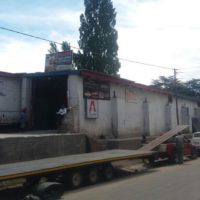
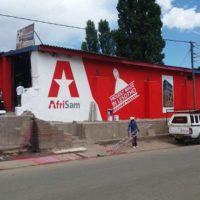
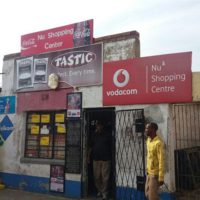
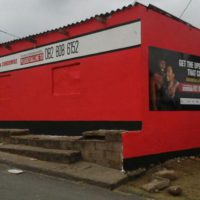
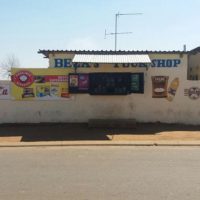
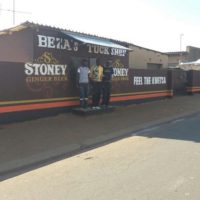
WHM Media is a specialist spaza-branding shop. The company takes ordinary — often rundown — spaza shops and transforms them into landmarks or, maybe more accurately, brandmarks. “It is a win-win for the shop owner, the local community and the brand,” says Hoy. “The shop owners love it because the shop gets a free makeover, both at the beginning and end of the contract, and the shop becomes a recognisable location and thus often a meeting point — in areas that are not particularly easy to navigate! In addition, the shop owners earn an income from hosting the branding.
“Local community benefits”
“The local community benefits from the makeover, too, not only in terms of an improvement in the environment but also because WHM employs local tradesmen to paint, maintain and eventually paint over the branding. And last, but not least, the brand benefits from being front of mind with its target audience. The branding is quite often so powerful that community members refer to the shop by the brand name, as in, ‘I’m at the Kwetsa’.”
Of course, this kind of branding isn’t new to SA’s spaza landscape, but what is new is that WHM Media is able to find a spaza shop that is specifically suited to a specific client, given the movement specific to that client’s customers, or potential customers.
“In conjunction with our partners at Fernridge Consulting, WHM has built a data-analysis toolset that brings together Fernridge’s knowledge on the likes of housing or rental costs, schools, taxi ranks and routes and overlays this with GIS data, and our knowledge of available sites. The result is that we are able to track consumer journeys in order to identify the best possible site for our clients,” Hoy explains.

Not as easy as you might think
Nielsen estimates that there are over 144 000 traditional trade sites across the country; choosing the right one for your brand isn’t as easy as you might think!
Recently, WHM branded 500 rural brick-making stores across Botswana, for PPC, which resulted in a massive growth in store purchase from PPC from 61 to 90%. An R11 000 average increase across the stores translated into a R5.5m increase in sales across the board. The company has also created branded stores across southern Africa for clients ranging from the National Lottery and NGOs such as Right2Care to Orange Money Services in Botswana. Next in the pipeline is a partnership with a company that is pioneering wifi-cafe technology, which offers low-cost, uncapped, time-based internet connectivity over wifi within 15m of the brandmarks. The project is currently being piloted in Soweto.
For perhaps the past 20 years, ever since SA made the great leap into democracy, there has been much talk about the so-called ‘emerging market’ and how best media companies and brands may collaborate to attract their attention, and ultimately, their money. Despite this, however, the TT sector seems to have been largely ignored.

Insufficient data?
“The market isn’t being ignored,” Hoy counters. “Clients and agencies know that it is there, but — until now — there has been insufficient data available to justify spend.”
And if R46bn isn’t enough to pique your interest, how about R250bn?
“Nielsen states that this [traditional trade] is a R46bn industry. We believe it to be in excess of R250bn,” he asserts.
“Why do we believe it is so big? [It’s] based on what we have seen and the volumes that the retailers claim to be selling, combined with our POS [point-of-sale] partners and the sheer magnitude of the volume of people. McDonalds believe that the fast-food portion of this sector alone is worth over R90bn.”
Updated on 1 Feb 2017. A previous version of this article incorrectly stated that the PPC business was done in South Africa, when it was Botswana. We regret the error.
 Kim Penstone is a freelance journalist, specialising in marketing, media and advertising. Over the past 15 years, she has worked for a variety of leading marketing industry publications, including Marketing Mix, Marketingweb and Brand Magazine, and in her freelance capacity contributes regularly to specialist titles, such as Brands & Branding, AdFocus and MarkLives. She has recently started a blog, www.runlikeamom.co.za, which is completely unrelated to the marketing industry.
— Sign up now for the MarkLives email newsletter every Monday and Thursday, now including headlines from the Ramify.biz company newsroom service!