Ad of the Week: Viva the selfie generation — Cell C

by Oresti Patricios (@orestaki) From one summer campaign to another! 1886 (a FCB Africa Company) teams up with director Slim of Egg Films to create a message for the summer campaign of mobile operator Cell C, #ConnectYourWay. This smart, vibey ad is aimed firmly at the younger generation and defiantly blows a raspberry at those who say GenX/Y/Z are ‘disconnected’, placing Cell C squarely in the ‘teens and tweens’ market.

The younger generation has a close (some might say symbiotic) relationship with their electronic devices. This is often criticised by their parents who want to enforce an older kind of ‘attentiveness’ on younger audiences. The concept of FOMO (fear of missing out) has emerged to describe how some people suffer psychological withdrawal when separated from their cellphones. For older folk, being continually connected may be seen as a problem. But for youngsters who live in a world of selfies, Snapchat and social media, it’s the only way to be.

Cell C targets this market with a range of products aimed at the younger, more budget-conscious market, for whom data connectivity is as essential as air and water.


Pinterest icon View all the Ads of the Week at a glance on our #AdoftheWeek Pinterest board!
YouTube icon Watch our 2017 #AdoftheWeek playlist on YouTube


The ad starts with a shot of a group of teenagers, all interacting with their phones. There is a big screen in the background. A news clip plays, and a woman (clearly a member of the ‘older generation’) says: “These kids are always on their phones — they’re so disconnected.”

The camera focuses on one young woman, who shakes her head cynically. She holds her phone up to cover her mouth. What we see then is a video of a mouth on the mobile screen that says: “Really?”

This launches an edgy, glitchy, graphics-loaded montage, set to the music of Charlie XCX and Icona Pop’s 2012 hit song, “I Love It”. It’s a happy, danceable tune that embodies a sense of upbeat, youthful rebellion.

Throughout the montage, the same young woman appears in a variety of scenarios. The device that is used to create movement from one scene to the next is a cellphone screen, or a screen-like graphic effect.

She is seen from ‘inside’ a screen as she designs clothing, transitioning to her posting pics of her work to Instagram. Next she is found at a fashion shoot, helping to set up a scene on a train. But our protagonist still finds time to take a selfie with the model. Then the young, urban trendster is out jogging, where she is joined by a few members of the Sharks rugby team (Cell C is a sponsor of the Sharks). Our Cell C persona is also portrayed as an avatar in a racing game. Then she’s in a YouTube video with Miss South Africa, Demi-Leigh Nel-Peters (Cell C is also a sponsor of the Miss South Africa beauty pageant).

The music comes to a sudden halt, and the young star of the movie’s voice repeats: “Disconnected. Seriously?”

1886 and Egg Films for Cell C #ConnectYourWay screengrabAt this point, the scene moves to a rooftop, where a crowd of teenagers is lit up by their cellphones. The camera moves to other rooftops, which are also light up — teenagers are dancing on rooftops all over the city. The final shot is a bird’s eye view and, from above, all the lit-up building roofs spell the words “CELL C”.

The ad is vibrant, with each scene graded to full saturation like one of those funky Instagram filters, and lots of cellphone-related graphic elements (share and like buttons, message bubbles etc.).

The editing makes ample use of cool effects and funky onscreen elements, all of which make the world of the ad seem alive with a kind of fun, kinetic energy — the high-level energy that teenagers seem to be able to summon when there’s loud, pumping dance music and bright flashing lights.

The ad is well-conceptualised, and smartly executed with great casting — the star of the ad is a young woman who is sassy and vibey —perfect for the target audience, complete with great editing, sound and effects.

I was wondering where the agency, 1886, got its name so I Googled it. That was the year gold was discovered on the Witwatersrand and it certainly seems as if1886 has struck gold again with a bright, shiny, connected ad for Cell C. Everyone speaks about connecting with youth markets — great to see a brand and agency that have done this so cleverly. Take a selfie and send it to us, you smart, smart people.

Credits

Agency: 1886, a FCB Africa Company
Executive creative director: Stuart Stobbs
Chief creative officer: Brett Morris
Creative directors: Toni Hughes, Gareth Lessing
Art directors: Mark Livni, Kerryn-Lee Tyser
Copywriter: Mthokozizi Sithole
Strategic planner: Tavonga Musingarabwi
Account managers: Derek Coles, Dorette Jooste, Iris Qacha
Production co-producer and executive producer: Nicci Cox
Agency TV producer: Caroline Crowther
Media planners: Media Shop
Production companies: Egg Films and Wondermerk
Director: Slim
Director of photography: Rory O’Grady
Art director: Keenan McAdam
Wardrobe: Nola Williams
Video editor: Joe de Ornelas, Left Post Production
Post production & graphic effects: Wondermerk
Final mix: Lorens Persson, Sterling Sound

Credits updated at 10.23am on 9 November.


Oresti PatriciosAd of the Week, published on MarkLives every Wednesday, is penned by Oresti Patricios (@orestaki), the CEO of Ornico, a Brand Intelligence® firm that focuses on media, reputation and brand research. If you are involved in making advertising that is smart, funny and/or engaging, please let Oresti know about it at clientservice@ornicogroup.co.za.

— Sign up now for the MarkLives email newsletter every Monday and Thursday, now including headlines from the Ramify.biz company newsroom service!

ABC Analysis Q3 2017: The biggest-circulating consumer mags in SA

by Herman Manson (@marklives) The Audit Bureau of Circulations of South Africa has released consumer-magazine circulation statistics for the period July–September 2017 (ABC Q3 2017); see our newspaper ABC analysis here. Apart from highlighting several figures that stand out for us, we’ve added a table of web traffic for Q3 and also updated our list of the biggest-circulating consumer titles in SA.

Note: we compare the current figures with the same figures for this time the year before, and not with the previous quarter. Green equals growth; red declined; purple maintained, new entrant or renamed; orange discontinued or resigned; pink no submission or suspended; brown minimal newsstand sales; and grey moved to a new category.

Key insights

According to data supplied by the ABC, total magazine circulation declined by 2.6% compared to the previous quarter, and by 13.5% to the prior year. Consumer magazines decreased by 2.1% on the previous quarter but increased by 5.2% on the prior year; this was as a result of several titles changing sector from custom to consumer. Excluding these changes, consumer magazines declined by 7.6% on the prior year. Custom magazines declined by 3.3% on the prior quarter, and by 25.7% on the prior year (see above).

Overall, consumer magazine circulation grew to 4 777 362 from 4 542 280 in the previous corresponding reporting period, as a result of several titles changing from custom to consumer. Single-copy sales stood at 2 461 130 (down from 2 562 169 in Q2 2017) and total paid (which includes subscription figures) at 3 660 884 (down from 33 760 586 in Q2 2017). Paid-for digital copy sales stood at 80 715.

Custom magazines saw an overall circulation decline to 5 515 864 from 7 837 468 in the corresponding previous reporting period; a number of titles were discontinued, while others moved to the consumer magazine category. Single copy sales in this category stood at 151 149, and total paid-for circulation at 1 164 174.

The business press

Finweek, 5-18 October 2017Finweek is up to 18 746 from 11 843 (total free copies = 2 881 plus sales at below 50% of the cover price = 8 044; single copy sales: 4 018). Financial Mail is slightly down to 13 266 from 13 319 in the corresponding previous reporting period.

Your Business Magazine has grown slightly to 9 367 from 9 359; Forbes Africa is up to 19 799 from 18 242 (total free = 8 888); Entrepreneur has declined to 14 579 from 16 778; Noseweek has declined to 11 405 from 13 275; and Personal Finance has fallen to 9 532 from 11 459.

Landbouweekblad has grown to 28 567 from 27 347 and Marktoe! to 10 633 from 9 900 (total free = 10 633) but Farmer’s Weekly is down to 12 138 from 12 227 and Veeplaas has fallen to 7 814 from 8 627.

Biggest-circulating business magazines in terms of paid-for (sales, bulk and subscriptions) circulation

  1. Finweek: 15 865
  2. Entrepreneur: 14 574
  3. Financial Mail: 13 266
  4. Noseweek: 11 405
  5. Forbes Africa: 10 911
  6. Personal Finance: 9 447
  7. Your Business: 7 336

Biggest-circulating business magazines in terms of total circulation

  1. Forbes Africa: 19 799
  2. Finweek: 18 746
  3. Entrepreneur: 14 579
  4. Financial Mail: 13 266
  5. Noseweek: 11 405
  6. Personal Finance: 9 532
  7. Your Business: 9 367

Position movement relative to Q2 2017.

Entertainment & celeb news

People has seen its circulation decrease to 34 787 from 42 333. TV Plus (Afrikaans) is down to 30 385 from 31 268 and the English edition has fallen to 16 773 from 26 216.

Bona is up to 71 952 from 71 214 in the previous corresponding reporting period. Drum has fallen to 40 680 from 50 506; Huisgenoot has dropped to 190 586 from 212 241; and YOU has fallen to 97 506 from 109 591.

The Big Issue has fallen to 10 290 from 10 731. Taalgenoot is down to 68 427 from 69 023.

Home & gardening, leisure

Taalgenoot, Spring 2017Condé Nast House & Garden has declined to 32 595 from 34 376 (total free = 8 269). Easy DYI is down to 11 618 from 12 598 (total free = 5 017). Food & Home Entertaining has fallen to 23 242 from 24 874 (total free: 5 733). House & Leisure has declined to 19 698 from 25 962 (total free: 2 654). Sarie Kos has fallen to 26 331 from 31 943.

Woolworths TASTE is listed as a custom magazine — circulation has declined slightly to 24 662 from 25 932 (single copy sales: 18 553).

ELLE Decoration has fallen to 15 885 from 22 705 (total free: 1 027) and SA Home Owner is down to 38 521 from 40 023 (total free: 8 254). SA Garden and Home is down to 47 299 from 51 480 (total free: 5 773). Tuis Home beats the trend to climb to 80 101 from 77 269 (total free: 809) and VISI has climbed to 15 703 from 15 111. MyKitchen (TFG) came in at 98 017 (new category: moved from custom).

Men’s market

Destiny Man has fallen to 13 259 from 14 252 (total free 3 815). Very Interesting has nudged down to 18 209, compared to 18 499 (total free = 4 412) in the previous corresponding reporting period.

GQ is down to 18 182 from 20 333 (total free: 6 565); Men’s Health has fallen to 27 602 from 34 491 and Popular Mechanics to 27 482 from 27 874 (total free: 3 740). Stuff is down to 13 925 from 15 893 (total free: 2 120). Tech is at 66 088 (new category: moved from custom).

Health, fitness, sport

Kick OffSports Club, Issue 106 is down to 18 054 from 27 999. Sports Club (TFG) has come in at 153 840 (changed category from custom). Golf Digest has jumped to 12 136 from 7 917.

SA Hunter has climbed to 47 931 from 43 930 while Game & Hunt/Wild & Jag is down to 9 571 from 11 621.

Hitting the road

SA 4×4 falls to 14 881 from 16 813 and Driven to 17 902 from 18 012. Leisure Wheels is up to 14 381 from 13 436 while CAR has grown to 62 130 from 59 120. TFG Motor has been moved from the custom to consumer category; its circulation has come in at 41 035.Speed and Sound is down to 24 232 from 27 173. Bike SA has jumped to 17 183 from 14 971 (total free = 5 808).

Getaway is up to 42 590 from 41 836 (total free has jumped to 11 708) but Weg!/Go! has fallen to 53 897 from 57 098. SA Country Life has declined to 29 743 from 35 738. Platteland has fallen to 32 729 from 35 424.

Woman’s general

MyKitchen, Issue 36Destiny Magazine is down to 25 125 from 26 576 (total free: 4 278). Cosmopolitan has declined to 37 128 from 42 554 (total free = 5 136), and Glamour to 45 478 from 47 311 (total free: 7 968). ELLE has ticked up to 22 422 from 22 090 (total free has jumped to 5 423). Fair Lady is down to 32 975 from 36 053.

Good Housekeeping/Goeie Huishouding has declined to 37 753 from 48 136 (total free: 4 797). Move! has collapsed to 70 062 from 84 835. True Love is down to 27 693 from 32 690, and Vroue Keur has dropped to 48 536 from 54 516. Woman and Home is down to 73 294 from 78 000 (total free jumps to 9 964).

Kuier has declined to 91 672 from 94 602, Rooi Rose has declined to 63 818 from 68 036 (total free jumps to 9 447), Longevity is down to 16 837 from 18 449, and Finesse is down to 45 973 following a frequency change. Essentials is down to 25 888 from 28 407; Sarie has fallen to 57 272 from 66 886, Your Family is down to 29 836 from 35 337, and Women’s Health has decreased to 31 520 from 35 580. Marie Claire climbs to 22 077 from 20 703 (total free = 4 453).

The MarkLives’ Big Magazine list*

  1. Huisgenoot: 190 586
  2. Sports Club (TFG): 153 840
  3. Kids Super Club (TFG): 118 672
  4. MyKitchen (TFG): 98 017  +2
  5. YOU: 97 506  -1
  6. Kuier: 91 672  -1
  7. Tuis/Home: 80 101  +2
  8. Woman and Home: 73 294  -1
  9. Bona: 71 952  +3  re-enters top 10
  10. Move!: 70 062  -1

Foschini Living Space: 68 827  -1  falls out of top 10
Taalgenoot: 68 427
Tech (TFG): 66 088
Rooi Rose: 63 818
CAR: 62 130

*By total circulation. Must have a cover price. Annuals excluded. Movement on the Big Magazine list compared to 2017 Q2 data.

Web traffic Q3

Impressions

Daily ave unique browsers

Title

Sector

Category

Frequency

Subs period

917903 17281 SA Rugby Consumer Sport and Hobby Mtly Jul-Sep
876738 14565 Car Consumer Motoring Mtly Jul-Sep
571093 10371 Good Housekeeping/ Goeie Huishouding Consumer Woman’s General N/A Jul-Sep
515027 10178 Destiny Magazine Consumer Woman’s General N/A Jul-Sep
448814 8873 Getaway Consumer Travel Mtly Jul-Sep
299025 4421 Vrouekeur Consumer Woman’s General N/A Jul-Sep
298644 3926 Cosmopolitan Consumer Woman’s General N/A Jul-Sep
255201 4703 Bona Consumer Family Interest N/A Jul-Sep
249244 2874 Woman and Home Consumer Woman’s General N/A Jul-Sep
233302 3567 Rooi Rose Consumer Woman’s General N/A Jul-Sep
211012 4285 Destiny Man Consumer Male N/A Jul-Sep
207196 2912 Farmer’s Weekly Consumer Farming N/A Jul-Sep
197602 2441 Bicycling Consumer Sport and Hobby 10xA Jan-Jun
174938 2004 Essentials Consumer Woman’s General N/A Jul-Sep
173997 3129 Marie Claire Consumer Woman’s General N/A Jul-Sep
164249 1793 SA Garden and Home Consumer Home N/A Jul-Sep
156878 2210 Living and Loving Consumer Parenting N/A Jul-Sep
130138 2401 Voelgoed Consumer Woman’s General 9xA Jan-Jun
121837 1566 Your Family Consumer Woman’s General N/A Jul-Sep
114874 1469 Food & Home Entertaining Consumer Home N/A Jul-Sep
100653 2105 People Consumer Celebrity N/A Jul-Sep
96347 1048 SA Home Owner Consumer Home Mtly Jul-Sep
90825 1375 House and Leisure Consumer Home N/A Jul-Sep
84980 1970 Baba & Kleuter. Consumer Parenting N/A Jan-Jun
60530 1282 SA Country Life Consumer Travel N/A Jul-Sep
59812 1072 De Rebus Custom Professional Mtly Jul-Sep
57353 1182 Elle Consumer Woman’s General N/A Jul-Sep
53238 945 Popular Mechanics Consumer Male Mtly Jul-Sep
45352 968 Leisure Wheels Consumer Motoring Mtly Jul-Sep
35634 254 Lose It Consumer Home AltM Jan-Jun
27590 418 Cape Etc. Consumer Travel 3xA Jan-Dec
19447 235 Compleat Golfer Consumer Sport and Hobby Mtly Jul-Sep
505 22078 Get It Highway/Durban North/Berea Free N/A Jul-Sep
198 9538 Get It (Joburg West) Free Mtly Jul-Sep
167 7175 Get It (Lowveld) Free N/A Jul-Sep
116 6516 Get It (Northern Suburbs Joburg) Free Mtly Jul-Sep
85 3764 Get It Joburg South Free N/A Jul-Sep
56 2462 Get It (eMalahleni – Middelburg) Free N/A Jul-Sep
55 2913 Get It Joburg East Free N/A Jul-Sep
41 2431 Get it (Northern KZN) Free N/A Jul-Sep
0 0 Longevity Consumer Health N/A Jan-Jun
0 0 Elle Decoration Consumer Home N/A Jan-Jun
Resigned Resigned You Consumer Family Interest Wkly, Th Jul-Sep
Resigned Resigned Women’s Health Consumer Woman’s General Mtly Jul-Sep
Resigned Resigned Weg Consumer Travel Mtly Jul-Sep
Resigned Resigned Tuis / Home Consumer Home Mtly Jul-Sep
Resigned Resigned True Love Consumer Woman’s General Mtly Jul-Sep
Resigned Resigned Sarie Consumer Woman’s General Mtly Jul-Sep
Resigned Resigned Runner’s World Consumer Sport and Hobby Mtly Jul-Sep
Resigned Resigned Move Consumer Woman’s General Wkly, Wed Jul-Sep
Resigned Resigned Men’s Health Consumer Male Mtly Jul-Sep
Resigned Resigned Landbouweekblad Consumer Farming Wkly, Fr Jul-Sep
Resigned Resigned Kuier Consumer Woman’s General F Jul-Sep
Resigned Resigned Kick Off Consumer Sport and Hobby Mtly Jul-Sep
Resigned Resigned Huisgenoot Consumer Family Interest N/A Jul-Sep
Resigned Resigned Fairlady Consumer Woman’s General Mtly Jul-Sep
Resigned Resigned Drum Consumer Family Interest Wkly, Th Jul-Sep
Discontinued Discontinued TopGear Consumer Motoring Mtly Jul-Sep
Discontinued Discontinued TopCar Consumer Motoring Mtly Jul-Sep
Discontinued Discontinued Idees Consumer Woman’s General Mtly Jul-Sep
Discontinued Discontinued Grazia Consumer Woman’s General Wkly, Wed Jul-Sep
Changed frequency Changed frequency Baba & Kleuter Consumer Parenting Mtly Jul-Sep


ABC 2017 stories

More ABC stories


Herman Manson 2017Herman Manson (@marklives) is the founder and editor of MarkLives.com.

— Sign up now for the MarkLives email newsletter every Monday and Thursday, now including headlines from the Ramify.biz company newsroom service!

ABC Analysis Q3 2017: The biggest-circulating newspapers in SA

by Herman Manson (@marklives) The Audit Bureau of Circulations of South Africa has released newspaper-circulation statistics for the period July–September 2017 (ABC Q3 2017); see our magazine ABC analysis here. Apart from highlighting several figures that stand out for us, we’ve added a table of web traffic for Q3.

Note: we compare the current figures with the same figures for this time last year, and not with the previous quarter. Green equals growth; red declined; purple maintained, new entrant or renamed; orange discontinued or resigned; pink no submission or suspended; brown minimal newsstand sales; and grey moved to a new category.

Key insights

Total newspaper circulation declined by 1.5% on the previous quarter, and by 6% on the year prior, according to the latest ABC data. Daily newspapers declined by 3.9% on the previous quarter, and by 11.9% on the year prior. Weekly newspapers increased by 3.8% on the previous quarter, but decreased by 6.5% on the year prior. Weekend newspapers declined by 3.4% on the previous quarter, and by 12.1% on the year prior. Local newspapers remained static compared to the previous quarter, but declined by 6.6% on the year prior.

Daily newspaper circulation fell to 1 126 532 from 1 242 958 during the previous corresponding reporting period (Q3 2016); pdf replica editions totalled 6 957, while single-copy sales came in at 829 047. Circulation at the weeklies fell, too — total circulation declined to 486 616 from 521 678; weekend newspapers declined to 1 356 674 from 1 526 592; and local papers dropped to 333 884 from 357 629. Free sheets fell to 6 139 426, from 6 383 491.

ABC member circulation totals

  • Daily newspapers: down to 1 126 532, compared to 1 242 958 for the previous corresponding period
  • Weekly papers: down to 486 616 from 521 678
  • Weekend papers: down to 1 356 674 from 1 526 592
  • Local papers: down to 333 884 from 357 629
  • Free papers: down to 6 139 426 from 6 383 491

Daily papers

Business Day, 7 November 2017In Gauteng, Pretoria News has declined to 12 570 from 15 206 (sales below 50% of retail cost = 2 438). Beeld has fallen to 37 560 from 43 374 in the previous corresponding reporting period. The Star is down to 75 288 from 85 975 (sales below 50% = 10 285). Sowetan is down to 73 650 from 88 299.

In the Cape, Die Burger (Eastern and Western Cape editions) has declined to 46 379 from 49 418. The Cape Argus has decreased to 27 640 from 30 062 [3 152 to Print Media in Education (PMIE)], while the Cape Times has also declined to 29 608 from 31 104 (3 092 copies go to PMIE). Son has fallen to 66 645 from 73 170.

In the Eastern Cape, Daily Dispatch has fallen to 18 086 from 20 763, and The Herald to 18 172 from 20 387.

In KwaZulu-Natal, The Mercury has declined to 25 129 from 25 758, and the Daily News is down to 23 283 from 25 301. The Witness has declined to 12 637 from 13 570.

Business Day has declined to 20 030 from 23 614, The Citizen to 44 216 from 45 947 (single copy sales: 29 116), and Daily Sun to 155 908 from 183 345. Isolezwe has fallen to 85 807 from 94 839. The Times is down to 45 098 from 59 072 (the print edition just got canned).

Volksblad has declined to 14 259 from 15 703. Diamond Fields Advertiser is down to 7 563 from 8 264.

The MarkLives Big Daily Newspaper List

  1. Daily Sun: 155 908
  2. Isolezwe: 85 807
  3. The Star: 75 288
  4. Sowetan: 73 650
  5. Son: 66 645
  6. Die Burger: 46 379  +1
  7. The Times: 45 098  -1
  8. The Citizen: 44 216
  9. Beeld: 37 560
  10. The Cape Times: 29 608

Weekly & weekend papers

Mail & Guardian, 3-9 November 2017Pretoria News Saturday has declined to 7 530 from 9 034 (sales below 50% of cover price: 1 384), while Independent on Saturday has fallen to 35 092 from 37 097 (sales below 50% of cover price: 3 323). The Weekend Argus (Saturday and Sunday editions) has declined to 51 651 from 54 166; the Saturday Star is down to 44 929 from 51 145 (sales below 50% of cover price: 3 880); Saturday Beeld has fallen to 36 962 from 40 311; Saturday Burger has declined to 59 048 from 62 833; and Saturday Dispatch to 16 372 from 17 648.

City Press has collapsed to 62 962 from 83 980 and Rapport falls to 115 878 from 127 764 (single copy sales: 91 108). The Sunday Times has declined to 260 781 from 283 360 (single copy sales: 154 363). Sunday Tribune has declined to 51 510 from 61 146 (sales below 50% = 6 000). Sunday Sun has crashed to 75 906 from 101 825, and Sunday World to 54 836 from 70 386.

Ilanga Langesonto is down to 37 746 from 42 770 and Isolezwe ngeSonto has declined to 67 499 from 75 100. Isolezwe ngoMgqibelo has fallen to 65 213 from 75 672.

In terms of the weeklies, The Post is down to 36 703 from 43 037 (sales below 50%: 2 241) and Ilanga has fallen to 63 718 from 72 023. The Mail & Guardian has fallen to 27 766 from 28 781. Soccer Laduma is down to 281 950 from 295 556.

The MarkLives’ Biggest Circulation Per Issue Newspaper List*

  1. Soccer Laduma: 281 950  +1
  2. Sunday Times: 260 781  -1
  3. Daily Sun: 155 908
  4. Rapport: 115 878
  5. Isolezwe: 85 807
  6. Sunday Sun: 75 906  +1
  7. The Star: 75 288  -1
  8. Sowetan: 73 650
  9. Isolezwe ngeSonto: 67 499  +2
  10. Son: 66 645  -1

Isolezwe ngoMgqibelo: 65 213  -1  falls out of top 10
Ilanga: 63 718
City Press: 62 962

*South African titles only. Must have a cover price. Excludes free papers. Movement on the Big Newspaper list compared to 2017 Q2 data.

Web traffic Q3

Impressions

Daily ave unique browsers

Title

Sector

Frequency

Subs period

14140311 94414 Daily Sun Daily Newspapers MD, Mo-Fr Jul-Sep
10537928 98732 The Citizen Daily Newspapers AD, Mo-Fr Jul-Sep
3564469 24337 Son Daily Newspapers MD, Mo-Fr Jul-Sep
21933 1337340 City Press Weekend Newspapers Wknd Jul-Sep
8921 461624 Roodepoort Record Free Newspaper Wkly, Th Jul-Sep
7949 409589 Lowvelder Digital N/A Jul-Sep
7113 314934 Rekord Centurion Free Newspaper Wkly, Wed Jul-Sep
6892 325279 Rekord East/Oos Free Newspaper Wkly, Tue Jul-Sep
6551 339869 Kempton Express Free Newspaper N/A Jul-Sep
5876 321849 Krugersdorp News Free Newspaper Wkly, Wed Jul-Sep
5626 281383 Northglen News Free Newspaper Wkly, Tue Jul-Sep
4093 193486 Highway Mail Free Newspaper Wkly, Wed Jul-Sep
3986 194546 Benoni City Times Free Newspaper N/A Jul-Sep
3658 187822 Randfontein Herald Local Newspaper Wkly, Tue Jul-Sep
3422 150278 Rekord North/Noord Free Newspaper Wkly, Th Jul-Sep
3367 163425 Rekord Moot Free Newspaper Wkly, Th Jul-Sep
3121 179425 Witbank News Local Newspaper N/A Jul-Sep
3104 173460 Chatsworth Rising Sun Free Newspaper Wkly, Tue Jul-Sep
3092 177514 Middelburg Observer Local Newspaper N/A Jul-Sep
3072 145510 Alberton Record Free Newspaper N/A Jul-Sep
2868 123591 Roodepoort Northsider (FormerlyNorthside Free Newspaper N/A Jul-Sep
2769 135745 Sandton Chronicle Free Newspaper Wkly, Wed Jul-Sep
2731 147119 Ridge Times Free Newspaper N/A Jul-Sep
2636 153651 Mpumalanga News Local Newspaper N/A Jul-Sep
2396 79924 Randburg Sun Free Newspaper N/A Jul-Sep
2282 104429 Bedfordview and Edenvale News Free Newspaper N/A Jul-Sep
1851 150712 George Herald Local Newspaper Wkly, Th Jul-Sep
1836 115740 Ladysmith Gazette Local Newspaper N/A Jul-Sep
1705 88044 Boksburg Advertiser Free Newspaper N/A Jul-Sep
1548 89900 Newcastle Advertiser Local Newspaper N/A Jul-Sep
1523 72334 Southcoast Sun Free Newspaper Wkly, Th Jul-Sep
1443 73579 Brakpan Herald Free Newspaper N/A Jul-Sep
1404 71996 Springs Advertiser Free Newspaper N/A Jul-Sep
1349 70313 Polokwane Observer Local Newspaper N/A Jul-Sep
1294 106464 Fourways Review Free Newspaper Wkly, Wed Jul-Sep
1239 55094 Northcliff & Melville Times Free Newspaper N/A Jul-Sep
1187 51085 Rosebank Killarney Gazette Free Newspaper Wkly, Tue Jul-Sep
1029 55507 Steelburger News Free Newspaper N/A Jul-Sep
1002 64067 Kzn Eyethu Free Newspaper N/A Jul-Sep
925 40226 Southlands Sun Free Newspaper Wkly, Tue Jul-Sep
900 43962 Berea Mail Free Newspaper Wkly, Th Jul-Sep
890 37782 MARITZBURG SUN Free Newspaper N/A Jul-Sep
846 54303 Oudtshoorn Courant Local Newspaper Wkly, Fr Jul-Sep
839 50163 Northern Natal Courier Local Newspaper N/A Jul-Sep
833 36684 Comaro Chronicle Free Newspaper N/A Jul-Sep
826 58919 Mossel Bay Advertiser Local Newspaper Wkly, Fr Jul-Sep
787 41292 Midrand Reporter Free Newspaper Wkly, Th Jul-Sep
744 39304 Germiston City News Free Newspaper N/A Jul-Sep
741 35618 Southern Courier Free Newspaper N/A Jul-Sep
738 43326 Phoenix Sun Free Newspaper Wkly, Wed Jul-Sep
630 32585 Vryheid Herald Local Newspaper N/A Jul-Sep
629 41187 Knysna Plett Herald Local Newspaper Wkly, Th Jul-Sep
608 34098 Estcourt & Midlands news Local Newspaper N/A Jul-Sep
555 29604 Public Eye Free Newspaper N/A Jul-Sep
524 30933 Alex News Free Newspaper Wkly, Th Jul-Sep
377 20088 Overport Rising Sun Free Newspaper Wkly, Th Jul-Sep
359 13342 North Eastern Tribune Free Newspaper Wkly, Tue Jul-Sep
348 21195 African Reporter Local Newspaper N/A Jul-Sep
317 19765 South Cape Forum|Suid Kaap Forum Local Newspaper Wkly, Fr Jul-Sep
304 26164 City Buzz Free Newspaper Mtly Jul-Sep
277 14082 Corridor Gazette Free Newspaper N/A Jul-Sep
276 11666 White River Post Free Newspaper N/A Jul-Sep
266 13700 Joburg East Express Free Newspaper N/A Jul-Sep
229 10523 Hazyview Herald Free Newspaper N/A Jul-Sep
212 9067 Nelspruit Post Free Newspaper N/A Jul-Sep
175 9753 Barberton Times Free Newspaper N/A Jul-Sep


ABC 2017 stories

More ABC stories

Last updated 2 July 2019.


Herman Manson 2017Herman Manson (@marklives) is the founder and editor of MarkLives.com.

— Sign up now for the MarkLives email newsletter every Monday and Thursday, now including headlines from the Ramify.biz company newsroom service!

Young, Gifted & Killing It: Zandi Tisani

by Veli Ngubane (@TheNduna) Zandi Tisani (@ZandiTee) deserves an extra round of applause. “The show I wrote, directed and starred in has been selected to play at the New York Television Festival in the Independent Pilot Competition. Clap for me,” she tweeted after hearing the great news. Not only that: she was also the only African filmmaker to have her production screened at the festival’s flagship competition this year. And she won, too, in the category OneX Pitch Deal.

None of this is surprising, though. As Lebogang Rasethaba, her colleague and cofounder of Egg Films division, Arcade Content, said recently: “Sometimes it’s embarrassing talking to her because you are constantly asking yourself, ‘Damn, why didn’t I think of that?’ She’s forward-thinking, progressive, and badass — exactly the kind of person we want on our team.” This young, gifted filmmaker is clearly killing it!

Veli Ngubane: Where did you grow up and what did you want to be when you were growing up?
Zandi Tisani: I grew up in Johannesburg. I remember wanting to be a psychiatrist. Taylor on Bold & the Beautiful was a psychiatrist; I heard the word and liked the sound of it!

VN: Please can you explain a little about what you actually do — what does an average day for you consist of?
ZT: It’s starting to sound like a cliché but there really isn’t anything like an average day in my world. A lot of emailing, prepping treatments, reading briefs, catching up on new work from around the globe.

VN: How did your parents react when you told them that you wanted to be a creative?
ZT: Pretty mortified. I basically had to put together a presentation explaining what it is I wanted to do with my future.

VN: How have your roots influenced your art?
ZT: I guess coming from a family that was politically active, I’m aware of my place in the world; how precarious a state of freedom and democracy actually is; and the importance of always keeping this in mind when going out in the world to produce work.

VN: You are an award-winning creative: can you share with us some of things you’ve learnt that you weren’t aware of when you started but have made a difference to your current work ethic?
ZT: The importance of everyone’s job when it comes to producing a piece of content. There are no minor roles, so learning as much as you can about various roles in the film industry ultimately makes you a more-complete director.

VN: What characteristics and skills does it take to do what you do?
ZT: You need to be self-motivated, a good communicator, and have a balance between confidence and humility, knowing when to listen to others and when to take the reins and do it your way.

VN: What are some of the daily challenges?
ZT: I suppose balancing my personal persona with my professional persona. I’m very vocal on social media and sometimes worry about what effect my opinions have on my career but, at the same time, I feel my perspective is valid and I don’t want to feel gagged.

VN: What do you enjoy most about your job?
ZT: Knowing that I chose this. I didn’t end up here by fluke so, even if things get tough, I don’t feel like a victim.

VN: Congratulations for being the only African filmmaker selected for New York Television Festival’s Indie Pilot Competition. How did you find out you were selected and how did it feel?
ZT: We were notified via Skype chat. I felt really relieved and affirmed. We’ve had a tough time trying to convince local platforms that this is relevant content that deserves to be invested in. To get that kind of affirmation from a platform as established as NYTVF gave me back my confidence.

VN: What is it like to work as a female in a male-dominated industry and how do you think the industry may attract more female creatives?
ZT: I find it hard to answer that question. I’ve always been a woman working in a male-dominated industry. I don’t know any other way. I don’t think the industry has a problem attracting female creatives — it has a problem supporting and retaining that talent. How do you do that? The first step is to genuinely care; the rest is common sense. They manage to do it with male talent; I don’t see why it should be such a conundrum for women.

VN: I’m interested in your thoughts on how women are portrayed on TV and in movies. Who do you think is the best example of a well-written strong female character in TV and movies you’ve seen in the last few years?
ZT: The first that comes to mind is Issa Rae from Insecure. It’s been such a relief to have a relatable black woman, who is far from perfect and still figuring things out. Generally, the way women are portrayed on TV makes me feel like most male writers have never met a woman in their life; if they could just imagine us as actual human beings, I think they might produce better results.

VN: What advice can you give to young women wanting to get into the business?
ZT: Don’t let the bastards get you down.

VN: What is your favourite ad campaign, past and present, and why?
ZT: Gap produced a micro-series to launch a new range of jeans. It was a series of 30-second episodes that were a narrative about a couple meeting and falling in love. I love a good story. From the past? Those Adidas house party ads were great.

VN: What has been your favourite project to date?
ZT: My pilot. It comes from me; it’s the most me thing I’ve ever made.

VN: Tell us something about yourself not generally known.
ZT: I started ballet as a very young girl, about three, and continued into my teens. I stopped because my body started to fill out in very unballerina preportions but, when I look back, it was a huge part of my formative years.

VN: What exciting projects are you working on at the moment?
ZT: A short doccie on an up-and-coming rapper who I actually like; a project about the City of Joburg; and potentially a music video.

VN: Please would you supply two or three pieces of work you have been involved in?
ZT:

People You May Know trailer

A Standard Bank brand film with Moonchild Sanelly and the Sartists that was Ad of the Week on MarkLives earlier this year

Style Diary: Yeoville

For more, go to arcadecontent.tv/south-african-director/zandi-tisani/.


Veli NgubaneVeli Ngubane (@TheNduna) entered the world of advertising with a passion after completing his BSocSci (law, politics and economics) at the University of Cape Town and a post-graduate marketing diploma at Red & Yellow, where he also currently serves as advisory board chairman. He is the chief creative officer and founding partner of one of the fastest-growing agencies in the country, AVATAR. A full-service marketing agency with digital at the core, its clients include Brand South Africa, FOX Africa, National Geographic, SAA and Chevron. Veli hails from Kosi Bay in the rural KwaMhlaba Uyalingana area of KZN. In his monthly column “Young, Gifted & Killing It”, he profiles award-winning, kick-ass black creative talent in South Africa.

— Sign up now for the MarkLives email newsletter every Monday and Thursday, now including headlines from the Ramify.biz company newsroom service!

Shelf Life: Joe Public reveals Cell C’s new entertainment platform

Cheryl Hunter (shelflife at marklives.com)’s weekly pick of all things new — product, packaging, design, insight, food, décor and more!

  • It’s all black for Joe Public United and Cell C
  • South Africa’s national parks and reserves on Google Street View
  • PURA Soda launches in SA

The future is here

Joe Public United has launched a brand new entertainment offering, named black. It’s described as a South African first, as it allows consumers to rent, buy or subscribe to movies and series and access music videos, football club channels, gaming and more on any smartphone, tablet, laptop or TV from only R5 for a day.

https://youtu.be/V2rm0Hvkcco

black is a separate division within Cell C that is focused on delivering entertainment and content, but will be network-agnostic, meaning it will be available to any consumer with an internet connection from 14 November 2017. According to Surie Ramasary, black, chief executive: content, the concept of black as a brand arose from wanting to position this new product as the best, most-innovative entertainment offering on the market: “The intention was to create a disruptive, iconic, intriguing and sexy brand that still offers consumers absolute accessibility and quality. From the start, we knew this brand would require a highly distinctive identity on which to build strong memory structures.”

To launch black, Joe Public United has created a full 360-degree campaign based on the premise that “If you don’t have black, you’re living in the past.” Starting with a brand positioning and integrated channel strategy, the Joe Public United group has built this brand and all its facets from the ground up, from corporate identity, developed by Shift Joe Public, and the brand campaign across all mass media platforms to digital solutions by Connect Joe Public, PR by Engage Joe Public, as well as all media planning and buying.

A series of humorous TV commercials has been produced and shot by Velocity Films and director Adrian de sa Garces.

joepublic.co.za • Facebook • Twitter • Ramify
black.co.za


Tour SA on Street View

A team of nature-loving South Africans, in partnership with Google Street View, has released a large collection of 360-degree imagery of the country’s wildest areas, extending the existing Street View imagery of SA’s wilderness areas to include all 19 national parks, 17 previously ‘un-trekked’ nature reserves, and many sites of natural, cultural and historical significance in all nine provinces.

More than 200 SA volunteers from across the country were involved in the 12-month project, mapping out the parts of SA that they call home. Many were SANParks, CapeNature and KZN Ezemvelo Wildlife rangers and guides. Others were avid hikers, nature-lovers and tech enthusiasts. The project forms part of Google’s Street View Camera Loan Program, which encourages anyone to apply to borrow the 360-degree camera technology and help map the planet.

Andre van Kets, outdoor enthusiast and founder of the Cape Town-based travel company Drive South Africa, saw the potential in this technology to showcase SA to travellers around the globe: “For the first time, travellers and wildlife lovers from across the globe can explore the full spectrum of SA’s diverse wilderness areas on Google Maps and Street View.”

Street View users may now walk in the footsteps of struggle icon Nelson Mandela, climb seven new trails to the top of Table Mountain, hike the famous five-day Otter Trail, track cheetah on foot and walk with elephants and other incredible wildlife. Additionally, seven of SA’s eight UNESCO World Heritage Sites are now waiting to be experienced. The microsite South Africa in 360 is an immersive VR-adventure through SA’s four top tourist destinations and a collection of its lesser-known gems.

google.com/streetview/#discover-south-africa
discoverafrica.com/southafrica360 • Facebook • Twitter


Soda evolution

As SA increasingly focuses on getting consumers to consume less sugar, PURA Soda has launched locally and is reportedly the first carbonated soft drink of its kind to hit the local market.

PURA SodaPURA Soda contains much less sugar than other soft drinks, juices and smoothies: only 2.5 teaspoons, while other options may contain up to nine teaspoons in a single can. Instead of cramming ingredient after ingredient into a single can, PURA Soda has also eliminated all unnecessary additives. Consisting of only five ingredients — carbonated soda water, citric acid, natural flavours, sodium benzoate, and a little pure cane sugar to enhance the flavor — PURA Soda has kept the sugar low and cut colourants out altogether.

It is available in a range of natural flavours, including Cucumber & Lime, Seville Orange, Cranberry, Lemon & Elderflower, and Pomegranate, and retails at R11.99 for a 330 ml recyclable can, and R13.99 for a 500ml recyclable PET bottle.

purabeverageco.com • Facebook


Cheryl HunterShelf Life is MarkLives.com’s weekly column covering all things new. Notify us of yours at shelflife at marklives dot com. Want to sponsor Shelf Life? Contact us here.

Cheryl Hunter (@cherylhunter) has written for the South African media, marketing and advertising industries for more than 15 years. A former editor of M&M in Independent Newspapers and contributor to Bizcommunity, AdFocus, AdReview and the Ad Annual, she has also produced for various television networks and currently consults on communication strategy and media liaison.

— Sign up now for the MarkLives email newsletter every Monday and Thursday, now including headlines from the Ramify.biz company newsroom service!

Inside Yuppiechef’s omnichannel retail strategy

by Kim Penstone. After years of claiming that it had no intention whatsoever of entering the physical retail environment, because “ecommerce was the future of retail, and eventually this channel would win and the others would die”, one of South Africa’s most-prominent online retail brands announced that it was wrong. On 1 October 2017, Yuppiechef officially opened the doors to its first brick and mortar store in Willowbridge, Cape Town.

Co-founder Andrew Smith explains the 11-year-old brand’s decision by commenting simply that he — and the team at Yuppiechef — believe the future of retail is omnichannel, a combination of physical stores and ecommerce.

Why?

“If your only differentiator is that you sell online, then you’re probably going to struggle in a world where every retailer will have an online channel of some sorts soon,” he says simply.

There’s no ignoring that logic. There’s also no ignoring that Yuppiechef isn’t alone in its move from clicks to bricks. Internationally, hot online brands, including Bonobos, Warby Parker and Indochino, have taken their brands from cyber space into retail space. Even Amazon has opened a couple of book stores, and just recently entered into the retail space in big way with its purchase of US specialty food store, Whole Foods. So if it’s good enough for Amazon…

Reasons the same

The market places might be completely different but the reasons for taking the omnichannel route seem to be much the same:

The numbers

Internationally, according to Smith, ecommerce is bigger than it is in South Africa, but not that much bigger when you talk percentages. In the US, it’s estimated that ecommerce only accounts for between 5–6% of total retail. In South Africa, he says, that figure is sitting at around 2%. That means that 95% of retail in the US, and 98% of local retail, takes place in the physical space. It would be foolish for any brand to ignore those figures (references: Remarkety.com and World Wide Worx).

The fulfilment

The challenge of delivery and order fulfilment is real, and doesn’t come cheap. It’s particularly expensive in countries such as the US and SA, where populations are spread over vast areas. In fact, says Smith, “retail rental costs about the same as door-to-door delivery of an online order”, so don’t go thinking that ecommerce is cheaper than the real thing! (It goes without saying that the South African postal service hasn’t done local ecommerce any favours, either!)

The culture

People like to shop in real shops. Especially South Africans. In fact, South Africa has one of the highest rates of shopping malls per GDP in the world.

We also don’t have a strong catalogue culture, which has hastened the acceptance of ecommerce in countries such as the UK because the population is used to selecting goods without actually handling them.

In SA, you may add to these reasons the low connectivity rates and high data costs, but Smith dismisses these as “convenient excuses”. The real reason, he says, is that while retail owners talk about online and offline and omnichannel, customers don’t see it that way.

“They see a brand as a brand, and there is an expectation that the brand will be available to them, not as either an online or a physical store but as a single entity, giving them the freedom to interact with the brand on their terms, whenever, and wherever it suits them.”

Brand changes

To this end, the Yuppiechef team has made some small but vital changes to the brand to give its customers a unified experience, whichever channel they choose to use. The .com has been dropped from the logo, brand colours have been adjusted to suit a physical environment, and the language in communications has changed slightly. To keep the digital interface alive in-store, online customer reviews have been integrated into price labels, and all products have QR codes to enable customers to access additional product information.

L-R: Yuppiechef logo October 2017 vs Yuppiechef logo August 2014So far, says Smith, the move to omnichannel is looking good:

“We had no idea what to expect from our first store but we are very happy with the reception… we are still encouraged that, every minute we have been open, there have been people in the store browsing and buying. It isn’t just friends and family buying a spatula out of sympathy for our new venture!

“We had a really excellent first month, well-above our expectations. It was a mix of Yuppiechef faithfuls who wanted to experience us ‘in the flesh’, and people who knew about us but were never brave enough to shop online, and some people who had no idea who we were. Customers have loved the store, and some of the omnichannel features, like being able to buy something that isn’t in the store, and have it delivered home. We have a lot to improve and experiment with, but the signs are encouraging. We have had to be realistic about growth in these tough times but, with the right expectations and planning, it is still possible to be upbeat about the season. If we focus on promoting good value items to our customers that still have enough margin, we can all win.”

He adds that, although the company will need to have a number of stores before offline sales make a significant impact on overall numbers, there have already been benefits to opening a store: “Many South Africans are still nervous of online shopping and, even if they don’t visit our Willowbridge store, they will gain confidence in our brand after reading or hearing about our physical presence. There is something reassuring about knowing you can visit a store if something goes wrong, even if you never do.”

Tangibility

To a greater or lesser degree, Smith believes that people have a slight bias against purely digital brands, because they can’t touch or see them in real life. When you give customers bricks and mortar, you give them something real, that they can trust.

Interestingly, although the brand sells the exact same products, at the exact same pricepoint online and offline, customers have expressed their worry about overextending their credit cards now that they have the ability to shop in a real store.

Smith concludes: “There is no doubt that ecommerce will continue to grow and the challenges overcome, but offline retail will make up the majority for many years to come.” Or, as he said in his email to customers on announcing the change: “Shops and malls are not going to disappear anytime soon.”

If you can’t beat ’em, join ’em.

Yuppiechef front page 3 November 2017Last updated at 9.16am on 6 November 2017.


Kim PenstoneKim Penstone is a freelance journalist, specialising in marketing, media and advertising. Over the past 15 years, she has worked for a variety of leading marketing industry publications, including Marketing Mix, Marketingweb and Brand Magazine, and in her freelance capacity contributes regularly to specialist titles, such as Brands & Branding, AdFocus and MarkLives. She has recently started a blog, www.runlikeamom.co.za, which is completely unrelated to the marketing industry.

— Sign up now for the MarkLives email newsletter every Monday and Thursday, now including headlines from the Ramify.biz company newsroom service!

Suhana Gordhan’s 23c on what it takes to be a C#D

by MarkLives (@marklives) Instead of looking back at Net#work BBDO’s last 23-odd years, Mike Schalit, founding partner and CCO, thought it’d be more instructive to look forward and see what wisdom could be identified on what does it really take to direct creativity. The result? The Creative#Director (C#D) coffee table book, curated by Schalit and designed by Emma Strydom. Over several weeks, MarkLives is featuring the pearls of wisdom from five of the 30 participants — next up is Suhana Gordhan.

In order to create C#D, Schalit approached as many creatives as possible who’d passed through the agency’s doors since its birth, in May 1994, as the very first agency in the new South Africa, and posed six basic questions.

Creative#Director book

Suhana Gordhan
Creative director, FCB
Chairperson, Loeries
Years at Net#work BBDO: 11 months

Elisabeth Kübler Ross wrote a useful book called “On Death and Dying”. It also happens to explain what it takes to be a creative director. Much like grief, it involves five stages: denial, anger, bargaining, depression and acceptance.

Being made CD means suffering denial and self-doubting statements such as “Why me?”, “One day they’ll find out I have imposter syndrome” and “I’m not really a CD; I’m just a writer with a really scary title.” It means that, when you’re asked to introduce yourself in a boardroom, you’ll want to say this title of creative director really fast and somewhat under your breath like this: “SuhanaGordhan. Graveumrector.”

There will be anger because your world is quite different and the ground underfoot keeps shifting. Your anger might even allow you to meet your dictator self. You go backstage and see things you’re not supposed to see when you’re an art director or a copywriter — it’s like seeing Lady Gaga without makeup.

You have to care more about the business and adult stuff like staffing and performance reviews and fiscal matters. (Fiscal is a terrible word that no good copywriter would voluntarily use.)

Bargaining comes with avoiding the cause of grief and trying desperately to hang onto that fraying rope of copywriting skill you once owned. This could mean rewriting someone’s copy because no one can write it the way you would and you’re hoping, if you keep writing, no one will notice what a crappy CD you really are.

Depression sets in when you realise the following:

  • It’s really hard to brainstorm Bridget Jones’ style.
  • Everyone expects you to make decisions and answer questions.
  • If the creative idea gets blown up and its brain splatters all over the car, you will have to be Harvey Keitel. You are the Wolf, and you will have to put on some rubber gloves.

Acceptance comes when you finally start to understand what the role means. When you begin to see that you’re a nudger and a navigator of creative thought; when you stoke the fires and place final puzzle pieces, there is a sneaky kind of joy at the end of it all.

When I was made creative director by Ahmed Tilly, the gentle and brilliant human who had a massive impact on my career, I walked into his office with pen and paper and asked him, “What does a creative director do?”

He said, “Everything.”

He was right, of course.

There is an ‘everythingness’ to being a CD. While it may feel like you’re walking through the valley of the shadow of death, over time there is a pervy kind of satisfaction to be gained from standing in, and then away from the work. You realise you are to be leaned upon and that you have to lean on others. You know you have to become the gladiator of lousy ideas and the Bruce Lee for great ideas.

And so, being a CD takes a little bit of dying, some mourning and a degree of traumatic rebirth every day. Each morning is a salute to rekindling, reinventing and rejoicing after death the night before. When you let go of everything, you see little baby ideas being born and surviving, and that’s what makes it great. It’s why we still do what we do.

Mike Schalit: Major achievements at Net#work and thereafter?
Suhana Gordhan:
Though my time at Net#work was pretty short, I feel that a major achievement was the youth project that Juliet Honey and I worked on with the students from Umuzi. It started out feeling like a bit of a ball ache but resulted in something quite amazing. Through a long project called, “Don’t worry Ma”, we had the opportunity to grow and develop this young talent and walk them through a creative process. It makes me happy to know that, at the end, three of the Umuzi students found a permanent place at Net#work.

MS: Best piece(s) of work at Net#work that made you proudest?
SG:
The work that made me proudest at Net#work was the Lotto pitch. This was one of the most organised pitches I’ve ever worked on. My partner Juliet Honey and I developed some ideas that we didn’t just love, but knew we would love to make. The work from the creative teams resulted in a win, and was made in the end.

MS: Most-spectacular failure at Net#work?
SG:
Tumbling down the stairs at Loeries in front of the entire agency.

MS: Most-significant work/achievement post Net#work?
SG:
My most-significant work before my time at Net#work, was work that allowed me to piss off a dictator, and win a Loeries Grand Prix. I was creative director on a commercial called “Last Dictator Standing”, a Nando’s ad about a meal for six people. It featured a Robert Mugabe lookalike reminiscing about the old days spent with his dictator friends that are no longer. Post Net#work, my most-significant work gives me two missed calls a day, reminding me that it still awaits me.

MS: Crazy idea that we as a C#D collective could collaborate on to make a dent in the universe?
SG:
Introducing The Fixers. We create one mobile, agile agency made up of a small number of great people from across the industry. This is an agency owned by the industry. Every three months we solve one major South African problem. The members of this agency can rotate. The work is not about advertising or awards but about mighty, yet simple ideas that can help us fix what is wrong and fall in love with this country all over again.

MS: A final provocation?
SG:

A Mini Manifesto for a New Page.

We have worn the pages of this industry
Cracked our spines and made squiggly notes in the margins
Great authors have come and gone
And stories told and retold

We need a brand new page.

On this page, we love our people harder.
Look after their health and wealth
And open up space to be inspired.
We break old things
And make new words.
We tear out pitching pages
And the ones where the client has us by the balls.
We burn the pages where we make client’s ads
And erase the ones where we squash big ideas into small minutes.

We bring more people of colour
We don’t lose women because they have ovaries
We backspace on awards and
make work out of love.

There will be no space for bitching
For backstabbing
And bitterness
For threats and losses
For giving everything and being left with nothing.

We have bold ideas and brilliant humans
And we all belong on a brand new page.

See also


Mike Schalit and Emma StrydomIn order to inspire the next generation of creative leaders in South Africa, Net#work BBDO has published the Creative#Director (C#D) book — insights into the creative process by 30 of South Africa’s top creative leaders. Beautifully crafted and designed by Emma Strydom, produced by Clinton Mitri and Exhibit Print in the finest of glossy coffee-table book traditions, it’s a riot of provocation and inspiration, edited and curated by Mike Schalit, Net#work BBDO founding partner and CCO, from the responses of 30 creative directors to a few leading questions.

A finer gang of rogues you’ll be hard-pressed to find — they’ve made the Net#work journey infinitely more madcap and magical, building and reinventing brands along the way, and making a difference to bottom lines and society. Some have gone on to become CDs in their own right; some have formed their own agencies; some have simply found themselves; and some are still with the agency today. All proceeds from the special limited-edition book, which costs R995, go towards helping build a library in a disadvantaged community. Donations for the library initiative may also be pledged.

— Sign up now for the MarkLives email newsletter every Monday and Thursday, now including headlines from the Ramify.biz company newsroom service!

Cover Stories: Thoughtfulness in design (3 Nov 2017)

by Shane de Lange (@shanenilfunct) Let’s delve into great media design from South Africa and around the world:

  • Local/print: Art Africa introduces highbrow modernism to the lowbrow culture of South Africa’s streets
  • Online: Magenta brings attention to the cultural importance of technology and design today
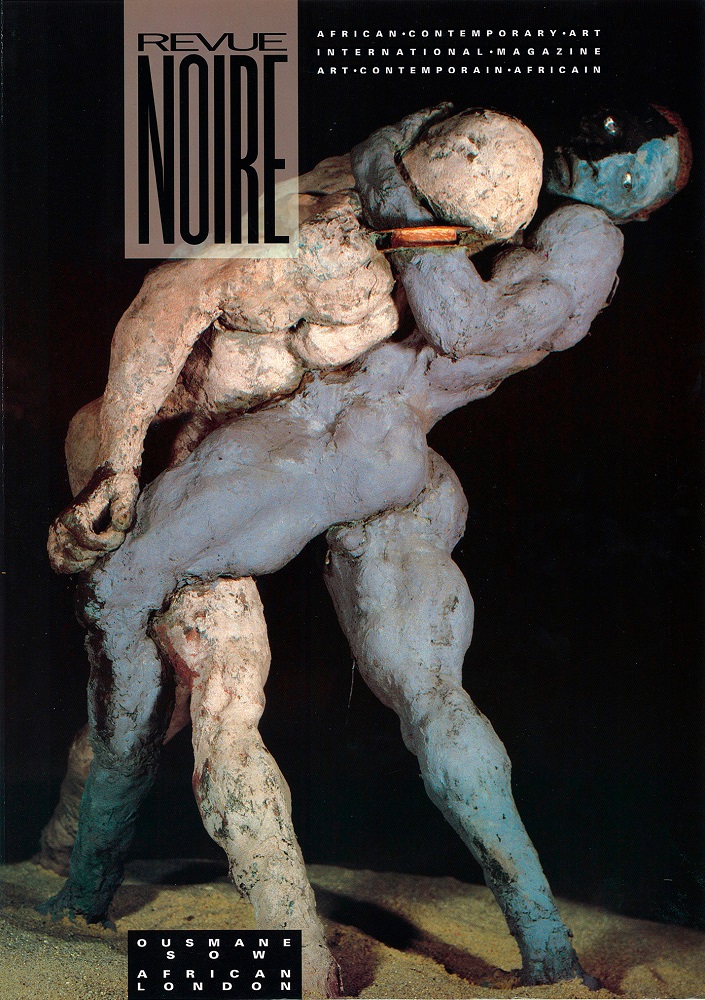
  • Iconic: Revue Noire constructed an avant-garde African consciousness
  • International/print: Roll with the Punches turns a popular sport into a movement for change
  • Iconic: USSR in Construction reconstructed experimentalism within the confines of dictatorship
  • International/print: The Washington Post Magazine appropriates from Russian art and design history to expose Trump’s compromised America

Find a cover we should know about? Tweet us at @Marklives and @shanenilfunct.
Pinterest icon Want to view all the covers at a glance? See our Pinterest board!


Print

Art Africa (South Africa), Issue 9, September 2017

Art Africa, Issue 9, September 2017

A one-of-a-kind publication, Art Africa magazine (previously Art South Africa) is a quarterly that never conforms and is always in support of art on the edge from across the continent. The current cover showcases recent work by South African conceptual artist, Robin Rhode (also the feature artist for this issue); he critically confronts issues on the cultural periphery in our country, risking life and limb daily by making his art within the bowels of the city of Johannesburg.

The cover image is a detail from a series titled “David”, one of Rhode’s most-recent projects focusing on aspects of colour theory and geometry. Following the work of Sol Lewitt (an important late-modernist and minimalist artist), Rhode’s stylistic approach here stands in contradiction to much of his earlier work but functions nonetheless within his established narrative, due to its rejection of literal interpretations of the outside world, rejecting representative forms that deliberately appropriate from political, economic, and social discourses, and favoring, rather, the construction of a fictional, quasi Afro-Modernist, world. Inspired by Lewitt’s instructional drawing process, Rhode and his crew produced work in a more-structured and -mechanical manner than in his older work. This was helpful when employing young men from the streets to make the art, empowering them and delivering the message, as the cover headline states, that “liberation is not deliverance”.


The Washington Post Magazine (US), 29 October 2017

Collage - The Washington Post Magazine 29 Oct 2017, Kasimir Malevich Supremus No 50 1915, El Lizzitsky About Two Squares Page 1922
The Washington Post Magazine 29 Oct 2017, Kasimir Malevich Supremus No 50 1915, and El Lizzitsky About Two Squares Page 1922

This issue of The Washington Post Magazine clearly appropriates from Russian art and design history to expose Donald Trump’s compromised America. The use of constructivist aesthetics, recalling the suprematist work of Kasimir Malevich and the El Lizzitsky’s legendary “Proun” works, is a subtle hint at Russian interference in American politics, particularly the lead-up to the election that resulted in Trump becoming the US president. The headline states “some assembly required”, also a throwback to constructivist worldviews, where industrial progress was a key concern in the production of Russian art and design. One key difference: America is arguably reversing progress, not generating it — a fragmented and fractured nation. There are no surprises as to why this cover is so cleverly composed; it was illustrated by Michael Bierut, a partner at Pentagram, co-founder of Design Observer, among a variety of other historically important contributions. Beirut is an institution in his own right, particularly within the global design community.


Roll with the Punches (Palestine), issue #1, 2017

Roll with the Punches, Issue 1, 2017

Conceptual in appearance, depicting the Palestinian flag across a triptych of skateboard decks, one would be forgiven for immediately assuming that Roll with the Punches is a publication about skateboarding. But it is, and it’s about skateboarding for good, and how the sport acts as an agent of change for the derelict communities of Palestine, one of the world’s longest-standing conflict zones. Staying true to its name, wheels rolling to the proverbial Israeli punches, the publication is printed in a limited edition of 500 copies. Edited and designed by skater, Tom Bird, this book details his work with SkatePal in the Occupied West Bank. SkatePal is a non-profit organisation that tries to enhance the lives of young people in Palestine through the sport of skateboarding. All money raised by this publication is donated to SkatePal so that it can work with the communities in oppressed areas in order to affect change. For more info on this project, go to rollwiththepunches.co.


Online

Magenta (global), October 2017

Magenta front page, November 2017

Magenta is an online magazine created by Huge, a digital and experience agency with offices across the globe, and curated by a talented editorial team comprising an array of creative types. Coverage of technology and design trends is commonplace in the media today, but Magenta changes focus, placing emphasis on stories about technology in the hands of real people and how design aids in changing the manner in which people are affected by it.

In partnership with Medium (accessing the channel’s readership), Magenta deals with the important relationship that people have with technology and design, and the role that this seemingly simple equation has to play in society today. This relationship is like the air we breathe; we cannot exist without technology, and the design that has gone into creating it. Many people are surprisingly ignorant of this, when it should be treated, as Magenta believes, “like it’s their job”. The result of this ignorance towards the importance of design and technology in society? We consume culture quicker than we can produce it, and it’s destructive.

Not enough brands get design, and understand the importance of design in the present, expanding technological age. Instead, brands latch onto important concepts turned trendy buzzwords, such as “design thinking”, “disruption”, and “convergence”, among a bunch of others. Often used superficially, or willy nilly, these ideas — once subversive notions, now common corporate jargon — become empty husks that gain momentum in the opposite direction to what design truly stands for. Design is not ‘human-centred’; it is innately human. We shouldn’t talk shallowly about such concepts simply because it’s in vogue and, as a result, profit may be generated from it, ‘adding value’. This attitude lacks critical thought and creative acumen, void of meaningful impact. We should think about design in every aspect of our lived lives, and turn the often-meaningless effect of superficial terminology, models, formulas, et al into lasting effects based upon a considered integration of technology and ‘thoughtfulness in design’. Magenta offers a sucker punch of pragmatism in this regard.


Iconic

Revue Noire (France), issue #1, 1991

Revue Noire, Issue 1, 1991

One on the earliest examples of its kind, first published in 1991, Revue Noire was an internationally distributed magazine that aimed to deliver quality commentary on all facets of contemporary African art, from painting and photography to dance and theatre. The magazine was bilingual — written in English and French — allowing for greater networking opportunities between artists from the continent and in the diaspora. In framing the various cultural and artistic fluctuations between African values and Western influences, the publication placed a lot of emphasis on overall design elements. Visuals were interspersed with insightful copy that contributed to the creation of an important discourse surrounding cultural identity on the continent, crafting truly ‘intercultural’ subject matter.

Revue Noire published 34 issues before rerouting the focus of the journal as a brand. By 2001, Editions Revue Noire elected to publish books, curate exhibitions and attempt to create an online presence rather than print magazines, and so an important chapter in the history and documentation of contemporary African art came to an end.


USSR in Construction (Russia), no. 2–3, February/March 1940

USSR in Construction, no 2-3 1940

Published over the course of eleven years, from 1930 to 1941, with a short-lived revival in 1949, USSR in Construction was a Soviet journal that, in a manner of speaking, was a silent reaction to the accepted cultural norm under Joseph Stalin known as “social realism”. Many artists turned to photomontage as a method of continuing their avant-garde tendencies as photography was an acceptable mode of expression within the confines of social realism, based on Stalin’s rejection of constructivism, which he viewed as a bourgeois style that defied the communist foundations of the Soviet Union.

As an undercover counter-current to socialist realism, each issue was an artwork, with larger-than-usual spreads, multi-page foldouts and other interactive elements that suggest a proto-experience design sensibility. For the most part, the design helm was taken by constructivists-turned ‘productivists’, El Lissitzky, and his wife, Sophie Lissitzky-Küppers. Other former constructivists, such as Alexander Rodchenko and his wife, Varvara Stepanova, also helped with layout and cover arrangements for a number of issues, making USSR in Construction a formidable creative force and historically significant publication.

Catering to an international audience, written in most major European languages, the magazine showcased the transformation of a technologically bankrupt country into a massively developed industrial powerhouse. The scope and scale of progress in Russia at the time was reflected primarily through photography in the magazine. Illustrated and designed by Lissitzky and Lissitzky-Küppers, the cover of no. 2-3 from March 1940 seems ironic in this context, given the austere circumstances at hand, as it depicts a Soviet soldier, in a passionate embrace, kissing a common Russian civilian. Not the kind of image that one would think Stalin would back to represent Soviet power. Despite its significance, December 1949 saw the final issue of the publication, succeeded by the far more conservative Soviet Union magazine in March 1950.


Shane de LangeShane de Lange (@shanenilfunct) is a designer, writer, and educator currently based in Cape Town, South Africa, working in the fields of communication design and digital media. He works from Gilgamesh, a small design studio, and is a senior lecturer in graphic design at Vega School in Cape Town. Connect on Pinterest and Instagram.

Cover Stories, formerly MagLove, is a regular slot deconstructing media cover design, both past and present.

— Sign up now for the MarkLives email newsletter every Monday and Thursday, now including headlines from the Ramify.biz company newsroom service!

SA TV Ratings: SABC 1 — primetime top 20 for Sep 2017

by MarkLives (@marklives) The hottest primetime television shows on SABC 1 in South Africa revealed: TV ratings for September 2017.

In 2016, the Broadcast Research Council of South Africa (BRCSA) changed its policy about giving away TAMS and now only monthly reports, highlighting the top 20 or 30 primetime shows on several popular channels, are available.

SABC 1 September 2017

BRCSA TV Ratings September 2017 primetime SABC 1Source: BRCSA September 2017

Broadcast Research Council of South Africa


The Broadcast Research Council of South Africa (the BRC) is a non-profit, industry body that was incorporated in 2015 to cater to the audience research needs of the radio and television industry in South Africa.

— Sign up now for the MarkLives email newsletter every Monday and Thursday, now including headlines from the Ramify.biz company newsroom service!

Activating brand love — emotions & experiential marketing

by Lauren Durant. Now, more than ever, marketers have to find ways of engaging with customers to build brand loyalty and avoid product switching. That said, if they have any hope of success, they need a retail marketing strategy that ignites the sales target and profits but, at the same time, increases brand loyalty, thereby creating lifelong brand advocates.

“Products are made in the factory, but brands are created in the mind.” —Walter Landor

We all buy brands and, to some extent, we define ourselves through our brand choices. From the clothes we wear to the cars we drive, the watch we choose, and where we live and socialise — the list goes on. Interestingly, up to 90% of all purchasing decisions* are made subconsciously, and the factors which influence purchase decisions are 80% emotional** and 20% intellectual***.

Clearly, we have deep connections with the brands we buy. We choose them not only for their intrinsic functional benefits but predominantly because we have an emotional relationship with them. It makes sense, then, that those brands and products that evoke our emotions are the most likely to succeed, and the earlier you make that connection the better. Once consumers are committed elsewhere, it’s that much harder to secure brand love in a world that’s all about likes.

Paying attention to emerging consumer trends and identifying relevant opportunities to move the revenue needle will help win the retail wars.

Emotions drive decisions

In my experience, customers will tell you they purchase rationally but all studies indicate that, even for B2B customers, it’s emotion that drives the final decision. Features and benefits justify decisions but the initial motivation is almost always emotional. If you want your customers to be attached to your brand, there needs to be strong emotional attachments that aren’t linked to price or convenience; there needs to a level of trust between consumer and brand. This comes from meaningful brand experiences that build connections and this is not something that can be achieved overnight. To quote Simon Sidek, well-known author, motivational speaker and marketing consultant “If you don’t understand people, you don’t understand business.” To add to this, understanding people is understanding their emotional drivers.

This is where experiential and activation — events that lead to deeper connections and create emotional stickiness to your brand — may add so much value.

Often linked to call-to-actions, they give consumers an opportunity to engage with brands through unexpected, authentic and seamless brand experiences. The best of these will be shareable, generating social chatter and digital noise. It’s hard to justify the cost per contact of a big or differentiated experience if you only focus on the people you connect with directly. This is why digital amplification is vital to magnifying the experience and, in so doing, reaching a broader audience. Social media and PR are ideally positioned to achieve this. More than just a blog or social mention, the campaign must include a creative angle that invites audience participation on digital platforms. Not just a one-way information push; it’s all about active brand engagement. A word of caution, though: be mindful of the prohibitive costs of data in South Africa, which may preclude participation of some audiences if not well thought-out. USSD and IVR may be used to work around this challenge. Ultimately, though, the campaign must solve a pain point for the consumer and, in some cases, the campaign must build awareness of this need, in the minds of the consumer.

Emotions enhance recall

A big part of activations and experiential success in building brand love is linked to the human brain retaining information better when there is an emotion associated with the experience. Emotion affects how the brain stores memory, so occasions that stimulate the senses with evocative imagery and emotions are retained and, if more senses are engaged in the experience, the emotional experience is elevated even further. A stronger emotional response equals a stronger brand connection.

This is not just conjecture. Emotion increases our ability to remember by affecting activity in particular areas of the brain involved in emotional processing, the amygdala and striatum. The same holds true for the hippocampus, the region of the brain involved in encoding new experiences.

Studies also show that emotion increases the strength of memories over time, a process called consolidation. It stands to reason, then, that brands that immerse consumers in positive, unique and emotional experiences will have more success when it comes to establishing long-term connections, recall and retention.

Engineering trust

Individuals expect brands to live up to their promises in every interaction. The benefit of brand activations is they contribute towards the creation of trust between the customer and the brand; trust is key to creating loyalty between consumers and brands. Once there is trust in place (while a challenge to maintain), companies may use this loyalty to create re-purchase behaviour, enabling profitable relationships between brands and stakeholders.

Measurable returns

Perhaps its greatest strength, ROI may be measured in multiple ways within the activation space. This return is usually linked to the brand goals, so the first and most-obvious step is knowing what you are measuring. Client/agency collaboration in the planning phase is, therefore, fundamental to putting ROI measures in place; it’s at this point that the business outcome driving the campaign should be defined. By translating objectives into analytics before the campaign even starts, this will ensure the analytics have context. For example, if it’s a new product with no ATL support, the activations agency needs to ensure high reach of engagements and trial. So the ROI would be measured in cost per engagement, or cost per sample. However, it’s critical to then measure sales within the activation catchment area to ensure that there is sustained interest from the audience.

Wrapping up

A sale is great for a short-term result, but brands need a strategy to build lasting relationships and that only comes with an emotional connection — one that builds brand love. Supporting profitable growth and maximising revenue should be the consequence of the approach adopted but, in the end, the marketplace is always the acid test. With all this said, though, there’s no doubt in my mind that the power of activations continues to generate better, deeper relationships between brands and consumers than any other communication tactic.

References

*Neuromarketing: Understanding the Subconscious Drivers: NeruoFocus, The Nielsen Company. Caroline Winnett, CM and Andrew Pohlmann, managing partner
**The Power Of “Emotional” Marketing. Jamie Anderson, Digitalist Magazine
***Fusionbranding: How to Forge Your Brand for the Future. Nick Wreden, page 117


Lauren DurantLauren Durant is an executive who’s been with Isilumko Activate since its inception in 1993 and has contributed significantly to the evolution of the business. She helps brands build emotional connections with their customers through experiences.

“Motive” is a by-invitation-only column on MarkLives.com. Contributors are picked by the editors but generally don’t form part of our regular columnist lineup, unless the topic is off-column.

— Sign up now for the MarkLives email newsletter every Monday and Thursday, now including headlines from the Ramify.biz company newsroom service!

Online CPD Courses Psychology Online CPD Courses Marketing analytics software Marketing analytics software for small business Business management software Business accounting software Gearbox repair company Makeup artist