Brand Politics: Remaining revolutionary — the challenges of leadership

by Alistair Mackay (@almackay) Post-colonial democracies in Africa have followed a similar pattern: the liberation movement ushers in independence, democracy or both. It then enjoys a golden age for a decade or two before things turn sour. Despite what fans say, no party will govern until Jesus comes back — unless he comes back fairly regularly or citizens have no say in the matter.

Ruling parties just don’t stay at the top of their game forever.

Steps To Goal Target by Master isolated images courtesy of freedigitalphotos.net
Courtesy of Master isolated images at freedigitalphotos.net

Some ruling parties come to undermine and subvert the democratic institutions they had helped to build in order to hang on to power, while others accept electoral defeat. How these ruling parties respond to their decline is one of the most important tests for a new democracy, and some political theorists believe you can’t consider democracy entrenched until there have been at least two peaceful, elected changes in the party that governs.

Leading private-sector brands are put to the same test: do they respond to declining relevance by reinventing themselves or do they fail?

According to KPMG, the average amount of time that a company spent in the S&P 500 in 1937 was 75 years. Today, it’s less than 15 years. The biggest, most successful companies and brands in the world today usually last less than 15 years at the top of their game before they are subsumed by a young upstart challenger, or simply forgotten by consumers whose tastes have moved on.

The burdens of incumbency

There are many reasons that leading brands lose their shine.

The first is that they can become complacent. They don’t have to work quite as hard as they did when they were fighting to get to the top. There is a certain ease that comes with having a strong brand. It buys you loyalty and time. Like party faithfuls in the early days of poor service delivery, customers will forgive certain things from brands that they love.

And if those brands come to take that support for granted, they take the foot off the gas, their culture shifts and they will even start to attract employees who are more interested in job security than innovation and disruptive ideas — the cadres of the brand world.

Market leaders become invested in the status quo in a market that is always changing — they have built an empire with their existing products, services, processes and brands, and that makes them more cautious of experimentation and change and risk. They become stale; they become insular. They think they have all the answers already.

Then the market changes and, by the time the incumbent notices, they are already irrelevant.

So what is to be done? Here, as always, there are a few lessons from the political world.

Rediscover your purpose

What evil are you liberating your customers from? The enduring brand power and citizen loyalty that liberation movements enjoy are a result of the grand battle they won for those citizens. They were the victors in a grand crusade against colonialism and oppression. It is rousing, life-and-death stuff. Citizens feel deep gratitude and emotional attachment because the purpose of those movements was so inspiring.

Those movements lose their way when their purpose is no longer so clear. Private-sector brands are no different: they only really matter to consumers when their purpose is meaningful and inspiring.

Don’t obsess over sales and profits — think about what kind of ding you want to make in the universe. It certainly seemed to work for Apple.

Disrupt yourself

Challenger brands are ungovernable. They disrupt the conventions that don’t work for them.

The EFF, for example, has completely changed the behaviour of Parliament — challenging the Speaker, ignoring requests to withdraw comments, chanting and wearing bright red overalls. It has worked to position the ANC as reactionary, conservative and oppressive.

Leading brands can stay relevant by disrupting themselves and always questioning whether their own conventions and practices actually serve the customer.

Virgin Active, for example, has stayed ahead of outdoor challengers such as CrossFit and British Military Fitness by taking itself outside, launching The Grid, outdoor classes and offering bicycles for use outside of their clubs.

Avoid the yes-men

The ANC is in trouble because it has a president who has surrounded himself with people who are too scared or unwilling to disagree with him. They protect him, rather than confronting the cold, hard truth, and it results in a growing disconnect between citizens and the party.

Big brands should avoid making the same mistake. Listen when market research tells you there’s something wrong, even if sales are still healthy. Listen to employees who have ideas for doing things differently.

And listen to people hating on your brand on social media — it’s a valuable source of ideas about things to change to stay relevant and useful to the customer.

Stay young

If the revolutionaries in your business age and their stories remain the only stories worth telling, you’re in trouble. Markets change, the goalposts of what’s culturally relevant keep shifting, and customers want to know what you’ve done for them lately.

Staying in touch with the zeitgeist is important not only for your advertising, but for your products and services, too.

You can see the big brands that have done this well — Nedbank, FNB and Allan Gray have all introduced youthfulness to their messaging and platforms, making their traditional, old-fashioned and complicated categories relevant to a new generation of consumers. Others that have remained proudly old-fashioned are struggling to survive.

The trick

Brands rise and fall faster than ever before. Consumer tastes move on, competition heats up and innovation comes from everywhere. When you’re at the height of your powers and a strong market leader, it can be difficult to appreciate how precarious that position really is.

The trick is to act like a challenger brand even when you aren’t one — to commit to a new liberation struggle for your customers and for the generations of new customers who are yet to come. Build a collaborative movement with them. And then keep fighting the good fight.


Alistair MackayAlistair Mackay (@almackay) is marketing manager and head of content at Yellowwood, (@askYellowwood) a leading marketing strategy and brand development consultancy. He has experience both as a brand strategist and as the digital media manager for the Democratic Alliance, and believes that innovative, insightful and generous marketing is both good for business and social change in South Africa. He contributes the monthly “Brand Politics” column, exploring lessons brands can learn and apply from politics, to MarkLives.

— MarkLives’ round-up of top ad and media industry news and opinion in your mailbox every Monday and Friday. Sign up here!

Thinking TV: What’s on offer over the festive season?

by Inge Hansen (@mecnotabene) With year-end fast approaching, advertisers are grasping at final opportunities to get their messages to consumers before the festive-season shopping has ended. This year, due to various factors, advertisers are up against more roadblocks than ever to reach viewers through TV and influence their purchasing decisions.

As retailers are stringing up their festive decorations and promoting specials earlier every year, you would be forgiven for thinking that Christmas is on our doorstop from the end of October. It does, however, bring into focus that leave needs to be applied for, holidays need to be booked and that some form of family entertainment may be required over the summer.

Kris Kringle Relaxing And Using Electronic Tablet by stockimages courtesy of freedigitalphotos.net
Image courtesy of stockimages at freedigitalphotos.net

TV no longer the first screen

And, as the first screen in many cases is no longer television, planners and buyers are having to work even harder in this increasingly fragmented environment to reach their audiences — and often on platforms where the opportunities for advertising have not yet been optimised. As we see increasing penetration onto these alternate platforms, it highlights the need for media owners to create viable and measurable opportunities to reach viewers as they consume content.

Within the upper-income consumer group, local cinemas are already enticing families with their new releases in December, such as the Penguins of Madagascar for the kids, and the final instalment of the Hobbit: Battle of the Five Armies, for the grown-ups. In the home environment, for those with premium DStv subscriptions and ADSL lines, it is possible to download or stream from a cache of 900 titles of series, movies or sports highlights via DStv Catch Up.

Also to be considered by the affluent consumer is the recently launched ‘TV Everywhere’ from DStv, which has stolen the thunder from competitors such as VIDI and Altech Node, providing subscribers with their first interconnected on-demand decoder. This is enabled by the subscriber purchasing a DStv WiFi Connector (R399 in retail stores), which uses the existing household broadband service to connect the DStv Explora to the internet.

Unmatched by competitors

This will allow the consumer access to a wide variety of exclusive and up-to-date content, unmatched by the competitors. The accompanying DStv Now App launches in December, making it possible for subscribers to set decoder recordings remotely via the app. Further functionality is that the subscriber will be able to download content or stream from several channels and view it on their smartphones or tablet.

These innovations will rapidly change how we consume TV content in a period where due, to warmer weather and later sunsets, our viewing patterns are already expected to be altered.

Right now, South Africa is experiencing an exciting period of innovation in terms of personal entertainment, and consumers are anxious to experience content in the way that counterparts in the US do.

Still a large role to play

However, due to the costs of these innovations ie data, installation costs etc, not all consumers are accessing the same platforms at the same pace and, as the majority of advertisers need to consider both the upper- and lower-market segments, traditional media such as TV still have a large role to play in our media landscape.

What with one-day passes to Ratanga Junction in Cape Town costing R172 per person and a family ticket to Gold Reef City in Joburg weighing in at R515 per family (two adults and two children), a ‘staycation’ starts to become appealing. Choosing this route will inevitably lead to increased couch time for the whole family, and with less stress on the wallet than a day out, an upgrade to DStv Premium for the month may be tempting.

For those consumers who are not in the position to afford a holiday, or another trip to the mall, free-to-air TV will be the solution to their entertainment fix.

Terrestrial TV rather light

Available schedules show that, for those wanting to relax after the inevitable day of overindulgence on 25 December, the festive fare on terrestrial TV is rather light. Although some locally produced shows may be showing Christmas specials, it appears that only e.tv is providing a variety of Christmas-themed programming, ie the ever-present Home Alone series.

Nevertheless, SABC2 does come through for those who have not made plans for 31 December with a New Year’s Eve special, which stands out from the other business-as-usual programming on offer. Other seasonal programming for this time of year includes the second test match between South Africa and the West Indies, set to take place 26–30 December and a certainty to log long viewing times.

While our top-rated shows, such as the eagerly awaited return of Generations, will continue to perform, it will be interesting to see if the expected viewership this festive season is attracted by the content on offer.


Sources:


Inge HansenFollowing two years at Media24 scrubbing for insights within the magazine division, Inge Hansen joined Nota Bene as an A&I analyst in March 2013. Working across multiple clients, including FMCG, alcohol and petroleum, she has the luxury of working with teams to develop robust insights that drive strategy while keeping abreast of media trends the world over. Inge loves having her pulse on the media landscape but far prefers raising her pulse mountain-biking on weekends. She contributes Thinking TV, a monthly analysis of South African TV viewership figures, to MarkLives. Follow @mecnotabene for regular media updates.

— MarkLives’ round-up of top ad and media industry news and opinion in your mailbox every Monday and Thursday. Sign up here!

Interview: New National Certificate of Advertising with Red & Yellow

by Herman Manson (@marklives) Advertising school Red & Yellow has launched the Red & Yellow Springboard Marketing Institute (RYSMI) in a bid to attract a more diverse skills pool for the advertising and marketing industries. The initiative offers students a National Certificate Of Advertising, accredited as a Level 5 qualification in the National Qualification Framework (NQF).

The institute hopes to address issues that currently turn youngsters away from a career in advertising and marketing, such as the affordability of further education (the course is funded via industry SETA), juggling work and learning and access to paid internships. The certificate entails six months of structured learning and six months of practical work experience at participating agencies and marketers.

MarkLives spoke with Sharon Warroll, who heads up the Springboard initiative at Red & Yellow, about the programme.

Sharon Worrall
Sharon Worrall

MarkLives logo Tell us about the major barriers of entry you have identified to youngsters entering the advertising and marketing industry and how are they being addressed by this initiative?
Sharon Warrol:
A barrier that we are seeing is that ad agencies are looking for graduates rather than candidates that are fresh out of school. In most cases, agencies tend to employ graduates as interns as they are not at all focused on the career paths of school leavers. The Red & Yellow Springboard Institute (RYSBI) is providing school leavers with a learning experience that fills the education divide that currently exists between school leavers and graduates.

Advertising is not seen as a common career choice within the broader community and we see students rather opting for careers in teaching, tourism, medical etc… which appear to be more tangible and easily understood among these communities. These types of careers also seem to be more familiar, as teachers, nurses and doctors form integral roles within the lifestyles of these communities. The roles of a marketing manager or advertising executive, however, are far less noticed and in most cases are not fully understood as viable career options.

MarkLives logo What are the criteria new students to your programme need to meet?
SW:
They will need to have matriculated with some form of further education or training in terms of a certified qualification or relevant work experience. Qualifying students are generally 20 years and older.

MarkLives logo How are you reaching potential students and how are you encouraging them to participate in this programme?
SW:
We use third party providers to prescreen unemployed graduate profiles. GAP is an online platform run by Fetula allowing graduates to post their CVs online through their dedicated graduate programme. This graduate programme is called Graduate Asset Programme (GAP) and is aimed at helping to solve South Africa’s youth unemployment crisis.

We have also used Dreamworker, an NGO focused on assisting the unemployed, where they screen the CVs of young people seeking employment.

After the prescreening process, selected individuals get invited to a panel interview, where they will receive a presentation introducing them to the industry, which is then followed by an Idols-type panel interview. The panel comprises HR, recruitment and agency professionals. After the panel interview, the students are expected to give a presentation to the panel. Following this phase, 49 students are selected to complete the first formal Certificate of Advertising learnership.

MarkLives logoHow is the programme being funded?
SW:
MICT Seta funds it.


MarkLives logo What are the skills students can expect to leave with at the end of the structured classroom learning part of their training?
SW:
Credited learners will be capable of:

  • Taking and constructing briefs,
  • Compiling a business and marketing plan
  • Creating and presenting a creative concept
  • Writing and disseminating a press release
  • Understanding integrated marketing communication
  • Constructing and planning business presentations
  • Planning and organising an event
  • Project management
  • Using basic computer programmes such as Word and Excel, as well as Google Analytics.

The students will also experience working in campaign groups ie groups of eight will be pulled together where each group will comprise a copy student, art direction student, strategic planner etc… Each group will then be tasked with running a campaign together.

MarkLives logo Who is participating in the practical on-the-job training part of this qualification?
SW:
 We have various lecturers, who are generally industry professionals, as well as individuals from some of our sponsoring companies who are taking on students as interns.

MarkLives logo How many students currently participate in this programme and what are the objectives in terms of numbers of young people you plan to send into the industry?
SW:
 We have 49 students currently on the programme. We are in the pilot phase of this initiative and will have a better idea of student numbers being integrated into the industry as we move along.

MarkLives logo There are several programmes running which attempts to address issues around transformation and socio-economic diversity in the ad industry. Do you believe there is a role for all of them and would it not make sense to collaborate on a broader level with those initiatives as well?
SW:
 Yes, absolutely. If there are other programmes out there, we would love to collaborate with them.

— MarkLives’ round-up of top ad and media industry news and opinion in your mailbox every Monday and Thursday. Sign up here!

MagLove: Beyoncé’s net effect

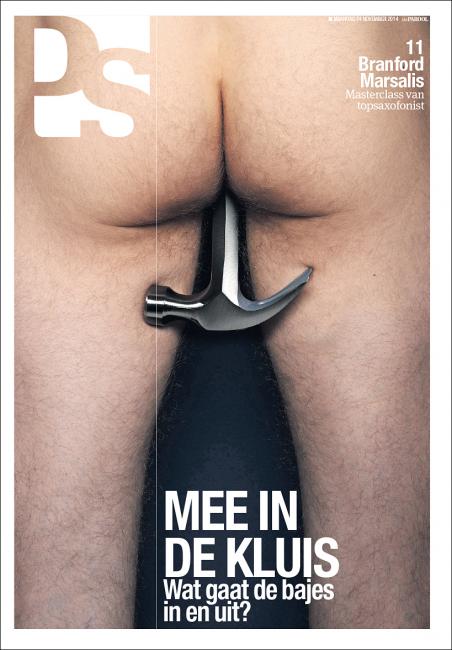
MediaSlut (@MediaSlut)’s choice of the best international magazine covers this week:

  • Interview (Germany)
  • The New Yorker
  • Parool, PS Section
  • Stylist (France)
  • Time Out London

INTERNATIONAL

Interview (Germany), December/January 2015

Interview (Germany), December/January 2015: BeyoncéBeyoncé fans will immediately *snap* the reference to the latest Interview cover — which is stunning — a reference to one of her outfits she wears on her latest “On the Run” tour with Jay Z.

The New Yorker (various)

The New Yorker, 8 December 2014If you’ve been keeping track of the unrest and protests happening in Ferguson in Missouri, you’ll agree with me that its 8 December 2014 cover perfectly captures the divide happening after the death of Michael Brown… Read more about this brilliant cover and the story behind it.

The New Yorker, 24 November 2014The second New Yorker cover I’ve included, is also very creative, showing different scenes from different eras (past and future), rolling out of a picture that depicts the present…

Parool, PS Section

Parool, PS SectionI love shock-value! But I must say that even this cover of PS (a section of Netherlands newspaper, Parool) has taken shock-value to a whole new depth…! The cover story looks at “what goes in and out of jails”…

Stylist (France), 20 November 2014

Stylist (France), 20 November 2014This cover immediately reminded me of my dad’s collection of hundreds of old little books, where the story was told in pictures and speech bubbles, such as Ruiter in Swart, Die Wit Tier and Die Swart Luiperd — even down to the detail of the old, torn spine and damaged edges…

This French issue of Stylist looks at which of today’s “cult fiction” items (iPads, iPhones etc) will stand the test of time… A great cover execution!

Time Out London, 26 November 2014

Time Out London, 26 November 2014I’m seeing more and more of these covers, where elements either play with the reader’s eyes or brain and pull the reader in. When it’s just a gimmick, it doesn’t always work — but when it fits in perfectly into the editorial and the overall issue, it’s brilliant!


Find a cover we should know about? Tweet us at @Marklives and @MediaSlut.
Want to view all the covers at a glance?
See our MagLove Pinboard!


MediaSlutMagLove by @MediaSlut is a regular slot featuring the best local and international magazine covers every week, recognising well thought-out, powerful and interesting (and hopefully all three-in-one) covers and celebrating the mix of pragmatism, creativity and personal taste that created each of them. The (for now anonymous) blogger behind MediaSlut knows way too much for his own good about media in South Africa, magazines in particular. His mission is to show when SA magazines fail but, most importantly, also when they succeed. If you’re looking for a library about SA magazines and news, this is your one-stop pitstop.

— MarkLives’ round-up of top ad and media industry news and opinion in your mailbox every Monday and Thursday. Sign up here!

Heroes & Zeros: Khaliques & stilted conversational radio ads — best & worst of the week

Every week, The Ad Feature team on 702 takes you through the highs and lows of advertising in South Africa. This week, Andy Rice (@ricecommaandy) and Jenny Crwys-Williams (@jcwLIFE) take a jab at a specific genre of radio station advertising, eg Pick n Pay’s Brand Match radio ad,  and give a big-up to a fashion brand that started at the bottom — Khaliques.

Find out why these feature in this week’s Heroes & Zeros by watching the webisode below:


For a fresh look at the world of advertising, Jenny Crwys-Williams of talk radio station 702 (@Radio702) chats to advertising critic Andy Rice on The Ad Feature, every Wednesday 2.30pm — 3pm. The filmed Heroes & Zeroes will appear on MarkLives every Friday as a webisode.

— MarkLives’ round-up of top ad and media industry news and opinion in your mailbox every Monday and Thursday. Sign up here!

Media Report: Global media buying trends

a The Media Report 2014 feature by Oresti Patricios (@orestaki) Imagine being able to buy media at a click of a button — the same way you’d buy some airtime online or be able to purchase an airline ticket. The news is that you can now do this, and it’s the hottest media buying trend across the globe.

Other big trends are the media buying war between television and the social media giants, and digital’s dark night of the soul. Then there’s the problem of the erosion of trust between brand owners and media buying agencies. Let’s go through the world’s biggest media buying trends, one by one.

media report: media trends graphic

  1. Media buying + technology + automation = programmatic buying

The biggest buzzwords across the globe – and the hottest media buying trend – is of course what’s called programmatic media buying. This is the buying and selling of media automatically, with real time bidding. Think of it as media buying meets eBay. Programmatic buying is currently limited to digital media buying, and it enables advertising to be bought in real time, in the same way that the disintermediation of the travel industry enabled hotel rooms or airline tickets to be bought directly, immediately and automatically.

Because the ‘middle man’ has been cut out of the equation and the transaction is done from machine to machine, it means the buying is more efficient and advertising costs have been reduced. The benefit of programmatic media buying is that it enables extreme targeting, and that advertising agencies can focus on media creative instead of media buying. The automation also means the opportunity for fraud or error is reduced.

  1. The big money’s still in TV. But Facebook, Google & Twitter want a piece of that pie.

Television is still enjoying the largest share of media investment. PriceWaterhouseCoopers’ Global Entertainment and Media Outlook for 2014 to 2018 shows that: “Despite the growth of digital media, TV advertising remains the place to be.” The PwC report states: “Global TV advertising revenue is successfully responding to the rise of newer forms of digital media. Global TV advertising revenue will grow at a CAGR of 5.5% over the next five years, confirming TV as the ‘place to be’ for advertisers looking to reach big audiences.”

But Facebook, Google and Twitter are eyeing those massive television advertising revenues with some degree of envy – they want in. All of these massive social media monoliths have established themselves in the world of advertising, and are looking to start doing deals that break into the hundreds of millions of dollars. YouTube recently turned to Nielsen for help with audience measurement – Nielsen, of course, is the self-same research company that measures US TV audiences.

Business Insider reports that “Facebook has gone to war against TV”. The superpower of a social network that Mark Zuckerberg built claims it has better audience and better measurement than US TV. Facebook is “hoping to eventually transfer the hundreds of millions of dollars currently being wasted on non-measurable TV commercials and funnel them into Facebook ads, where marketers can see instantly how well they perform,” Business Insider reports.

  1. Internet advertising faces the long, dark night of the soul

Digital marketing has always been the young upstart in the media mix, but of late there’s been a bit of a reboot in the way media buyers and brands are thinking about the medium. This thinking is summed up in a seminal article by the senior editor of The Atlantic, Derek Thompson. Entitled “A Dangerous Question: Does Internet Advertising Work at All?” the article states that the technology that underpinned the internet was supposed to tell brand owners and media publishers which ads work and which ads don’t. “But instead it’s flooded consumers’ brains with reviews, comments, and other digital data that has diluted the power of advertising altogether,” Thompson claims. What comes next is an examination of the efficacy of digital data, plus greater interrogation about how digital works with traditional media. Now that’s where the magic really lives.

  1. Content marketing fuels media buying.

Content remains king for brands that are generating Instagram adverts, Tweets, Facebook posts, YouTube video adverts as well as blogs, email newsletters and more. But the days of content being a novelty are long, long gone. The tsunami of content being created means that it is very easy for brand content (regardless of how good it is) to get lost. That’s why media buying now plays a strong role in content marketing because brands have realised that it is one thing to create a video, but getting people to watch it online is another thing all together.

  1. Mobile is the alpha and omega of media buying

Television might be winning the lion’s share of the marketing dollar, but when it comes to ubiquity nothing wins like mobile. Cellular phones are everywhere, and everyone has one. The reach and penetration of mobile phones make it the most pervasive marketing platform in the world, which is why marketers will have to take a mobile-first approach to marketing if they want to incorporate this mass medium into their mix.

  1. Transparency the biggest media agency concern for brands

The relationship between brands and media buyers is being bedevilled by a lack of trust. A survey by the US Association of National Advertisers and Forrester Research showed that nearly half of the advertisers surveyed in a study cited concerns with the level of transparency between them and their media buying agency. More so, 42% of advertisers polled in the research report called The ANA/Forrester Survey of the Evolution of the Media Buying Industry, said these trust-related concerns were on the rise.

The research showed that the biggest problems that advertisers had with media buying agencies was served versus viewable impressions for digital media. Brands also complained about digital ad placement including frequency caps, inappropriate content, share of voice, above-the-fold placement of adverts. The other issue that troubled advertisers was the lack of visibility into data used to define audience targeting.


the media report: independence graphicOresti Patricios (@orestaki) is the CEO of Ornico, a Brand Intelligence® firm that focuses on media, reputation and brand research.

This feature first ran in The Media Report 2014, which is published by Ornico with MarkLives.com as its official media partner. Read or download the full magazine via Issuu.

Visuals used are licensed through Creative Commons. Attribution and gratitude go to: Reporters Without Borders and the Give Dictators The Finger campaign; r2hox, who documents urban and street art; Rebel Mouse Digital artist, Surian Soosay; Khalid Albaih, founder of Freestock.ca; Nicolas Raymond, print buyer, and photographer, Karen Roe; photographer SandisterTei; and author, scientist and occasional photographer, Duncan Hull.

— MarkLives’ round-up of top ad and media industry news and opinion in your mailbox every Monday and Thursday . Sign up here!

#Top40TVratings: 17–23 November 2014

by SAARF & MarkLives (@marklives) See who made it to the top of our National and DStv charts for the week of 17–23 November 2014! A collaboration between the South African Audience Research Foundation (SAARF) and MarkLives, this #Top40TVratings column is a weekly roundup of SA’s TV audience viewership.

Satellite dishWe reveal the best-watched shows of the week before (in this case, 17–23 November 2014), where they ran and how many South Africans tuned in to watch.

We offer two tables:

  • The first covers all households — free-to-air viewing (the various SABC channels and e.tv), as well as the DStv platform.
  • The second charts the best-watched shows on the DStv network of channels only.

SAARF/MarkLives #Top40TVratings Charts: 17–23 November 2014

National

Market Target Activity
National Total Indv (incl guests) Live + VOSDAL
Counter Description (grouped) Channel Level 1 Level 2\variable (r) AMR % AMR SHR %
1 SKEEM SAAM SABC 1 Drama Drama 16.4 7 050 177 56.32%
2 KOWETHU SABC 1 Drama Drama 14.7 6 300 097 49.03%
3 SOUL CITY SABC 1 Drama Drama 14.1 6 044 652 46.99%
4 MUVHANGO SABC 2 Drama Drama 13.7 5 871 964 48.75%
5 ORANGE AFRICA CUP OF NATIONS QUALIFIER:NIGERIA VS SOUTH AFRICA SABC 1 Sport Football (soccer) 12.9 5 528 359 41.66%
6 SHREDS AND DREAMS SABC 1 Drama Drama 10.0 4 293 407 38.13%
7 MY PERFECT FAMILY SABC 1 Sitcom Sitcom 9.9 4 265 779 32.40%
8 ZAZIWA SABC 1 Variety Variety 9.9 4 244 851 32.72%
9 WHEN WE WERE BLACK 2 SABC 1 Drama Drama 9.9 4 239 832 32.89%
10 SELIMATHUNZI SABC 1 Variety Variety 9.0 3 865 268 29.92%
11 POWERBALL SABC 2 Variety Variety 8.8 3 790 864 37.30%
12 SCANDAL e.tv Drama Drama 8.2 3 522 241 28.08%
13 CROWN GOSPEL MUSIC AWARDS 2014 SABC 1 Music Music 8.1 3 480 924 31.87%
14 XHOSA NEWS SABC 1 News News 7.8 3 342 721 31.34%
15 MUTUAL FRIENDS SABC 1 Drama Drama 7.2 3 105 980 34.49%
16 THE X FACTOR SOUTH AFRICA SABC 1 Reality Reality 7.1 3 040 272 34.39%
17 SPEAK OUT SABC 2 Actuality Actuality 7.0 3 006 326 31.67%
18 DIE ANOTHER DAY (MOV) e.tv Movies Drama 6.8 2 931 006 29.59%
19 ABSA PREMIERSHIP KAIZER CHIEFS VS MAMELODI SUNDOWNS SABC 1 Sport Football (soccer) 6.7 2 893 978 37.71%
20 1’S AND 2’S SHOW SABC 1 Music Music 6.4 2 760 534 25.94%
21 ZULU NEWS SABC 1 News News 6.4 2 746 790 23.86%
22 SKEEM SAAM -R SABC 1 Drama Drama 6.2 2 655 655 53.62%
23 ROOTS SABC 1 Music Music 5.9 2 527 678 31.25%
24 RHYTHM CITY e.tv Drama Drama 5.7 2 439 210 24.51%
25 EMZINI WEZINSIZWA -R SABC 1 Sitcom Sitcom 5.6 2 409 195 48.40%
26 WWE WRESTLING RAW e.tv Sport Wrestling 5.6 2 395 768 26.84%
27 ALIENS IN THE ATTIC e.tv Movies Sci-fi 5.6 2 390 197 22.45%
28 MUVHANGO -R SABC 1 Drama Drama 5.6 2 381 093 48.42%
29 SKWIZAS -R SABC 2 Sitcom Sitcom 5.3 2 272 465 26.36%
30 ISIDINGO:THE NEED SABC 3 Soap opera Local 5.1 2 200 493 19.16%
31 MOHLOLOHADI 2 SABC 2 Drama Drama 5.0 2 133 003 23.81%
32 SUNDAY LIVE SABC 1 Actuality Actuality 5.0 2 128 335 20.07%
33 SKWIZAS SABC 2 Sitcom Sitcom 4.9 2 115 309 18.32%
34 CUTTING EDGE SABC 1 Actuality Actuality 4.9 2 113 435 22.32%
35 7DE LAAN SABC 2 Soap opera Local 4.9 2 092 841 20.98%
36 CUTTING EDGE -R SABC 1 Actuality Actuality 4.7 2 019 098 41.30%
37 ABSA PREMIERSHIP BIDVEST WITS VS FREE STATE STARS SABC 1 Sport Football (soccer) 4.7 2 018 325 22.22%
38 MUVHANGO -R SABC 2 Drama Drama 4.6 1 980 203 31.72%
39 THE BOLD AND THE BEAUTIFUL SABC 3 Soap opera International 4.6 1 954 937 23.76%
40 THE LINK (MAGA) SABC 1 Magazine Magazine 4.5 1 939 682 22.07%

DStv

Market Target Activity
DStv Total Indv (incl guests) Live + VOSDAL
Counter Description (grouped) Channel Level 1 Level 2\variable (r) AMR % AMR SHR %
1 SKEEM SAAM SABC 1 Drama Drama 10.2 1 375 071 33.65%
2 MUVHANGO SABC 2 Drama Drama 9.7 1 317 069 33.83%
3 ORANGE AFRICA CUP OF NATIONS QUALIFIER:NIGERIA VS SOUTH AFRICA SABC 1 Sport Football (soccer) 6.0 814 621 19.39%
4 ISIBAYA Mzansi Magic Variety Variety 5.9 797 755 19.40%
5 OUR PERFECT WEDDING (MAG) Mzansi Magic Magazine Magazine 5.7 772 689 19.63%
6 ZAZIWA SABC 1 Variety Variety 5.7 766 703 17.96%
7 POWERBALL SABC 2 Variety Variety 5.6 760 771 22.05%
8 SOUL CITY SABC 1 Drama Drama 5.3 719 406 17.23%
9 MY PERFECT FAMILY SABC 1 Sitcom Sitcom 5.0 674 114 15.38%
10 SPEAK OUT SABC 2 Actuality Actuality 4.9 655 818 20.77%
11 SCANDAL e.tv Drama Drama 4.6 627 524 15.31%
12 SELIMATHUNZI SABC 1 Variety Variety 4.6 626 955 15.20%
13 KOWETHU SABC 1 Drama Drama 4.4 592 734 14.24%
14 7DE LAAN SABC 2 Soap opera Local 3.9 529 665 15.07%
15 SKWIZAS -R SABC 2 Sitcom Sitcom 3.8 519 661 17.12%
16 INTERNATIONAL RUGBY:ITALY VS SOUTH AFRICA SuperSport 1 Sport Rugby (all) 3.7 503 843 16.14%
17 RHYTHM CITY e.tv Drama Drama 3.7 502 617 14.32%
18 SHREDS AND DREAMS SABC 1 Drama Drama 3.6 492 690 13.29%
19 ZULU NEWS SABC 1 News News 3.5 473 316 12.54%
20 WHEN WE WERE BLACK 2 SABC 1 Drama Drama 3.5 471 545 11.18%
21 XHOSA NEWS SABC 1 News News 3.4 459 775 12.06%
22 CROWN GOSPEL MUSIC AWARDS 2014 SABC 1 Music Music 3.3 451 760 12.31%
23 1’S AND 2’S SHOW SABC 1 Music Music 3.1 420 821 12.05%
24 SKEEM SAAM -R SABC 1 Drama Drama 2.9 397 930 24.25%
25 MOHLOLOHADI 2 SABC 2 Drama Drama 2.9 392 710 12.65%
26 ABSA PREMIERSHIP KAIZER CHIEFS VS MAMELODI SUNDOWNS SABC 1 Sport Football (soccer) 2.9 391 938 13.06%
27 THE X FACTOR SOUTH AFRICA SABC 1 Reality Reality 2.7 370 391 10.77%
28 ISIDINGO:THE NEED SABC 3 Soap opera Local 2.7 368 225 9.57%
29 BARCLAYS PREMIER LEAGUE ARSENAL VS MANCHESTER UNITED SuperSport 3 Sport Football (soccer) 2.7 358 309 9.32%
30 ALIENS IN THE ATTIC e.tv Movies Sci-fi 2.6 353 322 9.10%
31 BOER SOEK N VROU kykNET Reality Reality 2.6 349 206 8.23%
32 MUVHANGO -R SABC 1 Drama Drama 2.5 341 804 20.65%
33 MUTUAL FRIENDS SABC 1 Drama Drama 2.5 340 186 11.64%
34 NEWS e.tv News News 2.5 337 499 8.90%
35 DIE ANOTHER DAY (MOV) e.tv Movies Drama 2.5 335 585 10.12%
36 IDOLS SA Mzansi Magic Reality Reality 2.5 333 993 9.75%
37 THE BOLD AND THE BEAUTIFUL SABC 3 Soap opera International 2.5 331 390 10.73%
38 LOTTO DRAW LIVE e.tv Competition Competition 2.4 321 669 9.53%
39 NUUS SABC 2 News News 2.2 301 816 7.95%
40 WWE WRESTLING RAW e.tv Sport Wrestling 2.2 293 279 8.63%

How to read the tables

AMR% refers to the number of people in a target market who were watching an event ie programme, expressed as a percentage of the population for that demographic: “On average, 16.3% of adults aged 15+ who watched TV from 28 Jan-3 Feb 2014 watched Society on SABC 1”.

AMR is the number of people in a target market watching a specific event ie programme per minute, expressed in absolute figures: “On average, 1, 541, 066 adults aged 15+ who watched TV from from28 Jan-3 Feb 2014 watched Society on SABC 1”.

Share % (SHR %) is the share or proportion of the available audience (people watching TV at that time) that a specific channel/programme has achieved at that time: “Society achieved a share % of 52.59% from 28 Jan- 3 Feb 2014 on SABC 1″.

saarf 150SAARF is the name by which the South African Audience Research Foundation is familiarly known. SAARF’s main objective is to direct and publish media audience and product/brand research for the benefit of its stake-holders, thereby providing data for target marketing and a common currency for the buying and selling of media space and time. SAARF has thus the responsibility to measure the audiences of all traditional media such as newspapers, magazines, radio, television, cinema and out of home media.

— MarkLives’ round-up of top ad and media industry news and opinion in your mailbox every Monday and Thursday. Sign up here!

Beyond Borders: Retailers’ reality — the need to move north

by Craig Page-Lee (@cpl_ignite) It was with much anticipation that I recently boarded my flight to Dubai, neither because it was a cheap alternative to some global destination — as is the frequent offer by Emirates Airlines — nor because I was wanting to indulge in a shopping spree there (the value of the ZAR against other leading currencies being the determining factor here).

Irrespectively, I had many expectations as there’s been a lot published about the magnificence of the entire Emirates Airline traveller experience, from the comfort of the plane itself to the great service and on-board experience.

3d Earth Globe And Colourful Arrows courtesy of cooldesign at FreeDigitalPhotos.net
Courtesy of cooldesign at freedigitalphotos.net

Not the case

Sadly, this wasn’t the case on this particular trip, especially as there was no ‘goodie bag’ containing the obligatory fold-up toothbrush and minute tube of toothpaste – everyday items that are part of our lives and that I’ve received, and used, on just about every other long-haul international flight I’ve ever been on.

This made me think about where I would’ve gone at my end destination to buy said items, had I actually forgotten to pack them into my travel bag, or forgotten my wet-pack at home in its entirety.

We all have a reliance upon, and a relationship with, grocery retail brands in South Africa, and I have become curious as to where else on the continent these various organisations have migrated and “set up shop”.

Interesting research results

My readings into this topic have yielded interesting results, making me realise that, without too much effort, I will soon find a branch of Shoprite (OK Franchise Division — OKFD), Pick n Pay, Truworths, Woolworths, Pep, Game and Mr Price somewhere else in Africa to serve my needs.

As noted in my previous columns, the sub-Saharan African region is where many South African companies have already expanded into, or are in the process of doing so, in the quest for long-term growth prospects as the SA economy continues to contract at a rapid rate and the market remains stagnant.

Political and economic challenges will remain embedded as part of our daily lives in SA, so to achieve continued shareholder return, one has to look north of the borders. It is, however, not an easy journey, for there are many technical, legal and operational challenges to overcome and there are highly competitive markets which, to a large degree, are still defined as “informal”.

Traditional, ‘informal’ retail options still dominate the landscape, even among the growing middle class. About 90 percent of commerce in Africa occurs at these informal retailers, including small independent stores, kiosks, and non-organized open-air markets. Formal retail—such as malls, shopping centers, and other defined retail spaces—remains in the nascent stages in most Sub-Saharan Africa countries, limited primarily to a handful of urban areas. However, the low rates of formal retail coupled with increasing urbanization and the relative stability of many African economies demonstrates massive room for growth. For example, Nigeria, with its formidable and growing middle class, had only two shopping malls in 2012, compared to more than 200 in South Africa. As a result, domestic, regional, and international retailers are taking notice and increasing investment.” (Reference: AT Kearney — The 2014 African Retail Development Index™ Seizing Africa’s Retail Opportunities.)

Shoprite in Africa

SA retailers have achieved some great success on the continent and, most interesting to note, is that it’s Shoprite that’s had interest the longest, out of all the retailers mentioned, having expanded into 17 sub-Saharan countries as early as 1995, with over 169 stores and with plans to open a further 30 stores by June 2015. Surely this has made Shoprite SA’s best and most-experienced retailer in Africa?

Mr. Price, which targets the low- to mid-market consumer, has expanded into Ghana in West Africa; Pep Stores, which targets the low-end clothing market, has expanded into Nigeria; Spar has successfully expanded into a number of markets, including Nigeria; and Truworths, TFG, Shoprite, Game and Mr Price all have a presence in Ghana. Pick n Pay will also expand into Ghana, too, in 2015. Meanwhile, Woolworth has pulled out of Nigeria because its “mix” didn’t really work.

I do wonder if we will see international retailers such as Gap, Zara and Topshop use their SA establishments to springboard further into the continent, if at all — maybe there are a few good learnings from Woolworths in this regard.

Of interest, too, is that a great deal of the expansion across Africa has only been possible through the establishment of franchise agreements, as language (particularly with English-speaking countries trying to do business in francophone Africa), legal issues and local regulation regarding foreign ownership are stringent and not sympathetic to foreign companies, and operational and set-up costs are prohibitively expensive. That said, certain joint-venture structures have also been established with “in country” part-ownership.

Important to reiterate

Also important to reiterate is that Africa is a highly complex and competitive environment, and that not all “paths to purchase” lead to the till point for SA retailers. As much as Walmart’s acquisition of South African grocery chain Massmart (Walmart — the world’s number one retailer acquired 51% of Massmart for about $2.4 billion) presented the former with an opportunity to roll-out onto the continent, neither Massmart nor Shoprite have managed to develop a presence in French-speaking West Africa — a key market on the continent.

Carrefour, the world’s no.2 retailer — which operates a similar mix of store formats to that of Shoprite Holdings Ltd, with a mix of hypermarkets, supermarkets and convenience stores — has indicated that it will enter the West and Central African countries of Côte d’Ivoire, Senegal, Ghana, Nigeria, Cameroon, Congo, Gabon and the DRC.

This may not be a threat at this stage, with SA retailers not operating in French-speaking West Africa — as noted above — but may pose a huge threat to the broader region once Carrefour has laid a strong foundation in the region and begins expanding into other non-French speaking countries.

Closer to home, some Kenyan supermarket chains, including Nakumatt and Uchumi, have also expanded outside of their home market and could well be competing with retailers such as Walmart, Shoprite, PnP and Spar in a short space of time.

Window has closed

The window of opportunity for SA retailers has closed, and the race for consumer share-of-mind and spend commitment at the till point continues at an increased pace.

While I now do know that I should be able to find a branch or store of my favourite SA retailer elsewhere on the continent, it’s important to note that it’s not a one-size-fits-all approach to retail expansion. Shopping models in SA cannot be literally transferred to other countries without an in-depth understanding of regulatory controls within that market, challenges associated with the supply-and-demand side of the respective retail category in question, consumer segments and needs states, available communications channels, and the media-owner structures that are in place.

SA retailers which align with the right media and advertising agency groups operating elsewhere in Africa will also go a long way to ensure access to meaningful and relevant insights, and for successful campaign rollouts of expanding SA brands.

Are the agency groups’ Pan-African structures and offerings well-developed enough to address the highly differentiated communication needs for retailers in Africa, or are they also still at an “informal” level — as with the majority of retail operations on the continent — operating out of silos and jostling for positions of relevance?

Perhaps there’s an opportunity

In closing, and going back to my opening paragraph, maybe there’s an opportunity for Shoprite or PnP to develop cost-effective ‘goodie bags’ for economy-class passengers on the airline in question…


Craig Page-LeeCraig Page-Lee (@cpl_ignite) is the group managing director of Posterscope South Africa. He has over 21 years of working experience across the disciplines of architecture and retail design/brand communications and marketing management/advertising and media, across 11 pan-European and six pan-African regions. Craig’s monthly column on MarkLives, “Beyond Borders”, focuses on doing business in various African markets. Don’t forget to tune into his #eBizRetail slot on www.ebizradio.com.

— MarkLives’ round-up of top ad and media industry news and opinion in your mailbox every Monday and Thursday. Sign up here!

Shelf Life: Capitalising on geographic protection for Rooibos

Louise Marsland (@Louise_Marsland)’s weekly pick of recent product, packaging and design launches:

  • Robertsons adds fizz to a Sauvignon Blanc launch
  • Webtickets and Pick n Pay partner
  • Russian Bear’s new festive season launch, and
  • Rooibos capitalises on geographic protection

Robertson sparkles for summer

Robertson Winery Lightly Sparkling Sauvignon BlancA new lightly sparkling Sauvignon Blanc was launched this week by the Robertson Winery, just in time for the holidays and summer evenings. It marks a “new style of wine” by Robertson, which combines a light white wine with a slight fizz.

“It is a Lightly Sparkling Wine, produced from top quality Sauvignon Blanc grapes with an added dazzle of tiny bubbles to delight the senses on a hot summer’s day…” goes the PR spiel.

The bottle itself is unusual, with a turquoise hue to the glass and a bright turquoise cap — probably to summon up associations with the sea. Shaped like a ‘skittle’, it is very pretty and should stand out on shelf.

Robertson describes its new brand extension as imbued with tropical fruit flavours and a lively “dash” of fizz. It will retail nationwide at all retailers and liquor outlets for around R50.

Smart innovation

Webtickets PnP book online pay in storePick n Pay and Webtickets have just released the signage for their new partnership, announced this month, to provide integrated ticketing solutions to customers. Customers are now able to order tickets for any Webtickets event online or via its mobile device — and pay for them in store at any Pick n Pay nationwide.

This added flexibility means customers will be able to pay for and collect tickets to events and shows 24 hours a day through Pick n Pay Express Stores — and they do not need to have a credit card or even a bank account to do so. This should open the service up to millions of South Africans who do not have access to credit facilities or online banking.

The co-founder of Webtickets, Christy Turner, says the company has been exploring how to augment its audience reach through retail partnerships.

“One of the most exciting innovations is the ability for Webtickets and Pick n Pay customers to load tickets directly onto their smart shopper cards, which can then be scanned to gain access at the venue. Going forward, customers will also be able to redeem smart shopper points for tickets, which is another excellent benefit for shoppers. The turnaround time to get this project into pilot phase has been phenomenal,” Turner explains.

Deputy CEO of Pick n Pay, Richard van Rensburg, says that, in the near future, customers will also be able to book and pay for tickets at the new PinP Money Counters in select stores. The first Money Counter went live at the Brackenfell PnP store in October, and two additional Money counters have launched at stores in Cavendish Square and the V&A Waterfront this month, offering the same functionality.

Webtickets’ book-online-pay-in-store went live this month, and is available at any of almost 800 PnP stores countrywide.

New vodka batch

Russian Bear Single Batch Grain VodkaRussian Bear has launched a new grain-based variant, called Single Batch, which is now available in stores in anticipation of the approaching festive season. Russian Bear Single Batch Grain Vodka is produced in small batches of 1500 cases, and follows in the distillation footsteps of other premium vodka brands within the Edward Snell stable.

Within the single-batch process and through the use of grain as an input material lies a craft element that is said to result in a smooth taste, suggestive of a superior vodka.

Packaged in a stylish gift bag, and boasting a soft, floral nuance on the nose, as well as being smoother on the palate due to the grain distillation, the limited-edition Single Batch is aimed at holiday shoppers armed with Christmas gift lists.

“Like Russian Bear Original, Russian Bear Single Batch Grain Vodka is triple-distilled and then charcoal-filtered to remove 100% impurities, which consequently offers the consumer remarkably smooth vodka,” comments Schalk van Wyk, Edward Snell & Co marketing manager.

Rooibos industry mobilises

Rooibos Quality Seal logoThe Rooibos industry has launched a new website, www.rooibosltd.co.za, to provide a central point for its various stakeholders and for news about the industry, following upon the industry recently being recognised and shielded with ‘Geographical Indication’ status. This label is meant to protect the name Rooibos, and allow it to capitalise and build upon its geographical origin and global reputation.

Rooibos (and other well-known products such as Gorgonzola, Camembert and Champagne) can only be labelled as such if they come from the designated region. The new status for our beloved tea brand is meant to ensure that there are guidelines and control over production and quality.

Rooibos Ltd, which has been supplying the tea globally for 60 years, has launched this aggregate site for all information about Rooibos Ltd, and the industry and the origins of our indigenous tea brand.

“The protection granted by the economic partnership agreement between southern African nations and the European Union (EU) to the term ‘Rooibos’, has proved a daunting task over the years and a topical issue,” reports Gerda de Wet, Rooibos Ltd’s communication manager. “Two decades ago, a company in the USA trademarked the word Rooibos, forcing the Rooibos industry to prove that the commodity’s name actually belonged to South Africa.”

The Rooibos plant Aspalathus linearis grows only in the Cederberg region of the Western Cape. It was Benjamin Ginsberg, a pioneering Russian immigrant, who first realised the marketing potential of Rooibos back in 1904.


Shelf Life is a weekly column by Louise Marsland. Tweet new product, packaging and design launches to @louise_marsland Louise Marslandor email her at louise.marsland at gmail.com. Want to sponsor Shelf Life? Contact us here.

Louise has written about the FMCG, media, marketing and advertising industry for 20 years as a former editor of magazines AdVantage, Marketing Mix and Progressive Retailing, as well as websites Bizcommunity.com and FMCGFiles. She also edited the weekly Wednesday Media & Marketing Page for The New Age newspaper. She is currently the publishing editor of industry trendwatching portal, TRENDAFRiCA, for consumer insight, research and trends in Africa; a regular industry columnist and speaker; a consultant on content strategy; and contributing editor to Fast Company South Africa magazine, which has just launched in South Africa.

— MarkLives’ round-up of top ad and media industry news and opinion in your mailbox every Monday and Thursday. Sign up here!

#AdoftheYear: Top 10 Best South African Ads of 2014 [ads 10–6]

by Oresti Patricios (@orestaki) It’s that time of year again, when Christmas decorations are out in the malls, the newspapers are full of brochures and seasonal specials, and the promise of a well-earned break is just around the corner. With two weeks to go until Marklives.com closes shop for the holidays, it’s time to do a countdown of the Top 10 Best South African Ads for 2014.


Over the past year, I have declared 44 commercials or campaigns to be “Ad of the Week”, and it hasn’t always been easy — in one case, I even had to declare a tie. There were also a few ads that ‘slipped under the radar’, and one is just so good I’m adding it to this #Top10 list.

So here goes:

#10. Meet your match — a matter of taste

Tenth place goes to the Johnny Walker campaign, produced by King James and its digital division, Punk, that manages to convey the qualities of its product and draws the user into an engaging experience.

The first stage was a video campaign, wherein Johnny Walker invited well-known molecular gastronomic chef, David Higgs, to create a ‘taste test’ in order to profile four very different South Africans: rugby hero Bob Skinstad, architect/design guru Mokena Makeka, TV presenter Jeannie D and radio host DJ Fresh. Instead of blindfolding them, Higgs used his culinary wizardry to disguise and re-engineer the various ingredients. This way the test subjects were forced to keep an open mind about what they were putting into their mouths.

The video segment showed all four being taken through the process, and their reactions. Using the profile of each person, Higgs and the Johnny Walker team then assigned one of the four whisky labels to each test candidate.

The next stage took the form of an interactive website that took ordinary, non-celebrity people such as you and me through various stages, with visual and audio stimuli, to choose preferred moods, smells, flavours and environments. From this, the suggested Johnny Walker label was offered, in a video presented by Higgs. It was a very-personalised experience, and the user was entertained and stimulated.

#9. Playing with trick perspectives

In ninth position, here’s one we missed: a print ad for VW Golf, by Ogilvy & Mather Cape Town. The picture was beautifully retouched by Rob Frew, and the copy simple: ‘0-100 in 5.0 seconds. New Golf R.’
Volkwagen Golf R: Terminal VelocityThe picture shows a Golf stopped at a stop-street, and ahead a sheer drop. It’s a trick perspective picture where you don’t know which way is up, and from the point of view of the car, the street looks as if it’s heading straight down —a great visual play for what it might feel like to go from zero to 100 in a Golf R — terrifying yet exciting.

It’s an eye-catching ad that gets the message across, with a visual message that forces you to look twice and think.

#8. A reality show with a difference #KeYona

No. 8 is the Nedbank Ke Yona campaign by Native VML. The bank sponsors the Nedbank Cup, as well as sport in schools and at club level.

The Ke Yona challenge took the form of a reality show that selected amateur soccer players from across the country to create a team to take on the winners of the Nedbank Cup. Various media were used, including a tie-in with SABC1, which screened weekly updates, social media, and animated clips by Mdu.

#7. The great banking switcheroo

Seventh place goes to a company that used its own infrastructure as a medium — in a campaign conceived by digital agency Gloo, FNB used its own ATMs to persuade people to switch banks.

FNB | ATM Switch from Gloo on Vimeo.
When someone from another bank used their card at an FNB ATM, an obligatory message warned the user that an additional fee will be charged. Then another message popped onto the screen, offering to help the user to switch banks.

The message was tailored to the user’s own bank; for example, an Absa client would get the message: “If your bank is making you see red with bank charges, switch to the bank with free card swipes, fuel rewards, and more.” Other messages played with the opposition banks’ slogans.

Very clever, and apparently it worked — FNB claimed to have gained thousands of leads from this campaign.

#6. Be the man you want to see

Sixth place is taken by Guinness ad, ‘Sapeurs’, created by agency AMV|BBDO. The TV commercial celebrated the Brazzaville phenomenon of gentlemen who dress up in fancy suits and lend their ‘ambience’ to formal occasions.

The ad was shot in various locations in Durban, South Africa, and an accompanying documentary released on YouTube was shot in Brazzaville, Republic of Congo.

This ad formed part of AMV BBDO’s “Made of More” campaign for Guinness, which is all about celebrating people who put more into life to get more out of it.

The countdown continues next week

Next week I’ll continue the countdown, as we work our way to numero uno. Sadly, there will be no prizes for the winner, only the honour and respect you will inevitably earn from your peers.


Oresti PatriciosAd of the Week, published on MarkLives every Wednesday, is penned by Oresti Patricios (@orestaki), the CEO of Ornico, a Brand Intelligence® firm that focuses on media, reputation and brand research.


If you are involved in making advertising that is smart, funny and/or engaging,
please let Oresti know about it at info@ornicogroup.co.za.


— MarkLives’ round-up of top ad and media industry news and opinion in your mailbox every Monday and Thursday. Sign up here!

Online CPD Courses Psychology Online CPD Courses Marketing analytics software Marketing analytics software for small business Business management software Business accounting software Gearbox repair company Makeup artist