Agency Leaders: 2014’s most-admired ad agency in Cape Town

by Herman Manson (@marklives) Every year, MarkLives polls South Africa’s top agency leaders to find out what they think of their competitors, whom they see as effective managers and great creatives, and where they believe their future competition is likely to come from. Today, we publish the results of our regional Cape Town poll.

Results for 2014 have been particularly interesting — in line, we think, with sweeping ownership and leadership changes across a wide swathe of ad agencies.

The Cape Town vote also seems to have been influenced by a major account win and a successful foray into Johannesburg.

The recap

In 2013, Cape Town’s ad execs picked Ogilvy Cape Town as the ad agency they admired most, with FoxP2 the runner-up. In 2012, they picked King James as their most-admired agency, with Ogilvy Cape Town as runner-up.

The creative director at a Cape Town agency who was most admired by the city’s agency chiefs in 2013 was Chris Gotz, chief creative officer of Ogilvy & Mather South Africa. Joint runners-up were Justin Gomes, ECD at FoxP2, and Graham Lang, CCO at Y&R South Africa. In 2012, King James Group creative director, Alistair King, was voted the most-admired CD in Cape Town by his local peers. Justin Gomes from FoxP2 was our runner-up.

In terms of agency bosses in 2013, Gavin Levinsohn, ex-MD of Ogilvy Cape Town, was favoured by his peers, while James Barty, co-founder and chief executive of King James Group, was runner-up. In 2012, Claire Cobbledick (then MD of The Jupiter Drawing Room Cape Town) and James Barty tied for the top spot, with Levinsohn as runner-up.

Machine was voted the agency to watch in 2013 — an honour it also achieved in 2012 (“one to watch” is where execs got to nominate an agency from which they expect big things in the year ahead).

How it works

Towards the end of the year, Cape Town’s agency leaders were invited to nominate their most-admired agency in Cape Town, the most-admired creative director in Cape Town and the most-admired agency boss in Cape Town. We also asked them which agency did the best at digital integration and which agency they saw as the one to watch in the future. Johannesburg agencies received a similar questionnaire for their city.

Executives in both cities received a request to similarly vote for those they most admire on the national stage (ignoring where an agency is headquartered), and Durban execs were invited to participate in the national poll only.

For 2014, we added a third component to our polling: asking execs to nominate the brand they would most want their agency to work on (brands must operate in SA, and their own clients must be excluded); the marketer they most admire (in SA); the industry body they rate most highly (if any); the pitch consultant they would recommend to a client (if any); and their choice for the most innovative marketer/advertiser in SA. Results will be released on 2 March.

Nobody could nominate his or her own agency or staff members. All the nominations were then tallied up to see whom adland’s highest decision-makers admire most.

You may find our 2013 results here and our 2012 results here.

Agencies

Ogilvy & Mather Cape Town

tied with

King James Group

and, as runner-up,

FoxP2

Most-admired: Ogilvy Cape Town and King James Group — tied

The regional vote in Cape Town was at its most competitive in the three years we have been running this survey, resulting in a tie between 2013 winner Ogilvy & Mather Cape Town and 2012 winner King James Group, the latter buoyed by the launch of its successful offshoot in Johannesburg and the Sanlam account win.

It was a spectacular year for King James Group, says Alistair King, founding creative partner at King James Group.

“[We] managed to match significant growth across the group with a pretty strong creative product, and that’s always a tricky balance to achieve. Obviously, our resignation of Allan Gray to take on Sanlam was a pivotal moment in our company’s history. That decision, however, has enabled us to truly exercise our offering as an integrated agency, which was a key motivator for the decision. Much of our creative success [last] year [was] on work that combine[d] the collaborative skills of four or more KJ companies,  and we’re thrilled about that. Sanlam ‘One Rand Man’ and Johnnie Walker ‘Meet your Match’  are just two examples of how we are evolving as an agency.”

From a new business perspective, it’s been a cracker, with growth of 35% across the collective group of companies. Cape Town pulled in Sanlam, City of Cape Town, New Balance and a cellular offering from Durban-based The Ignition Group, while King James II in Jozi won Garmin, iStore and Altech Node.

Ogilvy & Mather Cape Town had a very successful year in terms of new client wins, taking on board Allan Gray, Pearson Education, Metropolitan and Metropolitan Health, and 24.com. By the end of November, revenue growth over 2014 sat at 16.68%, which, as MD Luca Gallarelli notes, is particularly strong, given the agency’s scale. It also didn’t lose any accounts.

Total headcount has grown from 278 to 312, representing an expansion of 12.23%. On the awards front, 2014 started with the agency being named the most admired by its peers in this very poll, followed by being named Agency of the Year at Tony Koenderman’s AdReview awards.

Runner-up: FoxP2

Runner-up FoxP2 took a year off the awards circuit and accompanying media exposure but has remained one of Cape Town’s most-admired agencies. Last year it skipped award shows to introduce #FoxFlame, investing that budget in sending staff members around the world to a series of conferences and events the agency hopes will inspire them.

The agency rolled out work in several  countries, including Uganda, Nigeria, Mozambique, Ghana and Kenya. FoxP2 Johannesburg is delivering great results for Liberty, says group CEO/partner FoxP2, Charl Thom, and has grown to 25 people.

Then there was the FNB account win. Other new clients for FoxP2 Cape Town included Unilever, Superbalist, Imperial and Stanlib.

Creative directors

Justin Gomes
Justin Gomes

 tied with

Alistair King
Alistair King

and, as runner up,

Chris Gotz
Chris Gotz

Most-admired: Justin Gomes, FoxP2 ECD, and Alistair King, King James Group founding creative partner — tied

2014 produced a tie between Justin Gomes, co-founder and ECD at FoxP2, and Alistair King, founding creative partner at King James Group.

Gomes currently chairs the Creative Circle and was instrumental in securing Coca-Cola as a sponsor for the organisation. FoxP2 has been producing some exceptional work for Ster-Kinekor.

King James caused waves when it resigned its defining creative partnership with Allan Gray to take on (very successfully, it would seem) Sanlam. In 2014, its TV spot for Bell’s Whisky, called “The Reader,” scored the second slot in our Ad of the Year selection.

Runner-up: Chris Gotz, Ogilvy & Mather South Africa CCO

Chris Gotz, CCO of Ogilvy & Mather South Africa, was the runner-up. He is well known for his work on Carling Black Label and VW and was promoted from ‎Executive Creative Director at Ogilvy and Mather Cape Town to Chief Creative Officer of the Ogilvy & Mather South Africa group in November 2013.

Agency bosses

Adrian Hewlett
Adrian Hewlett

no runner-up

Most-admired: Adrian Hewlett, Publicis Machine CEO

In 2014, MACHINE became Publicis Machine after it was acquired by Publicis Groupe and merged with the not very remarkable Publicis agency. The agency now boasts a fully integrated offering, with 170 staff in Jozi and Cape Town. New business wins last year included the likes of Auto & General, Jaguar/Land Rover and Peermont hotels, resulting in 42% revenue growth.

Hewlett built his agency out from an online sales house he founded from his home. Eventually, he would combine four different businesses into a single integrated agency with core digital competencies.

Although a number of agency bosses were nominated by their peers, Hewlett was the only one to generate a significant number of nominations.

Most-integrated

Ogilvy & Mather Cape Town

and, as runner-up,

Publicis Machine
Most-integrated: Ogilvy & Mather Cape Town

Ogilvy & Mather Cape Town pulled nearly 65% of the nominations cast in this category. In our 2013 poll, we didn’t award a runner-up in this category as Ogilvy Cape Town had secured 90% of nominations.

Runner-up: Publicis Machine

This year, Publicis Machine generated sufficient support to make our formal listing as runner-up.

One to watch

Publicis Machine

and, as runner-up,

Saatchi & Saatchi BrandsRock


One to watch: Publicis Machine

A repeat performance once again!

Runner-up: Saatchi & Saatchi BrandsRock

Saatchi & Saatchi Brandsrock was formed after Publicis Groupe acquired 100% of BrandsRock, founded by Mike Joubert five years ago, and merged it with Saatchi & Saatchi.

John Dixon, one of the most highly rated executives in the industry, became Saatchi & Saatchi group CEO, as well as CEO of Saatchi & Saatchi BrandsRock. Expectations are high for this agency to win clients and produce outstanding work in the year ahead.

Poll release dates:

Agency Leaders: 2014’s most-admired marketers & brands – 2 March 2015
Agency Leaders: 2014’s most-admired ad agency in South Africa – 16 February 2015
Agency Leaders: 2014’s most-admired ad agency in Johannesburg – 9 February 2015

— MarkLives’ round-up of top ad and media industry news and opinion in your mailbox every Monday and Thursday. Sign up here!

Brand Politics: The power of a gesture

by Alistair Mackay (@almackay) Western Cape Premier Helen Zille created quite a social media stir a couple of weekends ago when she took to the street outside of her official residence, Leeuwenhof, and started directing traffic.

Reactions

The scene, filmed and shared on Instagram by an impressed onlooker, generated all kinds of reactions on Twitter from star-struck admiration (“What an absolute legend!”) to outrage (“You took the law into your own hands!”).

Instagram tommmygotagun Helen Zille directing trafficThe traffic outside Leeuwenhof in Cape Town is particularly bad on Saturdays these days because of another of Zille’s unexpected and seemingly impromptu actions: she offered the grounds of her official residence to the Oranjezicht City Farm (OZCF) Market Day when its usual spot got mired in red tape. This was also a controversial move — with some saying she ignored due process to use state land and others expressing huge gratitude that she saved OZCF, a beloved non-profit, community-run organic market.

In both cases, the narrative that Zille fans trumpet is that she gets her hands dirty, and will do whatever it takes to fix things and do what is best for the people who voted for her. Her actions have been contrasted to blue-light brigades and Nkandla, driving home the point that she is accessible, down to earth, and doing it for the people.

It makes you realise the power of gestures, grand and small, to tell a story and shift perceptions.

Talk is cheap

Marketing, just like politics, is full of bluster. Marketers are all trying to convince their target audiences that their brands are the best — and so advertisers are under constant pressure to speak in a way that stands out from the clutter. Whether it’s creative and conceptual or simply shouting loudest about the lowest prices, huge amounts of time, money and resources go into telling the most compelling, attention-grabbing and powerful story to the consumer.

What politicians remind us of is that actions speak so much louder than words. Consumers, just like citizens, need evidence of the things that you say. At a minimum, that will convince them to believe and trust you. At best, it will spur them on to tell your stories for you — to share their amazement on social media and sing your praises to the detractors.

But how many brands have really mastered the grand gesture?

Making the right move

The reason the OUTsurance pointsmen system is such a brilliant and enduring act of marketing is that they perform this brand gesture at exactly the right time and place. They are there to help when the going gets tough and our robots are load-shed [or, in Jozi, rain-struck — ed-at-large]. They prove that “you always get something out” and they do it with actions, not words. Drivers discover them for themselves; they aren’t just told about them in a radio advertisement.

In the context of a much smaller brand, I was pleasantly surprised the other day to discover that The Butcher Shop & Grill, an upmarket and expensive steak restaurant, offers traditional Xhosa side dishes to accompany its premium cuts of meat. There is umnqusho available, and morogo and pap. It struck me as a very cool gesture, extending the halo of fine dining to African cuisine which has all too often been overlooked. It is probably also a gesture of welcome to a new generation of fine-dining patrons.

A well-placed, well-thought-through gesture can do wonders for building a brand. So how can marketers get it right?

  • Be authentic. Gestures lose all credibility when they are done as a publicity stunt. Consumers can smell inauthenticity from a mile off. The intention shouldn’t be to PR the hell out of your action; it should be to impact uoon the people who experience it so positively and powerfully that they tell your story.
  • Be unexpected. No one expects a premier to stand in an intersection directing traffic. It is not a gesture if your actions are mundane and common. Imagine Exclusive Books opening pop-up trailer stores at high schools and giving away textbooks for free. Imagine Pick n Pay cooking meals for the elderly.
  • Reach out to people. Gestures are powerful when they are acts of service and love — whether to your desired consumers or the people who are important to them.
  • Be clear on the narrative that you are trying to communicate. Gestures are symbolic. So be clear on what you are symbolising.

Nelson Mandela wearing a rugby jersey for the 1995 Rugby World Cup was a small but hugely powerful gesture of goodwill and reconciliation. It has gone down in history as a key moment in this country’s nation-building, perhaps the biggest brand building project to date.

If marketers could find the right poignant moments and offer acts of service or symbolism that resonate with the people they are trying to attract, they may well discover it gives them much more goodwill than a cleverly worded ad campaign or a 50%-off sale.


Alistair MackayAlistair Mackay (@almackay) is marketing manager and head of content at Yellowwood, (@askYellowwood) a leading marketing strategy and brand development consultancy. He has experience both as a brand strategist and as the digital media manager for the Democratic Alliance, and believes that innovative, insightful and generous marketing is both good for business and social change in South Africa. He contributes the monthly “Brand Politics” column, exploring lessons brands can learn and apply from politics, to MarkLives.

— MarkLives’ round-up of top ad and media industry news and opinion in your mailbox every Monday and Friday. Sign up here!

An ‘orsom’ press release from Net#work ‘and other peeple’

We received this ‘orsom’ press release from Mike Schalit, chief creative officer at BBDO SA, on a new ad his agency just made for Chicken Licken.

Date: Thu, 29 Jan 2015 14:44:43 +0000
From: Mike Schalit
To: Herman Manson

Helo Hernam

Seeee below link to tha nu Bang Bang add for Chicken Licken that Net#work and other peeple made.
It’s very orsom, so you must watch it. Allso you can to share it with you frend and lots of followers and groopies, it is now on tellervi…on TV.  Exsighting!!!
Bang Bang and Bye Bye,

PS –  Apologies Herman ,  we paid some guy 15 bucks to do this mail. (See official release attached. )
Hugs, Mike x

— MarkLives’ round-up of top ad and media industry news and opinion in your mailbox every Monday and Thursday. Sign up here!

MagLove: It’s a wrap for this ad-agency mockup for Cosmo

MediaSlut (@MediaSlut)’s choice of the best international and local magazine covers this week:

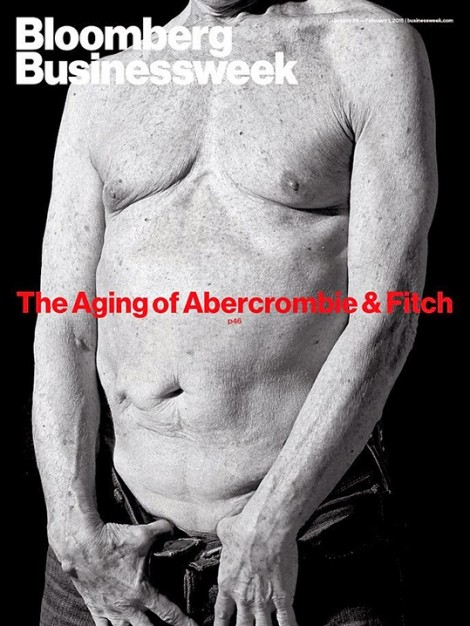
  • Bloomberg Businessweek
  • Cosmopolitan (UK) — Leo Burnett mockup
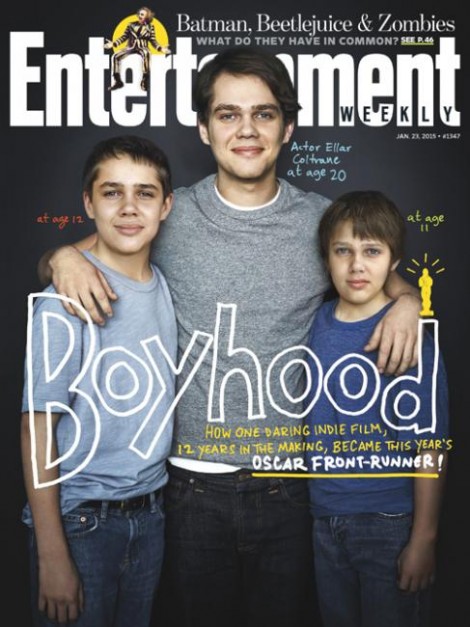
  • Entertainment Weekly
  • Taalgenoot
  • Food & Home Entertaining

INTERNATIONAL

Bloomberg Businessweek, 26 January 2015

Bloomberg Businessweek, 26 January 2015You may not know this (I certainly didn’t), but this is Bloomberg Businessweek’s first cover featuring a shirtless person — and a very fitting choice to go with the very informative article about Abercrombie & Fitch, its slow decline in the market, and the story of ex-CEO Michael Jeffries (70).

The older, shirtless model is the perfect opposite of the younger male model pictures which we’ve come to associate with A&F!

You may read the full article here (a must-read, especially if you’re in the retail and/or marketing industry), and also be sure to watch the video where editor Josh Tyrangiel and creative director Robert Vargas look at all the options they had, and chat about how they came to the decision for the above cover. 

Cosmopolitan (UK), February 2015 (mockup cover)

Cosmopolitan UK, February 2015 - mockup by Leo BurnettDon’t worry, Cosmoplitan hasn’t gone all “Marie Claire” on its readers; this is purely a mock-up for a campaign it’s supporting: “to call for a day of remembrance for the victims of honour killings” (read all about it here).

The above concept was done by advertising agency, Leo Burnett, (one of three that entered a competition Cosmopolitan ran), and I think the image/issue, wrapped in a plastic bag, was executed brilliantly. Cosmopolitan stresses the following: “It is not a cover. Our February issue has been on sale for nearly two weeks, and does not feature the image that Leo Burnett created.”

But, even though this isn’t a ‘real’ cover, I consider it a worthy entry for this week’s post. You can watch a small video here to illustrate it concept more:

Entertainment Weekly, 23 January 2015

Entertainment Weekly, 23 January 2015Boyhood is receiving a lot of Oscar-buzz and, having watched it myself, I totally agree with all of it! It’s also surprising how many people don’t know that the whole movie cast are the same actors over the whole 12 years it was shot (amazing to see them grow and ‘change’ during the course of the movie…).

This cover, although it’s a very simple (Photoshopped) concept, illustrates it brilliantly by showing the main character in three phases of his youth. Or, as the Huffington Post puts it, “Entertainment Weekly’s ‘Boyhood’ Cover Just Blew Our Minds”

LOCAL

Taalgenoot, Summer 2014

Taalgenoot, Somer 2014Afrikaans Theatre has, for the past few years, given thousands of theatre-goers what can only be described as theatre-orgasms. I’ve had a few of them, as the creativity on stage is absolutely mind-blowing!

And it’s people such as young Afrikaans theatre-guru Christiaan Olwagen making it possible.

Taalgenoot, the quarterly magazine for the ATKV, has turned Olwagen into a rockstar on this cover, with beautiful photography and creative design elements to go with it.

Read the full article (in PDF-version) right here.

Food & Home Entertaining, February 2015

Food & Home Entertaining, February 2015This is such a cute and fun idea, and I’m sure that you’ll see the Food & Home Puzzle-Pizza at a few dinner (and children’s) parties in the near future!

A visual element that is just so striking and different that it jumps out at you on magazine shelves!


Find a cover we should know about? Tweet us at @Marklives and @MediaSlut.
Want to view all the covers at a glance?
See our MagLove Pinterest board!


MediaSlutMagLove by @MediaSlut is a regular slot featuring the best local and international magazine covers every week, recognising well thought-out, powerful and interesting (and hopefully all three-in-one) covers and celebrating the mix of pragmatism, creativity and personal taste that created each of them. The (for now anonymous) blogger behind MediaSlut knows way too much for his own good about media in South Africa, magazines in particular. His mission is to show when SA magazines fail but, most importantly, also when they succeed. If you’re looking for a library about SA magazines and news, this is your one-stop pitstop.

— MarkLives’ round-up of top ad and media industry news and opinion in your mailbox every Monday and Thursday. Sign up here!

Smart Africa TV: AfriPOP and Social Media Week Johannesburg

by Russell Southwood (@BalancingActAfr)  In this video interview, we talk to Phiona Okukmu, co-founder of afripopAfriPOPmag.com, about:

  • how Afripop got started
  • what it covers
  • its audience
  • her role as the content director of Social Media Week Johannesburg, and
  • the things she liked in last year’s Social Media Week and the plans for 2015.

Smart Monkey TV logoRussell Southwood (@BalancingActAfr) is the founder of Balancing Act and the web TV channel Smart Monkey TV (@SmartMonkeyTV), and has been an analyst in telecoms, internet and broadcast in Africa for the last 15 years. Smart Monkey TV aims to capture the energy at the crossroads between African culture and technology. MarkLives is syndicating content from Smart Monkey TV on a weekly basis for the column “Smart Africa TV”.— MarkLives’ round-up of top ad and media industry news and opinion in your mailbox every Monday and Thursday. Sign up here!

Shelf Life: Global identity refresh for power tool brand

Louise Marsland (@Louise_Marsland)’s weekly pick of recent product, packaging, design and food launches:

  • Global brand refresh for BLACK + DECKER
  • Peppadew launches spicy addition, and
  • Corobrik reimagines our cities

BLACK + DECKER revitilises brand

BLACK + DECKER power tool with new brandingBLACK + DECKER has launched a new global brand identity for its consumer branded power tools, outdoor power equipment, and home products. New products and new campaigns will shortly launch to ‘provide energy’ around the brand and the new positioning across the global stage.

Black + Decker is a brand with a heritage of more than 100 years and the new identity seeks to revitilise with a simplified and more focused design. The repositioning also serves to market Black + Decker as a brand for the home.

Says trade marketing manager for Stanley Black & Decker, Mayan Desai, “While its roots are firmly planted in the power tool space, over the years there have been a number of additional categories that have contributed to the range of products, including cleaning and outdoor devices, and small kitchen appliances. As a result of this, the brand is deeply entrenched in and around the home. Ultimately, Black + Decker will help its product owners transform the place where they live into a home.”

Peppadew spices it up

Peppadew Atchar rangePeppadew keeps on innovating, now that the brand has decided to embrace other shelf categories as well as its original pickles. The latest spicy range addition is an atchar in a jar, and follows upon the launch of Peppadew’s pasta sauces and pickled jalapenos and pickled onions last year.

The Peppadew Atchar range has four variants: Peppadew Mild Vegetable Atchar with Piquanté Peppers; Hot Atchar with Piquanté Peppers; Mild Mango Atchar with Piquanté Peppers; and Hot Mango Atchar with Piquanté Peppers.

Apparently a good atchar requires skill: the Peppadew mango atchar is pip-free and only non-fibrous mangoes are used, as they reportedly provide a far better texture and are easier to eat. And a good atchar is said to require a true lactic acid fermentation process to produce its unique and uniform taste experience. Therefore, all Peppadew Atchars are packed in lined, well-sealed drums to prevent any exposure to air making so that true lactic acid fermentation takes place. (Lactic acid is reportedly beneficial to digestion when consumed along with fermented vegetables).

Peppadew also claims that its atchar is lower in salt, has less oil than competitor brands and is fully pasteurised.

“We’re a nation big on flavour,” says Peppadew brand manager, Laurian Ovens. “Atchars — versatile and firm favourites in South African kitchens and an intrinsic part of South Africa’s culinary history — were a natural extension of the Peppadew product range. We are confident that our Atchar range will tick all the boxes by adding a refreshing sharpness to every dish they accompany whilst adding exotic new flavour dimensions.”

Designing a new city

Corobrik Architectural Student of the Year Harold Johnson - 2015 regional competitionRelooking at the urban landscape, tracking secretive wastelands and rehabilitating scarred urban vistas through ecological restoration are the themes that took top honours at the Corobrik Architectural Student of the Year Awards at the University of Johannesburg (regional competition).

Energy efficient mechanisms and interventions for a more sustainable environment were the focus of the annual awards.

Overall winner, student Harold Johnson’s entry, “The Dark City: Critical Interventions in Urban Despair”, describes rain harvesting and windmills to upgrade a building.

Johnson says he began the project as a journey by observing and documenting violence, abandonment and exodus within the inner city. In his research, he tracked statistics and investigated the residents of Johannesburg’s inner city and the city’s responsibility, as well as what happens when infrastructure falls away.

To reach his audience, he engaged contributors in photography, film research and sociology to determine what architecture means to the inhabitants.

Rachel Wilson received second prize for her thesis “Junkspace City, The Institute of Political Ecology”, a sensitive landscape project to rehabilitate scarred landscapes of junk space through ecological restoration.

Inspired by a wasteland in the ‘jungle’ of Alexandra on the banks of the Jukskei River, among an abandoned water treatment plant, she discovered sangomas, inyangas and Rastafarian herbalists living on the site and growing medicinal plants as a source of economic sustainability. Wilson found that the site unfolds as a hidden wasteland, secretive and detached from society.

Third place went to Zoe Goodbrand for her thesis entitled “The Connected City”. She has proposed revitalising Johannesburg’s natural environment through the establishment of the Braamfontein Spruit as a sub-urban greenway. The project is a cycle network that spans the full length of Johannesburg, from suburb to inner city.

National student winners will be announced in April 2015 after all the regional winners at the competing tertiary institutions have been awarded.


Shelf Life is a weekly column by Louise Marsland. Tweet new product, packaging and design launches to @louise_marsland Louise Marslandor email her at louise.marsland at gmail.com. Want to sponsor Shelf Life? Contact us here.

Louise has written about the FMCG, media, marketing and advertising industry for over 20 years as a former editor of magazines AdVantage, Marketing Mix and Progressive Retailing, as well as websites Bizcommunity.com and FMCGFiles. She also edited the weekly Wednesday Media & Marketing Page for The New Age newspaper. She is currently the publishing editor of industry trendwatching portal, TRENDAFRiCA, for consumer insight, research and trends in Africa; a regular industry columnist and speaker; a consultant on content strategy; and contributing editor to Fast Company South Africa magazine, which has just launched in South Africa.

— MarkLives’ round-up of top ad and media industry news and opinion in your mailbox every Monday and Thursday. Sign up here!
Talking Radio: Radio as a content generator for brands

by Angela Haarhoff () These days, content is one of those infinite words which exists in its own vast universe of being — basically, ‘How long is a piece of string?’ and all that. Although ‘content’ in this new universe has been in existence for a while, many marketers and advertisers are still grappling with the concept as education continues.

Radio Microphone by Pixomar courtesy of FreeDigitalPhotos.net
Image courtesy of Pixomar at FreeDigitalPhotos.net

Some of our spaceships have not yet arrived in this realm. Just when you think you know what it means, you suddenly realise that you don’t. (If you still use the word “spaceship”, then you are probably one of these people.) We all have to start somewhere, however, and so we look to more developed markets to learn about content and all that goes alongside it.

Local is lekker

Many South African agencies and clients are only merely starting to experiment and understand its value. Local learnings and case studies are just as valuable as we begin to write formulae that work in our own market.

As marketers, we need to decide whether to create content around our brands, curate existing content or a bit of both. Importantly, we need to pin down our reasons for doing both and whether or not they add value to the brand and purpose. A brand’s target market will be confused by viewing irrelevant content in relation to the brand and their needs.

It is also important to consider from where the content is coming, and the context in which it exists. When we think of content, we usually think of online content but, at a brand level, where news and controversy are less of a factor, traditional media offer excellent spaces in which to find relevant content.

Start with the basics

So just how can a marketer use radio as a content generator? There are various avenues but let’s start with the basics.

First off, and because we are talking about brands and not social issues (where opinion is a key generator of content), successful radio brand content needs to be advertiser-funded at its start. This is going to be the spark that hopefully lights the flame of generation.

It also needs to be of that kind of relevant, useful and entertaining nature that pulls the listener in.

The more seamlessly it fits into the already-existing radio platform, the less disruptive it will be. In saying this, you also need to clearly signpost your content, as pulling the wool over listeners’ ears won’t go down well. So be honest and open in a native manner.

The story that is told through the content needs to be inventive and engaging, especially on this high-involvement and interactive medium where the audience wants a two-way relationship. The content or story should be shareable and spoken about. Engagement is, of course, critical.

Getting back to those avenues then, radio allows for content generation in some of the following ways:

Influencers

Radio DJs are an integral part of station content, listener buy-in and enjoyment. Designing brand content campaigns which involve the show host generally have better traction and impact than a paid-for radio advert.

Station content

Aligning with pre-existing station programmes and formats integrates the brand well. The sponsorship of a music show or talk show immediately ticks the brand-awareness box and, more cleverly, integrates the brand into the actual content.

Adding on expert comment or input from the brand itself further seals the trust between listener and brand.

Activations and events

Radio stations are well-known for hosting events which add massive entertainment or social value to their footprint areas. Brand linkage to these events may have great mileage when it comes to engaging with the audience on the ground — once again, adding extra value is key. A mere banner flying in the wind on the side of the road may not do much to create engagement or be remembered.

The brand as entertainment

Radio, at its core is, an information and entertainment medium, and so the brand needs to… inform or entertain.

Listeners seek escapism when listening to radio and want to be entertained in one way or another. Having their psychological downtime interrupted by a boring brand message often leads to an automatic aversion to what they are hearing.

Having this downtime disrupted in a different manner, however, may just cause them to think about your brand or — even better — talk about it.

More and more brands are learning (or have already learnt) how to create entertainment and engagement through a brand, thus turning the boring brand message on its head and adding, by far, more value than ever before.

It is, of course, vital to work together with the station when brainstorming ideas to generate and grow content in order to make best use of the available platforms.


Angela HaarhoffAngela Haarhoff () is an analytics and insights strategist at MEC Notabene Johannesburg. A Psychology and AAA Brand Management graduate, her background includes diverse years spent in strategic planning, marketing services and public relations. She contributes “Talking Radio”, a monthly analysis of South African radio listenership figures, to MarkLives.com. Follow @mecnotabene for regular media updates.

— MarkLives’ round-up of top ad and media industry news and opinion in your mailbox every Monday and Thursday. Sign up here!

Media Future: Gadgets to connect 2015 to your past and future

by Arthur Goldstuck (@art2gee) It’s customary, in January, to make predictions for the year ahead. 2015 is the year of connections.

It’s not technology that will excite us so much in 2015, as what that technology allows us to do.

Arthur GoldstuckAt the recent International CES (Consumer Electronics Show) in Las Vegas, the stand-out categories of innovation all had something in common. The Internet of Things, the connected car, the explosion of health and fitness tracking devices and applications, the smart home, the beyond-smart TV, and even the 3D printer with its template libraries in the Cloud, were all connected by one concept: being connected.

It is no coincidence that the connectedness revolution is playing out at the same moment in history when social communications tools are behind the biggest communities of individuals in the history of the planet. Facebook and WhatsApp will both soon have more than a billion users, with WeChat possibly not far behind. If one was ever looking for a seismic event in communications, 2015 would be the year to find it.

It is clear, then, that the gadget innovations that make it to the shop shelves, online stores and banner ads in 2015 will be aimed at sharpening or increasing connectedness. They will come in a range of price categories, with the following being among the most visible in South Africa:

High cost

4K TV: Forget Full HD TV; the new standard is 4K, which stands for a fourfold multiple of HD display quality. Last year this time it was still horribly expensive and avoided by consumers. Suddenly, the prices have plummeted, the number of sets on the market mushroomed, and the shipments are rising rapidly. Expect to find variations from Samsung, LG and Hisense in most local electronics stores this year, but don’t expect the local prices to make sense just yet.

Smart home technology:  In the coming months, South Africa’s Altech will begin rolling out the smart home functions of its Node satellite set-top decoder. It’s not yet the most stable of platforms, so few will depend on it as the sole arbiter of home automation, but for some it will be their first experience of smart home technology. Expect smart homes to become more mainstream once companies like Samsung and Apple roll out accessories or functions that allow more targeted control of the home and appliances from a smartphone.

Connected car: No, your car will not suddenly begin driving itself, nor take instructions via the Internet. That’s next decade’s model. For now, however, voice control and touchscreen management of in-car functions is slowly becoming standard, especially via the new version of Ford’s SYNC technology. For those not buying a new car, growing ranges of accessories and add-ons are emerging to give older models a semblance of connectedness.

3D printers: Despite their high cost, 3D printers have three huge attractions for specific professionals: they can produce models or prototypes of designs by specialists ranging from architects to medical prosthetic developers; they can produce objects from online template libraries containing thousands of designs; and designers on one side of the world can send their work to colleagues on the other side for reviewing, analyzing or improving in far less time and cost than the old way of couriers and air flights. Don’t be too startled to come across these devices in consulting rooms across various professions.

Medium cost

Fitness devices: For less than R2000, activity tracking devices like the Fitbit, Sony Smartband and Samsung Galaxy Gear Fit literally will transform people’s lives as the ability to monitor fitness and health becomes effortless. The basic bands, however, still don’t monitor the heart rate, so they must still be used in tandem with those hideous chest bands and RF transmitters . Expect that to change in 2015, as cutting edge technology matures and comes down in price. The fitness revolution of recent years is about to shift into high gear.

Low cost

Battery technology: Keeping all those gadgets connected is going to play havoc with battery life. Fitness bands are all very well, but some will wonder if a dead phone before knock-off time is worth all that health tracking. Better or bigger batteries, better and slimmer portable power packs, and a growing focus on battery management tools are some of the certainties we can expect in 2015. Our smartphones still won’t get anywhere near the battery life a Nokia 6310 gave us 14 years ago, but if we don’t stay connected for at least a working day, we need to read the instructions.

USB technology: From USB 2.0 to 3.0 to 3.1, we have been seeing rapid improvements in the speed of transmitting data from a flash drive to a computer and back. A new version of USB 3.1, called Type C, will be the first to be reversible, meaning it doesn’t matter which way round it is turned when one attempts to plug it in. It will also be smaller, and come with adapters to ensure it is compatible with older ports.

The USB standard is one thing; what manufacturers do with it is something altogether differentiated. If they are one of the market leaders, that is. SanDisk went large last year with wireless flash drives. We can expect this year’s cutting edge to include emergency charging capability and hotspot functionality. The better to keep us all connected, of course.

Disconnecting: All of this does suggest there is a potential flip side to the story: many individuals will feel over-connected. Overwhelmed by constantly tracking, being tracked, connecting, being connected, they will look for devices and apps that shield or cocoon them from the world of connectedness.

It’s not as simple as giving up that smartphone – most people still need a basic level of connectedness. It’s more a matter of muffling the noise and creating a barrier that becomes permeable only when one wants.  For that, one needs to adopt a new mindset rather than a technology solution. But, no doubt, there will soon be both a gadget as well as an app for that.


Arthur Goldstuck heads up World Wide Worx (www.worldwideworx.com) and is editor-in-chief of Gadget. He is a consulting editor to MarkLives and our media tech columnist. Follow him on Twitter on @art2gee. This article has been republished from Gadget.

— MarkLives’ round-up of top ad and media industry news and opinion in your mailbox every Monday and Thursday days. Sign up here!

The Ad Exec: Don’t get caught in the business of advertising

by Tom Fels (@thomasfels) It’s not our fault; sometimes we get caught up — in a moment, in a project, in a year’s worth of projects — and we look up to find ourselves in a place we didn’t expect, a place we never intended to go, a place where the joy is gone from the work. All we are left with is… the business of advertising.

Trapped With Money by jesadaphorn courtesy of FreeDigitalPhotos.net
Image courtesy of jesadaphorn at FreeDigitalPhotos.net

Small choices, sometimes as infinitely small as a hello in the hallway or a high five across a boardroom table, determine the path we choose to tread and inevitably shape our destiny.

Thus, businesses everywhere are made and destroyed by a series of choices that determine the energy flow, the creative direction and the business imperatives.

Decision culture

What with thousands of these decisions being made each day, as a leader it’s clearly impossible to control the granular detail. However, there is a way to influence it, and this lives in the world of company culture.

For ad agencies, culture has long been a defining characteristic: it attracts talent, informs reputation and seduces clients. Most often set by the founder (and representative of his or her outlook), the emergent values of an agency create a cultural framework for decision-making that is, as marketers would say, either on brand or not.

To more consciously understand this paradigm, many analysts look to the world of startups as icons in the high-performance arena which make critical decisions influenced by risk and reward on a daily basis. While highly regarded for their energetic thinking and ‘counter-convention’ outlook, many startups place their success on a single factor – the alignment of vision and action.

Everyday accountability

As a practical reference, when I visited New York last year, I was lucky enough to stumble into the Spotify office (a global leader in music streaming) on a Friday afternoon. It was filled with mid-20 to mid-30-year olds, seemingly far too young to be fuelling a business speculated to be worth over US$4bn.

What I was struck by (apart from the rooftop beer-pong, the IT vending machine, 3D printers and a track record of major recording artists performing in their ‘concert area’) was their enormous dispensation of accountability.

It became even clearer to me that this was enabled by a powerful and commonly held vision for the business, combined with a proprietary understanding of each employee’s role. I left feeling that, more important than the perks of the job, it was the powerful decision making happening inside Spotify which enables its extraordinary scalability.

Now, with a US$4bn business as a benchmark, consider the power of thousands of aligned decisions propelling your own business forward in a way that continues to reinforce culture.

Toward the love of advertising

Recognising the speed of advancement and change in the agency world, I’d suggest that the first acknowledgement any ad exec should make is that you are already on a path less ordinary and that, by choosing to enjoy it, you’re liberating yourself to the opportunities that it presents.

Then, by applying a high state of both self and organisational awareness to everyday decisions, you’re ultimately far more likely to produce a powerful momentum that enables you to experience the love of advertising, rather than the far less-fulfilling (and rather dead-end) business of advertising.


Tom FelsWith a decade of local and international experience in leading brand consulting, design, shopper marketing and integrated advertising roles, Tom Fels (@thomasfels) has gained a deeply relevant understanding of the dynamics of agencies. His skills are put to work daily as group managing director of Publicis Machine. He contributes the monthly “The Ad Exec” column to MarkLives.

— MarkLives’ round-up of top ad and media industry news and opinion in your mailbox every three Monday and Thursday. Sign up here!

Ad of the Week: Exploring the night

by Oresti Patricios (@orestaki) We love campaigns that use new media (sometimes along with ‘old’ media) in innovative and interesting ways. Smirnoff has raised the bar with a multi-channel campaign that promotes one of its more club-oriented products — Smirnoff Ice Double Black with Guarana. Yes, guaraná, that caffeine alternative that all students and ravers know and love.

Smirnoff Explore the Night screengrab Cape Town cabThe strength of this campaign is how it uses social media to offer something of added value that appeals to the exact target market; it also uses mainstream media to create awareness.

The TV campaign launches the service offering, which is basically this: download the Smirnoff “Explore the Night” app for Android or iPhone, and you can order a cab to take you to your club. Free of charge.

Taking a cab is a great idea if you’re planning on imbibing alcohol. It’s not always easy to get someone to be the “designated driver”, so cabs and services such as Uber provide a valuable service in keeping drink-impaired drivers off the road. This campaign capitalises on this, and offers a free service that is sure to add value to the brand.


As the publicity material states, “Some rides will be special” — in other words, participants could win an opportunity to have a memorable experience, such as a night-time helicopter ride around Cape Town, or a super VIP luminescent spray-paint party in a warehouse . No prizes for guessing the target market.


Smirnoff Explore the Night screengrab Your cab is here appThe TV commercial is a fast-paced montage set to a clubby piece of music: beginning with a close-up on the cellphone app announcing, “Your cab is here,” four 20-something friends pile into a London-style cab and are transported to a wide range of wild experiences. First up is a ‘Bronco Party’ where they ride a mechanical bull; then a club where the DJs are Smirnoff Explore the Night screengrab Cape Town astronaut partydressed as astronauts and the floor is inflated, like a jumping castle; then running through a park and playing with illuminated frisbees; then a karaoke bar; then what looks like skittles being played under a highway bridge; and finishing off at a classy club.

The final shot is of the group Smirnoff Explore the Night screengrab Cape Town skylinewatching the sunrise over the city. The music ends and the soundtrack is of morning birds.

JWT Cape Town originated the ‘Explore the Night’ concept back in 2013, and the taxi-cab concept was an extension of this, as a way for people to explore the nightlife of their cities responsibly. TV production credits for the TV ad go to Egg Films under the direction of Jason Fialkov, and the online content was created by Little Big Productions in Cape Town.

The music was composed especially for the campaign, and it’s really catchy — in fact, many tweeters and Facebook commenters have been asking for it to be released as a song. The lyrics were written by the JWT copywriters, and the music was written and the recording produced by Craig Ormond at Big Leap Studios in Cape Town.

Getting back to the campaign. What’s in the small print? Well, you have to allow Smirnoff to post to either your Twitter or Facebook timeline, for a start. Secondly, there is no guarantee that a cab will be available when you want one. And, finally, you have to purchase a can of Smirnoff Ice Double Black with Guarana at your destination to qualify for the next leg of the cab ride, be it to another club or home. Considering a cab ride could cost in the hundreds, it’s not a bad price to pay.

On the web, the campaign has a presence on Facebook, Twitter, www.mycitybynight.co.za and its own dedicated site, www.explorethenight.com.

Smirnoff Explore the Night DJ Roger GoodeOne of the launch publicity stunts that the organisers did was to ‘kidnap’ 5FM drive time DJ Roger Goode, and take him on an “explore the night” ride. Of course, his cellphone was patched into the studio so that listeners could follow what was going on.


The cabs are noticeably marked with the Explore the Night logo, and a tie-in with 5FM has gotten people out on the street looking for cabs that are ‘untraditionally’ decorated — with glitter, post-it notes or splashes of dayglo paint.

In addition, for the duration of the campaign, special events are being organised with three or more venues hosting different DJs, for those who want a little variety on their clubbing menu. Once again, the purchase of one can of Smirnoff’s guaraná-based drink supplies participants with a wrist band that entitles them to a free ride to the next venue.

Using social media for this target market is a no-brainer, but what makes this campaign inspired is the unique aspect of the free cabs, with an Uber-style app. Pulling the whole thing together with other channels such as TV and radio gives the campaign added impact.

It’s an exciting time in marketing, when we see creative people use their imaginations to come up with cross-channel campaigns that really deliver. As the media landscape changes, I’m looking forward to more brands using new media in interesting ways to effectively target their markets.


Oresti PatriciosAd of the Week, published on MarkLives every Wednesday, is penned by Oresti Patricios (@orestaki), the CEO of Ornico, a Brand Intelligence® firm that focuses on media, reputation and brand research.


If you are involved in making advertising
that is smart, funny and/or engaging,
please let Oresti know about it at info@ornicogroup.co.za.


— MarkLives’ round-up of top ad and media industry news and opinion in your mailbox every Monday and Thursday. Sign up here!
Online CPD Courses Psychology Online CPD Courses Marketing analytics software Marketing analytics software for small business Business management software Business accounting software Gearbox repair company Makeup artist