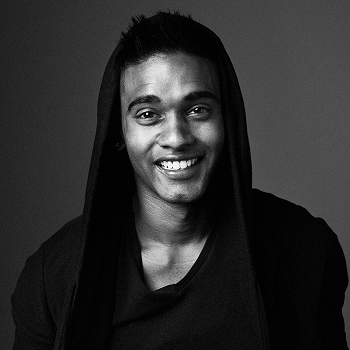
2020 & beyond is the era of the black-owned agency

by Zibusiso Mkhwanazi (@Zibusiso) Last week, I read Jarred Cinman’s 2020 trends piece here on MarkLives, #BigQ2020: The future is here, and I would like to expand on his views, which I fully agree with.

What a difficult year 2019 was for what seems to have been a majority of ad agencies in South Africa. The International Monetary Fund (IMF) has cut SA’s GDP growth prospects for 2020, from 1.1% to 0.8%. This in turn means that, when there’s little growth, marketing budgets are in the front of the chopping queue. This isn’t good news for SA agencies: our industry will continue to be under tremendous pressure in 2020 as our clients continue to want more for less and seek more efficiency in how money is spent.

The economy has resulted in many brands rethinking the targeting of their goods and services to find new growth prospects, as their traditional markets are under pressure. One emerging trend is that brands are looking for growth among the 80% of SA: the main market. Brands such as Capitec, whose growth largely is main-market based, and challenger brands such as TymeBank, which recently reached 1m new accounts in eight months, are examples of the types of growth rates in the main market.

Change on the horizon

In 2019, we were shortlisted for the Standard Bank pitch, which went to a well-deserved M&C Saatchi Abel in the end. Making the shortlist for a black-owned agency was something short of a miracle, however, that has given clients more confidence in the ability of black-owned agencies.

The reason that we went that far is because the pitch wasn’t run by pitch consultants (which would ordinarily be the case) but jointly by marketing and procurement. This is a big indicator that zajika izinto (“things are turning”) for black-owned agencies (and, indeed, we won our largest piece of business in the previous year). This just opens more opportunities for black-owned agencies because brands now see what we’re capable of.

Culture

It’s true that the black-owned agencies’ USP is the ownership structure but the unique culture in these agencies is bigger than the USP, which resonates with the main market. Some of the work that black-owned agencies are able to produce would simply not make it past the finish line in some globally owned counterparts, simply because the culture, creative ethos and lack of diversity at senior level won’t allow it.

In the case of untransformed agencies, the diversity of people is only part of the equation but, if you don’t have the culture right, the outputs won’t be the same. It took Eminem as a white male to live among African Americans, eating with them, hanging out with them to get the African-American culture right; in essence, it was a lifetime. The outputs of his creative —being music in this case —reflect how hip-hop isn’t just music to him but in his blood. Alternatively, if one doesn’t understand the culture, it’s as awkward as a recent Donald Trump campaign t-shirt with “Black Voices for Trump”. I’m pretty certain that Trump has black people in his presidential campaign team but the question is: Does the culture in the team allow their views to be taken seriously?

This is the phenomenon that many agencies still deal with today and these are the hoops they must be willing to jump through to get the culture right and also benefit from the growth of the main market. Failing that, they and their clients will be severely punished by Black Twitter.

Consolidation

There are less than a handful of black-owned agencies that can take on very large and complex accounts; however, demand is growing faster than supply. This is why I foresee more mergers and acquisitions between black-owned agencies to achieve the scale that clients need, as well as to avoid conflict work. Consolidation also means survival for many agencies.

In this new chapter, together we are stronger; together we will rise.

See also


Zibusiso MkhwanaziZibusiso Mkhwanazi (@Zibusiso) is the co-founder of Avatar and the group CEO Of M&N Brands. He is a World Economic Forum Leader and was announced as a finalist in the EY World Entrepreneur Awards 2018.

“Motive” is a by-invitation-only column on MarkLives.com. Contributors are picked by the editors but generally don’t form part of our regular columnist lineup, unless the topic is off-column.

Sign up now for the MarkLives newsletter, including Ramify.biz headlines, emailed every Monday, Wednesday and Friday!

#AgencyLeaders2019: Most-admired PR agency

by MarkLives (@marklives) For 2019, Atmosphere Communications (@atmospherecomms) has been voted as most-admired PR agency in South Africa, with Clockwork (formerly Clockwork Media) (@Clockwork_Media) and DNA Brand Architects (@dnabrandsa) as joint runners-up, by South African agency executives. This is the second year of this new category.


MarkLives logoEvery year since 2012, MarkLives has been polling South Africa’s top ad agency leaders to find out what they think of their competitors, whom they see as effective managers and great creative leaders, and where they believe their future competition is likely to come from. These are the results for 2019 and this week we are running the following categories.


The most-admired PR agency

Atmosphere Communications

Atmosphere Communications logoGrowth in staff and revenue remain a challenge for the advertising and PR industry, but for the award-winning Atmosphere Communications, it’s a matter of innovation and ambition. “Our industry is rapidly changing and we have to stay ahead of the curve,” says Nicola Nel, Atmosphere MD.

Atmosphere grew from 32 staff members to 40 in 2019, and top-line revenue by 24%, 72% of which was from retained clients. Despite this, the agency remains tentative for 2020, particularly when it comes to staffing. “There is dire need for senior, strategic and creative thinkers and the pool is getting smaller as the corporate lure gets bigger,” she says.

Agencies across the board are facing the challenge of relevance in a volatile economy. Acording to Nel, repeatedly refreshing product offerings and an involved approach to working with clients is what sets Atmosphere apart. “We give each one of our clients a senior team leader [who] focuses on the ROI for their clients. We also keep on innovating our product offering,” she says. “Atmosphere was one of the first companies to start a social media team and one of the first to build our influencer expertise.”

Atmosphere has retained its big-name clients, including Cell-C, Capitec, Sanlam, Takealot, Spotify, and Nestle, but the agency has goals to expand further in 2020. Says Nel, “In the year ahead, we are looking to build our African footprint through our PROI network. We currently work with great owner-run businesses in Egypt, Kenya and Ghana, and need representation in French-speaking Africa. We are also expanding our digital content capabilities and further growing our influencer expertise.”

In 2019, Atmosphere won the SABRE Platinum Best in Show and the PRISA PRISM Mid-Size PR Agency of the Year. The PR agency is part of the King James Group South Africa.

— Profile by Jessica Evans.

Previously: In 2018, our inaugural most-admired PR agency was also Atmosphere Communications.


The joint runners-up

Clockwork logo DNA Brand Architects logo

Clockwork

DNA Brand Architects

“It [was] a good year from a growth perspective,” says Tom Manners, Clockwork CEO, reflecting on 2019. It grew from 74 employees at its smallest point to 105 at year-end, and Manners doesn’t think it will stop there. “I reckon we’ll probably be around 115 by March/April [this] year.”

Not only has Clockwork grown in staff numbers, it has grown in revenue, too. “We’ll start to scratch on the R80m/R90m  mark [this] year, which is big considering two or three years ago we were under R50m. 2019 brought some of the agency’s biggest acquisitions yet, with Sunday Times most-loved brand and largest corporate in Africa, Standard Bank, signing on after a competitive pitching process. To me, it was one of the top three highlights in the lifetime of the agency,” he says.

Client retention was also a high point for Clockwork in 2019. Its key clients for last year included Microsoft Global and Standard Bank, with Hyundai, Netflix, LG, and Exxaro also bringing life to Clockwork.

For Manners, Clockwork’s growth in a questionable economic climate is down to its age-old outlook: “Our ability to come at creative ATL/TTL briefs from a comms perspective, from a reputational perspective, has been quite powerful. I think we look at things slightly differently.”

While 2019 initially brought Clockwork some attrition due to political and economic uncertainty, Manners is confident that this was an opportunity, rather than a threat. “Budgets have been reduced, clients are being forced to be more frugal and smart about how they spend money,” he says, adding that producing budget-friendly work, and doing so efficiently, is what keeps Clockwork standing out.

Manners is optimistic for Clockwork’s future in 2020. Other than a brand revamp and moving into a new building this year, he is expecting another year of growth, adding that “our agency is probably in the best place it’s ever been”.

— Profile by Jessica Evans.

“The obvious thing is value for money,” says Sylvester Chauke, DNA Brand Architects founder. According to him, this is what sets DNA apart in a battling industry.

And it’s DNA’s dynamic model that gives it an edge, he continues: “Most agencies, they’ve got very set structures of supporting their businesses and, I think for us, our model allows us to play quite broadly with the resources we have in the team to allow for effectiveness.”

This effectiveness is what he argues brings talent to DNA. “The impact that we’ve created for the client point-of-view has helped us to be able to really get some really good-quality staff members into our business,” he says. DNA started 2019 with 30 employees and ended with 41.

Staff isn’t the only aspect of the business that grew last year; DNA started 2019 with about R41m in revenue, and ended close to R54.5m, with a new branch opening in Cape Town. DNA’s vision for 2020 is all about investing in the training and personal growth of staff, sustainable business growth and diversifying sources of income.

DNA’s big acquisitions for 2019 fit the bill for diversity with Telkom, Barloworld, and Bridgestone signing on but the highlights didn’t stop there. DNA boasts five IABC Gold Quills in Canada and the PRISA PRISM Campaign of the Year for 2019 for its 2018 online video series for the relaunch of Lion Lager.

With highlights come challenges. Along with most other agencies in the industry, DNA Brand Architects is facing clients holding back on spending money, and hopping from agency to agency. “There is a lot of movement, and the movement is very often nowadays. So the challenge is, for a brand to really grow, an agency can’t really do an effective job in a year,” says Chauke, adding that capturing the essence of a brand is a long-term project. “It’s not really just about an ad at the end of the day.”

— Profile by Jessica Evans.

Previously: In 2018, our inaugural runner-up was Clockwork Media (now Clockwork).

How the poll works

In late October 2019, we invited a panel of handpicked agency executives — in creative and management, and ranging over a wide spectrum from small- and medium-sized to network agencies — to nominate their most-admired companies and company leaders of various types of agencies. This year we conducted only a national poll, doing away with the two regional polls for Johannesburg and Cape Town. Execs couldn’t nominate their own agencies or staff members. All the nominations were then tallied up for the final result. The editors of MarkLives held two votes in the final poll and could choose not to apply these in tight races.

Note: Runner-up(s) are only named if they achieved a good nomination tally, relative to the winner’s position. Contenders are named if they stood out significantly above other nominees but weren’t able to close in on the winner’s tally. The Most Admired Agency of the Year is disqualified from the One to Watch category; votes cast in its favour in this category are discarded.

See also


MarkLives logoSign up now for the MarkLives newsletter, including Ramify.biz headlines, emailed every Monday, Wednesday and Friday!

Young, Gifted & Killing It: Joe Human

by Veli Ngubane (@TheNduna) Describing himself as a lifestyle curator and brand identity developer, Joe “Human” Nawaya (@joe_human_; IG:@joe_human) is a creative entrepreneur and the co-founder and director of ideation agency, Creative Mind Space. He also plays the piano and is a 2019 Forbes Africa #30Under30.

Veli Ngubane: Tell us more about yourself: where did you grow up and what did you want to be when you were growing up?
Joe Human:
I grew up in the capital city of the Democratic Republic of Congo, Kinshasa, and moved to South Africa when I was six, after my dad — who was a pharmacist — decided to leave his job and chase a different passion. Growing up, I listened a lot to what my family and friends wanted me to be: a pilot, an engineer and sometimes even a doctor. After being bought a computer in the early 2000s, I started expressing myself through art by using Paint which was an old Windows software. I would create my own designs and artworks and that’s when I knew I wanted to be a graphic designer.

VN: Tell us what you do and what does a typical day look like for you?
JH: I develop beautiful brand identities, strategies and online platforms. A typical day in my life is responding to emails in my mornings, putting down a list of tasks I have to do for the day; sometimes my day [is] filled with one or two meetings but my favourite part of each day is being able to sit in front of my screen and just design.

VN: Tell us more about your ideation agency, Creative Mind Space — the business, vision and future?
JH: Creative Mind Space was birthed after my business partner, Elliot Sithole, and I quit our design jobs at a retail firm. We noticed that a lot of our brands lacked ownership of their narrative; tourists came into our continent and experienced all the things we have to offer but most times [left] with a narrative that isn’t accurate. At our agency, because we are here and experience our continent on a daily [basis], we [find] ways to communicate the richness and authenticity of our continent through creating brands and platforms that have purpose, great narratives and beautiful identities.

Our vision is to become one of Africa’s biggest agencies; our future is building an agency where a variety of creative minds exist because, to us, a creative isn’t only a designer or illustrator but… an architect, a chef or a copywriter, We’re building an agency that has multiskilled individuals who are building brands and work through collaborative efforts.

VN: What do you think entrepreneurs are doing right in South Africa and Africa?
JH: I think entrepreneurs in SA and our continent have unlocked the power of the digital platforms that exist. We’re using it to create impact [and] position our businesses and personal brands in ways that create good footprints, awareness, value and can be monetised. We’re using the minimal resources we have to gain access into our ever-competitive market; we’re collaborating and exchanging information and access to resources amongst one another.

VN: What South African brands do you admire and why?
JH: This is a tricky one because I love so many but I’m going to say it has to be Chappies. I admire this brand so much because it was part of my childhood; when I moved to SA, I’d make sure to always have a R2 coin so I could buy a few flavours after school.

I learned so many things from the “Did You Know” section inside the wrapper. I think Chappies was our Google before we became so reliant on digital for information. They sold us information broken down in such a simple and exciting manner. I love the authenticity in the colours of their branding, man… It was so iconic so much that we still refer to any other bubblegum as Chappies today hahaha.

VN: How can the creative industry attract and keep more young black talent in the industry?
JH: Before I got into this industry, I remember how my parents weren’t sure about my decision. Since I loved to draw and paint, they thought being a designer is getting a section at the local mall and drawing people’s portraits. I think the creative industry needs to be more educative about the different careers and opportunities that are in our industry, not only to our youth but also our parents. We also need to celebrate more black creatives in our space, more female creatives. This mandate is our duty because we make up the industry; we need to be vocal about the work we do and not only rely on big corporate or private initiatives to give us the platforms.

VN: Why do you think the advertising industry is struggling to transform and what do you think should be done to fast track transformation in the communications industry and in SA in general?
JH: I think the issue of transformation relies on reskilling the people in the advertising space. Digital platforms are now a big player in the advertising industry and content has become a great way to monetise, if not the only way… We need to understand the digital platforms that are available to us and how to effectively use them. Traditional media has taken a dip and finding new ways to communicate and reach new audiences is my way of transformation. Being able to adapt to our digital era is what will keep us on top.

VN: What do you feel is missing in the creative industry today and what should the future look like in SA and the rest of the continent?
JH: Creatives and the creative industry needs to get involved in more environmental and social work — we are communicators, influencers and thought-leaders. We have the power to shift perspectives, create tribes and build the societies we want. The future should be about collaborative work: I want to be able to work with creatives across the continent and globe on projects and clients that we can take global.

VN: If you had to go advice your 20-year-old self, what would your advice be to young Joe?
JH:
The 20-year-old Joe had a lot of self-esteem issues; he wasn’t really a social person or the “coolest” person to be around. Due to this he convinced himself that he wasn’t going to be anyone or anything. Yes, he had dreams and hopes but he would always doubt his ability. Being here right now, I’d tell the younger me that all the work you want to do on the outside truly begins inside — you need to believe in yourself and your ability to create anything that you put your mind to.

VN: What advice would you give someone completing their high-school education this year and looking to follow a career in the creative industry or starting their own business?
JH:
You’re right where you need to be; you have a gift and a strong purpose that’s why you’ve chosen the creative industry. Be patient, learn as much as you can, be nice to people and never get too comfortable. Always try and discover new skills, information and techniques to better the work you’ll be doing. You’re going to be great, good luck!

VN: Where and when do you have your best ideas?
JH: In the shower while taking attempts at my singing career.

VN: If you had a super power, what would you want it to be?
JH: To read minds. I’d know what my clients are thinking and what their budget for projects are hahah.

VN: Tell us something about yourself not generally known?
JH: I play the piano.

VN: What exciting projects are you working on at the moment?
JH:
Through my agency, we’re currently developing brand IDs for Thando Hopa and Donald Nxumalo Interiors. These projects are exciting because of the direction we have taken on each one; we’ve tried a new process of discovery and execution. In my personal capacity, I’m building a platform that will change how seminars and conferences are done. It’s called Cocktails & Collabs (short for collaborations) — all the right people in one room, sharing value, information and access to aspiring entrepreneurs, entrepreneurs and creatives.

VN: Please would you supply two or three pieces of work you have been involved in?
JH:


Veli NgubaneVeli Ngubane (@TheNduna) entered the world of advertising with a passion after completing his BSocSci (law, politics and economics) at UCT and a post-graduate marketing diploma at Red & Yellow, where he’s currently advisory board chairman. He also sits on the IAB’s Transformation & Education Council, is a DMA board member and Loeries, APEX, Pendoring, Bookmarks and AdFocus. He is the group MD of AVATAR and co-founder of M&N Brands, which is building an African network of agencies to rival the global giants. In his monthly column “Young, Gifted & Killing It”, he profiles award-winning, kick-ass black creative talent in South Africa.

Sign up now for the MarkLives newsletter, including Ramify.biz headlines, emailed every Monday, Wednesday and Friday!

#AgencyLeaders2019: Most-rated pitch consultant

by MarkLives (@marklives) For 2019, Independent Agency Search and Selection Company (IAS) (@agencyselection) has been voted by South African agency executives as their most-recommended pitch consultant in South Africa, with Yardstick as runner-up.


MarkLives logoEvery year since 2012, MarkLives has been polling South Africa’s top ad agency leaders to find out what they think of their competitors, whom they see as effective managers and great creative leaders, and where they believe their future competition is likely to come from. These are the results for 2019 and this week we are running the following categories.


The most-recommended pitch consultant in South Africa

Independent Agency Search and Selection Company (IAS)

IAS Independent Agency Search and Selection Company logoWhile the economy continues to ebb and flow, Johanna McDowell, Independent Agency Search and Selection Company (IAS) founder and CEO, believes her business is fortunate enough to be recession-resilient. This is because, in any downturn situation, marketers more than ever need to know they are spending their budgets wisely. She recalls an IAS masterclass at the beginning of 2019, where a panel of leading marketers were asked to talk to a roomful of agency folk. The biggest takeout was that 2019 budgets were the exact same as in 2012 but expectations were much higher, putting everyone under pressure.

Although marketing spend isn’t growing, the industry is definitely changing. According to McDowell, although the budget split favours BTL and digital activity, marketers all agree that finding an agency which serves as a partner, not simply a supplier, isn’t only becoming more important but aa requirement. Marketers are looking for industry leaders with real business problem-solving skills, partners who will sit in the trenches with them. She, however, questions whether enough people truly understand the term “partnership”. For her, it’s about being proactive and consistently being curious. not only about clients’ business but the category they fall in, as well as the broader industry as a whole.

To stay ahead of global trends, McDowell attends AdForum Worldwide Summits twice a year. At these events, 30-40 pitch consultants discuss spend, predictions, and other market-related challenges with about 40 agencies of different types. A major trend according to her is how real industry leaders are wanting to be closer to their clients and have become less interested in heading up massive agencies. For her, while it’s a good thing agencies have started to look at consultancies as potential threats, she’s convinced they’re not. What they charge for business advice is so far from what agencies would typically charge for the same offering, and this has created a huge opportunity gap for agencies to capitalise on.

IAS consults in two ways. The first is on a subscription basis, with agencies providing it with non-pitch-related services to help them improve their own marketing and assist in finding that which sets them apart from the hundreds of other agencies in the country. This part of the business also gives agencies feedback on their pitch wins and losses, and helps guide them through what did and didn’t work. The second avenue is running pitches with clients. Marketers come to it for advice on a number of areas, and IAS works with clients and agencies to examine everything that’s involved within a future business relationship.

IAS South Africa was launched in 2007 and, having started from zero, McDowell is proud to announce that the business has grown every year since inception. She shared figures of a 27% increase between 2017 and 2018, and a further +21% from 2018 to 2019.

— Profile by Sabrina Forbes.

Previously: In 2018, it was Yardstick; in 2017, it was IAS. In 2016, 2015 and 2014, it was Yardstick every time.


The runner-up

Yardstick

Yardstick logoDespite tight economic conditions, Yardstick has also shown excellent growth as the demand for strategic consulting and commercial services continues to grow. In 2019, Yardstick added a number of blue-chip clients such as Absa, Nedbank, Standard Bank, Liberty, Santam, Sanlam, MMI, Old Mutual, Woolworths, Pioneer Foods, Distell, TFG, and Famous Brands to its portfolio

Significant achievements in 2019 are its successful facilitation of several high-profile pitches including but not limited to a global pitch for Distell (all brands) plus a pitch for Namibia Breweries Tafel Lager and the management of what it believes was arguably the largest media pitch in the country last year. Yardstick is also proud to have been involved in a number of pitches with blue-chip clients in the financial services industry.

The Yardstick team believes that shrinking budgets are going to continue to put pressure on agencies but that there’s an opportunity to forge ahead with fresh and innovative thinking, regardless of budgetary restrictions. Examples often tend to show in the client space, with changes such as insourcing/going in-house becoming more popular.

Yardstick celebrated its 20th anniversary in 2019 and is proud that many of its existing clients have been a part of its family for the full two decades. It believe this is because its clients view it as strategic value-adding partners, not just as service providers, plus its highly experienced and skilled staff members continue to aim for transparency and integrity in everything they do, giving Yardstick the ability to remain completely objective and fair — the ultimate goal of any pitch consultancy.

— Profile by Sabrina Forbes.

Previously: In 2018, IAS was the runner-up and, in 2017, Yardstick. Before that, in 2016, 2015 and 2014, it was IAS.

How the poll works

In late October 2019, we invited a panel of handpicked agency executives — in creative and management, and ranging over a wide spectrum from small- and medium-sized to network agencies — to nominate their most-admired companies and company leaders of various types of agencies. This year we conducted only a national poll, doing away with the two regional polls for Johannesburg and Cape Town. Execs couldn’t nominate their own agencies or staff members. All the nominations were then tallied up for the final result. The editors of MarkLives held two votes in the final poll and could choose not to apply these in tight races.

Note: Runner-up(s) are only named if they achieved a good nomination tally, relative to the winner’s position. Contenders are named if they stood out significantly above other nominees but weren’t able to close in on the winner’s tally. The Most Admired Agency of the Year is disqualified from the One to Watch category; votes cast in its favour in this category are discarded.

See also


MarkLives logoSign up now for the MarkLives newsletter, including Ramify.biz headlines, emailed every Monday, Wednesday and Friday!

#DesignIndaba25: New engineers of creativity

by MarkLives (@marklives) This year, Design Indaba celebrates its 25th edition. A panel of agency and media execs who’ve been regular attendees tackle: What impact has Design Indaba had on the thinking, attitude and leadership of agency and marketing creatives and executives? Has it evolved and inspired you to research new ways of doing and thinking? Has it changed how you perceive the industry? Have there been any personal highlights, and where should the event pivot next — what can it do to add meaning to the industry and to one personally? First up in our #BigQ panel is Grid’s Jineil Kandasamy.

Jineil Kandasamy

Jineil KandasamyAt the tender age of 32, Jineil Kandasamy (@jineilk) was made creative director and partner at Grid Worldwide, obtaining this recognition through his fearless thinking and passion for creativity. It’s his love and enthusiasm for using ideas to solve business problems that has led him to recreate some of the biggest brands locally and around the world ie Destination Brand Qatar, Liberty, KFC etc and he is the recipient of various international awards.

As a young creative, how do you find inspiration in a world of chaos? Simple. Stop being a designer.

Yes, we do design but we are not designers. The world around us has fundamentally changed. If we challenge ourselves to create more and more meaning in everything we do, then we can’t limit ourselves to one discipline. Creativity lives in every solution so we have the biggest opportunity to make a difference anywhere.

Understand the economics of creativity. What is the shortest distance between ideation to meaningful customer engagement? Living in the NOW, creativity needs to solve business problems. It’s not about one industry but rather about how we connect the dots around us with multiple disciplines that will give us real solutions. However, you only connect the dots to collect.

What’s the lens in which you view the world? It’s everything you absorb around you.

Push the boundaries

Design Indaba has continued to push the boundaries of what we think creativity is defined by. It’s about looking at industries that have nothing to do with design but will inevitably affect design in the future. It’s a reminder to those in and out of the creative industry that we’re not limited to our disciplines but rather what magic may be created when industries collide. We can’t stay relevant by continuing to use the same thinking, thus always challenging/inspiring creative leadership to set new standards and innovate outside of our industry.

The world is engaging with content and information differently, and we need to be relevant to our customers’ engagement.

Design Indaba has made me realise that the context of the work is more important than the work itself. I have started asking questions such as: Is the context of the work showing up at the right place and right time? What is my work doing? What is its impact? How do I frame my work so that it’s pushing up against something important? More than ever before, creativity today has the opportunity to make the biggest impact in our world. It’s shown me what a powerful tool we have to make a difference.

I remember my first Design Indaba in 2014. As any young creative, you want to be lifted with inspiration. Thomas Heatherwick grew my love for architecture and design all round. From ideation to execution, his projects retained their brilliance. He never settled because of process and his inspiration wasn’t left at inspiration; it was made a reality.

Value

Don’t be about hours; be about measurable value. Emotional, functional and business value.

I believe Design Indaba can be more than just three days of inspiration but rather a tool that I can include in my business throughout the year. I want it to be the cultural engine that drives 21st century thinking and creativity value. How do we use Design Indaba expertise to create more meaningful creative and business outcomes in South Africa?

— MarkLives.com is a proud media supporter of Design Indaba 2020, taking place 26–28 February 2020 in Cape Town, South Africa. Book your tickets online for the main conference or the live simulcast to multiple cities around South Africa.


See also


MarkLives logoLaunched in 2016, “The Big Q” is a regular column on MarkLives in which we ask key advertising and marketing industry execs for their thoughts on relevant issues facing the industry. If you’d like to be part of our pool of panellists, please contact editor Herman Manson via email (2mark at marklives dot com) or Twitter (@marklives). Suggestions for questions are also welcomed.

Sign up now for the MarkLives newsletter, including Ramify.biz headlines, emailed every Monday, Wednesday and Friday!

#AgencyLeaders2019: Women of the year

by MarkLives (@marklives) For 2019, Fran Luckin (@effluck) has been voted by South African agency executives as their woman of the year in South Africa, with Steph van Niekerk (@twelvestephs) as runner-up. This is the second year this category has run.

Female executives aren’t competing on a level playing field — the majority of senior agency executives in SA are male and most men participating in our poll tend to nominate other men. Our challenge to them, and the women execs who vote in our annual poll, is to give serious thought to the women who play a pivotal role in our industry, who are admired, and who should be recognised and celebrated for their contributions to our industry. We hope that the profile generated by this poll category will contribute some small part to evening that out.

Until we achieve gender parity at senior management level, and in those invited to participate in our poll, #AgencyLeaders Women of the Year will play a role in punching out the glass ceiling women shouldn’t be subjected to in the first place.


MarkLives logoEvery year since 2012, MarkLives has been polling South Africa’s top ad agency leaders to find out what they think of their competitors, whom they see as effective managers and great creative leaders, and where they believe their future competition is likely to come from. These are the results for 2019 and this week we are running the following categories.


Woman of the Year

Fran Luckin
Chief creative officer
Grey Africa

Fran LuckinIndustry stalwart Fran Luckin (@effluck) has earned top honours in our poll, after being featured in the runner-up slot in 2018. She started 2019 with a bang by setting up bespoke WPP agency, Liquid, to service Distell’s top-tier brands.

Housed within Grey Africa and co-led by Luckin and Paul Jackson last year [Felix Kessel is now creative lead — ed-at-large], Liquid pulls together specialist agencies to deliver integrated work. “Setting it up was a really enjoyable challenge and a valuable learning experience,” says Luckin. “Building a team, doing the work of consciously and mindfully building a culture, while at the same time getting to know the business and all of the brands, really stretched me — and I’m proud of what we’ve built.”

In addition to the work done on — and by —Liquid in 2019, Luckin is particularly proud of the “Nozizwe” campaign Grey Johannesburg produced for Gillette, in collaboration with the late Siphiwe “SJ” Myeza-Mhlambi of 7Films. “I loved that it was a global brand executing against a unique local insight, and that it was a brand that celebrates healthy masculinity, honouring all the South African women who are raising male children single-handedly. It was a story that needed to be told.”

To Luckin, excellence in creativity is “the divine trinity of originality, relevance and superb execution”, and to achieve this requires continuous reflection and flexibility. “The game has become so complex and pressurised that I think it’s actually almost impossible to do all of your job 100% well all of the time, and still be an empathetic, kind, whole, healthy human being who lives in harmonious community with others,” she says.

“So, it requires one to be very aware of what’s needed most in the moment, and make adjustments. Do I need to be more of a manager now, or more of a leader? Does this season require me to be more practical, or more strategic? Do I need to be more hands-on now or do I need to withdraw a little from being available to everyone and put some time into planning and thinking?”

— Profile by Carey Finn.

Previously: Monalisa Sibongile Zwambila, Riverbed founder and CEO, was our inaugural Woman of the Year in 2018.


The runner-up

Steph van Niekerk
Creative director
Grey Africa

Steph van NiekerkTaking the runner-up spot, Steph van Niekerk (@twelvestephs) redefined personal success in 2019. Though she modestly describes last year as “very good”, Van Niekerk shone at both Cannes Lions and The Loeries. At the latter, she took home a dazzling number of awards for work done on TBWA\Hunt Lascaris Johannesburg and Ogilvy Johannesburg client accounts [she left Ogilvy for TBWA in October 2018 and joined Grey in May 2019 — ed-at-large]. She also scooped the top writer and creative director spots in the Loeries annual rankings.

“If I had to choose two highlights [of 2019], it would definitely be winning a campaign Gold, Silver and Bronze at Cannes,” she says. “Normally, we get to go to Cannes the year following the win, as a reward. Being there to collect the awards and carrying the SA flag on stage was a great honour. Second has to be The Loeries [last] year. I didn’t get to stay in my seat much; I think I went up like 17 times. We worked incredibly hard and it was a bigger ROI than I could ever have imagined.”

Van Niekerk describes the performance at Loeries as “a bit of a freak show”, saying: “I had 38 finalists across two agencies that converted into two Grands Prix, 13 Golds, two Silver and two Bronze. How did it feel? Totally overwhelming. Sometimes you can’t fully be present in a moment, because there is just way too much adrenaline coursing through your body. Looking back, it feels good. It still feels a little surreal. I just got very lucky with all the work coinciding in one year. Most of those campaigns took about 18 months to pull together, so after months and months of slogging away in the trenches without any tangible rewards, it was just the encouragement I needed to keep on keeping on.”

Another key moment for her in 2019 was moving to Grey to help build Liquid. “Joining a fledgling unit is incredibly exciting but it comes with its challenges,” she says. “It has helped me understand my strengths and my weaknesses, both as a creative and a creative leader. I am growing every day — and I’m lucky enough to be able to do that in the presence of some incredibly smart and talented people.”

— Profile by Carey Finn.

Previously: Last year’s inaugural runner-up was Luckin and the contender was Mariana O’Kelly, former Ogilvy Johannesburg ECD and now an Ogilvy global executive director.

How the poll works

In late October 2019, we invited a panel of handpicked agency executives — in creative and management, and ranging over a wide spectrum from small- and medium-sized to network agencies — to nominate their most-admired companies and company leaders of various types of agencies. This year we conducted only a national poll, doing away with the two regional polls for Johannesburg and Cape Town. Execs couldn’t nominate their own agencies or staff members. All the nominations were then tallied up for the final result. The editors of MarkLives held two votes in the final poll and could choose not to apply these in tight races.

Note: Runner-up(s) are only named if they achieved a good nomination tally, relative to the winner’s position. Contenders are named if they stood out significantly above other nominees but weren’t able to close in on the winner’s tally. The Most Admired Agency of the Year is disqualified from the One to Watch category; votes cast in its favour in this category are discarded.

See also


MarkLives logoSign up now for the MarkLives newsletter, including Ramify.biz headlines, emailed every Monday, Wednesday and Friday!

Media Redefined: Killing it with data

by Martin MacGregor (@MartMacG) Everyone is talking data but nobody knows what it means. Last year I found my most-powerful tool was the one-slider data visual that cut to the chase. I also realised the other day that I buy The Economist for the pictures — not the photos but the brilliant way data is visualised.

Tells the story

Every single data visual is put together in a way that tells the story without needing to read the article. Fascinating X and Y axes plotted against each other and the resultant data points show compelling insights and trends. Every kind of topic is tackled, from political skews in the voting of Supreme Court Justices and where most penalty shootout goals are aimed at in football world cups to historical trends on what occupations university graduates end up in.

Media is rich in data and the habit has been to overwhelm clients with as many graphs as possible. Maybe this is an historical legacy of trying to make up for the tap dance of selling a creative idea that normally precedes a media presentation?

Even worse, the graphs presented are usually one dimensional and don’t say much more than the very obvious.

“Aha” moment

What I’ve discovered is that there’s normally one key shift that needs to happen in a media strategy. It might be a tactical tweak in TV-programme selection, or a fundamental shift to move all media investment into digital. Whatever it is, this is the “sell” part of the presentation and, like a legal case, the facts need to be presented in an open-and-shut case. This is the “aha” moment, where clients should be vigorously nodding their heads, totally convinced about the new direction.

This is where the one slider becomes impactful —a visual representation of the one fact that will win the argument just by looking at it.

I recently put up one slider for a retail brand which showed how higher radio audiences mid-morning (as opposed to morning drive) on Western Cape stations meant that the cheaper rates at 11am were much better value for money. The opposite applies in Gauteng, and this simple visual led to a fundamental shift in strategy.

Most-relevant moments

Media is all about trying to find the most-relevant moments for the audience and the brand.

A useful trick which I use often is to do a four-quadrant graph which maps brand message against consumer insight. The top right-hand quadrant is the moment of highest relevance, where message meets insight; the bottom left, the most “irrelevant” moment. I then populate with the environments the brand should and shouldn’t be in. It’s a simple mechanic but it’s the one slide in every presentation that provokes the most conversation and gets to the heart of the strategy.

The discipline of using data in a simple, single-minded and interesting way is highly recommended. Less is definitely more.


Martin MacGregorMartin MacGregor (@MartMacG) has been managing director of Connect, the M&C Saatchi media agency with offices in Johannesburg and Cape Town, since 2012. He has spent 22 years in the industry, having previously worked at Ogilvy and been MD of Nota Bene (now Wavemaker) in Cape Town. Martin contributes the monthly “Media Redefined” column, in which he challenges norms in the media space, to MarkLives.com.

Sign up now for the MarkLives newsletter, including Ramify.biz headlines, emailed every Monday, Wednesday and Friday!

An Accountant in Adland: Becoming time unstrapped [S2 E3]

by Siwe Thusi (@Siwe_Thusi) Wait, didn’t we just have 2010? The year when South Africa was the world’s fave and the year when the 2022 Olympics draws was were a big “I’ll-see-about-that-later” yawn. How is it the turn of the next decade already?? Time — a concept so elusive but made so tangible through all the things that happen in our lives that help us dock which year was which. Which years to try and forget. Which years we should always remember.

But what about the moments where time is an absolute blur, where time is wasted outright, whether we’re aware of it or not? I think about those moments of our everyday: that banter around the coffee-making machine at the agency… or those 90m of scrolling on your social media you do on average per day (yes, the length of an American football field)… and how, in all honesty, we don’t even have a line item on Chase to allocate that to. The point is that it’s so easy to lose track of time. Off the back of that, it’s so easy to not be in a position to account for that time lost.

We think we have plenty of time

In an interesting recent piece by author Ryan Holiday, he writes: “Stoic philosopher Seneca once marvelled at how stupid even the smartest people are when it comes to protecting their time: ‘No person hands out their money to passersby, but to how many do each of us hand out our lives! We’re tight-fisted with property and money, yet think too little of wasting time, the one thing about which we should all be the toughest misers.’”

He also raises a cognitive bias that lets us perpetuate time-wastage through thinking that we have time in abundance. I found this quite interesting but, in thinking about my own experience, I also can pinpoint remedies for it.

I think about the minutes I’ve been alive for, 18 097 920 minutes and counting at the time of writing, and a large figure like that builds up the expectation of more time to come, because we have a bias of having the luxury of time. An excessive and unending life expectancy, which is obviously not true. This is why procrastinators thrive so much, and is one of the key ways how-time wastage actually becomes a thing.

Time has become democratised

Who hasn’t heard the sometimes-sarcastic, sometimes-motivational line, “Beyoncé has the same 24 hours in a day as you.”? It’s the infamous saying that aims to standardise time in an effort to get you to achieve more with it, the insinuation being that we aren’t doing half as much as the megastar is.

But there are leyyyy-vels to this time game.

“When it comes to attention and productivity, our brains have a finite amount,” says Guy Winch, PhD, author of “Emotional First Aid: Practical Strategies for Treating Failure, Rejection, Guilt and Other Everyday Psychological Injuries.” This speaks to the one thing that I have in common with Beyoncé — that we’re both human.

What we don’t have in common is infinite access and a 50-strong personal staff contingent who facilitate a better use of the same 24 hours. But each to their own lanes.

Ownership of time starts with no

Whenever you say no to something, you will always enviably say yes to yourself. And in an industry like advertising in which mental health issues run rampant, it’s important to exercise that deeply buried ‘no-muscle’.

Holiday goes on to write, “I know where I want to spend my time — and I don’t want it taken without my consent. I know what it’s worth.”

It’s important to be conscious of what you do with your time, because you then have a sense of what it’s worth.

Thinking that actually leads to an outcome

Auditors have to account for time. Ad agencies have to account for time. Because, as service providers, time is what we sell [currently — ed-at-large]. Time wastage becomes a very big issue when you have to account for it to a third party. In my line of work, thinking is the nature of the strategy beast.

I found myself daydreaming the other day, which raises an interesting question: does daydreaming constitute time wastage? Look at the intention of the daydreaming. Is it to stretch an idea; is it to see yourself in a more-aspirational light to focus your current reality… or is it to live in the past…or, worse, to draw nonsensical mental doodles in the sky?

I’m not saying that we should all be on the clock every moment. What I am saying is that we need to be much more conscious about what we to do in our time, with whom and how we protect it. Being cognisant about that allows us to be much more present in our own lives. So, when the next turn of the decade rolls around, we will know exactly how it did so.


Siwe ThusiSiwelile Thusi (@Siwe_Thusi) is a qualified South African chartered-accountant-turned-creative-strategist who joined M&C Saatchi Abel from FCB Joburg in mid-2018. She is also a working photographer and writer. Since mid-2015, she’s been in strategic planning, working on some of South Africa’s big brands in different categories and industries in the ATL and digital spaces. She contributes the monthly column “An Accountant in Adland” — exploring where, when and how the two ‘disciplines’ overlap… and why they should! — to MarkLives.com.

Sign up now for the MarkLives newsletter, including Ramify.biz headlines, emailed every Monday, Wednesday and Friday!

#BigQ2020: A brave new world!

by MarkLives (@marklives) What are the industry expectations for the marketing and advertising industry in 2020? A panel of key agency and marketing execs discusses the macro environment, budgets, changes in messaging, movement in the industry and any consumer and communication trends they’ll be looking out for in the year ahead. Last up is ForKeep’s Prakash Patel.

Prakash Patel

Prakash PatelPrakash Patel (@PrakashPatel_1), a seasoned marketing and brand strategist and data-driven digital marketer, is now an executive director for a new innovative platform, ForKeeps — keeping memories forever. Previously, he was MD and chief strategist for Fogg Agency, CEO of Prezence digital and chief digital officer of FCB/Mesh. Prior to moving to South Africa, he spent over 18 years at some of the world’s largest data and digital agencies in the UK. An active judge both locally and internationally and part of the SXSW Innovation Advisory Board, Prakash is now trying to keep up with tomorrow today and helping brands add value in our brave new digital world.

With the dawn of a new decade, I’m not just thinking about the usual trends in our industry specifically but also about what’s going on currently at an economic, global and local level. There’s much uncertainty in South Africa at the moment, with the recent announcements of retrenchments by Telkom and the potential closure of 34 Massmart stores (one of SA’s largest retailers including well known retail chains Dion Wired, Game, Builders Warehouse and Makro), and ongoing troubles experienced by our current and former parastatals — in particular our main energy provider Eskom, South African Airways (SAA) and ArceloMittel trying to sell some of their assets to offset debts. This — coupled with our horrendous unemployment level and the small number of taxpayers who are trying to uphold up our economy along with environmental challenges such as water shortages in the Eastern Cape — are all signs of a tough year ahead.

But, as Albert Einstein said, “In the middle of difficulty lies opportunity.”

This isn’t the first time we in SA have faced uncertainties, nor will it be our last. But one thing the past has taught us is that we’re resilient, nothing is permanent, and challenging the status quo is the ‘exciting’ way forward. It drives us to think differently. I believe our industry (and all industries) and brands need to buckle up and start the year by riding the new waves once again. Let’s get focused by knowing where we want to be in a year’s time — by being more purposeful and committed to becoming greater visionaries, innovators, disruptors and thinkers. Let’s be the marketers, advertisers and consultants who genuinely add value to our clients’ business challenges. It’s a time to be more equipped, understanding our own purpose and the changing world around us. Consumers aren’t only fickle and smarter but won’t tolerate false claims and broken promises. Consumers are in charge and, as such, are continually evolving naturally in how they behave, buy and consume media across all our marketing channels, when they want to and how they want to. We have their attention for a nanosecond, and that means that we’ve one genuine chance to win them over.

In today’s digital world, not having an online presence, or being able to buy a product online is the first sign of a business with an end date.

Online

I know many businesses that still don’t have an online presence. Why? Any business of any size may set up an online presence in minutes, from Facebook Pages to Shopify, or create an enterprise website; there’s no excuse. Statista recently reported that, in 2020, year-on-year online sales will grow at 15% and user growth by 6.9% (32m users). These are incredible opportunities and percentage growths that are more promising than any other sector growths in our economy. But, in SA, we still continue to grow well behind the global market. For example, in the UK, online retail sales account for approximately 18% of the total retail market, vs 1% in SA. To me, this isn’t bad news but great news, as we’re only scratching the surface of the potential. However, with these opportunities lie challenges — around the reduction of basket or cart abandonment (reported to be around 75%) and brand engagement — that may be achieved through better loyalty and greater mobile and desktop user experience (UX) or omnichannel architecture, as our consumers start their research in one place or device and complete it elsewhere.

Innovative thinking

We also need to further master the tools and media platforms at our disposal with greater insight, data, creativity and innovation, and not the same old thinking. I can’t wait to see some new innovative campaigns, or ones that use existing platforms or channels and do something never seen before with them. A simple but small brilliant example for me was an innovative campaign I judged last year by Joe Public, the 2018 Anglo-American South Africa Instamine campaign, which used the existing platform of Instagram and applied creativity in execution that was innovative, engaging and exceptional.

You have my attention for 1.5 seconds. Now make it count!

Mass production vs real-time personalisation

We now live in a world of instant gratification. Once it was thought that it was the first 7.5s that grabbed the attention of our consumers; now it’s estimated that this window is less than 1.5s — the speed we swipe, click, flick, and glance through media, from posts and popups to programmatic ads, is breath-taking. So, our job today has never been so difficult or scientific and technically enabled. Otherwise, we’re all gone in 60 seconds.

The challenge we have is that the traditional generic approach of aiming mass communications at everyone and anyone is now being replaced by personalisation at scale like never seen before, based on smart tracking of consumer behaviour and serving real-time, relevant ads at the right time based on your preferences and searches. This type of personalisation, based on data, analytics, algorithms and programmatic, is becoming more and more sophisticated. One day soon, even just thinking about a product will result in relevant ads being served and purchased with a blink of an eyelid (why not?).

‘85% of jobs in 2030 haven’t even been invented yet.’

New consumers

Generation Z (described as anyone born between 1997 and 2011 and whose ages span between 7 and 22 in 2019) are no longer young. This generation inherited digital; they would rather Uber than buy a car, and value experiences above anything else in their possessions. They’re now giving rise to the next generation: Generation Alpha (born after 2011), who’ve been described by Henry Rose Lee as “millennials on steroids”. I’m fortunate to be a father to three alpha girls who are most definitely on a curious quest for knowledge, saving the planet, and being influencers about everything we buy and where we buy them, from groceries to clothes.

This is a generation where digital is simply part of their DNA and the norm and they don’t see it as disruption or transformation. Their world is one where instant gratification is everything, content snacking is favoured above heavy ads, followers are their peers and where they have more admiration and respect for a 17-year-old activist than the presidents of the most-powerful countries in the world. They’re growing up in an environment where, by the time they are ready to work, over 85% of the jobs they’ll hold haven’t even been invented yet.

What’s your purpose?

The opportunity at the heart of all this, I believe, is about being more purposeful — first and foremost to ourselves and our families, in the role we do, the people we work with and the brands or businesses we serve! Purpose for me is one reason for being excited every day — excited about the business wins, the briefs we get or the opportunities we create. It’s about doing something that truly inspires us to go the extra mile, and the passion we inject into our lives. What then transpires isn’t ordinary but extraordinary in a brave new world of uncertainties.

See also


MarkLives logoLaunched in 2016, “The Big Q” is a regular column on MarkLives in which we ask key advertising and marketing industry execs for their thoughts on relevant issues facing the industry. If you’d like to be part of our pool of panellists, please contact editor Herman Manson via email (2mark at marklives dot com) or Twitter (@marklives). Suggestions for questions are also welcomed.

Sign up now for the MarkLives newsletter, including Ramify.biz headlines, emailed every Monday, Wednesday and Friday!

Gestalt: How DXMs became the enterprise’s connected core

by Leeya Hendricks (@LeeyaHendricks) We love a good acronym, we IT professionals (see what I mean?). And, as it happens, the ‘enterprise experience’ space is abuzz with them. There’s CX (customer experience), UX (user experience), DXM (digital experience management) and DXP (digital experience platform) — the pinnacle of the enterprise experience evolution and the subject of today’s column.

Somewhere in the middle, there’s also good old-fashioned CMS (content management systems) and ECM (enterprise content management) to keep in mind, because content formed the core of enterprise experience in its earlier forms and remains a key component today.

So how did this dizzy array of acronyms come about, and how do they all fit together?

The evolution of enterprise experience

If you’ve been wondering about this, you’re not alone. Ask your industry peers their definition of enterprise experience and you’re likely to get as many different answers as people you ask. I see this confusion in the minds of our customers, colleagues and even technical subject matters experts.

The confusing element seems to be the role that content plays in enterprise experience. In short, it has shifted over time, changing enterprise experience from a pure CMS play to an all-round enterprise-architecture-driven and digitally orchestrated immersion.

A mouthful, so let’s unpack that.

The evolving role of content in enterprise experience

Since the first browser was made available to the public, businesses have used CMS platforms to publish and update their digital content (product details, news stories, classified ads etc) without having to deploy an expensive web developer.

The control this gave them over their online presence has given CMS a long shelf life. Even today, many businesses support smaller, standalone websites with a CMS. While bells and whistles have been added over time, classic CMS tools are still very much in use, so the core principle of content management remains firmly at the heart of experience management.

The next evolution of CMS platforms came as more enterprises began to use these tools to manage their holistic content needs.

The growth of CX and DX

Next came CX, growing rapidly as organisations embraced a strategy of taking their websites beyond brochureware and into the realm of interactive, responsive digital experience — at all stages of the customer journey.

Content, however, still played a key role, needing to be accessible consistently on an endless stream of new channels while being individually relevant to each customer, thereby pushing cross-departmental collaboration to the fore.

This is DXM, in a nutshell.

Unpacking DXM

Let’s break the acronym right down.

  • D for “digital” is the part nobody needs explained
  • X for “experience” is every last interaction your customers have with your company — aka your brand experience, and
  • M for “management” is how you monitor and keep track of your customers’ experience across your digital channels, so you know what messages to send, when, and to whom

But how do you get there? With companies moving toward a DXM strategy, many will struggle to manage the overwhelming amount of data, personalisation and feedback of 24/7 omnichannel customer experiences.

In fact, given the immensity of the technological requirement, the term “DXM” is already outmoded, with leaders instead embracing DXP platforms to help them align their channels, manage their content, and keep their digital experience in check without the upfront investment in infrastructure and skills to manage it.

DXP offers a fully integrated experience that continues the power of CX and DXM, all within one end-to-end environment leveraging open platform principles, APIs and the additional power of microservices.

Frictionless connectivity

Digital experience platforms are the connected core of the experience space.

DXP offers a fully connected, self-improving experience, with every customer interaction giving the hyper-connected enterprise the opportunity to optimise the next interaction through feedback loops.

Customers want the relevance that fulfils their needs in the moment, and companies want to give it to them. The question isn’t why DXP; it’s what type of DXP can get you there.

You’re always changing define your needs

DXP platforms are for companies that are quite far along in their digital journey and want to offer a fully connected experience. Such platforms are best-suited to organisations whose developers and marketers already collaborate on DX and plan to integrate backend and frontend systems to meet customer needs.

Companies that qualify typically do email marketing and customer relationship management (CRM), manage website landing pages, serve documents and data, and need all of it to work seamlessly together. DXM is the connected core that manages it all, including language translation, personalisation, customer, partner and influencer data, metrics, as well as analytics and insights into your customer journey.

Note, however, that defining your DXP needs can be a challenge. Start by taking a critical look at where your digital experience is today and, more importantly, determining what level of performance you want 2–3 years from now. Ultimately, choosing between a CMS or DXP will simply depend on which type of system can most efficiently support your needs.

References


Leeya HendricksLeeya Hendricks (@LeeyaHendricks) is a designated chartered marketer, global marketing strategist, digital driver and a Women in Tech leader. She holds a BA degree in fine arts, a BA honours degree in brand marketing management, an MBA in business management and is completing her PhD in management sciences, focusing on customer value and business transformation. As VP of global marketing at Kurtosys Systems, based in London, she heads up the marketing and communications function. Leeya contributes the monthly column “Gestalt”, about putting customers first for sustainable business success, to MarkLives.

MarkLives logoSign up now for the MarkLives newsletter, including Ramify.biz headlines, emailed every Monday, Wednesday and Friday!

Online CPD Courses Psychology Online CPD Courses Marketing analytics software Marketing analytics software for small business Business management software Business accounting software Gearbox repair company Makeup artist