by Herman Manson (@marklives) If you’ve walked into a Hungry Lion or a Standard Bank branch, MTN, Tile Africa, Nando’s, or even a Shoprite Liquor store, you would have experienced a retail environment designed by Design Partnership, the specialist retail-and-hospitality design consultancy.
Having won several awards for their architectural practice, architects Callie van der Merwe and Francois van der Merwe left Port Elizabeth in 1994 to launch Design Partnership in Pretoria. The company has since moved its headquarters to Parktown North, Johannesburg, closed the Pretoria office and opened an office in Cape Town.
Grew to embrace
Design Partnership quickly grew to embrace not only architecture but also branding and retail and hospitality specialist divisions. Adrian Morris (COO) and Yatish Narsi (creative director) eventually joined the business after Francois exited.
It now specialises in understanding retail psychology and marrying it to the business of design.
In setting out to ensure better fulfilment for both the retail client and its end customers, you must realise that design is both functional and a scientific process, and not purely about emotional reactions, says van der Merwe. Work must be beautiful — obviously — but at its core it needs to be functional to show ROI for clients.
Construction division
The agency currently employs 70 people and houses it own construction division. According to Van der Merwe, it’s the only way to ensure fast and effective construction, and it assists in aggregating procurement for clients who might not have the experience or the systems in place to do it themselves.
Callie van der Merwe
Van der Merwe is especially pleased with the calibre of work Design Partnership is currently producing:
Standard Bank
Banks, by and large, are hostile spaces. There has been a movement towards making them more user-friendly and less intimidating but, for Standard Bank, Design Partnership is stretching the experience to make it feel like a coffee shop environment: pleasant, and where you can be seated and service comes to you — Instead of queues, clients get to sit down and relevant staff attend to them, based upon their requirements (picking up documents, filing a complaint or query, etc).
A case study on Design Partnership’s solution for Standard Bank describes signage as a failure of design. “A customer should find his or her way, not read it,” it states. “The use of space, light and layout of the service points within a branch all contribute to way-finding.”
Standard Bank has rolled out 12 new-look branches so far and it’s functioning well, says Van der Merwe.
Nando’s
Nando’s stores are designed taking into account the client profile of each store. Business sites (close to offices, etc) gets slightly larger tables to accommodate laptops comfortably.
For Nando’s Maponya Mall outlet, the agency is assisting the brand in moving from takeaway-only environments to sit-down eating (most of its UK stores are designed for sit-down). A red carpet leads customers upstairs — a space they resisted exploring before the carpet was rolled out.
Thanks to online shopping, says Van der Merwe, physical retail spaces are growing in importance, rather than being diminished. Shopping online is a bit like watching firework displays on TV; it’s not the same experience.
Instead, retailers are blurring the lines and paying attention to all touch points, including evolving their physical spaces to keep up with the Zeitgeist of the times.
— MarkLives’ round-up of top ad and media industry news and opinion in your mailbox every Monday and Thursday. Sign up here!
The Broadcast Research Council of South Africa (the BRC) is a non-profit, industry body that has recently been incorporated to cater to the audience research needs of the radio and television industry in South Africa.
— MarkLives’ round-up of top ad and media industry news and opinion in your mailbox every Monday and Thursday. Sign up here!
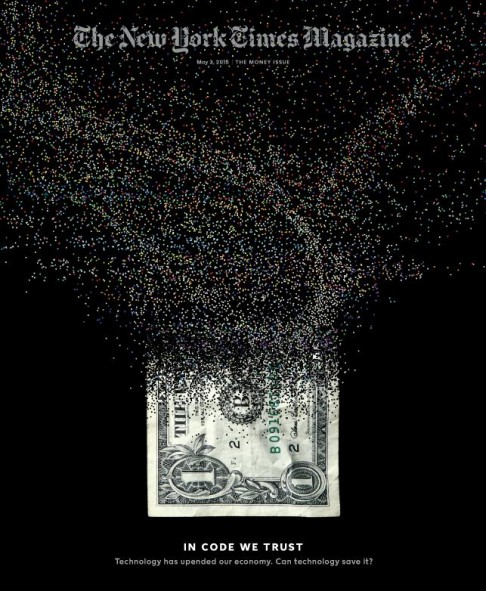
I’m featuring two (rather dark) New York Times Magazine covers this week. The first made me think how scary it is that all our money is actually ‘kept safe’ behind ‘code’. The second gets its message out clearly and simply…
The founders of Port magazine launched a new sexy baby recently — Avaunt, a new bi-annual publication — sexy for many reasons, of course!
It’s actually billed as “an adventure and innovation magazine for the International Luxury market”. Read reviews of this new magazine on Creative Review and MagCulture.
When translated, the cover reads “Give the Coke for Free — Germany needs a new drug policy”. Now, I’m not sure what the reasons behind this cover story are, and its true meaning, but I can appreciate the brilliance of the magazine’s logo cutting the Coke cover lines.
MagLove by @MediaSlut is a regular slot featuring the best local and international magazine covers every week, recognising well thought-out, powerful and interesting (and hopefully all three-in-one) covers and celebrating the mix of pragmatism, creativity and personal taste that created each of them. The (for now anonymous) blogger behind MediaSlut knows way too much for his own good about media in South Africa, magazines in particular. His mission is to show when SA magazines fail but, most importantly, also when they succeed. If you’re looking for a library about SA magazines and news, this is your one-stop pitstop.
— MarkLives’ round-up of top ad and media industry news and opinion in your mailbox every Monday and Thursday. Sign up here!
by Russell Southwood (@BalancingActAfr) In this video interview, we talk to Claire Sibthorpe, Connected Women Programme Director at the GSMA, about a global study on the gender gap in mobile ownership and use, focusing on the African results in the study.
She talks about:
the overall global picture in terms of the gender gap
how Africa compares to the rest of the world
variations between different African countries
the reasons for the gender gap and the key factors and
what might be done to close the gender gap.
Russell Southwood (@BalancingActAfr) is the founder of Balancing Act and the web TV channel Smart Monkey TV (@SmartMonkeyTV), and has been an analyst in telecoms, internet and broadcast in Africa for the last 15 years. Smart Monkey TV aims to capture the energy at the crossroads between African culture and technology. MarkLives is syndicating content from Smart Monkey TV on a weekly basis for the column “Smart Africa TV”.
— MarkLives’ round-up of top ad and media industry news and opinion in your mailbox every Monday and Thursday. Sign up here!
If this is true, it represents an evolution of the online, massive-scale advertising markets that Google, Facebook and similar services oversee. On the face of it, this sort of service seems like a great opportunity, but is it?
Image by hywards courtesy of FreeDigitalPhotos.net
“Essentially, advertisers would upload email addresses to Google with corresponding audience tags. Google would use the email addresses to connect the devices associated with each customer to the advertiser-specified audience tags.
“The advertiser could then customize search ads to individual audience segments — presumably using different ad copy, landing pages, and applying different bids for searches from those audiences — based on their own online and offline customer data. No more relying only on the constricted view provided by online browser behavior.”
Two thoughts about this seemingly natural progression are:
What should brands’ responsibilities be as sources of this data, and
Is the law being left behind once again (and what does that mean for consumers)?
Privacy laws
On the second point, this does seem like a case of technology leaping ahead of scenarios the law was designed to handle, to a degree. The classic-use case privacy laws are currently designed to address is a brand collecting email addresses, for example, from consumers on some basis and using that personal data to market to those consumers.
If those consumers give their informed consent to this or if there is some other recognised justification, then the brand is free to use that personal data within whatever parameters are implied by the justification.
Google’s rumoured plans take this classic use case a step further (Facebook is already doing this; it is called “Custom Audiences“). As Marketing Land pointed out, brands would upload consumers’ email addresses and Google would take that data and match the addresses to Google users to create segments the brand could then target.
If you just focus upon the brand’s activities, it is really merely using Google as a tool to reach its consumers? What about the elephant in the room, so as to speak? Which permissions will Google essentially grant itself regarding those email addresses? If they correspond with existing Google users, Google may be able to take that data and use it not only in terms of its agreement with the brand that supplies the data but also in terms of its agreement with individual consumers, too.
What about associated data?
This shouldn’t be problematic if Google has the email addresses already but what about associated data, such as relationships with other consumers in the brand’s datasets or some other ancillary data?
It will be interesting to see how new use cases emerge, when brands blend their data more and more with data already held by the likes of Google and under different legal frameworks.
Perhaps an even more interesting question is how brands should approach these opportunities? Certainly, scale is very appealing and the opportunity to supercharge your email database with a little Google juice is pretty compelling, but should brands be more circumspect?
Dan Herman of Aqua recently wrote a column on MarkLives titled “Motive: How brands can help us win back the internet“ in which he argues that brands should stand up as consumer advocates and align themselves more with consumers’ interests than their own:
“Fight against abuse”
“The continued growth of abusive online behaviour makes it an imperative for brands to unite with consumers in the fight against abuse. They need to do this by monitoring social conversation, driving positive sentiment and delivering content that adds value.”
I like the sentiment even though I wonder if it is realistic. It isn’t that I think brands are inherently evil and would never proactively work to protect consumers. Brands comprise people who are compassionate and often believe they are already working to benefit consumers in their own way. I just think the two perspectives may be incompatible from each other’s perspectives.
That said, adopting this consumer-activist slant may give brands more cause to think more carefully about whether supplying email addresses to Google or Facebook is the right way to go or perhaps spend a little more time ensuring those email addresses won’t be abused in some way.
This isn’t a simple challenge. Brands will always want to reach consumers most effectively and with scale. Consumers don’t always want to be reached but the trend towards better targeting and more relevance may help brands and consumers find an acceptable compromise.
Aligned goals?
After all, consumers don’t make purchasing decisions in a vacuum; we want to be better informed, to find the products and services that satisfy our needs more than others, and brands may help us achieve those goals. The question is whether those goals will be aligned, more often than not?
South African-born Paul Jacobson (@pauljacobson) is a content marketing specialist and reformed internet lawyer, now based in Israel. He has a passion for the social web, internet trends, digital marketing and related themes such as online reputation management and privacy. He contributes the regular “Tech Law” column focusing on issues in the digital marketing space to MarkLives.com. CC BY-SA 2.5
— MarkLives’ round-up of top ad and media industry news and opinion in your mailbox every Monday and Thursday. Sign up here!
Cheryl Hunter (shelflife at marklives.com)’s weekly pick of recent product, packaging, design and food launches:
Oreo Playtime extended
Shopper marketing with Nature’s Garden, and
The even thinner smartphone
The quirky cookie rocks Rosebank further
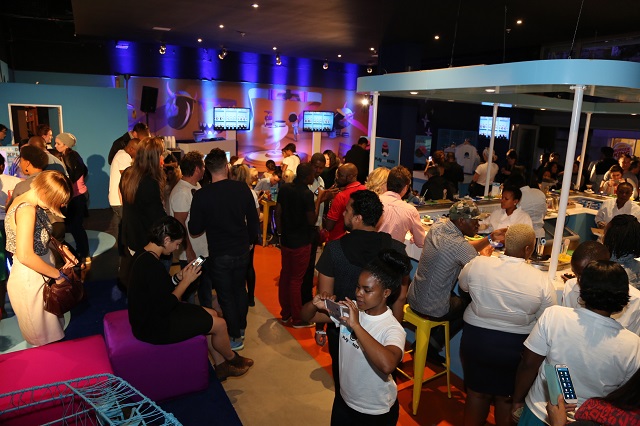
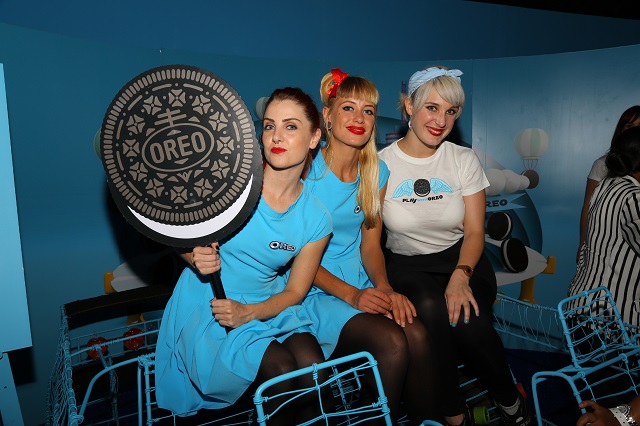
Joburg consumers have inundated the Oreo experiential café in Rosebank, Johannesburg, effectively demanding an extension of the pop-up store’s initial four-week period until 17 May 2015. The #PlaywithOreo café at The Zone @ Rosebank is an ‘imaginatively playful’ store that brings the brand attitude of Oreo to life.
Comments Grant van Niekerk, category leader: biscuits and beverages at Mondelez SA, “The café was more popular than we expected, with an estimate of 20 000 visitors in a month and more than 80 000 OREO dishes served (around four per customer), with long queues of guests waiting outside the store on a daily basis.”
Fans visiting the cafe in May will have a chance to create their own Oreo Cookie Creations with mini photoshoot sets and other fun activities. New OREO inspired treats will also grace the ‘Cookie Conveyer’, so returning fans will enjoy fresh delights.
Adds Van Niekerk: “We can now bring our fans a little more fun and a little more play over the next two weeks. We’ve been overwhelmed by the support and positive reaction from our fans and thank everyone for their amazing engagement and comments thus far.”
Retail wars — no garden party
When does an ad agency advise a client to freeze that adspend, put the tv commercials on ice and spend some time on the shelf? The answer: when the research advises it.
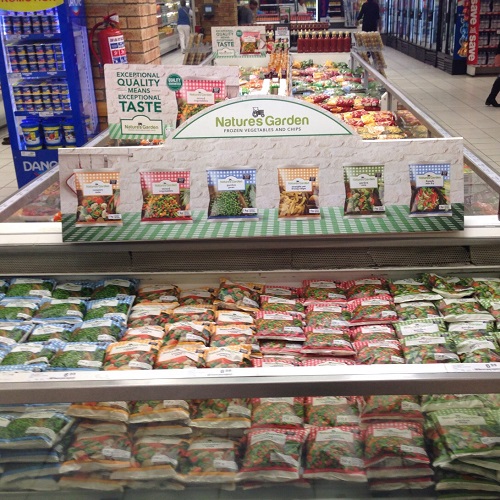
Nature’s Garden is one of South Africa’s largest suppliers of frozen vegetables and chips, and recently wanted to increase market share across retailers. According to Rob van Rooyen, House of Brave executive director (strategy), the Johannesburg-based agency used shopper marketing to better understand how and when people shopped, and the definitive result was a decision to engage the competition on shelf and in store.
The bulk of the campaign centred on ‘road-blocking’, explains Van Rooyen: “We bought out all media types across the various elements allowed for in stores and effectively roadblocked the freezer sections for a year.”
In isolation, this may not have been effective, but the messaging was specifically designed to embrace the user experience: “We made sure we understood what the user was looking for in store and eased the introduction for first-time users by removing any risk — we guaranteed the promise of taste or your money back,” he adds.
In addition, a new pricing strategy allowed the product to be positioned just below the category leader, which to shoppers meant the same quality at a great price — and the perception started to pay off.
The campaign resulted in huge growth, according to House of Brave, with one of the larger chain stores seeing a 24% increase in sales.
Disclaimer: House of Brave is a client of Cheryl Hunter.
The skinniest model in SA
Measuring just 5.1mm, the Mobicel Air is one of the slimmest smartphones in the world and is now available in SA….
The Air is an undeniably attractive phone. It’s incredibly light, weighing only 97 grams. While consumers are looking for bigger screen devices, they also want them to be compact to fit easily into pockets, so slim is great. But that makes one wonder what features were dropped to achieve this skinny appeal.
According to Mobicel CEO Ridhwan Khan, there were no compromises: “We wouldn’t compromise on anything. Everything we do is about delivering an amazing user experience, and the Air is no exception. It’s fast, it’s feature-rich, and it’s affordable.”
The Mobicel Air is powered by the 1.7GHz octa-core processor, operated by Android 4.4 KitKat, and offers an 8MP rear autofocus camera with touch focus, Gesture Shot and self-timer options, as well as real-time filters and an image editor. There’s also a full HD video recorder and a 5MP front camera for today’s selfie-hungry generation.
Commenting on the retail price of R3 499, Khan says: “It’s a slick looking device with a phenomenal user experience. It’s everything you’d expect from a smartphone… and it’s affordable. It’s a winner.”
The Mobicel Air comes in white and black and is currently available at Cell C and Foschini stores, as well as from Mobicel’s online store on www.mobicell.co.za.
Shelf Life is MarkLives.com’s weekly column covering new product, packaging, design and food launches. Notify us of yours at shelflife at marklives dot com. Want to sponsor Shelf Life? Contact us here.
Cheryl Hunter (@cherylhunter) has written for the South African media, marketing and advertising industries for more than 15 years. A former editor of M&M in Independent Newspapers and contributor to Bizcommunity, AdFocus, AdReview and the Ad Annual, she has also produced for various television networks and currently consults on communication strategy and media liaison.
— MarkLives’ round-up of top ad and media industry news and opinion in your mailbox every Monday and Thursday. Sign up here!
by Oresti Patricios (@orestaki) A Cadbury Lunch Bar promotion that gets people to look a little closer is the brainchild of digital agency Hellocomputer, in celebration of Lunch Bar’s Golden 50th anniversary.
The campaign uses a visual language that will instantly be recognisable to any video gamer: the illustrations in the advertising promotion feature ‘retro’ images inspired by each of South Africa’s major cities (and the Karoo).
Known as ‘low-poly’, this type of 3D graphic harks back to an era when computer graphics were not as powerful as they are today. In other words, this campaign pays homage to the pixel. The colour palette chosen is also quirky — a slightly desaturated, pastel look that gives it a unique look.
Computer graphics cards are measured by their ability to process polygons — the more polygons, the more detail you get, but also the more graphical power that’s needed to make the images appear smoothly on the screen. Low-polygon games were all that older computers and consoles could handle and had a characteristic pixelated look, which is where the term ‘low-poly’ comes from.
The fashion in video games — especially amongst independent gaming studios — has been to hark back to that era. Think of it as a nostalgic nod to games such as Minecraft that feature characters that look like they’re built out of Lego blocks, and environments that consist of untextured, flat colours. If that sounds boring to you, then you must have beamed in from another planet, because 27m+ people have been bitten hard by the Minecraft bug.
The charm of low-poly is in the simplicity, and the Lunch Bar illustrations have hooked into that. Each city is condensed down to a few city blocks, but each one is instantly recognisable to any South African who knows their geo-culture.
Pretoria is represented by the Union Buildings, the Voortrekker Monument and purple jacaranda trees, along with a cricket pitch and other buildings.
Cape Town features — naturally — Table Mountain and its cable car, vineyards, the V&A Waterfront and a ‘Kaapse Klopse’ parade. It also has a space shuttle taking off — a quirky little bit of invention on the part of the artist.
These city/landscapes were created by Duncan Bell, who is also a game designer; so he has a natural passion for the style. To create the campaign he used Cinema 4D, software that is used by many game designers to create video game environments.
Games are a big business, even in SA. A recent study by PricewaterhouseCoopers found that South Africans spend some R1.4bn rands on games and gaming products; internationally the industry earns more than Hollywood does — some US$76bn dollars per year. The aforementioned Minecraft was bought recently by Microsoft for US$2.5bn.
At any time of day, between 6m and 9m people are logged onto Steam, the world’s biggest online distributor of video games — which boasts an active membership of 125m people. Because of the nature of these games, those people often want to eat without leaving their stations, so snacks such as chocolates are always going to be part of the culture.
So there is a smart logic behind Hellocomputer’s thinking in this campaign. It will appeal, perhaps on a subliminal level, to those gamers old and new who appreciate the aesthetic. It should also appeal to anyone with a quirky design sense.
What adds to the fun of these graphics is the detail, which was added by a second artist, Reynard Nel. He included intricate scenarios and human interactions within the scenes, from people doing a tug-o-war on the roof of a Jozi building, to the band Die Antwoord playing for some fans in Cape Town. It’s reminiscent of those “Where’s Wally” books; the longer you look at the picture, the more little details pop out at you.
The campaign used phone-in competitions at radio stations Metro FM and 5FM, where callers had to answer general knowledge questions about SA, with clues often to be found in certain illustrations. Questions also were posted on Facebook, where the illustrations were published, with clues. Running concurrently with this were barcode/SMS competitions held through Sasol petrol stations, and Spar and Shoprite Checkers supermarkets.
Cadbury, which was bought a few years ago by Mondelez (the huge multinational that owns Kraft, among others) has retained its SA identity in brands such as Lunch Bar, which was found by Ipsos Sunday Times to be “South Africa’s most-loved chocolate” — and although that was in 2008, the brand still capitalises on that — and that it was awarded the TGI Icon Brand in the chocolate category in 2014.
The brand has a long and illustrious track record in SA, with even those of us in our 40s and 50s thinking fondly of the ‘much more munch’ ads — remember: “What kind of a Mac are you?” — “I’m a Makatini!” For a little nostalgia, view the series of ads in Shelf Life: Happy 50th, Lunch Bar!
Even then, the brand took pride in its South African roots.
This campaign works across several media channels to raise brand visibility, and I think it succeeds on several levels. What makes it unique is this retro/modern/gamified graphic treatment: simply sublime.
Welcome to the game revolution, Lunch Bar. Here’s to much more munch, obviaas!
Ad of the Week, published on MarkLives every Wednesday, is penned by Oresti Patricios (@orestaki), the CEO of Ornico, a Brand Intelligence® firm that focuses on media, reputation and brand research.
If you are involved in making advertising
that is smart, funny and/or engaging,
please let Oresti know about it at info@ornicogroup.co.za.
— MarkLives’ round-up of top ad and media industry news and opinion in your mailbox every Monday and Thursday. Sign up here!
by Thabang Leshilo (@Thabang_Leshilo) There is a global cultural shift in social perceptions and behaviours which is expected to have a powerful impact upon the future. The glossy world is being discarded, the reality of people rejecting perfection and abandoning their immaculately curated online selves. Instead, the gritty is becoming aspirational — genuine candour valued as people seek out interactions that are authentic and open.
I See A Different You: Stand Together series 03
Already, the impacts of this shift — Frank Reality* — are being seen in the world of brands and marketing.
One example is Lena Dunhams’ HBO series, Girls, which speaks to a generation of young women in a very real and candid way. Beyonce’s 7/11 video is another.
Home-made style
Shot in the style of a home-made visual, with the singer dancing at various locations in a sweatshirt and knee pads, the video is a refreshingly different take on the flashy world of celebrity and, even though meticulously edited, giving us a glimpse into her life offstage. Inspired by superfood kale, twerking, GoPros and her adoring fans who often create choreographed home videos of themselves dancing to her music, she has simply tapped into the ‘real world’.
The critical aspect for marketers tapping into Frank Reality is achieving the seamless ease and authenticity Beyoncé pulled off because — for millennials — the economic reality of our lives, and greater exposure and knowledge of the world around us, have rooted us in substance. We recognise what’s real.
Admittedly, Beyoncé wasn’t the first to ‘get real’ and embrace a very true documentary style. Electronic music star Major Lazor’s “Get Free” video, directed by SoMe, took the viewer on a candid journey of Jamaican culture. This was followed by Major Lazor’s dancer Mela Murder and friends vogue through NYC in Clayton Vomero’s GANG film, simply but beautifully capturing a 24-hour journey in life.
Emerging in South Africa
In South Africa, we’ve seen the emergence of photography trio I See A Different You, documentary film maker Leboghang Ratsebe and musician KO’s Caracca. All produce content that reflects a young and fresh perspective on real life in SA, a perspective that cannot be generated using stock footage.
Oh, yes, bye-bye stock footage and heavily scripted TV commercials. Messaging that simply pushes product will increasingly prove ineffective in reaching out to consumers, particularly young audiences who have grown up with the noise pollution that is generated by the media… and are consequently very good at tuning out.
More and more, we will see consumers rejecting superficial messages and responding only to real authentic stories that embrace imperfection and honesty in all channels, both off and online. Take Smirnoff’s recent launch into other African markets; it had an edgy advert that took the audience on a thrilling journey into the heart of Accra.
Time, money and effort
So gone are the days of stiff, stock photography. Creatives will need to invest more money, time and effort into drawing inspiration from real life and collaborating with other content creators to bring different art forms together. They must strive to let photography meet art films and music, in their purest and most provocative way, to capture the nuances of the real human experience.
What with storytelling having become one of the most valued and impactful principles within the world of brands and communication, it’s not only about telling more emotive stories about your brand — it’s about telling real stories that reflect real life with what feels like real characters. This is what consumers will be inspired by in the future.
Not picture perfect.
*Frank Reality is the term devised by Added Value to describe the global cultural shift in social perceptions and behaviours.
Thabang Leshilo (@Thabang_Leshilo) is a project manager at strategic marketing consultancy Added Value. As a ‘next-generation’ marketer with fresh and curious eyes looking into the industry, she has a keen interest for brands that are culturally in tune with and able to integrate and immerse themselves into the everyday realities of the consumer. She contributes the monthly “Tuned” column, sharing marketing insight and analysis, to MarkLives.
— MarkLives’ round-up of top ad and media industry news and opinion in your mailbox every Monday and Thursday. Sign up here!
by Emma King (@EmmainSA) Slumped on the sofa, glass of wine in hand, watching a handful of frantic Aussies desperately spill and burn things while the clock ticks — one wouldn’t think it was the ideal place to learn life (or business) lessons. But life is funny like that and sometimes the greatest little gems of insight pop up when least expected.
I had one of those moments recently, when catching up on a Masterchef extravaganza. British celebrity chef, restaurateur and TV personality Marco Pierre White was stomping around the room, leaving quivering aspirant chefs in his wake, while making them mindlessly chant “Yes, Marco!” each time he barked an instruction or insult. Gripping TV at its finest.
Image by marin courtesy of FreeDigitalPhotos.net
Made me think
But, in the middle of his tirade, a lucid comment about some unappealing disaster of a meal stayed with me and made me think: “Perfection is a lot of little things done well.”
Isn’t that true of so many things, especially, I think, a successful business?
I have written at length before about how important attention to detail is. A stroppy email bcc’d to the wrong person; a mistimed tweet about a sensitive subject; or a typo-ridden piece of communication have all been subject of our derision or cause of some poor soul’s redundancy package. For how can an agency position itself as an expert in communications, and charge for it, when it cannot get even the simple things right?
Strong business or brand
On the flipside, I’ve always believed that a strong business or brand is one that pays attention to all those little things — one that ensures that, every single time someone comes into contact with its branding, people or physical presence, she or he has a consistent and pleasant experience. A lot of little things done well, in truth.
In keeping with the Masterchef theme, and White in particular, another of his favourite sayings is “Time is not your friend; it’s your enemy.” Again, perhaps there’s something to be learned by us armchair-foodies that we can take into real life — For those who do well in the time-pressured situations on TV are those who have focused on their mise en place, simply translated from French as “putting in place” or “preparation”.
For we PR types, our mise en place is not the chopping of millions of vegetables or deshelling of hundreds of prawns, but rather the slow and steady planning and preparation that belies a good campaign or piece of work. It’s an exercise of mindfulness and concentration.
The most competent
There are many people I have come across who believe that the loudest or most-noticeable person in the room is the most competent, often the one running around making everyone else run in circles.
Yet I would argue that the ones who really have it all under control are those who are quietly keeping things moving in the background — the ones who have thought out each potential issue in advance and prepared for it; the ones who have come equipped with the tools to make things happen and the phone numbers of people who can make it happen if they can’t. Yes, the ones who have done their mise en place.
Who would have thought that little gems of insights could come from watching reality TV? I don’t suppose much can be learned from the latest episode of the Kardashians, except perhaps how to be vulgar and how to stretch the boundaries of good taste. But I do think that inspiration and life learnings may unexpectedly come from many places, so why not in a plate of steaming risotto or the bottom of a beverage glass?
Emma King (@EmmainSA) is the owner and MD of The Friday Street Club (@TheFridayStClub). Previously, she was head of PR at The Jupiter Drawing Room (Cape Town). She contributes the monthly “The Dissident Spin Doctor” column on PR and communication issues to MarkLives.com.
— MarkLives’ round-up of top ad and media industry news and opinion in your mailbox every Monday and Thursday. Sign up here!
by Erna George. How are brands behaving to allow consumers to feel partnered and covered against legal consequences of their signatures on seemingly innocuous agreements?
It all started with severe frustration in buying a car via a trusted financial services brand. Only, I was forced to deal with a third party — dual forms and dual processes that drove me to feel as if I needed a lawyer to protect my interests. When I looked deeper, the ‘iffy side’ to contracts in the brand-consumer relationship was plain to see.
Image by nongpimmy courtesy of FreeDigitalPhotos.net
Seeing both sides
Now that I sit at the marketer’s table once again and have a stack of areas to comply with on messaging, quality, and more, I understand the challenges of this. But, when I sit as a consumer, I see the other side, too.
Even with the Consumer Protection Act, it is still a significant task to get things done as a consumer without the daunting contracts or Ts and Cs that are a challenge to understand.
On calling my bank to get a car loan, I expected a simple process, given all financial services profess to straightforward sign-on done via one call. I applied and was to sign a contract with the bank, including admin fees and other costs plus, of course, the monthly instalment. Then I received a mail from a third party hired by the bank to run checks on myself and the car. The middle man also required me to sign a contract with the third party — only the fees and costs quoted by the bank were repeated on its form.
Signing for the same costs twice
Essentially, it stated that I can pay the admin costs upfront or over the term of the loan with the bank, only there was no tick box to select which I would prefer. Upon reading it several times, it became clear that I could be signing for the same costs twice.
When I brought this to the sales consultants’ attention (on both sides), their exasperated response was it would not happen and I should just sign. They behaved that, by asking the question, I was being difficult and should simply have faith.
The reality is that, if I signed an ambiguous clause, only I am held responsible; for the brand and its third party to brush off the query felt isolating. What could I do but sign and trust the brand?
Less than bargained for
The reason I was so pedantic is that I have heard too many stories of people trusting, signing and finding themselves with less than they bargained for.
One of these I overheard while in the lobby of a conference centre. A young couple with a little daughter came to a meeting with a consultant about cancelling their timeshare. They wanted to have another baby and, to make this feasible, would prefer not to spend funds monthly upon timeshare but upon their family’s daily needs.
The consultant’s response explained that they had signed a contract in perpetuity. They were liable to pay for the rest of their lives and so were their descendants, yes, forever. The brand salesman had said they could sell the timeshare back to the business at any time but it seems that he’d been less than generous with the truth.
Devastating
He had mentioned all the good stuff and not the perpetuity clause or that the repurchase was at the brand’s discretion and not guaranteed. The couple had skimmed some of the contract but did not understand it all so assumed what they were sold verbally matched the contract. They left with the contract intact. The impact of having to wait to expand their family and the future cost legacy they would leave their kids was devastating to both.
In terms of our law, when a consumer enters into a written contract or agreement without reading the contract, they will be bound by the terms and conditions of that contract in terms of the legal principle ‘let the signatory beware’ (caveat subscriptor). Without reading these, consumers, like the couple above, are bound by conditions, whether favourable or unfavourable to them. It is unfortunate that so many contracts have been constructed with language incomprehensible to the average consumer.
The Consumer Protection Act of 2008 shifts things marginally, stating that agreements must be written in basic language and that financial obligations must be specified in detail. The only hassle is that most agreements are so long and in such small print; who actually reads these? The act states that, if consumers do not understand, they should get a lawyer to assist. Just how many consumers can afford this?
Who does power vest with?
If I go by my recent experience, despite my actually understanding a very basic contract, brand parties would not change their clauses so the power does not seem to rest with consumers. At no stage could I speak to a supervisor or someone who could alter the contract. I was the crazy consumer frustrating the call-centre representing an organisation that could charge me twice. I did not have the time to change the world; I needed a car, so I signed!
Are brands becoming removed from their market by call-centre agents and third parties? Has the customer has simply become a signatory and a source of income? Given the size of brands and the resources at their disposal, the bias in ‘let the signatory beware’ is substantial. Let the signatory beware assumes that consumers understand their rights; that they have the capability to understand legal terms or resources to retain legal counsel and that all sales people provide all relevant details not a one sided pitch. While the signatory must beware, wouldn’t it be great if brands made it so that it was less necessary?
As more layers are placed between the brand and consumers, brands need to find a way retain their bond with the consumers they need support from. Consumers will lean towards the consumer-champion brands or brands that reflect processes, a voice and experiences that are fair and with fewer complications.
The same set of rules
Brand must hold themselves to the same set of rules as they do to their customers:
Call centres, third parties and sales teams must reflect the brand values and treat the customer with deference — and not as a signatory or source of cash
Contracts must be made simpler and the process must reflect fair practice
Consider becoming the brand that partners and educates consumers so they no longer need to beware
If not, one day I will be writing a column titled, “Let the brand beware”!
Erna George is the new marketing executive of Pioneer Foods’ Cereals & Other division. She has worked on both client and agency sides with diverse brands and categories — from FMCG, alcohol and agriculture to financial services and entertainment — in countries across many geographies, including South Africa, Mozambique, Nigeria, Kenya, India, Philippines and Brazil. She contributes the monthly “Fair Exchange” column, concerning business relationships and partnerships in marketing and brandland, to MarkLives.
— MarkLives’ round-up of top ad and media industry news and opinion in your mailbox every Monday and Thursday. Sign up here!

 Grew to embrace