Mike Schalit on the making of Net#work BBDO

by Herman Manson (@marklives) Mike Schalit, chief creative officer and co-founder of Net#work BBDO South Africa, would much rather appoint a strategist than a creative to his agency today.

The majority of a modern creative director’s job is focused upon strategy, he says. They direct creatives, keeping them on track and their work relevant to the brief, brand and market. They help clients understand suggested strategies and work closely with agency planners to bring together the creative and business sides of any given strategy.

Mike Schalit
Mike Schalit

Evolution a sign of maturity

While agencies will always require and celebrate the skills of craftsmen and women dedicated to finessing creative work, Schalit sees the creative director’s evolution into a more-strategic orientation as a sign of maturity in adland that breaks old stereotypes (he’s never had a ponytail, he quips, even when he wore his hair long) and which stops advertising agencies from being pigeonholed or taken less than seriously.

Creativity isn’t an indulgence — it deserves respect — and it’s the one offering most corporations aren’t able to transfer to an in-house department. For big-picture creative ideas, the talent stays in agencies. And their strategic approach ensures willingness on the client side to sit down and listen.

Schalit had always had an ambition to own his own agency. He had joined TBWA\Hunt\Lascaris in 1985, when it was a small 15-person agency and, by 1991, he was serving as John Hunt’s deputy. The latter threw a long shadow and Schalit was keen to start his own shop. He had some offers but Hunt always convinced him to stay and see if something came along within the group.

In 1994, that opportunity finally presented itself. TBWA\Hunt\Lascaris was approached by Nissan through its global alignment with NethWork, an Omnicom-owned specialist Nissan agency, which was a joint venture between TBWA and Hakuhodo operating in the Netherlands and Japan.

But, in South Africa, Hunt\Lascaris already held BMW. It opened up a gap to create a new shop in SA, lead by Schalit and colleague Keith Shipley.

Entered local ad lore

The duo went to see Nissan after flying in planners from Europe, got the nod and set about establishing the agency in April 1994 — the month SA would hold its first democratic elections. Their first ad was a dig at Toyota’s “Everything keeps going right” advertising campaign. True to form, it was subsequently banned by the Advertising Standards Authority of SA but not before entering local advertising lore.

Net#work BBDO logo square 2015There was a snag (apart from the country seemingly teetering on the brink) in that Nethwork wasn’t the most pronounceable name, given SA accents (it sounded clumsy, like a bad lisp, says Schalit). So they dropped the h and put in #, which Shipley has spotted on one of the agency typewriters. Net#work was born and named, resulting in people literally calling the agency “Net ‘hash’ Work’” — at least in the beginning.

Schalit says the agency was optimistic about its prospects and those of the country right from the start. He quotes Søren Kierkegaard, “Life can only be understood backwards; but it must be lived forwards.” It’s a philosophy he and the agency still hold onto 21 years later.

What was meant to be the local Nissan agency grew quickly, winning more business, and going up against TBWA\Hunt\Lascaris. Omnicom Group, which owns both TBWA and BBDO, decided it needed to strengthen its local BBDO presence (at that point it owned Berry Bush BBDO in Cape Town and a smaller shop in Jozi), rather than have two high profile TBWA agencies competing. Thus, in 2000, Net#work joined BBDO.

A 2004 peak

At its largest in 2004, the agency grew to close on 300 people and, besides the Joburg and Cape Town agencies, had four specialist shops:BBDO Consultancy, Proximity 4332 (the ‘direct’ offering), Gloo (yup, the same one) and an experimental arts/crafts lab called T#he Embassy. That year, it won 32 of the 115 advertising awards, including a Grand Prix, that were handed out at the Loeries.

As with all agencies, Net#work BBDO has seen growth and contraction (it lost Nedbank in 2012 after seven years, after losing Cell C that same year). The agency currently employs around 130 people in Cape Town (as 140 BBDO) and Joburg (as Net#work BBDO).

According to Schalit, the agency grew unfocused and thus needed to recorrect, selling off or closing its offshoots and integrating its offering, so that now it is currently enjoying a sense of renewal and rejuvenation and is winning clients again, including Virgin Money and South African National Lottery operator, Ithuba Holdings (in Joburg); and 22seven and Pam Golding (in Cape Town). It’s also slowly building out its creative hubs in East and West Africa, in Nairobi and Lagos, respectively.

Agency expansion  into the rest of the continent, says Schalit, has been all about business and less about the work. He hopes to change that by finding and nurturing talent with a focus upon creating excellent work outside of SA. He wants Net#work’s agencies on the continent to be produce vibrant African solutions and creative, with a focus on quality, rather than quantity.

Talent building

Net#work isn’t new to building up talent: some of the country’s most-regarded creative leaders have walked through its doors, including Pepe Marais (CCO/co-founder, Joe Public), Brett Morris (group CEO, FCB South Africa), Vanessa Pearson (CCO/co-founder, House Of Brave), John Davenport and Phil Ireland (CCO/co-founders, Ireland/Davenport), Rob McLennan and Graeme Jenner (CCO/co-founders, King James II), Gerry Human (CCO, Ogilvy London), Neo Mashigo (until recently ECD at Ogilvy Joburg), Mariana O’Kelly (ECD, Ogilvy Johannesburg) and Qingqile WingWing Mdlulwa (CD, FCB Joburg). The list goes on.

A personal highlight for Schalit came in 2007 when the agency received SA’s first Cannes Outdoor Grand Prix for Nedbank’s solar-powering billboard. It’s one of three Grands Prix the agency has taken at Cannes Lions (the others being for Virgin Atlantic Upper Class Suite and Mercedes-Benz safety features). The billboard still powers a school kitchen in Alexandra, Gauteng, that offers 1200 students a hot meal every day.

MAL FoundationAnother is the MAL Foundation, which finds its inspiration in a quote commonly attributed to Winston Churchill: “We make a living by what we get, but we make a life by what we give.” The foundation has so far designed and built six libraries in township schools around the country.

Schalit believes successful agency/brand collaborations happen if there is management buy-in on both sides. He holds fast-food fried chicken brand, Chicken Licken, as an example of such a relationship that works well for both parties. Founder and MD, George Sombonos, still comes to agency shoots and, when an ad works, he sees a sales spike, which is fed back to the agency. Chicken Licken has grown from a small township brand into a R1bn business, with franchises across the country.

Real reward

Making a real impact upon another’s company is still what gets him excited about being in the business several decades later, says Schalit. It’s not just an award; it’s real reward.


Herman Manson (@marklives) is the founder and editor of MarkLives.com.

— MarkLives’ round-up of top ad and media industry news and opinion in your mailbox every Monday and Thursday. Sign up here!

MagLove: The best magazine covers this week (4 September 2015)

MediaSlut (@MediaSlut)’s choice of the best international and South African magazine covers this week:

  • Esquire (Spain)
  • Forbes (Spain)
  • Interview
  • Time Out (New York)
  • Woolworths W

INTERNATIONAL

Esquire (Spain), September 2015

Esquire Spain, September 2015Funny-man Steve Carell is definitely not taking himself too seriously, judging by this cover! It takes a special kind of person who is willing to appear on the cover of a major magazine, wrapped in sellotape…

If you can undertand Spanish, read the article here.


Forbes (Spain), September 2015

Forbes (Spain), September 2015Also from Spain is Forbes magazine, with a devilishly good cover with Uber’s CEO, Travis Kalanick.


Interview, September 2015

Interview, September 2015: Selena GomezInterview, September 2015: Mert AlasInterview, September 2015: Kim Kardashian WestInterview, September 2015: Zain MalikInterview, September 2015: Madonna Interview, September 2015: Miley Cyrus Interview, September 2015: Jennifer LopezInterview, September 2015: Victoria Beckham
When you think about it, this is probably the cheapest eight-way-split cover — with a celebrity on each — ever! No styling, make-up, studio, photographer or lighting costs required. Just an Instagram-selfie! Genius!

For its “#ME Issue”, Interview features a selfie from the #Instagang, which includes Kim Kardashian West, Zain Malik, Victoria Beckham (look who’s also behind her!), Mert Alas and Marcus Piggott, Jennifer Lopez, Selena Gomez, Miley Cyrus and Madonna.


Time Out (New York), 2 September 2015

Time Out (New York), 2 September 2015100% awesome.


SOUTH AFRICAN

Woolworths W, Summer 2015

Woolworths W, Summer 2015I think I had a visual orgasm when I saw this stunner in the aisles of Woolworths, and the best part is that anyone may grap a copy free from Woolworths!

As you know by know, Pharrell has become synonymous with Woolworths, what with all the campaigns with him at the moment, but it was this cover that has really made me sit up and take notice. A true stunner!


Find a cover we should know about? Tweet us at @Marklives and @MediaSlut.
Want to view all the covers at a glance?
See our MagLove Pinterest board!


MediaSlutMagLove by @MediaSlut is a regular slot featuring the best local and international magazine covers every week, recognising well thought-out, powerful and interesting (and hopefully all three-in-one) covers and celebrating the mix of pragmatism, creativity and personal taste that created each of them. The (for now anonymous) blogger behind MediaSlut knows way too much for his own good about media in South Africa, magazines in particular. His mission is to show when SA magazines fail but, most importantly, also when they succeed. If you’re looking for a library about SA magazines and news, this is your one-stop pitstop.

— MarkLives’ round-up of top ad and media industry news and opinion in your mailbox every Monday and Thursday. Sign up here!

SA TV Ratings: 17–23 August 2015 (week 34)

by MarkLives (@marklives) The hottest TV shows in South Africa revealed: SA TV ratings for the week of 17–23 August 2015!

Couple Watching TV by jennythip courtesy of FreeDigitalPhotos.net
Image by jennythip courtesy of FreeDigitalPhotos.net

Using data supplied by the Broadcast Research Council of South Africa (BRCSA), this South African TV Ratings column is a weekly roundup of SA’s TV audience viewership. We reveal the best-watched shows, where they ran and how many South Africans tuned in to watch:

  • Top 20 — adults and kids
  • Top 10 SABC1 — adults and kids
  • Top 10 SABC2 — adults and kids
  • Top 10 SABC3 — adults and kids
  • Top 10 e.tv — adults and kids
  • Top 10 Mzansi Magic — adults and kids
  • Top 10 M-Net — adults and kids

Note: thanks to loadshedding, the BRCSA is now running a week behind.

Top 20 shows across channels (national — adults age 15+)

Variable TVR %
Ranking Description (grouped) Channel Level 1 Level 2\Activity (r) Live + VOSDAL
1 UZALO SABC 1 Drama Drama 22.1
2 GENERATIONS THE LEGACY SABC 1 Soap opera LOCAL 21.5
3 SKEEM SAAM SABC 1 Drama Drama 18.1
4 MUVHANGO SABC 2 Drama Drama 15.5
5 SCANDAL e.tv Drama Drama 12.6
6 VODACOM YEBO MILLIONAIRES SABC 1 Competition Competition 12.4
7 SHUGA SABC 1 Drama Drama 11.5
8 ZULU NEWS SABC 1 News News 11.2
9 MY PERFECT FAMILY SABC 1 Sitcom Sitcom 11.1
10 XHOSA NEWS SABC 1 News News 10.6
11 SINGLE GALZ SABC 1 Sitcom Sitcom 10.4
12 ZAZIWA SABC 1 Variety Variety 10.1
13 RHYTHM CITY e.tv Drama Drama 10.1
14 SELIMATHUNZI SABC 1 Variety Variety 10.0
15 3 NINJAS HIGH NOON AT MEGA MOUNTAIN e.tv Movies Movies 9.3
16 LOTTO DRAW LIVE SABC 2 Competition Competition 8.5
17 UNSTOPPABLE e.tv Movies DRAMA 8.3
18 WWE WRESTLING RAW e.tv Sport WRESTLING 8.0
19 Z’BONDIWE e.tv Drama Drama 7.9
20 1’S AND 2’S SHOW SABC 1 Music Music 7.9

Top 20 shows across channels (national — kids age 4–14)

1 GENERATIONS THE LEGACY SABC 1 Soap opera LOCAL 23.8
2 UZALO SABC 1 Drama Drama 23.5
3 SKEEM SAAM SABC 1 Drama Drama 20.0
4 3 NINJAS HIGH NOON AT MEGA MOUNTAIN e.tv Movies Movies 16.2
5 MUVHANGO SABC 2 Drama Drama 15.2
6 SCANDAL e.tv Drama Drama 14.0
7 SINGLE GALZ SABC 1 Sitcom Sitcom 13.1
8 VODACOM YEBO MILLIONAIRES SABC 1 Competition Competition 12.6
9 ZULU NEWS SABC 1 News News 11.9
10 MY PERFECT FAMILY SABC 1 Sitcom Sitcom 11.7
11 ZAZIWA SABC 1 Variety Variety 11.6
12 XHOSA NEWS SABC 1 News News 11.5
13 RHYTHM CITY e.tv Drama Drama 11.4
14 SHUGA SABC 1 Drama Drama 11.3
15 SELIMATHUNZI SABC 1 Variety Variety 10.9
16 UNSTOPPABLE e.tv Movies DRAMA 9.1
17 FAN BASE SABC 1 Music Music 8.4
18 1’S AND 2’S SHOW SABC 1 Music Music 8.4
19 FRIENDS LIKE THESE SABC 1 Variety Variety 8.3
20 DITLABONYANE KE DITLABOIMA SABC 2 Drama Drama 8.2

Top 10 shows across SABC1 (adults)

Variable TVR %
Ranking Description Day of week Level 1\Activity (r) Live + VOSDAL
1 GENERATIONS THE LEGACY Monday Soap opera 22.5
2 UZALO Wednesday Drama 22.4
3 SKEEM SAAM Monday Drama 18.4
4 VODACOM YEBO MILLIONAIRES Tuesday Competition 12.4
5 ZULU NEWS Wednesday News 11.9
6 XHOSA NEWS Tuesday News 11.7
7 SHUGA Friday Drama 11.5
8 MY PERFECT FAMILY Monday Sitcom 11.1
9 SINGLE GALZ Wednesday Sitcom 10.4
10 ZAZIWA Thursday Variety 10.1

Top 10 shows across SABC2 (adults)

1 MUVHANGO Monday Drama 16.7
2 LOTTO DRAW LIVE Wednesday Competition 14.8
3 MUSIC Friday Music 8.6
4 DITLABONYANE KE DITLABOIMA Friday Drama 7.6
5 GA RE DUMELE Monday Sitcom 7.4
6 SPEAK OUT Thursday Actuality 6.7
7 MAMELLO Wednesday Drama 6.2
8 7DE LAAN Tuesday Soap opera 6.0
9 MUVHANGO -O Saturday Drama 5.8
10 MUVHANGO -R Tuesday Drama 5.7

Top 10 shows across SABC3 (adults)

1 THE BOLD AND THE BEAUTIFUL Tuesday Soap opera 5.4
2 CAF CONFEDERATION CUP:AFC LEOPARDS VS ORLANDO PIRATES Saturday Sport 4.3
3 MUSIC Tuesday Music 4.0
4 DAYS OF OUR LIVES Tuesday Soap opera 3.3
5 ISIDINGO:THE NEED Thursday Soap opera 3.1
6 KOJAK Tuesday Drama 2.7
7 NEWS Sunday News 2.6
8 MAGNUM P.I. Thursday Drama 2.5
9 7DE LAAN -R Thursday Soap opera 2.5
10 ISIDINGO -R Tuesday Soap opera 2.5

Top 10 shows across e.tv channel (adults)

1 SCANDAL Tuesday Drama 13.2
2 RHYTHM CITY Wednesday Drama 10.6
3 3 NINJAS HIGH NOON AT MEGA MOUNTAIN Saturday Movies 9.3
4 UNSTOPPABLE Sunday Movies 8.3
5 WWE WRESTLING RAW Sunday Sport 8.0
6 E NEWS EARLY EDITION Sunday News 7.9
7 Z’BONDIWE Tuesday Drama 7.9
8 MAHADI-LOBOLA Sunday Reality 7.3
9 MODERN FAMILY Sunday Drama 6.9
10 ROLLING WITH HEADLINERS Sunday Reality 5.7

Top 10 shows across Mzansi Magic (adults)

1 OUR PERFECT WEDDING (MAG) Sunday Magazine 3.3
2 ISIBAYA Thursday Variety 3.0
3 DATE MY FAMILY Sunday Reality 2.8
4 IDOLS SA Sunday Reality 2.0
5 IT’S COMPLICATED Sunday Movies 0.9
6 ISIBAYA – O Sunday Drama 0.7
7 UTATAKHO Tuesday Reality 0.6
8 MY PERFECT PROPOSAL Sunday Variety 0.6
9 ISIBAYA – R Thursday Drama 0.4
10 ZABALAZA Wednesday Drama 0.4

Top 10 shows across M-Net (adults)

1 CARTE BLANCHE Sunday Actuality 0.9
2 IDOLS SA Sunday Reality 0.8
3 STEP UP ALL IN Sunday Movies 0.7
4 THE BIG BANG THEORY Wednesday Sitcom 0.4
5 BRITAIN’S GOT TALENT VIII Tuesday Variety 0.3
6 MADAM SECRETARY Monday Drama 0.3
7 CHICAGO PD Tuesday Drama 0.3
8 HAWAII FIVE -O Thursday Drama 0.2
9 BRITAIN’S GOT TALENT Friday Reality 0.2
10 NCIS NEW ORLEANS Thursday Drama 0.2

Top 10 shows across SABC1 (kids)

1 GENERATIONS THE LEGACY Monday Soap opera 24.9
2 UZALO Wednesday Drama 24.3
3 SKEEM SAAM Friday Drama 20.9
4 ZULU NEWS Wednesday News 13.3
5 SINGLE GALZ Wednesday Sitcom 13.1
6 XHOSA NEWS Thursday News 12.6
7 VODACOM YEBO MILLIONAIRES Tuesday Competition 12.6
8 MY PERFECT FAMILY Monday Sitcom 11.7
9 ZAZIWA Thursday Variety 11.6
10 SHUGA Friday Drama 11.3

Top 10 shows across SABC2 (kids)

1 MUVHANGO Monday Drama 18.0
2 LOTTO DRAW LIVE Wednesday Competition 14.7
3 MUSIC Friday Music 8.2
4 DITLABONYANE KE DITLABOIMA Friday Drama 8.2
5 GA RE DUMELE Monday Sitcom 8.0
6 MAMELLO Wednesday Drama 6.9
7 WIPEOUT USA Saturday Competition 6.6
8 MUVHANGO -O Saturday Drama 5.4
9 SPEAK OUT Thursday Actuality 5.2
10 THE WATERBOY Saturday Movies 4.8

Top 10 shows across SABC3 (kids)

1 THE BOLD AND THE BEAUTIFUL Thursday Soap opera 3.7
2 CAF CONFEDERATION CUP:AFC LEOPARDS VS ORLANDO PIRATES Saturday Sport 3.4
3 ISIDINGO:THE NEED Thursday Soap opera 2.6
4 SPECIAL AGENT OSO Saturday Children’s programs 2.3
5 WILD TRIPS Saturday Children’s programs 2.3
6 MUSIC Monday Music 2.3
7 WHICH WAY Saturday Children’s programs 2.2
8 PHINEAS AND FERB Saturday Children’s programs 2.1
9 DAYS OF OUR LIVES Thursday Soap opera 1.8
10 WIZARDS OF WAVERLY PLACE Saturday Children’s programs 1.7

Top 10 shows across e.tv channel (kids)

1 3 NINJAS HIGH NOON AT MEGA MOUNTAIN Saturday Movies 16.2
2 SCANDAL Friday Drama 15.4
3 RHYTHM CITY Monday Drama 12.1
4 UNSTOPPABLE Sunday Movies 9.1
5 MODERN FAMILY Sunday Drama 7.9
6 E NEWS EARLY EDITION Sunday News 7.5
7 Z’BONDIWE Tuesday Drama 7.4
8 MAHADI-LOBOLA Sunday Reality 7.2
9 WWE WRESTLING RAW Sunday Sport 7.2
10 MAX STEEL Sunday Children’s programs 5.8

Top 10 shows across Mzansi Magic (kids)

1 OUR PERFECT WEDDING (MAG) Sunday Magazine 4.2
2 DATE MY FAMILY Sunday Reality 3.2
3 ISIBAYA Friday Variety 3.1
4 IDOLS SA Sunday Reality 2.5
5 IT’S COMPLICATED Sunday Movies 1.0
6 UTATAKHO Tuesday Reality 0.6
7 MY PERFECT PROPOSAL Sunday Variety 0.6
8 ISIBAYA – O Sunday Drama 0.5
9 DINEO’S DIARY -R Sunday Reality 0.4
10 ZABALAZA Thursday Drama 0.3

Top 10 shows across M-Net (kids)

1 CARTE BLANCHE Sunday Actuality 0.3
2 MIKE & MOLLY Thursday Sitcom 0.3
3 THE BIG BANG THEORY Wednesday Sitcom 0.2
4 STEP UP ALL IN Sunday Movies 0.2
5 BRITAIN’S GOT TALENT VIII Tuesday Variety 0.2
6 BRITAIN’S GOT TALENT Friday Reality 0.1
7 BRITAIN’S GOT TALENT VIII -R Thursday Variety 0.1
8 RESURRECTION Friday Movies 0.1
9 CHICAGO PD Tuesday Drama 0.1
10 MUSIC Thursday Music 0.1

Source: 2015 Week 34 TV Audience Report


Broadcast Research Council of South Africa


The Broadcast Research Council of South Africa (the BRC) is a non-profit, industry body that has recently been incorporated to cater to the audience research needs of the radio and television industry in South Africa.

— MarkLives’ round-up of top ad and media industry news and opinion in your mailbox every Monday and Thursday. Sign up here!

#TheFutureByDesign: Selfie nation

a #TheFutureByDesign interview. Selfies are like milk, or a milk moustache. They’re the bread and butter — the daily staple — of this social media age. If you want to know how obsessed we are with selfies, just take a look at the stats. Research from TechInfographics.com reveals that well over 1 million selfies are taken a day. Most selfies are shared on Facebook [48% of all selfies shared], with Twitter next in line. But are selfies about self-love or narcissism?

“Some people might see selfies as a self-loving movement, but I see the selfie movement differently,” says Jozi-based photographer, Lebz Skywalker. “I think people are looking inwards,” he says.

Photo by Lebz Skywalker
Pic: Lebz Skywalker.

“People think selfies are a recent trend, but really this isn’t a new phenomenon. Before photography was invented people were making their own portraits – they hired painters or sketch artists to make images or portraits of themselves. As soon as people could draw they’ve been making images of themselves, or paying others to do this,” the photographer says. “Look at the Middle Ages, all the kings and queens wanted good images of themselves,” he adds.

Skywalker believes there’s a healing aspect to the selfie mania. “If you can look at yourself in the mirror and be happy with what you see it is a good thing. Surely people who are comfortable with themselves are more integrated, or can be more integrated?” he asks.

The photographer often does research when he’s doing shoots – which often involves taking upmarket clothing brands into the townships and shooting young people wearing them – disrupting the notion that luxury brands are only for the elite and the moneyed. “I do informal research on selfies all the time. When I ask people why they take selfies, they respond that this is about a daily ritual. In Soweto teen girls tell me they wake up, get ready for school, but before they go out into the world they will take a really good selfie. They will bask in the light and treasure this moment as a ritual for the rest of the day. It is a ritualistic process that sets their self-worth and their mood for the day. This is what has made me start seeing selfies in a completely different light – as an affirming movement.”

Skywalker says traditional photographers have advised him not to take photographs of himself. “But then I ask why do we have self-timers on cameras?” Skywalker laughs. “You have the skill and time to do this, so why not? Particularly given technology like Instagram that globally connects humans across the world through a single platform with a single vision – sharing images, including images of oneself. This should be used as a prototype platform where people can view each other without prejudice,” he says.

“Through Instagram one can check out good images and see how people live on the other side of the world. It is about documenting life. This is the future — documenting our lives and making visual history as we go, instead of waiting for someone else to do this for us. The power of a smartphone lies not just in the calls one can make — it is a powerful tool in the workplace, in our daily lives to show, to create, to share,” Skywalker says. “If we fight it, we are building a barrier to the next step of technology which is humanising it. Instead of technology separating us by humanising it we use technology to connect.”


See more of Lebz Skywalker’s photography online at www.lebzskywalker.co.za. You’ll also find the image maker’s work on Twitter and Instagram @lebzskywalker

This feature first ran in The Future by Design, published by Ornico with MarkLives.com as its official media partner. Read the full magazine via Issuu or download the pdf (24MB).


— MarkLives’ round-up of top ad and media industry news and opinion in your mailbox every Monday and Thursday. Sign up here!

Talk Africa: The popularity of cellular networks in Pan-African social media

by Remon Geyser (@remongeyser) Through Springleap’s creative insights division, we’ve isolated a trend on social media of three African countries: in Nigeria, Ghana and Kenya, cellular network operators are growing in popularity among Facebook and Twitter users.

In Kenya, Safaricom — which is now a key player in the stock market — has recently hit over 1m likes on its Facebook page from local internet users. Ghana’s social media stats ranks Airtel Ghana and MTN Ghana at first place, with 483 000 and 446 200 likes respectfully (in third place is Vodafone Ghana, with 334 000 likes). Nigeria, which boasts a higher internet penetration rate than Ghana or Kenya at 39.7% (2014), also reflects a large portion of local engagement and likes, with MTN Nigeria at 2 750 000. On Twitter, the same brands also generate positive engagement, with the most impressive statistic belonging to Safaricom Limited, which has 485 000 followers.

What seems to be driving this trend of positive engagement with cellular network operators in these three countries is an emotional attachment consumers have with a company that “connects people to one another”. While social media continues to grow and make inroads for brands with consumers in emerging markets, consumers on social media are interacting with their brands by following and liking their accounts. As this wave of digital loyalty continues to rise, brands should leverage this insight to enhance their presence in Kenya, Ghana and Nigeria.

Why are mobile network brands so popular online?

Uganda - ad on van in Kampala courtesy of Wikimedia.org
Uganda – ad on van in Kampala courtesy of Wikimedia.org

There could be a short-fire answer to this question — namely that these brands are performing well with the markets they have penetrated. However, is penetration alone enough to convert awareness into high doses of social media acquisition? One can’t simply stipulate that brand awareness is enough to garner such a high return, either. It takes an organic drive of sorts to get consumers moving on brands’ social media platforms.

In Kenya, mobile money is on the rise. Safaricom is in direct competition with the country’s most-profitable bank, Kenya Commercial Bank (KCB), for market share in the mobile money sector, and it is doing well. Of the 26m Kenyan mobile-money subscribers, 20m are Safaricom customers. On the brand’s Facebook page, customers have the ability to sign up, a function that directs users to the Safaricom website. This feature could benchmark Safaricom above its competition, helping to promote an innovative, user-friendly experience.

Indian telecommunications giant, Airtel, is leading in Facebook likes in Ghana. This success is largely attributed to the company leveraging the Ghanaian football culture which is top of mind in consumers. Airtel sponsors the Rising Stars programme, which explores the African continent for the next big name in professional football. There could be a link between Airtel Ghana’s popularity on social media and how the brand is marketed at the masses by sponsoring football-related initiatives. Could the next step be sponsoring the country’s national football team, the Black Stars?

In Nigeria, South African mobile network operator, MTN, is clearly celebrating the nation’s success in mobile internet connectivity. There could potentially be several reasons that its social media presence and Facebook likes are climbing. By building a consistent, visually engaging and prominent identity, the brand’s name has been borrowed for many different initiatives, drives and partnerships, which would appeal to the empowered local urban black youth (UBY) market. MTN Nigeria sponsors the hit Lagosian TV show, Project Fame West Africa, which is a reality singing contest helping unknown but talented musicians to launch their careers.

Social media campaigns

@SafaricomLtd tweetTwitter is a popular platform for digital campaigns which has been shown to produce tangible results, especially when brands use ad budgets to promote the campaigns. There is a clear relationship between how a brand communicates with its target audience on social media, and the number of followers they are able to gain. Retweets are a common occurrence by Twitter handles, which means that brand awareness is being spread to even more potential consumers.

Hashtags are being used by brands in this social media advertising space, too. Recently, Safaricom used #NeverMissaMoment, enticing consumers to “not miss out” on their data bundles, thus creating a sense of urgency. Airtel Ghana promoted #makeyourchange, which appeals to customers who are not brand loyal yet. Very recently, MTN Nigeria used #TheHottestOne to circulate hype around the launch of the Hot 2 Android One smartphone.

Consumers could be giving these brands a ‘thumbs-up’ on Facebook for enabling them to go online in the first place. In addition, some of the network services on offer could be viewed as ‘innovative’; it isn’t uncommon for happy customers to like Facebook pages in return for good service.

The cellphone industry in Africa has boomed, and this could be another reason for such a high level of social media engagement directed towards the brands, as they might use their social media pages to contact regional offices or inquire about products/services.

At its core, the action of rolling out effective adverts on platforms, such as Twitter and Facebook (resonating with the target markets), could lead to a high influx of consumers engaging with brands through liking and following brand pages.

As cellular operators in Kenya, Nigeria and Ghana continue to build stronger strategies and ad campaigns to attract more digital customers, local ad agencies will be given the task of communicating in a relevant way to build sustainable relationships with the online world of Africa.

Resources:


Interested in South African trends?
10% discounted subscription rate for MarkLives readers!

Every month, Springleap provides an oversight of local trends in the South African market, sourced from among its 22 000 African creatives, with new country specific reports planned for a number of key African and Middle Eastern markets. Pricing for accessing this trend platform starts at as little as R270 a month.

Readers must use the promo code “MarkLives10” to access their discount.


Remon Geyser 2015


Remon Geyser (@remongeyser) is a burger fanatic, wine connoisseur and eSports enthusiast (yes, a fancy term for playing computer games). He is also the research lead for Springleap, heading up a new global creative research division while obscurely attempting a PhD. Springleap provides instant creative expert feedback to rock marketing ROI. Remon contributes the new weekly “Talk Africa” column, covering Pan-African trends, on MarkLives.com.


— MarkLives’ round-up of top ad and media industry news and opinion in your mailbox every Monday and Thursday. Sign up here!

Fair Exchange: Harnessing diversity — challenge or benefit?

by Erna George. Diversity is, now more than ever, crucial to the success of businesses — it is critical for remaining competitive and staying ahead in the long term. My definition here includes race and gender, and also age, time in business, overall experience, education, thinking style, role and more.

If the marketing assistant from my team wanted to be just like me, who would execute with exacting precision constantly? Could I do it? Yes. Would I be brilliant at it, would it come effortlessly to someone with my bundle of strengths, and would I stay motivated if that were my job? Highly unlikely.

Headshot Collection of Multiracial Group of People by stockimages courtesy of FreeDigitalPhotos.net
Image by stockimages courtesy of FreeDigitalPhotos.net

Would brands be as strong?

More than that, would the brands be as strong and would the brand plans have a greater chance of success? Even more unlikely. A team of ‘mini-mes’ to manage and execute against the brand portfolio we are custodians of would result in gaps in our delivery.

I have worked with many different leaders and I know that I am not the easiest person to work with, as I do like my space and want to stretch my wings and play a little. (I plan but I am somewhat fluid, less meticulous or paper-bound in doing so). I remember working for an individual who embraced discipline, planned with detail (often in Excel spreadsheets) and managed tightly. Theoretically, these two personae could complement each other well.

While there were things I could learn, this manager wanted me to prove my ideas in numbers, validate most things and wanted to see plans in writing — what I would do and how/when I would deliver it. For marketing (and more so for me), this may be helpful but not always suitable. I resisted and the response was to impose the change more strictly, which did not leave me feeling my methods were needed or inspired to perform my best, resulting in a spiral to dwindling advancement.

Leadership must reflect

The reality is that, unless leadership reflects the attitude and commitment to integrating diversity, it will not filter down and a single style could be the result.

Imagine a service brand with one cognitive approach, a single view of the market or narrow cultural understanding? When a highly unique client walks in with a challenge to be resolved, the brand response could be limited to one of a few approaches, which could lead to a less-than-satisfied customer. It could feel a little like “you can have it in any colour. as long as it is black”.

I am not saying that people are not open-minded. I am suggesting that multiple age groups, areas of experience and points of view have a greater chance of imagining and delivering a range of possibilities. Often, the longer one works in one place with a particular style, the more habitual things may get. Yes, one can react with depth of experience but it could also result in a response that has been played out before. Brands and businesses that create a culture of diversity throughout their ranks improve their chances of tailoring their offers to meet unique needs, as well as their ability to compete on national or global scale.

Takes work

Guiding the power of difference takes work. Being inclusive in formulating ways of working or altering direction can be successful in re-energising and maintaining diversity.

While still in consulting, I once observed a marketing team in a workshop. The team was composed of a senior marketing head, trained in classical marketing with years of experience across industries in general management and marketing; a brand manager who started in R&D and moved to marketing years earlier; a highly creative marketing manager with over 14 years’ experience; a young brand manager who enjoyed analysing stats; and a couple of marketing assistants with skills across digital, numbers and excellence in project management.

Watching them work exposed a level of tension when they could not quite see each other’s perspective or if a proposed solution went against their personal grain. At the end, however, the ideas that came from this team were progressive, captured the business key strengths and were the most successful in consumer testing — different views can lead to the innovative ideas and creative approaches that yield long-term success in the market.

What diversity may bring

Diversity brings challenges, as channelling multiple approaches into a unified strategy is tough, but the positives can outweigh these. If diversity is truly embraced and not only a strategy on paper, it brings:

  • A variety of viewpoints for increased creativity and innovation
  • Increased morale and teamwork, strengthening productivity
  • More-effective execution, as different capabilities are harnessed
  • Advancement opportunities across functions for teams

In turn:

  • There is an aspiration and ability to serve new market segments
  • A diverse offering and team send a message to clients that the brand embraces a more-flexible approach, building positive brand perceptions across a broader customer base, and
  • Ultimately, this enhances the likelihood of increased market share and economic growth

So the next time a colleague’s views are different to yours, consider the possibility, even if it feels less comfortable, that building upon each other’s visions could be the difference between good and great.


Erna George


Erna George is the new marketing executive of Pioneer Foods’ Cereals & Other division. She has worked on both client and agency sides with diverse brands and categories — from FMCG, alcohol and agriculture to financial services and entertainment — in countries across many geographies, including South Africa, Mozambique, Nigeria, Kenya, India, Philippines and Brazil. She contributes the monthly “Fair Exchange” column, concerning business relationships and partnerships in marketing and brandland, to MarkLives.


— MarkLives’ round-up of top ad and media industry news and opinion in your mailbox every Monday and Thursday. Sign up here!

Brand Politics: Act like a person, think like a person

by Alistair Mackay (@almackay) What do ball-point pens have to do with political commemoration? Not a lot, but the age of social media has made it more difficult for brands to stay top of mind without hitching themselves to — or commenting upon — all kinds of news, topical events and political opinions that have nothing to do with the brands themselves.

By now, everyone has heard about BIC South Africa’s disastrous Women’s Day post. The message read “Look like a girl, act like a lady, think like a man, work like a boss.”

TheBestKirby free copy-edit of Bic_SA Women's Day adIt was immediately met with such unbridled fury across Twitter and Facebook that the story was even picked up in global media, such as The Guardian and Mashable. Users pointed out that, far from being empowering, the message was deeply misogynistic and paternalistic… and it also turned out to be plagiarised.

Having self-righteously participated in the Twitter outrage, I was left feeling guilty and unhappy. I suddenly realised that it would almost certainly be some junior social media manager’s job that was being ruined, not a middle-aged male executive with paternalistic views towards women. As far as I can tell, BIC’s marketing manager is a woman, and must have genuinely believed the message was empowering. (As difficult as that is to imagine, I suppose the last line “like a boss” is often used to describe powerful people).

The failure was not that of any one individual, nor was it a mistake for the brand to celebrate a political public holiday: It was BIC’s failure to have adequate cross-checks, approvals and a diverse range of views heard when making messaging decisions.

Social media’s lust for content

The saga is a case study in the power of social media — not just to facilitate swift and merciless mob justice on a bad piece of communication, but to make marketers think they need to create that kind of post in the first place.

The demand for content in the digital age is almost impossible to believe. Consumers seem to have an insatiable hunger for bite-size stories, videos and pictures. Magazines that once came out every month now post multiple stories every day on their websites and social media platforms.

Staedtler SA response to BIC_SA Women's Day adBrands are feeling the pressure, too. Even if you do create an amazing ad one day, what have you got lined up for the next? It’s a conversational era, and no one wants to talk about the same things they spoke about yesterday.

As misguided as that particular post was, it points to a healthy trend in marketing: that of brands centering their communication on the consumer’s world, rather than their own. It is where marketing is headed: brands participate in everyday discussions about the things that interest their target markets. Big campaigns are still important, but brands become relatable and likeable when they behave like someone interesting in your social circle.

So ball-point pens may have little to do with Women’s Day, but peri-peri chicken doesn’t have much to do with politics either, and Nando’s has been staying top of mind by blending the two for years.

Celebrating consumer ambitions

BIC’s Women’s Day post could have done wonders for the brand, if it had been properly thought through. The idea of celebrating women’s ambitions — even if narrowly defined as their ambitions in business — is a good one that could have generated goodwill for the brand. Who doesn’t like to be reminded that they can be whatever they want to be? (I’m assuming that is what the post was trying to get at).

Celebrating your target consumer is undoubtedly a good thing, as is creating content around their interests, passions and ambitions; even their politics. But a good intention is certainly not enough to win over any consumers. The execution needs to be tested, unpacked and thought about carefully. Ideally, you should have a diverse group of people in your marketing department, and all of them should have look to see if the message could be misconstrued.

The spontaneity-safety ratio

Of course, it’s not possible to have every social media message double or triple-checked. Half of the joy of social media is its spontaneity and that it doesn’t sound scripted. If you’re just using it as another broadcast channel, you’re missing the point. I have run social media accounts for businesses before and know that getting approval for everything that you post is just not feasible. If you are live-tweeting an event, for example, and churning out soundbite after soundbite in rapid succession, there’s no focus group in the world fast enough to stop you.

But I think the solution is simple. Anything that can be planned in advance is better planned than not. And especially if the topic you are hitching your brand onto for a free ride in the collective consciousness is political, then make sure you’ve checked your message from a number of angles before you hit publish. And if you get it wrong, apologise immediately, and without caveats.

Women’s Day is political. Feminism is political.

But that doesn’t mean they should be avoided. Political topics may be excellent for building awareness and relevance, and for positioning a brand on the right side of history. But they do require thought.

Constructive provocation

At the same time as the BIC crisis was unfolding on Twitter last month, another brand was showing us exactly how it’s done. The World Wildlife Fund used a playful and widespread social media custom to provoke a reaction in its audience about a serious and highly political issue: climate change.

WWF TBT Sierra NevadaWWF TBT Great Barrier Reef
Whereas most Twitter and Instagram users use the #ThrowbackThursday #tbt hashtags every Thursday to showcase funny or embarrassing pictures from their youth, the WWF posted a series of pictures that document the huge changes in our climate from human action. Instead of nostalgia, the pictures trigger a sense of panic in the viewer and a determination to support climate change action.

It’s top of mind awareness for the WWF and its chosen issue; it’s an effective and provocative use of social media for a political message; and it’s content that is impactful, quick to digest and to share. Marketers out there, it can be done!


Alistair MackayAlistair Mackay (@almackay) is a writer and marketing strategist. He spent many years at Yellowwood, a leading strategy consultancy, and has worked in politics as the digital media manager for South African political party, the Democratic Alliance. He believes marketing has the power to be both good for business and social change in South Africa. He contributes the monthly “Brand Politics” column, exploring lessons brands can learn and apply from politics, to MarkLives.


— MarkLives’ round-up of top ad and media industry news and opinion in your mailbox every Monday and Friday. Sign up here!

Motive: The shifting power of creatives

by Brad Dessington (@braddessington) What’s driving the burgeoning freelance market? Will it kill agencies or create a new era and modality to the way agencies work?

Unlike other industries, where the notion of “talent is our biggest asset” is nothing but a cliché, in the communications industry, talent is actually the only real asset. And when that asset is less fixed and more fluid, it creates a new dynamic to the way agencies operate.

FreelanceSimilar mentality to renting or buying

What with the upsurge in the freelancer market, agencies need to consider how to grow their value propositions to clients while ensuring that the business is not only a going concern but also an asset on the balance sheet. In many ways, it’s a similar mentality to renting or buying.

The core of an agency’s success is its ability to produce competitively creative work. But now, more than ever before, a creative has the flexibility to realise the value of their work more directly and, further, to expand their business opportunities into other industries.

Through the power of technology, web tools, networking systems, virtual working and cloud-business tools — the creative may, to a large degree, run an integrated business with themselves at the core. Added to this is the millennial’s disruptive mindset and attitude to work and their embracing a more fluid relationship with work, not to mention their aversion towards the stifling culture of the corporate world.

Change

It’s not only a change in the creative and in the accessibility to new ways of working but also the traditional agency model that is supporting this shift.

The value to the creative employee in the past was the chance to work for a known agency, within hallows of celebrity-like creative directors. Part of the package was the opportunity to win awards, bragging rights, and big-brands on your portfolio. The small print, however, included excessive hours (to the limits of abuse), little-to-no family life, small paychecks and, for some, terrible health choices.

Today, agencies that aren’t able to adapt and offer creatives value which they couldn’t get on their own will face an imbalance of freelancer-to-fulltime staff ratios and will ultimately need to shift their operating models to suit. Those that can’t do either, or both, will certainly have the risk of the perfect storm never subsiding and sinking in it. The constant, in today’s age, will however remain — creatives have more power and agencies will need to decide upon the risk or opportunity that it brings.

What’s the financial side of the power shift?

Cost-pressures

Cost-controlling is on the rise. Clients are demanding more input into agency rate cards, margins and even their overhead calculations. More and more, agencies now have to turn their businesses into lean, mean, margin-managing machines. And with this comes greater control and consistency of the resource costs — most importantly, the creative resource.

But when those resources are outsourced, with different rates, availability and experience, consistency in all manner is jeopardised — to the detriment of the agency’s bottom line and the brands it guides. With freelancers, agencies have less opportunity to make money from their overhead rate, even when they’ve optimised their business, because a large chunk of the rate card to client is used to pay the freelancer’s rate.

Agency sustainability

Skilled permanent staff, relative to freelancers, have a lower total hourly cost. This allows agencies the scope to scale their business, invest in infrastructure and to weather slow periods.

If, in an extreme case, the lion’s share of work is executed through freelancers, the margin for profit, scaling, resourcing and expansion is radically reduced — essentially relegating agencies to a hand-to-mouth cash-flow scenario.

Shift to project-based work

As more and more work is being shifted to project-based work, or out-of-scope work, agencies battle to resource adequately for the long term and have to resort to hands-on-deck only when there is clear sight of a paycheck.

This makes the model for freelancer-dominant agencies more attractive to agencies as the fixed cost doesn’t result in depleting profits when work is quiet. But, within this. the agency still needs to hold some level of value beyond being glorified labour managers.

How does this affect creativity?

If the communications industry is driven by creativity, we have to celebrate and augment the value of shared creativity. If the market becomes more fluid, with more creatives becoming more accessible to different challenges, then the benefit weighs strongly in favour of agencies willing to embrace change.

Agencies will, however, need to become better at management, and at putting in place controls within themselves to create order of their output, not to mention to embed their value within an idea. A variety of freelancers mean a variety of skills, which may translate into full-time staff. In many ways, being a full-time creative within an agency that makes use of freelancers offers you a unique opportunity to gain different skills, perspectives and technique — fast.

The cons for the agency that doesn’t employ strict measures to control multiple “externals” working upon the brands they run may be vast. For example, the creative ideas they produce may be good, but may lack relevance to the current business context of the brand. Freelancers often lack the deeper strategic and creative direction of the brands and often end up working on isolated campaigns. Clients are increasingly concerned with confidentiality, despite the strict NDAs and confidentiality agreements in place. And along with the diversity that freelancers bring are higher potentials for conflicting relationships with direct and indirect competition.

Power of creatives on the rise

Evidently, the reality is that the power of creatives is on the rise, and will become a critical consideration to agency modality.

Agencies have opportunities, in two parts, if they let go of any dogmatic views of freelancers. They may create an enhanced wellbeing for their full-time staff, which includes greater inclusion into the remuneration and profitability of the business, healthier working conditions and greater exposure to skills development, while also considering the potential for creating hybridised operating models which include freelancers as a critical component to creating greater flexibility within an industry that is more and more demanding of it.

The creative communication industry sells change to brands; it’s possibly time it shows its ability to do the same for itself.


Brad DessingtonBrad Dessington (@braddessington) is a board member of the Brand Council South Africa and CEO of Rogue Brand Agency.

“Motive” is a by-invitation-only column on MarkLives.com. Contributors are picked by the editors but generally don’t form part of our regular columnist lineup, unless the topic is off-column.

— MarkLives’ round-up of top ad and media industry news and opinion in your mailbox every Monday and Thursday. Sign up here!

Ad of the Week: Lessons for life

by Oresti Patricios (@orestaki) Simplicity is the key in this week’s Ad of the Week — a public service announcement (PSA) for Scouts South Africa, called “Learn It Young. Remember It Forever.” In a powerful and emotional 80-second sequence produced by Velocity Films, the critical value of a lifetime of learning an important skill is played out.

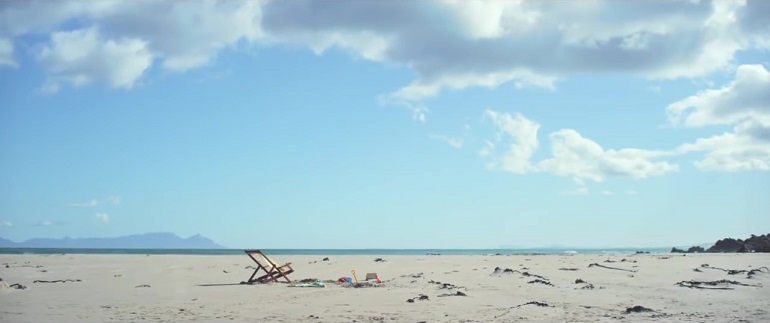
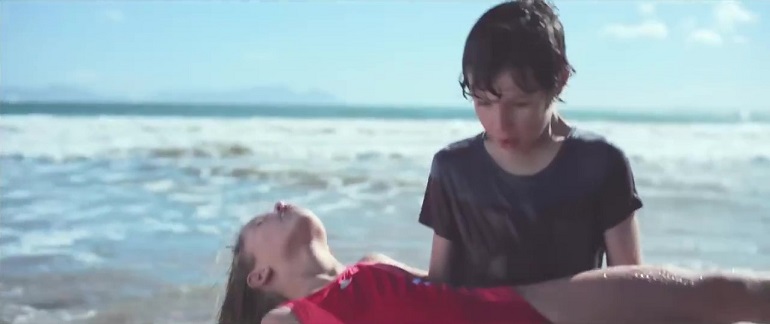
The dramatic story begins with someone clearly in trouble in the sea. But there is another in the surf who is able to rescue the hapless young swimmer. As the drama unfolds, it becomes clear that it is a young boy who is helping the little girl.

The boy emerges from the sea, carrying the lass, and lays her down. He checks her vital signs, looks for obstructions in her mouth, and administers cardiopulmonary resuscitation (CPR) and mouth-to-mouth resuscitation.

The scene cuts to a close-up of the girl as she lifts her head and coughs up water. A life has been saved. But the next cut reveals that the boy is, in fact, a man — and obviously the same person because he is wearing the same clothing.

The symbolism of this is very clear: the man is using the skills he learned as a boy. The message — life skills, once learned, never leave one.
Scouts South Africa PSA screengrab 01Scouts South Africa PSA screengrab 02 Scouts South Africa PSA screengrab 04 Scouts South Africa PSA screengrab 05 Scouts South Africa PSA screengrab 06


Brainchild

The idea for the PSA was the brainchild of Gavin Whitfield of Not Norm Agency, who was musing that everything learned in childhood seems to stay for the rest of one’s life. Whether it is riding a bicycle, writing, reading or swimming, these lessons endure.

The “skills are ‘forever’ learned,” says Whitfield, adding, “They’re latent, just waiting for when they’re needed. I felt this tapped into a space that would be motivating for both parents and kids alike. Scouting focuses on young people learning in a fun environment. It teaches so many things that this country is in desperate need of.”

“I think Scouts SA has a real role to play. You don’t teach a 20-year old right or wrong or how to socialise; it’s too late. If they learn these things young, they’ll remember them forever,” he continues.

Music mirrors girl’s state

I hope the ad will get a lot of airplay: the cinematography by Velocity Films is great, and the editing and sound create a great sense of tension. Cleverly, there is no music as such — when the boy emerges from the sea carrying the girl, the soundtrack becomes muted, to mirror the girl’s state of unconsciousness. As the girl coughs back to life, the ambient sound of the crashing waves returns, adding drama to the moment.

The performances, too, are spot-on. The look of relief on the father’s face is intense, and I think any parent would identify strongly.

The end title, over a shot of the man picking up his daughter, is: “Learn it Young. Remember it Forever,” followed by the logo and website — and that is all that is required to bring the message home.

This simple scene, beautifully produced, is all the more remarkable, considering it’s a pro bono production for the non-profit organisation. Great job, Gavin Whitfield, Gregg Bailey et al — kudos to all who contributed. What a great ad, and what a great message!

Credits:

Ad agency: Not Norm
Executive creative director: Gavin Whitfield
Director: Gregg Bailey
Production company: Velocity Films
Producer: Kathleen Browne
Executive producers: Karen Kloppers, Helena Woodfine
DOP: Jamie Ramsay
Marine cameras: Frog Squad
Music company/composer/sound: The Workroom
Editor: Anthony Martin
Offline/online/final mix: Deliverance


Oresti Patricios


Ad of the Week, published on MarkLives every Wednesday, is penned by Oresti Patricios (@orestaki), the CEO of Ornico, a Brand Intelligence® firm that focuses on media, reputation and brand research. If you are involved in making advertising that is smart, funny and/or engaging, please let Oresti know about it at info@ornicogroup.co.za.


— MarkLives’ round-up of top ad and media industry news and opinion in your mailbox every Monday and Thursday. Sign up here!

Global Headline Makers: Michał Kobierzewski, Poland

by Mark Tungate (@MarkTungate) When was the last time your computer screen reminded you of a theatre? Possibly never — but then you don’t have the mindset of Michał Kobierzewski, creative director of The Digitals in Warsaw.

Kobierzewski specialises in making connections between the digital and analogue worlds. This ability may spring from his background: he was originally destined to be a concert pianist.

“I finished high school as a pianist after more than 10 years of music school,” he says. Some saw him as the next Krystian Zimerman, the brilliant Polish classical pianist. “But I wanted to play jazz, modern music, which unfortunately was only available at a music conservatory. I wasn’t patient. I didn’t want to wait.”

Attracted to advertising

At the same time, he was attracted to the growing field of advertising, still a young industry in Poland. “The first TV commercials fascinated me.” He ended up with a Master’s in economics with an advertising specialisation. “That gives me a good background for understanding brands’ needs, their aims and how they fit into the world around them.”

Kobierzewski’s world is very diverse indeed: he says he’s interested in philosophy, psychology, modern art, movies, books, technology, games — and the theatre. “When I was looking at Flash websites, say 10 years ago, I wanted to tell a story in a limited space. I felt that a stage designer faced the same challenge.”

His first job was less glamorous, working on bus-side ads for a small agency, including pasting them onto the bus. Later, a friend invited him to join the interactive agency, OS3. “I didn’t understand the interactive world when I joined, but I quickly learned” — to such an extent that his campaign for ING Bank won a Silver Effie in 2008.

The following year, he joined the Polish cyber team at the Young Lions in Cannes.

Next stop

His next stop was Artegence, which he describes as “the oldest and most award-winning agency in the interactive market”. Here he managed three creative teams, building and rebuilding teams and ultimately bringing in at least 10 new clients.

He has been at The Digitals, one of Poland’s fastest-growing interactive operations, for three years. “I built the creative department from scratch. Within one year we won several big pitches for [beer brewer] Warka, Hyundai Poland and Amnesty International, and gained awards and distinctions at the most-prestigious domestic ceremonies.”

The key to his creative success seems to be his love of clashing points of view and ideas. “As a creative director I’d rather take someone who can build a story, like a novelist, a journalist or a copywriter, and unveil the interactive world to them. That approaches brings amazing results.”

Most proud of

It’s how one of the online campaigns he’s most proud of, for Amnesty, was born. It involved trapping a user’s cursor inside a web banner and forcing them for a few moments to experience the helplessness of somebody who’s been wrongly imprisoned.

“It was kind of an experiment — we only got about 450 impressions but, out of those, 50 people signed a petition.”

These days, he says, the big challenge for interactive agencies is storytelling. “Our advantage is that the internet is full of real stories, real insights and real premises. If we’re good observers, we can create campaigns that change the world by answering real needs.”

As an example, he cites another of his favourite campaigns, this time for Warka.

It was based on the insight that, with many Polish workers taking jobs abroad, fewer friends and families were able to get together in the pub.

Via social media, the agency reunited four brothers, three of whom had taken jobs in Ireland, while leaving the oldest alone in Warsaw. A short documentary film told the tale.

“Be like Robin Hood”

Kobierzewski says that, by solving their problems, brands give customers a reason to become ‘disciples’: “In a way, brands can be like Robin Hood, using their marketing budget to give something back to the world.”


Mark TungateMark Tungate (@MarkTungate) is the editorial director of the Epica Awards (@EpicaAwards), the only global creative prize judged by the specialist press. A British journalist based in Paris, Tungate is also the author of six books about branding and advertising, including Luxury World and Adland: A Global History of Advertising. He has a weekly column in the French magazine, Stratégies, and has written for leading newspapers and magazines in the UK and the US.

This “Global Headline Makers” column will be syndicated monthly, with permission from Epica.

— MarkLives’ round-up of top ad and media industry news and opinion in your mailbox every Monday and Thursday. Sign up here!

Online CPD Courses Psychology Online CPD Courses Marketing analytics software Marketing analytics software for small business Business management software Business accounting software Gearbox repair company Makeup artist