Publicis Africa Group buys Creative Counsel in record deal

by Herman Manson (@marklives) Experiential and activations agency, The Creative Counsel Group (TCC), has been bought by Publicis Africa Group (PAG), Publicis Groupe’s African agency network. The acquisition is believed to be the largest agency buyout ever to happen in South Africa, with an unconfirmed valuation of between R1bn and R1.5bn.

The Creative Counsel Group is the largest advertising agency in the country, too, with revenue of more than R600m a year. It employs more 1000 permanent employees — plus thousands of freelancers at any given time, depending upon the time of year and the number of campaigns running. Friends Ran Neu-Ner and Gil Oved launched the agency in 2001.

The Creative Counsel logoKey component

TCC will make up a key component in the growth strategy of PAG that will be rolling out the agency into a number of African markets. Currently, PAG has agencies in 35 African countries. TCC has already opened an office in Mozambique and will open in Nigeria, Kenya, Tanzania, Zimbabwe, Zambia, Namibia and Botswana over the course of the next 6–12 months, in conjunction with current PAG agencies, says co-CEO Oved.

Kevin Tromp, PAG CEO, says he was particularly impressed with the sophisticated logistical and operational systems in place at TCC. These, according a company profile provided by TCC, include systems and technology that report on everything in real time, from sales results, quality and quantity of engagements, and intensive tracking of promoters and field marketers to refining of messages and communication to consumers, based upon where they are and how they respond.

Publicis Africa Group logo“The combination of TCC’s scale, massively entrepreneurial culture, and intimate understanding of the South African consumer at every level, is an excellent complement to Publicis’ global communication sophistication, deep digital orientation and multinational mentality,” says Tromp. “This union creates the most-powerful activation and experiential entity on the continent, focused on bringing brands to life in a culturally relevant fashion, for our clients and their consumers.”

Deal clinchers

According to Oved, the deal follows a roster of meetings and a host of rival bids, but ultimately, PAG’s understanding of TCC’s vision and its commitment to investing not only in Africa but also in other emerging markets, plus its focus on digital and a good cultural fit, clinched the deal.

While TCC has scale in SA, its attempts to establish offices in other African countries have ended in failure several times, says Oved. The agency realised it required backing from a network with a wide African footprint which knows how to establish and manage offices on the ground in new markets.

Publicis Groupe logoInvestments in other African markets, as well as the broader emerging market landscape, will be key to growing TCC. The deal brings with it access to digital development partners, an infusion of global expertise, best practice and financial backing to build a global business.

The Creative Counsel Group will come under the remit of Publicis Groupe’s largest agency network — Publicis Worldwide — headed by global CEO, Arthur Sadoun. Neu-Ner and Oved will report to Tromp.

Key TCC clients include Vodacom, Unilever, Danone and Nokia. The agency runs 200–300 campaigns each year, and claims to hold a 50% plus share of the FMCG promotions market.


Herman Manson (@marklives) is the founder and editor of MarkLives.com.

— MarkLives’ round-up of top ad and media industry news and opinion in your mailbox every Monday and Thursday. Sign up here!

Talk Africa: How brands are engaging with the affluent Nigerian

by Remon Geyser (@remongeyser) The rise of the affluent Nigerian as a consumer group worth targeting is a growing trend identified here at SpringLeap. This has implications for the local branding scene as affluent brands rush to engage with this market. Let’s unpack these consumers, their spending power, and some insights into purchase trends to reveal the brand-engagement trends for this market.

Where are these affluent Nigerians spending their money? Which affluent brands are engaging them, and how are they targeting these markets? Some answers may be found below — you might be surprised at how traditional advertising still remains one of the most-effective forms!

What affluent brands see in Nigeria

Lagos is Africa’s most-populated metropolis, with an estimated 25m permanent residents by the end of 2015. It’s in African cities such as Lagos that you may see an obvious social divide between lower-, middle- and upper-class consumers. As infrastructure has developed, the economy has boomed in certain sectors, allowing many rich Africans to make Lagos their extravagant playground. Banana Island in the Lagos Lagoon, a man-made luxury estate, boasts some of the country’s highest density of millionaires.

In 2014, Forbes stated that Nigeria was home to 12 of the 50 richest people in Africa, one notch higher than South Africa.

Aliko Dangote, courtesy of Wikimedia

Among Nigeria’s most affluent, we find the likes of Folorunsho Alakija, a billionaire oil tycoon and fashion designer; Aliko Dangote, who is the CEO of Dangote group (largest manufacturing conglomerate in West Africa) and the wealthiest man in Africa; and Mike Adenuga, the founder of Globacom, Nigeria’s second-largest mobile phone networ. Five percent of Nigeria’s population is classified as “affluent”, whilst the “emerging affluent” market accounts for 25% [howwemadeitinafrica.com 2014]. This is impressive for an African country that is very much still developing.

For the affluent Nigerian consumer who can afford an affluent lifestyle, the actionable plans of how to best spend their money is interesting:

  • 95% wish to make improvements to their homes
  • 91% want to purchase the latest in technological goods/services/products
  • 85% want to purchase a new car or motorcycle
  • 84% wish to move to a better neighbourhood

It’s clear to see that the emerging affluent markets are aspirational, and have a desire to amplify their lifestyles. So how exactly are they doing this?

Purchase trends

Affluent Nigerian consumers invest in expensive property, both locally and abroad. London is a prime location for some of Africa’s wealthiest property investors, and affluent Nigerians are driving this trend— of the £600m spent on London property from African pockets, £250m comes from Nigerians.

One Hyde Park - Knightsbridge, courtesy of Elliott Brown, Flickr
One Hyde Park, Knightsbridge, courtesy of Elliott Brown, Flickr

The “platinum triangle” is the term given to three of London’s most-elaborate and -luxurious neighbourhoods. The area includes suburbs Mayfair, Belgravia and Knightsbridge, and is a favourite among Nigerian investors. Parents who can afford the lifestyle are also sending many of their children to school and universities in London, spending upwards of £300m (collective market) on accommodation and fees [dailymail.co.uk 2014].

There have been some exaggerated stats about champagne consumption in Nigeria, stating that the country was the world’s second-largest consumer. Even though this is not true, it still speaks to the nature of luxury goods in Nigeria. The nation is Africa’s largest consumer of champagne [africacheck.org 2015]. It is estimated that, in 2017, US$1.5bn worth of wine will have been consumed in these markets [mgafrica.com 2015].

Enter affluent brands

Not surprisingly, luxury brands have entered the market to target these consumers and their spending power. Porsche opened its regional offices in 2013 in the wealthy Lagosian suburb of Victoria Island. Italian fashion house, Ermenegildo Zegna, opened a retail outlet (in the same street as Porsche) in 2014.

Vehicle in Nigeria, courtesy of the National Crime Agency, Flickr

In the alcohol industry, prestigious cognac brand Hennessy sits comfortably in Nigeria. The country is one of the brand’s top-10 key markets [luxurysociety.com 2014]. Watch brand Ulysse Nardin is popular with the affluent customers in Abuja, the nation’s capital. ExecuJet is a key player in the private charter-jet industry, headquartered in Switzerland. The brand is popular amongst affluent Nigerians who like to (and can afford to) travel around the world in style.

Polo luxury, a homegrown prestigious brand (one of the few), offers customers the finer, smaller things in life and has four boutique stores — the flagship outlet is in Polo Towers in Victoria island — selling watches, jewellery, leather goods and writing instruments. The brand identity communicates a prestigious stance, one that resonates well with affluent Nigerians.

How brands are engaging

Stylerebirth.com online lingerie store Indecent exposure, 1Luxury lingerie boutique store, Style Rebirth, located in the well-to-do, up-and-coming Lagosian suburb of Lekki, has rolled out effective print ads that convey tongue-in-cheek messages of “indecent exposure”.

Multichoice Africa’s subsidiary, GOtv, offers emerging affluent audiences a world-class bouquet of television consumption. GOtv has also used simple, yet effective, print ads to communicate the value of its service to customers. For example, it rolled out a print campaign in 2014 that simply stated, “More TV. Less babies.” Once again, the tone was tongue-in-cheek and risky, which seems to be an effective communications trend for brands in Nigeria, especially when advertising to the affluent and emerging affluent market.

To recap, Nigeria is home to the richest man and the densest population of millionaires in Africa. Luxury brands, both homegrown and international, have GOtv, Turn-onchanneled their efforts to engage with this market. These brands are mostly using cleverly scripted ads to engage with consumers, perhaps complimenting the flamboyant lifestyle that comes with being an affluent consumer.

While most Nigerian consumers live on less than $US2 per day, being poor, middle-class or affluent doesn’t change the nation’ss shared value of aspiration, and the desire to acquire more wealth. Advertising in Nigeria currently caters to this shared “state of mind”, and it seems that brands targeting the affluent markets are showing their audience that there is always more wealth to be made and a better lifestyle to experience.

References


Interested in South African trends?
10% discounted subscription rate for MarkLives readers!

Every month, Springleap provides an oversight of local trends in the South African market, sourced from among its 22 000 African creatives, with new country specific reports planned for a number of key African and Middle Eastern markets. Pricing for accessing this trend platform starts at as little as R270 a month.

Readers must use the promo code “MarkLives10” to access their discount.


Remon Geyser 2015


Remon Geyser (@remongeyser) is a burger fanatic, wine connoisseur and eSports enthusiast (yes, a fancy term for playing computer games). He is also the research lead for Springleap, heading up a new global creative research division while obscurely attempting a PhD. Springleap provides instant creative expert feedback to rock marketing ROI. Remon contributes the new weekly “Talk Africa” column, covering Pan-African trends, on MarkLives.com.


— MarkLives’ round-up of top ad and media industry news and opinion in your mailbox every Monday and Thursday. Sign up here!

Green Sky Thinking: Successful strat for sustainable marketing

by Colwyn Elder (@colwynelder) If you’ve read about the benefits of building purpose-driven brands, but remain unsure of what and how to do it, read on, because today I go beyond the “reasons why” and unpack the “how to’s” behind a campaign.

  1. Find a cause or big issue to support

Having a strong point of view on a big social issue builds an emotional connection with your audience. The most famous example here is Dove standing for female self-esteem with its Real Beauty campaign.

But while it may look like an obvious route, it’s not necessarily the easiest to get right. Finding a cause and retrofitting it to your brand is likely to do more harm than good, and success is contingent upon finding the sweet spot where consumer insight, social need, and brand benefit overlap.

  1. Be a concerned brand citizen

Brand citizenship is based upon the premise that organisations are as much a part of society as people, and so have civic responsibilities beyond their business. Here, companies take on those easy-to-get-behind, non-contentious issues that represent a good-for-all future.

This is arguably a more-accessible strategy for most brands, since not every category has consumer relevant insights that also tap into a big societal issue. A useful strategic tool here is to look for a point of intersection between your brand’s values and the priorities of your customer (what do they care about?), as well as what business is doing (or could do) in terms of sustainable development.

Unilever’s brightFuture (previously Project Sunlight) is a good example here. Unilever’s goal is to halve its environmental footprint, which constitutes both the manufacture and use of its products, while growing its business. So while the business makes ongoing improvements to its manufacturing and supply chain, it is equally imperative to co-opt consumers by influencing and educating them to use products more sustainably.

  1. Create something and be part of the solution

Good corporate citizenship can also go beyond the realm of your business.

If the key priorities of your customer are outside the business scope but in sync with your brand values, another strategy is to create a socially beneficial project — in other words, be part of the solution, and put your brand’s name on it.

OMO washing powder knows that South African moms put enormous priority on their children’s education in a country with one of the lowest maths-literacy rankings in the world. In line with its brand purpose of “unlocking human potential”, OMO has created Fast Kids, a maths app designed to improve maths literacy through a gamified learning experience.

Also referred to as cause-related marketing, this is effectively another form of sponsorship, whereby marketing budget is assigned to something people care about in return for increased brand awareness and customer engagement.

Another example here is Kenco’s Coffee vs Gangs, a unique training programme established by Kenco that trains ex-gang members to find employment as coffee farmers.

  1. Facilitated giving

Fundraising has long been part of corporate social responsibility programs, and usually involves employee fundraising combined with corporate matching to raise money and make donations. But involving and facilitating customer-giving is becoming increasingly popular.

British Airways Change for Good programme facilitates customer-giving to UNICEF, simultaneously getting rid of that pocketful of foreign currency no longer need at your final destination, while MasterCard donates money to STUC (Stand up to Cancer) with Dig in & do Good every time diners pay their restaurant bills with MasterCard.

And, finally, the much-loved Toms shoes brand has been built on a model of one-for-one giving. For every pair of shoes sold, Toms gives a pair of shoes to children in need, and to date has given a record 45m pairs of new shoes.

The last word

So, there you have it, four successful strategies for sustainable marketing, and in this last little word lies the key difference between these strategies and conventional corporate social responsibility: it’s not CSR — it’s marketing, and so requires an appropriation of marketing budget and resource.


Colwyn Elder


Strategic consultant Colwyn Elder (@colwynelder) brings a global perspective to the issue of sustainability, having lived and worked in London, Tokyo, Amsterdam and Cape Town. She contributes the monthly “Green Sky Thinking” column on sustainability issues to MarkLives.


— MarkLives’ round-up of top ad and media industry news and opinion in your mailbox every Monday and Thursday. Sign up here!

The Switch: Harnessing creative energy

by Alistair Mokoena (@AlistairMokoena) Society is evolving at a rapid pace and with that comes a much more complex competitive landscape for businesses. Competition continues to be redefined and barriers to entry are being eroded in many industries. Being creative and innovative is the only way organisations can thrive in this new dispensation.

Communications agencies are not immune to this phenomenon. Being a creative agency does not absolve you from the need to actively inculcate a creative and innovative culture within your organisation. “Doing creative” is not the same as “being creative”.

Doing vs being

Doing creative means producing creative work to solve a business problem. Anyone, including non-creative people, may produce creative work. Doing creative is a job or a function; it is not a way of being. It is not a philosophy or a belief. It is not a product of self-definition.

Being creative is a state of mind, a state of being and a way of life. Anybody may be creative, from lawyers, accountants and engineers to town planners, politicians, you name it. Being creative is about the way you process things, the lens through which you view life, the way you express yourself, the relationship you have with your thoughts and feelings, and that way you solve problems.

My biggest revelation in moving from the client side to the agency side is that creatives don’t only reside in creative agencies. Creatives are everywhere. You just need to study people and understand what makes them tick and how they experience life.

Identifying creatives

How do you identify creative people, you might ask?

Creative people are crudely referred to as non-conformist, rebellious, contrarian, sensitive, crazy, lawless, irresponsible and needing to be reined in or managed. Creative people are often expected to spot brave hairstyles, multiple tattoos, body piercings and party excessively. Nothing could be more misleading. I have met a lot of creative people who don’t fit this stereotype.

Creative people are optimists. They are not deterred by obstacles and barriers. They believe in possibility. They believe in dreams and magic. They are constantly reframing the world around them to fit a vision of how they would like life to be. They dream in colour and they live life abundantly. They love to engage your thoughts and feelings. They want to move you and challenge you to eat life with a big spoon. Theirs is an energy you want to bottle and release into the world so that more people believe in the art of possibility.

Liberate in order to create

This energy needs to be cultivated, nurtured and encouraged. They are independent thinkers and free-spirited individuals who need to be liberated in order to create. The important thing is to ensure that they use their passion and craft to deliver value creation for your organisation. Value creation includes a pursuit of topline growth, margin enhancement and cost-containment:

  • Topline growth means developing ideas that win new accounts or using proactive to get more revenue out of existing clients
  • Margin enhancement means coming with bigger ideas that attract bigger budgets
  • Cost-containment means being efficient in how we work and being responsible in how we use our resources

That’s all the clarity creative people need. They are responsible, smart, accountable professionals who know they need to deliver results. They are not here to blow client budgets. They are here to solve client problems by developing awe-inspiring ideas that capture people’s imaginations.

No rules and regulations

They are driven by a need to move people. They don’t need rules and regulations. Allow them to figure out how to get from goal to success and from objective to glory. Trying to define this journey for them kills the very spirit that fuels their creativity. Telling them how to behave, how to dress, how to speak, when to work and when to chill simply drives them up the wall.

At the end of the day, everything boils down to trust. Non-creative people need to trust creative types to deliver value creation. They love being empowered and trusted to join the dots between your vision of success and their craft. They hold the key to success, so allow them to feel important and valued.

Create a culture and an environment that’s conducive to ideating. Reward courage, celebrate failure, encourage independence of thought, embrace diversity, have patience, be tolerant, allow ideas to grow and develop and, most of all, have faith in the creative process.


Alistair Mokoena November 2014Alistair Mokoena (@AlistairMokoena) is a Unilever-trained chartered marketer with lots of blue-chip marketing experience who switched from client- to agency side at the end of 2012. He is currently managing director of Ogilvy & Mather Johannesburg; previously, he was MD of FCB Joburg. One of his favourite pastimes is driving around in the bush, photographing wild animals. Alistair contributes the monthly “The Switch” column, covering relationships inside agencies and between agencies and clients, to MarkLives.com.


— MarkLives’ round-up of top ad and media industry news and opinion in your mailbox every Monday and Thursday. Sign up here!

Ad of the Week: Instant love

by Oresti Patricios (@orestaki) A healthy dose of nostalgia and a good shot of emotion are the ingredients for the latest Ad of The Week, the TVC for Ace Instant Porridge. The ad also offers interesting insight into the real world of people who eat a morning staple.

I’m talking about maize, of course, and the millions of people who eat this food across our continent. Some 42.2m metric tons of maize are consumed in Africa each year, of which South Africans chomp up some 5.21m metric tons. (A metric ton — just in case you don’t know — is 1000kg.)

Consumer benefits

Ace Maize Meal is one of the larger maize brands in South Africa, and falls under the umbrella of the Tiger Brands group. Given how much time it takes for people to travel to work and school each day, saving people time and energy are major consumer benefits and this makes instant porridge an important addition to the Ace range. Just add hot or cold milk or water, and voila — breakfast!

This brand benefit is charmingly and sensitively portrayed in a TV commercial produced by Bomb Commercials for TBWA\Hunt\Lascaris under the direction of Teboho Mahlatsi. The result is an ad for Ace — “a taste of Mum’s love” — that speaks to the heart.

Ritual of food

Ace Instant Porridge: A Taste of Mum's Love TVC screengrab 01 Ace Instant Porridge: A Taste of Mum's Love TVC screengrab 02The story starts with a young boy named Thabo who is getting ready for school; we see the young lad dressing himself, and putting on his tie. At the breakfast table his porridge is ready and waiting for him, alongside a note that reads: “I love you — Mama.”

If, like Thabo, you’ve had a caring mother, you’ll know that food is an important ritual that parents use to demonstrate their love and caring. Thabo smiles because he knows he’s getting a good meal before setting off for school.

The journey to school is eventful: Thabo must run past barking dogs, cross busy streets, and squeeze himself into a taxi between two large ladies. At his destination, he steps in a puddle and has to run to make it in time for assembly.

At school, the young boy gets picked on by some of the other kids, but he perseveres and is rewarded with praise from his teacher. Back home in the afternoon, Thabo is seen laying the table with a bowl, spoon, milk and the pack of Ace Instant porridge.

Working-class reality

Ace Instant Porridge: A Taste of Mum's Love TVC screengrab 07 Ace Instant Porridge: A Taste of Mum's Love TVC screengrab 08 Ace Instant Porridge: A Taste of Mum's Love TVC screengrab 09The reality for many working class children is portrayed in the subtext of this story. One never sees Thabo together with his mother. Time poverty is a concept that many people have to contend with because of the long distances they have to travel between work and home; or because of poor transport systems such as SA’s MetroRail which is notoriously unreliable. In working-class SA, many parents don’t have much quality time to spend with their children, especially during the week.

So it’s with a lump in the throat that one watches Thabo’s mother arrive home when it’s already dark. He’s asleep in bed. But in the kitchen, ‘Mama’ finds a place laid for her at the table with the note that reads: “I love you — Thabo.”

Mum then spots the schoolwork that Thabo has left out for her to see — a maths exercise that bears a gold star. She smiles proudly.

The pack shot of Ace Instant Porridge is accompanied by the simple slogan, “Start their day with a mother’s love.”

The ad is beautifully shot, especially the morning sequences that capture the mood of the township and the school. Little Thabo is well-cast. He’s got a face that is expressive and heart-warming. The soundtrack is minimalistic: spot-effects bound together with a gentle piano theme. Overall, the ad plays on a nostalgia for school days and childhood, while aligning the brand with a sympathetic view of working-class family life that strongly supports Ace’s brand positioning: “Ace, a taste of Mum’s love”.


What’s beautiful about the ad is that it quietly teaches about the love you give and get, about how the best love is tangible and demonstrated by actions. But what makes it a winner is that it’s a simple but powerful story about the people who are the backbone of our economy, and the youth who own our tomorrow.

Thanks, TBWA, Bomb and Ace, for this gem!

Roll credits:

Agency: TBWA\Hunt\Lascaris
Client: Tiger Brands
Product: Ace Instant Porridge
Production company: Bomb Commercials
Director: Teboho Mahlatsi


Oresti Patricios


Ad of the Week, published on MarkLives every Wednesday, is penned by Oresti Patricios (@orestaki), the CEO of Ornico, a Brand Intelligence® firm that focuses on media, reputation and brand research. If you are involved in making advertising that is smart, funny and/or engaging, please let Oresti know about it at info@ornicogroup.co.za.


— MarkLives’ round-up of top ad and media industry news and opinion in your mailbox every Monday and Thursday. Sign up here!

Media Future: Samsung goes large — again

by Arthur Goldstuck (@art2gee) In the wake of declining market share, Samsung faced a big challenge for its latest product launch. It had a big answer.

When Samsung launched its Galaxy S6 edge phone in February, it dazzled the market with a curved glass edge that seemed to rewrite the rules of phone design. However, it did not manage to dazzle the market equally with sales figures for the device. Ironically, demand was high, but supply was constrained by the complexity of manufacturing the curved screen.

Its more basic sibling, the S6, was too similar to the previous S5 and even S4 to capture customers’ imagination.  It was no surprise, then, that Samsung focused on the devices that made a difference when it staged its latest Galaxy Unpacked event in New York last week.

It unveiled a larger version of the edge, the S6 edge+, pushing it into the “phablet” space with a 5.7-inch screen – up from 5.1-inch on the smaller edition. At the same time, it announced the Note 5, the latest in a series that has redefined the market for larger smartphones.

The original Note, released in 2011, carried a mere 5,3-inch display, but was mocked as being absurdly big. Samsung had the last laugh, selling 10-million units in less than a year, and heralding the dawn of both the “phablet” and demand for larger screens. In a rare misstep, Apple initially dismissed the trend, but eventually succumbed with its iPhone 6 Plus last year.

The next two versions of the Galaxy Note each had a bigger screen, until it maxed out at 5.7-inches, where the new Note 5 has also settled. That appears to be the sweet spot for phablets, and the battle is now one for differentiation rather than format.

At the launch, Samsung Electronics President and CEO JK Shin made a point of reminding the audience of the legacy of the device: “The Note created a category.  Some said we were crazy, but we saw a problem we could solve.”

This time round, the problem was Samsung’s own: “What does it take to stay ahead of the curve?” The answer, he said, was to “start with the rules and bend them”.

SamsungThe result is two phablets aimed at two entirely different markets. The Note series captured an audience of professional users looking for more productivity from a handset, in particular through the introduction of the S-Pen that allows for handwriting recognition and drawing on a phone.

“The Pen is to the Note what the mouse is to the PC,” Shin explained. The Note 5 plays hard to this strength, with a “more solid, more precise and sensitive” S-Pen, which Shin says feels “like writing with a ballpoint pen”.

The S6 edge+, on the other hand, is aimed firmly at the consumer multimedia market, with an emphasis on content, sharing and consumption.  It improves dramatically on the functionality of the original S6 edge, which only allowed for inclusion of contacts on the secondary side screen. The edge+ allows any apps to be added to the side screen, bringing the notion of a phone edge into its own. This functionality should eventually be rolled out to the original edge phones as well.

The most significant innovation on the edge+ is not entirely on the handset itself. It’s called Live Broadcast, and allows users to share moments directly from the phone, as video.

“Sure there are other video apps that can do that,” said Shin, “but your friends and family have to be signed up with the same platform. With Live Broadcast, you can broadcast directly from the phone to YouTube, and people can watch live or catch up on the feed later.”

Wireless charging based on industry standards means the devices can now be charged in any location where standard wireless pads are provided, such as some Starbucks outlets in the United States. These are expected to become widespread in the near future.

According to Craige Fleisher, Samsung’s Director for Mobile Communications in South Africa, the enhancements to the devices represented a more significant change than the market realised, as they “bring our design innovation to the large screen format”.

Dealing with the power demands of large displays has also represented a major challenge, he said.

“Understanding that power in terms of battery consumption and recharge is a key consideration in terms of consumer purchases, I see Samsung bringing innovation to this environment as we have historically to camera and screen technology.”

Fleisher says the S6 edge+ will arrive in South Africa in the first week of September, while the Note 5 will be released in November.

Arthur Goldstuck


Arthur Goldstuck heads up World Wide Worx (www.worldwideworx.com) and is editor-in-chief of Gadget. He is a consulting editor to MarkLives and our media tech columnist. Follow him on Twitter on @art2gee. This article has been republished from Gadget.

— MarkLives’ round-up of top ad and media industry news and opinion in your mailbox every Monday and Thursday days. Sign up here!

Homegrown: Inspiring South African brand collaborations

by Lynne Gordon (@lynne_gordon) We South Africans are masters of collaboration, with inventive partnership seemingly part of our DNA. Everywhere, entrepreneurs and artists, self-starters and the self-made create successful new ventures by seeking opportunities to come together, bring ideas together, work together.

Need a plumber? The security guard knows a guy. Getting your dry cleaning done? Dudu outside can tailor those pants while you wait. Need ideas? Let’s work together. Running through the fabric of South African culture is a red thread of creative collaboration and inspiring partnerships that fuel our growth as a nation. And the same spirit of collaboration and unusual partnering is growth-fuel for brands courageous enough to embrace it.

The need for fresh perspectives

To win in tough markets, businesses are increasingly incapable of solving for growth in isolation. The heyday of ‘the answer lies inside our team’ is over. Instead, businesses seeking innovation, opportunities to renew and ideas to attract new consumer demand need to open their doors — and their minds — to new partners offering fresh thinking.

Driven by the search for new sources of growth, it’s more and more often ‘business as usual’ to seek inspiration from the world outside, using collaborative new partnerships to infuse innovative ideas.

A culture of collaboration

For consumers, fresh combinations and unusual collaboration are the order of the day. In a global culture of inclusion, people seek genuine collaboration, recognising that more bright minds create better opportunities. Bringing together different perspectives is a source of new perspectives, new insights and new skills. And so consumers look to brands with a scanner for inspiring collaborations — who can offer me some new combination? A smart and creative fusion? An unexpected original benefit?

This consumer desire for fresh perspectives, combined with brands’ needs for innovation, fuels opportunities and inspires new sources of growth:

Collaborating for content

Brands seeking to provide rich, relevant content to engage consumers are smart to look to collaboration as a source for inspiring ideas and material.

  • Yuppiechef has built its equity on the coolest cooking gadgets shipped to your door around SA. Through smart collaborations, it’s extended its offering from kitchen gadgets to foodie ingredients and now to revenue-generating content — online cooking courses in partnership with top SA chefs.

  • KFC was recognised at the Loeries in Durban with a golden bird for its content curation in KFC Soundbites, an inspiring collaboration to bring upcoming new music artists to its customers at interactive tables in outlets.
  • [And don’t forget M&C Saatchi Abel paired takealot.com with Mr D — ed-at-large]

Collaborating for innovation

Partnership may be a powerful source of new innovation.

Unilever has gone big to create the Unilever Foundry, an innovation lab that invites startups, designers and innovators to collaborate with Unilever teams to bring their innovations to Unilever brands, and to partner with it in its vision to make sustainable living commonplace. The platform overtly seeks collaborations as a way to transform Unilever growth, cultivating experimentation and innovation with its global brand portfolio.

Collaborating for enriched experiences

Uber is earning cult status for turning public transport on its head. Its open approach to partnering is the next phase to enrich its mobility solution, making Uber the service that brings unique and unexpected experiences — from great taxi transport to spring cleaning, ice cream and flu shots — to your door. Its collaboration with the new VW Up created a fresh experience that amplified both brands.

These offers to deliver #uberforgood, #ubericecream and #uberhealthsa have created news and reinforced both the helpful and quirky aspects of the brand.

Collaborating for good

Banding together, we know we can achieve more. Brands seeking to amplify social good for good business have recognised the power of partnering to enhance their brand message. Woolworths current partnership with performer Farrel Williams anchors a story about their joint ‘mission to change the world’ for the better, and makes the campaign more powerful, credible and newsworthy.

Lessons for marketers

A fresh perspective is available to brands ready to embrace inspiring collaboration. Find ways to:

  • Open your brand eco-system to long-term partners who complement and enrich your proposition. While campaign collaborations provide fresh news, the real winners create long-term recognisable partnerships that amplify the impact of their brands’ core propositions.
  • Curate new sources of creativity to bring value to your consumer. Meaningful partnerships — that bring music, art and design from emerging artists to your consumers — taps into their real passions and enhances a brand’s relevance and appeal.
  • Enhance impact by joining forces to achieve a common goal. As the cost of marketing escalates and budgets contract, collaboration offers brands the opportunity to amplify ‘bang for buck’ by finding common ground to pool resources and enhance market impact.

We’re better together. The sky is the limit for the new possibilities created when we open our brands to the same collaboration that suffuses the streets of the rainbow nation!


Lynne GordonLynne Gordon (@lynne_gordon) is the managing director at strategic marketing consultancy Added Value. Read more about inspiring collaboration and other cultural trends for 2015 at www.culturalthemes.com.

Lynne learned marketing on-the-job and is fascinated by the streets of South Africa, where small entrepreneurs — untrained as marketers — apply the art and science of branding to their businesses.

Her monthly MarkLives column, “Homegrown”, explores everyday businesses and the lessons corporate marketers can learn from the streets of Mzansi. Share your own observations, photos and examples of marketing from SA’s roadside with @lynne_gordon on Twitter.


— MarkLives’ round-up of top ad and media industry news and opinion in your mailbox every Monday and Thursday. Sign up here!

Shelf Life: SA is working out the Navy SEAL way with Kill Cliff

Cheryl Hunter (shelflife at marklives.com)’s weekly pick of all things new — product, packaging, design, insight, food, décor and more!

  • Don’t Kill Cliff — drink it
  • Exploring Soweto just got easier
  • Consol creates a jar in a jar

Reinventing rapid recovery

Kill Cliff is a rather eccentrically named “recovery drink” with an interesting background; it’s hugely popular in the US, where its American marketing strategy is loud and quirky. Recently launched locally market, the South African strategy — while keeping to the edgy and fun theme — is still focusing largely upon education. SA co-owner, Grant McNamara, gives Shelf Life some interesting insights into the new drink.

Kill Cliff logoIn 2011, a former Navy SEAL began Kill Cliff, which commits a share of its earning to support Navy SEALs and their families. That much is true. The rest is a mystery, with various stories circulating regarding the origins of the brand name, including one that claims the name refers to a secret mountainside in Afghanistan where soldiers were marched to their deaths.

What isn’t in dispute is that the drink was conceptualised because the military man grew tired of using caffeine-laden drinks to refuel his body after daily workouts and was convinced that energy and sports drinks were all missing key components to aid in recovery.

According to McNamara, the founder’s idea was to reinvent sports nutrition by developing a true recovery drink made with premium functional ingredients in a specialised formulation that is both healthier and tastier. In collaboration with top athletes and the beverage industry, he formulated Kill Cliff.

“The unique thing about Kill Cliff is that it’s a recovery and rehydration drink — think Game or Rehydrate — playing in the energy drink market — think Redbull and Monster. It is a cool and healthy alternative to the sugar and nasty loaded energy drinks but with all the ‘coolness’ of those brands.”

Kill Cliff recovery drink packshotKill Cliff contains no junk: no sugar, gluten, artificial colours or flavours. It has 15–20 calories per 355ml can; Vitamin B, C, and E, electrolytes and plant extracts (including ginger root, green tea extract, and ginseng root powder), as well as a unique enzyme blend. There is a touch of caffeine — 25mg — the same as a cup of green tea, so this is definitely not an energy drink.

Says McNamara: “It’s a recovery drink. The product is marketed for people [who] participate in hectic workout routines, are athletes, endurance, or CrossFit devotees or simply live a busy lifestyle and are looking for an alternative health drink that is not packed with hidden sugars.”

The brand is being activated bimonthly until December 2015 by Jam Media, from standard tasters at selected Spars and various Crossfit gyms around SA to fun nightclub activations, where McNamara says a core strategy is showcasing Kill Cliff as a viable alcohol mixer this summer: “Kill Cliff aims to be an edgy and loud brand that exists in the energy drink space, without actually being an energy drink.”

Kill Cliff packages its recovery drinks in Rexam sleek cans for durability, portability, and brand differentiation to help the beverage stand out on retail shelves. The company also benefits from aluminium cans reportedly being the most-sustainable packaging choice in the world, as they recycled at more than double the rate of any other beverage package.

www.killcliff.co.za • Twitter • Facebook


Soweto raises the travel bar

A small group of tourism entrepreneurs in Soweto have launched The Soweto Travel Bar to both grow their small businesses and gain more exposure for the area on the legendary Vilikazi Street.

According to Lebo Malepa, who owns Soweto Backpackers & Bicycle Tours, this concept was born out of a need for an information and networking hub for Soweto tourism products. Shova Events & Exhibitions, already located on bustling Vilakazi, offered the ideal positioning for the initiative, combining the best of unique travel experiences, African art and fashion, and a cool place to chill — the Travel Bar

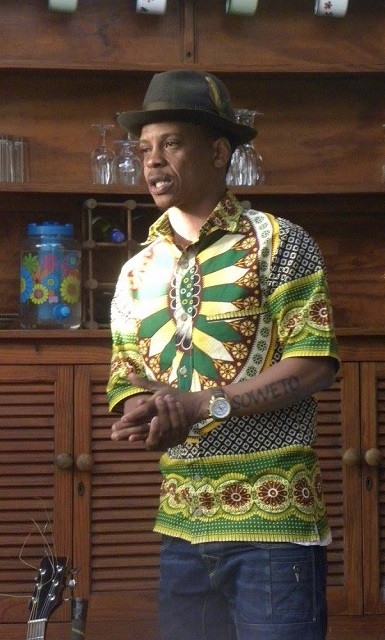
Soweto Travel Bar: Lebo Malepa
Lebo Malepa

Essentially, the new space is a traveller’s information hub where anyone may get info on where to stay; what to do, eat and drink; and how to get around. A smorgasbord of unique, Soweto-style township experiences are on display and offered to any traveller or visitor to the Vilakazi Street precinct.

Free WiFi, maps of Soweto, guide books and traveller’s magazines are other features to encourage the curious to learn more about Soweto and its surrounds. And for the adventurous whose interest is piqued, the Travel Bar also offers free walking tours and bicycle hire at the venue. These tourism information services are combined with Shova’s existing offering of African art, fashion and live music events.

Says Malepa, “We wanted to own the destination Soweto — one of the most-visited tourism attractions in the country. And the Travel Bar is where we can collaborate and work together to sell packages and unique Soweto products. As SMMEs, we will also be able to know each other better and assist one another.”

Vist the Soweto Travel Bar at 8039 Vilakazi Street, Orlando West, Soweto.

Facebook

Two in one

Consol has launched Jar in a Jar, aimed at making on-the-go consumption easier through a space-saving design that keeps everything you want separated together.

In essence, two jars of different sizes fit one inside the other, the larger (500ml or 1L) jar accommodating a smaller (100ml) one. The jars share a lid, which holds them securely together as a singular container, to simplify both storage and transportation. Marketed as perfect for soup and croutons, pap and gravy, salad and dressing, fruit salad and yoghurt, the jars should be perfect for meals where some of the ingredients are best kept apart until just prior to serving.

Not limited to food, the jars may be used to store products hygienically together in a sterile environment, as well as stationery and crafting materials, sprinkles, cupcake casings and other baking essentials.

The new range will be sold individually, and the frosted lids come standard in four colours: blue, green, light coral and white. The jars and lids are dishwasher safe but may not be frozen or heated in an oven or microwave.

Available at The Consol Shop Woodmead and Stellenbosch, as well as through leading retailers, large jars are R42.90 and smaller ones R32.90.

www.consol.co.za • Twitter • Facebook


Cheryl Hunter

Shelf Life is MarkLives.com’s weekly column covering all things new. Notify us of yours at shelflife at marklives dot com. Want to sponsor Shelf Life? Contact us here.

Cheryl Hunter (@cherylhunter) has written for the South African media, marketing and advertising industries for more than 15 years. A former editor of M&M in Independent Newspapers and contributor to Bizcommunity, AdFocus, AdReview and the Ad Annual, she has also produced for various television networks and currently consults on communication strategy and media liaison.


— MarkLives’ round-up of top ad and media industry news and opinion in your mailbox every Monday and Thursday. Sign up here!

Thinking TV: Brides are big biz

by Inge Hansen (@mecnotabene) If you have ever stared at a screen with horrified fascination, you are in the same boat as many viewers who have been drawn into watching ‘car-crash TV’. This popular occurrence is loosely defined by the Urban Dictionary as “any TV program that, like a recent car crash in the street, you know you shouldn’t watch, you know you’ll regret looking, but you just can’t help yourself!”

In our current TV landscape, this relates largely to real-life drama and reality TV shows that have you gasping one moment and cringing at the next; think live-singing auditions by the tone-deaf. However, at the same time, it appears that local audiences are also drawn to stories of inspiration, happiness and love — with a small dollop of voyeurism and family drama thrown in. This is evident on Sunday evenings as the Twitterverse ignites in conversations, exclamations and approving comments regarding the latest episode of Our Perfect Wedding.

Logical

Weddings are big business in South Africa but, with prohibitive costs making a dream wedding a reality for few, it seems logical that this would be a popular show for many. According to Statistics South Africa, nearly 160 000 marriages were registered in SA in 2013. Of these, the majority of the civil unions were conducted by a home-affairs official and not under an arch of roses at a dream location, followed by the release of doves during the vows. Who can afford that when the price of bread has risen by 69% in the past five years?

The show, therefore, has become a firm Sunday night drawcard for the channel, have been initially broadcast on Mzansi Wethu, and moving to the now popular Mzansi Magic from Season 3 [check out our weekly SA TV Ratings column — ed-at-large]. With viewership for adults having increased from 100 000–150 000 viewers per episode in 2013 to over 1m viewers (TAMS average data) in 2015, Our Perfect Wedding is steadily increasing its audience base. Being active in the social space also helps to highlight key moments and create engagement, with the show having a Facebook following of over 109 400 fans and over 11 200 followers on Twitter.

Unsurprisingly, the viewership is weighted to females due to the nature of the content, and attracts a primarily black audience at over 95% on average. In terms of age breakdown,s there is a relatively even split between the age groups of 15–24, 25–34 and 35–49 years of age, although also having some exposure to younger ages, most likely due to its early timeslot and family viewing habits. As the show is broadcast on DStv, it’s not surprising that the majority of viewing comes from the grouping of LSM 6–9, with a much smaller portion of LSM 10 tuning in at 2.70%.

New local production

Capitalising on the success of Our Perfect Wedding and similar well-known international shows such as Don’t Tell the Bride and Say Yes to the Dress will be new local production Four Weddings South Africa. Starting on Lifetime (channel 131 on DStv) on 16 October 2015. The reality show will follow four brides per episode, who will be competing against each other for the best wedding in order to win a dream honeymoon. Don’t expect anything plain and overly traditional, however, as the show is set to feature everything from a wedding in a shopping mall to naked brides and a “Boerekos”-themed meal at the reception.

What with the amount of negativity that consumers are bombarded with in the media that they consume, it’s no wonder that they would be drawn to programming that features positive (and local) real-life stories. After all, isn’t that what television is really about? The creation of entertaining moments that hit close to home, allowing a brief escape from the worries of everyday life.

References:


Inge HansenFollowing two years at Media24 scrubbing for insights within the magazine division, Inge Hansen joined Nota Bene as an A&I analyst in March 2013. Working across multiple clients, including FMCG, alcohol and petroleum, she has the luxury of working with teams to develop robust insights that drive strategy while keeping abreast of media trends the world over. Inge loves having her pulse on the media landscape but far prefers raising her pulse mountain-biking on weekends. She contributes Thinking TV, a monthly analysis of South African TV viewership figures, to MarkLives. Follow @mecnotabene for regular media updates.

— MarkLives’ round-up of top ad and media industry news and opinion in your mailbox every Monday and Thursday. Sign up here!

Ad Feature: It’s all about brand… ambassadors

by MarkLives (@marklives) Two Heroes and one Zero in the latest Ad Feature with Andy Rice, Sizakele Marutlulle and Jacob Moshokoa! 702’s Azania Mosaka also chats to Academy Award-nominated actor, Chiwetel Ejiofor, who’s in town as global brand ambassador for Chivas Regal’s “The Venture” campaign.

For the Wall of Fame or Shame:

  • Marutlulle gives a Zero to UCT Graduate School of Business for its latest print ad
  • Moshokoa tries for a Superhero but gets voted down to Hero regarding the “Straight Outta” meme doing the rounds, and
  • Rice votes Hero this week for DStv Premium’s announcement of Gabriel Macht as its brand ambassador — a call with which Marutlulle also agrees, having met the popular lawyer from the TV series Suits earlier in the week!

Enjoy the show!


Ad Feature logoEvery week, discover the highs and lows of advertising in South Africa with The Ad Feature team from Primedia Broadcasting — consisting of ad and branding critic Andy Rice (@ricecommaandy), brand and communications strategist Sizakele Marutlulle (@ZDivah), 947 anchor Jacob Moshokoa (@JacobMoshokoa), and producer Gary Oberholzer (@goberholzer). For more, go to Facebook.

You may also catch Andy on The Money Show on 702 (@Radio702) and Cape Talk (@CapeTalk) on a Tuesday evening just after 7pm for the new feature #ButDoesItWork on The Money Show.

— MarkLives’ round-up of top ad and media industry news and opinion in your mailbox every Monday and Thursday. Sign up here!

Online CPD Courses Psychology Online CPD Courses Marketing analytics software Marketing analytics software for small business Business management software Business accounting software Gearbox repair company Makeup artist