Hello World – a photographic collaboration

Hello World Agency officially launched their new offices in the Design District of Rosebank recently and took the opportunity to showcase their innovative approach to branding.

The launch concept was a collaboration that included South Africa’s top photographic and artist talent, as well as staff, media and clients, who were all asked to participate in developing a multi-medium exhibition of how they interpreted Hello World. This idea was taken one step further by integrating their interpretations into the ever-evolving brand identity to form a multi-dimensional view of Hello World.

Collaborators included Joáo Orecchia, David Prior Ross Garret and Marc Shoul to name a few.

Here are some of the contributions. 1. Smarteez by Chris Saunders 2. Phillip Island Hammer by Mark Shoul 3. Fishpaste crosswords by Ross Garrett 4.  Hello Camera by Gareth O’Callaghan

Smarteez by Chris Saunderss
Phillip Island Hammer by mark Shoul
Fishpaste crosswords by Ross Garrett
Hello Camera by Gareth O\'Callaghan

Don’t expect to make Facebook millions

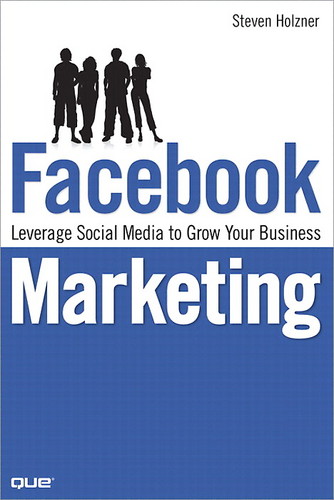
The fast-breaking storm of social networking has left marketers flailing about for shelter, a path to the calm in the eye of the storm, or at least a way to harness the energy in the turmoil. Some are turning to self-appointed experts, and some try to learn it as they go along. Somewhere in between comes a new guide to ‘Facebook Marketing’, with an umbrella of a sub-title that goes ‘Leverage Social Media to Grow Your Business’. Does it live up to its promises? Gadget editor Arthur Goldstuck tests it against the social weather.

Review: Facebook Marketing: Leveraging Social Media to Grow Your Business, by Steven Holzner, Que, 2008, Paperback,  276pp

Price: R226 recommended retail, but shop around for 10% discounts upward

Often, it’s what a guidebook WON’T do for you that defines it as much as what it will help you achieve. So let’s get one thing out of the way fast. “Profit from Facebook!”, as the headline on the back cover shouts, is not what this book will bring you overnight.

What it will do, on the other hand, is provide a practical roadmap through the basic use of Facebook as a marketing tool.

Down-to-earth, common sense advice, like “Become a part of the online conversation and don’t just throw up a display ad” (from Eddie Smith of SocialMediaNetworks) is not only sensible, but also applicable to any form of social marketing. It applies whether you’re using blogs, LinkedIn, Twitter, Plaxo or whatever comes next:  blatant marketing is the great destroyer of reputation. On Facebook, it can even get your account revoked. The “conversation” is the key to marketing in any of these gathering places.

Practical chapters on forming Facebook Groups, Pages and Events explain the differences between each, the benefits of each and when which one makes the most sense. Core advice for Page updates: “Add real content, not just spam”. Obvious for the initiates, but profound for newcomers.

Facebook Marketing comes into its own more than halfway through when it deals directly with what it calls “the meat and potatoes for many marketers”, namely advertising. This is one thing you don’t pick up vicariously while fighting werewolves or browsing YouTube videos on your friends’ walls. As a beginner in Facebook advertising, you really do need someone to walk you through the storm.

The difference between Ads and Social Ads on Facebook, how to create an ad, “start an ad”, choose an audience, and how to monitor and optimise the ad campaign, will make this show worth the entrance ticket.

However, if you plan to enlist the aid of the many instant professionals that have created an industry around social marketing, don’t pass this book onto them. They will be way ahead of the curve thrown out from these pages.

The same applies to a chapter on Facebook Applications. You’ll need a little more substance than this to venture boldly into the world of “aps”.

There are several irritations in the book, such as sloppy facts. In the introduction, Facebook has 42 million users. In the opening chapter, four pages on, it has 80 million users. We know it is growing fast, but not THAT fast.

Random insertions of useful advice – not related directly to the chapter where it appears – gives the book a fragmented feel. Paradoxically, these are also some of the most useful pieces of advice in the book.

And in one of those items lurks a hidden warning. Sunmit Singh, CEO of RootsGear, advises readers that there is a wide range of demographics to choose from, because “Facebook is at its peak right now”. The hidden implication (or, at least, this reviewer’s perspective on it) is that something else may come along soon to knock Facebook off its pedestal. As the next big thing arrives – and many believe Twitter is already that next big thing – Facebook may well lose both its impetus and its status as social networking leader.

The obvious message in that possibility is to avoid betting your reputation on the future of Facebook. But while Facebook remains top of the social networking pile, this book is a useful, easily digestible beginner’s guide to leveraging its strengths and negotiating its pitfalls.

Reprinted from Gadget with permission. Follow them at Twitter @gadgetza

Second ANC TV ad released

Together with advertising agency Ogilvy Johannesburg, the ANC has produced four commercials (view the first one here) that talk to the positive changes ordinary South Africans have experienced since 1994, while acknowledging “there is much more to be done”.  Once again Nelson Mandela is prominently mentioned at the beginning of the ad followed by a message from Zuma at the end.

It is sad no one truly knows a nation …until one has been inside its jails!

Winnie Mandela

Ruth First

Nelson Mandela

Gandhi

Only two more updates left on MarkLives.com of the stunning work of Zimbabwean born illustrator Sindiso Nyoni. He currently works at Amicollective. Today: a poster series for Constitution Hill, South Africa. The posters are based on historical political prisoners held at the old fort prison complex which now houses South Africa’s Constitutional Court.

Create Withtank

tank

Tank (Withtank.com) is a very cool South African start-up with a remarkable sitebuilding tool offering entrepreneurs and creatively inclined web users a way to get a website without much of the costs usually associated with doing so. Alan Alston, one of the founders, chatted with Mark about his dream to keep the Web simple and easy, how it’s maxing out his credit card and what cool features and partners he plans adding in the near future.

Mark: How did you come up with the concept for Tank (www.withtank.com)?

Alan: It’s not as much as a concept as it was one of those ‘scratching your own itch’ things: we were annoyed by the way one builds websites, and wanted a better way to do things.

Mark: How are you financing the initiative?

Alan: We’ve bootstrapped all the way: been living on maxed-out credit cards and bond accounts for some time now.

Mark: Your revenue comes only form user upgrades?

Alan: We do custom design and build too, to boost our income and to focus our efforts. The following sites are all examples of us designing and building ‘custom skins’ for specific clients, hooked up to our app:

* Golf Data – www.golfdata.co.za
* Adato – www.adato.co.za
* Whatiftheworld – www.whatiftheworld.com

Mark: What % of your users upgrade for extra services & tools?

Alan: Our conversion rate is much higher than we expected: more than that would be telling!

Mark: Any new features planned for the new future?

Alan: Our features are loosely tied to simplistic data-types: so far we’ve deployed pages (for pages), posts (for blogs/journals) and photos (for galleries/albums). We are playing with a new 4th data-type called
‘pods’: “the list of things you’ve always wanted in a list of things”. We’ll be using that to enable showcases, profile sections, support and FAQ sections: that type of thing. There is talk about the 5th data-type too: ‘products’ – and I’m sure you can imagine that would entail.

Mark: You have an ethos. Very Fast Company of you! Tell us more.

Alan: The simplicity-aspect of what we do has cottoned on, and struck a chord with many people. Think about it from the end-user point of view: server specs are Greek to them. Hosting sounds like trouble. Installing and customising a web application on a shared server, just in order to ‘manage content’? Forget about it. They want their web presence to offer the same simplicity and utility as email; it just works.

I reckon our ethos has been central to what we are trying to do: changing the love-hate relationship many people have had with their websites.

Mark: Mainstream hosting companies are also launching sitebuilders. How will this affect your business model?

Alan: True, we have seen hosting companies playing in this field: what I haven’t seen are the sites they are building – have you? I think any hosting company would fare better if they rather consider partnering with us as opposed to attempting to enter the sitebuilder market ‘on their own’. We have quite interesting ‘partner technology’ that we’re keen to try out should the right partner approach us.

Besides that I think it’s a question of positioning: hosting companies traditionally deal with developers (as hosting isn’t that consumer friendly). We deal directly with end-users so I think there is a lot more empathy for the user when it comes to our offering.

We try and understand the market from a designer point-of-view, and choose to work with and enable designers as opposed to trying to displace them from the market. Again it boils down to positioning: we give designers ‘skins’ (or ‘frameworks’) to build sites with: tapping into the ‘design is a process’ notion, other sitebuilders offer ‘themes’ and attempt to establish the ‘design is a choice’ notion.

Mark: I noticed that you only offer Google Analytics (a free service) to upgraded users. Do you think it’s wise when people really would want to see what kind of traffic the micro-site generates before they push money into it?

Alan: I think this might be a chicken-and-egg argument – we find our users choose to upgrade to their own domain before marketing and measuring their sites. Either way: it’s relevant feedback and something we’ll look at addressing.

Mark: You have a showcase on your site and the Tank built sites you feature are pretty impressive. Is targeting creative part of your unique selling proposition?

Alan: I think that just happened along the way, and we’ve found ourselves gearing up towards the more creative user. I think that’s a good thing on two levels: we enable them to build better sites for themselves, and they are always keen to help a friend to with his or her own site.

Mark: Some of your users won’t have the tools to create a really stunning site (like the ones in your showcase). Do you think it could be a future service offering where you create sites using Withthank.com on their behalf?

Alan: Instead of offering this as a service ourselves we are finding many designers are ‘picking up our app and running with it’: using our content-management system and their design ethos to roll out sites for their clients. It’s a win-win situation: we are enabling designers to build sites for their client base without the usual headaches involved in building and managing a website. They get to focus on design: their clients get to focus on content, and we do the heavy lifting in the background.

For instance: www.hawkeyes.co.za and www.cafemax.co.za were designed and built by one designer, www.pieterhugo.com, www.tique.co.za, www.oliverkruger.co.za and www.ulricaknutsdotter.com were designed and built by another, and www.blackadamhere.com by another.

We’d much rather be focusing on enabling and nurturing these ‘power-users’ further than trying to compete with them in the design realm.

Mark: What’s the best thing of working on an app like Tank?

Alan: Getting feedback like this:
“I have been searching for a CMS like this for years – as a web designer I’m always being asked to implement some sort of CMS in most of my client’s sites and I have been struggling to find a good solution.  A lot of the sites I do don’t warrant a full blown CMS just the basic features offered by Tank. Implementing something like WordPress, Joomla, or Drupal is usually overkill for me, and confuses the hell out of clients.”

Mark on Tank. Check it out!

To kill a country 101 (howzit Bob)

free zimbabwe

Zimbabwean born illustrator and activist Sindiso Nyoni created this Free Zim activist graffiti tag, with accompanying posters addressing the suppressed state Zimbabwe is in under the continued dictatorial rule of Robert Mugabe. He currently works at Amicollective – an outfit known for grabbing the hottest talent off the market and living up to its reputation yet again (as is obvious).
Online CPD Courses Psychology Online CPD Courses Marketing analytics software Marketing analytics software for small business Business management software Business accounting software Gearbox repair company Makeup artist