Book for Bright Talks


Ross Chowles

Bright Talks, a day long conference aimed at the marketing and advertising industries, is launching in Cape Town on Thursday, 25th July at Kirstenbosch Gardens.

The speaker line up will include Ross Chowles, ECD at The Jupiter Drawing Room, along with Gavin Levinsohn, MD of Ogilvy Cape Town; Ravi Naidoo,  creator of Design Indaba; Margaret Jenks, strategy consultant and leadership coach and Graham Warsop, Founder of The Jupiter Drawing Room.

Tickets for the first Bright Talks event are available for sale through the website www.brighttalks.co.za and costs R2600 per delegate. Lunch, mid-morning and afternoon teas and coffees are included.

Mike Abel: The Inconvenient Customer

by Mike Abel, MD, M&C Saatchi Abel As marketers, our lives have become far harder. In developed markets, the “lift pitch” we call advertising has fewer floors to travel with the customer.

We need to be crisper, sharper. Simpler.

Brand and product choice has truly exploded, competitor speed to market is shorter, distribution channels are easier, quicker and wider – and mike abelprice, unless you can always be the cheapest, is but a short-term protector of sales and usually comes with the inextricable corollary of a long-term perception of quality compromise.

It’s all rather tricky.

To make matters worse, this customer has become far more multi-faceted. The working mom, the stay-at-home dad, part-time, flexi, Skype-in, remote locations, freelance, consultants– they’re darn well fashioning their careers and jobs around their lifestyles as opposed to vice versa. “SOHO” is now becoming even more “boho”.

Information is consumed in bytes and bites. It’s like a smorgasbord of knowledge and entertainment options where you are able to choose snacks and bits from Twitter, Facebook, the local newspaper (if you still read physical paper), your best global sites and blogs – and it’ll most probably all happen on your phone, tablet, laptop and maybe television (that’s if you actually “consume it” on a tv set).

Watching my kids consume media is fascinating (as an advertiser, terrifying). It’s all on their terms. If it’s not of interest, they move on quickly. There’s no waiting to see if it gets interesting. It’s like watching only sports highlights, goal after goal, wicket after wicket. Keep the fun coming or I’m going.

I read an article about David Lynch the other day – the famed director of among other things, Twin Peaks (we were all fascinated by it’s loopy and well-crafted weirdness at the time). I was given the magazine (a very good freebie called Shortlist – also on shortlist.com) whilst flying Turkish Airlines. Lynch, at 67 years old, is described also as “a painter, guru, cartoonist and musician”. The interviewer asks him about the scary ‘C word’ – in this context it’s convention – the supposed horror of living a non multi-faceted life.

Growing up in the 70s and 80s, the model was at first to emulate the lives of ones parents – and their parents. You chose a responsible career (one which earned a steady income over the long term – it wasn’t that much about job fulfilment really). You maybe had a traditional hobby (one). You read the morning paper, watched the evening news, followed your sports teama nd raised your kids. Done.

Truth is, most of us today, like David Lynch – aware or not– strive to do more, live more, experience more. That’s why there is more on offer.

And that’s why there is also less. They co-exist like Ying and Yang.

More choice, less certainty. More options, less time.More time, less urgency. Less urgency, more laziness. It’s not as simplistic as this, but you get the gist.

More clutter. Less simplicity.

In a time of chaos and over-choice, opportunity arises to “be the threshing machine that separates the wheat from the chaff”.

Relevance of message is always the true north of any communication. Without relevance you may as well not even advertise. And when I say “relevance”, here is the shocking part…I don’t mean to the client or the agency – I mean to the customer. The inconvenient one that I’ve described above that is fighting for just a tiny bit of air in their often self-imposed, oversubscribed lives. Because that’s how we live today.

For you see, if we are indeed these “threshing machines”, we provide new opportunity for challenger brands to become market leaders, we create space for entirely new brands to come to market. We destabilize the status quo because customers are now getting used to making quick choices around relevance – be they emotionally based or on product intrinsics (usually both,but certainly more the former than the latter).

Customers can no longer be treated like cattle. Walking that same path twixt home and work – buying the same stuff for the same reasons. They are more open to suggestion that ever before. They lead varied lives. Many of us travel more than Christopher Columbus did in simply doing our job.

And the generation coming up behind us is even less concerned about ‘tried and trusted’. They’ll decide for themselves, thank you very much.

Our new friend, David Lynch was also asked about directing ads (which he’s done a number of). The question was around a strict creative brief, unlike a movie, which must surely be far more restricting for him? His answer was, “restrictions are interesting for creativity”.

So where’s the sweet spot? Well, if you restrict yourself to what is entirely relevant but never boring, just fresh – so it’s unexpected and brutally simple, I suspect what you’ll give the customer is “brutal simplicity of choice”.

And possibly nobody else will.

Reprinted from the blog of Mike Abel.
Stay up to date with our weekly mailer. Subscribe here. It’s free!

MagLove: Nelson Mandela at 95, as captured on magazine covers

MarkLives.com runs a regular slot featuring the best local and international magazine covers every week. We recognise well thought out, powerful and interesting (and hopefully all three in one) magazine covers and celebrate the mix of pragmatism, creativity and personal taste that created each of them. By media blogger MediaSlut.

With Nelson Mandela’s 95 birthday yesterday (18 July 2013) I thought it only appropriate to also celebrate some of the recent beautiful cover designs featuring Madiba.

LOCAL

SA Rugby, August 2013

SA Rugby 8 August 2013

I’m told by the editor of SA Rugby magazine, Simon Borchardt, that it took more than “40 000 photos of the rugby players he (Nelson Mandela) inspired and the moments he helped to make happen” to create this cover. It really is an amazing collection of pictures, and an even more amazing final product. The coverline reads, “Former and current Boks on how he inspired them – Memories of Madiba”. (Please note that this issue of SA Rugby is only on-shelf from next week)

Business Day Sport Monthly, August 2013

BDSM 8 August 2013

Keeping with the sporting-theme, is Business Day Sport Monthly (This issue is free with today’s copy of Business Day, Friday 19 July 2013). A beautiful collage of iconic sporting pictures in black and white, in the background, and a main picture of Madiba that just warms your heart, holding the FIFA World Cup. The coverline reads, “Magic of Madiba – What he brought to a Nation”

iMagazine (City Press), 7 July 2013

iMag 3.5 7 July 2013

The free weekly magazine with City Press newspaper, iMagazine, took a completely different (and unique) approach to their cover. At first it looked a bit ‘strange’ to me, but the more and more I look at, the more and more I love it. The coverline reads, “Mandela – Impressions of an icon”.

Finweek, 7 July 2013  

Finweek 1 11 July 2013

Finweek went the route of using a beautiful black and white picture of Nelson Mandela, paired with bright red design features. It’s once again a picture of Madiba that I haven’t seen before, and I think it makes a great cover. The article “The father provides” didn’t feature Madiba as such, but rather his impact on Qunu etc.

Kuier, 3 July 2013

Kuier 1.1 3 July 2013

First with the memorable and heartwarming Nelson Mandela covers, was bi-weekly magazine Kuier. I’m told that they would have liked to have him on their latest cover to co-inside with his 95th Birthday, but this is also their 100th issue, so that by itself was a special cover and issue for the Kuier team. I read some of the comments after Kuier uploaded this cover, and their readers definitely liked the cover as much as I do.

Madiba, 95th Years!

For more recent Nelson Mandela covers, you can find an small archive right here.

– The (for now anonymous) blogger behind MediaSlut knows way too much for his own good about media in South Africa. Magazines in particular. His mission is to show when South African magazines might fail, but most importantly, succeed. If you’re looking for a library about South African magazines and news, your one-stop pitstop is MediaSlut. #MagazinesForTheWin

– Find a cover we should know about? Tweet us @marklives and @mediaslut
Sign up for our free newsletter!

The Ad Contrarian: The devolution of social media marketing

adcontra

by  Bob Hoffman (@adcontrarian), San Francisco Bay Every time I try to explain to someone who is not in the ad business (and some people who are) why social media marketing has been a disappointment, I get the same response:

“But how can you say that? Facebook has over a billion users… Twitter is the medium people have used to overthrow governments… Pinterest is this and Instagram has that…and…my daughter is constantly using social media and… and…and…”

What people don’t seem to understand is that social media and social media marketing are two very different things.

Social media has been a huge worldwide success. Social media marketing has not.

Social media is to social media marketing as news is to public relations.

News is generated by news media. The objective of PR is to influence that news. Social media is chit chat generated by individuals. The objective of social media marketing is to influence the chit chat.

Just as PR is rarely successful at manipulating the reporting of the news, social media marketing is rarely successful at manipulating chit chat.

Sure, sometimes Burger King’s PR department gets a story placed somewhere and they have a big PR hit. And sometimes Wendy’s social media effort pays off with a social media success. But both are rare and massively unreliable.

Do PR and social media pay out in the long run? If done well, I guess so. But no one with a functioning brain believes anymore that they can rely on either to carry their marketing water for them.

Regardless of what PR experts tell you, you cannot control the news. Regardless of what social media experts tell you, you cannot control chit chat. Just as people can smell PR disguised as news, they can also smell social media marketing disguised as chit chat.

As social media marketing has been exposed for not being the magic it was purported to be, its influence — even in the world of social media — has waned.

The early zealots of social media marketing claimed that it was going to replace traditional paid advertising. “Talking down to consumers” (the code words zealots use to describe advertising) was going to be replaced by consumers having “conversations about brands.” This wonderful little fantasy soon became unmasked for the nonsense it was.

One of the confusing elements of this topic is a distinction that many don’t understand. Just as social media and social media marketing are different things, social media marketing and social media channels are often confused.

Our most successful social media channel — Facebook — can barely be considered a vehicle for social media marketing anymore. It has mutated into a channel for delivering traditional banner advertising. Facebook’s revenue model is basically no different from any other website — they are selling ad space. They are not in the “conversation” business. They are in the advertising space sales business.

My informal estimate is that over 1/3 of a Facebook page is covered with display ads of some sort, either outside your feed or inside it.

Social media marketing is devolving into not much more than traditional advertising on social media channels. The delusion that consumers crave conversations with marketers and engagement with brands is quickly evaporating.


– The Ad Contrarian is Bob Hoffman, is the author of The Ad Contrarian and 101 Contrarian Ideas About Advertising. Reprinted from his blog The Ad Contrarian.

– Industry profiles you’ll make time for. Sign up for our free newsletter!

Media Future: Life left in Microsoft – and Nokia

Microsoft finds itself in the uncustomary role of underdog, but that only tells part of the story, says SA managing director Mteto Nyati in discussion with Arthur Goldstuck (@art2gee).

The one-time all-conquering giant of software, Microsoft, is suddenly finding itself performing an uncustomary role: that of underdog. Aside from a share price that had reached a record low earlier this year, it has also been taking a public relations beating.

The launch of the new Windows 8 operating system (OS) late last year did not set the market alight with new respect, and itsmslogo recent unveiling of the specifications for the Xbox One entertainment device was vilified for the restrictions it placed on users.

For many companies, that would spell doom. In the past, that kind of response to previous products did indeed cast gloom into the hearts of all at Microsoft headquarters in Redmond near Seattle.

But we are looking at a changed organisation today, says Mteto Nyati, managing director of Microsoft South Africa.

“The fact that we’re underdogs gives us a new energy,” he says. “The speed at which we move has to be completely different. The level of innovation , the ability to come with a differentiator, our ability to bring all our assets together, we are changing everything we do.”

The turning point came a few years ago, when Microsoft released the disastrous Windows Vista OS. It followed it with the acclaimed Windows 7, which is the dominant computer desktop operating system today.

”Windows 7 was informed by feedback around Vista,” says Nyati. “It was largely shaped by customers. It was a big departure for Microsoft, where you saw an organisation that had become very open to feedback.”

The company has responded in the same way to the negative response to Windows 8: it has addressed most of the public complaints – most prominently the absence of a Start button – and fixed the flaws in the upcoming Windows 8.1.

“Windows 8 is a big shift. We’re going boldly into this new world of touch and we need to reinvent our entire ecosystem. It’s not an overnight thing. We always knew it was going to be difficult. Windows 8.1 demonstrates what started with 7: we are listening to our customers. 8.1 is coming out soon, the release cycles are going to be shorter and shorter and our customers are going to get the benefit much sooner.”

The philosophy was evident in the Xbox One announcements as well. Within a week of announcing that users would have to be connected to the Internet to use the Xbox One – a restriction that was met with howls of disbelief – Microsoft backtracked, along with rescinding a number of other restrictions.

It is that near-instant response to criticism that now most differentiates the company from its deadly rival, Apple.

Will it be enough to take on the new giants of consumer technology? Not in itself. But there are many strings to the Microsoft bow. Each, in itself, has come under fire from critics: the Windows 8 tablets are too expensive; the Office 365 online version of Microsoft Office has created too much reliance on the Cloud; the Windows Phone 8 operating system is going nowhere. And so on.

Yet, all of these products and services taken together add up to a powerful product set and a compelling business. Add its market-leading Cloud service, SkyDrive, and it becomes obvious the company is not about to evaporate.

Investors agree, and have boosted the share price by almost a third to near record highs in the past six months.

In the South African context, the most startling Microsoft number of all has been produced by another much-maligned company, Nokia. The two are joined at the hip, with Nokia having committed to using the Windows Phone OS exclusively on its smartphones. The result of the partnership is the Lumia range of phones, which competes in the mid-range and high-end price brackets with the likes of Apple, Samsung, Sony and HTC.

In a South African smartphone market comprising about 13-million phones in use, the Lumia has barely made a dent, with about 2% market share. But the overall installed base only tells half the story. In new sales in the last quarter, Nokia took 9,7% share of smartphone sales. That may only amount to a couple of hundred thousand phones, but it puts the cat among the pigeons of a smartphone market currently dominated by BlackBerry and Samsung.

Globally, Nokia sold 5,6-million Lumia phones in the previous quarter, almost catching up to  BlackBerry’s 6-million units sold. In the USA, it has overtaken BlackBerry.

It also means that the Windows Phone operating system itself is gaining ground. South Africa is one of half-a-dozen major territories where phone using the OS outsells the iPhone.

This is all happening before Windows 8 tablets really have a chance to get going in this country. With the release of Windows 8.1 in November, tablets carrying the Microsoft software will have a new lease on life. Already, they are edging towards 10% global market share.

Nyati offers another reason to watch that segment: “The other big change with 8.1 is that it will enable other form factors. We are not going to be stuck in the 10” range. We will move more and more into the lower end and we are enabling our partners to be able to go there. The complete package has to be affordable and we will do whatever is required to help there.”

* Arthur Goldstuck heads up World Wide Worx (www.worldwideworx.com) and is editor-in-chief of Gadget. He is a Consulting Editor to MarkLives and our media tech columnist. Follow him on Twitter on @art2gee. Reprinted from Gadget.

Industry news you will make time for. Subscribe here. It’s free!

Shelf Life: Value wines online

Louise Marsland’s (@Louise_Marsland) pick of new product, packaging and design launches.

Publishers embrace retail; new plans for Meyer & Associates; a whisky win for Grant’s; and Foschini launches a ‘rewards booth’ for customers.

Getaway takes best value wine online

Best Value Decal 2014.indd

We all know the traditional publishing model no longer brings in the huge profits of the past, so innovative media owners have to turn to brand extensions and Getaway magazine has launched an online wine store that aims to provide value-for-money wines to its readers, in partnership with Cybercellar.

The wines will be a selection of the top-scorers from Getaway’s 2014 Best Value Wine Awards and will available at www.bestvaluewineguide.com, the retail fulfilment of which will be managed by Cybercellar.

Explained Getaway editor Cameron Ewart-Smith: “All publishers are looking for additional revenue streams. It’s no longer enough simply to talk about products and experiences, we need to close the loop by making these available, and by delivered them to the consumer’s door, where possible.”

“We are already achieving this objective with our accommodation and travel package options – extending it to our wine content offering was the obvious next step.”

To qualify for entry into the Best Value awards, wines had to sell for less than R80 a bottle and be produced in sufficient quantity to have a reasonable amount of stock available to the public.

Redrafting M&A

M&A

Cape Town based specialist architecture and urban design firm, Meyer & Associates, recently restructured and decided that their visual identity also needed to reflect the fresh direction and their reputation for excellence.

The Engage Brandcraft team identified three core differentiating factors that set the firm apart and that would most likely define the firm moving forward. They then identified the common thread in the firm’s work and wove it into a new brand identity and the brand collateral of the firm, which is “at the intersection of minimalism (restraint), accessibility and responsiveness”.

Engage Brandcraft adds that the new corporate identity reflects the brand’s balance of “intelligence and class”, taking its chromatic cues from its predecessor, but looking forwards for its form and subtly crafted balance.” A piano gloss finish on the finished art signals quality, they say.

Raise your glass to Grant’s

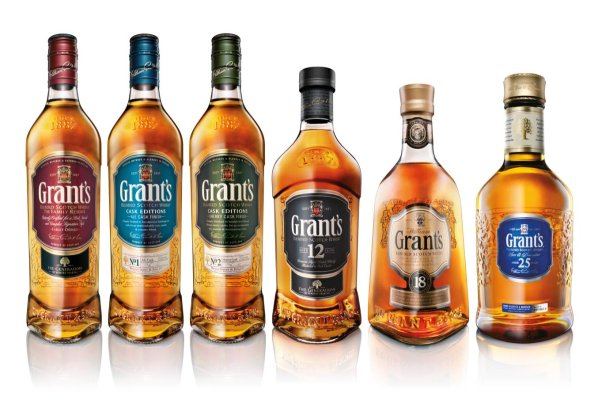
Grants

Grant’s blended Scotch whisky, represented in South Africa by Edward Snell, has been awarded the coveted ‘Master’ at this year’s Scotch Whisky Masters Awards for Grant’s 18 Year Old.  In addition, it has received a gold medal for its Grant’s 25 Year Old, a blend containing 25 of the world’s most distinctive malt and grain whiskies.

Grant’s is the oldest family owned blend in Scotland, built on five generations of heritage and passion for whisky-making, starting in 1887.

Also awarded silver medals were: Grant’s Ale Cask Finish and Grant’s Sherry Cask Finish, Grant’s Distillery Edition, and Grant’s 12 Year Old. Said Brian Kinsman, Grant’s Master Blender, “It’s always a great honour to be recognised for all the great whiskies we make. The awards pay tribute to the five generations of the Grant family and craftspeople from our distilleries.”

Money or the box…

Foschini retail

Queues of people lined up to take part in an activation by TFG (The Foschini Group), which saw them giving shoppers instant rewards at Cape Town’s Canal Walk shopping centre recently. The promotion was aimed at driving awareness of the fashion retailer’s Rewards&More programme.

The activation was done via a large interactive ‘Rewards booth’ that had a button, which when pressed, would reward a customer with an instant reward. Rewards ranged from clothing and accessories, to food vouchers, smartphones and tablets.

The Rewards Booth was a physical manifestation of the instant and tailored rewards that characterises TFG’s loyalty and rewards programme; TFG Rewards&More. The programme is unique in that each time a customer makes a purchase at any of its 18 brands, they are rewarded instantly with a reward that is tailored to their own unique shopping profile. No points, no vouchers mailed in the post.Today’s shopper wants instant gratification, which is why accumulating points when you shop, is no longer enough to entice loyalty, explains TFG marketing head, Kathryn Sakalis.

TFG Rewards launched on November 2012 and to date over 3.5 million people have signed up.

Louise Marsland– Shelf Life by Louise Marsland is a weekly column on MarkLives. Tweet new product, packaging and design launches to @louise_marsland or email her at louise.marsland at gmail.com.

– Want to sponsor Shelf Life? Contact us here.

Louise Marsland has written about the FMCG, media, marketing and advertising industry for 18 years of her 25 year media career as a former Editor of magazines AdVantage, Marketing Mix and Progressive Retailing; as well as websites Bizcommunity.com and FMCGFiles. She currently edits the weekly Wednesday Media & Marketing Page for The New Age newspaper; and is the co-founder and Publishing Editor of SA’s newly launched industry trendwatching portal, TREND. at www.trendlives.info, in partnership with MarkLives.com.

– Industry profiles you’ll make time for. Sign up for our free newsletter!

Would you give away your campaign for a better future?


rr

by Thomas Kolster, author, Goodvertising In a world facing massive change, we need to take drastic measures. A lot of the issues at hand from water scarcity to poverty are bigger than any one company or non-profit can answer. We can solve these pressing problems by sharing what really works. There are so many exciting initiatives around the world offering solutions, but most often people don’t know about them.

[pullquote]Take your best ads and give them away.[/pullquote]

With the Right to Recycle License we can all encourage free sharing of good initiatives. If an initiative can improve HIV infection rates in India, what is to say it wouldn’t work in Sub Saharan Africa? By sharing these ideas, we can make a real difference with real results and turn local initiatives global!

I hope to encourage agencies, companies, non-profits, governmental agencies and foundations to work together to find lasting solutions for health, environment and society, by submitting their sustainability initiatives or non-profit campaigns to a central platform. If we all share communication solutions for good; we can accelerate innovation and ultimately do greater good for people, the planet and business.

The platform, WhereGoodGrows, strives to inspire collaboration and sharing of good practices and sustainable efforts and it’s already showcasing initiatives by the likes of Nike, VW, McDonalds and WWF made by agencies around the world.

Join the Right to Recycle initiative here

Ad of the Week with Oresti Patricios – When Vampires Attack!

MarkLives Ad of the Week with Oresti Patricios – When Vampires Attack!

tabart Dracula

tabart vlad

tabart Nosferatu

We’ve passed the winter solstice, which means that summer is not too far off. For most South Africans it’s the season of fun in the sun. There’s so much to look forward to: longer daylight hours, braais, swimming… and then there’s the mosquitoes. Well, everything good must have a downside, or so they say.

But the reality is that those whiney bloodsucking vampires are incredibly annoying! Somehow they always find the most annoying place to bite me – like on my knuckle, my ear or my elbow. The worst part, though, is the whining sound as they start to dive-bomb, about twenty minutes after I turn out the light… or just as I’m about to drift off to sleep.

Tabard has established itself very solidly over the years as a household name in South Africa, and several other African countries, due in part to its easy application and not-too-unpleasant scent. But mostly because of its effective ability to banish the blood-sucking scourge that’s the mosquito.

Given that that the Tabard brand is familiar and well entrenched – owners the Acorn Group say it is Africa’s “most trusted insect repellent” – what’s important to the brand is that it remains relevant.

To this end, Tabard is launching an artful yet playful print campaign, just in time for the summer onslaught. Featuring three famous vampire characters, the principally black-and-white pictures play with size and perspective, portraying the bloodthirsty vampires as pilots of tiny aeroplanes, looking down on their targets: people in bed, on a couch or at a campfire. The slogan reads: “Because you never know who’s up there.”

It all has a delightfully spooky, Tim Burton-esque quality, with the illustrations done mainly in black-and-white: the only spots of colour are the red of the Tabard pack, matching up with the blood-crazed eyes of the vampires. The black-and-white is also an homage to the vampire movie genre, which harks back to the pre-Technicolor era, much as Coppola reverted to black-and-white when he produced his 1992 version.

The artworks are impeccable: first we have the classic Bela Lugosi, complete with cape and tuxedo, then we have the gothic Werner Herzog interpretation of Nosferatu, he of the icky long nails and pointy overbite, and finally the more modern, 1992 version as played by Gary Oldman, with his top hat and Victorian sunglasses, courtesy of Francis Ford Coppola. That was probably the last great Dracula movie: everything since then has either been a spoof (Dead and Loving it) or a tacky imitation. Then of course, there were the sparkly Twilight vampires, but the less said of those, the better.

I think what makes this series of ads work is that it lets the art speak for itself. Unlike other mosquito repellent ads, there is no overt reference to a mosquito. It’s a visual pun, which not only gives you an ‘aha’ moment, but also a giggle as you recognise the different ‘faces’ of Dracula. The campaign relies on the brand-recognition that Tabard enjoys in South Africa, and so the ads don’t need to make any USP-type claims or promises. What they do is reinforce the brand and raise its profile, ensuring its place as a market leader.

The ad is the brainchild of Volcano, which claims to bring together the “art and science” of  TTL advertising, design, branding, brand insights, brand strategy, digital, media strategy, public relations, promotions and events. This eye-catching campaign does them proud, and although I presume they will be placing in the usual consumer channels, I think it would be wise to support the campaign with some clever in-store placement – because it’s one of those products that you probably forget to put on the shopping-list, but naturally grab when you spot it.

The illustrator of this striking campaign, Gabby Correia, is a relative newcomer to the world of advertising, having cut her teeth in custom illustrating. Volcano’s two creative directors, Francois Boshoff and Glen Jeffrey, share the CD credits, and Art Direction credit also goes to Boshoff.

Funny, effective, powerful… a perfect print campaign. Well done to Tabard and its agency Volcano for a horror-ifically great series of ads.

Ad of the Week is published on MarkLives every Wednesday. See past selections here.
Oresti Patricios is the CEO of brand and reputation analysis company Ornico.

– Industry profiles you’ll make time for. Sign up for our free newsletter!

Hermaneutics: ‘Blackface’ ad faces international backlash

blackface

by Herman Manson (@marklives) Cape Town agency Lowe + Partners and client Cape Town Fish Market has been strongly criticised for using ‘blackface’ in their latest TV commercial. The ad has even been featured on Al-Jazeera who reported that the it had sparked ‘outrage among South Africans.’

In American history especially, ‘blackface’ was used to create stereotyped caricatures of black people. Today it is still sometimes used as social commentary or satire but it is generally considered politically incorrect.

The ad in question references a stereotypical ‘African Dictator’ – with an actor in blackfaceand wearing an Afro – diverting funds into his “expense account.” The ad, which consists of various vignettes, features the same actor also playing a prostitute, a dodgy doctor, porn director and rental agent.

Mvelase Peppetta blogged that he found the ad seriously offensive and suggested lack of transformation in the ad industry might have played a role in the ad getting flighted in the first place. “People far smarter and more experienced in SA’s marketing industry than me have time and again explained how the lack of diversity in our ad industry leads to these kind of horribly offensive and stereotypical ads,”  wrote Peppetta.

On US based site Africa is a Country T.O. Molefe wrote that “The ad uses blackface to play on the tired trope of a corrupt dictator from a nebulous, nondescript African state. It’s a double blacking up of stereotypes, because corruption and dictatorial tendencies are not uniquely African. That the two have such a strong association when corrupt, authoritarian politicians have been a global phenomenon throughout history has a lot to do with the enduring appeal of the idea that Africa was better off under its white colonial masters.”

Aiden Connolly, MD of Lowe Cape Town, says the agency never intended offence with the ad and admitted it had been taken by surprise by the negative reaction. He confirmed the agency would meet with its client and offer recommendations on how to deal with the current backlash. The campaign has significant media spend around it and versions of the ad is scheduled to run over the next two years – so this wasn’t an ad generated to create controversy and be quickly pulled, says Connolly.

Connolly says that the agency has been contacting people directly who has raised concerns over the ad and that it has supplied them with information on the creative rationale as well as an apology for any offence caused. He admitted that when a communication message (in this case around perceptions of fresh fish) gets lost  an ad is in trouble.

While those familiar with African-American history would certainly have steered clear of using blackface the South African cultural context is of course quite different from the American one. The annual Cape Carnival (Kaapse Klopse) is a boisterous affair featuring minstrel groups (some of them make use of blackface) that celebrates the abolition of slavery in the old Cape colony. The Klopse were banned from following its historical route through Cape Town during Apartheid to ensure participants don’t march through ‘white’ areas as designated Group Areas Act  – a key Apartheid policy. Tweede nuwe jaar (January 2), when the Klopse happens, is considered a celebration of freedom and emancipation.

This should not serve as an apology for Cape Town Fish Market or its agency. In the age of YouTube, advertisers need to be taking a broader and informed view on what could create controversy around their communication, and of course, the ad has faced significant criticism in South Africa itself, though maybe not quite on the scale the Al-Jazeera would suggest (it’s only made just over 10 000 views on YouTube as of 2013/07/16).

The ad should be pulled and the offending scene should be replaced. At the same time South Africans need to interrogate to what extent they want their (many varied) culture(s) viewed through a lens informed mainly by America’s cultural and historical context.

Hermaneutics is a column by MarkLives.com editor Herman Manson. It indicates as much opinion as reporting.

– Industry news you’ll make time for. Sign up for our free newsletter!

Online CPD Courses Psychology Online CPD Courses Marketing analytics software Marketing analytics software for small business Business management software Business accounting software Gearbox repair company Makeup artist