Shelf Life: Monkey Shoulder Scotch!

Louise Marsland’s (@Louise_Marsland) pick of new product, packaging and design launches.

L’Occitane launches its new fragrance range in SA; KFC adds to breakfast; a new Scotch that doesn’t monkey around; and African Pride and Protea Hotel’s new websites give guests what they want.

Scent of Provence

L OccitaneFrench cosmetics and skincare house, L’Occitane en Provence, launched a new fragrance collection in Cape Town recently with a ‘fragrance discovery event’ for beauty editors and bloggers at the grand dame herself, the Mount Nelson.

Set in the lush gardens on what was probably the only sunny day in August in the Mother City, a special colour-themed morning tea was served in the sumptuous style of the Nellie. This provided the backdrop to the colour-themed joyful scents which combine ingredients and spices from exotic lands, mellifluously combined by alchemist and L’Occitane private perfumer, Karine Dubreuil.

The new fragrance collection, entitled La Collection de Grasse consists of four fragrances: Jasmin & Bergamote; Magnolia & Mûre; Vanille & Narcisse; and The Vert & Bigarade for both men and women.

The inspiration for the collection came from Grasse, in Provence, France, the world’s perfume capital and home to major perfume houses.

The full product range will be available inside all L’Occitane stores in November.

Monkey Shoulder Scotch launches

Monkey Shoulder Scotch

This month sees the launch of a new Scotch in South Africa that purports to challenge everything you ever knew about Scotch! Its unusual name already gives a clue to its “free-spirited” nature.

Amongst a glut of adjectives, Monkey Shoulder is described as a “fun-loving triple malt with an easygoing smooth, rich and mellow vanilla deliciousness” and can be drunk neat, on the rocks, mixed or in cocktails.

It’s clearly not going for the connoisseur as it is considered sacrilege to mix your Scotch with anything other than the appropriate tulip-shaped glass to savour it in. The brand’s target is more everyman.

“Monkey Shoulder is an authentic Scotch and therefore we want to break down the barriers and let South Africans discover a new way to enjoy malt whisky without having to worry about all the history and traditions that can be somewhat intimidating,” says Lauren Kuhlmey, marketing manager for Monkey Shoulder SA.

“The time has come to demystify the stuffy world of whisky and introduce Scotch to a new generation of drinkers.”

Well, Cheers and Slainthe Mhath (‘Good health to you’)!

Break-fast

KFC Snacker

Adding to its breakfast offerings launched last year, KFC has added the AM Snacker. It’s basically a rounder with cheese and a fried egg added.

KFC now has 320 stores serving breakfast and believes there is a market for those who want fast food for breakfast.

As KFC Africa’s chief marketing officer, David Timm, explains: “The a.m. Snacker is the latest addition to our menu that ensures we keep giving our customers what they need – affordable breakfast options they can enjoy that fit into their time-starved day.”

Improving travel online

African Pride website

The African Pride Hotel group and Protea Hotels have launched their new websites to live up to the brand personality and offer the necessary functionality to the user.

As Protea Hospitality group sales, marketing and revenue director, Danny Bryer, explains, the new websites represent a big leap forward for hospitality technology in Africa that will not only make it easier for travellers to thoroughly research destinations, book and share their experiences on such forums as TripAdvisor, but also be an additional interactive sales tool for those in the travel trade.

Bryer says the Prokard Rewards Programme portal on the new website has been streamlined and simplified as well, making it easier for members to see at a glance how many Prokard Rands they have accrued and how they can redeem them on future accommodation and other hotel services.

The new websites start with the question ‘Where would you like to go?’ says Protea Hospitality group head of online distribution, Clinton Arnot, who managed the project.

“We used focus groups and feedback from guests as well during the creative process for the new website, because the online space has to reflect elements they consider to be key attributes. Consumer behaviour is different nowadays in that most people complete much of their travel cycle online, which means hospitality companies need to be in that space as well.”

Social media has been integrated to allow potential travellers to read reviews about any hotel they’re currently researching and even links to write reviews for TripAdvisor.

Check them out: www.proteahotels.com and www.africanpridehotels.com.

Louise Marsland– Shelf Life by Louise Marsland is a weekly column on MarkLives. Tweet new product, packaging and design launches to @louise_marsland or email her at louise.marsland at gmail.com.

– Want to sponsor Shelf Life? Contact us here.

Louise Marsland has written about the FMCG, media, marketing and advertising industry for 18 years of her 25 year media career as a former Editor of magazines AdVantage, Marketing Mix and Progressive Retailing; as well as websites Bizcommunity.com and FMCGFiles. She currently edits the weekly Wednesday Media & Marketing Page for The New Age newspaper; and is the co-founder and Publishing Editor of SA’s newly launched industry trendwatching portal, TREND. at www.trendlives.info, in partnership with MarkLives.com.

The Sell: The Invisible Gorilla in your shopper strategy

by Mimi Nicklin (@MimiNicklin) I am at the office. I know that I drove here (because it would have been impossible to walk!) but the truth is, I cannot remember the drive at all. An entire forty minute journey on auto drive. A scarily absent-minded, habitual, subconscious set of decisions that took me from A to B and achieved my set goal successfully, albeit without much conscious decision making. Not unlike the standard trip to the grocery store.

Auto drive. We shop in it and we buy with it. In fact we are so auto driven that up to 75% of the time people are so focused on their current outcome, versus the current reality, they totally miss changes or new news that is happening around them. Even when there are massive, gorilla like changes in the room, store or shopping environment shoppers often carry on without interruption. Take a look at this video:

Did you see the massive gorilla that walked across the screen or were you so focused on the task at hand that you missed it entirely? This is famously known as the “Invisible Gorilla Test” and it proved that our minds don’t work the way we think they do. When asked about the experiment, almost everyone has the answer “yes, of course I would see a massive gorilla walking across my screen” but the results are vastly different. How could something so obvious go completely unnoticed? When this experiment was carried out at Harvard University several years ago, over 50% of people who watched the video missed the gorilla. It was as though the gorilla was invisible.

The relevance? We think we see ourselves and the world as they really are, but we’re actually missing a whole lot as we auto drive and auto perceive our surroundings based on our focus at hand.We think shoppers are seeing our in store messaging, and indeed often they do physically see it, but are they actually deciphering it and seeing it as a valid input into their current shopping mission?

We spend many hours creating compelling POS that ticks all the rationale boxes but it is not having as much impact as we hope. The ‘failed’ reality sits in a phenomenon called ‘inattentional blindness’ and means that most people actually only take in about 1% of all the stimulus they see. Attention is a limited and valuable resource and the brain prioritizes – as marketers we are generally are not aware just how limited it is.

Some recent research by Accenture in the USA builds on this ‘auto shop’ behaviour by looking at gondola end shoppers. the invisible gorillaWhilst the shoppers knew (they have been trained over many years!) to shop the gondola ends (a set of island shelves in a self-service shop: used for displaying goods) for sales promotions and deals, they are not always consciously shopping the offer that’s there. The Accenture research filmed shoppers buying from a gondola end that had a “Buy One Get One Free” offer. Approximately 80% of those shoppers walked away with only one product! They approached, they shopped, they may have even looked at the headline offer but they grabbed on auto and walked away with the next purchase already in mind.

So is all lost? Absolutely not. Whilst we may over-estimate shoppers capacity to pay attention, there is still opportunity to manipulate the shopper to some extent! If we know it is difficult to capture the attention of someone who is focused on a very fixed shopper task at hand, what might be the best solution to interrupt this behaviour?

My opinion is that its not always the best solution to simply do something very different or unexpected. The established idea of disruption and ‘stand out’ may in the retail space not always be in our favour. When people are focused on a particular shopping goal, being different may actually make it less likely that you are noticed as shoppers are functionally blind to anything not directly related to their task. That’s why they might ignore your advertising or brand new packaging – its just not seen as ‘relevant right now’ making it just too much of an effort to focus on. There are reasons Coca-Cola, Heinz and Nivea haven’t messed with their packaging over their decades of brand life! These brands know that by keeping things consistent, recognized and relevant, the auto drive behaviour takes shoppers straight to them – habitually and with ease.

When the shopper is not in browse mode (i.e. not shopping for new clothes, new furniture, a new TV), and especially in the low engagement categories (think washing up liquid, kitchen roll) the best chance of getting noticed is to signal your relevance to their current goal. Leveraging category standard packaging formats and expected colours or visual cues which have more chance of being noticed than ‘new and different’, but unfamiliar, designs might be the simple solution. The difficulty of course is to continue to do this in a fresh and engaging way that communicates the shopper hook in an instant. No easy feat.

So, if I am correct in my belief that our shoppers are missing many of the million dollar changes to our brands at the point of purchase, have we as marketers all been as ‘asleep as the wheel’ as I was on my morning drive in? Have we missed the obvious and over complicated the shopping environment? And if so, am I arguing less creativity and innovation versus more?

Absolutely not and to borrow a phrase from Charlie Hiscocks at SAB, the answer from my POV lies in “fresh consistency.” Freshly representing those consistent cues that our ‘inattentionally blind’ shoppers want and need in a way that reminds them why they want to buy your product and not the one on the shelf below. Perhaps its time to wake up and shake up our approach, and start proving that we marketers are much wider awake to reality than our shoppers are!

mimiMimi Nicklin (@MimiNicklin) followed her passion and experience in the consumer, retail and shopper space from regional roles in Europe and Asia, to South African shores in 2010. Having led global brands through the line for Procter & Gamble, and two of London and Hong Kong’s top agencies, her background gives her an international perspective to add to her depth of SA understanding. She serves as strategic director and a partner at 34 Group. Mimi contributes the monthly “The Sell” column concerning shopper marketing to MarkLives.

Ad of the Week with Oresti Patricios – A Wallet for all Reasons


“Tap-to-pay” systems are taking off in the UK where consumers use smartphones to literally tap and pay for their products and services at select outlets. Internationally, the mobile wallet market has been littered with the corpses of failed mobile payments firms, which could be why South Africa has been slow on the uptake.

What is “tap-to-pay”? Well, it’s a system that uses the near-field communication (NFC) capabilities of your smartphone to make debit- and credit-card transactions without having to swipe your credit or debit card. Basically, your SIM card ‘becomes’ all your bank accounts and credit-cards. It’s more convenient and more secure, as the data is encrypted and no-one has access to your card. PINs and OTPs can add a layer of security in case your phone is lost or stolen.

In South Africa the idea of “mobile money” hasn’t really taken off, compared with the success of, for example, Safaricom’s M-Pesa in  East mobile walletAfrica. Late last year MTN launched a project in collaboration with Pick ‘n Pay and Tyme Capital, which allows users to receive an authorisation code on their cellphone which would then be used as a means of payment at a till point. It seemed a bit of a mission though, involving a process of sending USSD (MMI) codes and getting SMS verification, and required the user to have an  account at Pick ‘n Pay’s in-house bank offering, which is run under the licence of the Bank of Athens.

People want simplicity these days, and in terms of technology, there is no reason SA shouldn’t have the same convenience as our UK and US counterparts. But previous attempts at replacing cash and physical cards with cellphones have fallen foul of South Africa’s stringent banking regulations.

Another issue that could have dampened the market enthusiasm for mobile money is SA banks’ efficiency at deploying ATMs. There’s an ATM on just about every street of every town which means local banking is truly convenient. In tandem, the numbers of ‘unbanked’ individuals is falling.

For the middle-to-upper classes, who have several accounts, true convenience would be having everything in one place: on their smartphones. The latest ad from MTN, announcing the ‘MTN Wallet’ seems to be aimed at this segment.

It’s an artful piece of stop-frame animation that traces the history of the wallet, starting in 1692 with a leather draw-string purse, right to the present day. The core of the message is in the voice-over: “Now that your SIM card can replace all your other cards, you can put the wallet into the mobile phone… where you can keep more cash, cards and contacts than the humble wallet ever could. So say goodbye to the wallet, and welcome to the new world.”

This would imply that this product is not exclusive to one vendor, as in the Pick ‘n Pay Mobile Money case, but rather something that would approximate the more international, tap-to-pay systems. Unfortunately, the website mentioned in the commercial, mtnnewworld.com doesn’t give any clues.

The ad is elegant and artistic, with every detail carefully thought out and painstakingly executed. Stop-frame animation requires taking between 12 and 25 frames (individual shots) for every second of screen-time, and the animator has to move the items in the frame by miniscule amounts in order to create the illusion of motion.

The team at Am I Collective and Killer Robot VFX, along with Xyzoo’s Lindsay van Blerk have made a real gem here, right down to details like light sources, different leather textures and even cash and identity cards that all change appropriately according to the era – ending up with a modern wallet that transforms into a cellphone, built from the inside out. All in under 30 seconds. The agency was MetropolitanRepublic.

Exactly how the system works, whether it uses NFC or not, is still to be revealed in future communications from MTN. At least one would hope so, because this ad is not so much a message as a teaser – something to make us sit up and take notice. It’s beautifully crafted, and worth watching several times to appreciate all the little details.

Watch the ad on YouTube at: http://www.youtube.com/watch?v=qX0IZ_ckt8E
or on Vimeo at: https://vimeo.com/73316063

Ad of the Week is published on MarkLives every Wednesday. See past selections here.
Oresti Patricios is the CEO of brand and reputation analysis company Ornico.

The Ad Contrarian: Media buyers are ruining everything

adcontraby  Bob Hoffman (@adcontrarian), San Francisco Bay The fun part of being a contrarian is coming up with crackpot theories. And I’ve got a doozie for you today (by the way, how do you spell doozie?)

(Also, by the way, get ready for a lot of “by the ways” and parentheses today.)

I think that a substantial part of what makes our culture such a toxic cesspool can be laid at the feet of agency media buyers. Yup, all this rot is their fault.

You wouldn’t think that a kale-eating, instagram-obsessed 28 year-old media buyer could have much effect on society. But you’d be wrong. They actually have an alarming and pernicious effect.

In a very insidious way agency media buyers influence our culture. Their decisions on what TV, radio and web media to buy largely determine what types of TV, radio and web content are produced. Nobody wants to produce programming or content they can’t sell (except NBC, but that’s an accident.)

Media buyers pay special attention to the interests and tastes of 18-34 year olds… oops, excuse me, Millennials (they’ve been re-named, promoted and deified. By the way, I just noticed that “deified” is a palindrome. Is this column awesome, or what? But I digress…)

These peoples’ tastes determine what our media look and smell like. They set the tone and determine the agenda.

Why do people care about the amazingly talented and sophisticated (sarcasm) Miley Cyrus? Because the media pay attention to her. It’s quite a simple formula — no media coverage, no Miley.

Why do the media pay attention to her? Because media buyers will “buy” her. Why will media buyers buy her? Because idiot 18 year-olds want to hear about her.

Circle of Stupid.001

 I don’t really know what this illustration means but I don’t think it’s fair that the digi-dorks get to use all the arrows and circles.

The obsession with targeting 18-34 year-olds is mostly quite dumb. But that’s a whole other story that we don’t have time for today. You really can’t expect media buyers to understand it. They just do what media buyers have always done (it’s so much simpler than thinking.)

Why is most TV, radio and web programming and content so astoundingly stupid? Because 18 year-olds are astoundingly stupid.

So what ya get is crazy stupid programming which fills us with crazy stupid values and crazy stupid culture and creates crazy stupid people. Ergo, media buyers are ruining everything.

It’s a very pleasant time to be an idiot.

And who would know that better than me?

– The Ad Contrarian is Bob Hoffman, is the author of The Ad Contrarian and 101 Contrarian Ideas About Advertising. Reprinted from his blog The Ad Contrarian.

Lowe SA in media blackout after ‘homophobic’ Flora ad debacle

Lowe South Africa is currently subject to what effectively constitutes a media blackout following instructions from Lowe & Partners headquarters in London to decline media interviews. The Johannesburg office of the agency was heavily criticised in media and on social platforms last week for an ad it produced for Unilever margarine brand Flora that was deemed homophobic by critics.

Attempts to contact the Lowe SA leadership team though the course of last week proved unsuccessful.

The agency did put out a Facebook message apologising for the ad and followed with a statement from new Lowe SA CEO Adelle Wapnick saying, flora gay ad“We acknowledge the pain that the advert has caused and are deeply regretful of this. The advert does not in any way reflect the views of Lowe SA and does not form part of our value system – we are an organically diverse company. We are working with the client on appropriate remedies. We apologise profusely to all those who have been offended.”

The release invited journalists to contact Wapnick for further comment.

Asked why calls and emails haven’t been returned Renee Schonborn of Little Black Book PR, which holds the PR account for Lowe in South Africa, said that: “The Lowe & Partners office in London has requested that we not have any interviews / media conversations at this time. It is being dealt with at the highest level – with both Unilever and Lowe & Partners meeting to discuss and remedy.”

According to Schonborn media interviews will be granted as soon the current investigation is concluded and the go-ahead is given by London.

See Lowe + Partners criticised for ‘homophobic’ Flora ad
See Unilever calls Flora ads ‘offensive and unacceptable’
See Lowe + Partners apologises for ‘homophobic’ Flora ad

[Digital Grandad] The Social CEO

MarkLives’ digital agony uncle @DigitalGrandad1 is now taking questions on all issues digital. Tweet them to him or email DigitalGrandad@marklives.com.

Grandad

Dear Digital Grandad,

I’m the CEO of a major company listed on the JSE. Looking at the changes I’ve spearheaded in our marketing, I think I can safely say that we’ve embraced the digital revolution. We have a great website, mobi-site and our social media’s being expertly managed by an external agency.

I really thought I was doing well.

But recently, in a meeting with the agency handling our social media, one of the account managers asked me for my twitter handle so that she could assess my social media and see how it could be integrated into the company’s overall social media strategy. I was taken aback. I’d never thought that I should be using Twitter. Technically, I guess I am on Twitter. My daughter once set up an account some years ago, but I never really got the hang of it.

So Digital Grandad, do I really need to be personally using social media for my company? And if I do – which I hope I don’t – how do I get it right?

Thanks,

Twitter terrified but terrific CEO (TTBT-CEO)

First off, Mr TTBT-CEO let me say WELL DONE on having what sounds like a great digital strategy in place for your company. You certainly seem like you’re strides ahead of many of your contemporaries.

Having this digital strategy in place, I’m sure you know that social media is now integral part of marketing and public relations strategies for companies. Social media channels are now an essential platform for companies to communicate their messages to the general public and other audiences.

So how does that equate back to you, as a CEO, using social media?

Well wouldn’t you say one of your core responsibilities as CEO is to communicate the vision you have in place for your company; to spread its ethos and message to the public? The link between you being on social media, and your company, seems pretty clear when looked at in that light.

In addition to that, when you consider that a study by Weber Shandwick found that 76% of employees want their CEOs to be active on social media it’s clear how engagement on social media, by you, is yet another way you can breed the culture you believe your company needs to be successful.

Having said that, let’s be fair. For many CEOs social media on a personal level is uncharted territory. It’s very understandable why so many are reluctant to use it.

But knowing that social media’s nothing more than just another opportunity for you to spread your company’s message it’s important to recognise that, like so many communications undertakings in business, there’s no single roadmap for success.

In the end, as a CEO, you have to find the best platform to communicate both on and offline and most importantly, how best to do it while being authentic to both your personal and professional brand.

Okay then, here are my Digital Grandad Tip to get you being a Terrific Tweeting CEO.

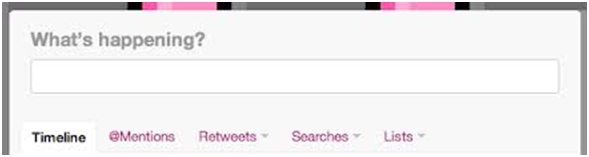
whats happening

Grandad Tip #1: ENGAGE. Many CEOs use Twitter as a personal billboard to talk about themselves and what it is that they think, are doing, and believe. That’s great. You need to do that, but beyond that you need to engage with other users. Ask what they think. Answer their questions. Get involved in discussions already happening online.

Grandad Tip #2: BE VALUABLE. Try thinking, for instance, if you’re providing insights into your industry, communicating with your consumers to create a personalised touch to your company, or becoming a go-to thought leader. If you can’t answer why you would follow your account, then you’re doing something wrong.

Grandad Tip #3: SHARE, SHARE, AND SHARE SOME MORE. If you’re struggling to find something that you think is interesting to say, share what it is that you’re reading or watching. We always say in the digital world that “Content is King.” A thought-provoking, informative, or interesting article or video can always get the conversation going. Also, being social with the content that you consume online can help give your audience insights into your inspirations and interests.

Grandad Tip #4: INTEGRATE other CONTENT. If you have other social media accounts and platforms you use, integrate and share stories from other platforms as tweets. A great platform for CEO’s is LinkedIn. If you see a great story, share it!

richard bransonGrandad Tip #5: BE YOU, AUTHENTIC and NOT JUST THE CEO. Remember that while your overall strategy in using social media may be to build your business, this is your personal account. Give people glimpses into who you are as an individual. While the majority of your social media must be helpful and on brand,  not everything you tweet about has to be about your company or relate back to your industry. If you’re into sports, tweet a bit about that big match coming up. If you love wine, share that latest shiraz you’ve discovered. People want to follow you. Just because you’re face and name is on the account doesn’t mean they won’t disengage if they’re sensing it’s nothing more than another faceless corporate account.

“THINK before you TWEET

As a CEO you have great responsibilities and influence. So even if you state on your profile page, that ‘all these views are my own’ and not your companies – you still need to be careful in what you tweet. I always say, think before you tweet before you regret. I have witnessed so many great people posting personal views on twitter, to only regret it. For example, keep away from religious topics or views, don’t get to political (unless you are a politician) andremember, if you wouldn’t stand in the middle of Sandton Square and shout out what you are about to Tweet, then it probably not best to tweet it.

Go on be yourself and real! Share your thoughts and get tweeting!

Best of luck

@digitalgrandad1

– DigitalGrandad is a Marketing Professional with over 140 dog years of practical digital experience working with both global and local brands. From SME’s through to Multinational’s and across industry sectors he has seen and embraced the changes technology has given to us to better our lives. Yes he remembers the old days, but is now a firm traDigitalist born through traditional marketing.

If you have a digital dilemma and are too afraid to ask your boss or your agency, but feel you need to ask for some straight no-nonsense advice, please email me at DigitalGrandad@marklives.com with your question, or better still tweet to @digitalgrandad1. I’ll answer one every week on MarkLives.com.

Pendoring Awards promises ever-greater diversity

Hermaneutics, a column by Herman Manson (@marklives) This year the Pendoring Awards will yet again be sidelined by the Creative Circle, even as it shares the Creative Week stage with the Loeries. The Loeries remains the only local creative award that counts to the Creative Circle points system, except for their pendoringown Ad of the Month of course.

But Pendoring General Manager Franette Klerck doesn’t seem fussed. Pendoring has been held, successfully, for 19 years. It has been steadily moving away from being an Afrikaans language creative award show to something that is taking on the sophisticated, multi-lingual character of South Africa in 2013, a move that will be accelerated, Klerck suggests. Last year Khaya Dlanga was tweeting “Black folks winning all over the place … #Pendoring Is this a case of Nationalise Pendorings?”

Its move towards celebrating advertising in South Africa’s diverse languages, rather than (mostly) English, not only makes it more relevant, but also explains the shifting demographics of the winners at the show.

Klerck says that this year the Radio and Truly South African categories saw a surge in entries, while digital, which was the stand out category last year, declined. Digital entries often did not use the different platforms available to it well enough. Integrated campaigns also disappointed, as did the student category, which tended to be either well executed or well conceptualised, rather than both.

Bigger agencies dominated the finalist list this year. Joe Public has 14 finalists, followed by Draftfcb Cape Town with six. Draftfcb Johannesburg, Etiket, and TBWA\Hunt Lascaris Johannesburg each has five finalists while Ogilvy, Johannesburg and Black River F.C. each has four finalists.

The Jupiter Drawing Room, Cape Town and tbsp///beyond the line each has three finalists, while Studio Zoo, MetropolitanRepublic, The Jupiter Drawing Room, Johannesburg and Baie-Lingual Concepts each has two. Orijin, Haas Advertising, FoxP2, Cape Town, M&C Saatchi Abel, Cape Town, and ThirtyFour each produced one finalist.

Brands represented on the finalist list includes Cell C, Clover, Toyota, Takealot.com, Douwe Egberts, Nissan and Hyundai.

Last year the finalist tally looked like this: Ogilvy Johannesburg (12) followed by Joe Public (10), Draftfcb Johannesburg (8), House of Brave (7) and The Jupiter Drawing Room (Johannesburg and Cape Town) 5. TBWA\Hunt\Lascaris Johannesburg and Black River F.C. had four each, and Net#work BBDO and Dojo115 three each. Etiket, human.kind advertising, MetropolitanRepublic, ninety9cents and The Suits Communications each had two  finalists, while BesterBurke, DDB South Africa, Gloo, EURO RSCG, Marchand, 60 layers of cake (now part of Jupiter), Studio Zoo and Trigger had one finalist each.

Some changes have been made to the judging process. Where the international judge used to be able to change awards (so downgrade something from say gold to silver), this year the judging panels’ decisions are final. They also get to award the Prestige Award, another prerogative that used to be granted to the international judge. Instead of bringing in experts to assist the judging panel in the Truly South African categories a whole new judging panel was put in place diminishing reliance on interpreters and allowing the nuances of the different languages to come into play during the decision making process. It shows the awards are serious about being multi-lingual rather than Afrikaans (now to sync its PR and marketing efforts with the message!).

This year entries fell from over 480 to 360. The Loeries had, in their own words, introduced a ‘substantial’ increase in entry fees this year, which affected the Pendoring Awards. The Loeries told the Financial Mail that sponsorship revenue now makes up less that 50% of its budget which will now be driven by ‘entries and ticket sales.’ The hike in Loeries fees was expected to impact on Pendoring entry levels, says Klerck, especially because agencies have a singe awards budget, and a larger slice of that budget would naturally go to entries recognised by the Creative Circle. Entry levels are still up on 2011.

In spite of Creative Circle chair Chris Gotz promising to engage on bringing the Pendoring Awards into the organisations points system no progress has been made in this regard. Klerck says the broader industry needs to drive change and is becoming increasingly vocal in this regard. Here’s hoping for change sooner rather than later.

The Gala event takes place Friday, 20 September 2013, at the CTICC.

* MarkLives is an official Partner of the Pendoring Awards 2013. The partnership respects our editorial integrity and right to report critically and independently on the awards.

* Hermaneutics is a column by MarkLives.com editor Herman Manson. It indicates as much opinion as reporting.

MagLove: Can’t beat food & sex

mediaslutzaMarkLives.com runs a regular slot featuring the best local and international magazine covers every week. We recognise well thought out, powerful and interesting (and hopefully all three in one) magazine covers and celebrate the mix of pragmatism, creativity and personal taste that created each of them. By media blogger MediaSlut.


See our archive of previous MagLove cover selections

INTERNATIONAL

Lucky Peach, Issue 8, 2013

Lucky Peach Female Lucky Peach Male

How do you marry food with a ‘gender issue’? Well, you create two different covers, and each cover has objects on it that SCREAMS male and female anatomy. Easy as that! Lucky Peach is a quarterly ‘journal of food and writing’… just in case you were wondering “WTF,” get a better understanding of their humour by viewing past covers here.

OBVIOUS, September 2013

Obvious OMARI BOYS #1 LARETTA CAMERON LEMAN YAVAS ASIAN GOLD SAMET

OBVIOUS is an online magazine  in celebrating of it’s 5th anniversary. For the special occasion they’ve produced 8 covers for their fashion issue, and most of them are pretty awesome…! It seems like it’s a massive trend in 2013 to not only create 3 split-covers anymore (which was the norm previously), but to try and create as many as possible… Esquire UK published 5 covers for their HEROES issue, and Interview US created 7 covers with their September 2013 “Model Issue”, and now OBVIOUS with 8 covers… I wonder how far publishers will take it, and what the maximum amount of covers will be…?

American University Magazine, August 2013

American University Magazine

I just thought that this is such a simple and creative way to illustrate “Around the World in 420 Days”… Maybe this will inspire something else for someone else. You can read the full magazine here.

LOCAL

SA Cricket, September / October 2013

SA Cricket 4 September October 2013

The Cyan Blue background jumps rights at you, and the ‘in motion’ effect used with Jacques Kallis is also very cool, and something new that I haven’t seen used before on a South African sports title. I think it’s a knock-out cover…

Huisgenoot, 5 September 2013

Huisgenoot 4.4 5 September 2013

Huisgenoot are publishing impactful covers more often these days. Good on them/ The previous cover I really loved, was their 21 March 2013 cover with the wedding picture of Karlien van Jaarsveld and Derick Hougaard. And now this cover with sports personality Graeme Smith, with his two adorable children. I mean, who’s heart wouldn’t melt when seeing this cover? Surely that must mean it’s a good cover, and a cover that will equate into copy sales…?

– The (for now anonymous) blogger behind MediaSlut knows way too much for his own good about media in South Africa. Magazines in particular. His mission is to show when South African magazines might fail, but most importantly, succeed. If you’re looking for a library about South African magazines and news, your one-stop pitstop is MediaSlut. #MagazinesForTheWin

– Find a cover we should know about? Tweet us @marklives and @mediaslut

Media Future: MicroNokia — who is saving whom?

by Arthur Goldstuck (@art2gee) Microsoft’s $7-Billion dollar purchase of Nokia should come as no surprise. However, there may be a twist in this tale of high-tech romance.

It started as a partnership of unlikely bedfellows and has turned into a marriage of convenience.
Fortunately for Microsoft and Nokia, they spent 18 months getting to know each other before tying the knot. The dowry may microsoft nokiaseem a little miserly: Microsoft is paying only $7,2-billion for the Nokia devices and services business, the poor relation in a Nokia family that also includes a profitable network infrastructure business.
However, the company is worth a tiny fraction of the $245-billion market capitalisation it was at a decade ago. Even in 2010, it was worth four times the $14,6-billion level at which it stands today.
Microsoft, too, has seen better days.  But it has still held onto at least half of its value: $278-billion compared to an all time high of $616-billion in 1999. More important, it has $77-billion in the bank. Only Apple has more.
The question about the deal should not have been why Microsoft would buy Nokia, but why it would NOT buy it.
Let’s face it: Nokia still makes great phones. Their entry-level phones are the best in the world, and are accessible to almost anyone in the world. Their feature phone/smartphone cross-over, the Asha range, offers smartphone functionality, a choice of keyboards and touchscreens, and a width of appeal that only Samsung can match.
Nokia’s woes are not a result of selling too few phones. They are a result of selling too few high-end phones that bring in the big profit margins. Dominating only the low-end is a recipe for disaster for a company that must still invest billions in research and  development.
Enter Microsoft. With an intimate knowledge of Nokia’s devices and money to burn – as opposed to Nokia’s now legendary burning platform – it is the ideal white knight to sweep the forlorn orphan off its feet.
But will this story have a fairytale ending? Will Nokia CEO Stephen Elop step in to lead Microsoft after Steve Ballmer has left? He’s to be appointed executive vice-president, setting up a neat succession plan for Microsoft.
The clue lies in Ballmer’s resignation letter to staff: he said he would have preferred to go once Microsoft was in the midst of its “transformation to a devices and services company”. That suggested the transformation had not yet begun, but that it would commence with the appointment of his successor.
And lo, along comes Nokia, in the shape of its “devices and services business”, with a CEO who has been running exactly that kind of business for several years – after joining Nokia from Microsoft.
Add in the many mobile patents Nokia holds – some of which helped shape the mobile industry – as well as key strengths like maps and navigation, a mature mobile music service, and a trusted name in emerging markets, and suddenly there’s a twist in the tale. It may well end up being Nokia that rescues Microsoft, and not the other way round.
— Arthur Goldstuck heads up World Wide Worx (www.worldwideworx.com) and is editor-in-chief of Gadget. He is a consulting editor to MarkLives and our media tech columnist. Follow him on Twitter on @art2gee. Reprinted from Gadget.

ASA kills ‘blackface’ ad


blackface

by Herman Manson (@marklives) The Advertising Standards Authority has ordered the controversial ‘blackface’ ad produced by Lowe Cape Town for Cape Town Fish market be withdrawn.

The ad in question referenced a stereotypical ‘African Dictator’ – with an actor in blackface and wearing an Afro – diverting funds into his “expense account.” The ad, which consists of various vignettes, features the same actor also playing a prostitute, a dodgy doctor, porn director and rental agent.

In American history especially, ‘blackface’ was used to create stereotyped caricatures of black people. Today it is still sometimes used as social commentary or satire but it is generally considered politically incorrect.

Lowe + Partners Johannesburg was recently forced to withdraw an ad deemed homophobic by various media outlets, commentators on social media, as well as client Flora (a Unilever product).

The ASA ruling found that “it is worth noting that throughout the commercial, all the “liars” depicted are white, and either male or female. However, the corrupt dictator or politician is depicted as black. The message being relayed is that only black politicians or dictators are corrupt. This is in a way discriminatory as the blackened character is negatively portrayed as a typical black dictator or politician.

“The Directorate also concurs with the second complainant that if the intention had only been to portray a corrupt government official or a corrupt dictator in general, the actor would still have been effective in his natural skin colour as he does in the other examples. A hypothetical reasonable person would realise that the commercial is targeting and discriminating against a certain racial group, and is likely to cause offence to black people.

“In the context of the commercial, and for the reasons set out above, the Directorate is of the opinion that the use of this negative stereotype falls within the ambit of what Clause 1 of Section II seeks to prevent.”

The ASA ruled that the commercial must be withdrawn in its current format with immediate effect and that the commercial may not be used again in its current format in future.

Online CPD Courses Psychology Online CPD Courses Marketing analytics software Marketing analytics software for small business Business management software Business accounting software Gearbox repair company Makeup artist