Pinterest: Maison&Objet Paris Jan 2014 — Green & purple

by Simone Puterman (@SimoneAtLarge) PARIS, FRANCE: While wandering the halls of Maison&Objet Paris during January 2014, I was struck by the juxtaposition of green and purple, especially in the Cook+Design hall where it was most definitely a trend.

Elsewhere, it made its appearance occasionally (otherwise I would have had thousands of photos).

Here are some photos — but, for the rest, view our Maison&Objet Pinterest board here.

Joseph Joseph scoops
Genevieve Levy Edition armchair and scatter cushion
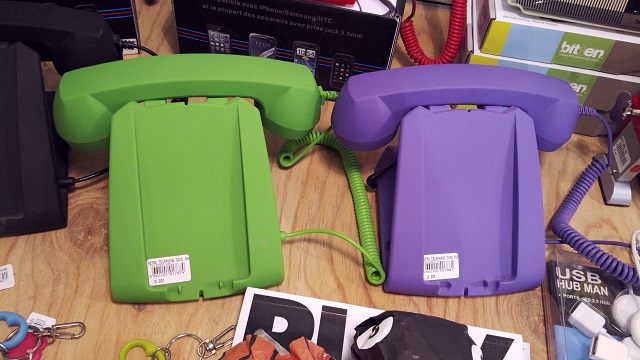
Bazardeluxe mobile phone holders
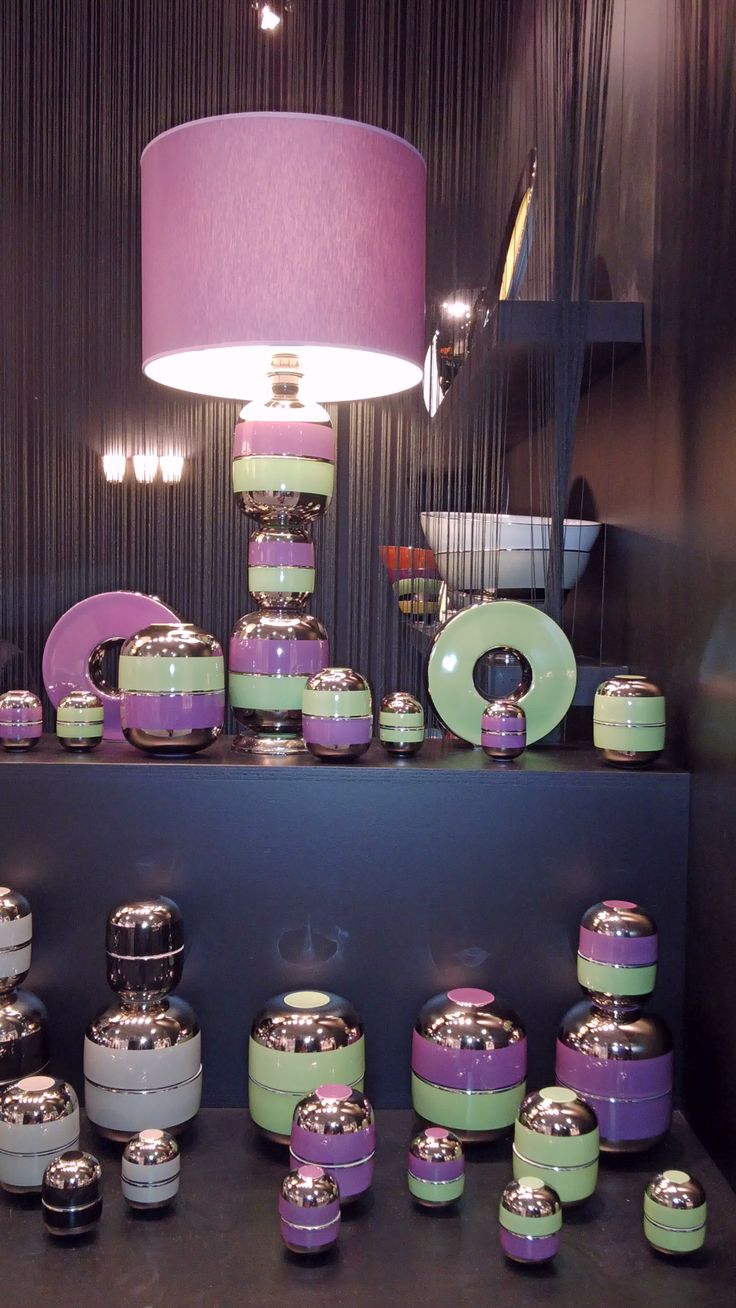
Legle Limoges lamp and ornaments
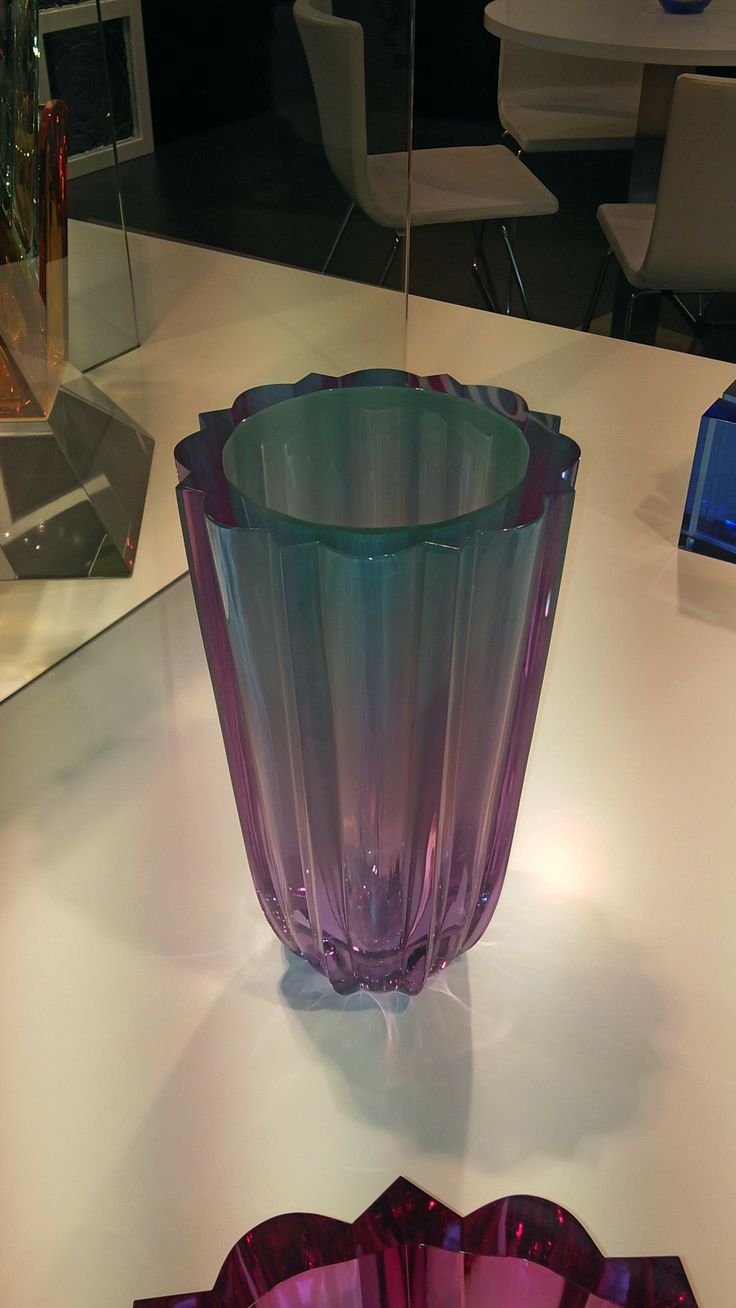
Moser Glass vase
Moser Glass vase
Puckator toy robots
Puckator toy robots
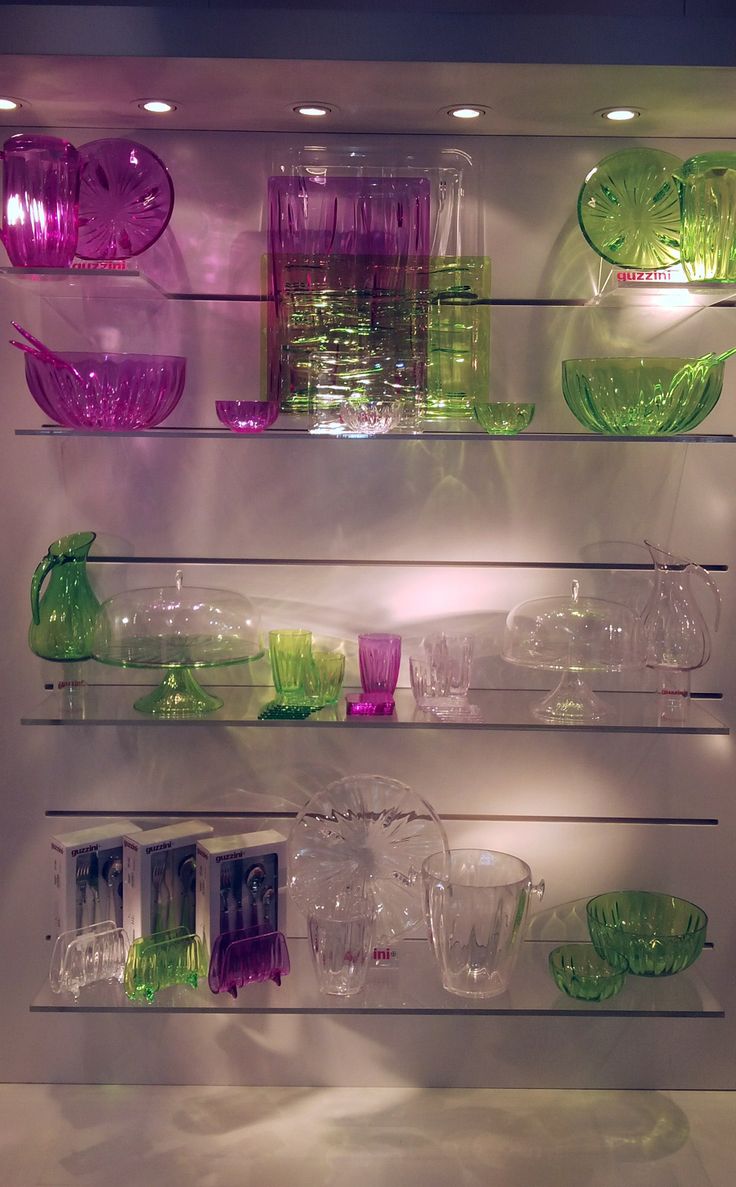
Guzzini plasticware
Guzzini plasticware

View the board here.

View our other Pinterest boards:

Simone Puterman (@SimoneAtLarge) is Editor-At-Large at MarkLives.com. She is the former Managing Editor of Bizcommunity.com and currently serves as Deputy Chair for the South African National Editors’ Forum (Sanef) online editors’ subcommittee. For the moment she is based in Paris, France, until the end of June 2014.

— MarkLives’ round-up of top ad and media industry news and opinion in your mailbox every three work days. Sign up here!

Shelf Life: Lay’s serves up a deli variant

Louise Marsland (@Louise_Marsland)’s pick of new product, packaging and design launches this week:

  • Lay’s serves up a deli variant;
  • A brand refresh for Quirk’s magical Red & Yellow school;
  • Virgin sexes it up in the malls; and
  • Not to get too technical but Pyrotec’s access to new pack-printing technology means it can expand its African footprint.

Deli-inspired chips

Lays Deli Kettle Cooked Sundried Tomato & Olives Flavoured Potato Chips

A more-discerning consumer palette and the search for premium products — and no doubt the obscene focus on MasterChef and other premium cooking shows — have led to brands such as Lay’s adding a premium “Deli” range to its chip offering.

Lay’s recently launched its new Kettle Cooked Deli range, as it put it, tp “meet the increasing demand for additional choice in the South African premium snacks category”.

The new Lays Deli Kettle Cooked collection was developed with four deli-inspired flavour combinations: Cheese Gratin & Caramelized Onion; Sundried Tomato with Olive; Jalapeno & Cream Cheese and Creamy Peppered Fillet.

The creative campaign around the new range from Simba Chips focuses on the payoff line: ‘Lay’s Deli Brings Back the Mmm!’ and is the “ideal treat to enhance a couple’s shared moments”.

Since I’m probably not allowed to say that I find that a tad wanky, I’ll go with cringy instead. But the new flavours do sound delectable.

The Lay’s Deli range has been available from select key retail stores and forecourts in Gauteng from November 2013 and there is a full nationwide rollout early in this New Year.

Red & Yellow’s logic and magic

Red & Yellow flexi-logo: Social Media signage - Community & EngagementRed & Yellow flexi-logo: Di Charton, You & MeRed & Yellow flexi-logo: Ashton van ven Bergh, Creativity & CaffeineRed & Yellow flexi-logo: Abby Mills, Passion & KnowledgeRed & Yellow flexi-logo: Roy Neubert, Circles & SquaresRed & Yellow logo: Chantelle Rautenbach, Simple & RewardingRed & Yellow flexi-logo: Tian van Heerden, Simple & ComplexRed & Yellow flexi-logo: Kelsey Hamilton, Then & Now
Quirk Education and the Red & Yellow School of Magic and Logic have merged into one brand entity: the Red & Yellow brand which has been refreshed and reimagined to reflect the new brand thinking.

It was a collaborative approach spearheaded by Carmen Schaefer, graphic design and art direction lecturer at the school. Everyone across the business was involved in the flexi-logo development, including the students (being a large representation of the market itself).

It is intended that the corporate identity constantly evolve with the school and, while the ampersand symbol may vary, the rest of the logo stays constant. The flexi-logo also acknowledges the evolving marketing communications industry and how Red & Yellow’s courses will adapt and evolve as the market evolves.

The Red & Yellow element of the logo (the yellow symbolising logic and red, creativity) has remained constant. Staff member and student interpretation of the meaning they put into the brand will be symbolised by the ampersand they choose to display.

 Virgin Mobile hits the malls

 Virgin Mobile SA mall activation for Citroen DS3 Cabrio 155 Sport promotion

I love what is happening in the in-store and mall space which is, without a doubt, the new frontier in product direct and experiential marketing.

Virgin Mobile SA recently teamed up with Primedia Unlimited’s Mall Active to promote the brand and grow sales through a competition in which the ultimate prize was a Citroen DS3 Cabrio 155 Sport.

The goal was to drive traffic to the nearest Virgin Mobile store to enable customers, who signed up with Virgin Mobile on a contract or TopUp package, to be in line to win the car.

“With an awesome prize up for grabs and a highly visible activation campaign that takes place in close proximity to points of purchase, Virgin Mobile wanted to win more market share through this campaign,” says Mall Active’s Travis Brown.

When done well, mall and in-store activations can be an energetic and fun way to promote products and brands to consumers who are already a receptive, captive audience present to shop and be entertained.

Pyrotec boosts African footprint

Pyrotec, the sole South African distributor of Markem-Imaje’s range of machinery, can now also offer CSAT printing solutions to its customers as a result of the acquisition by Markem-Imaje of the CSAT inkjet subsidiary from Heidelberg.

CSAT, headquartered in Eggenstein, Germany, specialises in integrating digital printing and labelling systems into industrial production lines, and focuses on supplying the pharmaceutical and label conversion sectors.

According to Rowan Beattie, Pyrotec MD, the acquisition of CSAT expands Pyrotec PackMark into a wider sphere of operation and will act as a springboard to establish its footprint into Africa, an entirely new market for the company.

“Globally, the whole industry is going the digital printing route and PackMark’s core business also forms part of the digital printing world. We use the same technology, but with different applications,” explains Beattie.


Louise MarslandShelf Life by Louise Marsland is a weekly column on MarkLives. Tweet new product, packaging and design launches to @louise_marsland or email her at louise.marsland at gmail.com. Want to sponsor Shelf Life? Contact us here.

Louise has written about the FMCG, media, marketing and advertising industry for 19 of her more-than-25-year career as a former editor of magazines AdVantage, Marketing Mix and Progressive Retailing, as well as websites Bizcommunity.com and FMCGFiles. She currently edits the weekly Wednesday Media & Marketing Page for The New Age newspaper and is the publishing editor of industry trendwatching portal, TRENDAFRiCA, for consumer insight, research and trends in Africa.

— MarkLives’ round-up of top ad and media industry news and opinion in your mailbox every three work days. Sign up here!

YouTube Views: Increasing the shareability of your YouTube videos

by Jerome Mouton The other week I was reading an article discussing how the media industry was complaining about the rising cost of advertising. This is where advertising on social media comes in: what I like best about it is that social media actually rewards individuals and brands that create interesting and engaging content.

This is definitely not the case with TV and radio; viewers cannot share your ad, no matter how hard you try, so no earned media.youtubeviews

Today we are going to focus on how to get your social followers to share your content with their followers.

Not the only metric

The best and most simple way to get YouTube viewers engaged in your content is by showing them something that causes them to experience strong emotions. When your content truly has an impact upon viewers, they will start sharing it, resulting in organic views.

In other words, the YouTube view count should not be the only metric.

Consider the following advice when making your YouTube videos (let’s face it, there are just too many YouTube videos made that invoke no response from viewers, who watch and then forget them):

  1. Be positive. Almost immediately after the death of Nelson Mandela, Woolworths created a flashmob video in one of its stores and it went viral. The public loved this video. The positive emotions experienced by viewers were one of the main causes of success. The video is currently hanging out in the 4.5 million views range, most of which are organic views.

  1. Personal triumphs, a tactic that is underused by many brands in social media. Looking at the campaign created below by Duracell, it tells the story of the Seahawks’ deaf fullback. This piece is highly emotional and is a fantastic example of triumph in the face of adversity. The video has received over 13 million views.

  1. Exhiliration is one of the most memorable triggers to ensure your viewers remember you. There are plenty of people who love sharing cool videos with their friends. EA sought out the help of Ken Block to create another jaw-dropping piece of driving, this time to promote the Need for Speed video game. The results got over 16 million, well-earned views. Check it out to see exactly what I mean.

It is really not possible to create a viral hit with every video you make, but creating engaging content is not hard if agencies and brands know and understand their target audience. There are more than enough case studies available on the internet to show what content is currently enjoying the greatest success on social media.

Unfortunately, there are just too many times when agencies or brands fool themselves into thinking they are creating entertainment when they actually are not. Local agencies and brands should invest more into content generation and stop subjecting people to their online sales pitches.

I’m going to leave you a phrase coined by Frank Rose, author of The Art of Immersion: “Content is just noise. Content without story and excitement is noise pollution”.

jerome mouton

Jerome Mouton is founder and creative director at 34 South Media, a video-content agency specialising in branded entertainment. He contributes the monthly “YouTube Views” column, focusing on YouTube marketing, best practice and viral videos, to Marklives.


— MarkLives’ round-up of top ad and media industry news and opinion in your mailbox every three work days. Sign up here!

Design Annotator: Meet the Design Indaba 2014 Emerging Creatives

10and5logosmall1byUno de Waal (@Unodewaal)  For our weekly wrap-up, we’ve collected:

  • Mr Sakitumi and The Grrrl x Mercedes Benz
  • Bell’s Whisky ‘The Reader’ TVC from King James and Velocity Films
  • The ‘Take Me Home’ print sale we’re having this First Thursday
  • The ‘Broken Foot Drawings’ exhibition by Koos Groenwald on Instagram
  • Meet the Design Indaba 2014 Emerging Creatives
  • New work by graphic designer Thomas Pepler
  • Rebecca Haysom’s narrative pictures, wish-fulfillment and escape
  • Photographer Ed Suter’s ‘Sharp Sharp Ghana’, and
  • Meet Knoffel, the saddest dog in the world, from a series of short films directed by Dave Meinert.

ADVERTISING

‘Open Up’ | Mr Sakitumi and The Grrrl x Mercedes Benz


In a collaboration with mblife, producer/VJ duo Mr Sakitumi and The Grrrl were asked to create a video inspired by their two-day tour of the Cape Peninsula in the E 500 Cabriolet.

Mr Sakitumi set out to create a track encompassing the experience, using recorded sounds from the car to integrate its presence.

Using the beautiful footage mblife shot of their Cape adventure in the E 500, The Grrrl went about mixing things up in her own signature style by adding ‘live’ effects to the video with a video mixing pad.

Read more about the project.

Bell’s Whisky ‘The Reader’ TVC


The pay-off line turned catchphrase, “Give that man a Bell’s”, returns in this heart-warming ‘I’m not crying, it’s just raining on my face’ TV commercial for the Whisky brand.

Feeling more like a short film than an ad, the piece by storytellers King James and Velocity Films beautifully tells the touching tale of a father whose intrepid spirit demonstrates just what it takes to be a true Man of Character.

The ad was released late last week and has received a tremendous response since.

Credits here.

EVENTS

Take Me Home | We’re having a print sale!

Take Me Home, Print Sale by Between 10and5We’re joining the ranks of the after-hours art crowd this First Thursday to bring you an all-illustration exhibition where everything is for sale.

Now’s your chance to own a print by one of your all-time or soon to be favourite South African illustrators that won’t break the bank.

More details.

‘Broken Foot Drawings’ | An exhibition by Koos Groenwald on Instagram

'Broken Foot Drawings' by Koos Groenewald | Between 10and5‘Broken Foot Drawings‘ is an Instagram exhibition (that is, an exhibition on Instagram) of 22 original ink and watercolour illustrations based on glimpses of things that might have happened or may still happen by Koos Groenewald.

The artworks will all go up for sale on Koos’ Instagram account on Tuesday, 11 February 2014, at 6:30pm (GMT+2). The first person to comment on an illustration he or she wishes to purchase, including the hashtag #SOLD and their email address, becomes the new owner.

Find out more about the series and exhibition here.

GOOD TO KNOW

Design Indaba 2014 | Meet the Emerging Creatives

Design Indaba Emerging Creatives 2014 Line Up | Between 10and5The 2014 Design Indaba is a month away and one of the usual highlights of the Expo for us is the Emerging Creatives section, an initiative by Design Indaba and the Department of Arts and Culture, committed to nurturing and promoting South Africa’s up and coming creatives.

We’ve put together a round-up of who makes up the 2014 Emerging Creatives line-up and a quick look at what they make.

See the full list of Emerging Creatives at Design Indaba 2014.

New work by Thomas Pepler

Thomas Pepler | Between 10and5

Thomas Pepler is a graphic designer living in Cape Town. For the past three years, he has been working at Monday Design, where he creates identities and builds brands for local businesses.

He also takes film photographs of the things he sees from day to day, a collection of which are archived on his blog: My Lucky Undies Are Red.

Read more about Pepler and his work here.

Featured: Rebecca Haysom | Narrative pictures, wish-fulfillment and escape

The Painter's Daughters After | Between 10and5Rebecca Haysom is a Johannesburg-based artist. Her work, which strongly references the traditional genre of portrait painting, is concerned with narrative, ambiguity and the creation of different ‘selves’.

Rebecca spoke to us about her work, influences, and being a child.

Read the interview here.

Ed Suter | Sharp Sharp Ghana

Ed Suter, Sharp Sharp Ghana | Between 10and5

Inspired by SA’s vibrant daily street life, photographer Ed Suter began a personal project, shooting street-style photographs of fashion, graphics and street art. Since publication, Suter has wanted to expand the project into other African countries and got the opportunity in November last year.

After photographs from “Sharp Sharp” were exhibited in Paris, Suter stopped off in Accra, the capital city of Ghana, on his way home to spend a week shooting on the streets there.

More about Sharp Sharp Ghana.

Meet Knoffel, the saddest dog in the world

For something simultaneously heart-melting and hilarious we present to you: Knoffel, the saddest dog in the world. With a name that means ‘garlic’ in Afrikaans’, Knoffel is a dog that “takes life seriously, a little too seriously at times”.

We see the full extent of this melancholic pooch in a series of short films directed by Dave Meinert.

More about the series.

Uno de Waal


Design Annotator is a regular column on MarkLives featuring the top design work from South Africa’s biggest online creative showcase, Between 10 and 5, which is curated by publisher Uno de Waal (@Unodewaal).


— MarkLives’ round-up of top ad and media industry news and opinion in your mailbox every three work days. Sign up here!

Africa Style: Going beyond the Big Idea… to just play

by Masingita Mazibuko In the marketing world, we often talk about the ‘Big Idea’. This is a term that I believe is possibly misleading, and perhaps results in us considering things which have the potential to create real changes as inane and dumped.

Masingita MazibukoAn illustration

To illustrate, at some point during the recent summer holidays, many of us must have been wide awake at odd hours, flicking through the many television channels and hoping to find something senseless to fill the empty non-hours until blissful slumber decided to put in an appearance.

Mindless TV often works to encourage its visit, but there are times when something on the box jumps out and demands attention. And, of course, in those moments, sleep loses the battle.

This was one such moment. It took me back to a time when I spent a lot of my time in aeroplanes, praying that I would reach my destination with luggage available or intact. This anxiety was brought about not only by numerous stories regarding lost baggage but a particular experience years back when I was on short-term assignment with my then-employer in London.

Having made it past the interrogating eyes of immigration officers (sporting dreadlocks, I have now become accustomed to such stares), I found myself the sole passenger at the baggage claim counter. I had retrieved my bag containing toiletries and shoes for my tenure, but my suitcases of winter clothing had gone amiss.

It did not escape my eye that being the only person at the baggage claim counter was actually an achievement, given the prevailing incidence of tampered or lost.

So, you can imagine that, when a post-midnight snippet on CNN highlighted an app enabling the smartphone owner to track his or her checked luggage, and that carriers would also save billions of dollars because they’d be able to optimise space usage in the cargo hold, I sat bolt upright.

Achieved via small shifts

The present day is littered with so-called innovation. However, what intrigues me about this one is that ‘just playing around’ and exploring left-field options that could be achieved via small shifts could ultimately take you above the mark.

Here, I reflect on the premise on which many social media channels are built: “connecting and creating a sharing platform among people you know”. There are also budget airlines which focus on frills-free air travel. Both these examples are underpinned by simple thoughts and a willingness to experiment, and have resulted in the dramatic transformation of industries.

So, perhaps at times, we are too hung up on the Big Idea. And, perhaps, innovation does not necessary come from Big Ideas. Maybe, it is being clear about what the problem is and opening your mind to all kinds of concepts, even playful ones.

And maybe, at some point, one of these will transform into something larger than initially thought. In other words, folks, open your eyes!

Masingita Mazibuko, marketing director at Unilever, contributes the monthly “Africa Style” column to MarkLives.com. The views expressed within this column are entirely her own.

— MarkLives’ round-up of top ad and media industry news and opinion in your mailbox every three work days. Sign up here!

Ad of the Week: Bewitching MWEB radio ad brews up trouble

“Double, double, toil and trouble;
Fire burn, and cauldron bubble.”
— Shakespeare

by Oresti Patricios (@orestaki) Anyone who’s been through school will know that those two lines are from one of the darkest plays ever written by Shakespeare: ‘Macbeth’. A teaching tale about what comes from using evil as a means of achieving power, the particular scene quoted comes from a pivotal moment in the play.

It is in this scene that the flawed hero of the eponymous piece is told by the witches that he is to become the king of Scotland.

Now, everything your average person knows about witches (or warlocks) comes from plays like this, or from fables and stereotypes that are perpetuated by society. Which is why it was fun to stumble across the new MWEB radio ad, in which distinctly local, South African witches are the protagonists of the commercial.

M&C Saatchi Abel radio ad for MWEB: “Witchcraft”

 The advert is very tongue in cheek, so it does resort to stereotypes about witches to get its point across, but it does this with a modern twist.

Unfortunately, this ad about witches and their need to get socially connected has caused a bit of a hullabaloo, but I think that this is a storm in a cauldron.

Great sense of humour

South Africans have a great sense of humour; then there’s the fact that we’re notorious for taking the mickey and for self-irony. Given this, it really did sadden me to discover that MWEB’s ads caused a flurry, and I feel that this may be a case of political correctness taken too far.

The MWEB radio ad that features witches was recorded in isiXhosa and flighted in January 2014. Luckily you may still watch the YouTube clip (posted above) with written English translations.

I thought it was laugh-out-loud funny, and I don’t think anyone with a reasonably mature sense of humour would think otherwise.

Starts with an explanation

You’ll see that the video for the ad starts with an explanation. “In Xhosa folklore,” it reads, “Gwadana forest in the Eastern Cape is where witches and sorcerers are reputed to meet in the dead of night. However they are moving with the times and meeting online on social media platforms.”

“On Facebook there are such groups as ‘Amagqwirha ase EC (Witches of the Eastern Cape)’ which have recently sprung up, where they discuss their latest acts of sorcery and the latest trends in witchcraft,” the YouTube recording states, before the ad commences.

With sounds of owls hooting and excited chattering in the night, the ad begins: “Greetings, witches and sorcerers. Thank you all for coming tonight. I know it can be difficult at times making it to these gatherings of ours here in Gadwana,” a mature female voice says in isiXhosa.

“In other exciting news”

There’s a joke about someone who fell off their “transportation device”, and then the ad continues: “Let’s give a big round of applause to Jambase. He is our ‘sorcerer of the month’. He far exceeded his quota of people to turn into zombies. Well done, you super-sorcerer you! In other exciting news we now have MWEB internet. That, witches and warlocks, means we can now send curses via tweets.”

But it is an ad about witches, so — “double, double, toil and trouble” — Damon Leff, the founder of the South African Pagan Rights Alliance, declared that his organisation was “deeply offended” by the ad.

MWeb Witchcraft South African Pagan Rights Alliance siteIn a release he stated: “As an NGO that represents actual Witches in South Africa, and as the only NGO in this country advocating against witch-hunts, SAPRA calls on MWEB to earnestly reconsider airing this flippant disregard for the very real victims of witch-hunts perpetrated against innocent women, children and men (often of largely Xhosa speaking communities) who have been and are falsely accused of bewitching others.”

Error in logic

Frankly, I think there is an error in logic here. The ad is clearly humorous; it doesn’t ridicule witches, but rather creates a fun, fantasy world that is obviously not connected to reality. How that instigates or perpetuates witch-hunts is not logically connected.

By that same logic we should ban comics and TV programmes (of which there are a few) that may show witchcraft in a negative light — think ‘Sabrina’ and ‘Charmed’, as well as a whole bunch of horror movies.

Does anyone really believe that witches meet in the woods and fly around on brooms, let alone use Twitter and Facebook to send spells and curses? On the contrary, I think that humour disarms much of the fear and superstition that surrounds the topic.

And why is Leff speaking on behalf of the ixwele (herbalists) or amagqirha (diviners) of the Eastern Cape — isn’t that a little patronising?

Path of least resistance

Disappointingly, MWEB has taken the path of least resistance and, as reported in City Press, apologised for the “once-off” radio advert. Obviously MWEB was loathe to offend anyone.

“What the team was trying to do was to create a memorable radio advert that presented our offer in a light-hearted, tongue-in-cheek manner rooted in the culture of the consumers we were talking to,” it explained in the press release quoted by City Press, adding that the advert “was produced very much in the style of the isiXhosa radio dramas that play on isiXhosa stations”.

Surely Leff could have taken the high road and, instead of being filled with brimstone and damnation, he could have used the ad as a way of educating the public about the modern Pagan movement, something that would have encouraged free speech — and tolerance — and made us all a little wiser.

But decide for yourself.

Oresti Patricios

Ad of the Week, published on MarkLives every Wednesday, is penned by Oresti Patricios (@orestaki), the CEO of Ornico, a Brand Intelligence® firm that focuses on media, reputation and brand research.


If you are involved in making advertising that is smart, funny and/or engaging,
please let Oresti know about it at info@ornicogroup.co.za.


— MarkLives’ round-up of top ad and media industry news and opinion in your mailbox every three work days. Sign up here!

Hermaneutics: What adland should learn in 2014 from 2013 #trendMARK

by Herman Manson (@marklives) What lessons can South Africa’s advertising agencies learn from the year that was? We offer a few.

1. All advertising is global

All advertising is global. Earlier this year, a South African agency used ‘blackface’ in a TV ad. Historically, and in the United States madmenespecially, ‘blackface’ was used to create stereotyped caricatures of black people. This country doesn’t have quite the same cultural history with blackface as the US has. But, in the age of YouTube, advertisers need to be taking a broader and informed view on what could create controversy around their communication, globally.

The ad made it onto Al Jazeera and various international content sites. Eventually, the Advertising Standards Authority ordered the ad to be withdrawn — but not before significant amounts of extremely negative publicity was produced on the brand.

2. Integration isn’t working

Most of the major agency plays have bought digital agencies. Yet the only major agency deemed effectively integrated by its peers (in polls conducted by MarkLives over the past two years) is Ogilvy Cape Town, through a focus on education rather than acquisition of digital skills.

Interestingly, ad agency Machine is most often cited as ‘the one to watch’ by its peers in the same polls. Machine was created through the combination of a digital and BTL agency of roughly equal size. Both agencies were owned by the same shareholder. Here, integration worked because neither business could swallow the other.

Buying digital agencies and keeping them alive in silos within agency structures doth not an integrated agency maketh. Such acquisitions can only be effectively integrated if its management structure and staff are pulled in and fully integrated into the agency.

3. Ubuntu isn’t about you

This year, it seemed like the Year of Ubuntu at the annual industry Loeries Award show. Of the four Grands Prix awarded, two went to campaigns with a social conscience. In both instance, the judges were impressed by claims, made in beautifully produced entry videos, of brands effecting real change.

In neither case did this prove true as economic feasibility and agency oversell, in the one instance, and just plain made-up nonsense, in the other, left observers, agencies and brands deflated after the event.

If campaign claims to have a social conscience yet, on the evidence available, benefits nobody as much as it does the agency, it’s shameful.

4. Don’t wait for TV

TV campaigns are breaking online before they flight on the platform they were produced for. Here they either go viral, as one such ad — featuring a meeting between Gordon Ramsay and Nataniel previewed on Facebook — did for Checkers, or they don’t, which should leave time to tweak its effectiveness before your expensive media plan is activated.

5. TV is never going to be bigger

New satellite TV operators, some with free-to-air content strategies, are going to upturn the this year. OpenView HD with its new free-to-air satellite television service launched in October. Then there’sSentech’s new free-to-air satellite platform, Freevision. TopTV recently rebranded as StarSat.

More broadcast licences could yet be issued as a number of players are still waiting to hear if their applications have been successful. Expect ecommerce and mobile integration from these operators.

This feature first ran in trendMark. Read or download the full magazine via Issuu. For a PDF copy click here.

— MarkLives’ round-up of top ad and media industry news and opinion in your mailbox every three work days. Sign up here!

Media Future: The gadgets that will light up 2014

by Arthur Goldstuck (@art2gee) The buzz around wearable device at this year’s CES in Las Vegas almost overshadowed a flood of groundbreaking new gadgets, but not quite. Let’s look at the newly launched devices that are likely to make an impact in 2014.

It’s fairly easy to tell which new gadgets, launched at last month’s International Consumer Electronics Show (CES) in Las Vegas, will make a big impact in 2014. They are the ones that managed to rise above the tsunami of attention paid to wearable devices. No, you didn’t have to be part of the “wrist revolution” to get recognition at CES.

These are some of the devices that stood out above the crowd, and earned the applause of the media and show-goers alike:

Parrot MinidroneParrot Minidrone

The A.R. Drone quadricopter was one of the great new toys of the past five years, but also established itself as both a creepy and a liberating surveillance device. Now Parrot has launched the Minidrone, a scaled-down version piloted via Bluetooth Low Energy, and compatible with Android, Windows and iOS smartphones or tablets.

It also comes with four blades, but weighs only 50g and almost fits in the palm of the hand. That means there’s no room for an HD camera and video recording, but a downwards-facing high speed camera helps keep control — and will no doubt also be put to surveillance use. Detachable wheels allow it to drive around on the ground or climb walls.

It will be cheaper than the Drone 2.0, but don’t expect much in the way of battery life.

Garmin nüvi 2798LMTGarmin nüvi 2798LMT 

The new nüvi, with 7” display, offers a feature that was previously only available on high-end luxury vehicles: a backup camera. That doesn’t mean it backs up your data, but rather gives you a rear view of what is behind your car when you are reversing. It’s wireless, meaning that you don’t need much extra wiring to make your VW think it’s a Volvo.

When wired to the reverse lights for power, the live camera feed displays every time the vehicle is shifted into reverse. A button press toggles between camera and navigation modes if the camera is plugged into constant power.

LG 77” Curved OLED TVLG 77″ Curved OLED TV

LG Electronics won this year’s TV wars at CES. It was no doubt its turn, given last year’s dominance by Sony, and the previous year by Samsung. But what a way to take the lead: a Flexible OLED TV is not only a curved TV unit — Samsung also unveiled one with UHD display — but it also lets viewers adjust the angle of curvature with their remote controls.

For once, it wasn’t hype when the CEO said: “LG’s Flexible OLED TV is a product that has to be seen to be believed, because it defies description.”

HH Ha, president and CEO of LG’s Home Entertainment Company, summed it up neatly when he added: “What curved is to flat, flexible is to curved.”

Samsung Galaxy NotePro 12.2Samsung Galaxy NotePro 12

Samsung wasn’t out of the picture. It crushed all comers in the tablet arena, with the launch of a new range of galaxy Tab and Note devices, and taking the maximum standard tablet screen size from 10.1” to 12.2”.

The standout device is the  Galaxy NotePro 12.2, which swept the boards when it came to awards for tablets launched at CES. Along with the TabPRO, it claims the world’s first 12.2” WQXGA Widescreen (16:10) display, with 2560×1600 resolution. Translation: pretty sharp.

Its magazine-style user interface is  optimised for a large screen, allowing users to organise content in a dashboard with automatic feed or news updates. A Multi Window feature lets users split the screen into four different windows.

The Samsung S Pen is included, while a Pen Window allows users to draw a window of any size on the screen, and instantly access in-application features within the window.

ZTE Projector HotspotZTE Projector Hotspot

It claims to be the world’s first all-in-one WiFi hotspot and portable projector, making it ideal for home or boardroom. It’s a compact 4.7 x 4.7 x 1.1” device, with a 4” capacitive touchscreen, running on Android.

The combination of the operating system and WiFi means content can be run directly off the Internet, or shared from the device to other devices in the room — up to eight can be connected. Oh yes, it projects images too, up to 120” in size.

It supports multiple inputs, including linking to a laptop through HDMI, or mirroring a smartphone screen via WiFi Display. A 5000mAh battery means smartphones can also tap into it as a portable charger.

MakerBot Replicator MiniMakerBot Replicator Mini

While 3D printing was all the rage at CES, most of these devices for “printing” solid objects are out of reach of the ordinary consumer. Market-leader MakerBot is slowly getting there, though.

Alongside the new high-end $6500 Replicator Z18 and mid-range $2900 Replicator prosumer, it also launched an “entry-level” $1375 Replicator Mini. Remarkably easy to use, it is intended to produce both toys and prototypes or complex models of objects that will be mass-produced more conventionally. Using a Smart Extruder nozzle, it converts filament stored in cartridges in the device to produce solid objects up to 4x4x6” in volume.

Astonishingly, there is only one button on the device: it’s primarily controlled via  desktop or mobile app. Now you can build the future yourself.

Sony HDR-CX900 HandycamSony HDR-CX900 Handycam

Professional performance in a compact body. It’s a phrase we hear often in video-camera marketing, but this time it seems on the money.

A 14.2 effective megapixel back-illuminated CMOS sensor with a wide angle 29mm ZEISS Vario Sonnar T Lens allows shooting in full HD, with high-quality still images. Its 12x Optical Zoom Lens “marries a wide aperture with a seven-bladed iris diaphragm to allow professional-looking videos and photos with smooth, defocused backgrounds”, says Sony.

Built-in ND filters, it is claimed, take the camera from low-light to bright sunshine with little difficulty.

Razer Nabu smartbandRazer Nabu smartband

Okay, okay, wearables really will make a splash this year, so let’s end with one. The best one.

Entertainment device manufacturer Razer won Engadget’s People’s Choice award in a public vote, with the Nabu smartband. Newcomers to wearables, Razer ignored the rules and built on an open platform that links to smartphones, collects physical data and communicates with other users’ bands.

It does what is now the usual, such as tracking fitness data, location, sleep data, and biometrics. Band-to-band active and passive communication makes it a 4Square for the wrist, allowing users to find nearby friends.

In future, it may even link you to healthy restaurants — and let you share the experience. That’s both the good news and the bad news. Can you say “oversharing”?

Arthur Goldstuck heads up World Wide Worx (www.worldwideworx.com) and is editor-in-chief of Gadget. He is a consulting editor to MarkLives and our media tech columnist. Follow him on Twitter on @art2gee.

This article has been republished from Gadget.

— MarkLives’ round-up of top ad and media industry news and opinion in your mailbox every three work days. Sign up here!

The Switch: The quick agency/marketer guide to surviving a pitch

by Alistair Mokoena (@AlistairMokoena) Every profession has its defining moment, a moment when stakes are at their highest. We refer to these moments as the moment of truth.

For engineers, this is the moment when they test their prototype for the first time. For artists, it is the opening night of an loveexhibition. For musicians, a listening session is a moment of truth.

For marketers, the moment a consumer interacts with a brand for the first time constitutes a moment of truth. For those of us in the advertising world, the moment we present work to a client is our moment of truth.

Nerve-wracking

I’ve been in enough boardroom discussions to know that the advertising moment of truth is as nerve-wracking for clients as it is for agencies. In fact, for many people in marketing and advertising circles, this is the moment they dread the most. This is because it puts their capability to the test.

For marketers, the creative product is a culmination of a long, tedious and challenging strategy development process. It is proof that their strategy is sound and executable. It is a physical manifestation of what marketing does.

It is also a reflection on the quality of a brand manager’s brief. And as we know, crap in crap out! This is when clients start doubting their briefs and wishing they had spent more time crafting their brand strategy.

Reflection of ability

Another reason this moment of truth is stressful for marketers is that it is a reflection upon their ability to choose an ad agency. Everyone wants to partner with an agency that is strategically strong, creatively hot and good at sticking to the budget. This is important when you consider the pressure that clients face from their non-marketing colleagues back at the ranch, who judge them on creative product.

These non-marketing colleagues often underestimate the value of marketing, and are quick to dismiss advertising as needlessly expensive and time-consuming. This is because they don’t understand the advertising process and therefore have unrealistic expectations about how long things take and how much they cost.

The last thing a client needs is for its agency to live up to this ill-informed stereotype.

Skin in the game

For ad agencies, they have skin in the game. Their reputation and self-esteem are on the line. A lot of blood, sweat and tears go into the creative process.

This high level of personal investment leaves agency teams feeling insecure, vulnerable and less than confident the night before a big creative presentation. Not exactly the best state of mind ahead of a stage performance! I’ve heard even the most-experienced ad guys confess to having pre-presentation butterflies, a confession that is always followed by the old adage, “You are only as good as your last ad.”

With all this anxiety and worry going through the mind, many marketers battle to sleep the night before a big creative presentation by their agency. So how do we make this moment of truth more fun and less stressful?

Need to tackle together

We need to tackle the problem together, as agencies and clients. We need to walk in each other’s shoes.

Marketers’ needs are broader than just a great piece of creative that will sell loads of products. They need help in raising the profile of marketing and the value of advertising in their organisations.

Let’s start exposing our clients’ non-marketing colleagues to the advertising value chain. Invite them as observers to a pre-production meeting so they can see what goes into making a 30-second commercial. Invite them to a shoot so they can see what a painstaking process this is. Arrange for them to spend a day at a production house and a day in an edit suite so they can see where the money goes.

And, lastly, get them to shadow a creative team for a day so they can see how hard it is to come up with a big idea.

How do we ensure?

So how do we make sure that creative teams are amped, psyched and enthused ahead of a creative presentation to clients?

Again, partnership is the way to go. The creative process has to be based on a strong sense of partnership. Accountability must be clear and personal; however, ownership must be shared by agencies and clients.

Tissue sessions are a must. It helps for clients to bounce off their strategies on agencies before a brief is written.

It’s also great for clients and agencies to write the brief together. Once briefed, agencies must bounce off their initial thoughts on clients, to ensure alignment. Alignment is achieved when the creative strategy reflects a consumer insight that matters and promises a solution that is believable.

Element of surprise

In recommending that agencies take clients into their confidence prior to the big creative presentation, I’m not suggesting that the creative process should be dull and predictable. The element of surprise is important; however, a tissue session can help improve the odds of a successful creative presentation.

A tissue session is merely directional. It’s not aimed at exposing the full extent of the idea. It cements the partnership by creating a sense of co-ownership of the idea.

A creative presentation should not feel like a harrowing presentation to a panel of judges, whose sole purpose is to criticise and intimidate. It should feel like a working session between teams that are driven by the same hunger to produce award-winning work that captures imaginations and builds strong brands.

So let’s start working closer together to ensure that the moment of truth delights and excites.

Alistair MokoenaAlistair Mokoena (@AlistairMokoena) is a Unilever-trained Chartered Marketer with lots of blue-chip marketing experience. He’s currently MD of Draftfcb Joburg. Mokoena contributes the monthly “The Switch” column to MarkLives.com.

— MarkLives’ round-up of top ad and media industry news and opinion in your mailbox every three work days. Sign up here!

Advertising on pre-paid vouchers

by Herman Manson (@marklives) Blue Label Media, a subsidiary of Blue Label Telecoms Limited, last year introduced advertising on prepaid airtime and electricity vouchers distributed through Blue Label Telecoms. The company distributes as many as 100 million prepaid vouchers every month. We caught up with the Head of Sales* at Blue Label Media group, Wayne Miller, to find Wayne Miller out more about the growth of the company’s advertising business.

MarkLives: You supply prepaid telecom and electricity vouchers. Then you started selling advertising on them in 2010. What has the take-up been like?

Wayne Miller: We’ve seen very strong adoption among South African companies, [which] are always looking for innovative and cost-effective ways to reach their markets. In a market where budgets are under pressure, our prepaid voucher advertisements have resonated with a wide range of clients. Our current advertisers span industries — financial services, medical, FMCG, and more — and our clients report good results for direct response and branding campaigns alike.

As a medium that offers one-to-one communication with customers in an environment as engaging and personal as their cellphones, vouchers deliver really good results at a relatively low cost. What’s more, they reach a high proportion of the population, including poor and rural communities difficult to talk to through television, digital, print or even radio.

MarkLives: Were there any qualms from your telecom clients? If so, what were they, and how did you address it?

Miller: Naturally, the service providers and operators don’t want their brands to be associated with offensive or inappropriate content, so we do avoid content that might offend customers. We also don’t allow networks to advertise on competing networks’ vouchers — I imagine that wouldn’t go down very well.

MarkLives: How effective is advertising on prepaid vouchers?

Miller: Of course, it depends on the messaging, the product and the audience, but the results are exceptional for many campaigns. The most successful campaigns can get in excess of 50 000 responses out of 2 million vouchers carrying the client’s messaging [a response rate of 2.5% — ed].

MarkLives: What audience (LSM etc.) can marketers reach using this product?

Miller: Our audience is primarily in the 4-9 LSM band. That said, prepaid voucher users span the population, from the poorest to the richest. More than 90% of South Africans — including 50% of LSM 10 — are on prepaid.

MarkLives: The number of vouchers going out is amazing — 100 million a month — what percentage of these are going out with paid for advertising?

Miller: It varies from month to month, but I’d say 70% has paid for advertising.

MarkLives: How cost-effective is this as a marketing solution?

Miller: The cost of producing a voucher campaign are exceptionally low and the frequency of consumer purchases are high, with most users recharging 6-10 times a month. We have reach and frequency in a low-cost marketing solution, so I think prepaid vouchers can work as an advertising platform for nearly any brand.

MarkLives: Do you foresee this being rolled out in other markets where Blue Label is active?

Miller: We have nothing specific to talk about, but we’re always considering ways to bring business models that work in one country to other territories where we are active. But we always do this in a manner that takes into account the nuanced need of different markets.

Correction 2014/02/04. In a previous version of the article we incorrectly identified Miller as the CEO rather than the Head of Sales at Blue Label Media. We regret the error.

— MarkLives’ round-up of top ad and media industry news and opinion in your mailbox every three work days. Sign up here!
Online CPD Courses Psychology Online CPD Courses Marketing analytics software Marketing analytics software for small business Business management software Business accounting software Gearbox repair company Makeup artist