The Dissident Spin Doctor: Are you making your employees rich, famous and happy?

by Emma King (@EmmainSA) Businesses in our industry have two assets: the talents who work for us, and our name (or reputation). All the rest — the work we do, the client relationships we have, the awards we win — stem from the former, and dictate the later.

Emma KingSo it’s surprising when I see stats, such as recently reported in UK’s Design Week, that “62% of UK creative and marketing businesses have no strategy in place to retain talented employees”. What???

Shortsighted

How damn shortsighted is that? We know what a turmoil it is to train and upskill people, and we know how insecure clients feel when they constantly have to deal with new people — not to mention the financial (and emotional) burden of ongoing recruitment processes.

So why the hell aren’t we placing more focus on retaining good people?

I don’t think looking after employees needs to be rocket science, and I believe it can be easily distilled down to three basic principles: Are you making them rich, famous and happy?

Bear with me while I explain.

1. Are you making them rich?

This doesn’t need much explanation but it goes without saying that, if you are not paying talented employees at least what other people are willing to, or giving them benefits they could have, they are going to be tempted away.

If your staff members are LOVING their work and your business, they may overlook this. But not for long.

People don’t work for the love of the commute, the office hierarchy and the crappy open-plan office. They work to get paid so they can do the things they want to when they are not at work.

2. Are you making them famous?

This means, loosely, are you letting them do work that excites them and are you letting them be brave? At the extreme end, it means letting them (and pushing them to) do work that will be recognised and rewarded. But is also means giving them the opportunity to create work and operate in a way that is meaningful.

Good talents want to be in an environment where they can do work that matters, work that is important — that they can be proud of, and which challenges and excites them. With clients who respect them.

And they want to be recognised, whether by the industry at large, or internally through career progression or peer and colleague acknowledgment.

3. Are you making them happy?

This is all the fluffy stuff — a decent amount of leave, good equipment to work off, an office environment that is not like Mordor. Not having to sit next to and deal with douchebags… bullies… psychopaths…

This part is probably the easiest to get right but it’s surprising how many agencies don’t.

I heard of a local one that, without warning, cut all its employees’ salaries (without reimbursement) for a couple of months due to ‘cash flow problems’. The directors, meanwhile, took full pay and showed up soon after with brand new BMW ‘company cars’.

Another one only allowed the management team to have good coffee from the cappuccino machine. The rest of the staff had to drink Ricoffy and bring in their own milk.

Is this for real? And they wonder why staff doesn’t want to stay in conditions that would make a Dickensian poorhouse embarrassed…

As with anything in life, as employers, you often can’t do it all. But if you can’t make them rich, famous AND happy, at least try to tick two of the boxes. Tick none, and maybe you should start to worry…

Emma King (@EmmainSA) is head of PR at The Jupiter Drawing Room (Cape Town). She contributes the monthly “The Dissindent Spin Doctor” column on PR and communication issues to MarkLives.com.

— MarkLives’ round-up of top ad and media industry news and opinion in your mailbox every three work days. Sign up here!

Tech Law: Publicity vs privacy — if you’re a marketer, you won’t like this column

by Paul Jacobson (@pauljacobson) A fairly subtle, and yet fundamental, shift has been underway for a few years now and it is likely to radically change digital marketing if it becomes the norm. This shift isn’t necessarily about users moving from one service to another (although this is indicative of the shift); it is more profound than that. As you may expect, this shift has do with privacy and, if you’re a marketer, you’re not going to like it.

Paul JacobsonPrivacy a perennial concern

Although privacy is a perennial concern on the social web, the major social services such as Facebook, Google+ and Twitter are optimised for publicity. Each of these services caters for users’ privacy preferences in varying degrees.

Facebook and Google+ have fairly involved privacy controls, to the point of being confusing enough to most users that they don’t bother customising them to suit their preferences. I don’t believe that this is unintentional.

On the contrary, these privacy controls are confusing by design. They have the appearance of being user-friendly and giving users choices about what to share with whom — but making effective use of these privacy controls requires a fair amount of commitment to safeguarding your privacy, and most users don’t have it.

Structural bias towards publicity

To add to this structural bias towards publicity are the many features and functions which prompt users to share more with more people and which even override users’ carefully selected privacy settings, with little regard for the consequences of those design choices.

Take the example of Bobbi Duncan who, in 2012, was revealed as a lesbian when the president of the University of Texas’ Queer Chorus added her to a Facebook group for the Queer Chorus, which automatically notified Duncan’s friends that she had joined the group and, effectively, outed her to her Facebook friends, including her father who was both extremely homophobic and unaware that his daughter was gay.

Duncan had made a concerted effort to customise her Facebook privacy preferences so very few people would know that she is lesbian. What she and the Queer Chorus president did not expect was that the Facebook group’s privacy controls would override Duncan’s profile settings.

Highlights the gap

Facebook’s response highlights the gap between the social network’s interests and its users’:

“Our hearts go out to these young people. They are unfortunate experience reminds us that we must continue our work to empower and educate users about our robust privacy controls.”

This wasn’t a case of a Facebook user not being sufficiently aware of the privacy controls available. Duncan took the time to customise her privacy controls very carefully. What exposed her was not her ignorance but rather a privacy loophole that allowed anyone to add a person to a group without their approval and then publicise that on the user’s Timeline automatically.

Obvious reason

The reason for this “feature” is obvious: Facebook’s entire business model depends on users sharing as much personal information as they possibly can to feed increasingly personalised display ads.

Google’s model is similar. Although there are no ads in the Google+ stream, users’ personal information and activities are used to personalise search results and other Google services.

Both Google and Facebook recently expanded their efforts to use personal information and connections to imply endorsements by users’ connections. While Facebook did not give users a choice, Google’s choice was between allowing it to use its users’ personal information in this manner or expressly opting out of this ‘feature’ in the Google+ settings. This forced Google users who had not yet ‘upgraded’ their accounts to Google+ accounts to make the change which then included them in the broader Google+ ecosystem, something which they had probably preferred to remain out of.

Disguise a willingness

The “robust privacy controls” that each of these services have developed for their users disguise a willingness to disregard users’ privacy preferences when they frustrate lucrative business models that are not only optimised for publicity but are almost entirely dependent upon it.

The apparent trend towards messaging services as an alternative to these more-established social networks is more than just a shift to something different. What these messaging services (and more private social networks such as Path) have in common is that they are optimised for privacy.

Rather than being reliant upon increased publicity to sustain their business models, these services use more direct revenue models and a variety of addictive social features to keep users engaged with each other and dependent upon the service for their social interaction.

Instead of paying for the service with their attention to ads, these users may buy content, premium services or even take advantage of unobtrusive and branded service offerings.

Fundamentally different models

These two models are fundamentally different. Where Facebook, Google and, to a lesser extent, Twitter rely upon increasingly public sharing to grow, messaging services and more private social networks give their users a more personal experience and offer them the opportunity to pay for features and content they find more valuable without sacrificing their privacy in the process.

As more users opt for an option designed to protect their privacy, digital marketers have to change their strategies to better accommodate more privacy-conscious users, who expect their deliberate choices, about what they share with whom, to be respected and not sacrificed for the sake of ad personalisation and shareholder value.

Paul Jacobson (@pauljacobson) is the founder and director of Web•Tech•Law. He contributes the regular “Tech Law” column focusing on issues in the digital marketing space to MarkLives.com. CC BY-SA 2.5

— MarkLives’ round-up of top ad and media industry news and opinion in your mailbox every three work days. Sign up here!

Millenial Ad-Grad: How to land your first job in advertising

by Faheem Chaudhry (@FaheemChaudhry) The first job interview for any young person looking to start her or his professional career is always a daunting task. Lack of job opportunities, coupled with an increasingly competitive market, means that securing your first gig is becoming more and more difficult.

Faheem ChaudhryIn the marketing industry specifically, graduates find themselves in a slightly different scenario from other industries. We’re in the business of selling, the business of persuasion and so, naturally, it should follow that we’re better positioned to put our case forward.

So what are the core skills we possess as communication professionals that we should use in an interview scenario? Here’s my thinking:

You are a brand

Personal branding is a much-documented field. It’s the art of attaching oneself to certain characteristics in as persuasive way as possible.

For any young graduate entering the lion’s den, looking at interviews through this lens is a great way to prioritise the way you communicate your offering.

As with any other business or brand, successful conversion from your communication is made up of various crucial elements; we shouldn’t look at ourselves any differently from the brands we work to sell on a daily basis.

Every touchpoint that employers meet you in should be consistently selling what value you believe you can bring to them and the businesses they are representing. From the way you express your interest in the firm and your CV to your social media profiles and your delivery on the day, putting across your case should form the various pieces of your brand’s puzzle.

The graduates who can successfully do this will make the most believable, intriguing impressions.

Delivering this is simply a matter of a heightened consciousness towards what moments shape the employers’ perceptions of you. It’s in your control; make it truly you.

Know your unique selling point

What truly differentiates you? Being hard-working, passionate and an eager learner just isn’t going to cut it, I’m afraid.

You have to be aware that the expected doesn’t differentiate. In the same way that consumers come to expect quality and service from the brands they engage with, employers are looking for a real reason to choose you — to hire you.

They are making an investment in the potential of your talent, so ensure you clearly state your case of why you have something of unique value to bring to their businesses.

Understand your audience

Successful brands have a pin-point understanding of their audiences: what their consumers look for in the brands they choose, and what role the brands play in their lives. Nailing your first interview is no different.

A starting point is to always do your homework about who your interview is with

A managing director, for example, is a different audience to a human resources manager, or department head. All are looking for slightly different attributes: the MD is looking for potential to grow in the business, HR for an organisational fit, and the department head for confidence that you have depth in your skill set.

Tailor your talking to the reality of your audience, and you’ll be in a far better place to land your message in the most resonant way.

Being aware of your competitors

In an increasingly competitive job market, positions are becoming tougher to land and, ultimately, your classmates are your core competitors. Understanding what you offer in relation to them is vital to the success of your path going forward.

To make the impression you’re after, offer something that you don’t think your competitors will. Demonstrate clear value that you believe you can deliver better than anyone else going for the same position.

It’s an honest conversation you need to have with yourself going into your first interview. You need to leave your interviewer with the confidence that you’re the cream of the crop. They are looking for the best. Give them a reason to believe it’s you.

You’re taught all you need

In summary, as communication graduates, you are taught all the skills needed to convince an audience to believe and choose certain propositions over others. Your personal brand is no different.

Be focused on the unique value you bring, and communicate this offer in a way that is most relevant to your audience on the day.

Being practised in the art of persuasion is a massive benefit that ad-grads enjoy — don’t miss out on the opportunity to authentically represent the most important brand you will ever work on: yourself.

Faheem Chaudry (@FaheemChaudhry) is a passionate marketer at M&C Saatchi Abel. With a focus on the future, his aim is to better entrench the importance of creative thinking to solving critical business problems. Faheem contributes the monthly “Millennial Ad-grad” column to MarkLives.

— MarkLives’ round-up of top ad and media industry news and opinion in your mailbox every three work days. Sign up here!

Smart Africa TV: Digital advertising growth in Uganda

by Russell Southwood (@BalancingActAfr) In this interview Seanice Kacungira, CEO of Blu Flamingo (@BluflamingoUg) talks about how she and her business partner set up Blu Flamingo in 2010 and how the online advertising space in Uganda is growing.

The interview also covers:

    • what motivated their first client to come on board;
    • how well You Tube is used in Uganda by brands and music performers;
    • the levels of digital advertising spend;
    • and how digital spend compares with ads in newspapers for effectiveness.

Smart MonkeyRussell Southwood is the founder of Balancing Act and the web TV channel Smart Monkey TV, and has been an analyst in telecoms, internet and broadcast in Africa for the last 14 years. Smart Monkey TV aims to capture the energy at the crossroads between African culture and technology. MarkLives is syndicating content from Smart Monkey TV on a weekly basis for the column “Smart Africa TV”.

— MarkLives’ round-up of top ad and media industry news and opinion in your mailbox every three work days. Sign up here!

Jupiter Cape Town goes for new cool with global, digital work

by Herman Manson (@marklives) The Jupiter Drawing Room (Cape Town) has come off “two horrendous” years, admits agency head Kevan Aspoas. During that time, the agency lost two major accounts, namely Woolworths (which took its account to an in-house studio) and Sanlam (which left for MetropolitanRepublic, just to move again one year later in February 2014 to King James Group). “It knocked our psyche,” admits Aspoas.

The Jupiter Drawing Room (Cape Town)Getting its mojo back

But he believes the agency is getting its mojo back. Loss of business is part of agency life; sometimes things go against you, but the wheel turns, and you’ll find yourself on the up again. For Aspoas, the times have offered an opportunity to assess if and why he wants to stay in the game.

Aspoas seems willing to see the agency through to better times. Having fallen from 170 people (before the Woolies loss) to 85, he will not fill the MD slot at the agency, recently vacated by Claire Cobbledick, but plans to steer the agency himself with the assistance of a beefed-up management team.

Aspoas, who stepped back from the day-to-day running of the agency a few years ago due to ill health, says he is “much better, thank you”. He’s just keen on getting back to the business of embracing problem solving for clients in an unsettled market. “I’m up for it as long as the work remains exciting,” he says.

Jupiter Cape Town was launched in 1994 by Aspoas and two partners, Ross Chowles and Joanne Thomas. It would later launch Black River FC in Johannesburg. Recently, the agency started its African expansion through the launch of Weathermen & Co in Namibia (more detail below).

Strong background in retail

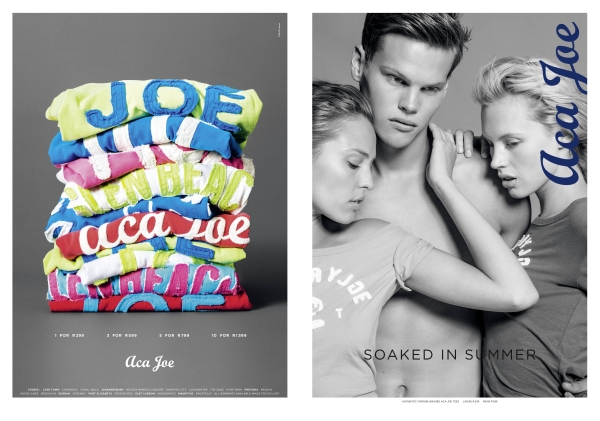
The agency has a strong background in retail, having worked on Truworths, Woolworths, Foschini and Musica in the past. Retail, says Aspoas, is the best form of consumer research — sales tell you whether people have reacted with their wallet or not. So he is particularly excited about the work the agency is producing for Urban and Aca Joe in a market that has seen an influx of international brands.

To leverage the intense November–mid Jan retail season, Jupiter Cape Town produced wraparounds for both brands in Sunday newspapers — something that made an impact at a time when they could easily have been forgotten among competitor advertising.

For Urban, it also launched the now much lauded #UrbanSelfie campaign. Visitors to Urban stores could take a selfie of themselves wearing their pick of clothing items, post it on Facebook and Twitter, and get R100 towards its purchase. Over the course of three weeks (24 November – 15 December 2013), the campaign added 16 947 new fans to Urban’s Facebook page and generated 873 351 impressions. It produced 88 winners (selected and popular selfies received prizes). The Urban stores also scored — the average basket size of #urbanselfie customers in store was particularly high.

Urban Degrees #UrbanSelfie campaign

Urban Degrees

Urban Degrees

For Aca Joe, the agency created the “Show us how you #ACAJOE” campaign. Customers would post their #ACAJOE pics to Instagram, add the hashtag, and receive R100 towards their next Aca Joe purchase. Between 7 December and 13 December, the campaign added 34 786 fans to the Aca Joe Facebook page and generated 828 386 impressions. It resulted in over 300 online redemptions.

Aca JoeAca JoeAca Joe

Both campaigns are pretty interesting and digi-savvy for what many still consider a ‘traditional agency’. “We’ve proven we can do this kind of work,” asserts Aspoas.

Friendly, colourful animation

For Budget Insurance, the agency decided to move away from the talking-heads-and-endorsement route still followed by many insurers, opting for friendly, colourful animation that aims to make the client’s message understandable to the average consumer.

The campaign launched in January and feedback has been positive, says Aspoas, who notes that, since every flighting of the client’s ad comes with another phone number, measuring call and conversion rates have been highly effective.

For Lucky Pet, a pet product from the folks who bring us Lucky Star, Jupiter Cape Town created another animated ‘mini-movie’, which is currently running on YouTube.

If it tests well, the client is prepared to take it onto TV.

The Jupiter Drawing Room (Cape Town) is also developing global guidelines for the Virgin corporate identity. It had previously done work on some of the local Virgin brands and, on the strength of that, was able to put itself forward on the global pitch, which it won.

The new CI guide will live online and covers all aspect of the Virgin business — from its entertainment brands through to Virgin Galactic and its aims to fly commercial flights into space.

The win also resulted in Virgin sending creative partners and employees from its subsidiaries around the world to Cape Town to engage with sensory experts, including Andrew Shoben (the creator of The Clockwork Forest); sound artist Sissel Tolaas (the founder of The Re_Search Lab for research on smell); Joel Gethin Lewis (the creator of ’24 Hour Music’ and ‘Hello Cube’), who led the workshop on sight; Marije Vogelzang (a developer of experimental restaurants and creator of food rituals); and Willem Boshoff (an artist who led the presentation on touch).

Windhoek is one of Jupiter Cape Town’s larger clients, with good traction in South Africa and Namibia — and a heartfelt wish to make an impact in other African markets as well.

The agency cleverly played up its status as an “Africa’s World-Class Beer” and scored a massive hit with an ad starring Ivorian footballer Didier Drogba.

Locally, the agency is preparing the brand for the day when legislation removes any number of marketing opportunities through its ‘Windhoek pure beer society’ initiative. It uses social media, events and retail spaces (both as bars and shebeens) to engage with consumers around their interest in beer. The aim is to build a database of beer lovers for Windhoek to engage with in future.

The agency is looking north as well, expanding beyond its South African base for the first time with the launch of Weathermen & Co in Namibia. It is a joint venture between Namibian holding company Ohlthaver & List Group and The Jupiter Drawing Room (Cape Town).

Ohlthaver & List Group owns Namibia Breweries Limited which in turn owns, manufactures and distributes beer-brand Windhoek; Jupiter Cape Town holds the Windhoek account in South Africa and Namibia. The new agency will service existing Ohlthaver & List Group brands, including Tafel Lager and Wernhil Park, as well chase new Namibian client wins.

As Windhoek expands into other markets, so too will the agency, it is hoped. Aspoas is keen on learning lessons in expansion into other African markets close to the border, rather than jumping straight into complex markets such as Nigeria. Angola is high on the wish list.

The agency also recently won SASKO (a bread brand of Pioneer Foods), for which it will handle all production for all above- and below-the-line work, and furniture and décor brand Weylandts in February. All of this is further proof that the agency is finally swinging out from tough times to new cool.

— MarkLives’ round-up of top ad and media industry news and opinion in your mailbox every three work days. Sign up here!

MagLove: A new angle on wolves, Bitcoin and… winter is coming!

by MediaSlut (@MediaSlut) My choice of the best international and local magazine covers in MagLove this week:

  • MADE
  • Newsweek
  • The Sunday Times Magazine UK (iPad cover)
  • TIME
  • Vanity Fair

INTERNATIONAL

MADE, Edition #3

MADE, Edition #3 MADE, Edition #3, outside back and front covers

This is the first time I’ve been introduced to MADE, which “combines stunning photography with text focusing on the remarkable people behind the creation of incredible clothing, jewellery, architecture, furniture, food and other brilliantly designed objects” (according to its bio).

The Husky on the cover of this Australian title immediately draws my attention, and his second image on the back cover just melts my heart…

Newsweek, 14 March 2014

Newsweek. 14 March 2014

You might also be thinking: “But wait, isn’t Newsweek dead?” You’d be right, because it printed its ‘last’ issue in December 2012, going only digital.

But this seems to be its first new printed issue, so it’s back in the game! And it’s kicking it off with a very strong (and smart) cover featuring the founder of “crypto-currency” Bitcoin.

The Sunday Times Magazine UK, iPad cover

Sunday Times Magazine iPad cover

The Sunday Times Magazine also features the man/men behind Bitcoin on its latest iPad Cover issue, with a coolly executed range of images.

Bitcoin seems to be on everyone’s minds.

TIME, 17 March 2014

Time, 17 March 2014Time, 17 March 2014: 360 degrees

TIME is looking at the new World Trade Centre from a new angle (literally), and it’s looking at what it took to get the tallest skyscraper in the Western Hemisphere ready.

The editorial team looks at the 10 000 people involved in getting the 104 floors up, and they, of course, feature the spectacular view! There’s even a specific page on the website where anyone can play around with the 360 degree HD image (as in the cover and extended digital cover) and zoom in as far as people’s bedroom windows in other suburbs!

I’m definitely going to try to get my hands on this issue! Happy zooming-in!

Vanity Fair, April 2014

 Vanity Fair, April 2014

Game of Thrones is almost here! Everyone is getting ready and excited for it (even DStv, which is loading ALL the issues of the previous seasons on the DStv Explora before the new season starts!), and I also can’t wait!

Vanity Fair has produced a cover with some of the GOT stars, in true Annie-Leibovitz-and-Vanity-Fair style. Another issue I wouldn’t mind getting my hands on, to read about “the making of the biggest, baddest, bloodiest show in TV history”!


Find a cover we should know about? Tweet us at @Marklives and @MediaSlut. Want to view all the covers at a glance? See our MagLove Pinboard!


MediaSlutMagLove by @MediaSlut is a regular slot featuring the best local and international magazine covers every week, recognising well thought-out, powerful and interesting (and hopefully all three-in-one) covers and celebrating the mix of pragmatism, creativity and personal taste that created each of them. The (for now anonymous) blogger behind MediaSlut knows way too much for his own good about media in South Africa, magazines in particular. His mission is to show when SA magazines fail but, most importantly, also when they succeed. If you’re looking for a library about SA magazines and news, this is your one-stop pitstop.

— MarkLives’ round-up of top ad and media industry news and opinion in your mailbox every three work days. Sign up here!

The Ad Contrarian: How to become a marketing moron

by Bob Hoffman (@adcontrarian), San Francisco Bay For a guy who writes relentlessly about the ad industry, I pay remarkably little attention to it.

The Ad Contrarian logoI never read Ad Age or Adweek or Brand Anything. I read very few ad blogs or marketing articles. I could no sooner tell you who won a Gold Lion than I could tell you who won the Swedish lacrosse championship.

While I have tremendous respect for excellent work, I don’t know who the great copywriters or art directors of our day are, and I don’t know who runs what agency or who just got hired or fired.

I am not bragging about my ignorance. The truth is I am interested in advertising, but I am not interested in the ad industry.

I find that the only way I can maintain perspective about the impact of advertising on real people in the real world is to live among them. If I really want a sense of how it works and how it doesn’t work it is best to see it as a consumer sees it, not as a practitioner sees it.

When you pay a lot of attention to the industry, you start to give too much weight to popular notions. You question the evidence of your own eyes, and your own common sense. You forget that the assertions of experts, loudmouths, and zealots are mostly just opinions tarted up to resemble facts.

You start believing that people have a strong bond with your brand of gasoline, and that when you run TV spots next quarter you can calculate a precise ROI.

Or you believe that people want to go on line and have conversations about your cream cheese. And that these conversations will lead their friends to share this enthusiasm and will result in great marketing success.

In other words, you become a moron.

No sensible civilian would believe this nonsense. Only a marketing professional could be so silly.

The best way to keep a proper perspective about advertising is to remain at a safe distance from its legendary lack of self-restraint, and notice for yourself what is working and what isn’t.

Observe what real people do and, to the extent possible, try to be one.

The Ad Contrarian is Bob Hoffman (@adcontrarian), the author of The Ad Contrarian and 101 Contrarian Ideas About Advertising.

This column has been republished from his blog The Ad Contrarian.

— MarkLives’ round-up of top ad and media industry news and opinion in your mailbox every three work days. Sign up here!

SAARF/MarkLives #Top40TVratings: e.tv moves into top 5

by SAARF & MarkLives (@marklives) The week of 3 March — 9 March 2014 saw e.tv’s Big Momma House 2 usurp a Top 5 position from SABC 1 on our SAARF/MarkLives #Top40TVratings national chart, and the international friendly soccer match between South Africa and Brazil also scored top 10 positions on both national and DStv-only tables.

Satellite dishThis weekly roundup of South Africa’s TV audience viewership, a collaboration between the South African Audience Research Foundation (SAARF) and MarkLives, reveals the best-watched shows of the week before, where it ran and how many South Africans tuned in to watch.

We offer two tables, the first covering all households — free-to-air viewing (the various SABC channels and e.tv) as well as the DStv platform — and the second charting the best-watched shows on the DStv network of channels only.

SAARF/MarkLives #Top40TVratings Chart: 3 March — 9 March 2014

National (include all households — free-to-air viewing and DStv platform)

Market Target Activity
National Total Indv (incl guests) Live + VOSDAL
Counter Description (grouped) Channel Level 1 Level 2\Variable (r) AMR % AMR SHR %
1 GENERATIONS SABC 1 Soap opera Soap opera 20.1 8 621 414 72.24%
2 Local 20.1 8 606 085 64.97%
3 NGEMPELAH SABC 1 Drama Drama 16.2 6 946 462 51.47%
4 AMAZA SABC 1 Drama Drama 16.0 6 875 323 51.84%
5 BIG MOMMA’S HOUSE 2 e.tv Movies Drama 12.6 5 403 183 49.60%
6 INTERNATIONAL FRIENDLY :SOUTH AFRICA VS BRAZIL SABC 1 Sport Football (soccer) 12.5 5 350 338 40.92%
7 INTERSECTIONS SABC 1 Variety Variety 12.0 5 163 245 41.39%
8 MUVHANGO SABC 2 Drama Drama 10.8 4 634 355 39.65%
9 TASK FORCE(DRAMA) SABC 1 Drama Drama 10.7 4 582 608 39.39%
10 XHOSA NEWS SABC 1 News News 9.0 3 881 939 32.42%
11 LITTLE MAN e.tv Movies Comedy 8.8 3 788 029 41.49%
12 POWERBALL SABC 2 Variety Variety 8.7 3 732 315 37.12%
13 SINGLE GALZ SABC 1 Sitcom Sitcom 8.6 3 673 944 29.98%
14 FRIENDS LIKE THESE SABC 1 Variety Variety 8.5 3 651 687 33.35%
15 SCANDAL e.tv Drama Drama 8.4 3 602 442 28.29%
16 LESILO RULA 4 SABC 2 Drama Drama 8.4 3 591 049 31.56%
17 SELIMATHUNZI SABC 1 Variety Variety 8.1 3 463 302 27.65%
18 RHYTHM CITY e.tv Drama Drama 8.0 3 429 545 32.85%
19 ZULU NEWS SABC 1 News News 7.9 3 392 011 27.19%
20 KHUMBUL’ EKHAYA SABC 1 Magazine Magazine 7.9 3 388 428 45.98%
21 ABO MZALA SABC 1 Sitcom Sitcom 7.0 3 000 414 27.20%
22 LOTTO DRAW LIVE e.tv Competition Competition 6.6 2 844 035 26.70%
23 WWE WRESTLING RAW e.tv Sport Wrestling 6.3 2 683 519 27.83%
24 NEWS e.tv News News 6.0 2 569 661 22.28%
25 DI WELE MAKGOLELA SABC 2 Variety Variety 5.6 2 407 342 25.74%
26 90 PLEIN STREET SABC 2 Drama Drama 5.5 2 372 878 32.04%
27 EKASI OUR STORIES:BROTHERS IN ARMS e.tv Drama Drama 5.4 2 319 168 21.00%
28 MR BOX OFFICE SABC 1 Sitcom Sitcom 5.4 2 316 203 22.94%
29 MUVHANGO -R SABC 1 Drama Drama 5.3 2 292 754 46.38%
30 GENERATIONS -R SABC 1 Soap opera Soap opera 5.2 2 240 500 55.37%
31 RING OF FIRE e.tv Movies Movies 5.2 2 225 268 21.46%
32 NYAN NYAN SABC 1 Reality Reality 5.1 2 208 866 23.09%
33 GENERATIONS -R SABC 1 Soap opera Local 4.8 2 063 636 44.12%
34 CUTTING EDGE SABC 1 Actuality Actuality 4.8 2 048 819 24.72%
35 7DE LAAN SABC 2 Soap opera Local 4.8 2 043 086 18.88%
36 VODACOM YEBO MILLIONAIRES SABC 1 Competition Competition 4.7 2 030 462 19.53%
37 SOCCER ZONE SABC 1 Sport Football (soccer) 4.7 2 009 960 18.92%
38 7DE LAAN SABC 2 Soap opera Soap opera 4.7 1 997 036 22.38%
39 THE BOLD AND THE BEAUTIFUL SABC 3 Soap opera Soap opera 4.6 1 970 050 26.72%
40 ELECTION DEBATE SABC 1 Reality Reality 4.5 1 944 517 18.55%


DStv platform only

Market Target Activity
DStv Total Indv (incl guests) Live + VOSDAL
Counter Description (grouped) Channel Level 1 Level 2\Variable (r) AMR % AMR SHR %
1 GENERATIONS SABC 1 Soap opera Soap opera 16.8 2 270 011 55.02%
2 Local 15.4 2 080 710 47.94%
3 MUVHANGO SABC 2 Drama Drama 8.6 1 158 669 30.09%
4 INTERSECTIONS SABC 1 Variety Variety 7.8 1 055 846 24.82%
5 INTERNATIONAL FRIENDLY :SOUTH AFRICA VS BRAZIL SABC 1 Sport Football (soccer) 6.8 913 458 20.94%
6 BIG MOMMA’S HOUSE 2 e.tv Movies Drama 6.7 901 577 23.55%
7 KHUMBUL’ EKHAYA SABC 1 Magazine Magazine 6.1 822 853 31.01%
8 NGEMPELAH SABC 1 Drama Drama 6.1 817 936 18.64%
9 RHYTHM CITY e.tv Drama Drama 5.9 797 910 20.73%
10 AMAZA SABC 1 Drama Drama 5.8 784 167 18.38%
11 SCANDAL e.tv Drama Drama 5.8 782 081 18.34%
12 POWERBALL SABC 2 Variety Variety 5.6 749 970 21.62%
13 XHOSA NEWS SABC 1 News News 5.5 740 135 18.20%
14 LESILO RULA 4 SABC 2 Drama Drama 5.2 707 095 18.07%
15 ISIBAYA Mzansi Magic Variety Variety 4.9 657 812 21.45%
16 NEWS e.tv News News 4.6 625 360 15.28%
17 ZULU NEWS SABC 1 News News 4.6 625 022 14.63%
18 TASK FORCE(DRAMA) SABC 1 Drama Drama 4.4 592 921 14.89%
19 LITTLE MAN e.tv Movies Comedy 4.0 540 811 16.44%
20 BIG BROTHER SA Mzansi Magic Reality Reality 4.0 539 264 12.56%
21 LOTTO DRAW LIVE e.tv Competition Competition 3.7 501 916 14.38%
22 7DE LAAN SABC 2 Soap opera Local 3.7 496 320 12.61%
23 FRIENDS LIKE THESE SABC 1 Variety Variety 3.5 471 466 11.80%
24 GENERATIONS -R SABC 1 Soap opera Local 3.3 442 682 25.35%
25 SELIMATHUNZI SABC 1 Variety Variety 3.2 431 937 10.15%
26 DI WELE MAKGOLELA SABC 2 Variety Variety 3.2 430 519 12.98%
27 GENERATIONS -R SABC 1 Soap opera Soap opera 3.1 422 846 30.64%
28 SINGLE GALZ SABC 1 Sitcom Sitcom 3.1 419 842 10.11%
29 7DE LAAN SABC 2 Soap opera Soap opera 3.1 416 677 11.88%
30 THE BOLD AND THE BEAUTIFUL SABC 3 Soap opera Soap opera 3.0 409 846 13.89%
31 MUVHANGO -R SABC 1 Drama Drama 3.0 400 482 22.27%
32 ABO MZALA SABC 1 Sitcom Sitcom 2.8 382 243 9.44%
33 WWE WRESTLING RAW e.tv Sport Wrestling 2.8 374 938 10.29%
34 NOOT VIR NOOT SABC 2 Music Music 2.7 368 648 8.55%
35 NYAN NYAN SABC 1 Reality Reality 2.7 360 664 9.99%
36 VODACOM SUPER RUGBY 2014 BULLS VS BLUES SuperSport 1 Sport Rugby (all) 2.6 357 158 10.64%
37 NUUS SABC 2 News News 2.6 353 137 8.90%
38 VODACOM SUPER RUGBY 2014 SHARKS VS LIONS SuperSport 1 Sport Rugby (all) 2.6 352 168 9.11%
39 THE BOLD AND THE BEAUTIFUL SABC 3 Soap opera International 2.6 346 663 9.70%
40 PASELLA SABC 2 Magazine Magazine 2.5 344 485 7.70%

How to read the tables:

AMR% refers to the number of people in a target market who were watching an event ie programme, expressed as a percentage of the population for that demographic: “On average, 16.3% of adults aged 15+ who watched TV from 28 Jan-3 Feb 2014 watched Society on SABC 1”.

AMR is the number of people in a target market watching a specific event ie programme per minute, expressed in absolute figures: “On average, 1, 541, 066 adults aged 15+ who watched TV from from28 Jan-3 Feb 2014 watched Society on SABC 1”.

Share % (SHR %) is the share or proportion of the available audience (people watching TV at that time) that a specific channel/programme has achieved at that time: “Society achieved a share % of 52.59% from 28 Jan- 3 Feb 2014 on SABC 1″.

saarf 150SAARF is the name by which the South African Audience Research Foundation is familiarly known. SAARF’s main objective is to direct and publish media audience and product/brand research for the benefit of its stake-holders, thereby providing data for target marketing and a common currency for the buying and selling of media space and time. SAARF has thus the responsibility to measure the audiences of all traditional media such as newspapers, magazines, radio, television, cinema and out of home media.


— MarkLives’ round-up of top ad and media industry news and opinion in your mailbox every three work days. Sign up here!

Heroes & Zeros: Andy Rice’s best (Yellow Pages) & worst (Volvo) ads of the week

Andy Rice (@ricecommaandy) talks about his best (Yellow Pages) and worst (Volvo) adverts of the week with Jenny Crwys-Williams (@jcwLIFE) during The Ad Feature on Talk Radio 702 (@Radio702). Find out why these brands feature in this week’s Heroes & Zeros webisode.

)
 

For a fresh look at the world of advertising, Jenny Crwys-Williams of 702 Talk Radio chats to advertising critic Andy Rice on The Ad Feature, every Wednesday 2.30pm — 3pm. The filmed Heroes & Zeroes will appear on MarkLives every Thursday morning as a webisode.

— MarkLives’ round-up of top ad and media industry news and opinion in your mailbox every three work days. Sign up here!

Shelf Life: Spicing up furniture design trends

Louise Marsland (@Louise_Marsland)’s weekly pick of recent product, packaging and design launches:

  • Latest furniture design trends from Cologne
  • Spicing things up in the kitchen
  • Is nailing a product to a wall actually art?
  • The sweet smell of success

Latest furniture design trends

Cologne furniture trends as spotted by Woodbender

Recent furniture design trends at the famous Cologne Fair are described as “delicate” and in line with market needs for smaller, compact furniture. Woodbender, a solid bentwood furniture manufacturer in South Africa, was one of four manufacturers representing South Africa at IMM Cologne, which is host to Europe’s leading furniture designers and manufacturers annually.

Woodbender director, Shirley Mast, reports: “There were interesting differences in European market preferences in terms of furniture size and colour. Europeans prefer and require, for space reasons, smaller furniture, whereas South Africans choose furniture that is larger in terms of footprint and seat.

“The colour preferences of the furniture also differ between the markets, with Europe preferring light timber finishes whilst the South Africans largely go for the darker walnuts, mahoganies and ebonies. The level of perfection and attention to detail was incredible. The upholstery was simple and used in a way to emphasise the furniture. There were no patterns or prints used, only subtle textures.”

According to Mast, the colours confirm the Dulux 2014 forecast and consist of dirty pastel blues, greens, mustards and apricots, acid yellow, purple and blue, as well as warm neutrals, beiges and grey, with copper still popular, plus black and white.

Spice up your dinner

Spice and All Things Nice: Indian Butter Chicken Curry Kit Spice and All Things Nice: Thai Green Curry Kit
Cape Town-based spice product factory, Spice and All Things Nice, now includes curry kits in its range of products, enabling anyone to make a curry meal.

Founder and director, Gillian Downes, says it’s all about convenience: “I wanted to put all of the curry components that we make into one solution, ie curry paste, rice and poppadums in one box to make it easier for the consumer.”

All customers need to add is their meat and coconut milk or cream and their curry (serving four) is ready in 15 minutes. A proud Downes hopes it will become a bestseller in her range, just like her poppadums, couscous, curry pastes and Bircher Muesli.

The curry kits are currently available at the larger Pick n Pay stores in the Western Cape and will be rolled out nationally at Spar, Dischem and Checkers, and will also be available at Wellness Warehouse in Cape Town. The launch will be supported by editorial and in-store demos.

Is it art?

Cape Town Art Fair ‘A Low Hanging Fruit’ by Mitchell Gilbert MessinaCape Town Art Fair caption

At the recent Cape Town Art Fair, artist Mitchell Gilbert Messina nailed a Pattex ‘No more nails’ tube of glue to the wall of the art exhibition with the title, ‘A Low Hanging Fruit’.

Funny, ha ha. But with a price tag of R1000 incl VAT? That’s a real joke!

In comment from the artist, he describes it as: “The easiest work I ever made.”

I get the irony but is it art?

The sweet smell of success

Now this is an activation which I think should be implemented nationwide: in order to publicise Tuffy’s scented bin liners which help disguise bad odours, Saatchi & Saatchi South Africa took the smelliest thing it could find — a garbage truck — and gave it a “sweet makeover” to illustrate the point. In graphic detail.

I wonder how many people thought it was an actual ice cream truck?!

The dump truck was cleaned and decorated in candy-striped vinyl, with a larger-than-life ‘melted’ ice cream sculpture on the top. Completing the picture was the traditional plink-plonk music of a traditional ice cream van coming from a well-positioned loudspeaker.

The activation took five months from planning to concept and implementation, and seven days to dress the truck and create the sculpture. The truck was then driven around Cape Town.

Tuffy Brands marketing director, Rory Murray, comments: “We love that our brand has the ability to be playful and have fun, while still communicating this product’s obvious benefit.”

I think all garbage trucks should be made to look so pretty; it would be a vast improvement. And, as to scented bin liners, they are definitely useful in disguising bad odours for at least a while — I use them as nappy bags for my toddler!


Louise MarslandShelf Life by Louise Marsland is a weekly column on MarkLives. Tweet new product, packaging and design launches to @louise_marsland or email her at louise.marsland at gmail.com. Want to sponsor Shelf Life? Contact us here.

Louise has written about the FMCG, media, marketing and advertising industry for 19 of her more-than-25-year career as a former editor of magazines AdVantage, Marketing Mix and Progressive Retailing, as well as websites Bizcommunity.com and FMCGFiles. She currently edits the weekly Wednesday Media & Marketing Page for The New Age newspaper and is the publishing editor of industry trendwatching portal, TRENDAFRiCA, for consumer insight, research and trends in Africa.

— MarkLives’ round-up of top ad and media industry news and opinion in your mailbox every three work days. Sign up here!

Online CPD Courses Psychology Online CPD Courses Marketing analytics software Marketing analytics software for small business Business management software Business accounting software Gearbox repair company Makeup artist