Shelf Life: Transforming Jozi CBD through creating meaningful change

Louise Marsland (@Louise_Marsland)’s weekly pick of recent product, packaging and design launches:

  • Native makes an Absolut statement
  • Get the skinny on McCain’s new fries, and
  • Bain’s Cape Mountain Whisky expands marketing strategy

Native takes up Residence
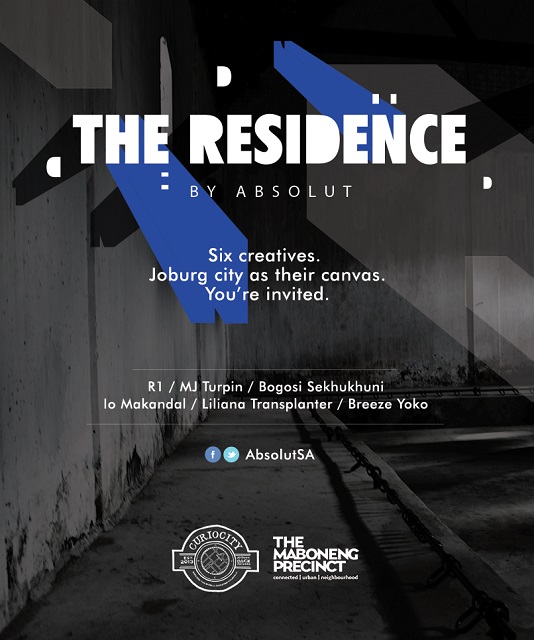
Tranform Today: The Residence poster
Residence artist - Liliana TransplanterResidence artist - Bogosi Sekhukhuni
Is it editorial? Is it experiential? Is it un-advertising? No! It’s Native VML at work again, pushing the boundaries of what was formerly known as advertising to promote its clients’ brands in unique ways. The client in this case study is Absolut South Africa, which has created an artist’s residency programme called The Residence.

The goal is to transform the Johannesburg CBD by creating meaningful change. The change agents are six multidisciplinary creative and artists who are collaborating for the month of May under Absolut’s global brand banner, Transform Today.

Absolut brand manager, Shirley Mabiletja, explains that the brand sought out collaborators with “daring spirits” [pun intended]: “The collaborating artists craft their work by changing things, breaking things, challenging conventions and recreating themselves in order to become something more.”

The resident artists are Breeze Yoko, a multimedia artist whose thought-provoking artworks transform spaces and minds; Io Makandal, co-founder of the Open Drawer projects, who reinterprets urban debris and creates new narratives with sculptural paintings; MJ Turpin, musician, artist, curator, director and founder of the Kalashnikov Gallery in Joburg; Linzi Lewis (aka Liliana Transplanter), guerrilla gardener and co-founder of Ambush eCo-Art Collective; Bogosi Sekhukhuni, a multimedia and performance artist who explores the role of art in addressing SA’s past; and then there is the numerically entitled ‘r1’, a street artist who documents change in urban environments.

The six artists are living together in a fully serviced apartment in the Maboneng Precinct in Johannesburg, immersing themselves in the environment so they can understand and appreciate the challenges at hand. They are self-organising and executing projects of their own choosing. The process is being documented online with a live-streaming blog from the creators, as well as with YouTube videos.

“Creativity really does have the power to create a meaningful impact when applied in the right way. Through this programme we’re giving these SA creatives a platform to apply their creativity to make a real difference,” says Ryan McManus, executive creative director of Native VML.

But is it art? Oh yes, and much more — it is social change with a conscience and a purpose. Absolutely brilliant.

Celebs launch new McCain chips

McCain Fry Chips McCain has been busy, launching two new products: McCain Skinny Fries for that “home takeaway” and McCain Fry Chips.

The McCain Skinny Fries come with some fun recipes on the McCain website for the consumer to try, such as parmesan sprinkles and re-fried bean dipping sauce. Yum yum.

For McCain Fry Chips, however, Joe Public was brought in to launch the #FrydayTaste for every day. Five celebrity moms — Manaka Ranaka, Kuli Roberts, Khanyi Mbau, Penny Lebyane and Phumeza Dlwati — were challenged to see what they could cook in three minutes.

Naturally, the McCain Fry Chips came out tops as the most-appetising snack after the yummy mummies raced around trying to throw together a meal in just three minutes, creating chaos in the kitchen. The chips themselves were fried and ready within three minutes, as is claimed, putting the ‘moms’ efforts to shame. Although I’m not sure how effective I would be either, racing around a kitchen in heels that high and so much makeup — I’d be worried about melting my face or those long nail extensions.

Winning whisky

Bain’s Cape Mountain Whisky pack shot and ad shootFor a young whisky such as Bain’s Cape Mountain Whisky, only launched in 2009, it was a great honour to be named the World’s Beast Brain Whisky at the 2013 World Whisky Awards in London.

Distribution and demand has grown, and Eliska Botha, global marketing manager, says the time was right to expand its marketing strategy and tell the story of Bain’s Cape Mountain Whisky to a wider audience.

“Bain’s Cape Mountain Whisky was only launched in 2009 so, at the moment, we’re focusing on meeting the demand both locally and abroad. It takes up to five years to mature Bain’s Cape Mountain Whisky in casks so, although we are planning on some innovation, it will take a few more years to materialise.”

Its agency, TBWA\Hunt\Lascaris, called in Egg Films to capture the inspiration and essence behind the whisky in the brand’s first major advertising through a TV commercial.

Bain’s Cape Mountain Whisky is crafted at the James Sedgwick’s Distillery in the Boland town of Wellington, at the foot of the Bainskloof Pass — where the ad was shot. This whisky pays tribute not only to one of the most picturesque and magnificent passes in South Africa but also honours Andrew Geddes Bain, the pioneering engineer who planned and built the Bainskloof Pass in 1853.

“The television commercial has come at the right time when South Africans are realising that, as a country, we can make extraordinary award-winning whisky. We used the beauty of the Cape Mountains to share the story and inspiration behind crafting this proudly South African and 100% grain whisky, giving whisky enthusiasts a sense of the natural purity of Bain’s Cape Mountain Whisky,” says Botha.

Bain’s is available nationwide at all major liquor outlets and across Africa, as well as at select whisky shops in Canada and the UK.


Louise MarslandShelf Life by Louise Marsland is a weekly column on MarkLives. Tweet new product, packaging and design launches to @louise_marsland or email her at louise.marsland at gmail.com. Want to sponsor Shelf Life? Contact us here.

Louise has written about the FMCG, media, marketing and advertising industry for 19 of her more-than-25-year career as a former editor of magazines AdVantage, Marketing Mix and Progressive Retailing, as well as websites Bizcommunity.com and FMCGFiles. She currently edits the weekly Wednesday Media & Marketing Page for The New Age newspaper and is the publishing editor of industry trendwatching portal, TRENDAFRiCA, for consumer insight, research and trends in Africa.

— MarkLives’ round-up of top ad and media industry news and opinion in your mailbox every three work days. Sign up here!

ABC Analysis Q1 2014: The biggest circulating newspapers in South Africa

by Herman Manson (@marklives) The Audit Bureau of Circulations of South Africa has released newspaper circulation statistics for the period January — March 2014 (ABC Q1 2014).

The Times 2014 5 13Daily newspapers have seen a slight uptick in circulation to 1 622 041, compared to 1 541 488 in the previous corresponding period.

The Times, which was moved by the ABC into the daily category in the meantime, has contributed 142 603 copies to that tally. Take it out, and the category has declined by over 62 000 copies over the course of the year.

Copy sales stand at 1 247 511. Digital editions come in at 5 741.

Circulation at the weeklies have also fallen — total circulation has declined to 621 750  from 630 268 (and 632 934 in 2013 Q4). Weekend newspapers have fallen to 2 086 611 from 2 292 053 in the previous corresponding period.

Local papers have not been not spared the decline, either. Circulation has fallen to 432 771, from 446 648.

Free sheets grew dramatically to 6 596 237 from 6 195 065.

Note: we compare the current figures with the same figures for this time last year, and not with the previous quarter. Green equals growth, red equals decline. For magazine circulation figures, click here.

ABC member circulation totals:

Daily Newspapers: up to 1 622 041 from 1 541 488 for the previous corresponding period
Weekly papers: down to 621 750 from 630 268
Weekend papers: down to 2 086 611 from 2 292 053
Local papers: down to 432 771 from 446 648
Free papers: up to 6 596 237
from 6 195 065

Daily papers

In Gauteng, Beeld has fallen to 62 766 from 67 700. The Citizen has declined to 57 385 from 63 854, Pretoria News to 17 445  from 18 775 and The Star to 101 711 from 106 484. Sowetan, however, has grown to 99 403 from 98 258.

In the Cape, Die Burger (Western and Eastern Cape) has declined to 59 895, from 62 237. Cape Argus has fallen to 30 319 from 33 247, while sister title The Cape Times has fallen to 33 986 from 35 616. Well done to the Daily Dispatch (East London) for bucking the negative trend! It has grown to 30 199 from 28 879, on the back of its continued investment in strong journalism. The Herald (Nelson Mandela Bay) has grown slightly to 23 605 from 23 372. Son has fallen to 84 870 from 92 213.

In KwaZulu-Natal, the Daily News has fallen to 30 016 from 32 002 and The Mercury to 29 616 from 31 025. Isolezwe is up to 119 846 from 116 186. The Witness has fallen to 17 693 from 19 001.

In the Free State, Volksblad has fallen to 20 590 from 21 811 and, in the Northern Cape, DFA has grown to 9 745 from 9 691.

Daily Sun is down to 283 216 from 296 489.  Business Day is down slightly to 32 854 from 33 690. The Times comes in at 142 603, slightly up from 142 117.

The MarkLives Big Daily Newspaper List*

  1. Daily Sun: 283 216
  2. The Times: 142 603
  3. Isolezwe: 119 846
  4. The Star: 101 711
  5. Sowetan: 99 403
  6. Son: 84 870
  7. Beeld: 62 766
  8. Die Burger: 59 895
  9. The Citizen: 57 385
  10. Cape Times: 33 986 + [new entry]

Business Day has fallen out of our Top 10, to be replaced by the Cape Times.

Weekly and weekend papers

Among the weeklies, Ilanga has fallen to 100 853 from 117 115. The Mail & Guardian has to 44 266 from 45279 (also down markedly on Q4 2013, when it came in at 51 551).

Saturday Dispatch 2014 5 10The Post has managed to grow to 45 503 from 44 984. Soccer Laduma has enjoyed significant growth — circulation is up to 317 013, from 289 654.

Lots of bad news for the Saturday papers: Beeld has fallen to 55 260 from 65 645 and The Citizen to 35 865 from 37730. Independent on Saturday has declined to 40 849 from 44 169 and Pretoria News Saturday to 10 177 from 11 382. The Saturday Star has fallen to 72 556, from 76 897

Die Burger has fallen to 73 588 from 78 301. Weekend Argus (Saturday and Sunday editions) has fallen to 56 508 from 61 715. On the upside, Saturday Dispatch has grown to 22 109, from 20 450.

On Sundays, City Press has held steady at 118 676 (compared to 118 547). Rapport has continued its decline to 177 016 from 210 675 (and 187 288 in Q4 2013), as has the Sunday Times — to 405 458 from 442 018 (and 411 186 in Q4 2013). The Sunday Independent has fallen to 34 543 from 35 200, and Sunday Tribune to 68 668 from 75 304.

Sunday Sun has grown to 172 741 from 169 412. Son op Sondag is down to 50 186 from 55 885 and Sunday World has fallen to 113 757, from 126 120.

Ilanga Langesonto has fallen to 55 224 from 61 918 and Isolezwe ngeSonto to 93 268 from 95 672. Isolezwe ngoMgqibelo has grown slightly to 80 976, from 80 792.

The MarkLives Biggest Circulation Per Issue Newspaper List*

  1. Sunday Times: 405 458
  2. Soccer Laduma: 317 013
  3. Daily Sun: 283 216
  4. Rapport: 177 016
  5. Sunday Sun: 172 741
  6. The Times: 142 603
  7. Isolezwe: 119 846 +2
  8. City Press: 118 676 -1
  9. Sunday World: 113 757 -1
  10. The Star: 101 711

Ilanga: 100 853
Sowetan: 99 403
Isolezwe ngeSonto: 93 268

*South African titles only. Must have cover price. Excludes free papers.

ABC: The biggest circulating consumer magazines in South Africa
ABC: The biggest circulating newspapers in South Africa
ABC Magazine Round-up: Consumer magazines continue decline
ABC Newspaper Round-up: Weekend papers suffer

— MarkLives’ round-up of top ad and media industry news and opinion in your mailbox every three work days. Sign up here!

ABC Analysis Q1 2014: The biggest-circulating consumer magazines in South Africa

by Herman Manson (@marklives) The Audit Bureau of Circulations of South Africa has released circulation statistics for the period January — March 2014 (ABC Q1 2014). Here are several consumer magazine ABC figures that stand out for us (see our newspaper ABC analysis here). We’ve also updated our list of the biggest circulating consumer magazines in SA.

Huisgenoot
Saam deur dik en dun.

Note: we compare the current figures with the same figures for this time last year, and not with the previous quarter. Green equals growth, red equals decline.

Overall, circulation has fallen to 5 888 456 from 6 207 891 in the previous corresponding reporting period (and from 5 912 008 in the previous quarter). Single copy sales stand at 3 964 472 (down from 3 974 366 in Q4 2013) and total paid (includes subscription figures) stand at 4 718 243 (down from 4 754 642 in Q4 2013). Paid-for digital copy sales stand at 89 144 (up from 76 823 in Q4 2013 and 69,581 in 2013 Q3).

Some insights

  • Entrepreneur retains the top slot as the business magazine with the highest paid-for circulation in the country (23 247), followed by Financial Mail (21 315).
  • Elle Decoration and Visi buck the downward-circulation trend.
  • The guns-and-hunting category continues to see circulation gains.
  • In the motor category, nobody comes close to CAR. Sorry, TopGear.
  • Rooi Rose sees a dramatic decline to 83 899 from 96 621, while arch-rival Sarie grows to 108 436 from 104 862.
  • Kuier and Move! keep on impressing.
  • Finweek now sells fewer than 10 000 copies a week.

Finweek continues decline

Finweek has fallen to 11 995 from 17 571 in the corresponding previous period (and for the period October — December 2012 it stood at 23 456, then down from 26 241). It includes a total free circulation of  2 503. Its paid-for circulation already stands below 10 000 copies per issue. Granted, this is a weekly, and most of its competitors in the entrepreneurial space are monthlies. But this is a dramatic decline from where the magazine was even a year ago. The Financial Mail, meanwhile, has grown slightly, to 23 400 from 23 049.

Entrepreneur has grown nicely to 23 913, up from 20 272 in the corresponding previous  period. Personal Finance also has also grown to 13 334 from 11 647. Noseweek has declined to 18 537 from 20 417.

Biggest-circulating business magazines in terms of paid-for (sales, bulk and subscriptions) circulation:

Entrepreneur: 23 247
Financial Mail: 21 315
Noseweek: 18 537
Personal Finance: 13 319
Succeed Magazine: 12 187
Finweek: 9 452
Your Business: 9 031
Forbes Africa: 8 904

Biggest-circulating business magazines in terms of total circulation:

Financial Mail: 23 400
Entrepreneur: 23 913
Succeed Magazine: 22 195
Forbes Africa: 19 193
Noseweek: 18 537
Personal Finance: 13 334
Finweek: 11 955
Your Business: 10 478

Entertainment, celeb news hit a downer

heat magazine has dropped to 28 017, down from 29 442. People has grown to 83 573 from 82 464 in the corresponding previous period. TV Plus (Afrikaans) has fallen to 36 058 from 37 752 while its English language edition has fallen to 39 973 from 41 594.

Bona is down to 96 572 from 98 267. Drum has fallen to 115 402 from 121 768, while Huisgenoot has dropped to 275 902 from 285 520 (but up from 261 224 in the last quarter) and YOU to 151 584 from 165 330. Taalgenoot has dropped to 67 300 from 68 330. Rolling Stone is slightly down to 7 116 from 7 155 (but more significantly from 8 723 in the previous quarter).

Home & gardening, leisure

In the home category, Conde Nast House & Garden sees a significant decline to 42 547 from 47 812. Home Handyman is down to 10 034 from 11 664.

House & Leisure has dropped to 47 988 from 54 551 in the previous corresponding period — but up from 40 320 in the previous quarter. SA Garden and Home is also down slightly, to 59 410 from 60 902. Plascon Spaces is down to 15 793 from 24 020.

Elle Decoration has managed to increase its circulation to 25 552 from 23 630 and VISI has climbed to 13 349    from 12531. SA Home Owner has grown to 46 288 from 42 361. Tuis/Home is down to 83 226 from 85 654. Die Tuinier has fallen to 22 220 from 24038.

On the foodie front, Sarie Kos has grown to 52 503 — up from 50 496. Ginja has climbed to 3 982 from 2 573 in the previous quarter; it’s new, so there is no previous corresponding period. Food and Home Entertaining has fallen to 30 371 from 34 052.

Cheers, dude.
Cheers, dude.

Men’s market

Blaque Magazine has managed to come in with the exact number of copies as it did in the previous quarter — 14 638 (total sales:  5 119). Braintainment has grown to 13 404 from 12 525, and Destiny Man to 20 922 from 19 251. Popular Mechanics has climbed to 48 674 from 48 283.

GQ has come in at 27 435; it has changed its frequency from 10 to 11 copies a year. Gaming title NAG is sitting at 18 436, down from 21 333.

Men’s Health has fallen to 52 881 from 69 196 and Stuff has fallen to 18 352 from 25 317 (it recently upped its frequency from six to 10 issues). In this category, FHM was discontinued earlier this year.

Health, fitness, sport

Amakhosi is down to 31 573 from 35 646 and Compleat Golfer has fallen to 11 076 from 14 638. Kick Off has fallen to 40 815  from 47 425. Runners World has fallen to 19 397 from 21 630 and SA Rugby to 19 977 from 20 848.

Fitness (His edition) has grown to 11 693 from 8 214. Game & Hunt/Wild & Jag has climbed to 13 583 from 11 653 and SA Hunter to 41 285 from 38 517. Inside Fitness Magazine is up to 8 530 from 7 714. Ride is up to 12 007 from 11291. ZigZag is up to 9 432  from 8 533.

Weigh-Less Magazine has grown to 22 510 from 21 344 while Health Intelligence has grown  to 17 522 from 15 697. Longevity has fallen to 17 217 from 22 339.

Hitting the road

Bike SA has declined to 22 358 from 25 734, while Super Bike has grown to 9 722 from 6 172. Caravan and Outdoor Life has dropped to 21 532 from 23 323. SA4x4 has fallen to 21 368 from 23 299.

CAR has fallen to 77 739 from 89 620, while Leisure Wheels has fallen to 20 857 from 21 876 and Speed and Sound
to 38 359 from 41 143. Drive Out/WegRy has grown slightly to 36 704 from 36 531. TopCar has grown  to 19 186  from 17 706. TopGear is down to 31 277 from 32 896.

Auto Trader has fallen to 10 237 from 14 583.

Getaway has fallen to 48 137 from 55 424 and SA Country Life to 39 930 from 40 708 and Weg/Go to 72 760  from 79 727. Wegsleep has dropped to 30 622 from 32 540.

Rooi Rose
Purple is not the new red.

Rooi Rose wilts

Here we go again! Cosmopolitan has fallen to 70 172 from 83 049. Elle is down to 32 174 from 32 544, Essentials to 36 438 from 37 147 and Fair Lady to 50 122 from 59 121. Finesse has fallen to 63 216 from 69 562, Glamour to 67 973 from 72 676, Good Housekeeping / Goeie Huishouding to 55 879 from 66 169, Grazia to 19 013 from 23 686 and  Ideas/Idees to 71 863 from 89 321. Leef is down to 37 400 from 40 089, Marie Claire to 36 222  from 37 959, O magazine to to 31 093 from 35 197, True Love to 61 223 from 67 388, Woman and Home to 85 183 from 90 830 and Your Family to 39 312 from 50 535 (ouch!). Women’s Health? Down to 72 306 from 74 492.

Rooi Rose has seen a dramatic decline to 83 899 from 96 621, while arch-rival Sarie has grown to 108 436 from 104 862. Kuier has continued its success streak — circulation is up to 106 335 from 95 846, while Move! has upped its circulation to 135 611 from 119 480. Destiny Magazine has grown to 29 870 from 28 337 and Fitness magazine to 22 972 from 17 624.

The MarkLives Big Magazine list*

  1. Huisgenoot: 275 902  –
  2. YOU: 151 584  –
  3. Move!: 135 611  –
  4. Drum: 115 402  –
  5. Sarie: 108 436  +2
  6. Kuier: 106 335  -1
  7. Bona: 96 572  +3
  8. Woman and Home: 85 183  –
  9. Rooi Rose: 83 899  -3
  10. People: 83 573  3-1

Tuis/Home: 83 226
CAR: 77 739
Women’s Health: 72 306
Weg/Go: 72 760
Ideas/Idees: 71 863
Cosmopolitan: 70 172

*By total circulation. Must have a cover price. Annuals excluded.
Movement on the Big Magazine list compared to 2013 Q4 data.

ABC: The biggest circulating consumer magazines in South Africa
ABC: The biggest circulating newspapers in South Africa
ABC Magazine Round-up: Consumer magazines continue decline
ABC Newspaper Round-up: Weekend papers suffer

— MarkLives’ round-up of top ad and media industry news and opinion in your mailbox every three work days. Sign up here!

ABC Magazine Round-up Q1 2014: Consumer magazines continue decline

Extracts from the ABC Q1 2014 presentation released today, Wednesday, 14 May 2014, show a continued decline in consumer magazine sales. In addition, there were more closures than new entrants into the market; total magazines increased by 0.5% (97 000 copies) over the previous quarter; and consumer magazines decreased by 0.4% (24 000 copies) over the previous quarter.

Graphs, analysis and data courtesy of the ABC.

Four-year magazine circulation by quarter

Four-year magazine circulation by quarter

Total magazines have increased by 0.5% (97 000 copies) over the previous quarter. Consumer magazines have decreased by 0.4% (24 000 copies) over the previous quarter.

Four-year category trend by quarter: consumer magazines

Four-year category trend by quarter: consumer magazines

Circulation has declined annually by 1.7% (468 000 copies) over the period, although the decline has slowed in Q1, compared to the previous six quarters.

Four-year category trend by quarter: consumer magazines — home

Four-year category trend by quarter: consumer magazines — home

Circulation has remained static over the period. Q1, however, has increased by 20 000 copies, compared to Q4.

Four-year category trend by quarter: consumer magazines — sport and hobby

Four-year category trend by quarter: consumer magazines — sport and hobby

Circulation has declined annually by 3.3% (66 000 copies) over the period. Q1 has remained static, compared to Q4.

Four-year category trend by quarter: consumer magazines — travel

Four-year category trend by quarter: consumer magazines — travel

Circulation has increased annually by 22.7% (259 000 copies) over the period, fluctuating considerably as a result of biennial reporting titles. Q1 has increased by 19 000 copies, compared to Q4.

Four-year category trend by quarter: consumer magazines — woman’s general

Four-year category trend by quarter: consumer magazines — woman’s general

Circulation has declined by 3.4% annually (237 000 copies) over the period. Q1 has decreased by 48 000 copies, compared to Q4, mainly the result of a discontinued title.

4 Year Category Trend by Quarter: Custom Magazines

abc13

Circulation increased annually by 2% (918,000 copies) over the period. Q1 increased by 204,000 copies compared to Q4.

Four-year category trend by quarter: consumer magazines — free magazines

Four-year category trend by quarter: consumer magazines — free magazines

Circulation has declined annually by 16.9% over the period. Q1 has decreased by 10% (60 000 copies), compared to Q4.

Graphs, analysis and data courtesy of the ABC.

ABC: The biggest circulating consumer magazines in South Africa
ABC: The biggest circulating newspapers in South Africa
ABC Magazine Round-up: Consumer magazines continue decline
ABC Newspaper Round-up: Weekend papers suffer

— MarkLives’ round-up of top ad and media industry news and opinion in your mailbox every three work days. Sign up here!

ABC Newspaper Round-up Q1 2014: Weekend papers suffer

Extracts from the ABC Q1 2014 presentation released today, Wednesday, 14 May 2014, show a continued decline in weekly and weekend newspaper sales. As a counter trend, the circulation of free papers continues to rise. Two good-news stories stand out — Daily Dispatch jumping 18% and Isolezwe up 11% on Q4 2013.

On the downside, weekend titles have dropped only 1.8% (Afrikaans titles have faired worse than their English or vernacular counterparts).

Graphs, analysis and data courtesy of the ABC.

Four-year total newspaper circulation trend by quarter

Four-year total newspaper circulation trend by quarter

Total newspaper circulation has increased by 20 000, compared to the previous quarter.

Four-year category trend by quarter: daily newspapers

Four-year category trend by quarter: daily newspapers

Circulation has declined annually by 4.5% since 2010, equivalent to  304 000 copies. However, Q1 has remained static, compared to Q4.

Titles showing largest growth: daily newspapers

No Publication name TOTAL CIRCULATION Corresponding previous period Variance — prior year Previous quarter Variance — previous quarter
1 Daily Dispatch 30 199 28 879 4,57% 25 521 18,33%
2 Isolezwe 119 846 116 186 3,15% 107 119 11,88%

Titles showing largest decline: daily newspapers

No Publication name TOTAL CIRCULATION Corresponding previous period Variance — prior year Previous quarter Variance — previous quarter
1 Citizen, The (Daily) 57 385 63 854 -10,13% 58 735 -2,30%
2 Cape Argus 30 319 33 247 -8,81% 30 204 0,38%
3 Son (Daily) 84 87 92 213 -7,96% 86 837 -2,27%

Four-year category trend by quarter: weekly newspapers

Four-year category trend by quarter: weekly newspapers

Q1 has declined by 2.5% (13 000 copies), compared to Q4.

Four-year category trend by quarter: weekend newspapers

Four-year category trend by quarter: weekend newspapers

Circulation has declined annually by 5% (485 000 copies) over the period. Q1, however, has only declined by 1.8% (34 000 copies), compared to Q4.

Titles showing largest growth: weekend newspapers

No Publication name TOTAL CIRCULATION Corresponding  previous period Variance — prior year Previous qQuarter Variance — previous quarter
1 Saturday Dispatch 22 109 20,450 8,11% 20 679 6,92%

Titles showing largest decline: weekend newspapers

No Publication name TOTAL CIRCULATION Corresponding previous period Variance — prior year Previous quarter Variance — previous quarter
1 Rapport 177 016 210 675 -15,98% 187 288 -5,48%
2 Beeld, Saturday 55 26 65 645 -15,82% 58 411 -5,39%
3 Volksblad–Saturday 17 913 20 234 -11,47% 18 286 -2,04%
4 IlangaLangesonto 55 224 61 918 -10,81% 56 074 -1,52%
5 Pretoria NewsSaturday 10 177 11 382 -10,59% 10 126 0,50%
6 Son op Sondag (formerly Sondag Son) 50 186 55 885 -10,20% 54 625 -8,13%

Four-year category trend by quarter: local newspapers

Four-year category trend by quarter: local newspapers

Local newspapers have declined by 2.8% (63 000 copies) over the period. Q1 has increased by 11 000 copies, compared to Q4.

Four-year category trend by quarter: free newspapers

Four-year category trend by quarter: free newspapers

Distribution has increased annually by 7.1% (1 513 000 copies) over the period. Q1 has increased by 53 000 copies, compared to Q4.

Graphs, analysis and data courtesy of the ABC.

ABC: The biggest circulating consumer magazines in South Africa
ABC: The biggest circulating newspapers in South Africa
ABC Magazine Round-up: Consumer magazines continue decline
ABC Newspaper Round-up: Weekend papers suffer

— MarkLives’ round-up of top ad and media industry news and opinion in your mailbox every three work days. Sign up here!

Ad of the Week: #RainyDay savings

by Oresti Patricios (@orestaki) A healthy rate of personal savings is a sign of a healthy economy, but South Africa lags behind the rest of the developing world when it comes to this, even during these tough economic times. We know we should defer consumption and put something aside in savings — but data shows that we Africans suffer from the opposite problem — indebtedness, or spending too much.

Nedbank's "Make saving for a #RainyDay happen" billboardAccording to the Reserve Bank, SA experienced its highest personal savings rate of over R17 billion in 1996. This has decreased steadily over the years to a negative amount of –R22.5 billion in 2007, picking uo somewhat since then but still in negative territory, at –R983 million, at the end of last year. Over the years, our ministers of finance have repeatedly encouraged people to save. Of late, this advice has fallen on deaf ears, largely because credit has become so easy to access.

SA’s massive personal-debt burden shows that, as a nation, we’re caught in the trap of being a consumerist society that has a ‘buy now, pay later’ mentality, spending more than we earn in regular income Neither high unemployment nor poor financial education helps the situation. Many households, across all strata of society, find themselves servicing the interest on purchases that would have been far cheaper had they been paid for by savings (and not expensive credit).

Banks have come under significant fire from government because of this, so it’s great to see banks showing people how to save instead of how to spend. This week, we look at the ‘green’ bank, which recently came up with an arresting way of getting people to think about saving.

Joe Public’s billboard for Nedbank: “Make saving for a #RainyDay happen”

Nedbank, in promoting its “Savvy Save” account, is trying to tap into the positive aspects of saving, hooking into the well-used saying, “Saving for a rainy day”. The way the bank decided to approach this was with the clever use of an indoor billboard in Sandton City, Johannesburg, which ran for a week early in May 2014 — with an added dimension.

The design was innovative and based on a vertical, or a ‘portrait’ format, rather than the typical horizontal/landscape format used by regular outdoor billboards. The huge, dynamic poster portrayed a guy under a (you guessed it) green umbrella, with a cloudy sky above him. But, instead of looking sad, this man had an infectious grin — it was as if he is enjoying the rain.

There were droplets of water that fell in a steady, ongoing flow in front of the billboard, emulating raindrops. Through clever programming ‘magic’, these droplets were manipulated to form legible words as they fell. Passers-by were invited to text what they are saving for and, almost instantly the words appeared, falling like raindrops in an easy-to-read message. But they were just drops of ‘rain’. The effect was magical!

Hat tip to Joe Public

A tip of the hat must go to Joe Public for marrying the medium to the message so perfectly. “Saving for a rainy day” may be a cliché, but it’s also something people need to be inspired to act upon, in a feel-good way. This billboard literally got people stopping and staring, or taking out their mobile phones to snap a shot.

It turns out the company that made this ‘rain magic’ is from the UK — the land of rain, where else? Known as Aquascript, this technology uses computer systems to control hundreds of valves that produce droplets that fall at exactly the right space and time to form letters or other shapes. Interface that with an SMS system, and voilà — a waterfall that people can read, help ‘direct’, engage with and marvel at.

The guy in the poster with the infectious grin is the same character from the Nedbank TV ads, ‘Eugene’, who gets reminded by a ‘voice from above’ that it’s better to save for a rainy day than to buy what he can’t afford straight away. He is also seen on the Nedbank website, as the ‘savvy’ guy featured in various banking products.

Continuity

Using the same, likeable character makes for good continuity between the bank’s various products and campaigns.

The ad was effective, because it ticked most of the marketing boxes required to deliver a memorable message. It was interactive, entertaining, attention-grabbing, aligned to the target market, and created considerable word-of-mouth. Search Twitter for “#rainyday Nedbank” and you’ll catch some of the buzz it’s created.

The nett effect? A plethora of selfies, a TV shoot, radio interviews, press coverage and more must have delivered blockbuster returns to the brand.

Clever, Joe Public. Very, very clever.


Oresti PatriciosAd of the Week, published on MarkLives every Wednesday, is penned by Oresti Patricios (@orestaki), the CEO of Ornico, a Brand Intelligence® firm that focuses on media, reputation and brand research.


If you are involved in making advertising that is smart, funny and/or engaging,
please let Oresti know about it at info@ornicogroup.co.za.


— MarkLives’ round-up of top ad and media industry news and opinion in your mailbox every three work days. Sign up here!

Design Annotator: AfrikaBurn, botanical projects and backpacking in Maboneng

10and5logosmall1by Uno de Waal (@Unodewaal) Today we’re getting back into the swing of things with Design Annotator to show you:

  • Photographs from this year’s AfrikaBurn Festival
  • An interview with Brett Rubin, an artist pushing the boundaries the photographic medium
  • Curiocity Backpackers, recently founded by Bheki Dube in Maboneng
  • Motherland Coffee Co, a great place to work away from work
  • What the day job of Superbalist’s art curator, Zach Nossel, entails
  • 10 botanical-themed spaces and projects
  • A case study of the adidas Originals ‘Unite Joburg’ campaign

AfrikaBurn: The year of the trickster


AfrikaBurn 2014For 358 days of the year, the Tankwa desert in the Northern Cape is a desolate, windswept Martian wasteland of brittle scrub, metallic rock and dust. But, for one week in late autumn each year, a glorious out-of-season spring occurs, transforming the landscape into a mirage of shifting shapes, colours and sounds.

The AfrikaBurn festival, now in its eighth year, is a shared experiment in radical inclusion, participation, expression, decommodification and self-reliance. It’s a celebration of immediacy, where no programme or line-up dictates the flow of events; rather, the festival takes its own organic course, created by the people who attend it.

See more photographs from AfrikaBurn 2014.

Featured: Brett Rubin


Brett RubinJohannesburg-based photographer, Brett Rubin, speaks to us about the necessity of experimentation; the cultural paradigms inherent in everything we create; the politics of portraiture; and taking photos in the ‘first person’.

Rubin is one half of the creative consultancy VATIC, is a highly regarded fashion and commercial photographer, and is an artist pushing the boundaries of what the photographic ‘medium’ means.

Read our interview with Rubin.

Curiocity Backpackers


Bheki Dube, Curiocity BackpackersBheki Dube, a young South African entrepreneur, recently founded ‘Curiocity Backpackers’ in the heart of Maboneng. The accommodation, as well as the guided experiences through the inner city that it offers, allow locals and people from around the world to see Johannesburg at its finest.

Dube’s main aim is to break the negative connotations that surround ‘the city of gold’.

We asked the photographer-turned-entrepreneur a few questions about his new venture.

Out of office: Motherland Coffee Co


Motherland Coffee Co, St George's MallMotherland Coffee Co is owned by Rob Maud, Kirstin Maud and Seb Schneider. In 2009, the Mauds travelled the globe, only to realise just how special their motherland really is, and so they opened up Motherland with Schneider to celebrate the humble African coffee bean.

Find out more about their journey and where to find a Motherland near you.

My day job: Zach Nossel | Art curator at Superbalist.com


Zach Nossel, art curator at SuperbalistZach Nossel is the art curator at Superbalist.com, a local online art, design and style retailer. While the traditional role of an art curator has been in existence for ages, selecting art to sell online is a whole other ball game.

We caught up with Nossel to chat about exactly what his job entails.


10 botanical spaces and projects

10 botanical spaces and projects

Over the last while, we’ve had the pleasure of noticing, and in some instances speaking to, a group of creatives who have made their medium or informed their design with the living world of plants and flowers.

So, before we plunge headfirst into winter, let’s dally briefly to smell the roses and soak up some gorgeous botanical goodness.

See the full list of botanical spaces and projects.

Case study: adidas Originals | Unite Joburg


adidas Originals | Unite Joburg | Case study from MACHINE on Vimeo.

Unite Joburg was an integrated digital campaign that consisted of a concert performance from Detroit rapper Danny Brown, a unique online ticketing mechanic, a photography exhibition and a short documentary film, all with the aim of getting adidas Originals to stake a claim within the minds of Joburg’s youth.


Find a breakdown of each of the components that made up the Unite Joburg campaign here.


Uno de WaalDesign Annotator is a regular column on MarkLives featuring the top design work from South Africa’s biggest online creative showcase, Between 10 and 5, which is curated by publisher Uno de Waal (@Unodewaal), inaugural South African winner of the British Council South Africa‘s Young Creative Entrepreneur (#YCE) Digital Publishing Award in March 2014.

— MarkLives’ round-up of top ad and media industry news and opinion in your mailbox every three work days. Sign up here!

The Switch: Do you want a loerie or an ostrich?

by Alistair Mokoena (@AlistairMokoena) If you ask the average person in adland what her favourite bird is, she is likely to say a loerie. Not surprising at all. Every advertising agency aspires to caging a few Loeries every spring. Creativity is our lifeblood and winning a few Loerie Awards every year is essential to our wellbeing.

Another bird

The loerie bird has, in essence, become the hallmark of creative excellence in our industry. But what if I told you there is another bird out there, of equal significance? A bird that can teach us a few valuable lessons about running a successful business?

Ostrich by Alistair Mokoena
Pic courtesy of Alistair Mokoena

Enter the ostrich, the world’s largest bird. It boasts a tall and imposing figure, making it the leader of the feathery pack. Size talks to scale. Scale, if properly harnessed, results in efficiencies, stature and has a magnetic effect on talent and new business.

Size also telegraphs that you are “tried and tested”, which is important to many clients. A small boutique agency might seem like an alluring proposition because of its agility and its nimble nature but every business owner eventually wakes up to the fact that size does count.

We have all experienced the leaking-bucket syndrome when it comes to revenue. It needs constant replenishment. Without growth, you are dead.

Growth and scale are inevitable

So, actually, growth and scale are inevitable, unless you decide to shift your strategy from growth to maintenance. But at what point do you draw the line or close the door on growth?

The ostrich has the largest eye of any land animal. This allows it to have the best possible bird’s eye view, which helps with scanning the environment for danger and opportunities, a feature that all businesses need.

Our ability to scan the business environment in which we operate is crucial to our survival. Our ability to predict consumer trends and client needs, before they happen, creates daylight between us and the competition.

Continue to close shop

Many businesses continue to close shop, thanks to their inability to predict the future and therefore reinvent themselves or reposition themselves for a new reality. Agencies that previously dismissed the need for integration or, worse still, dismissed digital migration as a fad, are now licking their wounds and reminiscing about the good ol’ days when advertising was lucrative.

Ostriches have an impressive wing span of two metres, made up of beautiful feathers. These wings fulfill multiple functions.

Apart from the obvious decorative value of the feathers, the wings are used to conserve heat and to attract attention during mating season. They also serve as navigational rudders. Talk about sweating one’s assets!

It’s just not efficient

There is an important lesson here about extracting maximum value from staff by deploying the same individual across different disciplines. The days of specialists who operate in functional silos are over; it’s just not an efficient way to do things.

Small boutique agencies are good at employing multi-skilled multi-taskers. This makes for flexibility, agility and speed. Not only does multi-skilling open up new revenue streams but it is also good for keeping great talent stimulated and fulfilled in their roles.

An ostrich’s long, strong legs make it not only the fastest bird on earth but also serve as a weapon against predators. It also has three stomachs, allowing it to store food and water for longer. This point talks to resilience and strength.

Rainy days are coming

Every agency knows that rainy days are coming; however, very few agencies have ‘insurance’ against the harsh reality of account losses. This is because they focus only on traditional advertising services instead of diversifying their revenue streams to capture a larger share of their clients’ businesses.

Every agency needs to have three stomachs. In other words, we need to create more than one revenue pool to help us, not only to weather the storms but also to remunerate talent well and invest in our sustainability.

An important caveat is to grow revenue without adding to your agency’s headcount.

Creating new revenue sources

But how does one create new revenue pools? Ostrich products such as meat, eggs and leather are a great source of revenue. For ad agencies, the obvious product is advertisements but we need to think more broadly if we are to drive exponential revenue growth.

Disciplines such as training, design, events and consulting are often overlooked by many traditional advertising agencies. These can be packaged into branded products.

I’m not suggesting a box-ticking exercise where an agency tries to be all things to all people; I’m rather agitating for a systems-thinking approach to brand communication, which helps you see a client’s business as a system of drivers and outcomes.

Work in harmony

All the parts of a marketing mix must work in harmony to maximise impact. If we are going to be held accountable for brand equity scores, then surely we should aim to control as many levers as possible that influence these scores? Granted, there’s honour in being purist about things, but commercial success requires us to develop complementary skills which afford us greater influence on the marketing mix.

So, if you feel that your business is sufficiently geared for growth, settle in your saddle and enjoy the ostrich ride.

Alistair MokoenaAlistair Mokoena (@AlistairMokoena) is a Unilever-trained Chartered Marketer with lots of blue-chip marketing experience who is currently MD of FCB Johannesburg. One of his favourite pastimes is driving around in the bush, photographing wild animals. Alistair contributes the monthly “The Switch” column to MarkLives.com.

— MarkLives’ round-up of top ad and media industry news and opinion in your mailbox every three work days. Sign up here!

Dissident Spin Doctor: Dear brands, (please stop) the dumb things you do

by Emma King (@EmmainSA) Last month, I wrote about some things that I think we, as agencies, should stop doing. It was inspired by a book I’d been reading, which talked about the difference between good and great companies — the latter being ones that focus not just on what to do but also what not to do, and what to stop doing.

Emma KingIn a similar vein, it’s interesting to look at what our partners — the brands we work with — should not do, or should stop doing. Here are some of the things that bug me the most.

1. Stop giving away things free of charge!

Everyone loves a freebie — that little hamper of goodies won by commenting on a Facebook post or the stash of products that arrive by magic for referring friends.

Being a brand that is generous as part of its strategy to encourage trial and recommendation is no bad thing. But, when the giving away of stuff becomes all that a brand does, it devalues itself.

With that, the customers who flock to your social-media pages for freebies will NEVER be the ones who flock to your stores to part with cold, hard cash.

2. Stop asking for things free of charge!

There are those brands (you know who you are!) that think it’s OK to ask for services for nothing or in exchange for product. But, nice as it is to get some free shizz, the stash of stuff you want to give me is not going to pay my mortgage — and most suppliers (those who are any good) do not need to work ‘for free’ in order to “boost their portfolio”.

You wouldn’t go into Pick n Pay and ask for a leg of lamb for free, or in exchange for a hamper of your homemade, strawberry-flavoured mampoer. So don’t do it. It’s rude.

(Linked to this are the brands that want PR companies to work for them because they don’t have any budget and want ‘free’ advertising. Grrrrrrrr.

3. Don’t get sucked in by the BS

We know. The world of marketing and social media and research and all that malarkey can be confusing. Especially if you don’t come from a background in it.

But don’t think that you need to do everything just because other people are doing it.

I’ve said it before, and I’ll say it again: if you are a combine-harvester manufacturer in the Free State targeting old and middle-aged farmers, you don’t need to have a Facebook page, Twitter handle, Google + account, YouTube channel and blog from your CEO to be successful, just because everyone else is.

Likewise, if you team is getting sold something that sounds good to be true, it probably is. Being promised Heidi Klum in a helicopter for your R3 budget? Be prepared for an old bird on the back of scooter.

There are a lot of charlatans who are making a pretty penny from selling things to brands that they don’t understand or can’t afford. Don’t be sucked in.

4. Don’t try to be something you’re not

There’s no need to spend all your time emulating the big brands and trying to be them. They took ages to get there, and spent a whole lot of money. They have that corner of the market nailed now, anyway.

Don’t be shy because you have a local product with a quirky twist or interesting people who work for you. Embrace it and be authentic. We love that.

5. Don’t think that your brand is made just by your marketing team

Many brands — the ones that don’t ‘get it’ — leave all that “marketing stuff” to the marketing team, the rest of the business instead being focused on financials and sales projections and so on.

But the brands that do ‘get it’ know that every single part of the business is what makes or breaks a strong brand — not just the label that gets stuck on the box, or the ad that goes in the newspaper, or the statement that the PR person puts out.

Strong brands know that everything — from the people whom are hired and the way the leadership team behaves to the way the business operates within its community — builds a reputation and builds a brand. It doesn’t matter how much the veneer is polished; a rotten core cannot be hidden.

Sounds complicated?

Not really.

Just be authentic, think big, and treat people the way that you would like people to treat you and your family. Easy.

Emma King (@EmmainSA) is the owner and MD of The Friday Street Club (@TheFridayStClub). Previously, she was head of PR at The Jupiter Drawing Room (Cape Town). She contributes the monthly “The Dissindent Spin Doctor” column on PR and communication issues to MarkLives.com.

— MarkLives’ round-up of top ad and media industry news and opinion in your mailbox every three work days. Sign up here!

Smart Africa TV: iROKING guns to become sound cloud for Africa

by Russell Southwood (@BalancingActAfr) In this video interview, Jason Njoku, CEO of iROKO (@itsiroking), talks about its online music platform will be making a transition in the next couple of years.

Here he talks about:

  • iROKING going from being a content aggregation service to being the “sound cloud for Africa”;
  • the scale of music downloads on the platform against the number of film downloads on iROKO TV, and
  • the current level of downloads and his predictions for future growth.

Smart MonkeyRussell Southwood is the founder of Balancing Act and the web TV channel Smart Monkey TV, and has been an analyst in telecoms, internet and broadcast in Africa for the last 14 years. Smart Monkey TV aims to capture the energy at the crossroads between African culture and technology. MarkLives is syndicating content from Smart Monkey TV on a weekly basis for the column “Smart Africa TV”.

— MarkLives’ round-up of top ad and media industry news and opinion in your mailbox every three work days. Sign up here!

Online CPD Courses Psychology Online CPD Courses Marketing analytics software Marketing analytics software for small business Business management software Business accounting software Gearbox repair company Makeup artist