The Sell: Should fridges tweet and other stories

by Mimi Nicklin (@MimiNicklin) As the plethora of technology options widens, how do we choose what to buy? This is the question I pose myself when looking at which technology brands are getting right, and wrong, when it comes to driving purchase.

Mimi NicklinI was recently at a conference where I heard Stafford Masie speak. As a technological trend expert he presented a theory I was instantly smitten with, and that was the “disappearance of technology”. His theory considers that, as with electricity, one day soon technology will be so widespread, so much the norm, that we will no longer even ‘see’ it.

Stafford’s point is that, in the not-so-distant future, we will no longer be talking about ‘technology’ and its connections, because everything will be connected. Our entire lives will be ‘on’ — from our phones and cars to our sofas and fridges and gym clothes.

In the meantime, the tech brands are constantly innovating and testing new ways to make people buy their technology first.

I often write about the power of the emotional triggers that shoppers rely upon when deciding what to purchase and, in the tech category, the decision is no different. Sure, shoppers review online and they care about the technical information driving the product but, fundamentally, the move from consideration to buying still lies in the understanding of the emotion the product is offering.

So the question really is: is there emotional value in buying a tweeting fridge?

In the technological purchase-decision cycle, is a fridge that can send tweets as you reach for your milk at 7am really going to provide the benefit you need to swap up from the average to the premium fridge in store?

And, if not, which innovation will truly nail a smart fridge that serves consumers with more useful information, greater convenience and emotional reward?

At heart, human beings (aka shoppers) have a set of unchanging, fundamental needs and wants:

  • Physical health
  • Mental wellbeing
  • Safety and security
  • Connection to loved ones

The key to getting people to shop the technology category more often is to tap into these needs and not simply insert connectivity/a new technical benefit merely for the sake of it.

In 2005, there were 2.5 billion connected devices, mostly PCs, smartphones, tablets. By 2020, there will be over 30 billion connected devices, mostly not PCs, smartphones, tablets (Gartner, November 2013)!

The products shoppers will lavish love and attention upon are the products that unlock new ways to serve these above-mentioned human imperatives. Consumers will be naturally embracing their own network of connected objects and, if we want them to shop more, we will need to connect with them in an equally emotional way. If linking to Twitter fundamentally improves the product, it is shoppable but, if it is just a gimmick, it’s a wasted feature that shoppers will ignore.

You’re probably already familiar with the innovations that have blazed an early trail for tech that talks to a deeper human need, such as the Nest smart thermostat, NIKE fuelband and Fitbit, so this month I want to offer some new news on the shopper choices ahead. Here’s my list of five products that ‘get’ why we shop for connected devices:

Cuptime smart glass project poster1. January 2014 saw Cuptime reach its Demohour crowdfunding target. Designed in China, the plastic cup connects wirelessly to a cellphone, allowing consumers to monitor their water intake. Users input their height and weight, and Cuptime then enables them to track whether they’re drinking enough, assigning a ‘hydration performance’ score.

2. Unveiled in November 2013, Athos is a fitness system designed to function like a personal trainer. Sensor-fitted apparel and a wearable device track exertion across 22 different muscle groups by recording electrical activity produced by muscles. This information is then transmitted wirelessly to a mobile app, where users can see which muscles they are using and how. The app also shows breathing and heart-rate information, and can help track balance, cadence and form.

3. October 2013 saw US-based Skully Helmets debut the Skully P1: a smart motorcycle helmet with an integrated heads-up display (HUD). The P1 HUD includes a 180-degree rear-view camera system which relays images onto the HUD, enabling riders to see what’s beside or behind them, and eliminating blind spots. Genius.

4. Surpassing its funding goal on Indiegogo in November 2013, The Cricket is a Bluetooth-enabled bike alarm that syncs with a mobile app. The US-designed device detects when the alarmed bike is touched or moved, and automatically sends a push notification to the owner’s cellphone. If the bike is stolen, cyclists can alert The Cricket network and every connected device will scan for the lost alarm, sending an alert if the bike is located.

5. Finally, the cutest of the lot. Surpassing its target on Kickstarter during December 2013, Toy mail is a range of talking toys that allow parents to stay in touch with their kids when traveling. The wifi-enabled ‘mailmen’ sync with an iOS app that allows parents to record and save voicemail messages, which are played through the toy in each character’s voice. Kids can reply to the last message received via a button on the device, with replies played back through the app.


So there you have it — technology worth shopping for!

When consumers live amid their own personal network of connected objects, their shopper mindsets will naturally ask: how is this brand really enhancing my life to be worthy of the price tag?

The shopper shift needs to understand that it is no longer purely the appearance of technology or connectivity that is the benefit, but the opportunities this connectivity can offer.

Much of this feels far away for South African daily life as yet but, regardless of the country you are sitting in as you read, I can confirm my own opinion on Tweeting fridges and that is: fridges really don’t need to tweet.

If they can alert me when my milk runs out, or the power has been cut, that would be another story. Indeed, that would be a reason to buy!

Mimi Nicklin (@MimiNicklin) followed her passion and experience in the consumer, retail and shopper space from regional roles in Europe and Asia, to South African shores in 2010. Having led global brands through the line for Procter & Gamble, and two of London and Hong Kong’s top agencies, her background gives her an international perspective to add to her depth of SA understanding. She serves as strategic director and a partner at 34 Group. Mimi contributes the monthly “The Sell” column concerning shopper marketing to MarkLives.

— MarkLives’ round-up of top ad and media industry news and opinion in your mailbox every three work days. Sign up here!

Undercover Boss SA producers merge content marketing and entertainment

by Herman Manson (@marklives) Peter Gird is an adman-turned-producer and, in the face of limited production spend by South Africa’s broadcasters, he has set out to merge TV content and advertising like it’s never been done in SA before.

Undercover BossSoon South Africans will be able to see their localised edition of the hit reality series, Undercover Boss, after Cooked in Africa Films, in which Gird is a partner, obtained the local licensing rights from all3media International.

Going undercover

In the reality series, corporate executives (the bosses) goes undercover in their own companies, doing the work of an ordinary employee. The idea is that the execs will emerge with new insights into how their organisations treat their people and the challenges often faced by entry-level employees.

At the end of the show, undercover bosses will reward hard-working employees they had gotten to know during the course of the production.

The SA version of Undercover Boss is scheduled to premiere in 2015, and filming should start this July.

Tweaked show format

Faced with limited spend by local broadcasters, Gird has decided to tweak the show’s format to allow for corporate CEOs to buy their way onto the show. Essentially, Gird is selling companies 46 minutes of prime-time exposure, focusing on their businesses. Only one company will be covered in any given vertical (retail, banking, vehicle manufacturing, etc).

People-centric

Because South Africans are likely to know their chief executives, CEOs may nominate another senior board exec to take his or her place. Gird believes the content, with its people-centric format, will grip audiences, allow organisations to showcase their businesses to broad audiences and boost internal staff morale, as well. Each shoot will take around 10 days, generally at multiple locations.

Gird will retain editorial integrity of the show; he controls the production and end product. Issues arising during filming (maybe a cockroach is filmed running across a kitchen floor in a fast-food joint) won’t be edited out — but execs will be allowed to come up with a solution and fix the problem on air.

Gird started his career in 1980 at Rightford Searle-Tripp and Makin. At the time, ad agencies were still importing directors for TV ads from England (the SABC started its nationwide service in 1976, and advertising started running in 1978). Gird tried his hand at directing and quickly rose through the ranks at a time of incredible growth for SA’s ad industry. He soon became a member of the board and helped the agency win a Grand Prix at the Loeries for seven years in a row.

Introduced to branded entertainment

In 1991, he launched his own production company, Peter Gird Productions, where he was involved in the production of the first TV commercial for Vodacom to be flighted in the country (his relationship with Vodacom would last for another 10 years). He also directed ads for MasterCard internationally but decided to call it a day in 2006, after his exhausting schedule finally caught up with him. It was during a stint at 2.0 Media that he was introduced to branded entertainment.

With increased media fragmentation and an explosion of (satellite) TV channels, Gird realised the demand for content would increase exponentially. At the same time, he saw that people are becoming less and less engaged with ads, while services such as PVR allows for ads to be skipped completely.

Justin Bonello had launched Cooked in Africa Films in 2003. He and Gird joined forces in 2010, following the successful collaboration on Fresh Living TV show for Pick n Pay. The show was aimed at helping consumers do better for their families and encouraged people to submit problems online that would then be addressed and resolved on the show.

A real success

Ultimate Braai Master, where amateurs compete in outdoor cooking challenges, was their next project, also by Pick n Pay. The advertiser-funded show was a real success, with an average audience rating of 604 482 viewers (it just left SABC 3 for e.tv). All3Media International has picked up the Ultimate Braai Master internationally.

Gird insists his production company works in premium entertainment. Apart from the audience, he gets high production-value shows and brands that receive exposure well beyond what any 30-second slot could afford them. Broadcasters also benefit, as sponsors generally protect their investment in the branded content by buying ad slots around the show.

Generally, the branded content produced by Cooked in Africa isn’t limited to TV; touch points includes live events, digital, social media, secondary broadcasts, media partnerships, apps and even in-store activations.

Producing ROI

Ultimate Braai Master is a R30-million production, says Gird; just slapping the show on TV would never produce ROI for its sponsor. If the show focuses on chicken one week, the retailer will ensure touch points in-store. The show has even produced a bestselling boerewors for Pick n Pay.

At the moment, Cooked in Africa Films has 22 shows on the global market, including Charly’s Cake Angels (Snowflake Flour covers production costs), Cooked (sponsored by Woolworths), Long Miles Coffee Project and Ultimate Braai Master. Broadcasters include The Food Network, National Geographic (which just picked up Seasons at Terroir — paid for by Kleine Zalze) and The Travel Channel.

— MarkLives’ round-up of top ad and media industry news and opinion in your mailbox every three work days. Sign up here!

Africa Style: Don’t replay your brand — we’re changing too fast

by Masingita Mazibuko Change, the unfamiliar, the unknown — these are circumstances that human beings naturally avoid. Yet, marketers are duty-bound to be brave if they are to contribute positively to their brands’ success and, on a far larger scale, their economy’s growth.

Masingita MazibukoA valid statement in economies worldwide, it is a vital one in South Africa, where we are rebuilding our society.

Here, in addition to a great divide between haves and have-nots and a seemingly insurmountable requirement for investment in basic services, class mobility and rapid technological advancement perpetually challenge the so-called established norms. New channels and sub-cultures are constantly emerging.

Marketers have to face the unknown, embrace the unfamiliar and leverage the changes.

It has always been so. Yet, only a handful of brands have taken a stand.

The iconic United Colors of Benetton campaign stared then-current convention in the face with its portrayal of — shock! — different-race and same-sex couples in — shock and horror! — various stages of undress and embrace. These arresting visuals made a not too subtle statement, and captured the imagination of many.

United Colours of Benetton: Unhate
Absa SARU New Springbok jersey April Fool's 2014
On a lighter, safer note (well, possibly not to die-hard Bok fans) Absa and SARU’s recent ruse required a certain bravery. They mooted changing the Springbok Jersey from the familiar green and gold to red… on April Fool’s Day. Their bravery (meddling with a rugby heirloom) raised the conversation levels, driving talkability and brand engagement.

So, as brand custodians, our role is not to play back to consumers what our brand is but to ensure an ever-evolving conversation, so that we keep them actively engaged. There’s no need to be reckless but, rather, considered, and to take into account the present-day dynamics or anticipate the imminent change.

This may require investing ahead of the curve in channels and on target markets that are not — currently — important to our brands. But, having planted the seed, when the market does take root and grows, we will reap the fruits of our investment and, hopefully, contribute to society’s change or growth.

Masingita Mazibuko, marketing director at Unilever, contributes the monthly “Africa Style” column to MarkLives.com. The views expressed within this column are entirely her own.

— MarkLives’ round-up of top ad and media industry news and opinion in your mailbox every three work days. Sign up here!

Smart Africa TV: WildEarth — watching nature live!

WildEarth TVby Russell Southwood (@BalancingActAfr) In this video interview, Graham Wallington, co-founder of WildEarth TV, talks about how he has created a business out of live-streaming animals across the globe.

The interview covers:

  • the different kinds of locations and wildlife covered;
  • the number of people viewing the streams;
  • the advertising the site attracts;
  • the impact of lower satellite bandwidth prices; and
  • the possible of 4K live streams.

Smart MonkeyRussell Southwood is the founder of Balancing Act and the web TV channel Smart Monkey TV, and has been an analyst in telecoms, internet and broadcast in Africa for the last 14 years. Smart Monkey TV aims to capture the energy at the crossroads between African culture and technology. MarkLives is syndicating content from Smart Monkey TV on a weekly basis for the column “Smart Africa TV”.

— MarkLives’ round-up of top ad and media industry news and opinion in your mailbox every three work days. Sign up here!

MagLove: Putin Apple to the beat

by MediaSlut (@MediaSlut) My choice of the best international covers in MagLove this week:

  • Apple Magazine
  • Caffeine
  • National Geographic
  • TIME

INTERNATIONAL

Apple Magazine, 16 May 2014

Apple Magazine 16 May 2014With news (or rumours) that Apple is close to buying Beats by Dr. Dre for US$3.2 Billion, people are sitting up to see what this would mean!

The new Apple Magazine cover illustrates the possible merger perfectly, even though it’s not the real deal (just yet)…

Read more here.

Caffeine, April/May 2014 (and older)

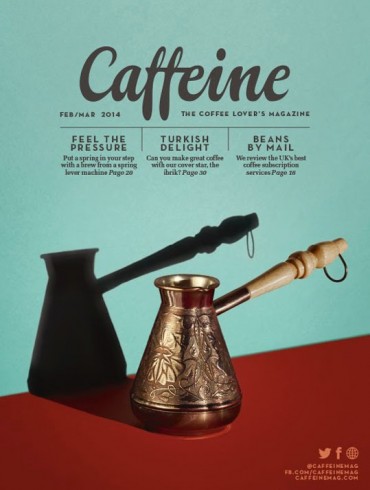
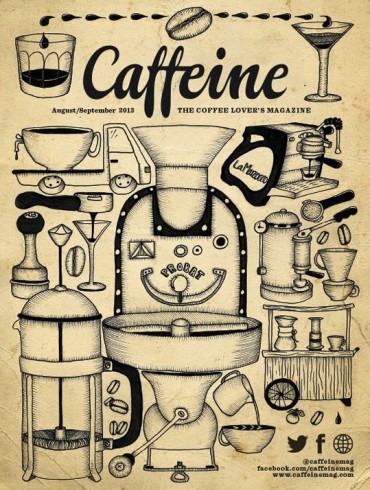
Caffeine Magazine April/May 2014Caffeine Magazine February/March 2014Caffeine Magazine August/September 2013All coffee lovers, take note: this beautiful magazine, Caffeine, is for coffee lovers everywhere but specifically focuses on the independent coffee scene in London “and it’s influence across the country”.

Its covers are what really drew me in. Instead of a stylized cup of coffee somewhere in a coffee shop, it’s rather showing the items that make coffee, or were used to make it before. Brilliantly done!

National Geographic, May 2014

National Geographic May 2014National Geographic knows just how to make a cover image show exactly what the main story is about.

In this case, the iconic neon lights one normally associates with diners/restaurants spell out “EAT”, and are placed on Mother Earth. And the good mother she is to all (some?) of us, she serves more 7 billion of us. Every day. One busy and resourceful lady!

TIME, 19 May 2014

TIME 19 May 2014Ah, Putin, Putin, Putin! I had to Google what czar is (also sometimes spelled tsar):

“Czar is an informal title for certain high-level officials in the United States and United Kingdom. Political czars can run or organize governmental departments, and may devote their expertise to a single area of work. The ‘czars’ have various official titles such as adviser, director, administrator, or diplomatic envoy, but such titles are often quite long or awkward sounding.” — (Wikipedia)

But there was also Tsar Nicolas II, who was an emperor of Russia before 1917.

I’ll have to read the full story to understand the concept of the article completely but it’s a striking TIME cover, once again, with very little being said — but a lot at the same time.

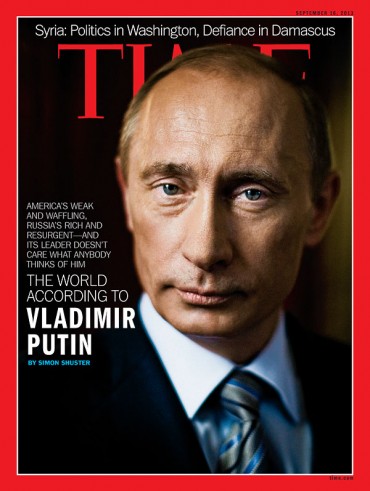
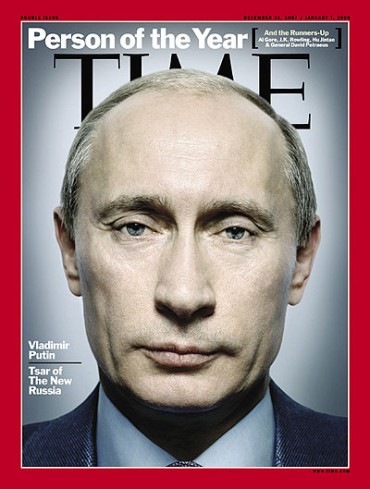
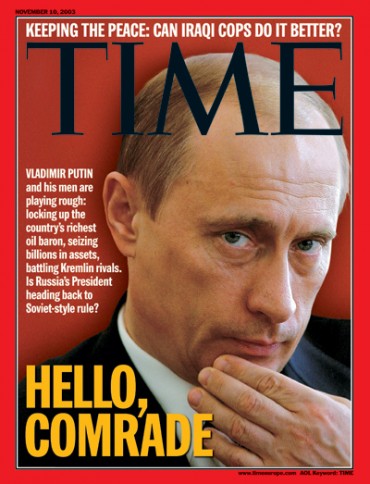
Here are some more of TIME’s previous Putin covers to show how it always focuses on a close-up of his face…

TIME 16 September 2013TIME 31 December 2007TIME 10 November 2003


Find a cover we should know about? Tweet us at @Marklives and @MediaSlut.
Want to view all the covers at a glance?
See our MagLove Pinboard!


MediaSlutMagLove by @MediaSlut is a regular slot featuring the best local and international magazine covers every week, recognising well thought-out, powerful and interesting (and hopefully all three-in-one) covers and celebrating the mix of pragmatism, creativity and personal taste that created each of them. The (for now anonymous) blogger behind MediaSlut knows way too much for his own good about media in South Africa, magazines in particular. His mission is to show when SA magazines fail but, most importantly, also when they succeed. If you’re looking for a library about SA magazines and news, this is your one-stop pitstop.

— MarkLives’ round-up of top ad and media industry news and opinion in your mailbox every three work days. Sign up here!

Grubstreet: SA’s newspapers give us something to chew on

by Gill Moodie (@grubstreetSA) I see a few positives for newspapers in the recent figures from the Audit Bureau of Circulation of SA (ABC), out today, for the first quarter of this year – far more than for magazines.

After a reasonably good fourth quarter in 2013 – in which many papers did well on the back of their coverage of Nelson Mandela’s death and funeral – total daily circulation is up again (from 1 541 488 to 1 622 041 year on year) in the first quarter of this year plus many individual titles are showing growth from the last quarter of last year.

mg2014-03-07Some – such as the Daily Dispatch, Diamond Felds Advertiser, The Herald, Isolezwe, Sowetan, The Times, The Post, Soccer Laduma, City Press, the Saturday edition of Isolezwe, Saturday Dispatch and the Sunday Sun  – are even showing year-on-year (YoY) growth. Granted some of this growth is small but in today’s difficult world of across-the-board circulation slide even holding steady is something to applaud.

City Press and the Sunday Sun can be particularly pleased with their performances in this quarter because they have been battling falling sales for quite some time. (City Press was at 118 676 in Q1 2014 compared with 118 547 in Q1 2013 while the Sunday Sun was at 172 741 in Q1 2014 compared with 169 412 in Q1 2013. Let’s hope both have turned a corner here and can start to grow in a sustained fashion.

We have certainly had lots of big news events in this first quarter of the year – Oscar Pistorius, the Public Protector’s final report on Jacob Zuma’s Nkandla home and the build up to the national election – so many papers would have benefited from that.

Equally, however, many papers could not compete with social media, radio and TV in being first with the news when it came to Pistorius and Nkandla so what gives here?

I think we are seeing reader momentum from the increased appetite for the serious, intelligent coverage of Mandela carrying through to this year. It’s as if people got a taste for it last year and the papers have given them more to chew on in this quarter.

Let’s hope the readers keep chewing now that the election is over and I think the emphasis on strong  regional stories that resonate with the readers are serving the regional dailies well.  The Dispatch’s series on the scandal of how funds meant for Nelson Mandela funeral in the Eastern Cape have been diverted to all sorts of questionable places is the best example of this.

Here are the figures for the best performers – most of them belong to Times Media Group – among the newspapers (year-on-year figure is in brackets):

  • TMG’s Daily Dispatch, which showed the biggest rise of all the dailies (4/5%) and which is  based in East London: 30 199 total circulation     (28 879);
  • TMG’s The Herald, based in Port Elizabeth: 23 605 (23 372);
  • Independent Newspapers’ Isolezwe, based in Durban: 119 846           (116 186);
  • TMG’s Sowetan, based in Johannesburg ( national paper): 99 403        (98 258); and
  • Independent Newspapers’ The Post (weekly), based in Durban: 45 503     (44 984).

Other titles to note in this quarter include:

Independent Newspapers’ The Star and Caxton’s The Citizen are still battling with falling sales. They were at 101 711 (106 484 YoY) and 57 385 (63 854) respectively and both are doing significant amounts of incentivised sales.

Ilanga’s circulation woes also continue. The twice-weekly isiZulu title was at 100 853 (117 115 YoY) but at least this was up on the immediate  previous quarter (95 994) and there were no incentivised sales. (Ilanga is owned by the investment wing of the Inkatha Freedom Party and Media24.)

The Mail & Guardian is down (to 44 266 from 45 279 YoY) after picking up sales in the last quarter of 2013 year-on-year but this is probably due to a significant cover-price increase.

TMG’s Sunday Times is down again year-on-year (to 405 458 from 442 018 YoY) but this is still mostly as a result of stripping out incentivised sales. This year there remains only 10 000 third-party bulk, which was at       12 000 in the last quarter of 2013.

Meanwhile, the consumer-magazine industry looked a bit grim in the first quarter of the year with most  showing decline year-on-year and suggesting that readers are buying fewer magazines and sharing copies more in these straightened economic times. One can, after all, do without a mag when money is tight. It is worth noting that back issues were a feature of the women’s general category in particular.

The only titles to show growth year-on-year were Destiny Magazine, Elle, Kuier, Move! and Sarie.

Always of interest is the battle between the Financial Mail and Finweek – one which we can say the FM has won hands down. In the first quarter of this year, the FM was at 23 400 (23 049 YoY) while Finweek was at 11 955 (17 571).

GrubstreetSouth Africa’s leading media commentator Gill Moodie (@grubstreetSA) offers intelligence on media, old and new. Reprinted from her site Grubstreet. This piece was published first on Journalism.co.za, the website of Wits University’s journalism school.

— MarkLives’ round-up of top ad and media industry news and opinion in your mailbox every three work days. Sign up here!

The Ad Contrarian: The lifetime value of stupidity

by Bob Hoffman (@adcontrarian), San Francisco Bay  One of my all-time favourite dumb-guy marketing ideas is “lifetime value”.

The Ad ContrarianIt is the fantasy that, if you get a customer at a young age, she’ll stick with you for life. This nonsense is particularly popular in the automotive industry, where I misspent a lot of my agency career.

My conversations about lifetime value usually went something like this:

BOB: Why are we spending so much of our advertising budget against 18-34 year-olds when they have no money and no interest in buying cars?

STUPID-ASS MARKETING GUY: Because we have to think about the future. We need young people in our brand. If we get them now, we’ll have them for a long time.

BOB: But doesn’t it make more sense to try to sell our car to people who are actually interested in buying a car now than to people who might buy a car in 15 years?

STUPID-ASS MARKETING GUY:
Old people are dying out, and we need to get youth into our brand or we’ll die, too.

BOB: (Foolishly trying to insert logic into the conversation) First of all, old people aren’t dying out. Adults over fifty are growing at almost three times the rate of adults under 50. It’s young people who are evaporating, not old ones. But more important, 88% of cars are sold to people over 35. The math just doesn’t work.

STUPID-ASS MARKETING GUY: (Snickering on the inside) Why don’t you just stick to writing the ads and leave the math to me?

BOB: Because you’re a f*cking moron (no, I didn’t really say that…I’d say something like)… “let me show you the numbers…”

Only 12% of cars are sold to people between the ages of 18 and 34.  Let’s say we are the most brilliant marketers in history and we can get a 50 share among these people. And then let’s say that we make the most irresistible car in history and fifteen years from now 50% of these people will still buy our brand. And let’s say that these people miraculously become the most eager new car buyers in history and they buy a new car every 2 years. That means fifteen years from now we will have 1.5% share of market from them.

In the meantime, we will have ignored 88% of the f*cking people who actually bought a f*cking car every f*cking year for fifteen f*cking years. Does this sound like good f*cking business strategy to you, you f*cking moron…(once again, the “f*cking” part was often more a thought than an actual verbalization. Often, but not always.)

STUPID-ASS MARKETING GUY: (Snickering on the inside, the outside, the right side, and the left side) Why don’t you just stick to writing the ads and leave the marketing decisions to me?

That, my friends, is the value of stupidity. And it lasts a lifetime.

The Ad Contrarian is Bob Hoffman (@adcontrarian), the author of The Ad Contrarian and 101 Contrarian Ideas About Advertising. This column has been republished from his blog The Ad Contrarian.

— MarkLives’ round-up of top ad and media industry news and opinion in your mailbox every three work days. Sign up here!

WPP strikes again, brings GREY back to SA

by Herman Manson (@marklives) GREY has re-entered the South African market. WPP has announced that its wholly-owned operating company Grey has acquired a majority stake in The Volcano Group. GREY exited the local market abruptly in July 2013, when it closed its Johannesburg agency. At the time, no reason was given for the sudden closure.

GREYOwen Dougherty, chief communications officer at Grey Group, had told MarkLives that the network would regroup in South Africa and either acquire or build a new integrated agency, describing it as a key market.

It has now made good on that promise through the acquisition and rebranding of Volcano Group as GREY Africa.

Launched in 1994

Volcano launched in 1994 in Johannesburg. Clients include Procter & Gamble, First National Bank, Sony and Consol Glass.

Volcano’s unaudited consolidated revenues for the year ending 31 May 2013 were approximately R61 million, according to WPP, with gross assets at the same date of approximately R26 million.

Last week, WPP announced it will take a controlling interest in South African marketing agency Quirk.

Actively acquiring

Both WPP and Publicis have been actively acquiring agency properties in the country over the past few months, with more deals in the pipeline. WPP also recently bought into Cerebra and Native; Publicis Groupe recently bought out OwenKessel and merged it with Leo Burnett, as well as digital agency Lighthouse Digital, which has become part of Publicis division Starcom MediaVest Group. In December 2013, Publicis also bought out digital agency Synergize to sit within Saatchi & Saatchi South Africa.

— MarkLives’ round-up of top ad and media industry news and opinion in your mailbox every three work days. Sign up here!

Heroes & Zeros: Rescue Radio’s Hidden Message — Andy Rice’s best ad of the week

Andy Rice (@ricecommaandy) talks about his best advert of the week (Rescue Radio — The Hidden Message, by Memac Ogilvy Dubai) and inappropriate targeting with guest host Sam Cowen (@samcowen) during The Ad Feature on Talk Radio 702 (@Radio702).

Find out why these brand campaigns feature in this week’s Heroes & Zeros webisode by watching below:


For a fresh look at the world of advertising, Jenny Crwys-Williams of 702 Talk Radio chats to advertising critic Andy Rice on The Ad Feature, every Wednesday 2.30pm — 3pm. The filmed Heroes & Zeroes will appear on MarkLives every week as a webisode.

— MarkLives’ round-up of top ad and media industry news and opinion in your mailbox every three work days. Sign up here!

SAARF/MarkLives #Top40TVratings: Drama rules supreme, despite elections

by SAARF & MarkLives (@marklives) Surprisingly (or not, depending upon your level of cynicism), drama and not election news appeared to rule most of the Top 10 during the week of 5 — 11 May 2014, our SAARF/MarkLives #Top40TVratings  national chart shows, although SABC 1’s Zulu News did climb from the 14th to the eighth spot, and SABC 1’s Xhosa News went from tenth to ninth.

Satellite dishOn our DStv chart, Zulu News moved from 14th to 5th, and Xhosa News from eighth to seventh.

This weekly roundup of South Africa’s TV audience viewership, a collaboration between the South African Audience Research Foundation (SAARF) and MarkLives, reveals the best-watched shows of the week before, where it ran and how many South Africans tuned in to watch.

We offer two tables, the first covering all households — free-to-air viewing (the various SABC channels and e.tv) as well as the DStv platform — and the second charting the best-watched shows on the DStv network of channels only.

SAARF/MarkLives #Top40TVratings Chart: 5 — 11 May 2014

Market Target Activity
National Total Indv (incl guests) Live + VOSDAL
Counter Description (grouped) Channel Level 1 Level 2\Variable (r) AMR % AMR SHR %
1 GENERATIONS SABC 1 Soap opera Local 24.0 10 295 497 70.44%
2 NGEMPELA SABC 1 Drama Drama 16.3 6 982 290 50.64%
3 AMAZA SABC 1 Drama Drama 15.8 6 775 614 50.26%
4 LOXION LYRIC SABC 1 Drama Drama 13.9 5 967 512 43.83%
5 MUVHANGO SABC 2 Drama Drama 12.4 5 316 906 43.35%
6 INTERSEXTIONS SABC 1 Drama Drama 11.9 5 110 200 38.52%
7 FAMILY BONDS SABC 1 Drama Drama 11.5 4 942 409 37.23%
8 ZULU NEWS SABC 1 News News 11.2 4 801 618 33.98%
9 XHOSA NEWS SABC 1 News News 11.1 4 772 863 34.54%
10 RHYTHM CITY e.tv Drama Drama 10.5 4 506 588 35.11%
11 TASK FORCE(Drama) SABC 1 Drama Drama 10.4 4 480 274 33.37%
12 SELIMATHUNZI SABC 1 Variety Variety 10.4 4 478 299 32.55%
13 FRIENDS LIKE THESE SABC 1 Variety Variety 10.4 4 470 747 34.96%
14 SINGLE GALZ SABC 1 Sitcom Sitcom 10.2 4 372 864 31.62%
15 ZAZIWA SABC 1 Variety Variety 9.8 4 194 730 31.88%
16 SCANDAL e.tv Drama Drama 9.6 4 128 990 28.82%
17 POWERBALL SABC 2 Variety Variety 9.4 4 043 757 38.10%
18 THE PERFECT SISHEBO SHOW SABC 1 Magazine Magazine 8.8 3 768 266 26.91%
19 NEWS HEADLINES SABC 1 News News 7.9 3 374 644 25.46%
20 REAL GOBOZA SABC 1 Magazine Magazine 7.6 3 239 705 28.76%
21 THOLA SABC 2 Drama Drama 7.4 3 166 894 35.52%
22 NYAN NYAN SABC 1 Reality Reality 7.2 3 090 389 28.08%
23 NEWS e.tv News News 7.1 3 048 564 22.72%
24 FAN BASE SABC 1 Music Music 6.9 2 938 953 27.11%
25 WWE WRESTLING RAW e.tv Sport Wrestling 6.8 2 911 122 30.23%
26 LOTTO DRAW LIVE e.tv Competition Competition 6.3 2 712 562 26.19%
27 OH SHUCKS I’M GATVOL e.tv Movies Comedy 6.2 2 649 902 24.66%
28 DI WELE MAKGOLELA SABC 2 Variety Variety 6.1 2 622 370 28.07%
29 EKASI OUR STORIES UMAKOTI NOMKHWENYANE e.tv Drama Drama 6.1 2 620 595 24.17%
30 THE NEXT KARATE KID e.tv Movies Drama 6.0 2 587 327 30.51%
31 SPEAK OUT SABC 2 Actuality Actuality 6.0 2 567 152 25.81%
32 THE MATING GAME SABC 1 Drama Drama 5.9 2 530 906 35.36%
33 ELECTION DEBATE SABC 1 Reality Reality 5.9 2 527 218 21.54%
34 THE LINK (MAGA) SABC 1 Magazine Magazine 5.6 2 417 742 22.19%
35 20TH ANNUAL SOUTH AFRICAN MUSIC AWARDS SABC 1 Music Music 5.6 2 413 775 27.10%
36 GENERATIONS RETRO SABC 1 Soap opera Local 5.6 2 404 705 18.69%
37 TROPICA ISLAND OF TREASURE SABC 1 Reality Reality 5.6 2 400 312 21.12%
38 CRY THE BELOVED COUNTRY SABC 1 Movies Drama 5.6 2 398 291 21.34%
39 7DE LAAN SABC 2 Soap opera Local 5.5 2 359 494 18.47%
40 KHUMBUL’ EKHAYA SABC 1 Magazine Magazine 5.5 2 339 727 21.07%

DStv platform only

Market Target Activity
DStv Total Indv (incl guests) Live + VOSDAL
Counter Description (grouped) Channel Level 1 Level 2\Variable (r) AMR % AMR SHR %
1 GENERATIONS SABC 1 Soap opera Local 16.8 2 264 931 48.43%
2 MUVHANGO SABC 2 Drama Drama 8.6 1 162 070 28.62%
3 ISIBAYA Mzansi Magic Variety Variety 7.7 1 034 545 23.09%
4 RHYTHM CITY e.tv Drama Drama 6.9 929 488 21.57%
5 ZULU NEWS SABC 1 News News 6.8 922 966 20.18%
6 SCANDAL e.tv Drama Drama 6.0 812 903 17.60%
7 XHOSA NEWS SABC 1 News News 5.7 769 044 17.10%
8 AMAZA SABC 1 Drama Drama 5.4 725 618 16.18%
9 NEWS e.tv News News 5.3 709 702 15.94%
10 POWERBALL SABC 2 Variety Variety 4.9 658 120 17.32%
11 LOXION LYRIC SABC 1 Drama Drama 4.8 647 005 14.71%
12 NGEMPELA SABC 1 Drama Drama 4.5 603 716 12.99%
13 FAMILY BONDS SABC 1 Drama Drama 4.4 599 668 14.06%
14 INTERSEXTIONS SABC 1 Drama Drama 4.4 588 410 13.20%
15 7DE LAAN SABC 2 Soap opera Local 4.3 587 031 13.67%
16 SPEAK OUT SABC 2 Actuality Actuality 4.3 577 007 18.52%
17 NYAN NYAN SABC 1 Reality Reality 3.8 510 704 13.34%
18 FRIENDS LIKE THESE SABC 1 Variety Variety 3.6 488 755 11.39%
19 SELIMATHUNZI SABC 1 Variety Variety 3.5 478 468 10.80%
20 20TH ANNUAL SOUTH AFRICAN MUSIC AWARDS SABC 1 Music Music 3.4 460 612 14.83%
21 ZAZIWA SABC 1 Variety Variety 3.4 460 377 10.11%
22 KHUMBUL’ EKHAYA SABC 1 Magazine Magazine 3.3 452 155 12.36%
23 NUUS SABC 2 News News 3.3 450 199 10.17%
24 SINGLE GALZ SABC 1 Sitcom Sitcom 3.3 449 766 9.77%
25 MUVHANGO -R SABC 1 Drama Drama 3.2 436 596 23.66%
26 WWE WRESTLING RAW e.tv Sport Wrestling 3.2 432 488 11.89%
27 ABSA PREMIERSHIP MAMELODI SUNDOWNS VS SUPERSPSORT UNITED SuperSport 4 Sport Football (soccer) 3.2 430 118 10.54%
28 LOTTO DRAW LIVE e.tv Competition Competition 3.1 418 911 11.82%
29 THE BOLD AND THE BEAUTIFUL SABC 3 Soap opera International 3.1 418 394 10.90%
30 STOKVEL SABC 2 Sitcom Sitcom 3.1 415 534 12.80%
31 NOOT VIR NOOT SABC 2 Music Music 3.0 402 987 9.00%
32 CRY THE BELOVED COUNTRY SABC 1 Movies Drama 3.0 400 700 10.49%
33 DI WELE MAKGOLELA SABC 2 Variety Variety 2.9 396 881 12.36%
34 THOLA SABC 2 Drama Drama 2.9 390 776 11.37%
35 THE PERFECT SISHEBO SHOW SABC 1 Magazine Magazine 2.8 383 364 8.25%
36 GENERATIONS -R SABC 1 Soap opera Local 2.8 382 395 22.21%
37 SWARTWATER SABC 2 Variety Variety 2.8 379 186 8.07%
38 OH SHUCKS I’M GATVOL e.tv Movies Comedy 2.8 378 059 11.28%
39 PASELLA SABC 2 Magazine Magazine 2.7 371 435 8.01%
40 NEWS HEADLINES SABC 1 News News 2.7 366 743 8.43%

How to read the tables:

AMR% refers to the number of people in a target market who were watching an event ie programme, expressed as a percentage of the population for that demographic: “On average, 16.3% of adults aged 15+ who watched TV from 28 Jan-3 Feb 2014 watched Society on SABC 1”.

AMR is the number of people in a target market watching a specific event ie programme per minute, expressed in absolute figures: “On average, 1, 541, 066 adults aged 15+ who watched TV from from28 Jan-3 Feb 2014 watched Society on SABC 1”.

Share % (SHR %) is the share or proportion of the available audience (people watching TV at that time) that a specific channel/programme has achieved at that time: “Society achieved a share % of 52.59% from 28 Jan- 3 Feb 2014 on SABC 1″.

saarf 150SAARF is the name by which the South African Audience Research Foundation is familiarly known. SAARF’s main objective is to direct and publish media audience and product/brand research for the benefit of its stake-holders, thereby providing data for target marketing and a common currency for the buying and selling of media space and time. SAARF has thus the responsibility to measure the audiences of all traditional media such as newspapers, magazines, radio, television, cinema and out of home media.

— MarkLives’ round-up of top ad and media industry news and opinion in your mailbox every three work days. Sign up here!

Online CPD Courses Psychology Online CPD Courses Marketing analytics software Marketing analytics software for small business Business management software Business accounting software Gearbox repair company Makeup artist