The Switch: Towards a yes-yes relationship

by Alistair Mokoena (@AlistairMokoena) What would happen if both clients and agencies were more instinctively inclined to say “yes” instead of “no”? Would clients end up with poor work? Would agencies end up financially ruined? I don’t think so. Saying yes doesn’t make you weak or easy. Saying yes makes you a willing and enabling partner.

A better place

I believe that the world would be a better place if we had more “yes-people” than “no-people.” By yes-people I’m referring to those who ‘play to win’, as opposed to those who ‘avoid losing’.

Characters Holding No Yes Signs Show Uncertain or Confused by Stuart Miles courtesy of FreeDigitalPhotos.net
Image by Stuart Miles courtesy of FreeDigitalPhotos.net

People who go through life avoiding losing tend to operate from a place of fear, insecurity, desperation and impoverishment. People who play to win, though, see the world as a source of abundance and endless possibilities. They are self-assured and, as a result, more trusting of other people’s intentions.

People who avoid losing are either prone to say no to everything or they become people pleasers in order to avoid losing approval. They tend to agree with everything because they want to be liked. Their obsession with approval often comes at a cost.

Personal vs professional

On a personal level, being a people-pleaser results in unhappiness and self-loathing. On a professional level, they tend to be a liability because they overpromise and make commitments on behalf of their colleagues.

Being a yes person requires self-assurance and confidence. For client to buy creative work, they need to trust their own judgment and have the courage of their conviction. This comes from years of experience and from knowing that they are working with a good communication partner.

Agency people also have to have the confidence to back themselves to deliver, when given a tough brief with a tight deadline.

Be more entrepreneurial

I’m not suggesting that we should commit to deadlines on the spot without first checking with traffic. What I am suggesting is that we should be more entrepreneurial in our approach.

Entrepreneurs look for reasons to say yes to opportunities. They don’t look for reasons that something cannot be done. They fight for every bit of additional revenue. They are solution-oriented and they are in business to serve.

My observation is that our industry is full of “no-people” and “people-pleasers” on both sides of the fence. Those clients who do not have the courage to give us honest feedback tend to sugarcoat everything — only to have their bosses bomb the work down the line. This ineptitude makes us hugely inefficient and robs us of an opportunity to solve clients’ problems quickly.

Be willing to help

It’s important, in any relationship, to first declare your willingness to help before you think of reasons not to help. The best insurance company is one that looks for reasons to pay out claims, and not one that looks for a way out of paying.

Clients come to us for business and communications solutions. Very often, clients are on the receiving end of criticism from their colleagues. This is based upon the perception that marketers are seen as slow, ineffective and unreliable. It puts them on the back foot.

So, when they come to us for help, we need to understand the pressure they are under so that we may help them. We are often their only trusted allies. So, imagine their frustration when their best ally’s instinctive response is “No, I can’t help you” instead of “I completely understand where you are coming from and promise to find a solution to your problem that serves both of us”?

Similarities

The relationship that agencies have with clients is in many ways similar to the relationship between employers and employees. At face value, these two parties seem as if they sit on opposite ends of the fence, fighting for competing interests.

In reality, employees and employers actually want the same thing. They both want to create and derive the most value from the workplace. The same is true for clients and agencies.

We all want to get maximum value out of the creative process. The problem is we don’t always feel that are our interests are valued and protected. We often feel as if we give more than we receive.

Understanding and respect

My suggestion is that we have to ensure that our partners understand and respect what matters to us.

For clients who respect and understand that I run a business which is made up of human beings who come to the office to do great work and be appreciated for it; that I run a business that has shareholders who expect a decent return for their investment; that I also run a business which belongs to a proud industry that wants to be respected for having high standards — know that there’s nothing I won’t do for them.

I will look for every reason and opportunity to say yes, and I will walk to the ends of the earth for them.


Alistair Mokoena November 2014

Alistair Mokoena (@AlistairMokoena) — a Unilever-trained Chartered Marketer with lots of blue-chip marketing experience — joined Ogilvy & Mather Johannesburg as MD in January 2015). Formerly, he was MD of FCB Joburg. One of his favourite pastimes is driving around in the bush, photographing wild animals. Alistair, who switched from client- to agency side at the end of 2012, contributes the monthly “The Switch” column, covering relationships inside agencies and between agencies and clients, to MarkLives.com.


— MarkLives’ round-up of top ad and media industry news and opinion in your mailbox every Monday and Thursday. Sign up here!

Ad of the Week: Nando’s serves up the good news

by Oresti Patricios (@orestaki) From Nkandla to load-shedding, from chaos in parliament to ISIS, the bad news seems to be coming at us hard and fast. Thankfully, there’s a flame-grilled chicken brand with a good sense of humour that’s campaigning hard to get us to laugh.

Renowned for its cheeky, topical and sometimes off-the-wall campaigns, Nando’s always seems to connect with the zeitgeist. And in its latest online ad, from Publicis Machine, it has identified the sense of fatigue that many of us are experiencing with all the ‘bad news’ that gets served up on news sites.


The concept is simple. Next to an article with ‘bad news’ on the website News24, the distinctive Nando’s font proclaims: “Load shedding making you feel a little in the dark?” Beneath this is a big red ‘button’ with the instructions: “Click here for some good news.”

Nando's load shedding before click throughClick on the button, and the text changes to: “Good news coming right up.” The news article bursts into flames and is replaced with a Nando’s ad. It’s a beautiful picture of a Nando’s meal, with the text, “Don’t let life get you down. Get the ¼ Chicken Meal for only R49.90. Now that’s good mood food.”

Nando's load shedding after click throughIn the meantime, the red button’s text has changed to: “Click here for more good news.” Click again, and the fire animation ‘burns up’ the page to be replaced by a good news story, for example, about turtles being rehabilitated and returned to the ocean.

Click again, and a new tab opens with the Nando’s site where you can search for the nearest Nando’s restaurant. Prominent on this page is a link to a list of Nando’s restaurants with backup generators, or home delivery, as an alternative for that power-interrupted home meal.

The effect is achieved, as far as I can tell, using Flash, so if you have disabled Flash, or blocked pop-ups, the ad won’t work for you. (I’m not going to go into the pros and cons of Flash here, save to say that many security specialists are against it due to security vulnerabilities that it can introduce.)

Nando's decor in the UK

A revised brand approach

At this year’s Design Indaba, Nando’s co-founder Robbie Brozin spoke about a revised approach to the brand, where it will furnish its restaurants globally with hand-made products. Speaking to The Drum magazine at the indaba in Cape Town, Brozin said this is part of a desire for South Africa to “own the soul of the brand” once more. This means that individual franchisees will be able to personalise their restaurants, while adhering to a basic ‘brand bible’.

In the UK, Nando’s has created some more upmarket venues where the sit-down meal is complemented by interesting decor and art, usually with a South African theme.

The company currently boasts some 7400 pieces of art in its collection, of which much is displayed in the 243 restaurants in the UK — which makes it the largest collection of SA art outside the country. But it’s not just aesthetics — Nando’s also promotes art through mentorships, installations and competitions.

“Part of our DNA”

Speaking to Kelly Berman at Design Indaba, Brozin credited chairman Dick Enthoven for the company’s focus on art, saying, “He’s passionate about art. He said art would make our chicken taste better. There’s no scientific evidence for that but I can tell you when there’s beautiful art on the walls, it makes a great impact for the restaurant — and for the artist. It’s shared value. It’s not a CSI project — it’s part of our DNA.”

It’s this DNA that puts Nando’s way ahead of the pack in the fast-food segment, and the reason that a simple yet smart ad such as this one can make such an impact.

Because it’s not just the ad.

Nando’s has built a brand that’s renowned for humour and for being authentically South African. It is as if Nando’s gets us, and we get it. So you know that clicking on that button isn’t going to just open a boring link. There’s going to be a reward, in the form of a laugh or a surprise.

That’s the Nando’s promise. And it delivers.

Credits
Digital agency: Publicis Machine
Senior art director: Josh Foster
Creative group head copywriter: PJ Eales
Executive creative director: Jake Bester


Oresti PatriciosAd of the Week, published on MarkLives every Wednesday, is penned by Oresti Patricios (@orestaki), the CEO of Ornico, a Brand Intelligence® firm that focuses on media, reputation and brand research.


If you are involved in making advertising
that is smart, funny and/or engaging,
please let Oresti know about it at info@ornicogroup.co.za.


— MarkLives.com is a proud Media Supporter of Design Indaba 2015. Get our round-up of top ad and media industry news and opinion in your mailbox every Monday and Thursday. Sign up here!

Bad ADvice: Office tips for every ad agency

by Every Ad Agency (@EveryAdAgency) We believe the traditional ‘office’ to be much like print, radio, TV, outdoor advertising, digital, and street poles — dead.

In the ever-changing advertising landscape, Every Ad Agency always aims to be at the forefront in everything, including our office layout. We’ve managed to create an open-plan office environment that promotes synergy and collaboration while also encouraging creativity and free thinking.

Every Ad Agency - office plan for the futureNo sense of hierarchy

First, we’ve removed offices completely. With this ancient concept destroyed, we’ve also managed to make sure there’s absolutely no sense of hierarchy, with the managing director enjoying her morning coffee next to the graphic design intern.

At Every Ad Agency, we are firm believers in the idea of forced integration. Nobody likes change but they adapt to it easily when put in an unknown scenario.

We do this by breaking down any departmental barriers: with us, there’s no such thing as creative, client service, or digital. We believe in ideanovation hubs where it’s possible for the CEO, traffic manager and the copywriter to form a team — some of our best ideas have come from the partnership of receptionist and digital strategist!

Complete transparency

What our officeless space also brings to the fore is complete transparency: being able to hear how much the account manager wants to date her crossfit trainer leads to invaluable, on-the-spot, real-time insights that can immediately be turned into creative ideas.

We also encourage constructive open conflict, which is made possible with the copywriter shouting expletives across the entire office to the senior accounts director about the client-approved headline. We then proceed to get the whole agency involved in coming up with a resolution, which not only betters personal relationships but our teamwork as a whole.

Any agency space needs to impress clients when they arrive. For this sole purpose, we have the Fun Basement. In here, we proceed to stash all the items we will never normally allow during a normal day, but have no hesitance in bringing out for visiting clients.

Work-hard/play-hard

Such items include the strategically placed ping-pong table, close to our entrance, that portrays a work-hard/play-hard mentality.

Another essential is easy-to-apply decals of words such as “CREATIVITY”, “IDEAS”, and “MAGIC”. These are big with clients, as they really, really, really like to know that their agency can be creative.

As you can see, while the open-plan office environment might seem daunting, if you really put your mind to it, it’s simple.


Every Ad Agency logoWe are Every Ad Agency (@EveryAdAgency). You’ve either worked for us, with us or against us. What’s more, we make every advertising and marketing cliché work. Headquartered in Johannesburg; branches everywhere.

All these satirical “Bad ADvice” columns, which are exclusive to MarkLives, are written by the Chief Operating Creative Director in Charge of Ideas (COCDCI).


— MarkLives’ round-up of top ad and media industry news and opinion in your mailbox every Monday and Thursday. Sign up here!

Tech Law: How much do you Like your colleagues?

by Paul Jacobson (@pauljacobson) Facebook is clearly the dominant social network. That much has been obvious for some time now but could a version of Facebook become your preferred business network? Dubbed “Facebook at Work”, the social giant’s latest foray into the enterprise space is an interesting approach.

Facebook Like buttonWill the features that make Facebook such a compelling personal social experience translate into success in the enterprise collaboration space?

One question you may ask is why Facebook is developing a business collaboration version of its popular social platform? The short answer is that Facebook wants to secure your undivided attention (well, in as much as that is possible). According to Quartz Magazine:

“Chartbeat, which measures real-time traffic for many of the most popular websites, provides another look at people’s Facebook habits. As this chart illustrates, Facebook desktop traffic peaks during the workday, while mobile traffic rises in the evening.”

Legitimate and compelling

If Facebook can give its business users a legitimate and compelling reason to use it during the day (even if it is a distinct service loosely connected to the social platform), Facebook will have even more of your attention and, quite possibly, expand its social user base even further in the process. You are probably familiar with the term “mindshare”? This is a move which, if successful, is almost guaranteed to secure a dominant mindshare that spans the work/personal divide.

For now, though, we’re getting ahead of ourselves. The first thing to bear in mind about Facebook at Work is that we don’t know a lot about it. It is currently in a closed and fairly small testing phase, and Facebook hasn’t shared much about the service’s features and longer-term plans. What we do know is pretty interesting, though. The basic idea is to take the service we know and use daily and adapt it for enterprise collaboration. According to the Wall Street Journal:

“Facebook At Work looks and feels similar to Facebook’s familiar social network service, with a few key differences. There are no advertisements and the company doesn’t track users or hold their data.

“Facebook says a key feature of the app is Groups, which the company believes could replace email lists that appear never-ending and seem to grow larger with time.”

Appealing or not

Whether this appeals to you or not depends largely upon your feelings about Facebook (not for work). If you are an ardent fan, being able to collaborate within a Facebook environment is pretty close to idyllic. Although your work and personal accounts will be separate, you will still have a somewhat coherent identity in the Facebook ecosystem (unlike in the Google ecosystem, where your identity is split across multiple Google accounts if you have, say, a personal account and a work account). According to the Facebook Help Center:

“Your work account is only visible to people at your company and is separate from your personal account. From your work account, you can still access things that are shared publicly on Facebook.

“When you set up your work account, you’ll be able to connect it to your personal account. This lets you switch between the 2 accounts while using the same username and password for both. Your username and password aren’t shared with your employer.”

However, it is easy to adopt what will likely be a very familiar interface and lose sight of some of the likely challenges. Perhaps the most prominent one is how much sensitive corporate data Facebook will have access to and process, with the correlative concern being the risk of that corporate data being misused or even mistakenly exposed to people who shouldn’t have access to it?

Common response

One of the common responses to Facebook privacy controversies is that a person’s typical Facebook user data isn’t especially sensitive and, if it is exposed to an unintended audience, the consequences are probably not likely to be severe. That won’t be the case with corporate data, which could include discussions about upcoming projects; sensitive pricing models; and product development. In that case, the consequences of data falling into the wrong hands could be catastrophic.

Again, according to the Wall Street Journal:

“Facebook, however, could face trust issues from chief information officers wary of allowing a company that specializes in gathering personal data to tap into sensitive corporate conversations.

“A Facebook spokeswoman said Facebook will gather no data on corporate users and the actions of Facebok At Work users will not change their usual Facebook profiles.”

In one respect, this is a technical challenge which Facebook’s engineers could, almost certainly, meet through robust data safeguards. Facebook also wouldn’t be the first internet company to become a custodian of this sort of sensitive data, either. Companies entrust their data to various cloud service providers which include Amazon (through its Amazon Web Services); Google (Apps for Work); Salesforce; and even new providers such as Slack. The next biggest problem is perception.

Perceptions

Facebook is perceived as a personal social network with more than a few privacy controversies under its belt. It features strongly in more than 1.4bn people’s lives but it is still the place where people share family photos, write updates about their kids, keep track of birthdays and play farming games.

Could Facebook change that dominant perception and become known as a serious business productivity company, too, that is trusted with business data?

Solving the technical challenge of securing valuable business data is one thing but Facebook will have to persuade corporate clients that it will handle that data responsibly; regulators that it will process that data in compliance with a variety of data protection laws; and users that Facebook can be a credible work collaboration platform, too — and not just the place they go to Like photos of other people’s kids.

Paul Jacobson

South African-born Paul Jacobson (@pauljacobson) is a content marketing specialist and reformed internet lawyer, now based in Israel. He has a passion for the social web, internet trends, digital marketing and related themes such as online reputation management and privacy. He contributes the regular “Tech Law” column focusing on issues in the digital marketing space to MarkLives.com. CC BY-SA 2.5


— MarkLives’ round-up of top ad and media industry news and opinion in your mailbox every Monday and Thursday. Sign up here!

Brand Politics: The consumer is no moron

by Alistair Mackay (@almackay) It can be difficult to believe how sticky the ANC’s voter loyalty seems to be. Despite the fury surrounding e-tolls and Nkandla leading up to last year’s polls, support dropped a barely perceptible 3.75% nationally. Protests are more common and angrier than ever before, and yet Zuma can laugh smugly in parliament, and ignore the mechanisms and questions that are meant to keep him accountable.

Customer Service Survey by 89studio courtesy of FreeDigitalPhotos.net
Image by 89studio courtesy of FreeDigitalPhotos.net

It says a lot about South African society that we put up with a ruling party that behaves like this. It proves how reluctant we are to give up the devil we know, to switch allegiances or gamble with our choices. It proves how untrusting we are and how difficult it is to earn trust, which makes sense considering our history.

Important things to know

Those are important things to know for a marketer, as well as a political strategist — how do you encourage trial, for example? Can you use repeat purchase as an indicator of satisfaction and loyalty, or is it just an indication of repeat grudge-purchasing?

One thing it does not prove, however, is the level of voters’ intelligence. Frustrated commentators love to imply that voters are stupid, that most South Africans continue to vote for the ANC because they can’t understand politics, don’t know what’s in their own interests or are “uneducated”. David Ogilvy famously had to correct that line of thinking in marketing as well: “The consumer is not a moron, she is your wife.”

If voters continue to vote for a party that frustrates them, it doesn’t mean they’re stupid: it may mean the other choices that are available to them are untenable or unsatisfactory. It is a failing of the opposition parties, not the voters.

Leap of faith

Getting people to switch their brand of choice requires them to take a leap of faith. And, to do this, they need assurance to make the switch feel less risky. Three ways in which I believe our political parties, and some brands, are failing to offer that assurance are:

  1. Messaging that resonates with their needs and context
  2. Visible proof of the benefit of switching
  3. Consistency and trust

1. Resonance

Messaging can be as loud as you like; yet, if it doesn’t answer a functional or emotional consumer need, you may as well not bother.

The DA’s ambivalent attitude to BEE, for example, is a position that makes it profoundly unattractive to South Africa’s mostly-black population and no amount of sugar-coating it will change that.

You’re not going to sell a McDonald’s burger to a health nut by telling him his health-consciousness is unimportant, or that you know what will make her happy better than she does.

2, Proof

There is a reason consumers want to test-drive cars: the ad may have piqued their interest but they want proof of the benefit of the new car before making such a big purchase decision.

ANC rule has had many visible, tangible benefits. For opposition parties to be a real option, they need to demonstrate — not say — that they offer even greater benefits.

The DA is getting better at communicating its service delivery record but is still a little too reliant on dry audit reports. The man on the street would be more swayed by bustling business hubs and middle-class growth in Khayelitsha, for example, or seeing large-scale social housing programmes going up around the Western Cape.

A consumer isn’t going to leave a car show-room feeling certain about anything if, instead of a test drive, you offer her facts about how much you spent developing the model.

3. Trust

The EFF’s antics in Parliament have earned it headlines and made it famous, but there is a fine balance to strike when disrupting the president at every turn and demanding money.

While its message resonates with many people, live analysis of the State of the Nation address showed that its disruption triggered a negative reaction amongst many citizens — showing that people want to see more than only disruption, which can come off as a little childish.

Instead, trust is built over time. It’s important but not enough to take up the issues that resonate with potential voters — it also needs to be done in a way that demonstrates competence, consistency and integrity.

Unilever, for example, launched an emotionally powerful and beautiful campaign for Dove, “Talk to your daughter before the beauty industry does”, but ended up with egg on its face when a consumer spliced that footage together with the sexist, objectifying campaigns of another of Unilever’s brands, Axe.

Neither consumers nor voters are stupid, and you won’t get them to do what you want them to do unless you start by doing what they want you to do.

No brand ever won over a new consumer by patronising them.

When politicians from opposition parties start seeing voters as equals and treating them with respect, perhaps fewer of the voters will continue to make the ‘grudge purchase’ of supporting the complacent industry leader.


Alistair MackayAlistair Mackay (@almackay) is marketing manager and head of content at Yellowwood, (@askYellowwood) a leading marketing strategy and brand development consultancy. He has experience both as a brand strategist and as the digital media manager for the Democratic Alliance, and believes that innovative, insightful and generous marketing is both good for business and social change in South Africa. He contributes the monthly “Brand Politics” column, exploring lessons brands can learn and apply from politics, to MarkLives.

— MarkLives’ round-up of top ad and media industry news and opinion in your mailbox every Monday and Friday. Sign up here!

Media Report: Independent media research for growth

a The Media Report 2014 feature by Celia Collins. Brand and market decisions are still being made using gut instinct, despite the massive growth Africa is experiencing. As brands flock to the continent, investment in independent research is becoming more critical than ever.

Africa is a large and rapidly growing market for research, as seen in the numbers of funding opportunities open to researchers. The most frequent sponsors of research in Africa include the National Research Foundation, Medical Research Council in South Africa, UK Department for International Development and other research related to the financial, scientific and medical community.

Media Report: media war graphicBut media and marketing research is another matter altogether. Despite the extraordinary growth of new products being brought into the continent, there are currently only some 24 African countries that have AMPS (All Media and Products Survey) studies or similar. These territories include Nigeria, Kenya, Cameroon and Namibia.

The Pan African Media Research Organization (PAMRO) will present 16 of these reports at the organisation’s next conference in Ghana in 2015. These studies were done by the likes of IPSOS, TNS, AC Nielson, Plus 94, and Ask Africa and were largely self-funded.

Financial support

But what about the sustainable nature of this self-funded research? I hear that there has not been enough support from Multinationals who aren’t purchasing the data in numbers. If this doesn’t become profitable, will it be sustainable? Will the research houses fund this research on an annual basis? Let’s just say I’m not too optimistic about this.

It’s ironic, because if there is so much growth, so much opportunity and interest in Africa from global brands, surely these brands should be investing in research to determine their ROI and place in the respective markets?

Mobile penetration

When it comes to technology and communication, research on the annual growth rates of mobile phones shows penetration has reached 69,3 per 100 inhabitants across Africa according to the International Telecommunication Union, as seen in the table below.

Mobile-cellular subscriptions from ITU

Cash on-the-go

Mobile money has become a major success story in Africa. M-Pesa (Pesa means money in Swahili) was launched in Kenya in 2007 by Vodafone and grew to 17 million subscribers in some four years. The service was rapidly launched in Tanzania and then taken to Mozambique, Lesotho and Egypt, as well as Afghanistan and India. The mobile payment system was also brought to SA, but didn’t do as well in this territory, and is currently being relaunched.

Both feature-phones and smartphones are used for money transfers, savings and insurance payments, and these transactions are expected to exceed USD 200 billion by 2015, World Bank statistics cite. The same research indicates that there are over 40 million mobile money users worldwide, and almost half of these are in Kenya, a country with more cell phones than adults.

New methodology

It is for this reason that PAMRO is helping countries to establish or expand ‘AMPS’ type Research. The organisation has engineered a generic establishment survey with technical and sampling guidelines for African countries for free. The survey includes a mobile questionnaire in the establishment survey to capture indicators of the fast growing culture and landscape.

As marketers we need to understand how mobile phone penetration is changing lives and increasing the repertoire of consumer behaviour as it relates, for instance, to the monthly ‘basket’ buy within the upper segments. We know that most low and middle segments do not have fridges and purchase products on their way to or from work, within an informal market which has hundreds or even thousands of products visible at any one time.

Going forward

How do brands become relevant, without alienating the consumer by presuming they are able to apply traditional first world marketing strategies?

  • Multinationals should start purchasing AMPS type data, as they do in first world markets, to understand the insights of African consumers. I believe if this is done we shall see that phenomenal growth we all so wish to see.
  • I believe that local governments should help fund both quantitative and qualitative research into consumer purchase patterns across the continent. If they do, foreign investment into Africa could be tailored to individual countries or regions, allowing for even more growth.
  • Additionally, this data will greatly assist with the creation and implementation of Government policies that are structured to not only help the public, but also increase business confidence.
  • All too often marketing decisions in Africa are being made by gut instinct, or by following past models that worked in other continents. As marketers we have the opportunity to change this, but only if brands, governments and media owners play a role.

A robust model

South Africa is leading the charge on new ways to incorporate funding models for marketing research, and to structure research by medium. Within the next 12–18 months there should be a robust model which could be used for the rest of Africa with the formation of Joint Industry Committees and Best Practices.

The more independent marketing research becomes, and the more available that research is made in the open market, the better for Africa’s sustained growth and all who benefit from it.

the media report: independence graphicCelia Collins is with Carat.com — the world’s leading independent media planning & buying agency and the market-leader in digital and non-traditional media solutions.

This feature first ran in The Media Report 2014, which is published by Ornico with MarkLives.com as its official media partner. Read or download the full magazine via Issuu.

— MarkLives’ round-up of top ad and media industry news and opinion in your mailbox every Monday and Thursday . Sign up here!

Agency Leaders: 2014’s most-admired marketers & brands

by Herman Manson (@marklives) This year, for the first time, our annual poll of agency leaders also gauges the brand South African agency leaders would most want their agency to work on (brands must operate in SA, and their own clients must be excluded); the marketer they most admire (in SA); the industry body they rate most highly (if any); the pitch consultant they would recommend to a client (if any); and their choice of the most-innovative marketer/advertiser in SA.

View results for our Agency Leaders 2014 poll here:

The brand agencies most want to work on

Coca-Cola

and, as runner-up,

FNB logo
Most-admired: Coca-Cola South Africa

The brand most South African ad execs want to work on is Coca-Cola. The account is currently held by FCB South Africa.

Last year, the brand clinched the top position in the M&G Top Company Reputation Index (for the fourth year running), was named winner of the Grand Prix Overall Favourite Brand category at the 2014 Sunday Times Top Brands awards, and scooped a Grand Prix at the Loerie Awards. It also took the fifth spot in MarkLives’ Top 10 South African ads for 2014.

Runner-up: FNB

FNB is not far behind. The brand has managed to reinvent itself as tech-savvy, forward-leaning and not afraid of innovation. Its great banking switcheroo campaign, in which FNB used its own ATMs to persuade people to switch banks, made it into MarkLives’ Top 10 South African ads for 2014 in seventh position.

Other serious contenders in this category include MINI, Volkswagen SA and Audi.

Marketers

Sharon Keith, marketing director, Coca-Cola Southern Africa
Sharon Keith

and, as runner-up,

Bernice Samuels, chief marketing officer, FNB
Bernice Samuels

Most-admired: Sharon Keith, marketing director, Coca-Cola Southern Africa

Not only is Coca-Cola the brand most agencies want as a client, its marketing director, Sharon Keith, is the marketer they most admire.

Keith holds a MBA at the Graduate School of Business in Cape Town.

Runner-up: Bernice Samuels, chief marketing officer, FNB

Runner-up is Bernice Samuels, who holds an MBA from Wits Business School and a Bachelor of Science Honours Degree (Genetic Engineering), from UCT. She has worked in senior marketing positions on brands such as Multichoice and MTN.

Enzo Scarcella, who became chief marketing officer at Telkom in February 2014 after a five-year stint at Vodacom, also received strong support among ad execs.

Industry bodies

ACASA logoand, as runner up,

IAB SA

Most-admired: Association for Communication and Advertising (ACA)

The ACA is the official representative body of South Africa’s communications profession. The results-driven APEX Awards is organised by the ACA, and members are expected to subscribe to its transformation charter, pitch guidelines and the ASA code of advertising practice.

The ACA was the most-admired industry body by a good margin.

Runner-up: Interactive Advertising Bureau of South Africa (IABSA)

The Interactive Advertising Bureau of South Africa (IABSA), formerly known as the DMMA, is focused on the digital industry within South Africa. Members are drawn from among online publishers, brands and educational institutions, as well as creative, media and digital agencies.

(It is telling, however, that the a substantial number of nominations went to ‘None’, suggesting that industry bodies still have some work to do in terms of satisfying industry needs.)

Pitch consultants

Yardstick

and, as runner-up,IAS: Independent Agency Search and Selection Company

and second runner-up

Gillian Rightford, Adtherapy
Gillian Rightford

Most-admired: Yardstick

In this category, we asked which pitch consultant ad execs admired enough to recommend to clients. Yardstick takes the vote as the most-admired.

Runner-up: The Independent Agency Search and Selection Company (IAS)

Following closely is The Independent Agency Search and Selection Company (IAS).

Second runner-up: Gillian Rightford

Second runner up is consultant Gillian Rightford, of Adtherapy.

Nevertheless, a significant percentage of ad execs said they would not recommend any pitch consultants.

Brand innovation

Coke can

and

FNB logo

Most-innovative: Coca-Cola South Africa and FNB (tie)

The two most-innovative brands when it comes to marketing are (surprise, surprise) FNB and Coca-Cola South Africa, in joint position.

— MarkLives’ round-up of top ad and media industry news and opinion in your mailbox every Monday and Thursday. Sign up here!

#designindaba diary: Reclaiming public buildings and beauty in Dakar #makechange

by Herman Manson (@marklives) The Design Indaba Conference’s in-between day (usually day one and day three are the strongest) still delivered some gems to delegates:

  • Chickens are cheaper than actors
  • Beauty and community in Dakar
  • Freedom in photography
  • People taking back the city
  • Crisis equals change

Chickens are cheaper than actors

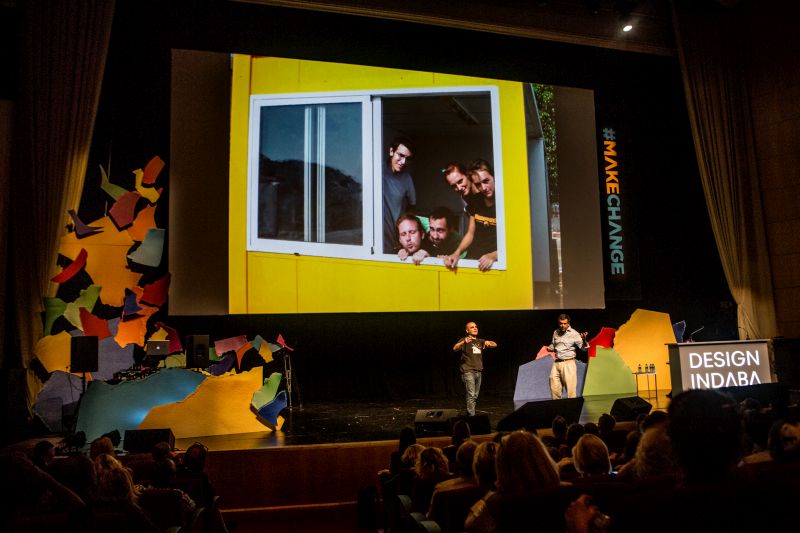
Robbie Brozin, one of the founders of flame-grilled chicken chain, Nando’s, revealed some company secrets. Top of the list would be the secret of how Nando’s makes its famed chicken. Brozen revealed that the ad was shot on a budget; they used chickens because they could not afford actors. The chickens could also be put back in stock, he quipped.

Brozin also reminisced on the brand’s early days, when he and his partners had to decide, for instance, whether their shop would be open for the head or the end of political marches in the late ’80s. He also admitted that, following the controversy stirred by its Last Dictator Standing ad, which caused damage to its Zimbabwe business, the brand is focused upon producing local advertising for each of its markets in a bid to avoid spillover (not likely in the age of YouTube).

According to Brozin, the brand also used restaurant design to build its successful UK business — which is slightly more upmarket than the South African franchises. The group employes 30 000 people worldwide (interestingly, the 30 000 is a number that has been in the public domain since at least 2011). The group will open 80 new restaurants this year. Brozin says it costs about R5 million to set up a Nando’s branch in South Africa. In the UK, that cost rises to around 1.3 million Pounds.

In terms of design news, Brozin announced a new initiative from Nando’s to export SA product design to its stores world-wide. He says that, as the international business grew, its SA core lost much of its relevance to the group. Its new corporate headquarters, dubbed “Central Kitchen”, reflects the group’s SA roots and heritage, as well as its design-orientated ethos, and has brought the soul of Nando’s back to its home market, according to Brozin.

Images: Nando’s UK via its Facebook feed

Nando's UK

Nando's UK

Nando's UK

Beauty and community in Dakar

Selly Raby KaneSenegalese fashion designer Selly Raby Kane, based in Dakar, offers a new vision of her home city. It bypasses urban decay and dysfunction to find and celebrate the beauty of its people.

She and her collaborators don’t wait for somebody else to make things happen. Instead, they convert decaying buildings into themed parties/fashion shows, street art, pop-up retailers and that involves local communities.

It’s a celebration of haute couture in an unexpected venue that forces you to reconsider what you thought you knew about fashion on the continent.

Freedom in photography

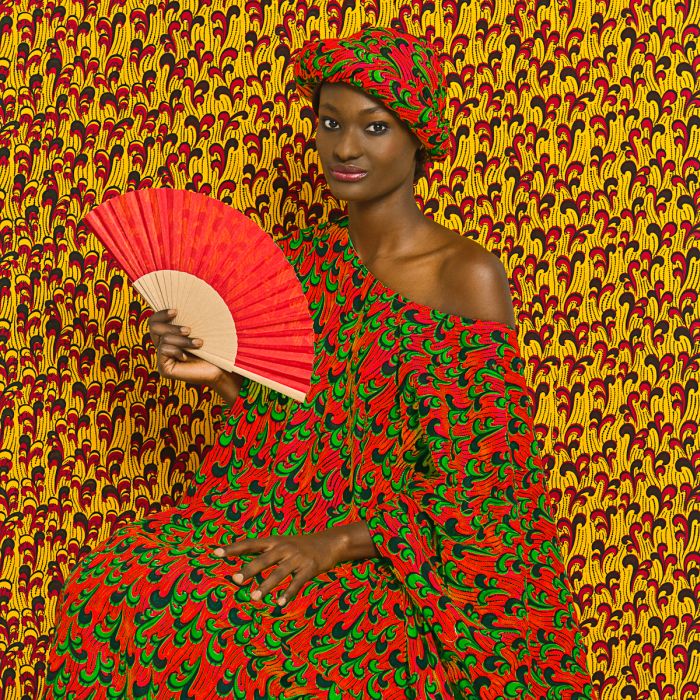
Omar Victor Diop is a Senegalese photographer who escaped a job in the corporate world to find freedom in his passion for photography.

Omar Victor Diop

Omar Victor Diop

Omar Victor Diop

Omar Victor Diop

People taking back the city

Design Indaba buildSantiago Cirugeda is an activist architect from Seville, Spain. He hates the politicos and the feeling seem to be mutual.

Cirugeda encourages community collectives to reclaim vacant and unused public property, and not only re-purpose building material, but to construct new spaces with social value. It has often placed him and the collectives he work with in opposition with political, legal and law enforcement officials in his home country but, as governance decays, it seems certain that Cirugeda is one of the forerunners of a wider, people-driven movement to reclaim their public urban spaces (in Istanbul, Turkey, it nearly sparked a full-scale revolution, after all).

In SA, this holds special resonance, as neither the government nor the private sector seem able address chronic housing shortages.

Cirugeda won’t have communities await sanction or for the politicians to drop by, come election time. Architecture has become all pretty as a picture; just another form of pornography, says Cirugeda. It can be ugly, or at least not pretty, and still hold relevance he, argues. Possibly more so, if it can be claimed by the citizenry.

Cirugeda believes in participatory construction — students building class rooms or residents constructing community spaces. Communities not only repurpose unused public buildings but raise finance through crowd-sourcing campaigns.

Cirugeda is an architect but more importantly he is an active citizen and member of his community. Importantly, the work he does is not about destruction but about rebuilding (including city spaces’ relationships with inhabitants).

Crisis equals change

Italian designer Stefano Giovannoni’s talk was a fascinating journey through decades of stylistic change — often brought about by an economic crisis.

The ’70s, he told delegates, was a period for status symbols, obvious emblems of wealth, while the ’80s focused on style, rather than status. It was in the 80s that Giovannoni become famous for his creations for Alessi.

The early ’90s were colourful, youthful and playful, but the financial crisis made colour disappear from the products Giovannoni was designing. At the start of the 2000s, new economic growth announced the end of minimalism, and an exploration of decoration and cultural understanding. Increasingly, design would meet technology through electronics and telecommunication.

The 2008 financial crisis once again brought about a design shift for Giovannoni, with a move to natural materials.

— MarkLives.com is a proud Media Supporter of Design Indaba 2015. Get our round-up of top ad and media industry news and opinion in your mailbox every Monday and Thursday. Sign up here!

MagLove: Impactful colour and dazzle

MediaSlut (@MediaSlut)’s choice of the best international and South African magazine covers this week:

  • New York
  • O, The Oprah Winfrey Magazine
  • ELLE South Africa
  • House and Leisure
  • Golf Digest South Africa

INTERNATIONAL

New York, 23 February 2015

New York, 23 February 2015The new issue of New York magazine has a smorgasbord of ‘strange’, or rather, atypical, stories… “What it’s like to be in love with a horse. And to see 100 million colors, and to have a micropenis: Ten outliers tell us how their lives are shaped by their differences”.

New York, I don’t think anyone could have thought of a better way to illustrate ALL of the above, and more, with just one simple idea!

O, The Oprah Winfrey Magazine, March 2015

O, The Oprah Winfrey Magazine, March 2015Oprah Winfrey is known for her over-styled, and also over-photoshopped covers. But the March 2015 is just so bright and cheerful, and the colours so well co-ordinated, that I just had to share it.

And yes, the boxes are real, and she’s really sitting on them!

To prove it, I’ve included a link to her behind the scenes pictures of the shoot.

SOUTH AFRICAN

ELLE South Africa, March 2015

ELLE South Africa, March 2015Kim Kardashian eating cake has been on the January 2015 cover of ELLE UK already. Instead of just ‘copying and pasting’, the ELLE South Africa team actually did something I never thought it would: a very close crop of Kim not looking ‘that’ sexy… [She’s still being sexually suggestive; she’s just not in a bathing costume— ed-at-large.] But I think it’s GREAT that the team did that!

On the magazine’s website, there’s “10 reasons to buy ELLE March”, and no. 1 is:

“So you think you know Kim Kardashian? Think again. The lady that gets 20 new Twitter followers a minute tells-all in this ELLE exclusive 6-page story.”

Nothing can make me forgive Kim for her recent cover stunts, but I have to say that I really like these un-sexy-cake-eating ones…

House and Leisure, March 2015

House and Leisure, March 2015 House and Leisure, March 2015: both coversThe March 2015 issue of House and Leisure has to be one of my favourites — not only because of the stunning cover image(s), but also the way the “Small Spaces” stories has been presented to readers. Some really amazing spaces and ideas!

Getting back to the stunning cover: it showcases two levels, with the bedroom at the top. But what you might not know that there are actually two covers! One has the bedroom is painted teal, and the other raspberry.

I’m sure it’s Photoshop, but it illustrates the difference colour and paint makes in a small space…

Golf Digest South Africa, March 2015

Golf Digest South Africa, March 2015Golf Digest, March 2015While Golf Digest South Africa may be sporting the same bejazzled driver as its international siblings, it’s still worth showing as it’s something amazing!

Are you familiar with the term “vajazzle”? (Google is your friend.) I’m wondering if there’s isn’t a similar term for golfers, inspired by this cover :-)


Find a cover we should know about? Tweet us at @Marklives and @MediaSlut.
Want to view all the covers at a glance?
See our MagLove Pinterest board!


MediaSlutMagLove by @MediaSlut is a regular slot featuring the best local and international magazine covers every week, recognising well thought-out, powerful and interesting (and hopefully all three-in-one) covers and celebrating the mix of pragmatism, creativity and personal taste that created each of them. The (for now anonymous) blogger behind MediaSlut knows way too much for his own good about media in South Africa, magazines in particular. His mission is to show when SA magazines fail but, most importantly, also when they succeed. If you’re looking for a library about SA magazines and news, this is your one-stop pitstop.

— MarkLives’ round-up of top ad and media industry news and opinion in your mailbox every Monday and Thursday. Sign up here!

The making of Emily Oberman #makechange #designindaba

Using paper as a base, all the creative elements of the Design Indaba 2015 campaign have been crafted painstakingly by hand by ad agency The Jupiter Drawing Room Cape Town, including the profile images of every single Design Indaba speaker.

Here Jupiter Cape Town shares the making of the image of speaker Emily Oberman, who is a partner in multidisciplinary design firm Pentagram.

Making of the image of Design Indaba 2015 speaker Emily Oberman

Making of the image of Design Indaba 2015 speaker Emily Oberman

Making of the image of Design Indaba 2015 speaker Emily Oberman

Making of the image of Design Indaba 2015 speaker Emily Oberman

Making of the image of Design Indaba 2015 speaker Emily Oberman

Making of the image of Design Indaba 2015 speaker Emily Oberman

Making of the image of Design Indaba 2015 speaker Emily Oberman

Making of the image of Design Indaba 2015 speaker Emily Oberman

Making of the image of Design Indaba 2015 speaker Emily Oberman

Making of the image of Design Indaba 2015 speaker Emily Oberman

Making of the image of Design Indaba 2015 speaker Emily Oberman

Jupiter team:
Executive creative director — design: Joanne Thomas
Creative director: Carla Kreuser
Copywriter: Kate Royce
Art director: Robert Prinsloo
Project managers: Alison Pegg and Vuyokazi Jonas
Retouching and DTP: Gareth Skibbe, Haydn Fairman and Ernestine Daniels:
Design intern: Sarah Gregg-MacDonald

See also:


— MarkLives.com is a proud Media Supporter of Design Indaba 2015. Get our round-up of top ad and media industry news and opinion in your mailbox every Monday and Thursday. Sign up here!


Online CPD Courses Psychology Online CPD Courses Marketing analytics software Marketing analytics software for small business Business management software Business accounting software Gearbox repair company Makeup artist