Graham Warsop on Sir Martin Sorrell’s resignation

by MarkLives (@marklives) Graham Warsop, founder of The Jupiter Drawing Room & Partners, offers his personal take on the resignation of Sir Martin Sorrell as CEO of WPP, and calls on the agency global holding company to offer transparent feedback on “personal misconduct” allegations levelled against Sorrell. In 2009, WPP acquired a 49% stake in The Jupiter Drawing Room & Partners, which at the time held stakes in The Jupiter Drawing Room (Johannesburg), The Jupiter Drawing Room (Cape Town), Black River FC and MetropolitanRepublic.

Sir Martin’s resignation. A sad day indeed

by Graham Warsop. The day was eventually going to dawn when the indefatigable Sir Martin Sorrell, supreme head of the WPP empire, would no longer be CEO of his ‘baby’ — the largest marketing services company on the planet. Accepted wisdom was that it would most likely be the grim reaper who terminated his employment at WPP. Dying in the saddle seemed like the only truly fitting conclusion to the career of a 73-year-old CEO who, every day for the last 33 years, ate, slept, lived and breathed WPP. No one could have predicted such a hasty resignation, effective immediately, predicated by unspecified allegations of “personal misconduct”.

It’s a sad and shocking termination for a man that many (myself included) consider to be the most-remarkable and -visionary entrepreneur in the history of our industry.

When entering adland as a junior copywriter at the end of the 1980s, I shared the great David Ogilvy’s disdain for an upstart accountant, “who had never written an ad in his life’” seeking to move to the centre stage of the global advertising industry. How could a creative philistine possibly be allowed to get his grubby hands on the polished jewel that was Ogilvy?

Watched in astonishment

We all watched in astonishment as one global network after another fell prey to Sorrell’s ambitions. First JWT, then Ogilvy, Y&R and Grey. All master-minded by this self-confessed bean counter.

Shunning huge executive suites, Sorrell and a small talented team operated out of tiny offices in Farm Street, London W1. Over time, it became clear that his master plan extended way beyond the introduction of rigorous financial disciplines to an industry not noted for its business acumen. At a time when agencies were preaching to clients what advertising they should be wanting, Sorrell’s approach was to rather look at what clients needed to gain a competitive advantage.

He deliberately branched out into a raft of marketing services that went way beyond traditional advertising, realising that if he didn’t provide them, someday, someone else would. It’s a testament to his vision that today 50% of WPP’s £15bn in revenues hails from the digital arena.

Recent outcries

For three decades, WPP survived recessions and prospered. In recent years, there were outcries over Sorrell’s pay (his distractors conveniently ignoring the fact that most of it was performance-based remuneration). As a matter of interest, exactly what is the right remuneration for the founder, CEO and standard bearer of a personal-services company, grown from inception to post-tax profits of £2 000 000 000.00 last year?(To put it in context, that’s a post-tax profit of over R34bn!).

Sir Martin Sorrell
Sir Martin Sorrell

Sorrell became the undisputed industry oracle. Always present on a stage somewhere, be it Cannes or Davos. Fiercely bright and implacable, with an astonishing capacity to retain facts. His calm and confident utterances about the industry and where it was heading provided a measure of certainty to clients, investors and the industry alike.

But in these disruptive times, the model of large advertising-based agency networks has come under severe attack. Not even the diversification strategy and philosophy of ‘horizontality’ could wholly combat the onslaught of consultants, procurement officers and global clients slashing budgets as they struggle to come to terms with the relentless rush of technology.

“Who knows?”

Profit warnings came and the WPP share price plummeted. It seemed as if the go-to oracle, always there to analyse, assess and reassure, was shrugging his shoulders and saying, “Who knows?”

In that climate, the WPP board announced that two legal firms had been retained to investigate an allegation of personal misconduct by Sorrell. He denied the allegations “unreservedly”. But Pandora’s Box had been opened. It come as no surprise that, in the interests of the company he spent such an enormous part of his life nurturing and growing, he should put its interests before his own. Hence his resignation and the close of the most-remarkable chapter in the history of advertising.

Many people who know Sorrell by reputation only will not fully appreciate the grasp he had on the empire he created. Having had the privilege of interacting with him for a number of years, my admiration for his unprecedented accomplishments and work ethic is unbounded.

Merits of a visionary founder

I’ve always believed, however unfashionably, in the merits of having a visionary founder associated with an agency brand — a visible leader who believes unreservedly in his brand and its cause, willing to champion his company in good times and bad. Sorrell was just such a leader.

In an age in which managers have replaced entrepreneurs, strategies are made by committees and decisions promulgated by faceless boards, he led from the front. His direct communication channel was legendary. As anyone who regularly emails him would know, if a reply from him is not forthcoming within 15 minutes, it’s best to check whether your in-box is malfunctioning.

He bravely expanded into new continents and territories (a head count of WPP companies in South Africa providing clear evidence of his commitment to this region).

Truly a pioneer

Sorrell as WPP CEO was truly a pioneer, with unrelenting energy harnessed to create a global marketing services empire, unprecedented in its size, its geographical reach, its scope of services and, ultimately, its creativity (the latter proved at Cannes, with WPP winning Holding Company of the Year in every one of the seven years the award has been made).

What next?

My advice to the chairman of the board of WPP is to be transparent. Clarify exactly what the “personal misconduct” allegations were and the results of the investigations conducted. Let’s not forget, Sorrell has vehemently denied any wrongdoing. Whatever the outcome, it cannot be worse than the current unspecified “personal misconduct” allegations that stand to leave his departure from WPP shrouded in murky conjecture, that will only serve to sully his name, his reputation and his giant legacy.

The Jupiter Drawing Room ad with Sir Martin Sorrell
Sir Martin in happier times, featured in The Jupiter Drawing Room’s house ad announcing WPP’s acquisition of 49% of The Jupiter & Partners group.

— One subscription form, three newsletters: sign up now for the MarkLives newsletter, including Ramify headlines; The Interlocker, our new monthly comms-focused mailer; and Brands & Branding, launching soon!

Transformation: Can you feel the shift?

by Ndumiso Ndlela (@ndundlela) The young black South African creative is no longer willing to sit back and just accept the status quo. Can you feel the shift?

“There needs to be an appetite for black excellence. We have been influential since the diaspora yet faced setbacks in the form of Bantu education and apartheid but continue to fight back.” These words were shared by Dr John Kani, where he was talking about “The Rebirth of Black Excellence” and touching on the remarkable impact of Marvel’s Black Panther movie. He also went on to say “black South Africans are negotiating for a space in the industry, yet we are the majority”, referring to the South African media industry.

Shared and growing sentiment

Dr Kani’s words echo a shared and continuously growing sentiment among many black creatives in the advertising and media industry where, for many, it feels as if negotiating for space and having our voices really heard has been going on for so long that we’ve reached a stalemate. A number of thought leaders and industry professionals have shared their thoughts and views on the best way to tackle and address the issue of transformation in an industry dominated and controlled by a few, especially in positions of management, leadership, and ownership. The young black South African creative is no longer willing to sit back and just accept the status quo. Can you feel the shift?

Has the time not come for South Africa to propel black creatives to positions of leadership and influence? If Marvel can trust a young filmmaker, with just two features to his name and no blockbuster under his belt, to direct what has become one of the most-successful movies of all time, what is stopping our industry from growing deserving black creatives who have paid their dues to reach director levels?

This year, we witnessed the first African American to win an Academy Award for the best original screenplay. After the win, Jordan Peele said, “I almost never became a director [sic] because there was such a shortage of role models”. And this statement pretty much sums up the importance of representation. Nothing is quite as disheartening for many young black creatives than working for an agency and there isn’t a single person at a management level who looks like you. No one who you can look up to as a symbol of growth and achievement. No one you can relate to on a deeper level of shared experiences and background.

Global examples

Louis Vuitton or LV, for short, is one of the most-famous and globally recognised fashion houses and the brand was founded in 1854. Today, Virgil Abloh — who was born in 1980 to Ghanian parents — is the artistic director of menswear at Louis Vuitton. Can you feel the shift?

The brilliant and dynamic Ava Duvernay is set to direct “New Gods” at Warner Bros as part of the studio’s DC Extended Universe. She’s just recently directed Disney’s “A Wrinkle In Time,” becoming the first black woman in Hollywood to be at the helm of a live-action film with a production budget of US100m. Can you feel the shift?

So, yes, globally, we can feel a shift. It may be minimal in scale in comparison to where we should be by now, but just these few examples give us hope that we might also see real transformation in the South African media and advertising industry. It’s time to move from discussion and think pieces to active willingness to see real change and create spaces where people of colour are fully represented, our voices are heard, our ideas and insights are fully supported and appreciated, and we see representation at every level of the South African agency.

Stuurman said it best

I believe Trevor Stuurman, South African stylist, photographer, blogger and trendsetter, said it best as he was working at New York Fashion Week: “It’s important for us to occupy all these spaces that kind of were never for us.”


Ndumiso NdlelaNdumiso Ndlela (@ndundlela) is a storyteller at heart, a lover of cinema, an inspiring documentary filmmaker and a digital content creator. As head of digital for DNA Brand Architects, his passion is to help brands navigate the digital landscape and creating ground-breaking, innovative and award-winning content.

“Motive” is a by-invitation-only column on MarkLives.com. Contributors are picked by the editors but generally don’t form part of our regular columnist lineup, unless the topic is off-column.

— One subscription form, three newsletters: sign up now for the MarkLives newsletter, including Ramify headlines; The Interlocker, our new monthly comms-focused mailer; and Brands & Branding, launching soon!

Media Redefined: Touchpoint strategy — cast, bait, catch, eat

by Martin MacGregor (@MartMacG) I hate fishing. It’s a pity, as I love eating anything from the sea, but a combination of a low boredom threshold and almost guaranteed seasickness has made it a no-go zone for me. Sitting and waiting isn’t something I do well. Feeling nauseous while I’m doing it? Count me out. Ironically, touchpoint strategy — which is what I do — is exactly like fishing and I often draw the parallels.

Cast, bait, catch, eat

To succeed requires a very similar and simple four-step approach: Cast, bait, catch, eat.

Cast

Casting is speculative by definition. You know the patch of water that you aim for has some potential but, really, it’s guesswork.

This is the case with a lot of broadcast media buys across TV, out of home (OOH), radio, print and, to be honest, a lot of online media as well. You have an idea of the target market, and generally play it safe and make it as broad as possible. But, in reality, you have little idea of what’s below the water.

If casting were the only strategy, a lot of time would be required; so it is with building awareness over time but we all know how impatient the finance department gets with this.

Bait

Fishermen are cleverer than that. They think about what it is that the fish are actually attracted to, and that bait is carefully selected.

Understanding what consumers like gives the messaging context. This may be anything from sponsoring the content consumers love to making sure messaging is in their most-watched programmes. This provides the key ingredient of relevance. Fish aren’t interested in the hook; they want the bait. Is there a reason Absa hangs around soccer and Klipdrift hangs around rugby? Of course.

Catch

All things being equal, the fish bites. But, as all fishermen know, the real art of what they’re doing has only just begun. Converting that nibble into a catch requires every bit of their skill and experience.

It’s scary how many marketing departments feel that their job stops here. Bringing in that fish is just not part of their remit.

The consumer is now in your store, chatting with your call centre, on your website, interacting on your social media pages. How these touchpoints are constructed, how efficiently they work, the clarity of messaging and the simplicity of the process are fundamental to converting an interest into a sale. Whereas, in the past, the tools to achieve this were basic, blunt and limited, data and sophisticated digital platforms have armed marketers with something much smarter — fishing rods are no longer just a stick and some line.

Eat

Finally, the fish is flip-flopping in the bottom of the boat. But it is not the finished product. A tasty fish requires care and creativity so that every single possible flavour is brought out.

Ensuring a loyal customer who truly loves your brand means a similar amount of care must be taken. Dealing one-on-one with this very special person is a fine art and thinking like a gourmet chef will certainly help.

Banks do this well, especially to their most-important customers. Invites to relevant events, market-related opinions in newsletters and business-class lounge access all keep you in their world and loyal. Mass-consumer goods find it more problematic as the opportunities are less. Data and digital platforms are helping solve this as retargeting becomes more and more of a possibility, serving relevant messaging to loyal consumers.

~~~

Putting together a touchpoint strategy is simple. Think fishing and make sure you are casting in the right place, using tasty bait, have fine-tuned how you reel customers in and, once landed, be very caring to bring out every one of those flavours. Enjoy!


Martin MacGregorMartin MacGregor (@MartMacG) is managing director of Connect, an M&C Saatchi Company, with offices in Johannesburg and Cape Town. Martin has spent 18 years in the industry, and has previously worked at Ogilvy and was MD of MEC Nota Bene in Cape Town. He contributes the monthly “Media Redefined” column, in which he challenges norms in the media space, to MarkLives.com.

— One subscription form, three newsletters: sign up now for the MarkLives newsletter, including Ramify headlines; The Interlocker, our new monthly comms-focused mailer; and Brands & Branding, launching soon!

Headspace: Connecting with the millennial parent

by Tenielle Maris. When one thinks of the term “millennial”, images of hipsters adorned in mismatched outfits, wheeling vintage bicycles down the road while sipping on their craft-brewed ales, come to mind. We tend to forget that young parents, chasing after screaming children, nappy bags and wet-wipes in tow, also belong to the ‘infamous’ millennial tribe. These are the millennial parents, or ‘parennials’, whom are hyper-connected, choice-rich, time-poor and one of the most-influential bunch of consumers across the globe.

This group of ‘new-age’ parents do things a little differently than our own parents did: they have access to more information than they know what to do with but enough of it to make their consumer journey more complex and colourful than we advertisers and marketers had ever imagined.

Their love affair with multi-device browsing, social media and online shopping means that these parents have more tools at their disposal — to conduct research, consult reviews, have their say and take part in bigger conversations — than parents from previous generations. As a result, they are better-equipped, more engaged and more vocal through their parenting experience, and smart brands are seizing the opportunity to really get it right with these people.

New-age support groups

The age-old saying goes that “it takes a village to raise a child”; however, the modern-day definition of village now encompasses the communities made possible through technology.

Studies have confirmed that more millennials turn to social media and Google for parenting advice vs other generations, and will rely on parenting groups to provide them with a sense of community during one of the most-challenging, scary and rewarding experiences of their lives.

They exist in a culture of mutual exchange where they rely on the opinions of trusted sources and, in turn, provide insight on their own experiences: millennials love to broadcast their thoughts and experiences, and they will seize the opportunity wherever possible to feel simultaneously enriched and heard along their parenting journey.

The evolution of the SAHM

Digital connection and the way in which innovation is changing the workplace — allowing women to work anytime, from anywhere — is enabling more millennial mothers to work from home. This, along with more and more millennial mothers making the choice to stay single, presents a new set of challenges for moms wanting to find balance in their work and time spent raising children.

According to Forbes, these women are challenging the status quo of what being a stay-at-home mom (SAHM) is all about and, as the key decision-maker in most households, marketers and advertisers had better ensure that they understand how to connect with her.

“It’s a really exciting time for content creators and marketers because the family is being represented differently than they’ve ever been represented before.” —Pam Kaufman, Nickelodeon CMO.

Influential mamas

Millennial moms are especially more likely than their Gen X counterparts to trust the advice of other parents. This is one of the main reasons that millennial mommy influencers are connecting with communities of like-minded women in the most-relevant way and raking in the big bucks as a result.

Millennial mothers are looking up to influencers whom are sources of inspiration when it comes to being a mom and simultaneously doing what they love: whether through lifestyle, food, fashion, art, culture or interior design. These new-age moms are hungry for avenues to assist in their quest for a multi-dimensional existence, beyond traditional mom-related information.

Getting it right

Peanut has been described as the Tinder for millennial moms wanting to make connections with others moms, with similar interests, living nearby. The app recognises that mothers may be lonely or purely just want to connect with other like-minded people who understand what they are going through and is the reason it’s being talked about across playgrounds in the US.

This is a shining example of an innovation that demonstrates a genuine understanding of what millennial moms are going through: by plugging seamlessly into busy parenting schedules in a way that is second-nature to them, and providing them with an insight-led solution that makes their lives a little easier.

Brands have the opportunity to develop long-lasting relationships with these millennial mamas by providing them with a solution or experience that directly addresses their modern-day challenges at a parenting moment when they need it most: making them feel a little more-prepared and -organised for the chaotic and beautiful journey that lies ahead.

References


Tenielle MarisTenielle Maris is strategic director at TTL agency, 34°, in Johannesburg. Beginning her career in branding and communications, she has spent the last decade in the marketing industry where she has worked upon big brands spanning the African continent. Having found her passion in understanding what drives human beings to connect with particular brands, her time is spent getting up close and personal with the people whom brands are trying to connect with. Tenielle contributes the monthly “Headspace” column, which unpacks anything and everything that helps marketers and advertisers understand why people connect with brands, to MarkLives.com.

— One subscription form, three newsletters: sign up now for the MarkLives newsletter, including Ramify headlines; The Interlocker, our new monthly comms-focused mailer; and Brands & Branding, launching soon!

Martin Sorrell resigns from WPP — industry reaction & analysis

by MarkLives (@marklives) Updated 2018/04/16 WPP has announced the resignation of its CEO, Sir Martin Sorrell, with immediate effect. This follows the conclusion of an investigation into an allegation of misconduct against Sorrell. According to a statement issued by the group,”[t]he allegation did not involve amounts that are material.”

Roberto Quarta, WPP chairperson, becomes executive chair until the appointment of a new chief executive officer. Mark Read, CEO of Wunderman and WPP Digital, and Andrew Scott, WPP corporate development director and chief operating officer, Europe, have been appointed as joint COOs of WPP.

“In accordance with his at-will employment agreement, Sir Martin will be treated as having retired on leaving WPP, as detailed in the Directors’ Compensation Policy. His share awards will be pro-rated in line with the plan rules and will vest over the next five years, to the extent group performance targets are achieved,” the group stated.

Further reading

Campaign: Notes on a scandal: Things will never be the same after Sorrell exit

To anyone rubbing their hands at the downfall of our industry’s biggest titan, I say “be careful what you wish for”. The sorry Sorrell saga certainly wont do anything for the standing of our industry among clients already questioning the value we add. But a weaker WPP wouldn’t do much for the status of British advertising in what is now a global agency marketplace. And unless clients and analysts turn against the holding-company model altogether, a strong WPP led by a strong chief is surely desirable.

Ad Age: Martin Sorrell was an amazing visionary (and now WPP must change)

Although Sorrell blamed clients for “shortsighted” cuts in marketing spend, he missed an important fact: WPP agencies, like all holding company agencies, had been cost-reduced into weakness. They were no longer seen by their clients as valuable strategic partners. Senior agency personnel had been let go; juniors had taken their place. Client brands, which ceased to grow very much after 2008, were in trouble, and agencies were not capable of making a difference.

The Guardian: Martin Sorrell stands to pick up £20m as WPP faces possible breakup

Analysts believe Sorrell’s departure combined with a share price slump of almost a third over the past year means investors and the WPP board will have to consider that there is potentially more value in breaking up WPP.

Financial Times: Martin Sorrell resigns after 33 years as WPP chief

WPP, which will consider internal and external candidates to succeed Sir Martin, faces complex set of challenges. Some of its biggest clients say it has an unwieldy structure and point out that professional services firms such as Deloitte and Accenture are encroaching on traditional advertising turf. They add that Google and Facebook are offering brands the ability to connect direct with vast numbers of people.

Financial Times: Martin Sorrell’s legacy will be judged by WPP’s durability

In the end, the road to the “glue factory” that Martin Sorrell often joked was his ultimate destination was shorter and more slippery than he could have imagined. Less than two weeks after the surfacing of an investigation into allegations of personal misconduct (denied by Sir Martin), the advertising industry’s most tenacious, most outspoken and — not to be forgotten — most successful conglomerateur is out.

The Guardian: Martin Sorrell steps down as head of WPP advertising agency

Whoever takes on WPP will find keeping the sprawling empire – autocratically run with an iron hand with what has been dubbed “Sorrellcentricity” – intact perhaps an impossible task. Observers believe that Sorrell’s departure will have rapid and catastrophic ramifications for WPP and the wider global advertising eco-system.

Ad Age: Martin Sorrell’s farewell note to staff: WPP more important than ‘life or death’

“As I look ahead, I see that the current disruption we are experiencing is simply putting too much unnecessary pressure on the business, our over 200,000 people and their 500,000 or so dependents, and the clients we serve in 112 countries.

“That is why I have decided that in your interest, in the interest of our clients, in the interest of all shareowners, both big and small, and in the interest of all our other stakeholders, it is best for me to step aside.”

Campaign: Sorrell departs WPP: how an outsider shaped the global ad industry

Because Sorrell was never defined by the industry he has always viewed it with an outsider’s dispassion. Quick-thinking and clever, he was astute enough to recognise the huge potential of the creative industries if they could be well enough managed to meet what clients were demanding of them. This meant introducing the kind margin-boosting cost controls that were commonplace in Sorrell’s world but largely alien to adland.

The New York Times: Martin Sorrell Resigns as Chief of WPP Advertising Agency

A first-generation Jewish immigrant in Britain whose parents came from Kiev, Ukraine, Mr. Sorrell got his big break in advertising when he joined Saatchi & Saatchi in 1975. He quickly worked his way up and became so entwined with the agency’s founding siblings that he became known in the industry as “the third brother.”

The Drum: Who could be in the frame to succeed Sir Martin Sorrell at WPP?

Irrespective of current events – Sorrell denies any wrongdoing – the question of who should succeed such an indomitable figure, and the company’s readiness for that eventuality, had already been among the thorniest subjects facing WPP in recent years. In its 2016 annual report, WPP said succession planning was underway and a pool of internal and external candidates had been identified. “The founder CEO has over 30 years’ service with the company and is identified with the success of the group’s strategy and a failure to plan for his succession could impact investor confidence in the company,” it acknowledged.

The Drum: Beneath the gushing tributes to Sorrell lies an industry fortified by the prospect of change

Despite his eye-watering salary, an ugly past business year and personal misconduct allegations still left unresolved, the industry’s response to Sir Martin Sorrell’s WPP resignation smacks more of effusive obituary than critical analysis. But alongside the tributes is a feeling of invigoration: a hopeful sense that things will never be the same again without the godfather of modern advertising.

Social media reaction

https://twitter.com/MattGarrahan/status/985268638881140736

https://twitter.com/FinancialTimes/status/985504540622454785

— One subscription form, three newsletters: sign up now for the MarkLives newsletter, including Ramify headlines; The Interlocker, our new monthly comms-focused mailer; and Brands & Branding, launching soon!

2018 Liberty Radio Awards winners

by MarkLives (@marklives) The Liberty Radio Awards winners were announced at the Sandton Convention Centre on Saturday, 14 April 2018.

Afternoon drive presenter — campus

UCT RADIO
NAUSHAAD MAHARAJ

Afternoon drive presenter — community

HOT 91.9
SIMON PARKINSON

Afternoon drive presenter — commercial

EAST COAST RADIO
BONGANI MTOLO

Afternoon drive show — campus

TUKS FM 107.2
THE DRIVE WAY

Afternoon drive show — community

HOT 91.9
THE BIG JOBURG DRIVE

Afternoon drive show – commercial

METRO FM
THE DRIVE

Breakfast presenter – campus

TUKS FM 107.2
NICHOLAS LAWRENCE

Breakfast presenter – community

MIX 93.8
TONY BLEWITT

Breakfast presenter – commercial

KAYA FM
DAVID O’SULLIVAN

Breakfast show – campus

PUKFM 93.6
BIG BANG BREAKFAST

Breakfast show – community

RADIO TODAY
TOM LONDON BREAKFAST

Breakfast show — commercial

KFM 94.5
KFM MORNINGS WITH DARREN, SHERLIN AND SIBS

Business and finance show

KAYA FM
KAYA BIZZ

Community project – campus, community combined

PRETORIA FM
OGGENDKUIER

Community project — commercial

ALGOA FM
BIG WALK FOR CANCER

Content producer – campus, community combined

VOICE OF WITS
DJ KEYEZ

Content producer – commercial

GAGASI FM
MFUNDO MABASO

Daytime show – campus

PUKFM 93.6
PUKFM LUNCH

Daytime show – community

ALEX FM
THE REAL DEAL

Daytime show — commercial

ALGOA FM
THE ALGOA FM TOP 30

Documentary

RSG
MONITOR – VROUE TRONK

Drama programme

MOTSWEDING FM (OGILVY PUBLIC RELATIONS & CREATRIX)
BUA LE MMINO – MAKARAPA CITY

Field news reporter

702 AND 947
MIA LINDEQUE

Internet/online radio show

PULPIT MEDIA GROUP
I AM YOUTH

Multi-channel promotion

JACARANDA FM
SINGING BILLBOARD

Music show — campus

TSHWANE FM
THE NIGHT PULSE

Music show — community

RADIO KHWEZI
NIGHT TIME CREW

Music show — commercial

VUMA 103 FM
SUNDAY GOSPEL SHOW

My station — most votes

HOT 91.9

Most loyal listeners

HOT 91.9

News and actuality show – campus, community combined

RADIO ISLAM
SABAHUUL MUSLIM

News and actuality show — commercial

KAYA FM
THE LAW REPORT

News bulletin reader — campus

UCT RADIO
NAUSHAAD MAHARAJ

News bulletin reader — community

MIX 93.8 FM
HELEN DESBOIS

News bulletin reader — commercial

702
TARA PENNY

Night time show – campus

PUKFM 93.6
ROOIWYNSONDAG

Nighttime show — community

KINGFISHER FM
MASABELANE WITH TASCO

Nighttime show — commercial

OFM
A TOUCH OF THABANG

Podcast

EAST COAST RADIO
#GETREAL – WITH VANESSA GOOSEN

Promotions stunt/event – campus, community combined

TYGERBERG 104 FM
#VREESLOOS2017

Promotions stunt/event — commercial

ALGOA FM
ALGOA FM BIG WALK FOR CANCER

JACARANDA FM
JACARANDA FM BILLBOARD

Radio innovation

SMILE 90.4 FM
AMPLIFYING THE GOOD NEWS IN THE MOTHER CITY

Sports presenter

POWER 98.7
THABISO MOSIA

Sports show – campus, community combined

HOT 91.9
HOT SPORT WITH JOHN WALLAND

Sports show — commercial

METRO FM
THE ULTIMATE SPORTS SHOW

Station imaging – campus, community combined

HOT 91.9

Station imaging — commercial

POWER 98.7

Traffic presenter

PHALAPHALA FM
RENDY S

Weekend radio show — campus

PUKFM 93.6
INTERNATIONAL TOP 40

Weekend radio show — community

HOT 91.9
THE TONY MURRELL SHOW

Weekend radio show — commercial

MUNGHANA LONENE
SWITSHONGO – TOP 30

BURSARY AWARD

WINNER:
ADADUME MGADLELA

Bright Star inductees

AGANANG FM – NTHABISENG MOTLHODI
EAST COAST RADIO – JASON MCCALL
EAST COAST RADIO – SIMON CARTER
GAGASI FM – LANGALETHU CELE
KFM 94.5 – CARL WASTIE
MAGIC 828 AM – BYRON MACDONALD
OFM – LERATO LELIA
TRU FM – SIMAMKELE MGUGA
TUKS FM 107.2 – QUINTUS POTGIETER
TUKS FM 107.2 – TAYLA WELCH
UMHLOBO WENENE FM – ZUKISWA MQUMBISA

Hall of Fame inductees

DAVE TILTMANN
DUDU ‘LADY D’ KHOZA
HAIDER ALI DHORAT
KEVIN SAVAGE
LLOYD MADURAI
MEL GAHLER
PHUMZILE MNCI
THUSO MOTAUNG
WILSON B NKOSI
ZWELI NOKHATYWA

Station of the Year — campus

PUKFM 93.6

Station of the Year — community

HOT 91.9

Station of the Year — commercial

ALGOA FM

For more, go to libertyradioawards.co.za.

See also

— One subscription form, three newsletters: sign up now for the MarkLives newsletter, including Ramify headlines; The Interlocker, our new monthly comms-focused mailer; and Brands & Branding, launching soon!

M&N Brands launches agency with SKYY as 1st client

by Herman Manson (@marklives) M&N Brands, owned by Zibusiso Mkhwanazi and Veli Ngubane of Avatar fame, has launched a new agency with Mbuso Ndlovu (@NdlovuMbuso) and Chiedza Quinchette. The new agency will be called Kanbar and will be based at its own premises in Johannesburg. The agency is launched with founding client, SKYY Vodka.

SKYY was previously held by Y&R South Africa and temporarily serviced by VML South Africa after Y&R’s last office, in Johannesburg, was integrated into VML South Africa in early 2018.

M&N Brands logo“Maurice Kanbar is the man who invented SKYY Vodka,” explains Zibusiso Mkhwanazi, group CEO of M&N Brands. “He is a challenger, a disruptor, someone who (over and above having 50 patents to his name), went and created a vodka when he couldn’t find the right taste for the perfect martini. He reminds us of who we are, and what we are trying to do in the African advertising industry.”

Mkhwanazi explains that a new agency has been launched to ensure participation from Ndlovu and Quinchette. Avatar, in which M&N Brands owns a significant stake, wasn’t involved in the pitch, according to Mkhwanazi, and was driven by the creative duo. Kanbar will operate as an independent agency within M&N Brands and is set to announce a managing director in the near future.

“We have met the right partners, with the right attitude and the right understanding of how to help us achieve our objectives. We are quite ambitious about the future of SKYY Vodka in South Africa, and so working with the right partner is critical in helping us deliver against these ambitions,” says Simphiwe Pato, Campari South Africa marketing manager. “We look forward to a long and fruitful relationship with Kanbar.”


Herman Manson 2017Herman Manson (@marklives) is the founder and editor of MarkLives.com.

— One subscription form, three newsletters: sign up now for the MarkLives newsletter, including Ramify headlines; The Interlocker, our new monthly comms-focused mailer; and Brands & Branding, launching soon!

Cover Stories: Thoughtfulness in design (13 Apr 2018)

Shane de Lange (@shanenilfunct)’s weekly analysis of media design — both past and present, print and online — from South Africa and around the world:

  • International/print: Aperture brings attention to America’s mass incarceration woes
  • Online: Enso features the life and work of Charles and Ray Eames, a preeminent creative couple who defined modernist architecture and furniture
  • Local/print: Fast Company South Africa — when used indiscriminately, terms such as “innovation”, “disruption”, and “design thinking” lose their value
  • Iconic: Mail & Guardian pays homage to struggle icon, Winnie Madikizela-Mandela
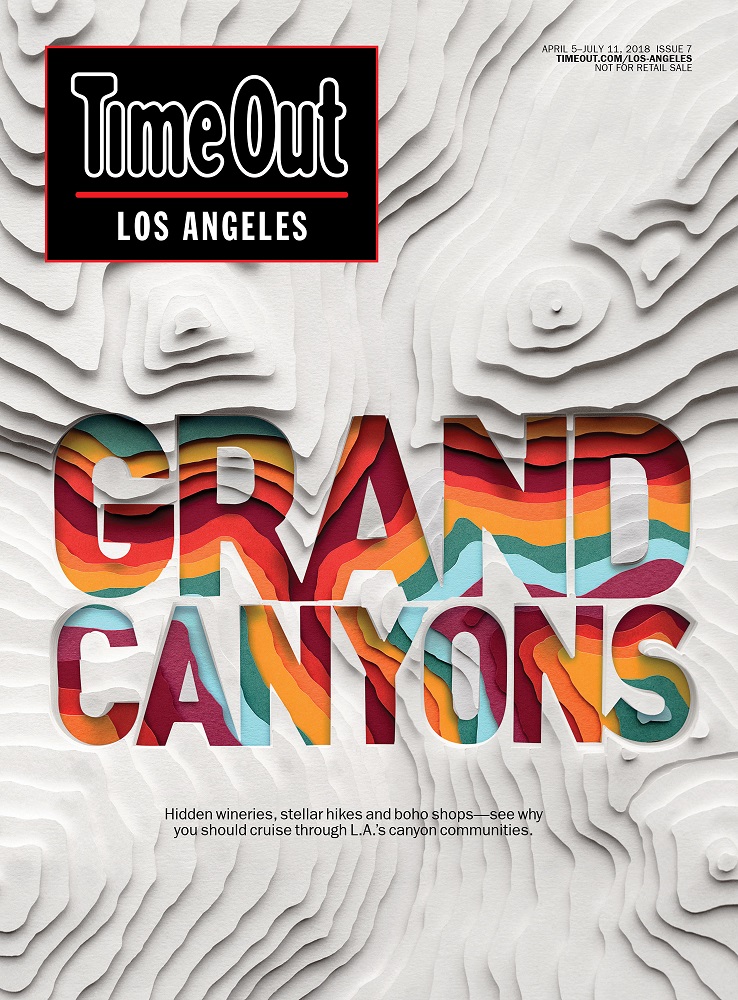
  • International/print: Time Out Los Angeles sports some seriously skilled paper craft that illustrates Los Angeles’ canyon district

Find a cover we should know about? Tweet us at @Marklives and @shanenilfunct.
Pinterest icon Want to view all the covers at a glance? See our Pinterest board!


Print

Loud-Megaphone by digitalart courtesy of FreeDigitalPhotos   Fast Company (South Africa), February 2018

Fast Company South Africa, February 2018 - Zibusiso Mkhwanazi

Is it only the consumer at fault when it comes to the over-consumption of culture? Or are marketing people who engineer consumer behavior also responsible? Design is supposed to produce culture, not promote the destruction of it. In this sense, Massimo Vignelli’s oft-quoted words ring true, more so now than ever: “Unfortunately, there are designers and marketing people who intentionally look down on the consumer with the notion that vulgarity has a definite appeal to the masses, and therefore they supply the market with a continuous flow of crude and vulgar design. I consider this action criminal since it is producing visual pollution that is degrading our environment just like all other types of pollution.”

The design process has devolved into highly marketable terms, such as design thinking. As a result, we are at risk of losing culture altogether. When used indiscriminately, terms such as “innovation”, “disruption”, and “design thinking” lose their value. The lack of comprehension of behalf of the people using these terms suggests a complete breakdown in responsibility and accountability. To quote Vignelli once more, “There is no design without discipline. There is no discipline without intelligence”. Vulgarity it is indeed, pure opportunism that runs counter to what design truly stands for. Red flags must go up when there is a crass and unsolicited use of this kind of language, or when strategic tools and models are perceived to be design. Design is not “human-centered”, it is innately human. It is not focused on the end-user’, the ‘target market’, or which LSM a ‘consumer’ belongs to; it is in there to serve human beings. Design is not a service; it is a necessity.

Although Fast Campany SA is not free from sin regarding the overuse of buzzwords on its covers, the magazine makes up for it on the cover to the February 2018 issue, featuring Zibusiso Mkhwanazi, a man who seems to be swimming upstream against the mainstream current of popular marketing rhetoric. Mkhwanazi is a South African entrepreneur, the cofounder and CEO of black-owned ad agency, Avatar South Africa. Notably, he is a World Economic Forum Young Global Leader. Avatar also won the FM AdFocus Agency of the Year in 2016 [and has featured prominently in the MarkLives Agency Leaders’ Most Admired Poll in the last few years, most recently taking the title of national winner of our new Agency Diversity & Transformation award — ed-at-large].

For more insight related to this matter, see Natasha Jen’s pragmatic 99U presentation here (Jen is a partner at Pentagram and an esteemed Design Indaba speaker):


Heart-Love-Polygon-Geometric-Flat-Design-Icon-Illustration by lekkyjustdoit courtesy of FreeDigitalPhotos   Time Out Los Angeles (US), 5 April-11 July 2018

Time Out Los Angeles, 5 April-11 July 2018In simple terms, the design process requires a healthy balance between thinking and making. In other words, it’s when there is a good rhetorical flow between concept and craft, with a consistent current that can clearly convey narrative. It’s always good to see design in practice that is accessible, where the concept is succinctly implied through craft. The seventh issue of Take Out Los Angles exhibits such qualities, drawing attention to the canyon communities of the city.

The cover is handcrafted using paper and a utility knife, brought to life with the impressive typographic and illustration skills of London-based artist, Owen Gildersleeve. The cover is an engaging topographic play of shape and form, positive and negative space. Using delicately cut contour lines, layered to represent Los Angeles’ canyons, Glidersleeve’s illustration slices through multiple layers of white paper to eventually expose a burst of colored paper layers below, emulating the effect that a canyon has as it exposes the stratification of various layers of earth to the elements. The visual depth to the illustration alone oozes tons of shelf appeal.


Heart-Love-Polygon-Geometric-Flat-Design-Icon-Illustration by lekkyjustdoit courtesy of FreeDigitalPhotos   Aperture (US), issue #230, 2018

Aperture, issue 230, 2018The latest issue of Aperture magazine, themed “Prison Nation”, explores the role that photography has to play as a storytelling and documentary platform, effectively depicting mass incarceration in the US. A prison nation it is, indeed, as incarcerated population numbers have reached saturation levels, with 2.2m people behind bars, and 3.8m people on probation. This is a pressing matter, to say the least, which is why this issue is accompanied by a curated photographic exhibition and six public engagement programmes with a variety of contributing speakers, all hosted by the Aperture Foundation’s gallery.

Conceptual in its appearance, with a formalist quasi-minimalist layout, the cover is provocative and sets a distinctive tone. The various depictions of prisons and prisoners inside show how pictures may tell engaging stories about mass-incarceration — pictures containing pathos to the nth degree. Prison Nation is yet another example of how photographers may restore dignity to their subjects through layered storytelling and photographic documentation, sending an important message out into the ether.


Online

Heart-Love-Polygon-Geometric-Flat-Design-Icon-Illustration by lekkyjustdoit courtesy of FreeDigitalPhotos   Enso — Charles and Ray Eames (US), April 2018

Enzo, online, April 2018 - Charles and Ray EamesAn archetypal power couple, Charles and Ray Eames were a highly influential husband-and-wife design team who had a significant impact upon modernist architecture and interiors, industrial design and graphic design. The work that resulted from their prolific creative partnership was of such a high calibre that much of it is still in vogue today, notably the Eames Lounge Chair and Ottoman, the Eames Plastic Chair, and the DCM chair.

In its latest iteration, Enso magazine has created a concise, accessible and easy-to-read online publication detailing the historic contributions made by Charles and Ray. The site is welcoming, with an intuitive flow and navigation, not to mention, well-chosen type combinations and print-like layout that eases effortlessly between horizontal and vertical navigational elements, including a few neat animated transitions and interactive additions that never cross the line into the realms of cliché. Overall, a very entertaining and educational read, and a tasteful aesthetic experience.


Iconic (contemporary history)

Heart-Love-Polygon-Geometric-Flat-Design-Icon-Illustration by lekkyjustdoit courtesy of FreeDigitalPhotos   Mail & Guardian (South Africa), 6–12 April 2018

Mail & Guardian, 6-12 April 2018 - Winnie Madikizela-MandelaOriginally known as the Weekly Mail, the bane of the oppressive apartheid regime and now known as the Mail & Guardian (M&G), this is an iconic newspaper that is no stranger to left-wing, liberalist politics. If a cover could depict a moment in time, it doesn’t come any better than last week’s edition. Aside from former president, Jacob Zuma, and his legal woes, and the tectonic shifts taking place within the Democratic Alliance, SA’s main opposition party, the most-striking element of this front page is an heirloom photograph of ANC stalwart and struggle icon, Winnie Madikizela-Mandela. Fondly referred to as Mama Winnie, this South African legend and the former wife of late former president, Nelson Mandela, passed away on 2 April 2018. Brushing aside some furore surrounding her past, there are no words that could describe her invaluable contribution to our country and its people. She leaves a mammoth legacy behind — a true doyenne.

References


Shane de LangeShane de Lange (@shanenilfunct) is a designer, writer, and educator currently based in Cape Town, South Africa, working in the fields of communication design and digital media. He works from Gilgamesh, a small design studio, and is a senior lecturer in graphic design at Vega School in Cape Town. Connect on Pinterest and Instagram.

Cover Stories, formerly MagLove, is a regular slot deconstructing media cover design, both past and present.

— One subscription form, three newsletters: sign up now for the MarkLives newsletter, including Ramify headlines; The Interlocker, our new monthly comms-focused mailer; and Brands & Branding, launching soon!

SA TV Ratings: DStv — primetime top 30 for Mar 2018

by MarkLives (@marklives) The hottest primetime shows on DStv in South Africa revealed: TV ratings for March 2018.

DStv March 2018

BRCSA TV Ratings March 2018 primetime DStv
Click to enlarge and view properly.

Source: BRCSA March 2018

In 2016, the Broadcast Research Council of South Africa (BRCSA) changed its policy about giving away TAMS and now only monthly reports, highlighting the top 20 or 30 primetime shows on several popular channels, are available.

Updated at 9.04am on 13 April 2018.


Broadcast Research Council of South AfricaThe Broadcast Research Council of South Africa (the BRC) is a non-profit, industry body that was incorporated in 2015 to cater to the audience research needs of the radio and television industry in South Africa.

— One subscription form, three newsletters: sign up now for the MarkLives newsletter, including Ramify headlines; The Interlocker, our new monthly comms-focused mailer; and Brands & Branding, launching soon!

Only Connect: Influencer marketing is about more than just reach

by Bradley Elliott (@BradElliottSA) Marketers wanting to harness digital word-of-mouth are using influencers to establish credibility and to create social currency in order to drive branded word-of-mouth recommendations. The key criterion for selection in the influencer game? Reach, or how many followers a person has. But this is a flawed, old-school approach to a digital world.

Look beyond reach

When did we ever ask a friend who recommends a product or service how many friends they have before taking their advice? We don’t do that. We trust the people in our human networks that we have relationships with. It is the trust and the relationship that matters, not the person’s popularity.

A word to the wise, marketers: we’re living in an era where reach is being questioned. A New York Times expose called “The Follower Factory” revealed as many as 48m of Twitter’s reported active users — nearly 15%— are automated accounts designed to simulate real people. In November last year, Facebook quietly updated key numbers that reveal much about its user base. Business Insider reports that “Facebook quietly increased its number of estimated duplicate accounts from 6% to 10%”, and that estimated “fake accounts were raised to 2–3% from 1%.” The bottom line? As many as 60m fake or automated accounts now roam the world’s largest social media platform.

Now, I’m not saying that marketers should never use reach as a metric, but they’re not giving enough thought and weight to two other key “influencer” metrics, namely: relevance and resonance. Relevance talks to expertise or knowledge. Resonance, which is a result of relevance, is the propensity to drive action.

Don’t be blind to ‘brand influencers’

The big problem with only using reach is that you’re missing out on the next wave of influencer marketing — the real gold in your branded social communities if you’re a marketer. Here I am referring to a group of people I’m going to call ‘brand influencers’.

If you use the right technology to analyse your social networks, you’ll discover that there are people in your social media communities who have a strong affinity to your brand. They may not have a lot of reach (less than 1000 followers) but they do have a huge amount of relevance and resonance. Most of them don’t even know they have this level of influence. They like your brand — some of them even love your brand. They engage, they retweet, they share stories about your brand.

These are the people who drive the velocity of conversation in your brand communities. When they engage on a piece of brand content, it gains traction, other people engage (resonance) and authentic organic reach escalates. The best part — they’re not looking to become influencers and they are only influential within your brand-specific community.

Technology drives influencer success

How may you leverage these audiences? First, you need to identify who these people are, which until now has been really difficult. But technology, data and computer algorithms will help brands identify and segment influencers on big social media networks. Once you know who the gold is, through direct outreach, recruitment strategies, and by serving targeted content based on personal interests, you’ll be able to build an army of brand influencers whose reach, relevance, resonance, and, most importantly, authenticity will likely surpass that of other types of influencers.

Technology and a smart social strategy will enable you to migrate social audiences so that they become customers or brand connections. The power of these social connections become even greater when you start to integrate behavioural data from other sources, like point-of-sale, ecommerce or CRM, which enables true personalised marketing at scale.

On a final note, it may sound as if I’m against the current state of influencer marketing — I’m not. All types of influencers have a role to play in overall brand strategies and should be considered.

The main takeaway here is that there is massive untapped value in brand social media communities. As marketers, the big question we need to ask ourselves is, why are we ignoring them?


Bradley ElliottThe founder of Continuon and Platinum Seed, Bradley Elliott (@BradElliottSA) is a serial entrepreneur who’s created a number of businesses in the digital and technology sectors. He believes that marketing needs to be reinvented so that it becomes more useful to humans and brands. He’s also a collector of fine whiskey. Bradley contributes the new monthly column, “Only Connect”, which focuses on influencer marketing, to MarkLives.com.

— One subscription form, three newsletters: sign up now for the MarkLives newsletter, including Ramify headlines; The Interlocker, our new monthly comms-focused mailer; and Brands & Branding, launching soon!

Online CPD Courses Psychology Online CPD Courses Marketing analytics software Marketing analytics software for small business Business management software Business accounting software Gearbox repair company Makeup artist