Drink coffee. Design. Repeat.

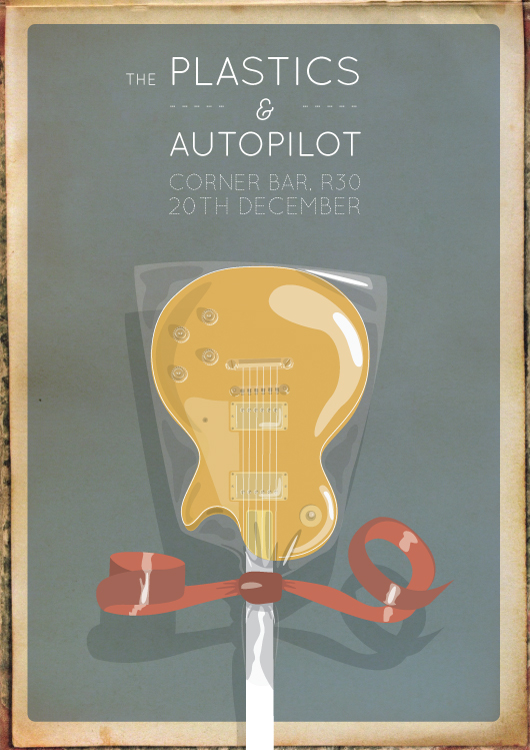
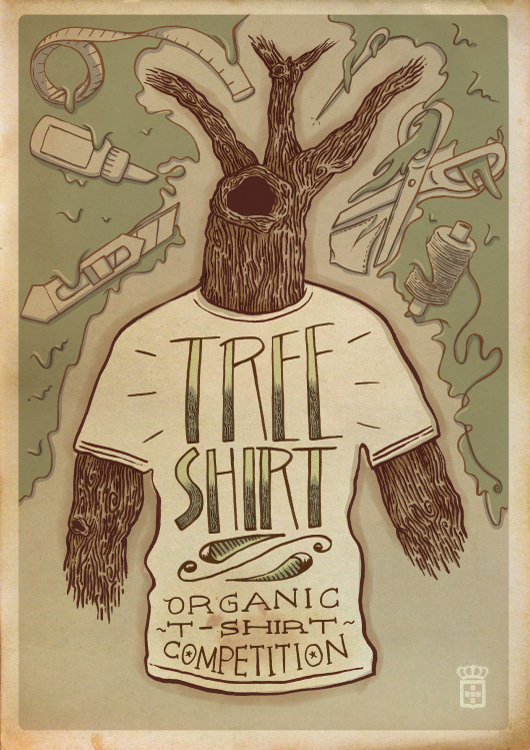
Ian Jepson is a designer for vida e caffe. Mark enjoys his playful style and decided to showcase some of his design work & illustrations. (Find his blog here for more!)

Ian says: Illustration is, along with music, my greatest passion. Here’s The Skywhale.

Ian says: I love doing gig posters… There’s such a huge amount of freedom and imagery to play with.

Ian says: I’m a designer at Vida, and I reckon I have one of the best jobs ever. Drink coffee. Design. Repeat.

You’ve been identified!

Endless amounts of money flow into focus group and field research in an attempt to find out what people really think about brands and why. It is surprising, then, how little substantive research is available on how people decide if they like a brand or not.

What Mark (and everybody else) really wants to know is: what parameters do consumers use to recognise a corporate identity, and what influences our perception of that identity? It seems that the answer, in short, is everything.

We have relationships with a company or product much like we do with people, argues Mary Weisnewski, principal of Kite Inc. What influences these relationships? Everything: “what they look like, how they act, how they make us feel, if they do what they say, whether they are consistent, and whether they are authentic – all the tangibles and intangibles that influence all relationships”, says Weisnewski.

“There are no neutrals – every interaction at every touch point will dilute or strengthen perceptions.”

For Mike Freedman, a partner at consultancy Freedthinkers, the meaning of a corporate identity flows from a blend of promise, personality and performance. Freedman uses BP as a case study. When BP began focusing its communication on its more sustainable and environmentally aware business practice, it changed its logo from a shield to a sun/sunflower to signify a change in company philosophy and direction to ‘Beyond Petroleum’.

In spite of the Texas rig explosion and a massive Alaskan pipeline leak that had environmentalists calling the company “Big Problems”, recent research conducted in the UK and USA among consumers shows BP is still perceived as a leader in tackling climate change, according to Freedman. “A powerful directional CI backed by a strong promise and appealing personality, will overcome occasional lapses in performance. It becomes a lovemark… and love does forgive,” Freedman concludes.

Our relationships with brands are a mixture of the emotional and the rational. Kate Wolters of Added-Value, a marketing insight group, says this is why consumer insight has to be a lot more than “why people like a brand”. The “why” will give you the post-rationalisation without the deeper emotional trigger. “We use a lot of cultural insight to get deeper into the triggers behind decisions – as often, culture plays a huge role,” says Wolters. “Observational and ethnographic research can also give you richer insight and if you’re in a traditional focus-group environment, you need to use sharper tools like sense- and gestalt-based techniques.”

Part of the emotional appeal of a brand relationship lies in our association with its images. When we see symbols and logos identifying companies that we don’t know anything about and have yet to experience, we will try to relate those symbols to things in our worldview, says Andrea Fitting, CEO and Brand Strategist for the Pittsburgh-based Fitting Group. She gives some examples: “Rounded corners, circles and ovals are [perceived as] friendly and non-threatening. Hearts are nurturing. Jagged lines are young and dynamic. Colour is an added dimension that is very powerful, because it has a tendency to influence our emotions. Yellow and red are energising; green and blue are calming and make us feel stable.”

So if everything influences consumer perceptions, from colour and symbols through every touch point available, how does a business ensure positive outcomes from so many touch points? “With ongoing focus, consistency, education and dedication,” says Weisnewski. Key touch points include employee and education, service excellence, consistent and meaningful communication internally and externally, leadership from managers and empowering brand champions within the organisation. Weisnewski also argues for dialogue with audiences and stakeholders.

Mark brand ambassadors extend to people ambassadors – a managerial position dedicated to flexible problem solving. They would support consumers who can’t get help through technical, account or service departments, and who would advocate on behalf of consumers through all departments of a business. Sometimes real people with an investment in consumer satisfaction are what are required to ensure a relationship that surpasses that of a rival brand.

Martin Lindstrom, Buy-ology Symposium

The Buy-ology Symposium explores why everything we believe about why we buy is wrong. Product placement is off track, sex doesn’t sell and the TV commercial is dead in the water. So what’s next for marketing? Find out! Book now and mention MarkLives to receive a R2000 discount on your booking. 09 March 2009, Gallagher Estate, Midrand

If you have something to say…

If you have something to say…

… say it with a card. That is the philosophy behind an e-card service called inSPOT. It uses humorous (in a nice way) electronic cards and messages to allow people to inform sexual partners if they need to get tested for sexually transmitted infections.

“Notifying the person exposed to a sexually transmitted infection is the critical piece in preventing further spread,” said Dr. Susan Blank, New York City’s assistant health commissioner for sexually transmitted disease, to The New York Times. “And as the reach of the Internet expands for use in finding instant sex partners, we’re using that technology as part of the solution.” A number of cities in the US and Canada have rolled out the service, initially aimed at gay men, with plans to expand the system to include heterosexual partners and a national site in the works.

Here’s hoping South African NGOs picks up on the service.

5 steps to a successful Twitter feed for your content company

Many publishers launch onto Twitter without giving the platform or its users much thought or studying what other media companies are doing to maximise benefit from the platform. This approach dilutes the user experience on your Twitter feed and lead to users unsubscribing from your brands Twitter service.

At the moment media sites are making four major mistakes.
1. They post as much of their content as they can onto Twitter. Users, feeling flooded by content, are forced to unsubscribe
2. They don’t have a human manning the account – they link to an auto feed. Auto feeds can be appropriate as mini-aggregators for networks such as CAB or can be used in tandem with a human operator. The best examples of Twitter use by a media organisation have them tap a staff member to post friendly intros (rather than simply headlines) that pulls in readers.
3. They don’t promote their Twitter account to their readers.
4. They don’t make use of the viral power of Twitter by following all or most of their followers in turn. Many people discover Twitter accounts via other users – a major marketing opportunity missed. The flip side is that if you have a stable of columnists using Twitter you might choose to only follow them. Users will notice and pick their favourite columnists to follow via your account but this depends on how well known and established your brand is online.

Take a look at http://twitter.com/pcmag and http://twitter.com/Newsweek. Newsweek chose to put out one story every three hours or so, while PCmag doesn’t use headlines to push stories – their style is more informal and invitational which makes it seem less like a feed and much more human.

Marks‘ 5 steps to establishing a successful Twitter feed for your media company are:

1. Tap somebody within your organisation to man your Twitter feed
2. Post only your most interesting features and breaking news items to the feed
3. Use an informal style and limit posts to one or two every couple of hours
4. Follow your followers in turn to ensure viral marketing for your Twitter account
5. Promote your Twitter URL on your website

Remember – if it seems human it’s more like to have impact! Follow Mark on Twitter!

The Knowledge Factory

knowledge factory

knowledge factoryKnowledge Factory is a customer and market insights company. They turn information into valuable and workable knowledge and tasked Code with a re-brand. The logo is derived for the letters K & F rotated to form a ‘knowledge factory’ creating a strong mark from which the new brand aesthetic was developed. This architecture was carried through Knowledge Factory’s sub-brands and product offerings. In addition a bold and playful illustration style was used within the brand including an animation illustrating the concept of looking further.

Creative Director: Sean Harrison
Design & Illustration: Adam Hill

Pixel award winner Craig Jamieson isn’t big on awards. He just wins them (graciously).

Craig Jamieson

One of our favourite websites was designed by 2008 Pixel Award winning designer Craig Jamieson of Digiguru. The sites attention to detail, unconventional calendar style navigation and functionality makes it a winner (have we mentioned the Pixel?). Mark tracks him down in Jozi for a short interview.

Mark: Please give us a short overview of you career.

Craig: I’ve been working in the design industry for over 10 years now. I am self taught, but have done the odd software course here and there. After a couple of years doing graphic design, I switched to web and multimedia. I started teaching and did that full time for a while, before continuing on my own, whereby Digiguru was born. I have mostly worked for myself ever since. I’m currently quite content working for myself, I get to sleep late, work from home, spend time with my kid and work at my own pace. I’m quite comfortable designing just about anything, but most days I do mostly site concepts and flash sites for local and international clients.

Mark: What inspired the design of your personal web site?

Craig: At the time I started planning my site I was working at a pretty cool agency in Cape Town, so had no need to bring in more work. I had also grown somewhat tired of blogging, cause I really didn’t have much to say, which wasn’t already being said on a gazillion other blogs, but I wanted a place to share creative ramblings, achievements, projects and a little personal dribble too.

I decided to build a flash site that had a lot of the properties found in more traditional websites like rss feeds, back and forward functionality, bookmarking, deep linking etc. I would use a calendar style navigation which I had seen successfully used before and then scaled content relative to screen size for visual impact.

The primary focus would be my updates, which I did not want to feel obligated to do, rather posting whenever I felt like it. Secondary would be my portfolio and info.

My situation has changed, working for myself I have to bring in work and I have considered making my portfolio the focus of the site, but as most people like to know what’s new first, I thought for now I’d keep things the way they are, seeing as it hasn’t hurt my business in any way.

Mark: You won the Pixel Award in the Personal Website category for Digiguru – why do you think people react so positively to the site?

Craig: I’m not too sure actually. I worked on the site for ages, so maybe it’s the attention to detail, maybe it’s the scalability, functionality … or maybe it’s the hot chicks I use from time to time to blurb my news.

Mark: What do awards mean for your career?

Craig: I’m actually not a big advocate of awards. An individual cannot compete when you’re up against agencies who have big clients, bigger budgets, teams of designers etc, added to that there’s all the politics and just to top it off, it’s not affordable for individuals to pay to enter their work. But I have been fortunate enough to have been nominated and won a few awards, so some people like the idea, and hell if it helps pay the bills, then I guess I have to graciously accept them.

Mark: Which are your 5 favourite websites/blogs?

Craig: Google (www.google.com … just in case you’ve lived on mars for the past century)
WikiPedia (www.wikipedia.org)
Design You Trust (www.designyoutrust.com)
FWA (www.thefwa.com)
Facebook (www.facebook.com – I hate to admit it, but despite all the irritations, it can be a useful tool)

Mark: Are there any online tools you really value?

Craig: I use a few day to day. I think mint (www.haveamint.com) is the sexiest way to view your web stats. I use Harvest (www.getharvest.com) to account for all the hard work I do. PayPal (www.paypal.com) can be handy but not being able to receive funds is a bit silly.

Mark: Tell us about your design process?

Craig: Ideally things would pretty much go like this. Get a feel for the client and brand, do a little discovery into what they are hoping to achieve, understand who they perceive as cool and then try and put some sort of brief together. Once some plan is set in place, design, develop and then build.

After that it test, fix and launch. But lets be honest, it hardly ever works like that, it’s usually a little more like this … taking a few notes, throwing around some ideas, searching for inspiration and then either putting a design together or jumping right into flash and just rocking things out.

Find Craig @ http://www.digiguru.co.za

Online CPD Courses Psychology Online CPD Courses Marketing analytics software Marketing analytics software for small business Business management software Business accounting software Gearbox repair company Makeup artist