David Moffatt doesn’t get called a rock star just because be designed a WordPress theme. The guy actually rocks as lead guitarist of indie rock band The Dirty Skirts when he isn’t running his digital agency HelloComputer alongside business partner Mark Tomlinson. Together they have created what quite a few people refer to as one of the hottest indie digital specialists around.
HelloComputer strives to make technology more accessible to the rest of us because it sees technology is an enabler rather than an end in itself. In fact their tag line states “We make Digital more Human.”
By applying classical marketing principles to the digital environment and using creative ideas enabled by technology the agency builds sites aimed to appeal to end users – and they seem to be succeeding based on the three daily FWA (Favourite website awards) they claimed over the past twelve months. The agency is increasingly well known for the quality of its digital craftsmanship while the FWA’s has attracted international attention, including collaborations with Crispin Porter + Bogusky and Mother New York.
Tomlinson says the agency works primarily with premium brands that are leaders in their segments. Clients include BP, Continental, Musica and Vodacom. HelloComputer is fully independent and has a staff compliment of 32. The average age hovers at 27.
Interestingly Hello Computer is following a business strategy radically different from many of their peers in that they are seeking less engagement with traditional ad agencies when many of their rivals are looking for closer associations. They believe clients increasingly see the value in specialist digital agencies, especially as direct relationships remove additional ‘management’ mark-ups by ad agencies. It makes them financially competitive and skirts “fundamental structural issues” many ad agencies face according to Tomlinson.
Moffatt agrees in the value a focused and direct relationship with clients produces. At HelloComputer they work on a partnership model, says Moffatt, which appeals to clients. And where they do enjoy good relationships with ad agencies they expect dual credit. “We take pride in our work,” says Moffatt.
Tomlinson was a founder of Generator New Media Communications in the early days of the commercial internet. Moffatt joined to head up Account Management and Business Development. Generator shrunk from 20 staffers to 6 after the dot bomb. Tomlinson later sold the business to pursue a different creative vision and moved on to launch HelloComputer in 2005, which Moffatt joined in 2006.
For Moffatt digital is the new direct marketing – it’s all about initiating and maintaining relationships. This means the guys don’t think short term – they talk to clients about three to five year plans.
Ultimately HelloComputer aims to inject soul into the digital experience. A cold layer of tech might impress some, but these guys want heart, and at HelloComputer they believe you will find it.
A young creative worker from one of South Africa’s leading advertising agencies has spoken out on the pain, anxiety and social guilt he has suffered as a result of an award winning campaign. John Doe reports.
The campaign has seen ‘love tags’ attached to a leading brand of breakfast cereal. The removable tags (containing lines such as: I Smaak U!, U Turn Me On! and Be My Bitch!, amongst others) have rapidly become a feature of local sidewalks, garbage bins and schoolyards.
“I won an award for the idea, which I suppose is good career wise,” says Adam Smith (24). “But there has been a major downside to the whole thing. Every time I go out I see these tags lying on the street, I see them still attached to cereal boxes in supermarkets, I even saw a pre-pubescent boy chasing a girl down the street waving a ‘Be My Bitch!’ tag the other day. I just can’t shake the feeling that I am responsible for polluting the social landscape.”
The substitution of a capital letter U for the actual word has also been very difficult to cope with,” Smith added.
Smith received a raise, industry wide acclaim and an international award for his idea. But, he says, the concept was little more than Monday morning sarcasm and was never intended to be acted upon. Smith also admits that there were a variety of illicit substances circulating through his bloodstream at the brainstorming session concerned.
“I went out on the Friday night, and I only got to bed sometime late on Sunday evening,” he says. “So at work on Monday I really don’t think I was in a sound frame of mind to be making creative decisions.”
Despite his tenuous mental condition and lack of interest in the campaign, Smith is now responsible for the thousands of ‘love tags’ cluttering South Africa’s streets.
“The creative director had come up with the idea of removable tags,” says Smith, elaborating on the creative process. “They asked each junior to contribute with an idea for the copy. When my turn came around, I said ‘Be My Bitch’, intending to be sarcastic and actually referring to a funny conversation I had stumbled across on Saturday, when a bunch of us were looking for another club to go to. I was shocked when the creative director leapt on it, and even more surprised to find myself pitching the idea to the client two days later.”
Moral anxiety as to the social effect of advertising is not uncommon within the industry, according to leading psychologists. However, such feelings are not openly accepted within the work place – leading to high levels of paranoia and anxiety amongst many workers.
In-house rehab sessions and moral culpability classes are just some of the ideas mooted within the industry to deal with moral confusion amongst its workers.
To date, however, advertising agencies have yet to be seen to be taking responsibility for providing staff with such coping channels.
“I did approach my boss about the whole thing,” says Smith. “But I kinda wish I hadn’t. He looked at me as if I was nuts and then told me to grow up and accept that advertising is a whore’s business. I guess he’s right, but it hasn’t made it any easier for me when I go grocery shopping.”
— John Doe has enjoyed a long career as an executive assistant, working with a variety of major global brands in a clerical capacity. Long famed in the corporate sector for his legendary dictation skills, Doe has also gained acclaim for his incisive media journalism. Although queries have been raised as to the veracity of some of his information, Doe is adamant that he simply reports on media issues that he comes into contact with – his sources remain a closely guarded secret. Doe dismisses as ‘unsubstantiated’ and ‘possibly defamatory’ allegations that he is in fact one Andrew Miller of Unity Design.
Backtrack pulls stories from the archives of our predecessor, media.toolbox, which published media and advertising commentary between 1998 and 2008.
The question then: Bubble capitalism. Enron, WorldCom, auditors, faith in business leaders and stock market analysts, all just went pop. We wondered then if the damage could be repaired.
The question now: The credit crunch, the Global Financial Crisis, the Great Recession. We are still feeling the effects of the massive housing bubble and mortgage crisis in the US and Europe that lead to a massive global (tax payers) bail-out of the world’s financial institutions. Once again it’s clear big (financial) business had pulled a fast one on investors and consumers.
The story: When fairness suffers
Date published: 01|10|2002
Analysing the failings of leadership in the year big business became big scandal has become a national pastime in the US. The Washington Post quotes Felix G. Rohatyn, a governor of the New York Stock Exchange in the 1970s, who writes: “I do not recall a period of more generalised gloom in the financial community than the one we are going through now. The crisis of the New York Stock Exchange in the 1970s comes closest.”
While all the elements of the 1970s crisis are present today like shaky capital structures, the Israeli-Arab concern and a lengthy bear market, Rohatyn believes today it has more to do with the “financial integrity of the entire American business community that is suspect, together with its surrounding support system: its boards of directors, its accountants, its investment bankers, its lawyers and the media.”
Rohatyn declares that the most important economic issue facing his country today is the issue of fairness. Fairness is basic to moral leadership, something US business and government have long claimed to have on their side. “The outrageous compensation packages of many corporate managers and the symbols of abuse created by the Enrons, the WorldComs, the Tycos and the Global Crossings have shaken the faith of many Americans in the fairness of our system, and convinced our overseas critics that American-style capitalism and globalisation work hand in hand exploiting the less fortunate.”
A spate of corporate scandals both in the US and here at home have caused a crisis in investor and consumer trust in business leaders. Are CEOs simply convenient villains or is this a real crisis in business leadership? Rohatyn sees real crisis in leadership that purports to be moral but is not.
Tony Manning, a leading management consultant, takes issue, saying it’s important to acknowledge that every leader isn’t unethical, devious, or a crook. “A few bad apples have tainted the whole barrel. And for a whole host of reasons, conditions in the last half of the 1990s were ripe for their abuses,” says Manning. The media and the law are coming down hard on the miscreants, according to Manning, and standards of corporate governance are being raised everywhere.
Which is true, except for that leadership requires credibility, which in part stems from fairness, something Rohatyn equates with moral leadership. Faith, once broken, takes a long time to repair, Rohatyn writes.
Today’s business leaders will take a long time to rebuild credibility and faith lost due to the actions of their rotten counterparts and the financial system and global business environment that supported business excesses in the past.
A new era of corporate responsibility, transparency and fairness is required to restore our faith in the “captains of industry.” How long will it take before the damage will be repaired?
Take out: The support system Rohatyn describes as playing a role in the financial crisis of 2002 remains in place today. The media continuously fails to play a proper investigative role when it comes to the power of business in modern society. Investigative journalism remains focussed on political players, but as the cosy relationship between regulators and oversight and tender committees on one side and business on the other clearly show, money is the cookie crumb trail between one and the other.
Cameron Platter is a relatively young (read 32) artist who lives and works in Ballito, the little holiday town just north of Durban that is equal parts Bible belt and surfers’ paradise. Platter has worked steadily at his art for over a decade and his dedication and effort are starting to pay big dividends.
Cameron Platter - jealous is the freedom of fools
His work is included in prominent public collections in Europe and America, he is regularly invited to participate in international art fairs and biennales and has had a number of solo shows at home and abroad. His work is highly original, distinctive and troubling in all the right ways. He’s easy going, has a wicked sense of humour and can cook a pig underground. Here he has a heart to heart with Richard Hart.
Cameron Platter: Ballito? Argghh… Ballito is Boksburg by the sea, with worse architecture…I like to think I work in Shaka’s Rock. It just sounds nicer. The Bible belt thing is true. We also have an autobodyshop that doubles as a church, which is next to a braai and rib shop, which is opposite the Cash Crusaders, next to the discount bottle store.
Richard Hart: These days you pursue the solitary life of a full-time artist, but it wasn’t always this way. In fact I recall hearing that you showed massive promise as a young commercials director. Can you tell us a little about those days and why you chose to give up what most would consider a pretty glamorous, high-rolling career for that of the artist?
CP: The film gig was a brief blip. It did have its perks: people called me ‘sir’, I had my own office overlooking Greenmarket Square and someone who made me coffee. But I was astounded at the braindeadness, self-importance, and brazen stupidity of most of the people that worked in that industry.
RH: That’s quite an indictment, and I’m sure well deserved. However I’m sure many would have the same to say for the art world. Maybe it’s just a question of where you find yourself and with whom?
CP: It was certainly my experience of the advertising and film industries. I’m sure there’s plenty of great, inspiring stuff out there. I didn’t come across it, though. My problem is that the vast majority of the advertising business is all for dumbing down – people not giving a shit about doing the right thing, fuelling an obsession for eating KFC and buying cellphones and cars and cash loans and penis enlargers on credit. Then again I suppose it feeds my art, so I revel in it too…
RH: From the get-go you seem to have had a very clear idea of your vision, your own personal iconography as an artist. Can you tell me a bit about how you got to where you’re at.
CP: Art school taught me that everything fun, anything involving colour, and especially, drawing – was BAD and was never to be done, under any circumstances, ever. So naturally, after graduating (just) and mopping restaurant floors for a couple of years, I decided to have fun, love colour, and make some drawings. And not worry too much about what people thought. Crocodiles, Killer Transvestite Zebras from Outer Space, Minibar/ ATM/ Soundsystems, Penis Enlargement ads, Porn, Storytelling, Films, Rudeness, and Lewdness all evolved quite naturally from that decision. I couldn’t tell you what I will be making in a year’s time. Although I have a plan, it always deviates from the blueprint. Any artist who claims to be absolutely sure of where they’re going is lying.
RH: Okay, I just need to get this one out the way; what’s with the penis obsession? While your at it you might as well explain the porn thing too. CP: Everyone loves cock. If they claim they don’t, they’re lying…The porn thing is multi-dimensional and would require a mini-thesis to answer. In short, if people find porn offensive, shocking, deviant, perverse, etc., I wonder why they aren’t appalled at the goings-on of everyday life, which are far more offensive, shocking, deviant, perverse and horrific.
RH: Yes indeed. But those two sculptures on your bedside table must surely bring on feelings of inadequacy, or are you completely unthreatened by two foot high shiny black phalluses?
CP: No inadequacy feelings whatsoever. I hardly ever think about art while having sex…
RH: You clearly think about sex plenty when making art though?
CP: Dude, you’re too good…I can’t come back at that! Although a cold shower before the studio sometimes works…If I want to get serious work done.
RH: Your work has a very optimistic feel; bright, flat colours, characters that could easily come from childrens’ books, plenty of humour. Yet you work in a small studio that gets so hot in the summer that you have to strip down to your jocks. You make massive pictures that are hand coloured using pencil crayons. It all seems pretty arduous – where does the joy come from?
CP: Joy? My work is darkly satirical, paranoid, and explores the futility of our existence. Sitting in a sweltering studio, in underpants, with mosquitoes, aids reflection on these doom and gloom thoughts.
RH: A lot of children’s programmes (like The Magic Roundabout back in the 70s) work on two levels, one that is light and fun and aimed at the kids, and another that communicates a darker message. I think your work operates like this. On one level it is just a lot of fun – it is easy to fall for a crocodile in boots and a hat even if he’s toting an AK 47 and abusing his women. I think the bright colours and the humour are a good foil for your deeper intentions. Is it a calculated strategy or do you simply sit back and channel what’s coming through?
CP: I don’t think there’s too much strategy, it’s definitely more about sitting back and channeling real life into some sort of fiction. Although it is rather nice to lure people in with bright colours, and a seemingly cheerful disposition, and then sucker-punch them in the balls. And of course it’s easier for most people to watch an animated crocodile ass-fuck a prostitute and then shoot her in the head. You couldn’t do that with real people. Still, in spite of the darker side of my work, I absolutely love what I do, and wouldn’t trade it for anything.
RH: That love comes through – maybe more than the paranoia and the futility of our existence. A few months back I was lurking about in a gallery while the owner was showing your stuff to a collector and his wife. They laughed a lot.
CP: Although they may have laughed a lot, I don’t think they bought anything.
RH: Maybe not, but I’ve never bought a Goya…doesn’t stop me gawking in wonder. With such a singular vision of your own I would imagine you’d be very selective in the type of work that you like and the artists that inspire you. Who’s getting you hard right now and why?
CP: Although others might not think of them as artists, I’d definitely call them masters – in no particular order: whoever designed the IFP election poster; ditto for the layout genius of the life insurance/ need cash/loans ads in the Daily Sun; for sheer chutzpah, the Minister of Co-operative Governance and Traditional Affairs; and of course, Prince Barrack Hussein. Oh, and Michelangelo (for David’s penis).
RH: So can we take from this that you’re not really very enamored with art that’s being made these days?
CP: Generally I don’t look at too many artists’ work. I think that you find far more interesting stuff walking around, keeping your eyes and ears open. Obviously, I’m aware of what’s happening locally and internationally but I don’t pay too much attention to it. I find that it can be unhealthy and distract your own vision. And a lot of the stuff is pretty mediocre – you really have to wade through the sludge to find that chicken nugget.
RH: You’re so right. I made it to the Frieze art fair in London last year and was appalled at how much sludge there was. Here you have the best and the brightest galleries in the world supposedly showcasing the best and the brightest artists in the world and I couldn’t help wondering if anything at that fair would be in the permanent collection of Tate Modern or MoMA in 20 years’ time. How does the art world function when so much seems to be a case of the emperor’s new clothes?
CP: I think it’s all about who’s fucking who. And then, on the rare occasion, it’s about the art!
Reprinted from Enjin magazine. Richard Hart is creative director at distrubance design.
Branko Brkic is South Africa’s best-known maverick publisher. He puts out the content every editor (and reader but not necessary advertiser) dreams of getting past the bean counters and corporate lawyers upstairs. He also loves throwing the publishing dice. It often brings him fame, less often fortune, but always sees him pushing the boundaries of modern publishing (and at least from a distance, sometimes, fiscal sense).
First there was Maverick – the best business magazine ever published in South Africa (I heard Leadership mentioned, *now seriously…*). It quickly became the thinking business man’s must-read.
Then Brkic wanted to push his success into trade niches and for some reason picked the overtraded media sector to do it in. He launched the consumer-trade hybrid Empire to cover media business and he did it exceptionally well.
I still remember a conversation with Brkic at the time, in which he told me he was betting the farm and that Empire had better work. Empire was thick, it had fantastic content under the able hand of editor Kevin Bloom, and it didn’t make it. Because fat magazines with great content cost a ton of money to produce and trade spend in that sector is disappointing, to say the least.
Next came The Daily Maverick, Brkic’s ass-kicking daily website that has emerged as the go-to source for analysis of South African politics and media (with a good dose of sport and a bit of culture thrown in). It took only 19 months to build an audience of 100 000 and Brkic says the site is on the point of breakeven (maybe even as soon as next month).
In the meantime, he is launching a daily iPad newspaper. Just months after News Corp (market cap US$29 944.42 million) launched the world’s first dedicated iPad newspaper, The Daily, Brkic is doing the same in South Africa with his new daily newspaper iMaverick.
To be published five times a week, iMaverick, which Brkic describes as a daily reading menu for people with brains and money, will cover business, politics, sport, lifestyle… well life, promises Brkic. It will still aim to break news, but in a world where you no longer have a day’s lead time on rivals – in fact, you no longer own a story for more than a couple of minutes – the value of breaking news in the newspaper world is in decline. Social media and the web breaks news these days – where you go for insight and understanding is where Brkic wants to be with iMaverick.
iMaverick, which is expected to launch mid-August with an editorial staff of 25 (Daily Maverick has a full time staff of five at the moment), will come bundled with an iPad 2 and a 24-month contract, as Brkic tries to kick start a market.
Brkic says there are currently 50 000 iPads in the local market but he projects a total tablet (all makes, not just iPads) market of 500 thousand to a million in three-to-four years. He needs to sign up 8000-9000 subscribers to get into the black on his current costings and expects 20 000 – 25 000 subscribers signed up in his first year of operations.
The whole project will cost less than the R30 million Brkic initially hoped to raise and is financed by a host of small shareholders and former iBurst MD Alan Knott-Craig Junior’s investment company World of Avatar. (Andrew Trench did some costings on the project, admittedly on a Media24-sized scale, and seemed quite pleased with the results.)
To get your hands on iMaverick and an iPad 2 will set subscribers back R395 a month over two years and works out at around R17 a copy per day. As Brkic point out, it’s not a pricing model you can compare with traditional newspapers, as it includes the iPad (16GB wifi, or 32GB 3G at R499 pm). You get a paper, the web, etc etc all included in the deal. A stand-alone subscription deal will be announced for those who already own an iPad, or some other tablet, in the near future.
Brkic is also betting on a decent take-up from South African expats – a market traditional newspapers don’t have a hope of capturing. iMaverick is working closely with iPad distributors Core and, since the announcement of its launch, Brkic says a number of telco players have approached him to offer bundled services to their subscribers.
Brkic makes it clear that he isn’t marrying his product to the iPad. He is a publisher, and iMaverick isn’t being designed to bring gizmos to the people, but the iPad, for the moment, offers the best platform for iMaverick. It will work across tablets, though, and is being designed in html5.
Back to money for the moment, and making it.
Apart from subscriptions, iMaverick will rely on advertising for revenue. Brkic describes a tablet newspaper as a golden solution for advertisers. On the one hand, it retains the print frame; on the other, it offers interactivity to advertisers and the ability to action on the part of the consumer.
iMaverick will only sell full-page ads, but at a significant discount to the traditional press. It’s a frame readers and advertisers already understand and, if he gets the readers, he is betting that the advertisers and their ad agencies should follow.
Will his latest roll of the publishing dice pay dividends? We will know in a year from now. In the meantime, expect more of the same from Brkic and his team: some rocking content, and eye for detail, general industry envy, and – with a bit of luck, finally – well, fortune.
Originally published on Bizcommunity.com Marketing & Media | South Africa – click to see more comments.
The Client: Stellenbosch Eerste
The Agency: Am I Collective for agency Limbik
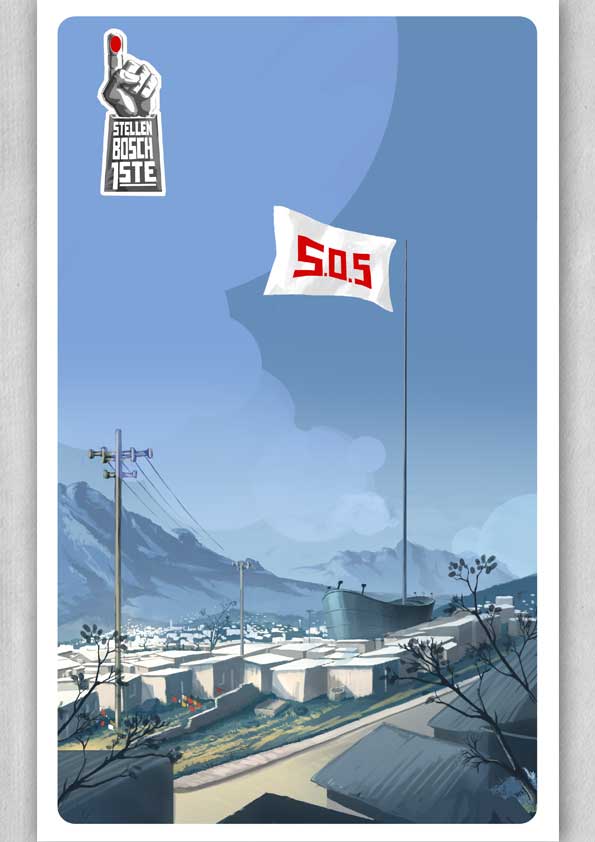
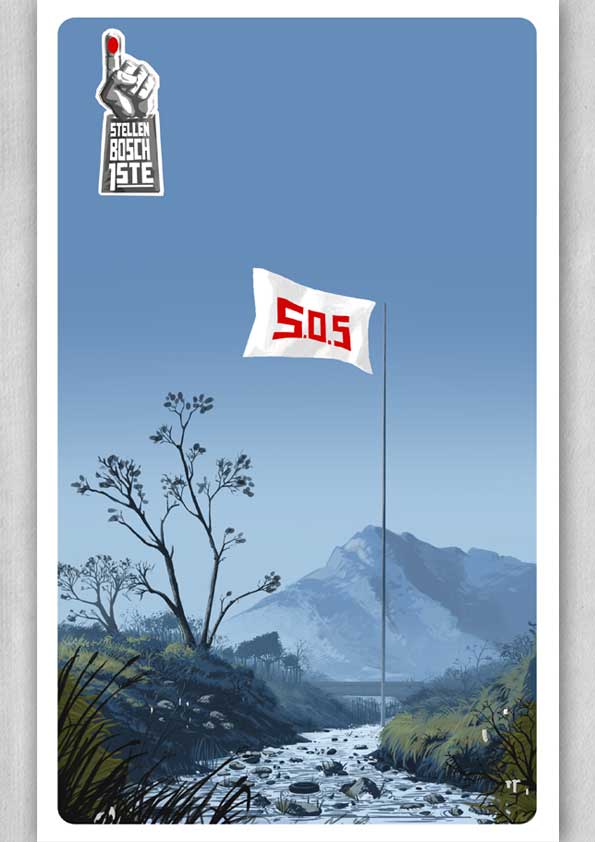
The Brief: Stellenbosch Eerste, a non-political initiative, wanted to address voter apathy by highlighting local issues that affect Stellenbosch residents. In phase one residents were reminded to register to vote, phase two reminded them to cast their ballot.
Creative Solution: Am I Collective used 50’s style political poster art as inspiration to portray a beautiful town in stages of decay due to bad administration. The posters addressed the various local issues such as dirty rivers and over-extended dumping grounds. It ran in the local press and as street posters. Registration went up 10% on previous election years.
Creative Team: Am I Collective
First printed in the May 2011 edition of AdVantage Magazine in my Create column.
I was fascinated to read earlier this week about Daily Maverick’s irrepressable entrepeneur Branko Brkic’s plan to launch SA’s first iPad daily “newspaper” under the Maverick brand. It’s a concept that I’ve been keen on ever since laying my hands on an iPad and I too have spent many hours doing sums on the back of knapkins wondering if they can be made to work.
When I first looked at Branko’s proposition I thought he was bonkers. “There’s no way he can make this work,” I thought.
But then I took the time to do some calculations based on the assumptions that he has put out there already and from this we can glean some insight into his business plan.
This is what we know:
There will be a monthly subscription of R395
Subscribers will have to commit to a two-year deal
Branko targets an eventual market of between 20,000 and 25,000
He plans to offer around 40 articles a day
So, lets do some numbers (disclaimer: I am not an MBA, an account, or a business manager, so please challenge my assumptions/calculations)
Well, the numbers produce quite a surprising result and a very healthy potential margin. By my calculations, if Branko can hit the target he has put out there, by month 24 he will be producing revenue of around R3,2m a month.
Since, unlike traditional publishers he has no costs of printing or distribution, his major cost will be the cost of his content. In traditional publishing, cost of editorial as a percentage of revenue, in my experience, can range from between 7% to around 20%. Let us assume that Branko is going to spend big on content (40 stories a day is no small potatoes). So I calculate that he would commit at least 30% of revenue to content which will allow him to ultimately invest just south of R1m a month – which is money you can do something with.
Interestingly, my calculation of his revenue per edition (less the cost of the iPad) comes in pretty much in the same ballpark as a top-end daily newspaper. And he has the added incentive of offering the sexiest consumer technology on the market with this deal.
And of course, a loyal subscriber base of 20,000 could also produce a healthy advertising revenue stream too, although dwarfed, I would imagine, by the subscription revenue.
Of course my calculations don’t take into account a very significant marketing investment that will be required for this project and other back-office costs which are part of any business. He is also going to have to access a significant amount of capital to ensure the supply of the technology platform he is promising.
What are the weaknesses in his apparent assumptions?
1. That there are 20,000-25,000 potential buyers for an iPad in South Africa and who would want to lock into such a deal over two years. I don’t think this is unachieveable but anticipates a huge growth in the market or Branko’s ability to almost single-handedly create the market. There are no reliable stats of iPad penetration in South Africa that I have seen and if there are I would be fascinated to see them;
2.The iPad is not a closed garden. There is no guarantee that users would stay loyal Maverick app users during the course of their subscription or afterwards;
3. That there is a great enough supply of iPads locally to meet his anticipated demand;
4. What do you do when the two-year-deal is over? Offer a technology upgrade to keep the proposition or hope to convert these users to a continuing content-only subscription? If it is the latter, I anticipate he will have to factor in a very significant churn rate;
5. His real revenue per edition is close to $1 a day. Over the long term that cannot be the price per edition for a subscriber as it will be enormously out of kilter with expectations in the digital space so he will have to reduce that cost by either finding significantly higher volumes of subscribers or in-app revenues from advertising or similar.
What are the strengths of his model?
1. He is hitting the sweetspot of the trap that traditional publishers find themselves in as they look to this new platform. Calculations based around brands with the traditional cost structures of print products do not allow for competitive pricing in the app or tablet space;
2. He could have the edge in content investment which could provide him with a significant edge into the future
3. He does not have to restructure an existing business to make it happen.
Overall, I think this is an exciting proposition. I’ll be watching it closely. Heck, I’ll probably be among the first signing up for the deal. Maverick’s content is great and I’d see value in more of it – and I ain’t going to say no to an iPad2 either.
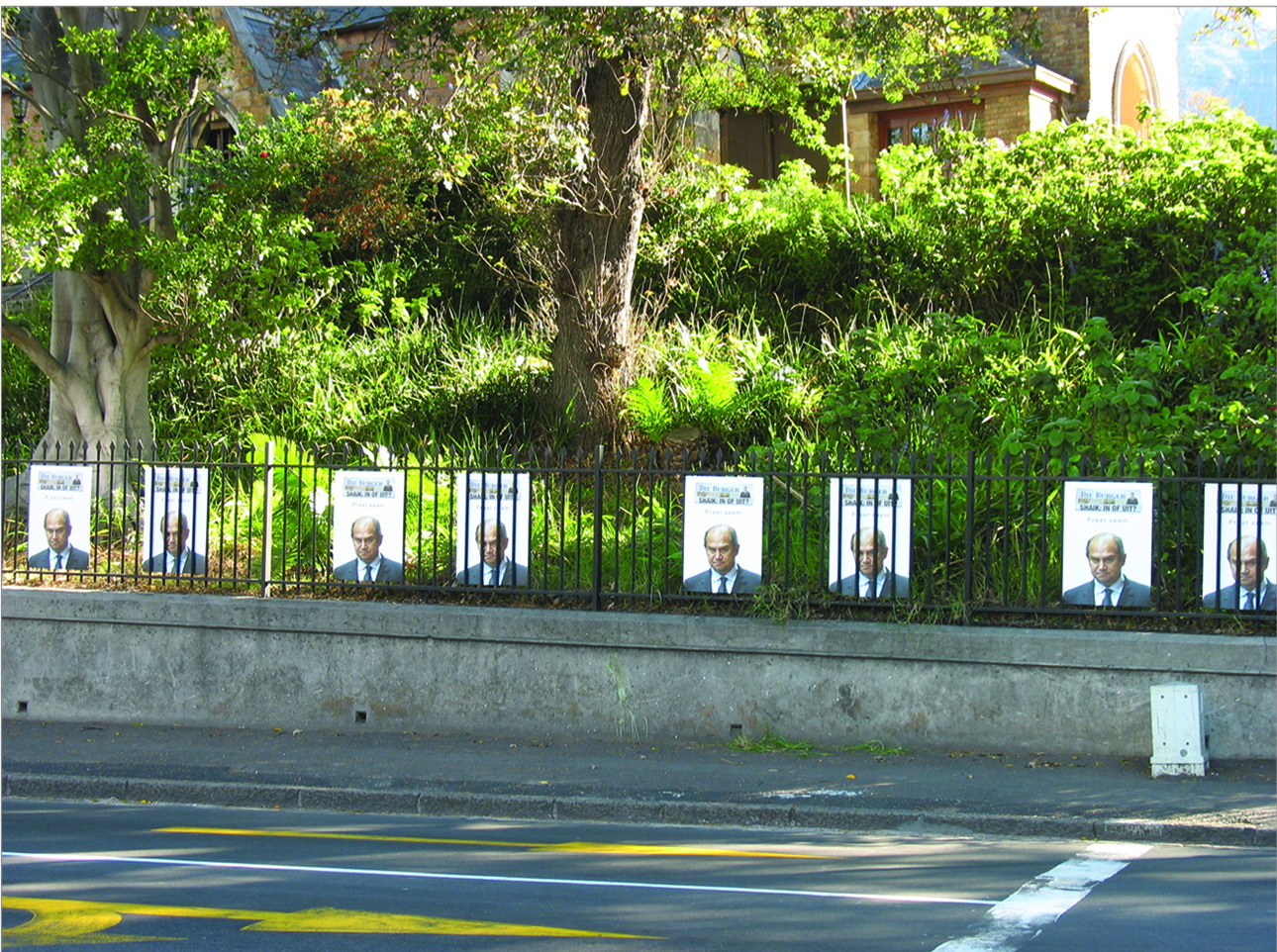
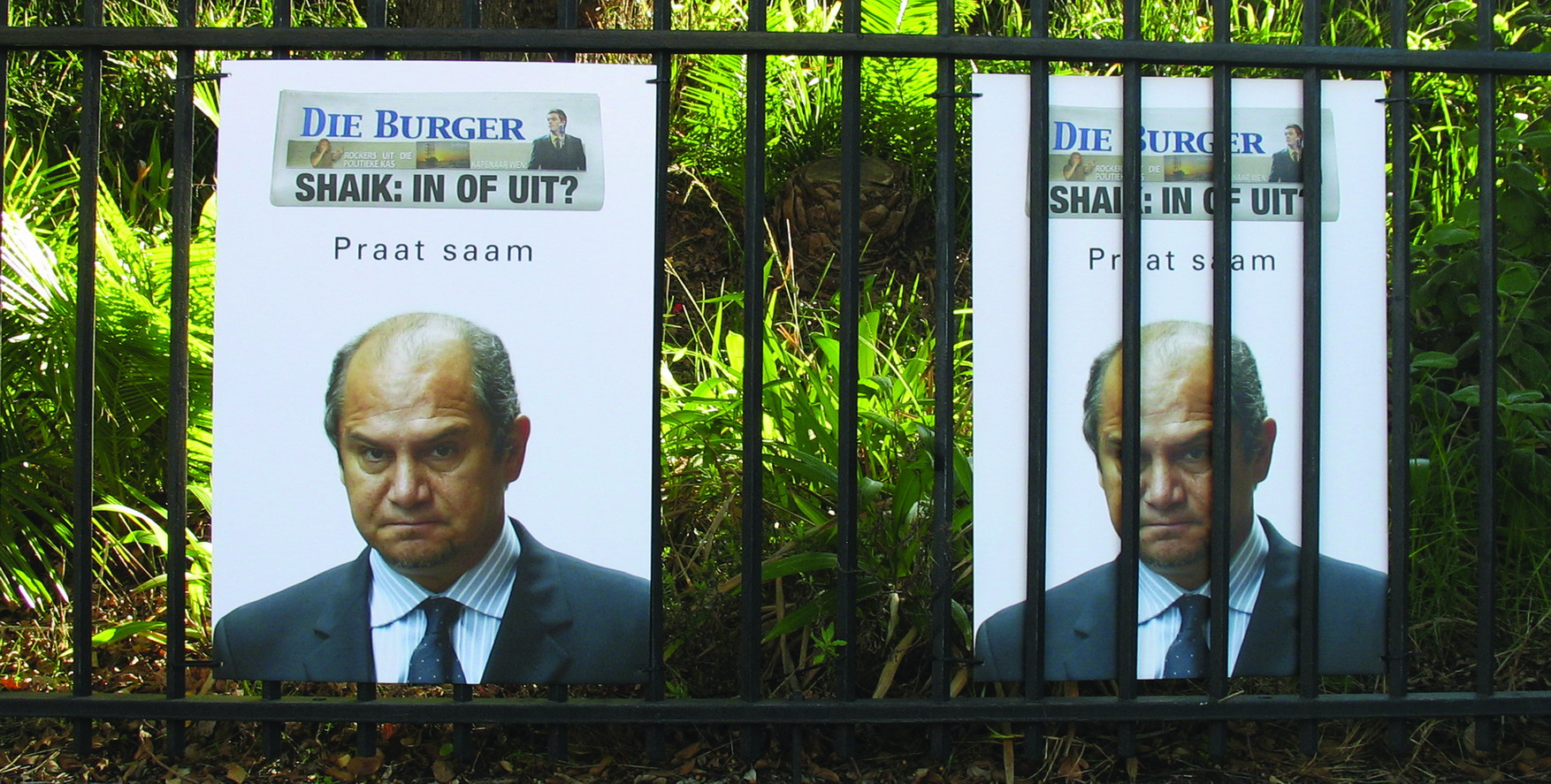
Posters of convicted fraudster and special friend to President Zuma, Schabir Shaik, who has been in and out of jail a number of times, were placed behind and in front of railings around Cape Town. The headline asks: ‘In or Out?’
Client: Die Burger
Agency: DraftFCB
Creative Team: Executive Creative Director: Francois de Villiers, Creative Directors: Doug Larter and Aaron Harris, Art Director: Riaan van Wyk, Copywriter: Andre de Wet
Jason Xenopoulos has been part of South Africa’s internet economy about as long as we have had one. One of Internet Solution’s first dial up subscribers, Xenopoulos has seen the boom and bust cycle of dotcom investments better than most. He recently re-emerged as an important player in the South African digital arena through his role in facilitating and leading the merger of three digital businesses, mobile expert Brandsh, digital agency Stonewall+ and content management firm Cambrient, to launch Native.
Xenopoulos studied film making at New York University in the early 90’s. He came back to SA to make a movie based on the novel Na die Geliefde Land (Promised Land) by author Karel Schoeman. While he waited for enough money to be raised he got involved in writing company scripts for VWV studios. Research for a sci-fi screenplay set in Jozi in 2020 led him to explore the Web at the same time as its’ marketing potential become obvious and he soon helped establish VWV Interactive. The company grew to 60 people in 18 months and soon acquisition hungry Primedia had purchased a sizable chunk of the VWV business.
Primedia now tasked Xenopoulos with establishing Primedia Entertainment. He was partly responsible for helping to raise the R1.5 billion Primedia needed to acquire Ster Kinekor. In the meantime Primedia was also eyeing the success enjoyed by rival Naspers in its listing of M-Web. It already owned the iafrica.com brand and Xenopoulos was moved to put together an online business Primedia could list off. They gave him 90 days.
Aged 28 be became the CEO of the JSE listed Metropolis Transactive. The listing raised a R100 million. Metropolis proceeded to, rather famously, burn through that entire amount in little over two years. The dot com bubble burst before the business could be sold or refinanced, and the company vanished as quickly as the original R100 million. Xenopoulos retells the story matter of factly.
Asked what he learnt during that tumultuous time Xenopoulos says he learnt mergers are not made on paper. It’s not bits of Lego you put together. Mergers are not about structures or even strategies though of course you need both. It’s much more nuanced, it’s about people, and the chemistry between them. Xenopoulos, like many dot bubble entrepreneurs, learnt the hard way, but he seems relieved to have learned and found value in the experience.
Xenopoulos finally got to make his film, Promised Land, with the help of deferrals by staff and suppliers, and later directed Critical Assignment, which was sponsored by Guinness beer as a branded content project. It lead him to advertising and Y&R where he served as Executive Creative Director. Later still he got involved in film production company 2.0 Media where he served as Chief Creative Officer.
Xenopoulos wanted to build a digital agency again, but realised it would be difficult for a production company to move up that ladder, which convinced him he needed to look beyond 2.0 Media. The Brandsh/Stonewall+/Cambrient marriage was the result and funded from the cash in the bank of the companies involved.
Native will evolve as the industry evolves, says Xenopoulos, but for the moment it is focussing on fulfilling the role of “full service digital agency.” Xenopoulos agrees a turf war is emerging between ad agencies beefing up their digital skills and digital agencies taking on a more strategic role. Net#work BBDO Cape Town recently rebranded as 140 BBDO with a focus on brand ‘curatorship’ and outsourced production where required. Native, he promises, will ultimately be digital at its core but fully integrated across all channels. It will increasingly become an advisory business, says Xenopoulos.
Who will win the war? Xenopoulos is betting on the digital side, which is where the momentum lies, while traditional agencies have to reinvent themselves against the current. He would rather come in with the new than from the old. He is doing it minus the moneymen hoping for quick listings and with little care for the people Xenopoulos has accepted professional responsibility for. The Metropolis man has long gone, it’s clear, and in his place, finally, a CEO.
With 500 000 apps in the Apple App Store, 250 000 in the Android Market, and the rest in the tens of thousands, how do you choose from among so many apps? Does size count? Does popularity count? ARTHUR GOLDSTUCK sums up the state of play, and a few of his favourite apps.
Recently the Apple App Store reached the landmark figure of 500 000 apps, double the Android Market’s 250 000 apps. At the same time Research In Motion declared that BlackBerry’s App World had reached 25 000 apps. And the Windows Phone Marketplace, it was also announced, holds 18 000 apps. For those who have been clinging onto the 20th century, when you bought something called “software”, an “app” is the same thing, just smaller, cheaper and – its users like to think – cooler. Oh, and it’s also more abbreviated. It’s short for “applications”. Take that, 20th century!
The number of apps is often used as a proxy to keep score of who leads the race for control of the mobile phone and tablet markets. But in truth, is a choice of 500 000 apps better than 250 000? Or even 18 000? Yes, if it means that any app you can imagine is available for your phone. No, if any app you want or need is available among the smallest of the app stores.
That said, numerous apps that compete across Apple and Android devices are not yet available for the BlackBerry, which suggests that size does count.
If an app is free, so much the better, but the paid-for apps tend to be better, since someone has an incentive to work harder on it. In the App Store, the average price is $3.64 for an app, so it won’t break the bank. But 37% of the apps are free, so you don’t need a bank either.
The irony of the app universe (and no, that one’s not taken yet, so feel free to capitalise it and challenge the rest with your App Universe) is that many users tend to download only the 10 or 20 most popular apps. They choose from a list based on which apps have been downloaded by most other users, or those with the highest ratings from these users. This has created a massive industry based simply on pushing up the rankings and downloads of apps in order to get more visibility. This, in turn, feeds popularity and sales in a self-feeding cycle.
In other words, you can’t trust any app store/market/marketplace/world to tell you which the best apps might be. Even referrals from your friends will be tainted by this artificial boosting. The key, in truth, is to find the apps that are meaningful to you, rather than to the billion people who have downloaded apps before you.
So, without wanting to sway you in any way, these are the five apps I’ve found most useful across all markets/worlds/etc. All are free.
Accuweather: Looks great on iPhones, integrates beautifully with BlackBerry, gives me the weather, wherever I am in the world.
Shazam: Listens to music, whether on radio or your own humming, identifies the song, and lets you buy it over the air.
Gmail: the most reliable app for both synchronising and standardising your mail across all devices, whether desktop, tablet or phone.
WhatsApp: an instant messaging app that crosses the live-chat divide between BlackBerry on the one hand and iPhone and Android on the other. You’ll hear much more about this one as it takes on BBM and MXit in the South African market.
BBC News: While other news organisations wrestle with business models and interface issues, these old-timers quietly get on with the job. The iPhone version even has live radio built in. It never fails to amaze me.
* Arthur Goldstuck heads up the World Wide Worx market research organisation and is editor-in-chief of Gadget where this story first appeared. You can follow him on Twitter on @art2gee

 HelloComputer strives to make technology more accessible to the rest of us because it sees technology is an enabler rather than an end in itself. In fact their tag line states “We make Digital more Human.”


 I still remember a conversation with Brkic at the time, in which he told me he was betting the farm and that Empire had better work. Empire was thick, it had fantastic content under the able hand of editor Kevin Bloom, and it didn’t make it. Because fat magazines with great content cost a ton of money to produce and trade spend in that sector is disappointing, to say the least.