Weekly Top 10: Fastest rising search terms from South Africans on Google

With the help of Google Trends we are publishing the top 10 searched for phrases (minus the sexy stuff of course) by South Africans on Google over the previous seven days. Sport and the Golden Globes dominates our fastest rising web searches chart this week.

lance armstrong

Fastest rising web searches

golden globes 2013 Breakout
www.tshwane.gov.za Breakout
lance armstrong +1,100%
cape verde +750%
australian open +550%
two oceans marathon +200%
afcon +190%
afcon 2013 +120%
weather sa +60%
sasol +50%

Top 10 search terms

1. facebook
2. google
3. gumtree
4. youtube
5. gmail
6. you [tube – ed]
7. login facebook
8. fnb
9. yahoo
10. absa
11. news
12. unisa
13. game
14. standard bank
15. weather

Top 10 search terms  (minus search, mail or social terms)
1. gumtree
2. fnb
3. absa
4. news
5. unisa
6. game
7. standard bank
8. weather
9. games
10. news24

(For past data click here)

* Google Trends is intended for general analysis of volume patterns.
* When you see Breakout listed instead of an actual percentage, it means that the search term has experienced a change in growth greater than 5000%.

Magazine covers we love (in the new year)

MarkLives.com runs a regular slot featuring the best local and international magazine covers every week. We recognise well thought out, powerful and interesting (and hopefully all three in one) magazine covers and celebrate the mix of pragmatism, creativity and personal taste that created each of them. By media blogger MediaSlut.

INTERNATIONAL

GRID, January 2013

Grid

Striking and something I haven’t seen before, and definitely grabs your attention. I just feel sorry for the poor model!

The Portland Mercury, 2 January 2013

Portland MercuryFor their first issue of 2013 The Portland Mercury created an interactive cover. I first thought it was in support of Pussy Riot… But they gave readers the chance to cut out their own ‘Winter Mask’, and ran a competition inviting readers to send in their pictures of how they made use of it. I love it when covers interact with its readers! And here are some of the entries, and the winner.

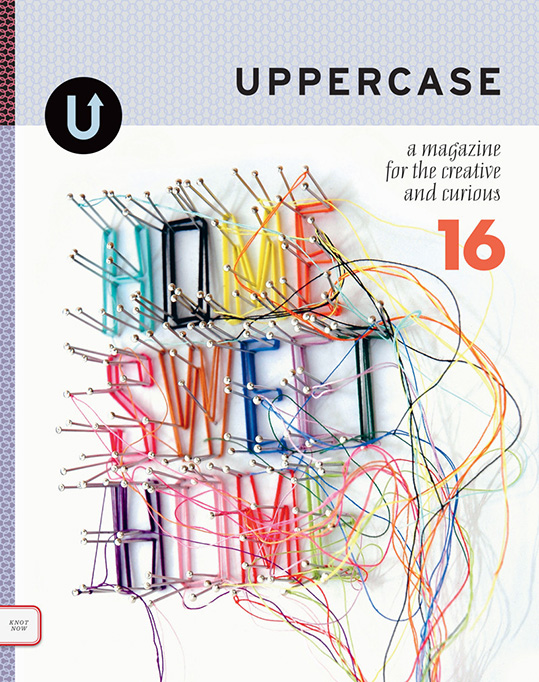
UPPERCASE, Issue 16

Uppercase

Very unique, pretty, relevant to the theme and magazine, and just plain smart! If you haven’t seen how a magazine is printed, you can view this little video which shows the printing of this specific issue. Visiting a printing press is something every magazine lover should do at some stage!

LOCAL

House and Leisure Food, 2013

House and Leisure Food 2013

At last! The 3rd annual House and Leisure Food issue! And it’s a beautiful blue cover with a ‘mash’ of green. A cover that’s simple, and states exactly what you get.  The 2012 issue showed up as number 2 on my TOP 10 list of Food Covers for 2012. You can view this cover, and my Top 10 selection by clicking here.

– The (for now anonymous) blogger behind MediaSlut knows way too much for his own good about media in South Africa. Magazines in particular. His mission is to show when South African magazines might fail, but most importantly, succeed. If you’re looking for a library about South African magazines and news, your one-stop pitstop is MediaSlut. #MagazinesForTheWin

– Find a cover we should know about? Tweet us @marklives and @mediaslut
Sign up for our free newsletter!

‘Native advertising’ digital magic of the hour

by  Bob Hoffman (@adcontrarian), San Francisco Bay You ready for the new online advertising miracle?

The digital advertising hype-cycle is growing shorter all the time. Apparently the online lemmingocracy has grown tired of “content” as the digital magic of the hour. Now it’s all about “native advertising.”

What is native advertising? Well, according to Solve Media…

“Native advertising refers to a specific mode of monetization that aims to augment user experience by providing value through relevant content delivered in-stream.”

Oh. Okay.

Now let’s pretend for a minute that we live on the planet Earth and we talk in a language that is comprehensible. Here’s what that bullshit means:

Native advertising is advertising that is pretending to be something else.

It’s Promoted Tweets on Twitter, and Sponsored Stories on Facebook, and any other kind of online advertising that the publisher is disguising as part of a story or part of their content.

Desperate magazine publishers used to do stuff like this. If you bought a large enough ad schedule they’d sneak some positive mentions of your product into their editorial pages. It wasn’t called native advertising. It was called unscrupulous bullshit. And you didn’t have to pay for it.

So here’s what is really going on. We are at the beginning of Stage 3 of digital delusional thinking.

Stage 1 started when we believed that online advertising would be more engaging and effective because people would “interact” with it. This delusion crumbled when we found that people had no interest whatsoever in interacting with display advertising.

In order to cover our tracks, we needed a new story. So Stage 2 was developed. We decided that online advertising was really a “social” activity. We proclaimed that consumers wanted to have “conversations” about brands with each other and with us. This delusion died the day Facebook went public.

Now we are in Stage 3. Once again, we need to cover our tracks. We need to have a new story to tell our clients and change the subject from why we wasted their money on social media marketing.

Stage 3 started with “content.” But now that content is being exposed as just another over-hyped online daydream, “native advertising” is evolving. And what is it? It is really just advertising disguised as content.

Does this stuff work? Adweek doesn’t seem to think so. In a story they published a while back…

“…a new survey…asked online adults what they thought about three native ad formats—Twitter’s Promoted Tweets, Sponsored Stories on Facebook and video ads that appear to be content. 

According to the survey, a majority found the ads negatively impacted or had no impact on their perception of the brand being advertised.

People had the strongest reaction to sponsored video ads, with 85 percent saying they negatively impacted or had no impact on their perception of the brand. Sixty-two percent said the same of Promoted Tweets and 72 percent of Sponsored Stories.


The survey also revealed that 45 percent found Promoted Tweets misleading, while 57 percent and 86 percent said the same about Sponsored Stories and video ads, respectively.”

Of course, the data in this study is all self-reported, so the study itself is pretty much useless. But it’s an indication that “native advertising” is gaining traction as the new miracle du jour.

So get ready for a blizzard of bullshit about the magic of native advertising. And be prepared for every client bandwagoneer to insist that his advertising plan includes native advertising. Remember one of The Ad Contrarian’s timeless axioms… there’s no bigger sucker than a gullible marketer convinced he’s missing a trend.

– The Ad Contrarian is Bob Hoffman, ceo of Hoffman/Lewis advertising in San Francisco and St. Louis. Hoffman is the author of The Ad Contrarian and 101 Contrarian Ideas About Advertising. Reprinted from his blog The Ad Contrarian.

– Industry profiles you’ll make time for. Sign up for our free newsletter!

Africa Style: Afro-Gangnam Style — seeking out real relevance

by Masingita Mazibuko The Korean hit Gangnam Style has taken the world by storm, notching up close to 1-billion views on YouTube.Masingita

Psy’s parody of the folk living in the affluent and trendy Seoul suburb (click here for more details) highlights their rapid increase in personal wealth, manifested in lavish and conspicuous consumption. But is South Korea the only guilty country? And more than that: are they even guilty?

Turning the gaze to South Africa one can easily draw parallels. It is easy to frown on the prevailing glitz and glamour of so called ‘new money’ in our country. However, societies remember and build on where they come from. Self-expression and the desire to be noticed are not alien to many African cultures.

In fact, African cultures are very often expressive cultures where emblems and outward facing symbolism carry social relevance. For example, black culture marked social categories of age, gender, kinship, and rank in their attire and etiquette. A woman’s clothing indicated whether she was married or not, and coming-of-age ceremonies involve display of self-pride and self expression.

And growing up everyone dressed up in their best gear for church on Sunday, holidays like Christmas and Easter, weddings and funerals.

Many will recall the act of ‘swanking’ where hostel-dwelling men put on their best gear to showcase their ‘swanked’ self. This involved status brands like Crockett & Jones and Florsheim shoes (currently approximately $140), Dobshire clothing, and so on. These are seriously exclusive and expensive brands way beyond the pay package of hostel dwellers

Putting Gangnam Style in context in our nation, how does one ensure that this is not lost in the melting pot of colour at end of the rainbow? There is an increased desire for self-definition, recognition and acknowledgement.

In fact, I believe we are a society still ruled by a pre-defined framework and that brands often pander to the prevailing pent up desires where wealth acquisition is taking up a perverse fashion. South Africans can’t be fully expressed on a straight line ranging from rich to poor.

On the one side of the coin, the implication for brands of Afro-Gangnam Style is the risk of being associated with the emptiness of wealth rather than seeking out real relevance and addressing an enduring need.

On the other, brands can ensure greater distinctiveness through a more textured spectrum, especially in a society so diverse. That is, they can be used as ‘words and symbols’ of expression to give self definition and authentic direction.

Some brands are taking this path – Woolworths with its MySchool Card and sustainability focus, Levis with its successful launch of the Eva gangnam style‘Bootlicious’ range (African inspired), KFC with Add Hope and Primedia with LEADSA.

There is also the young and highly expressive youngsters Smarteez, who have created a distinctive street fashion label that has caught the eye of the international fashion media, and the more established Stoned Cherrie with its more modern expression of African wear. For me, both these labels express a real desire for self-definition and ensure that authentic African expressions are not lost.

There is a low-key trend which Added Value has termed ‘Afro Luxe’, which marries the very modern world with Africa’s very traditional one. It is not international expression with an African spin; instead it is modern African luxury. The trend regards luxury as authenticity, vibrancy and dynamism, and taps into a growing desire of South Africans to do things their way and express who they are in the lifestyle choices.

For brands, the opportunity exists to go beyond the obvious and truly delve into our culture to ensure richer granularity.

Some may question whether this is the role of brands, I say the more we do this, the more South Africa can influence the world at large.

Masingita Mazibuko is an Associate Director at brand development and marketing insight consultancy Added Value. For more insights, visit www.added-value.com/source/. Mazibuko is a regular columnist for MarkLives.

Sign up for our free newsletter!

(Not) Ad of the Week with Oresti Patricios – Beer brands and the Great White Hype

(Not) MarkLives Ad of the Week with Oresti Patricios – Beer brands and the Great White Hype

jack black the great white project

I love the idea of craft beer. But let me unpack that statement so that it’s not just a glib say-so.

Beer is a refreshment that just about everybody loves – easy to understand. But I love the idea of craft – that time honoured tradition of ritual and the observation of sacred practice. That’s why although I wouldn’t label myself the world’s greatest beer drinker; I am passionate about craft beer because it is all about creating something that consumers can enjoy. It is the making of a beverage according to a time honoured tradition or on a small scale or using only the best ingredients.

After years of domination by the SABigboys, in the past few years the local craft beer market has really opened up. Yes we’ve always had craft beer, but for the first time restaurants, pubs and eateries are beginning to understand the complexity and brand opportunity in beer as much as there has been in wine.

There will be a big argument as to why this is, but in my book the guys most active in changing market perceptions about beers have to be those lads at Brewers & Union. Yes, independent brewers have staged their own revolution, but if anyone knows about marketing it has to be those people who once founded Vida e Caffè -Brad Armitage and Rui Esteves.

It was Armitage and Esteves who largely put coffee on the map (yes, that’s another controversial statement), and I believe they’ve done the same with beer. The story goes that the two lads met in Durban while surfing well over a decade ago, founded the red coffee shop that became a legend, and then sold the business six or seven years ago. That’s when they decided to do the same thing for beer that they had done for coffee.

And so the duo of marketing whizzes set of on a journey that took them across the globe (well a large part of it) to bring the best artisan beers back home. Their first attempt was a corked beer that failed dismally in the market, because consumers just weren’t ready for anything that avant-garde. We were only just cutting our teeth on craft beer, and for the most part still under the stranglehold of that massive brewing monolith. We hardly knew our hops from our wheat.

But under the brand collective Brewers & Union, Armitage and Esteves persisted and started importing crafted beers from Europe into the country. The big thing for the beer-loving pair is quality rather than mass commercialisation. But what’s been crucial to the growth of their house of handcrafted brands is educating the market – both restaurateurs and consumer palates.

Initially Brewers & Union struggled to get their beer into restaurants and knew they’d be dead in the water if people didn’t have some place where they could enjoy the beer, so they opened up a ‘beer salon’ under the old NG church at 110 Bree Street, Cape Town. The vibe is chilled and there’s great tasting food, and awesome local music. Needless to say it is the place where all the cool people go.

This and the ‘We love real beer’ association which hosted the ‘We Love Real Beer Craft Festival 2012’ have helped spread the word. As have a dedicated direct marketing programme that Brewers & Union has with distributors and restaurateurs. The accent is on quality and the personal touch – going that extra mile.

This is why I was so excited to see that another craft brewer had come out with what looked like a really clever campaign.John Jack Black was a brewerfrom the New York State in the US, who had a maverick spirit and was passionate about bringing the freshest beer to people who loved their ales. His spirit has been adopted for a Cape Town based brewery that makes beers in small batches, with the same care and dedication.

To be honest when I clicked on the brand’s new campaign the result was disappointing to say the least. The idea is pretty obvious, and isn’t executed in a way that’s fun or cheeky or that offers some sort of redemption to what is a fairly flaccid ad. There’s a ‘behind the scenes’ type video that accompanies the ad, but it is fairly cringe-worthy and I found it uncomfortable and difficult to watch, precisely because of that fact.

It doesn’t matter how much your ad cost to make – even if it was a couple of beers. But if those beers were awesome, the ad has to be just as good as the beer or else you’re not doing your brand any favours.

Craft and artisan beer has immense opportunity in marketing. Don’t hash that by being obvious, clumsy or creating bad ads. The time and effort you invest in your marketing should be just as considered as the time and effort you invest in your craft beer.

The Ad

Behind the scenes (Watch at own risk)

Ad of the Week is published on MarkLives every Wednesday. See past selections here.
Oresti Patricios is the CEO of brand and reputation analysis company Ornico.

– Industry profiles you’ll make time for. Sign up for our free newsletter!

The Dissident Spin Doctor: 2013 sees PR enter the boardroom

by Emma King (@EmmainSA) I can’t tell you what this year’s big business start-up or new social media phenomenon will be (oh, that I wish I could). But we can look at current trends and begin to plan around what we know will happen, so here are my thoughts on the big things we will see in 2013, and how we can prepare our businesses.

 1.       PR gets (way) more important Emma King

We’ve said this for a long time, but it’s never been truer. In a time of change, it’s important for businesses to manage their reputation efficiently, build relationships, and communicate clearly about what they are doing and why. Corporates realise that these practices need to be built into their very way of working, rather than trying to stick PR Band-Aids over their fundamental business issues.

It’s heartening therefore to see PR entering the boardroom, as with the recent rise of SABMiller’s ex-corporate affairs chief, Sue Clarke, to European MD. It’s recognition that reputation has a very real impact on the bottom line.

Hand in hand with this comes further collaboration between disciplines. I’ve already spoken about the need for integration, and for PR t to sit within creative planning, rather than stuck on as an afterthought here [link to previous article].

Communications professionals arebecoming increasingly responsible for managing the minute-to-minute face of a brand or business – and they cannot do this within virtual silos. Collaboration of talent and experience, irrespective of job titles or department, is crucial for brands to thrive in our super-connected future.

What does this mean for us? Experienced and heavy weight communications professionals need to be included in planning, and have an impact in the boardroom. Those businesses that strike it off a ‘nice-to-have’ rather than an essential, or, even more worrying, entrust their communications to a lightweight PR manager or junior social media intern, do so at their peril.

 2.       PR agencies become content producers

Advertising agencies are traditionally thought of as the content producers, but 2013 is the year that PR specialists become content producers in their own right.

The times of farming out generic press releases are long gone, and to connect and engage audiences we all need to be story tellers.  This is not just important for brands –corporates weave a mythology about their business develop reputations that are hard to crack at time of crisis, look at Google or Apple for example.
Within all of this there needs to be substance. 2013 will see data becoming cheaper and ever more available, so fluffy PR speak will be tolerated less. And conversely, intuition remains key – those brands who overanalyse and nitpick an idea or content to death, will lose out in the fast-paced and instinctive work of digital and social media.

The learnings for us are as follows: we need to be content producers, not just news producers. Consumer wants stories – and they are used to be told them in visual ways, though videos on Youtube, memetastic viral pictures and interactive videos and downloads. That means staffing and upskilling so that PR agencies can create this content – not outsource it.

3.       Activism continues to grow

It seems forever ago, when digital communications came to the fore as a weapon for the man on the street to drive global change. Globalism means that underground activism continues to become mainstream.

For corporates this means a continued demand for transparency, information and real time response. Consumers demand that brands be accessible, and businesses need to be ever more social. They must invest in telling micro-stories – little stories within larger stories, which connect consumers with companies that are compatible with their values and interests.

This means we must ensure the brands we are custodians of are transparent, connected and work hand-in-hand with communities within which they operate – whether real life or virtual. And we need to ensure that, in the very foundation of the business, we are answering questions about the role of corporates, over and above making a profit.

4.       The continued growth of the niche

One of the greatest things that the digital age has bought about, is the power of the niche. No longer are we confined to creating mass communications which hit the lowest common denominator. We can create super-targeted content to engage readymade communities and dedicated social networks.

Having said that, I still think TV will continue to have staying power – purely because it connects to all of our other screens. One only needs to see the way we consume superevents on YouTube to see how we will consume TV in the future. Again, we as PR professionals need to look at ourselves as content producers – and present brand news as such, rather than via the dying press release.

When I started out in PR, it was so different to today. I used to sit next to a fax machine faxing out press releases, and we had to find out information without the help of Google (it seems impossible now). But we need to change and be relevant, or we become outdated and drop by the wayside, as many PR agencies have.

A friend fittingly said the other day, after a school PTA meeting, “We don’t know what the future holds, we can just equip our children with skills for jobs that we don’t even know will exist.”

Emma King is Head of PR at The Jupiter Drawing Room (Cape Town). You can find her on Twitter at @EmmainSA

– Industry news you’ll make time for. Sign up for our free newsletter!

Media Future: Gadget war moves into the lounge

Arthur Goldstuck (@art2gee) Sony, LG and Samsung all stole the show at the International CES last week with TV sets that, once again, raised the stakes in both technology and marketing.

The war for domination of consumer electronics has shifted from the handheld portable gadget to a device that is firmly ensconced in the living room.

At last week’s International Consumer Electronics Show (CES), the launchpad for the industry that owns Las Vegas in January every year, smartphones took a backseat. One dazzling TV set after another was unveiled to oohs and aahs – and aarghs from those who had just bought Arthur Goldstuckthe previous state of the art version.

There was little to choose between the flagship screens of the world’s TV giants, with the big three, Samsung, LG and Sony, all unveiling versions of the new Ultra High-definition (UHD) 4K standard – sets with double the resolution of High-definition TV.

Sony stole a march on its rivals, however, with the world’s first 4K TV using OLED (Organic Light-emitting Diode). Samsung, for its part, put out a 3D OLED TV.

While OLED is becoming common on cellphone screens, its high cost of materials and production had kept it from big screens. Now, it seems, the stakes are high enough for TV manufacturers to ignore the fact that the devices are priced out of reach of the market. The desperate shortage of tailor-made content is glossed over. In this battle, mindshare is as important to manufacturers as market share. Being first with any size, format or innovation is a goal in its own right.

Why are bragging rights so important? The real issue with high-end TV is that the manufacturer only has one shot at winning over the consumer. Unlike smartphones, which are typically replaced every two years, the TV set has a lounge life of five to 10 years. Once the purchase has been made, the losing brand may not have another chance to win over the customer for up to a decade.

With smartphones, they can recover from mistakes; they can survive having to play catch-up; and they can win back lost customers with the next roll of the dice. When they lose a TV customer, on the other hand, there is rarely a second chance in the product future that is currently mapped out.

As a result, convincing customers to go with a specific brand is as important as giving them what they want from the device. Being positioned as a technology leader is a key part of that convincing.

Enter 4K. The first 4K sets unveiled a few months ago by Sony and LG – on the same day in South Africa – respectively cost R279 000 and R160 000. That meant a market of perhaps a few dozen customers. But anyone seeing either of the sets in action on shop floors would have been convinced that the manufacturer had entered the future of TV. Despite the technology not yet being built into lower-end devices, the perception of technology leadership would still provide a halo effect over these sets.

For Sony, the stakes are high. Speaking to South African media at CES this week, Sony senior vice president Masashi Tiger Imamura acknowledged that the company was on a mission to turn around the loss-making TV business.

“The most important thing to us was to make a very attractive product for  the market,” he said of the 4K OLED set. However, it was also important to understand how the TV had evolved in the way it was used.

“TV used to be a very passive device. Now it has become both a passive and active device. TV is not a standalone product anymore.“

Every one of the major manufacturers also unveiled more advanced versions of the content services available on their Internet-connected TVs, with the Samsung and Panasonic screens at CES displaying remarkably similar interfaces for accessing Web-based content. Increasingly in the future, we can expect to see TV makers attempt to differentiate their devices based on innovative content services.

Imamura does not believe, however, that competition for higher picture quality has ended, or that content is the only way to differentiate.

“I believe there is still a lot of room to improve picture quality with new technology like OLED. The issues are always around the customer getting real value, how much they will pay, and what kind of volume we can sell. It’s a balance between demand and supply and technological advance.”

As a result, he said, 4K represented both a risk and a challenge to Sony.

The excitement it created at CES suggests that, from a marketing point of view, the risk has paid off.

* Arthur Goldstuck heads up World Wide Worx (www.worldwideworx.com) and is editor-in-chief of Gadget. Follow him on Twitter on @art2gee. Reprinted from Gadget.

Industry news you will make time for. Subscribe here. It’s free!

The Switch: What contract law taught me about agency briefs

The Switch, a new MarkLives column by Alistair Mokoena (@AlistairMokoena) As a trained lawyer, one of my favourite legal subjects was Contract Law. If you memorised the textbook definition of a contract you were guaranteed five marks in the exam and if you could cite cases that helped illustrate the various elements of a contract you could score a further five marks and so it went. The definition of a contract is a legally binding agreement between two parties where one party to the contract undertakes to perform an act or deliver goods or services to the other in exchange for payment.

For a contract to be enforceable a few requirements have to be met. Firstly the contracting parties have to be legally capable of contracting. In alistair makoenaother words they should have the authority to contract. Secondly there has to be consensus or a meeting of the minds between the parties. Any misunderstanding or error in relation to any part of the contract renders the contract null and void. Thirdly the contract has to have a win-win outcome for the parties. In other words both parties have to benefit.

It is my submission that applying these rules to advertising briefs would be of great benefit to the creative development process. If anything, they serve as a good barometer for what makes a good advertising brief.

An advertising brief is meant to assist in converting strategy into magic. In other words a brief is meant to distill a client’s strategy and marketing objectives into a concise document that inspires the flow of creative juices.

The more concise the brief the less likely you are to see confusion and misinterpretation of what needs to be achieved. Lack of clarity and brevity in a brief often results in a laundry list of Marketing objectives as found in Phillip Kottler’s Marketing textbook. The creative output will most likely be a confusingconvoluted message about nothing.

The important thing about strategy though is that it’s about making choices which help you win customers’ hearts. It is not, contrary to what we’ve seen in many briefs, the kitchen sink.

Ever received a brief for a campaign that requires you drive awareness, retention, trial, consumption and repeat purchase all in one go? Another example that comes to mind is a brief for a campaign to drive acquisition and retention using one execution. Without a single-minded articulation of what needs to be achieved it is not possible to have a meeting of the minds between client and agency, and therefore no contract.

Another point that complicates the creative development process is receiving a brief from someone who does not have the authority or mandate to brief. And I’m not referring here to a brief from a junior marketer,but a brief from a senior Marketing Manager who labours under the belief that their brief accurately reflects what “the boss” wants achieved only to have the “the boss” change the brief midstream.

One of the unsaid yet immutable laws of Marketing is the client’s right to change their mind after the initial briefing.It’s fine if this happens once or twice, the problem is when clients do not apply their minds to the brief as a matter of course knowing that that they can fine tune it as they go along. Not only does it cost the client money but a constant shifting of the goal posts often leaves the creative team deflated and confused. If this were a contract such changes in scope would render the contract null and void.

The ideal partnership is one where the agency and client have intimate knowledge of each other’s businesses. For this to happen both parties need to fully immerse the other party in each other’s businesses. This takes trust and maturity on both parts.

The benefits of such a close partnership are innumerable. It makes for co-creation of work and with that comes shared successes and failures. The best outcome is where the agency’s success is closely linked to the client’s success. This drives a sense of financial responsibility on both parties. It has the effect of forcing the parties to deliver creative work that is more likely to positively impact the client’s financial performance, which in return results in the agency earning a performance bonus. After all a contract is meant to have a win-win outcome where both parties benefit.

So the next time you draft or receive a brief for a campaign ensure that it is concise, single-minded, both parties share a common understanding of the objectives, it is results-oriented and promises mutual benefit for both parties.

Alistair Mokoena (@AlistairMokoena) is a Unilever-trained Chartered Marketer with lots of blue-chip marketing experience. He’s currently MD of Draftfcb Joburg. Mokoena contributes the monthly “The Switch” column to MarkLives.com.

Industry news you will make time for. Subscribe here. It’s free!

Weekly Top 10: Fastest rising search terms from South Africans on Google

With the help of Google Trends we are publishing the top 10 searched for phrases (minus the sexy stuff of course) by South Africans on Google over the previous seven days.

bafana bafana

Fastest rising web searches

bafana bafana +90%
uj +90%
tut +80%
efiling +70%
linkedin +60%
university of pretoria +60%
eskom +50%
facebook login +50%
sars +50%
sars efiling +50%

Top 10 search terms

1. facebook
2. gumtree
3. google
4. youtube
5. gmail
6. facebook login
7. fnb
8. absa
9. yahoo
10. news
11. games
12. standard bank
13. game
14. unisa
15. weather

Top 10 search terms  (minus search, mail or social terms)

1. gumtree
2. youtube
3. fnb
4. absa
5. news
6. games
7. standard bank
8. game
9. unisa
10. weather

(For past data click here)

* Google Trends is intended for general analysis of volume patterns.
* When you see Breakout listed instead of an actual percentage, it means that the search term has experienced a change in growth greater than 5000%.

Top 10 of 2012: Foodie covers we loved

MarkLives.com runs a regular slot featuring the best local and international magazine covers every week. We recognise well thought out, powerful and interesting (and hopefully all three in one) magazine covers and celebrate the mix of pragmatism, creativity and personal taste that created each of them. By media blogger MediaSlut.

Previous TOP 10 lists:

Food covers range from pretty styled plates of food, to conceptual covers and even food in the process of being eaten… this list is my Top 10 Food covers for 2012, and includes a variety of styles.

10. Appetite, November 2012 

82683343130405016_lMvbUwxA_c

I’m not sure if this was all done electronically, but this is a beautiful piece of art. And there really is an art to ‘savouring lobster’ properly.

9. Donna Hay Magazine, Dec / Jan 2013  

Screen shot 2012-12-14 at 4.44.23 PM

Christmas is over, but I’m sure that when this issue went on shelf in 2012, every child wanted their folks to try to replicate the ginger bread men on the cover. Especially with that nice ice cream centre…

8. SARIE Kos, Feb / March 2012

Sarie Kos 2 Feb March 2012

When it comes to food covers, SARIE Kos has always got it right with fonts and colours used but it’s the food that makes you WANT to buy (and try to make) it. These little home-made ice cream bars with chocolate, and the beautiful palette of colours, comes in at #8.

7. VegNews, Nov / Dec 2012    

Veg News Nov Dec 2012

I don’t find veggie food very interesting (I’m more a meat-kinda-guy), but even this little stack of veggies and cheese is something I would love to eat regularly, and the simple colours and layout brings it in at #7.

6. New York, 31 December 2012

New York

“Where to Eat” issues were really big in 2012, and with good reason, because there really is just so many great places to eat. Instead of a cover with a perfectly styled plate, New York went one step further and showed what a plate will look like if you actually really like the food. A well-loved plate of good food, in action.

5. Four Seasons, Issue #2, 2012    

114495_fourseasons_summer2012

Juicy, Summery, great colours and structures. Something I needed this Summer. Deserving #5.

4. Woolworths TASTE, December 2012

TASTE 11 December 2012

This cover is unique and beautiful for a few reasons. It sports a mini-flip on the cover which, when flipped, gives you the highlights of the issue. You will also find a second Woolworths TASTE cover with no cover lines. For more images click here.

3. Fricote, #7, 2012

cover_fricote07_6401

A cover that will make anyone smile. Very smart, on trend, and gives great character to, well, fruit.

2. House and Leisure Food, 2012

HL Food

This issue and cover was published in January 2012, but it still sticks in my mind, and is my number one favourite South African food cover of 2012, but comes in at #2 on this list. The cover was and is extremely striking, on trend, and states exactly what it is…

1. Cincinnati, March 2012  

Cincinnati

In at number 1 on my list of Top 10 Food covers, is Cincinnati with their March 2012 cover where they also had a special “Where to Eat” issue. But this one stands out for me because of the great use of ‘black board writing’, great layout, simple styling of the food and plate that is the centre of the attention. This was also one of the first ‘black board writing’ covers I noticed, and after that I saw it being used quite a few times… But Cincinnati definitately did it the best.

– The (for now anonymous) blogger behind MediaSlut knows way too much for his own good about media in South Africa. Magazines in particular. His mission is to show when South African magazines might fail, but most importantly, succeed. If you’re looking for a library about South African magazines and news, your one-stop pitstop is MediaSlut. #MagazinesForTheWin

– Find a cover we should know about? Tweet us @marklives and @mediaslut
Sign up for our free newsletter!
Online CPD Courses Psychology Online CPD Courses Marketing analytics software Marketing analytics software for small business Business management software Business accounting software Gearbox repair company Makeup artist