SAARF/MarkLives #Top40TVratings: the Zaziwa bounce

by SAARF & MarkLives (@marklives) The week of 14 April — 20 April 2014 saw SABC 1 music talk show Zaziwa bounce from 11th to 6th place, the SAARF/MarkLives #Top40TVratings national chart shows. Interestingly, the bounce was not replicated on the DStv chart, where the show only climbed one spot — from 21st to 20th. Selimathunzi jumped from no. 18 into the no. 9 slot.

Satellite dishThis weekly roundup of South Africa’s TV audience viewership, a collaboration between the South African Audience Research Foundation (SAARF) and MarkLives, reveals the best-watched shows of the week before, where it ran and how many South Africans tuned in to watch.

We offer two tables, the first covering all households — free-to-air viewing (the various SABC channels and e.tv) as well as the DStv platform — and the second charting the best-watched shows on the DStv network of channels only.

SAARF/MarkLives #Top40TVratings Chart: 14 April — 20 April 2014

Market Target Activity
National Total Indv (incl guests) Live + VOSDAL
Counter Description (grouped) Channel Level 1 Level 2\Variable (r) AMR % AMR SHR %
1 GENERATIONS SABC 1 Soap opera Local 23.5 10 077 732 70.34%
2 AMAZA SABC 1 Drama Drama 17.5 7 507 431 52.46%
3 NGEMPELA SABC 1 Drama Drama 15.6 6 685 573 48.77%
4 LOXION LYRIC SABC 1 Drama Drama 14.8 6 330 488 45.07%
5 MUVHANGO SABC 2 Drama Drama 13.2 5 641 840 45.93%
6 ZAZIWA SABC 1 Variety Variety 11.3 4 829 083 34.91%
7 SINGLE GALZ SABC 1 Sitcom Sitcom 10.9 4 680 721 32.94%
8 FRIENDS LIKE THESE SABC 1 Variety Variety 10.8 4 629 780 36.01%
9 SELIMATHUNZI SABC 1 Variety Variety 10.7 4 590 786 33.43%
10 XHOSA NEWS SABC 1 News News 10.6 4 547 665 34.58%
11 ZULU NEWS SABC 1 News News 10.6 4 546 498 32.87%
12 RHYTHM CITY e.tv Drama Drama 10.2 4 356 852 35.48%
13 FAMILY BONDS SABC 1 Drama Drama 10.0 4 273 567 35.74%
14 POWERBALL SABC 2 Variety Variety 9.8 4 202 156 42.78%
15 INTERSEXTIONS SABC 1 Drama Drama 9.7 4 170 910 33.93%
16 SCANDAL e.tv Drama Drama 9.6 4 101 543 29.35%
17 THE PERFECT SISHEBO SHOW SABC 1 Magazine Magazine 9.4 4 027 764 30.71%
18 TASK FORCE(DRAMA) SABC 1 Drama Drama 9.2 3 949 962 31.27%
19 NEWS HEADLINES SABC 1 News News 8.3 3 572 463 26.85%
20 NYAN NYAN SABC 1 Reality Reality 7.3 3 124 853 28.99%
21 SPEAK OUT SABC 2 Actuality Actuality 7.0 3 007 842 31.48%
22 MEET DAVE e.tv Movies Action/adventure 6.9 2 952 339 29.59%
23 WWE WRESTLING RAW e.tv Sport Wrestling 6.8 2 936 350 31.16%
24 NEWS e.tv News News 6.7 2 885 884 22.31%
25 THOLA SABC 2 Drama Drama 6.6 2 830 480 35.50%
26 STOKVEL SABC 2 Sitcom Sitcom 6.2 2 680 605 27.24%
27 FRIENDS LIKE THESE -R SABC 1 Variety Variety 6.2 2 672 661 31.75%
28 MUVHANGO -R SABC 1 Drama Drama 6.0 2 558 275 48.23%
29 LOTTO DRAW LIVE e.tv Competition Competition 5.9 2 535 551 25.51%
30 EKASI:OUR STORIES TOUGH AT THE TOP e.tv Drama Drama 5.9 2 532 118 22.69%
31 FASTER e.tv Movies Drama 5.8 2 473 660 36.34%
32 GENERATIONS RETRO SABC 1 Soap opera Local 5.7 2 441 405 20.10%
33 THE GOSPEL IN ME CONCERT -R SABC 1 Music Music 5.5 2 379 765 37.28%
34 MUVHANGO -R SABC 2 Drama Drama 5.5 2 362 637 32.82%
35 REAL GOBOZA SABC 1 Magazine Magazine 5.5 2 349 894 25.98%
36 FAN BASE SABC 1 Music Music 5.5 2 342 399 25.78%
37 KHUMBUL’ EKHAYA SABC 1 Magazine Magazine 5.4 2 305 355 20.69%
38 CAF CONFEDERATION CUP 2014 :KAIZER CHIEFS VS ASEC MIMOSAS SABC 1 Sport Football (soccer) 5.3 2 295 030 28.36%
39 YOU DESERVE IT. e.tv Reality Reality 5.3 2 294 926 21.96%
40 THE LINK (MAGA) SABC 1 Magazine Magazine 5.3 2 293 329 21.75%

DStv platform only

Market Target Activity
DStv Total Indv (incl guests) Live + VOSDAL
Counter Description (grouped) Channel Level 1 Level 2\Variable (r) AMR % AMR SHR %
1 GENERATIONS SABC 1 Soap opera Local 16.1 2 174 859 47.34%
2 MUVHANGO SABC 2 Drama Drama 10.4 1 403 298 33.93%
3 ISIBAYA Mzansi Magic Variety Variety 8.0 1 075 046 23.84%
4 POWERBALL SABC 2 Variety Variety 6.6 889 621 24.78%
5 RHYTHM CITY e.tv Drama Drama 6.3 855 395 20.99%
6 AMAZA SABC 1 Drama Drama 5.9 803 974 17.37%
7 SCANDAL e.tv Drama Drama 5.7 771 037 17.16%
8 SPEAK OUT SABC 2 Actuality Actuality 5.6 763 420 21.78%
9 XHOSA NEWS SABC 1 News News 5.6 754 344 17.34%
10 ZULU NEWS SABC 1 News News 5.5 743 355 16.72%
11 NGEMPELA SABC 1 Drama Drama 5.1 691 594 14.56%
12 NEWS e.tv News News 4.8 646 517 15.08%
13 FRIENDS LIKE THESE SABC 1 Variety Variety 4.6 618 602 13.64%
14 LOXION LYRIC SABC 1 Drama Drama 4.4 593 066 13.39%
15 SELIMATHUNZI SABC 1 Variety Variety 4.0 535 609 11.86%
16 WWE WRESTLING RAW e.tv Sport Wrestling 3.7 494 158 13.96%
17 SINGLE GALZ SABC 1 Sitcom Sitcom 3.6 489 510 10.59%
18 7DE LAAN SABC 2 Soap opera Local 3.6 484 931 11.94%
19 FAMILY BONDS SABC 1 Drama Drama 3.5 475 844 12.15%
20 ZAZIWA SABC 1 Variety Variety 3.4 458 840 10.57%
21 MEET DAVE e.tv Movies Action/adventure 3.4 457 854 12.95%
22 KHUMBUL’ EKHAYA SABC 1 Magazine Magazine 3.3 445 550 12.24%
23 THOLA SABC 2 Drama Drama 3.3 441 939 14.72%
24 INTERSEXTIONS SABC 1 Drama Drama 3.2 430 469 10.39%
25 NYAN NYAN SABC 1 Reality Reality 3.2 430 078 11.49%
26 MUVHANGO -R SABC 1 Drama Drama 3.1 423 449 22.45%
27 CAF CONFEDERATION CUP 2014 :KAIZER CHIEFS VS ASEC MIMOSAS SABC 1 Sport Football (soccer) 3.1 422 381 13.17%
28 TASK FORCE(DRAMA) SABC 1 Drama Drama 3.1 417 511 9.69%
29 THE PERFECT SISHEBO SHOW SABC 1 Magazine Magazine 3.1 417 311 9.72%
30 GENERATIONS -R SABC 1 Soap opera Local 3.0 400 531 23.04%
31 NEWS HEADLINES SABC 1 News News 2.9 386 948 8.96%
32 NUUS SABC 2 News News 2.8 376 077 9.11%
33 VODACOM MILLIONAIRES e.tv Competition Competition 2.7 363 276 9.32%
34 STOKVEL SABC 2 Sitcom Sitcom 2.6 356 167 10.94%
35 THE BOLD AND THE BEAUTIFUL SABC 3 Soap opera International 2.6 353 056 9.86%
36 LOTTO DRAW LIVE e.tv Competition Competition 2.6 346 241 10.20%
37 EKASI:OUR STORIES TOUGH AT THE TOP e.tv Drama Drama 2.6 345 735 9.51%
38 SOCCER ZONE SABC 1 Sport Football (soccer) 2.5 342 808 9.77%
39 NOOT VIR NOOT SABC 2 Music Music 2.5 337 477 8.07%
40 VODACOM SUPER RUGBY 2014 STORMERS VS LIONS SuperSport 1 Sport Rugby (all) 2.5 332 226 10.11%

How to read the tables:

AMR% refers to the number of people in a target market who were watching an event ie programme, expressed as a percentage of the population for that demographic: “On average, 16.3% of adults aged 15+ who watched TV from 28 Jan-3 Feb 2014 watched Society on SABC 1”.

AMR is the number of people in a target market watching a specific event ie programme per minute, expressed in absolute figures: “On average, 1, 541, 066 adults aged 15+ who watched TV from from28 Jan-3 Feb 2014 watched Society on SABC 1”.

Share % (SHR %) is the share or proportion of the available audience (people watching TV at that time) that a specific channel/programme has achieved at that time: “Society achieved a share % of 52.59% from 28 Jan- 3 Feb 2014 on SABC 1″.

saarf 150SAARF is the name by which the South African Audience Research Foundation is familiarly known. SAARF’s main objective is to direct and publish media audience and product/brand research for the benefit of its stake-holders, thereby providing data for target marketing and a common currency for the buying and selling of media space and time. SAARF has thus the responsibility to measure the audiences of all traditional media such as newspapers, magazines, radio, television, cinema and out of home media.

— MarkLives’ round-up of top ad and media industry news and opinion in your mailbox every three work days. Sign up here!

Shelf Life: The straw of life — portable water filter a potential lifesaver

Louise Marsland (@Louise_Marsland)’s weekly pick of recent product, packaging and design launches:

  • A portable water filter product from Aqua4Life that could save lives
  • Havas gambles on new experiential brand campaign
  • Get the Skinny on this World Design Capital 2014 design collaboration

Portable water filter

LifeStraw personal water purification system LifeStraw Outdoors
Here’s a new product that could save the world, well, at least help rural communities and hikers, or anyone fleeing a Zombie apocalypse, to drink water safely when they have limited options.

Aqua4Life has launched the chemical-free, micro-filtration system called LifeStraw in South Africa. Drinking water through a LifeStraw can assist in the prevention of illness from any bacteria or microscopic parasites that may be present in untreated water, as it claims to remove up to 99.9999% of bacteria, viruses, parasites and turbidity by filtering particles larger than 0.02 microns.

The LifeStraw product range is from a Swiss-based company, VerstergaardFrandsen, committed to improving the health of vulnerable people. It was awarded ‘Best Invention of the Year 2005’ by TIME, ‘Europe’s Best Invention, 2006’ according to Reader’s Digest, and was proclaimed to be ‘A Water Purifier that can Change Lives’ by the New York Times.

The product range launched in SA includes: LifeStraw Personal (filters up to 1000 litres), LifeStraw Go (filters up to 1000 litres), LifeStraw Home unit (filters up to 4500 litres), and LifeStraw units which filter from 1000 litres up to 100 000 litres of water — ideal for rural and disadvantaged communities.

The product will be available through selected retailers end-May 2014. With the purchase of any LifeStraw product, Vestergaard promises to provide clean water for a child in SA for the period of one year through its social responsibility programme.

Dicing with addiction

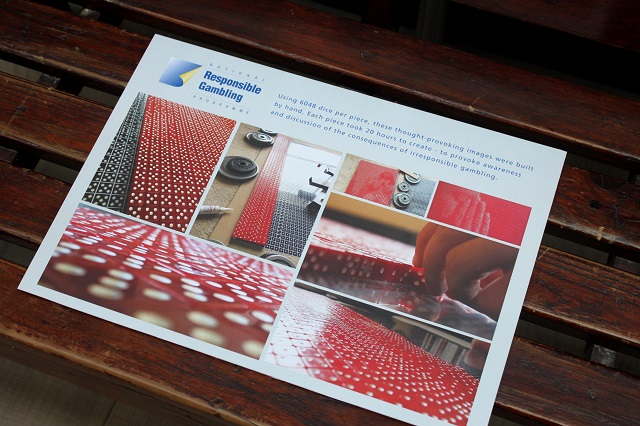
Havas mosaic art for National Responsible Gambling Programme 2 Havas mosaic art for National Responsible Gambling Programme 1Havas mosaic art for National Responsible Gambling Programme 3
A Havas WW Johannesburg team experiential brand campaign, to raise awareness of gambling addiction, created mosaic art pieces with real dice to bring home the message of the negative effects of gambling addiction through illustrating the way life may be for those living with this addiction.

Each individual art piece consists of 6048 dice, each individually stuck down by hand. The total size of the art pieces spans 1.1m high and 1.5m wide.

“This idea was proactively generated by our team and then created in cooperation with the National Responsible Gambling Programme (NRGP),” explains Eoin Welsh, executive creative director at Havas WW Johannesburg.

Continues Welsh, “Gambling is a very serious problem in its own right, and the repercussions of this move far beyond the money one might lose. This addiction puts one’s family and whole life at risk, and we are proud to be able to use this project to create some much-needed awareness and talkability around this subject.”

These outdoor installations are being showcased at an array of public places, including popular shopping malls.

No wallflowers here

Skinny laMinx collection of Robin Sprong Wallpaper: Wild Flowers-Sweet mix

In line with Skinny laMinx’s WDC2014 theme of cross-pollination, designer Heather Moore approached local wallpaper company, Robin Sprong, to team up on a collection of made-to-order Skinny laMinx wall coverings. The result is a celebration of shape, colour and composition, showcasing a selection of Moore’s much-loved designs including: Orla, Duikers, Brancusi Stripe, Wild Flowers, Bowls, Woodpile and Flower Fields.

The Skinny laMinx collection wallpaper is made to order from Robin Sprong Wallpaper, which has recently started using a new type of pre-gummed wallpaper that is PVC free, 100% recyclable, and is printed with non-toxic latex inks.


Louise MarslandShelf Life by Louise Marsland is a weekly column on MarkLives. Tweet new product, packaging and design launches to @louise_marsland or email her at louise.marsland at gmail.com. Want to sponsor Shelf Life? Contact us here.

Louise has written about the FMCG, media, marketing and advertising industry for 19 of her more-than-25-year career as a former editor of magazines AdVantage, Marketing Mix and Progressive Retailing, as well as websites Bizcommunity.com and FMCGFiles. She currently edits the weekly Wednesday Media & Marketing Page for The New Age newspaper and is the publishing editor of industry trendwatching portal, TRENDAFRiCA, for consumer insight, research and trends in Africa.

— MarkLives’ round-up of top ad and media industry news and opinion in your mailbox every three work days. Sign up here!

Thinking TV: Earth Hour a miss as TV viewers keep watching

Introducing a monthly analysis of TV viewership figures by Inge Hansen (@mecnotabene) In March 2014, as history leads us to expect, the most popular local drama on South African television was Generations, a necessary daily fix for many that delivers consistently high viewing patterns.

TV test patternIn an analysis across adults 18+ in the mid-tier (LSM 5-7) and top-end (LSM 8-10), there appears to be noticeably different patterns in terms of where the viewership came from before tuning into Generations and, subsequently, what channel they watched next.

Throughout both markets, a large portion of the viewership came from e.tv programming, with the highest rating point for Generations during the month culminating at a 30.7 AMR (Average Minute Rating) for the mid-tier and a much lower 15 AMR for the top end.

In terms of where they went next if they tuned in away from SABC1, for the mid-tier, SABC2 and e.tv were the most frequent subsequent programming choices,with some occurrences of the TV being turned off.

For the top-end, there was a higher instance of DStv being the primary channel move as Generations ended, as well as SABC2. Mzanzi Magic featured strongly for both the top-end and the mid-tier.

Love for soccer

Close to home, in an analysis of soccer fixtures (a popular South African pastime), we can see certain matches in particular were much anticipated.

In looking at local vs international matches, local matches or those featuring Bafana Bafana delivered the best audience viewership across both the mid-tier and top end consumers. During March, the top two fixtures in terms of ARs were the International Friendly between South Africa and Brazil, and the Absa Premiership clash between Orlando Pirates and Kaizer Chiefs — acknowledging, however, that Orlando Pirates and Kaizer Chiefs are widely recognised as being the most supported teams in South Africa, which explains the diverse audience their clash attracted.

Access to more DStv sport channels means that consumers within the top-end can indulge more in the international soccer scene, and more of this programming is expected in their viewing habits.

LSM 5-7 Adults (18+) Live + VOSDAL, National
Channel Programme AR’s
SABC 1 INTERNATIONAL FRIENDLY :SOUTH AFRICA VS BRAZIL 263.2
SABC 1 ABSA PREMIERSHIP ORLANDO PIRATES VS KAIZER CHIEFS 256.2
SABC 1 NEDBANK CUP GOLDEN ARROWS VS MAMELODI SUNDOWNS 130.8
SABC 1 ABSA PREMIERSHIP PLATINUM STARS VS MARITZBURG UNITED 127.4
SABC 1 ABSA PREMIERSHIP POLOKWANE CITY VS FREE STATE STARS 110.3
LSM 8-10 Adults (18+) Live + VOSDAL, National
Channel Channel AR’s
SABC 1 INTERNATIONAL FRIENDLY :SOUTH AFRICA VS BRAZIL 99.2
SABC 1 ABSA PREMIERSHIP ORLANDO PIRATES VS KAIZER CHIEFS 67.6
SuperSport 3 BARCLAYS PREMIER LEAGUE MANCHESTER UTD VS LIVERPOOL 42.0
SABC 1 NEDBANK CUP GOLDEN ARROWS VS MAMELODI SUNDOWNS 37.0
e.tv UEFA CHAMPIONS LEAGUE:CHELSEA VS GALATASARAY 35.4

Even when adding another local sport passion point into the mix for March — rugby — the top-performing fixture did not change from soccer and the International Friendly between South Africa and Brazil (5 March 2014), for both the mid-tier and top-end.

However, the quantity watched of each sport changed dramatically between the LSM groups, with access to various Supersport channels also being a factor. Viewers within LSM 5-7 predominantly watched soccer on SABC1, while LSM 8-10 viewers were more likely to watch Supersport on DStv and the Vodacom Super Rugby fixtures featured strongly.

With the increased quality of sport programming, commentary and live feeds, coupled with the strain on the average consumer’s wallet, televised sport should continue to be a viable option for sports fans.

Impact of Earth Hour?

And, finally, with millions around the globe pledging their participation in Earth Hour 2014 (29 March), would a look at TV consumption habits reveal the drive to switch off for 60 minutes?

A Post-Campaign Analysis on Total Individuals over the Saturdays in March during the 20h30-21h30 time-band, revealed a 4% increase in the number of advertising spots on 29 March, with ARs at an equitable level to the Saturday before. Although the two final Saturdays of the month had slightly lower ARs than the previous three, no substantial decrease in viewership was observed during Earth Hour.


Data sources: Arianna & Telmar, Programme analysis excludes programming repeats.


Inge HansenInge Hansen is an analytics and insights strategist for MEC NotaBene Cape Town. Working with diverse brands across the agencies client portfolios, her previous media experience includes time in the print industry with Media24. Inge will contribute Thinking TV,  a monthly analysis of South African TV viewership figures, to MarkLives. Follow @mecnotabene for regular media updates.


— MarkLives’ round-up of top ad and media industry news and opinion in your mailbox every three work days. Sign up here!

#trendMARK: IM platforms and social networks will blur together in future

a trendMARK feature by Mike Wronski (@mikewronski) The marketing industry is being disrupted faster than most as old paradigms of branding, PR and communications change to reflect the empowerment — and constant connection — of consumers via digital channels. People have access to any information they want, when they want it and on whatever device they want it. This has created a highly fragmented landscape that can be confusing for marketers who aren’t versed in technology trends.

Branded video

Cited as a high priority gap for brands to capitalise on in the 2014 Social Landscape study by World Wide Worx, engaging video content should be part of any large brand’ s marketing arsenal. With data costs plummeting and mobile video usage on a sharp iPhone4sincline, a gap exists for brands to create original content where a large deficit currently exists locally.

Currently the best performing local video content produced by brands is related to experiences that customers care about, including music festivals, cooking classes and celebrity content. One trend is certain– brands are going to create much more branded video content in2014, and they will allocate larger budgets to ensuring the content is professionally storyboarded, produced and edited.

Applification

Continuing the strong trend of branded mobile and social apps in 2013, brands will keep creating immersive mobile experiences around highly niche topics and events. DStv’s Remote app, FNB’ s Find Steve Facebook App, or Castle Lager ’s Braai Nation app are some interesting examples of apps that provide a niche utility value, or have high quality entertaining experiences.

A solid 67% of brands surveyed in the SA social landscape report plan to create mobile apps in 2014. The key to unlocking an app’s success is not only in its utility or entertainment value, but how well the brand connects the app back to its fundamental business proposition.

Content marketing

Online advertising budgets will continue to increase, with a larger portion allocated to social media advertising and content marketing. This follows an international trend, where social media advertising is the largest growing digital adspend category – 47% of US brands plan on increasing social advertising budgets in 2014.

Thousands of brands are vying for the attention of consumers who are content rich, but time poor. The brands that get content marketing right will be those that create engaging content and digital brand engagements that linger with consumers long after they’ve experienced the content. This trend will see brands investing in social data analytics to understand what content their consumers want. Smart brands will train their staff to become brand ambassadors — even to the point of hiring journalists and content experts in-house.

Instant messaging

With over 11-million active WhatsApp users in South Africa, instant messaging has surpassed social network usage. This is because people want a simple, cost effective and quick way of connecting with friends,but also due to people wanting greater control over privacy and content visibility.

Instant messaging platforms and social networks will blur together in future, but for now there is a fairly clear separation of functionality between the WhatsApps, 2gos and WeChats; as well as the Twitters and Facebooks of the world. Brands will try to engage more effectively on these IM platforms – as is evidenced by the brands that own portals on MXit, which connects to consumers on the Naspers-owned IM platform WeChat. Whether consumers will accept brands into this private space remains to be seen.

Consumer privacy

As consumers’ lives become more intertwined in the digital space, exponentially more data will be collected about their personalities,whereabouts, connections, interests, discussions, transactions and everything in between. This data can paint detailed pictures for brands about who their customers are and what they want. It also allows marketers to connect and engage with consumers in optimal ways. However, collection and retention of consumer data often operates in a large grey area amidst privacy laws such as the Protection of Personal Information Bill and the CPA.

These grey areas will almost definitely be challenged at some point as consumers become more educated about the need for consumer privacy and start pushing back against certain data collection practices. Brands that don’t play ball and comply will no tonly be penalised, but may have their reputations significantly impacted.

This feature first ran in trendMark, the discerning trends resource for African marketers and corporates. Read or download the full magazine via Issuu. For a PDF copy, click here.

Mike Wronski (@mikewronski) is the MD of social media management and research company Fuseware.

— MarkLives’ round-up of top ad and media industry news and opinion in your mailbox every three work days. Sign up here!
Influencers: Very few people make truly individual choices

by Jason Stewart (@HaveYouHeard_SA) Influencing someone to change behaviour is very hard to do:
Jason Stewart

  • 85% of corporate change efforts fail.
  • two out of three criminals are rearrested within three years.
  • two years after life-saving coronary bypass surgery, 90% of patients revert to old, unhealthy behaviours.

These failure rates should scare marketers whose job it is to convince consumers to buy their brands.

Another scary fact is that it’s often not the brand that makes us buy, but rather the source of who said we should buy it, which influences us. That’s why offspring continue to buy the same brand as advocated by their parents, regardless of the advertising they are bombarded with by competitors, offering superior benefits.

The most credible

According to Nielsen’s 2013 Global Trust in Advertising & Brand Messages, recommendations from family and friends remain the most credible form of marketing. Also, Millward Brown recently showed that people we more aware of what people say than we are of the messages in the cluttered media landscape: consumers act on one in every three recommendations they receive, whereas only four branded messages of the estimated 6000 we are exposed to daily or registered.

So, peer pressure can come to the rescue; it’s one of the most powerful influences when it comes to enforcing change.

Much of the work I do involves ‘unpacking’ mothers as a target group. Over the years, I have come to realise that mothers — possibly more so than any other community, with the exception of teenagers — want to know that they have made the right decision and that their peers (other mothers) agree with that they are doing.

Consistent behaviour

As with all other communities, they don’t need to make that decision based on their own research and judgment, but apply their brand choice according to the accepted general norms of the day. Their behaviour is consistent across every product category and demographic.

Simply put, very few people make a truly individual choice.

At this stage, I’m certain you’re muttering, “Wait — people buy my product because they love it” or “People are independent-minded, not stupid. How dare you say that I buy brands because of what other people think or say?!”

Peers and sources of influence

I’ll concede that maybe 5% of what consumers buy is their own choice, but I maintain that 95% of purchase decisions are based on other people’s recommendations or endorsements, no matter how subtle or surreptitious they might be. I argue that people buy a product because they think it is the right option based on what their peers and what their sources of influence, most importantly, deem is right.

Look at fashion. You may decide to buy black skinny jeans and credit yourself with that choice. But what about the brown, flair corduroy bootlegs that you would have bought instead 40 years ago? You didn’t, because they’re not the fashion. So, your individual taste may not have changed as much as everyone else’s has.

Of course, there are the few fashion and media influencers who provoke the fashion changes every season. They are the true influencers of general taste. Our best friends and our peers are the true influencers when it comes to the specific item purchased. They influence the brand, colour and style of jeans, touching us immediately and almost always at the point of purchase.

Influence dynamics

So, when looking at influence dynamics, there is a lot at play. For example, consider an 82-year old grandmother we used on a campaign for a pharmaceutical product.

Most brands would never give her a second glance: too old, no longer sexy, not very influential. Yet this lady had more energy than a 19-year-old and more influence in Cape Town than Helen Zille. Her recommendation single-handedly converted over a hundred consumers onto this product, based upon her standing in the community, and the passion and conviction with which she advocated the brand.

Jason Stewart, a Red & Yellow School graduate, joined the industry as a project manager at Draftfcb Cape Town before taking on business development responsibilities at Instant Grass, a position he held for three years. He is now managing director of HaveYouHeard (@HaveYouHeard_SA), an innovative word-of-mouth and social media agency founded in Cape Town in 2008.

— MarkLives’ round-up of top ad and media industry news and opinion in your mailbox every three work days. Sign up here!

Ad of the Week: Meet your match — a matter of taste

by Oresti Patricios (@orestaki) It’s been a weird week in advertising, what with ‘that’ DA ad being banned and then unbanned – after the Streisand effect gave it far more attention than was probably ever hoped for.

However, it was a very classy campaign from Johnny Walker that caught my eye. It’s a brand that has a lot of traction, and we’ve looked at the “Keep Walking” campaign before, but this felt like a case of getting back to basics and really getting customers to look at the product in a new way.


King James & Punk for Johnny Walker: “Meet Your Match”

 Whisky is the best selling spirit in the world, and whether your taste is for Irish or Scotch, single malt or blend, there’s an air of sophistication that the various brands have managed to build up around the product. Unlike cane spirit, brandy or rum, whisky is marketed as a drink for connoisseurs.

Building on this, Johnny Walker’s agency, King James, along with its digital division, Punk, have plugged into the trend of customisation with this campaign. It’s a campaign that focuses on individual taste, and the fact that there are actually four different types of whisky under the Johnny Walker label.

The King of Flavour Whisky ProfilerSo which one is for you? To answer that question, Johnny Walker invited well-known molecular gastronomic chef, David Higgs, to create a  ‘taste test’ in order to profile four very different South Africans: rugby hero Bob Skinstad, architect/design guru Mokena Makeka, TV presenter Jeannie D and radio host DJ Fresh. Instead of blindfolding them, Higgs used his culinary wizardry to disguise and re-engineer the various ingredients. This way the test subjects were forced to keep an open mind about what they were putting in their mouths.

The video segment shows all four being taken through the process, and their reactions. The voice over by Higgs describes how he approached the challenge. “What we tend to forget is that everybody’s palate is different,” he explains, adding: “It’s really all about opinion and personal taste. So how do you force a whisky—or anything for that matter—onto someone?”

The King of Flavour Whisky ProfilerUsing the profile of each person, Higgs and the Johnny Walker people then were able to assign one of the four whiskies to each test candidate. The final ‘reveal’ – which resembles a tense moment from one of those food competition reality shows – matches up each celebrity with their label.

The filming of this ad is really beautiful. Most of the clothing and the décor is black. The food preparations look mind-blowing, presented as they are with a sort of zen-like simplicity. The lighting is subdued and warm, lending a sense of luxury to the environment. The sound-track is really spot-on: starting with a laid back electronic piece that bursts into a guitar-driven anthem as each celebrity is shown their ‘match’.

The final sequence is of each celebrity on a black leather seat, holding their whisky, with the brand label in gold supered over. The final shot is of what you might call an ‘everyman’ guy in the same black leather chair, but without a whisky in his hand, and the text: “What are you?” – followed by the URL: www.meetyourmatchsa.co.za.

The King of Flavour Whisky ProfilerVisit the site and you’ll be presented with a short video featuring David Higgs once again, but addressing the camera. He invites you to find your personal match, using your computer and visual stimuli.

The test takes you through various beautiful screens. The first has images which depict different moods, from “feeling mellow” to “celebratory”. Next come 3 flavours you have to choose, such as cherries, chocolate, sherry and orange rind. Then you have to choose 3 aromas, including smoke, cut flowers and vanilla. The fourth screen asks you to select your environment from places such as “at home”, “VIP” or “bar”. Then you have to choose your serving, such as rocks, straight, cocktail, or ginger ale. As you mouse over each beautiful picture, a sound-effect plays, so it really feels like an interactive experience.

Having gone through all your choices, a video of Higgs will tell you your personal ‘match’ in terms of Johnnie Walker label. The page features all your choices, along with a sound-track to match. In the video, Higgs invites you to click on a link called “Your Pairings” which is a suggestion of cocktails and meals that would suit this particular whisky.

The King of Flavour Whisky ProfilerHe also invites you to share it on Facebook where you stand in line to get an invitation to an event where you will get a personal flavour profiling from Higgs himself. The Facebook page has close on 9 million ‘likes’ – not bad considering it’s a South African page.

Having Higgs as a guide makes the entire experience engaging and strangely personal. Even though you’re interacting with your computer, you feel like there is a certain connection. Higgs is unassuming and likeable, and there is no ‘hard sell’ – it’s all about you, the consumer – what your preferences are, what kind of person you are.

It’s a really smart way of interacting with customers and potential customers, making them feel special, and educating them about the product.

Great concept, great execution, and as classy as a glass of JW Black.

Oresti PatriciosAd of the Week, published on MarkLives every Wednesday, is penned by Oresti Patricios (@orestaki), the CEO of Ornico, a Brand Intelligence® firm that focuses on media, reputation and brand research.


If you are involved in making advertising that is smart, funny and/or engaging,
please let Oresti know about it at info@ornicogroup.co.za.


— MarkLives’ round-up of top ad and media industry news and opinion in your mailbox every three work days. Sign up here!

SABC bans election ad claims EFF

The SABC has banned its election ad according to a press statement issued by the EFF. This follows on news last week that the SABC had banned, and then unbanned, an election ad by the DA. In the ad the EFF calls for justice for the victims of the Marikana massacre and the eff‘physical’ destruction of eTolls.

EFF statement:

This campaign to keep the EFF out of the public eye has now been adopted by the South African Broadcasting Cooperation, SABC. As part of the public broadcaster’s constitutional duty to promote access to information to all South Africans, the SABC allocates free slots on radio and television to all contesting political parties. The EFF, as it is with all other parties standing in these elections, received its free slots, and accordingly submitted an advert to inform South Africans of its policies. This advert was supposed to have been aired on the 20 April, 2014 but was not, because the SABC has taken a decision to ban it.

The SABC wrongly and illegally banned this advert because of the EFF’s decisive position shown in the advert that in an instance when it takes government it will physically destroy the undemocratically imposed eTolls on Gauteng motorists and commuters. The SABC refuses to air this advert arguing that it incites violence.

EFF has as a result launched an urgent complaint with Independent Communications Authority of South Africa (ICASA) against the SABC decision. The EFF will take legal action against the SABC and will roll mass action on 29 April, 2013 until our advert is aired as its banning is a clear violation of the freedom of expression.

The banning of this advert is a clear indication of the ruling party’s refusal for eTolls to be on the agenda of these elections. SABC, which reports to Luthuli house has acted in the interests of their wishes to suppress the fact that the ruling party imposed eTolls on South Africans. Nonetheless, we reiterate without any fear of contradiction that we shall physically destroy eTolls to allow South Africans to use their roads without paying any additional money to the tax they already give to government. The advert must be aired on SABC television to allow voters to know this so that they make an informed choice about who should govern, particularly in Gauteng.

— MarkLives’ round-up of top ad and media industry news and opinion in your mailbox every three work days. Sign up here!

Smart Africa TV: Social messaging goes big in Nigeria

by Russell Southwood (@BalancingActAfr) Nigerian tech blogger Jesse Oguntimehin (@JesseOguns) talks about how Twitter came to grow so big in Nigeria and recent trends within it.

The interview covers:

  • the incident that sparked the growth of Twitter;
  • its impact on news media;
  • the Basketmouth rape joke controversy;
  • the enormous size of the 2Go community and
  • private social messaging; and what happens next to social media in Nigeria.

Smart MonkeyRussell Southwood is the founder of Balancing Act and the web TV channel Smart Monkey TV, and has been an analyst in telecoms, internet and broadcast in Africa for the last 14 years. Smart Monkey TV aims to capture the energy at the crossroads between African culture and technology. MarkLives is syndicating content from Smart Monkey TV on a weekly basis for the column “Smart Africa TV”.

— MarkLives’ round-up of top ad and media industry news and opinion in your mailbox every three work days. Sign up here!

Selling Cell C

by Kim Penstone While rumours of consolidation in the mobile and telecoms sector continue to circulate, Cell C marketing director Dr Doug Mattheus is determined to sell Cell C to South Africans — not the competition.

Dr Doug Mattheus
Dr Doug Mattheus, executive head of marketing at Cell C.

Challenger brand

Cell C is the epitome of a challenger brand, courageously fighting mobile giants Vodacom and MTN for a slice of the lucrative local mobile pie. Between the two, Vodacom and MTN boast an 83% market share, leaving Cell C with a humble 17%.

Even Cell C CEO Alan Knott-Craig admitted, at the time of taking on the chief executive role, that it is virtually impossible for smaller players to compete on the current playing field, stating that the company needs between 20 and 25% marketshare in order to be competitive — and profitable.

It’s not impossible. Currently, Cell C has over 14 million customers, an increase from the 11.7 million that it announced in July last year, which itself is an increase from 9.4 million in 2012, and 8.2 million in 2011.  In marketshare terms, this represents an increase from 13.2% in 2011 to the current high of 17%.

To a large extent, this growth is the result of the price war that Cell C brought to the mobile market in 2012, when it slashed prepaid call rates to 99c per minute. But even Knott-Craig has famously stated that “price is not a strategy”, so where to from here?

Dr Doug Mattheus, executive head of marketing at Cell C, is the man charged with selling Cell C to South Africans. His view is simple: what you need to sell a cellular brand is CBD — coverage, brand and distribution.

Coverage

“One of the biggest challenges we face at Cell C is not coverage itself, but consumer perception of our coverage,” says Mattheus, who explains that South Africans tend to think that Cell C still piggybacks off the Vodacom network, as it did at launch.

That was a long time ago and the company now has its own network, with over 4000 cellular stations, offering coverage to 97% of the population.

“We have the coverage; our challenge is prove to consumers that what we offer is the same as that offered by Vodacom or MTN — no better, no worse,” he says.

This is a big brand challenge that requires the creation of big brand power and, as such, will be tackled with big brand visibility — the likes of the Sharks and Miss South Africa sponsorships. In typical Cell C style, however, these sponsorships will go much deeper than the traditional headline and logo, rather encouraging the personalities in each arena to use the Cell C network in their everyday lives to create the perception that “if it’s good enough for me, it’s good enough for you”.

Cell C logoBrand

Another challenge that the company faces is one of brand perception. Mattheus has a two-pronged approach to this challenge: external and internal.

Externally, the Cell C brand has nailed its colours to the mast of simplicity.

“You shouldn’t have to have a Masters degree to work out what you’re paying to make a call,” says Mattheus. “With Cell C, it’s simple: 99c per minute, all the time, any network, any time of day.  And all calls are charged per second, so you don’t pay for the seconds you don’t use.”

How much do people pay on the other networks?

“That’s the question we’re asking. Does the average mobile user know how much he or she pays per minute? Probably not,” says Mattheus, “It’s very difficult to work out the cost per call with the other service providers; there’s a lot of smoke and mirrors…”

This was the basis for the newsroom-style campaign that Cell C launched in early 2013, encouraging South Africans to find out how much they are paying per minute, and change to Cell C. Cell C intends to build upon this in 2014, focusing on educating South Africans about how much they are paying with their current mobile service provider versus how much they could be paying with Cell C.

Internally, Cell C is focused on selling Cell C to its staff.

“Ultimately, the people who sell Cell C are the people who work for Cell C. These people are our moment of truth,” says Mattheus.

‘It’s ironic that South Africans are beginning to believe in Cell C, but our own staff still view the brand as the third rung on the ladder,” he says, relaying one of Knott-Craig’s recent addresses to Cell C staff, where he listed all of the areas in which Cell C is first in order to encourage Cell C employees to raise their own opinion of the company.

In order to help foster a sense of pride from within, Mattheus and his marketing department initiated a series of activations as part of the brand’s ‘Believe’ campaign that saw Cell C employees perform thousands of ‘random acts of kindness’ across the country, such as paying for people’s parking at shopping malls, offering passengers on the Gautrain free tickets, and donating free airtime to paramedics.

“These small acts have a big impact on the recipients, and often a bigger impact on those who are enabled to give, instilling a sense of pride in employees and turning them into brand advocates,” says Mattheus.

Distribution

The third and final spoke in Mattheus’ marketing wheel is distribution. On this front, Cell C is placing increased emphasis on building and maintaining relationships with its retail partners.

“Sales through PEP account for 25% of sales in any given month,” says Mattheus. “We have to ensure that we have the best possible relationships with our retail partners, that we provide them with the best service, and the best sales tools, so that they are in the best position to sell Cell C to their customers.

This is one of the reasons Cell C recently brought Draftfcb into the fold, dropping longtime partner Ogilvy Johannesburg in favour of an agency that, according to Mattheus, “has more retail experience”.

Cell C has also just opened a massive walk-in customer service centre at its new premises in Buccleuch, Johannesburg. This centre ultimately gives the brand more control over the service that it offers, as it can ensure that the people working here are not only educated about Cell C offers but also competitor rates; the same cannot always be said of independent retail operators and their employees.

Together, these individual strategies all form part of the greater plan to position Cell C as the cellular company that is trying to make life a little better for all South Africans, whether that’s demonstrated by paying for someone’s parking or providing consumers with the best value for money on the market.

“What we’re trying to show South Africans is that we are all in this together. We know times are tight; as one of the smaller players in the market, we’re used to stretching our budget. We want to show consumers that it’s not about how much you have, but how you use it,” says Mattheus.

The timing couldn’t be better.

Kim Penstone


Kim Penstone is a freelance writer, specialising in the fields of marketing, media and advertising. She is also a contributing writer to MarkLives.


— MarkLives’ round-up of top ad and media industry news and opinion in your mailbox every three work days. Sign up here!

MagLove: We love this cover spoof of TIME magazine

by MediaSlut (@MediaSlut) My choice of the best international covers in MagLove this week:

  • EDGE
  • Men’s Health UK
  • Popular Science
  • Thursday Magazine
  • Time Out New York
  • The New Yorker

INTERNATIONAL

EDGE, May 2014

 EDGE, May 2014

Techies will love this cover! It references the well-known Xbox Controller with the playing button X – Y – B – A, which it’s cleverly adapted for the article to shout H – E – L – P, with the question “Can Microsoft turn things around for Xbox One?”. Very clever and brilliantly done!

Men’s Health UK, May 2014

 Men’s Health UK, May 2014

I definitely see a trend where printed magazine covers move  into the realm of looking more 3D or ‘live.’ This Men’s Health cover is the perfect example of how designers are trying to find ways to marry the printed cover with what a digital cover could possibly do.

Popular Science, May 2014

 Popular Science, May 2014

Spotted this cover on the popular CoverJunkie website, and it really has a great story behind it! The new May 2014 cover of Popular Science is based upon and inspired by the October 1920 cover that artist Norman Rockwell painted. I think it’s a great story and brilliantly ‘updated’.

Thursday Magazine, 10 April 2014

Thursday Magazine, 10 April 2014

No, it’s not TIME. It’s actually a spoof of TIME, done by Times of Oman’s supplement Thursday Magazine! How right or wrong it is, I’m honestly not sure, as it can clearly be mistaken for a TIME cover as it includes all the iconic design elements. Shows you how far a magazine supplement to a newspaper can actually push the boundaries…

Time Out New York, 10 April 2014

Time Out New York, 10 April 2014
I like the twist on the normal (and now boring) “I LOVE NY” with ‘love’ in the shape of a heart… Time Out New York has turned it upside down, and changed it to “New York, you’re all Heart”, with the typography in an actual illustrated human-heart.

The New Yorker, 21 April 2014

The New Yorker, 21 April 2014
I’m going on holiday for a few weeks and my next MagLove column will only run again on Friday 9 May. Which is why I thought it’s very fitting to include this The New Yorker cover as it perfectly illustrates “Getting There” when travelling with an air plane. I actually rather enjoyed looking at each of the different characters and scenarios playing out on the cover, as it’s very true! Unfortunately, I won’t be in the compartment at the bottom of the cover, but only time will tell which character I’ll be playing as we fly out… Happy Easter to everyone!


Find a cover we should know about? Tweet us at @Marklives and @MediaSlut.
Want to view all the covers at a glance?
See our MagLove Pinboard!


MediaSlutMagLove by @MediaSlut is a regular slot featuring the best local and international magazine covers every week, recognising well thought-out, powerful and interesting (and hopefully all three-in-one) covers and celebrating the mix of pragmatism, creativity and personal taste that created each of them. The (for now anonymous) blogger behind MediaSlut knows way too much for his own good about media in South Africa, magazines in particular. His mission is to show when SA magazines fail but, most importantly, also when they succeed. If you’re looking for a library about SA magazines and news, this is your one-stop pitstop.

— MarkLives’ round-up of top ad and media industry news and opinion in your mailbox every three work days. Sign up here!

Online CPD Courses Psychology Online CPD Courses Marketing analytics software Marketing analytics software for small business Business management software Business accounting software Gearbox repair company Makeup artist