Moshokoa also chats to Neo Mashigo, outgoing co-ECD at Ogilvy & Mather Johannesburg and current chairperson of The Loerie Awards, about the state of creativity based upon the quality of the entries this year.
Expect to view the two big Grand Prix winners of Loeries 2015: “Black Cats on Holiday” won in Branded Content Video: Single Execution for Impact BBDO Dubai and its client, Loto Libanais [which appears to be controversial — ed-at-large].
You’ll also see KFC SoundBite, the Grand Prix winner in Digital & Interactive: Applications, Games & Interactive tools for Ogilvy & Mather Johannesburg. OgilvyOne South Africa national managing director and creative team representative, Ben Evans, unpacks the original brief from client, KFC, and explains how some cool tech helped it scoop the coveted award.
Every week, discover the highs and lows of advertising in South Africa with The Ad Feature team from Primedia Broadcasting — consisting of ad and branding critic Andy Rice (@ricecommaandy), brand and communications strategist Sizakele Marutlulle (@ZDivah), 947 anchor Jacob Moshokoa (@JacobMoshokoa), and producer Gary Oberholzer (@goberholzer). For more, go to Facebook.
You may also catch Andy on The Money Show on 702 (@Radio702) and Cape Talk (@CapeTalk) on a Tuesday evening just after 7pm for the new feature #ButDoesItWork on The Money Show.
— MarkLives’ round-up of top ad and media industry news and opinion in your mailbox every Monday and Thursday. Sign up here!
by Herman Manson (@marklives) Ad agency Black has undergone a strategic rebrand and repositioning as Black Africa Group — a creative business partner focused upon creating brand value and exponential growth.
The agency is entering its 11th year as an independent agency, employees 35 people and has offices in Johannesburg, Port Louis (Mauritius), Nairobi (Kenya) and Kampala (Uganda). It enjoys Level 1 BEE status, revenue sits between R30–R40m and clients include Absa, Barclays Africa, Life HealthCare, Bonitas, the JSE, MultiChoice, Kenya Airways and a host of other brands.
Executive director, Veejay Archary, launched Black, Brand Strategy & Design out of the design component of Herdbuoys McCann-Erickson, of which he was a founding partner (and where he designed the ballot paper for the first democratic elections).
Incubated
McCann had incubated the business in 2003 and 2004, offering support and infrastructure while Archary built out the new agency, which was soon working on the corporate identity for South African Airways.
But, by 2005, Black still found itself under the shadow of the Herdbuoys McCann brand, even as it was operating as an entirely independent agency (it is still 100% independently owned). The agency moved into its own premises to establish an identity of its own in the market. Chief executive, Marisa Holley, also joined the business in 2005. In 2011, there was a short-lived merger with Interbrand Sampson, which didn’t end happily for either party.
Veejay Archary
The agency has slowly been rebuilding and Black received its own renewed brand identity earlier in 2015 following, recognition by Archary and Holley that the business needed a new and clear driving purpose. “We asked ourselves what vale are we creating,” says Holley of the process. “It wasn’t about money — that is simply an outcome; our purpose is value creation for clients.”
Triangle of value
That value, she says, is created by combining brand strategy, business strategy and creative strategy into “a triangle of creative strategic intelligence that drives growth”.
The name Black, of course, also refers to adding to the bottom line and keeping business in the black. The agency needed time to prove, once again, its place in the market, something Holley feels it’s achieved.
In 2016, the agency will move offices to a new creative hub being built in Rosebank and plans to continue growing its industry engagement and profile.
The agency has made a shift into a more-strategic, creative mindset, away from just design. Holley says seven staffers are continuing their studies this year, including Holley herself — an MBA at the Berlin School of Creative Leadership.
Marisa Holley
Brand to Life
It is also in the process bringing to market a new service tool called Brand to Life that focuses upon internal brand engagement and service standards training.
“We believe that here are HR interventions and there are brand internal engagement tools but where is the integration?” asks Holley. “This product aims to connect with a company’s most-valuable assets — its employees — and to awaken a sense of collective purpose between an employer’s objectives and the employees, creating a sense of self-purpose with the goal of achieving value both for the employer and the employee.”
Black Africa Group will continue to expand its African footprint through a partnership approach; it already works in Kenya and Uganda on this basis. It’s important to have feet on the ground in different markets, says Archary.
Herman Manson (@marklives) is the founder and editor of MarkLives.com.
— MarkLives’ round-up of top ad and media industry news and opinion in your mailbox every Monday and Thursday. Sign up here!
by Herman Manson (@marklives) The Loerie Awards organisers have not been presented with any complaints regarding the judging process. This is in response to tweets by outgoing CCO of Ogilvy & Mather South Africa, Chris Gotz, that allege irregularities.
Allegations on Twitter
Gotz, who leaves South Africa to take up a senior position with O&M North America in September 2015, made a number of public allegations against The Loerie Awards and its CEO Andrew Human on 18 and 19 August 2015:
View the full conversation here. Gotz had earlier criticised the awards show for accepting entries from the Middle East, believing it should be focused upon the continent of Africa.
During the 2015 awards event, Ogilvy & Mather Johannesburg was awarded a Grand Prix for KFC ‘SoundBite’ in the Applications, Games & Interactive tools category, while another Grand Prix was awarded to Loto Libanais and IMPACT BBDO Dubai (United Arab Emirates) for “Black Cats On Holiday” in the Branded Content Video category.
Roughly a decade
Loeries commitee member, Jarred Cinman, has pointed out that entry to the Loeries has been open to entries across Africa and the Middle East for roughly a decade.
A statement issued by Loeries communications agency IDIDTHATAD (on behalf of the Loeries) said there were no truth to the allegations made by Gotz. “There is no truth to these allegations and the judging process most definitely doesn’t work as laid out by Manson,” reads the statement, confusing our request for comment upon Gotz’s allegations as being the allegations.
“The Jury Chairperson make the decision on what is awarded, and thereafter all final scores are printed and the ballots are signed by the Jury Chairperson for each panel, as well as the CEO of the Loeries,” the statement continues. “All the signed ballots are independently audited to ensure that the published winners match the signed results. All signed ballots are kept for one year after the awards.
“The Jury Chairs this year included Chuck Porter, Chris Clarke, Ji Lee, Steve Vranakis, CK Tan, Caroline Pretorius, and Virginia Hollis – this alone rubbishes the claim that somehow this group of international and local leaders are all part of a conspiracy that ignores the final scores and hands out awards according to the whims of the organisation. Such claims are damaging to the whole industry and should be treated with the contempt that they deserve.
“The Loeries will not enter into any further correspondence on irresponsible claims and awaits a formal complaint from any individual or organisation which it will address in the appropriate manner.”
The Broadcast Research Council of South Africa (the BRC) is a non-profit, industry body that has recently been incorporated to cater to the audience research needs of the radio and television industry in South Africa.
— MarkLives’ round-up of top ad and media industry news and opinion in your mailbox every Monday and Thursday. Sign up here!
In June 2015 I posted about Foodism for the first time, with its hot fire-logo. This time, its very cool ice-cream “f” just oozed with creativity again! I’m definitely going to be keeping an eye on its clever uses for this “f”…
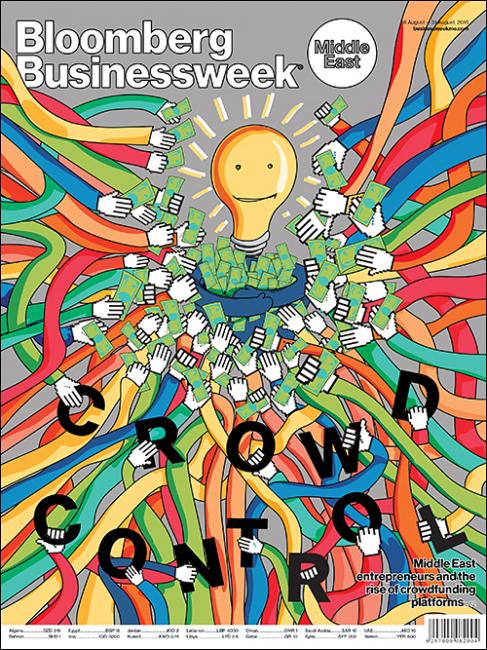
I Google Translated the cover story, and it’s a riveting read (when it translated correctly), but the cover image and story is about “My brother, the drinker”, and the two complement each perfectly. You can read (and then translate) the article here.
When I was at school in the early ’90s, I remember we’d just bought a computer, and on it there was a program (can’t remember of find the name at all!) where, when you typed your document, the program would change certain words to little icons/clipart. Dog to a dog-icon, hand to a hand-icon and house to a house-icon, to give a few examples.
I thought I was very smart with this, and would hand in many many assignments done this way “to give extra depth” (hey, I was younger than 10, if I remember correctly!). This cover reminds me of this, illustrates it perfectly, and is actually also rather funny…
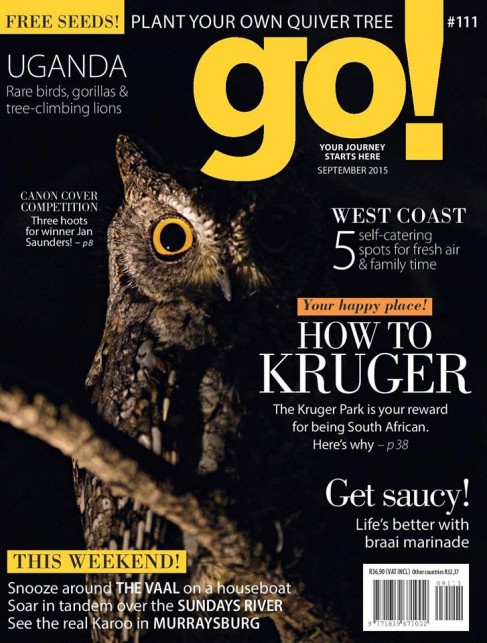
MagLove by @MediaSlut is a regular slot featuring the best local and international magazine covers every week, recognising well thought-out, powerful and interesting (and hopefully all three-in-one) covers and celebrating the mix of pragmatism, creativity and personal taste that created each of them. The (for now anonymous) blogger behind MediaSlut knows way too much for his own good about media in South Africa, magazines in particular. His mission is to show when SA magazines fail but, most importantly, also when they succeed. If you’re looking for a library about SA magazines and news, this is your one-stop pitstop.
— MarkLives’ round-up of top ad and media industry news and opinion in your mailbox every Monday and Thursday. Sign up here!
a #TheFutureByDesign feature by Jarred Cinman. An article published in Newsweek exactly 20 years ago made the rounds recently, thanks to its brave, but wildly wrongheaded predictions about the internet. Amongst its many claims were things such as “no online database will replace your daily newspaper” and “These expensive toys are difficult to use in classrooms and require extensive teacher training.”
Nowadays, the newspaper is already a living fossil. And schoolrooms — at least those that can — have transformed into multimedia centres. So much for predicting the future.
The future of internet advertising is no more clear now than the future of the internet was in 1995. However, there are some trends that are important to track, and failing to do so will leave a brand out in the wilderness in years to come.
Here are two.
Data-driven advertising
Marketing’s most profound shift is from planned advertising to computed advertising. We have already seen this revolution’s early forces marshaled by the likes of Google and Facebook, and by endless ad networks and automated buying platforms.
In brief, these technologies take the manual labour and guesswork about placing your ad in front of the people who need to see it. By collecting and processing huge amounts of data about users, and using matching algorithms to find ads they are most likely to engage with, programmatic platforms not only place ads dynamically but charge efficiently for those ads. This is a boon for advertisers who, in theory, only pay when their ad finds its audience.
Most radical at the moment are systems which dynamically create or modify the ad itself – to appeal to different user profiles or to tease out which version of a message is most successful. Horrifying as this is to agency creatives, there is evidence that this kind of agile advertising works.
Internet of everything
At its most basic, the internet is just a way to connect computers so that they can share data. It’s not this definition which is shifting but the definition of what a computer is. Today, it’s a desktop, laptop, tablet and phone. But it is rapidly becoming a watch, a fridge, a sprinkler system, a light bulb and a car. It will eventually become pretty much everything – it is hard to imagine an object or creature in the future that wouldn’t benefit, in some way, from being plugged in.
That is not science fiction. A casual search online for internet-connected devices will reveal a surprising number of products already being mass produced. (The catch-phrase, in case you didn’t know, is the Internet of Things, or IoT.)
Advertisers will benefit from this in two ways: the amount of data available about people and their stuff will increase exponentially, and the number of touchpoints will mushroom. However, people’s desire for privacy, and their distaste for irrelevant, intrusive messaging, is increasing just as fast.
Winning brands will be threaded through people’s lives, stitched into the fabric of their online devices. But engaging with people this intimately is going to take an unprecedented understanding of human motivation, and a commitment to authenticity which has been absent for much of the history of advertising.
In 20 years what has happened to digital advertising will have been impossible to imagine today. But there is no doubt that big data and pervasive computing will be two of the driving forces in that story.
Jarred Cinman (@jarredcinman) is the managing director (and one of the founders) of NATIVE VML. He is a longstanding member of the South African digital industry, having founded one of the first professional web services firms in 1995. Cinman is chair of the IAB SA and a member of the Loeries Committee.
by Alistair Mokoena (@AlistairMokoena) Like medical professionals are lousy about taking their own medication, so, too, are communications agencies generally bad at communicating.
Take internal communications. We are often accused of either under-communicating or over-communicating to staff. How many times have we presented really good ideas badly by being long-winded on irrelevant stuff? Or by articulating ourselves badly because we inherently believe that a great idea doesn’t need a great sell?
Image by pat138241 courtesy of FreeDigitalPhotos.net
How, not what
Many pitches are lost, not because of bad ideas, but because of a bad sales pitch.
Communicating what you are proud of is less important than communicating how you plan to solve a problem. The focus should be on how effective your solution is, not how smart your idea is — a subtle but critically important difference.
Many pitches are won on attitude and the heart, not so much on ideas and the mind.
Many communications agencies miss the importance of positioning, communicating and managing their own brand:
How many agencies have a brand-positioning statement such as a brand blueprint, brand pyramid or brand ladder?
As kings and queens of a single-minded proposition, how many agencies have a payoff line?
What benefit do we own in the minds of prospects?
What space do we occupy in the marketplace?
What do our prospects think of our price-positioning? Are we an economy brand, value brand or a premium brand and why?
Do we ever wonder?
As an industry, do we ever wonder why do we battle to convince the market of our value and worth — why is our craft seen as easy and mindless, with low barriers to entry? Why does everyone think they are marketers? Is it because we have done a lousy job of communicating the science and the art behind marketing communications?
For the longest time, the strength of communications has been measured upon the basis of what is said and how it is said. In other words, verbal and non-verbal communication elements are equally important. Society has become a lot more-discerning over time. More and more people are searching for meaning and purpose in their lives. For this reason, the “why” question has become more important. The reason that something is said is becoming increasingly important.
Theodore Roosevelt once said, “People don’t care how much you know until they know how much you care.” If we show how much we care about helping our clients win and helping improve the lives of customers and consumers, we will improve our hit rate.
The right audience
Communicating to the right audience is also very important. As one of my favourite Buddhist proverbs proclaims, “When the student is ready, the teacher appears.” Don’t waste your time presenting sustainability ideas and goodvertising ideas to your marketing clients. They will tell you these ideas are not core to their business KPIs.
Rather, sell these ideas to their corporate affairs colleagues. It doesn’t matter that we haven’t been asked to solve sustainability problems. We have to challenge ourselves to see our clients’ businesses holistically. We employ very bright people with clever ideas that can change the world but these remain our best-kept secret because we haven’t received a brief for these ideas.
For people who deal with segmentation models and target-market identification daily, it’s a surprise that we are not good at tailoring messaging according to the target audience. For example, our government and local municipalities are grappling with challenges that, if solved, could radically transform the way we experience life. Why don’t we have hackathons that are aimed at improving service-delivery issues, health care and crime? Are we knocking on government’s door with these solutions?
Priorities
These are the kind of ideas that do well at Cannes Lions; why aren’t we making them a priority?
I think part of the problem is that we are so fixated with daily survival and short-term revenue opportunities that we ignore the things that will bring us long-term success, such as investing in strong brand equity and driving good corporate citizenship.
The questions you need to ask yourself are: Do you have the right people working with you, do they share your vision, do you know what keeps your client up at night, are you in touch with the things that society cares about and are you clear on the legacy you want to leave behind?
Alistair Mokoena (@AlistairMokoena) — a Unilever-trained Chartered Marketer with lots of blue-chip marketing experience — joined Ogilvy & Mather Johannesburg as MD in January 2015). Formerly, he was MD of FCB Joburg. One of his favourite pastimes is driving around in the bush, photographing wild animals. Alistair, who switched from client to agency side at the end of 2012, contributes the monthly “The Switch” column, covering relationships inside agencies and between agencies and clients, to MarkLives.com.
— MarkLives’ round-up of top ad and media industry news and opinion in your mailbox every Monday and Thursday. Sign up here!
by Remon Geyser (@remongeyser) As the third largest country in Africa, and a GDP growth rate triple that of South Africa’s, brands are eager to get a better understanding of the day in the life of a Democratic Republic of Congo (DRC) citizen. In an attempt to provide a snapshot of the country, we’ve used our Springleap network of creative professionals there to comment on some of the social media chatter happening.
As with many other post-conflict countries in Africa and around the world, the DRC is actively forging a modern identity comprised of historic cultural traditions, fragile social progress and future aspirations. As thousands of refugees also return home after fleeing the devastating conflict between 1994 and 2003, they will be part of this process of redefining what modern-day DRC is known for, what its people stand for and what role they will play in Africa’s ascent.
The state of digital
The DRC is by no means an online highway of digital conversation. Taking into account the nation’s 77.4m citizens, in 2014 only 2.2 % had a means of internet connectivity — that’s only 1.7m people. Ultimately, the whole country accounts for only 0.6% of Africa’s entire online consumer basin.
Interestingly, of the 1.7m people fortunate enough to be connected to the web, 53% have Facebook profiles. That’s just under 1m consumers for brands to target social media campaigns to.
The DRC is a beautiful country, known for its vast reach of the Congo River’s delta and surrounding masses of equatorial rainforest; however, there has been a large migration to urban centres. Kinshasa, the nation’s capital, which lies by the Congo, is the world’s second-largest francophone (French-speaking) urban hub in the world, after Paris. With just over 10m inhabitants, Kinshasa is the third-largest African city by population. Lubumbashi, the DRC’s second-largest city, is home to just over 1.5m citizens.
What’s trending online in the DRC?
The personalities
In many African countries, music stars, athletes, famous and controversial politicians, and other homegrown heroes tend to be, by far, the most-followed individuals on Twitter. In the DRC, this trend continues. Bismavk Biyombo is a Congolese-born basketball player for the NBA’s Toronto Raptors, and must be an icon to his homebound fans as he has been graced with over 53 000 followers.
The topics
#HumanRights: What with ethnic violence still occurring in various parts of the country, tragic events are still widely spread and discussed on social media. Because the country is still very much in the international spotlight, foreign media brands are often involved in disseminating politics.
#Politics: A recent move by the current president to evaluate the possibility of running for a third term (illegal under the current constitution) has citizens, political activists and competing parties actively making their arguments online.
#Regional: As trade expands within and outside of the DRC borders, the country’s leaders are actively involved in building relationships with neighboring African countries. Lately, the country has been in talks with Rwanda on what products to remove import duties from, and citizens from both countries have been joining the conversation on Twitter.
Brands and agencies shouldn’t ignore the online chatter, followings and influences that may be seen in the DRC’s social media sphere. With mobile and internet connectivity slowly on the rise, there will be increasing competition to reach consumers online.
Having 53% of the online DRC consumers on Facebook means that there is an open door for brands to engage with socially (online) active target markets.
Even though these numbers reflect a few highly engaging brands, many other companies from the DRC have yet to enter the online marketing world. As a result, few brands are on Twitter, and the ones that have handles can’t yet boast a wide reach. As Twitter is primarily driven by popular icons and human-centric topics, brands may accommodate this by linking up with these trends and communicating messages that will link to this buzzing conversation, online and offline.
Vodacom
Vodacom is a big player in the DRC’s branding sphere, as it serves as a sponsor for the country’s largest soccer stadium: the Stade des Martyrs, which boasts a capacity of 80 000 fans (the fifth largest in Africa). With 230 200 likes, they are the second-most-popular branded page on the DRC’s Facebook landscape — that’s 11 % of the nation’s online consumer market. Not surprisingly, Vodacom has tangibly acquired 11m network subscribers in the country.
Tigo RDC
The most-popular brand on Facebook, Tigo RDC, a local network and ISP provider, has reached over 915 344 likes. The brand is owned by a company called Millicom, which “[d]evelops and operates cellular telephone networks in emerging markets”. Tigo DRC’s accumulation of likes reflects 45% of the entire country’s Facebook users.
It is refreshing to see a local brand such as Tigo gain so much popularity online, and it opens up the idea that local business might begin to thrive online in the developing countries of Africa. So, the challenge now is to convert social media popularity into an increase in sales, and a greater impact upon the lives of consumers. As more people “like” company pages on Facebook, there will be room for digital activations and online campaigns. While internet penetration in DRC is still quite low, however, the focus should be spreading awareness on the platform to as many online communities as possible.
However, there is one organisation that has gained massive traction, reach and awareness on DRC’s Twitter; MONUSCO (United Nations Organiation Stabilization Mission in the DRC) at over 57 500 followers. There’s no surprise that this handle ranks so well locally, as the organisation is the driving force behind uplifting and managing the internal refugee crises, which is spoken about a lot on the platform by citizens across Africa — searching for #DRC will bring up numerous pictures from the latest happenings related to this topic, as it seems to be a trend.
Brands with an empathetic nature and value could impact the community by uplifting the lives of thousands and, at the same time, boosting the their local corporate social initiatives.
10% discounted subscription rate for MarkLives readers! Readers must use the promo code “MarkLives10” to access their discount.
This information was provided by Springleap’s Trend Spotting platform. Every month, Springleap provides an oversight of local trends in the South African market, sourced from among its 22 000 African creatives, with new country specific reports planned for a number of key African and Middle Eastern markets.
Remon Geyser (@remongeyser) is a burger fanatic, wine connoisseur and eSports enthusiast (yes, a fancy term for playing computer games). He is also the research lead for Springleap, heading up a new global creative research division while obscurely attempting a PhD. Springleap provides instant creative expert feedback to rock marketing ROI. Remon contributes the new weekly “Talk Africa” column, covering Pan-African trends, on MarkLives.com.
— MarkLives’ round-up of top ad and media industry news and opinion in your mailbox every Monday and Thursday. Sign up here!
Cheryl Hunter (shelflife at marklives.com)’s weekly pick of all things new — product, packaging, design, insight, food, décor and more!
Saint-Gobain recognises winning social architecture
Wimpy rolls out music playlists
Joburg gets a taste of the Nedbank Cape Winemakers Guild selection
Creating winning social spaces
The 2015 Architecture for Social Gains Awards, conceptualised by top-100 industrial group Saint-Gobain to recognise and reward talent in the design of spaces that promote learning and development, was held recently in Johannesburg and produced some unique concepts.
EcoBrick Sample Wall. Photo by Ian Dommisse
Say Evan Lockhart-Barker, MD Weber Saint-Gobain, “The awards really promote and celebrate architecture that positively effects the integration of community and environment for the long-term benefit of both people and planet, complimenting Saint-Gobain’s commitment to support social change and make a difference in the spaces we live, learn, work and play in.”
Entries were received across three categories: Future, Built and Adopt-a-School.
“We were thrilled with the number of online entries received as these awards challenged industry norms; with the call for strictly digital entries, architects were challenged to move beyond the traditional medium of submitting hardcopies of drawings and renderings, and embrace the realm of the video-entry format, which encouraged digital story-telling around submissions,” adds Lockhart-Barker.
People Making EcoBricks at Penguins Preschool. Photo by Threeclouds Photography.
The judges, impressed by the quality of the digital submissions, added an additional award for Best Movie: East Coast Architects used one of the learners of the Vele Secondary School to take the viewer through its project, highlighting every sustainable design feature from the vegetable gardens to the recycling of “grey water” in the bathrooms. This resulted in a documentary-style movie, which made for a refreshing and innovative submission.
According to Lockhart-Barker, the awards saw a new wave of up-and-coming architects entering the fold, as well as submissions from both professional architects and student architects. The People’s Choice award, which invited online public participation, attracted an impressive 8 896 votes in one week.
SVA 2015 Mandela Day Event at Penguins Preschool
The Architecture for Social Gain Awards looks specifically at the following types of building projects:
Education — preschool to high school, colleges, universities, training colleges;
Community — buildings that are multifunctional and offer facilities like training, family law, counselling, AIDS, health education and trauma counseling; and
Development — buildings such as training and sports centres and other facilities focused on human development.
Quick-service restaurant chain, Wimpy, is rolling out a new in-restaurant dining experience by introducing selected music for customers. The success of pilot projects in Gauteng has encouraged franchisees nationwide to install the tailored Wimpy Audio Solution.
Moving Tactics, the digital signage solutions company, first piloted the idea at Wimpy restaurants in Sandton and the East Rand Mall and, in the last two months, eight more outlets have installed the new system.
According to Willem van Bosch, solutions development manager at Moving Tactics, “It saves franchisees hours of their time selecting, downloading and maintaining their music selection. We have taken something as simple as music playing in a store and made it a dynamic and personal experience. New songs are added daily as they are released and old songs are removed on a regular basis to keep the playlists fresh and relevant at all times.
“Wimpy franchisees no longer have to concern themselves about unwanted content sneaking into the music being played — worrying about expletives, vulgar language or advertisements being played as part of the music selection.”
Say Sabrina van der Merwe, Wimpy Lydenburg franchisee, “It has saved me a lot of time not having to select and change CDs, and it’s been a relief to have the playlists created and updated for us. If any of the songs chosen don’t go down well with our customers, we can simply request that it be removed, and this is then done with immediate effect. Another benefit has been that we can control the type of music being played on-site instead of having the staff select and play their own selection of music. It is much nicer to have a variety of music that appeals to a broad audience.”
Each Wimpy Audio Solution system installed is tailored to the needs of that specific Wimpy franchisee. •
A rare case of handcrafted wine, created by pinotage aficionado François Naudé, is among the charity items to be auctioned in aid of the Cape Winemakers Guild Protégé this year. For the first time, the public will be able to taste the auction wines in Sandton this month as a run-up to the guild’s annual auction in October.
The 31st Nedbank Cape Winemakers Guild Auction, of singular wines that have crafted in small volumes exclusively for the auction by guild members, takes place on Saturday 3 October at the Spier Conference Centre, Stellenbosch, Western Cape.
Wine lovers in Johannesburg have the opportunity to taste this year’s auction lineup at the Nedbank Cape Winemakers Guild Auction Showcase at the Nedbank Atrium in Sandton, on Wednesday 26 August, from 6pm.
François Naudé
Naudé’s Le Vin de François is described as a blend of the best barrels from some of South Africa’s finest producers. The wine is sold annually at his private auction and this year’s 2013 vintage is a blend of wines from Delheim, Kanonkop, Lanzerac, L’Avenir, Rhebokskloof, Simonsig and Wildekrans.
Since its inception in 2006, the Protégé Programme — a mentorship scheme under the patronage of the Nedbank Cape Winemakers Guild Development Trust, with the goal of effecting transformation in the wine industry — has recruited 17 oenology and viticulture interns, with nine graduates currently working in the industry.
Shelf Life is MarkLives.com’s weekly column covering all things new. Notify us of yours at shelflife at marklives dot com. Want to sponsor Shelf Life? Contact us here.
Cheryl Hunter (@cherylhunter) has written for the South African media, marketing and advertising industries for more than 15 years. A former editor of M&M in Independent Newspapers and contributor to Bizcommunity, AdFocus, AdReview and the Ad Annual, she has also produced for various television networks and currently consults on communication strategy and media liaison.
— MarkLives’ round-up of top ad and media industry news and opinion in your mailbox every Monday and Thursday. Sign up here!
by Erna George. As the world moves faster, we know expectations are growing — more begets the hunger for even more. Shareholders seek more value, so businesses drive more cost-reduction and more from each of their resources. In a context where consumers expect faster service, better quality and more innovation, technology-update frequency grows and great talent expects more in return for their contribution, how are constant annual cost-savings feasible?
And brands need more to grow in a cluttered, fast-moving world. Something has to give. Balancing cost-saving with people’s need to progress and business profitability, as well as brand and share growth requirements, is a fine art and, if not planned or thought through, meticulously leads to declines.
While I understand the rationale for cost-cutting, having often sat on the side of being told to cut budgets and sacrifice brand-building activity for the bigger goal, I was in part seeking a rationale for cost-saving being detrimental to brands when I started this piece. While I found a number of examples and case studies of how cost-cutting led to losing a competitive advantage or even to the demise of a brand, there were an overwhelming number of examples that showcased successful cost-cutting where brands emerged strong and set for growth.
Amazon as an example
A case in point is Amazon. Among competitors focusing on intuitive simplicity or data, Amazon focused on saving in order to offer customers the best deals. This focus has contributed in a significant way to Amazon’s successful shift from selling online books to becoming a giant in the technology field.
The reality is that, in the current economic and competitive environment, cost-saving is here to stay, in one form or another. I suppose the trick is how to navigate so that the brand’s needs and cost-saving requirements are aligned.
Cost-cutting is never easy and often urgent, so many management teams often seek low-hanging fruit such as capex, sales budgets, and marketing (often some of the big numbers on business income statements, besides salaries). What I have often seen applied is the announcement of cuts across the board to reach x-target. A cut-down on extras, limited travel, maintenance rather than investment in new capital expenditure; reducing brand investment to make annual profit targets.
Long-term vs short-term
This approach is tough on long-term growth plus everyone’s confidence in the future. It’s a draining process but it may be useful in the short term to prevent retrenchments and, if channelled properly, might help provide fuel for growth.
Unfortunately, many times it is not applied for short bursts only. Frequent brand-budget cuts may not make an immediate dent but as investment is cut without thought on how to channel that spend to different efficient activity, brand presence is lost in the market and the relationship with consumers may wane. And as the behaviour becomes cyclical, budgets are cut and targets are met, then the expectation is that more can be done with less. Brand growth is limited.
This approach is either applied unilaterally (ie everyone must save 15% on costs) or it handed to team managers or directors to save costs. In the everyone-be-responsible-and-cut-your-own-budgets approach, each manager is chasing his or her own view and agenda. In this silo mentality, departments could compete to be cost-saving heroes or limit their cuts so they do not have to experience as much of the pain.
Win some, lose some
Every brand manager knows to expect a budget cut by or just before mid-year, so this leads either to the spend or commit-as-much-as-possible in the first six months so your brand is less impacted. If not led by a common goal with a clear agreement on how to reach that goal with a role for each department, some brand teams or departments win and some lose. Ultimately, this disorganised, silo-approach often results in too much investment in brands or activities that are not the big growth engines of the business.
It is critical to first understand the business in great detail, and the cost drivers. It is critical for the saving initiative or plan to focus upon the real cost-drivers, or it will not be sustainable as a strategy.
For example, one of General Electric’s strategies was to only focus upon markets where it could be no. 1 or 2. This resource-prioritisation strategy was established and rolled out throughout GE. Understanding key drivers of costs and value for its specific business led to a clear strategy to drive success.
Brand-value chain
On a smaller scale, this means that brand managers need to understand the brand-value chain and be more commercially focused than ever before. With deep insight into the key areas of the value chain, brand teams understand what adds the most value, making where to cut costs not only easier but more-aligned to growth strategies. This approach identifies clear profit generators so resources may be allocated in the correct weighting across areas.
Yes, some brands will need to take a back seat but there are ways to reconfigure spend to focus upon the drivers that differentiate — significant mass media in year one, focused digital in year two, etc. With a strategic approach, there is more investigation of spend options and planning to ensure market opportunities may be exploited.
Ultimately, this calls for marketers to carefully balance great strategic thinking, creativity and commercial acumen. Brand teams are required to understand costs and profit engines — more than ever before — for competitive edge and long-term growth. There is no use in fighting this; one has to entrench it within the expanding role of marketers.
How to
For cost-saving to stick and not to make this the sole focus of a marketer’s job:
Base cost-saving programmes upon brand-growth strategies so the items that drive growth or capabilities required for growth are not impacted — marketers must accept that, for some things, good enough is just that.
Set an agenda for the journey ahead and build a path to drive the change through the business so that all are aligned
Be disciplined and ruthless in execution of the strategy
All that remains is to monitor and manage carefully, so you can tell when or where it is time to shift from cost-cutting to a full investment phase. Happy costing!
Erna George is the new marketing executive of Pioneer Foods’ Cereals & Other division. She has worked on both client and agency sides with diverse brands and categories — from FMCG, alcohol and agriculture to financial services and entertainment — in countries across many geographies, including South Africa, Mozambique, Nigeria, Kenya, India, Philippines and Brazil. She contributes the monthly “Fair Exchange” column, concerning business relationships and partnerships in marketing and brandland, to MarkLives.
— MarkLives’ round-up of top ad and media industry news and opinion in your mailbox every Monday and Thursday. Sign up here!

 Expect to view the two big Grand Prix winners of Loeries 2015: “Black Cats on Holiday” won in Branded Content Video: Single Execution for Impact BBDO Dubai and its client, Loto Libanais [which appears to be controversial — ed-at-large].
 Every week, discover the highs and lows of advertising in South Africa with The Ad Feature team from Primedia Broadcasting — consisting of ad and branding critic Andy Rice (@ricecommaandy), brand and communications strategist Sizakele Marutlulle (@ZDivah), 947 anchor Jacob Moshokoa (@JacobMoshokoa), and producer Gary Oberholzer (@goberholzer). For more, go to Facebook.