Q5: How has the role of ECD evolved since you first stepped into the industry? Camilla Clerke: When I first stepped into the industry as an intern to the intern, the role of an ECD was to ensure the very best creative output, from hiring the right talent to inspiring the creative teams and casting an eye over every single piece of work produced — down to the last print ad. Then digital happened. Mobile phones became a computer in one’s pocket. Social media became the way to find a date on a Saturday night. And quickly the industry evolved, from what we offer our clients to how we measure success and the tools we use to connect with our clients’ audiences. With that, the role of an ECD evolved, too. The creative output is still first and foremost but getting there is different. It requires an intimate knowledge of every single area of business — from a client’s objectives to integrated strategy, platform “360” ideas, and data and technology. So, no, an ECD won’t see every link ad. But an ECD will lead their teams to groundbreaking creative solutions.
Q5: What goals, both personal and professional, do you hope to achieve in this role?
CC: To work with, and grow, the most-talented humans. Ever. People inspire me. And our industry centres around humans. Clients, colleagues, partners, mentors, target audiences, and the emotional connections we make. Empathy will always be the key to inspired teams. Motivated clients. Excellent creative. And great problem-solving. And great problem-solving builds brands. It also sometimes adds a few pieces of metal to the agency mantlepiece. Just saying.
Q5: How do those tie into the overall goals of the agency, going into 2020? CC: Our goals are people-focused. To build brands by connecting our clients to their audiences. To grow future leaders in this industry. To build a better South Africa by focusing on transformation and female empowerment.
Q5: Your background is in writing. What skills do you think are needed to be a successful ECD? CC: You need to be an eternal student. Never stop listening, learning and being open-minded. Because great ideas come from anyone, and anywhere. You also can’t be afraid to fail.
Q5: What can we do to see more females stepping into the role of ECD in South Africa? CC: It’s simple. By insisting more females have a seat at the table. Actually, the head of the table.
Carey Finn (@carey_finn) is a writer and editor with a decade and a half of industry experience, having covered everything from ethical sushi in Japan to the technicalities of roofing, agriculture, medical stuff and more. She’s also taught English and journalism, and dabbled in various other communications ventures along the way, including risk reporting. As a contributing writer to MarkLives.com, her new regular column “Q5” aims to hone in on strategic insights, analysis and data through punchy interviews with experts in media, marketing and design.
by MarkLives (@marklives) We feature insight into the brief, creative idea and production challenges of the current #NedbankMoneySecrets campaign from Joe Public, Riverbed, The Mediashop, The Odd Number, Digitas Liquorice and director Greg Gray of Romance Films.
Client: Nedbank Agencies: Joe Public, Riverbed, The Mediashop, The Odd Number, Digitas Liquorice Title: Nedbank Money Secrets
Information supplied by Nedbank.
Brief
The brief was to create a brand engagement piece that would get the nation talking about money. As money experts, Nedbank recognises that, when you want to address social issues or even when you want to improve yourself, the best place to start is by speak honestly about issues at hand.
We wanted to create a piece of communication that would show the entire nation that money doesn’t need to be a taboo subject. We know it can be hard for anyone to talk about money and their relationships with it — some research findings have highlighted that 62% of people would rather talk about their body weight than their bank balance — but we want people to start having those tough conversations. We want South Africans to get real about money and to talk about the issues that affect all of us. Our nation is one of the most-indebted in the world and, despite ongoing campaigns by industry bodies and banks, such as the annual savings month focus, South Africans just don’t seem to be able to get themselves out of debt and into a savings habit.
As a purpose-led brand (our brand promise is to help people “see money differently”), we want to bring all these issues to the fore, and let South Africans know that we are very aware of the money challenges that many of them face. We know that money plays a big part in every person’s life and the challenges it creates can be highly stressful.
So, we invested a huge amount of time and resources into understanding why money is such a taboo subject, and how this reticence to speak openly about money has resulted in so many of us having such a poor relationship with it, and as a result, with our banks. Ultimately, the message we want to get across through this campaign is simple: It’s time we all start talking about money and, by doing so, we can hopefully start to see it differently in our everyday lives.
This campaign is not intended to be a quick fix, and it isn’t about creating a platform from which we can promote our products. It’s an honest effort to take South Africans on a journey towards opening up about money, having the hard conversations, and asking the questions that need to be asked. Even though some of the conversations may involve distressing secrets, we want people to feel safe to share them and begin their new money relationships. We also want to share positive money ‘secrets’. Secrets to being better with our money. Secrets to financial success.
For us at Nedbank, this campaign is just the beginning of a much bigger conversation that all South Africans need to be having and we are passionate about facilitating that conversation.
Creative summary
We believe that the first step towards better financial behaviour is to start talking about our money and we hope that this campaign will be the catalyst that gets those discussions underway. To do that, it highlights some pretty serious money statistics in a way that really captures people’s attention — something that static numbers on a page seldom succeed in doing. Instead, we have chosen to bring this important information to life by telling compelling stories about ordinary South Africans in a short film.
While we were very excited about setting out on this campaign journey, initially we were also relatively apprehensive. This is a bold and adventurous undertaking, and few of us have been involved in short-film production before. We turned to Hollywood and ended up having a huge amount of fun mimicking the world’s big movie launches, eventually resulting in comprehensive launch of our own, complete a movie trailer, poster and premiere at Nu Metro Hyde Park. [None of the guests, from celebrities to media, realised the ‘movie’ was actually a 15-minute short-film commercial until the reveal towards end of the screening — ed-at-large.]
Setup before the premiere
During the premiere
Guests at the premiere
The red carpet
During the premiere
Inside the movie threatre, before and after the reveal
Setup post-reveal
Guests post-premiere
Production
Despite the initial apprehension, we believe that film is the best medium by which to captivate our audience through compelling story telling. Our film tells the tales of three ordinary South Africans, Ben, Amanda and Sizwe, who are burdened by their own unique money secrets. We are confident that South Africans who watch the short film become emotionally invested in these characters and their secrets. In this way, that the money statistics we are sharing should truly hit home in a way that would not have been possible with a print media advert or a 30-second radio or TV commercial.
From the initial briefing, to the completion of the movie, the entire process has taken about 18 months. It’s one of the biggest and most-rewarding creative campaigns we, and our agencies (see credits below), have ever worked on.
There have obviously been challenges along the way, but with the help of director, Greg Gray, and his team at Romance Films, we have succeeded in producing a campaign that we are not only immensely proud of but that we are confident will have a massive impact.
Duration & resources
In July 2019, the campaign began running for six weeks across media channels, TV trailers, TTV trailers, OOH, digital and radio. The film premiered on Thursday 18 July and has been flighted on SABC 2, e.tv, eMOVIES, ShowMax and VIU.
Creative agency: Joe Public
PR and communication: The Riverbed Agency
Media-buying agency: The Mediashop
Digital media agency: The Odd Number
Digital agency: Digitas Liquorice
Production & post-production
Lead actors: Brett Williams (Ben), Rolanda Marais (Ben’s wife), Hlubi Mboya (Ben’s business partner), Lindiwe Dim (Amanda), Peter Mashigo (Sizwe), Faniswa Yisa (Sizwe’s wife)
Production company: Romance Films
Director: Greg Gray
Executive producer: Helena Woodfine
Director of photography: Paul Gilpin
Production art directors: Will Boyes, Keenan McAdam
Wardrobe stylists: Bridget Baker, Sandra Smit
Editor & company: Kobus Loots/Ricky Boyd, Deliverance Post
Visual effects company: Chocolate Tribe
Music company/composer/sound: Mad Planet/Nicholas Wright
Post-production online: Jean du Plessis, Chocolate Tribe
Post-production offline: Kobus Loots/Ricky Boyd, Deliverance Post
Colourist: Craig Simonetti
Makeup & hair: Annette Van Staden, Shiralee Maclachlan
Art buyer: Tammy Chetty
Stills photographer: Justice Mukheli
Stills retoucher: Simon Keeling/Imaginality Studio and George Greyling/Pixel Effects
#Campaigns is the latest MarkLives column featuring insight into the brief, creative idea, production challenges and results of South African communication campaigns, both ongoing and recent. Have a campaign worthy of being featured in #Campaigns? Submit a short motivation to and we may well be in touch. Please include links to campaign material, when it ran/is running and why you believe it should be featured.
by Jeff Harvey (@JefferyMess) “Woke” ads are all the rage at creative award shows but, in an industry that celebrates originality, has this trend run its course? Does “goodvertising” really benefit the causes they promote, or merely the brands who partner with them?
Carrefour’s “Black Supermarket” forced the EU to free up its regulations on organic agriculture
An-Nahar’s “The Blank Edition” forced Lebanese politicians to take responsibility for their inaction
Volvo’s “The EVA Initiative” improves car safety for women
pl’s “The Last Ever Issue” promotes respect for women
The New York Times’ “The Truth is Worth It” promotes the true value of good journalism
The March for Our Lives “Generation Lockdown” promoted reasonable gun laws in the US
Growing attitude
One the one hand, most of us want equal opportunities for women, life to be easier for the physically challenged, and the police to leave innocent people alone. On the other hand, many consumers are tired of being preached to. Does your frozen Hawaiian pizza really need to save the whales? If you’re constantly reminded of the social and environmental impact of every brand you use, I wouldn’t blame you for preferring a Tide ad that simply makes you laugh. At least it does what it says on the box. This seems to be a growing attitude among my advertising colleagues and consumers alike.
The key to doing it well is authenticity and relevance. Both the public and awards judges have become savvier, so successful brands now have no choice but to operate with integrity. With the rise of social media, there’s nowhere to hide. So, to remain authentic, many brands have to stick to their knitting and not claim to be more than they are. There’s no shame in simply making a decent toothbrush; it creates jobs and clean teeth are important. But brands with loftier ambitions will have to really prove they care. Words are cheap and principles aren’t principles until they cost you money. When Nike backed Colin Kaepernick, it wasn’t mere lip service; it actually stood for something — it sacrificed millions of loyal customers, some of whom even burned their Air Jordans. (Fortunately for Nike, by drawing a line in the sand, it gained millions of new fans and cemented the relationship with many existing customers.) When Gillette owned its contribution to toxic masculinity, many men were outraged and swore they’d never buy a Gillette razor again. Again, it was ballsy but paid off.
But picking a side and risking a hit in sales is not the only way to show you care. “Solvertising”, the more practical cousin of goodvertising, actually answers a real social or environmental problem through a practical solution. The numerous innovations for the physically challenged this year are examples of this. The unwritten rule of goodvertising is as long as you genuinely contribute, it’s okay to tell the world. Maybe conspicuous altruism is better than quiet charity if it inspires other brands to make this a better world.
Taking a stand
Polarising as it may be, it’s also exciting that big brands are taking a stand. For so long, many brands have tried to create the least offensive advertising, resulting in vanilla work. These days, brands know that controversy gets clicks. If it’s done well, purpose-driven marketing is effective. John Seifert, Ogilvy Global worldwide chief executive, believes “[p]urpose and point-of-view are now almost table stakes, and a deep cultural connection to the brand, the audience, and their lives is a standard by which all brands must operate.”
The 2019 Cannes Lions Entertainment jury president, Scott Donaton, echoes that sentiment: “For brands going forward in entertainment, having values and expressing values is going to be the best way to connect with people.”
Advertising reflects society and popular culture. As we approach the 2020s, there’s a growing search for meaning, so it seems like cause-marketing will be with us for the long run. Acting ethically and contributing to a worthy cause should be celebrated, even revered, but “woke” alone isn’t an idea — advertisers still have to be original and entertaining, interesting or useful, but above all, authentic. Remember the Pepsi-Kendall Jenner train wreck? Stay real, my friends.
Jeff Harvey (@JefferyMess) is senior copywriter at Grey Africa, Johannesburg. Born in Durbs, raised in Joeys, and seasoned in adland, Jeff is a through-the-line copywriter who loves ideas and writing equally. Like two children. His work has been recognised with a Cannes Gold Lion, a D&AD Wooden Pencil, multiple Loeries of various colours, and several Ads of the Month. His Uber rider rating is 4.66.
“Motive” is a by-invitation-only column on MarkLives.com. Contributors are picked by the editors but generally don’t form part of our regular columnist lineup, unless the topic is off-column.
by Lani Carstens (@lani_carstens) To create a powerful piece of content, having the correct data and analytics is important — but should data lead the conversation or are we missing out on an opportunity for human connection? Data and audience analytics only give us half the picture; without human intelligence, the story is only half told and we fall short of forging a connection.
According to the Content Marketing Institute, intelligent content “combines the wonders of technology with human capability in a way that powerfully supports an organization’s goals”. Lovely, but what is the real relationship between technology as an enabler and motivating human behaviour with beautiful content? Is it even possible?
The magic, I believe, lies in using journalistic skill and overarching human intelligence to really make your audience sit up, take notice and engage. Taken further, the content should ignite a mood, emotion or response, and ultimately drive behaviour. In short, it should light fires. In content marketing, the challenge is always to tell a brand’s story, regardless of channel, in the most-compelling way in order to evoke a response. That “response” is either to change perceptions, forge a brand affinity, sell product or all the above! Easier said than done, or is it?
Forget B2B, or B2C
Think B2Me. We’re talking to humans, people, with feelings and emotions who need to walk away from your message thinking a little (or a lot) differently about your brand than they did before. And it’s not about what your PowerPoint presentation to the board says about your brand; it’s what your customers want to hear and how you have responded to their very real needs. Data can help with that bit.
Think like a storyteller
Hire the very best editors and creatives your budget can afford. A great editor will take your brand message and turn it into a compelling piece of storytelling, whether in a picture or 140 characters, and elicit an emotional response. Your PowerPoint presentation ‘reworke’ won’t cut it. A good editor will put the reader at the heart of the messaging, then the brand will be subtly be woven into the narrative.
Don’t let the data push you around
We’ve all heard marketing tales of products that would never have seen the light of day, had they ‘listened’ to the research (we’d still be using Walkmans). Data will tell you the facts and figures, the how and when but human intelligence will provide the why — it’s what’s needed to really understand your target audiences’ inner workings and passions and enable you to respond with brilliant content. Editors, regardless of channel, should advocate fiercely for the customer and what truly drives them.
Measure, measure, measure
Beautiful words and pictures aren’t enough. Content agencies need to be accountable to deliver ROI and, unsurprisingly, data is key to measuring this. But there is no one-size-fits-all solution. When setting up metrics, be guided by your business objectives and agree on the bespoke metrics that will enable you to measure success. Review how these metrics are structured at regular intervals, adjusting them as your needs change. Finally, when reviewing the metrics, ensure that the raw data is interpreted into something meaningful, insightful and actionable to have a real impact on your content programme and on your business. Its content informed by EQ that will create the relationships that ensure longevity.
We call it intelligent content.
Lani Carstens (@lani_carstens) is group managing and executive director of John Brown Media South Africa, a position she has held for the past nine years. Before that, she spent three years in Shanghai, China, on secondment by Naspers as group business director, where she helped launch a number of lifestyle titles. She oversees John Brown’s operations in SA and is an executive board member of the international John Brown Media Group.
“Motive” is a by-invitation-only column on MarkLives.com. Contributors are picked by the editors but generally don’t form part of our regular columnist lineup, unless the topic is off-column.
by Herman Manson (@marklives)Five years after launching Duke, its CEO, Wayne Naidoo, has announced the launch of a group structure that will pull the creative agency, alongside digital media specialist Mark1 and PR firm Positive Dialogue Communications, into a new full-service offering: Duke Group.
The three agencies have been working together on shared clients, including Pepsi and Jive, over the past year, with sufficient success to lead them to formalise the arrangement. Duke Group allows further close collaboration, and all three agencies will retain their own brands under the auspices of the group.
“…[W]e have entered into a new, exciting and maturing phase by creating a formidable, full-service communication offering by partnering with Mark1 and Positive Dialogue Communications to form the Duke Group, which is one of the very few 100% black-owned and BBBEE Level 1 offerings in South Africa,” says Naidoo.
Natural fit
According to him, the agencies are a natural fit: All are specialists with strong, experienced management teams, and they share a similar ethos in focusing on ROI for clients and over- rather than under-delivering. All three have also wanted to achieve greater scale while retaining their independence from the major networks. He says the teams are also aligned in breaking from the “state of sameness” that he believes permeates the agency world.
The deal also gives the group a presence in Johannesburg through Mark1’s office there. The combined group will employ over 60 people.
Wayne Naidoo
Naidoo’s father had named him after the actor John Wayne, whose nickname was Duke (hence the agency name). He is well-known in the South African advertising world, having been both chair and vice chair of the Association for Communication and Advertising (ACA) over the years; CMO at financial services company, AFB; and CEO of Lowe + Partners SA. He is a former chair of the Young Presidents Organisation (YPO). MarkLives named Duke the Cape Town Agency to Watch in 2019 in our 2018 Agency Leaders’ Most Admired Poll.
Mark1 is 10 years old and run by co-owners Daan du Toit (MD) and Joe Steyn-Begley (sales director) and has taken awards at both the IAB Bookmarks and MMA Smarties; it acquired Dash of Lime and 365 Digital from Primedia Online in 2016 [clarification: 365 Digital has run as a separate business with its own board since 2016 and is not part of the deal with Duke]. Positive Dialogue Communications is managed by Tracy Jones (MD) and has twice taken Gold for Best Agency at the annual PRISM Awards over the past five years.
Clients want integration
“Combining creative, digital and new-generation PR forces in one team provides the integration we all know our clients want and need to adapt successfully to changing consumer expectations and behaviours,” says Du Toit. He notes that Mark1 had been recommending Positive Dialogue to clients for years, and vice versa, without either party realising.
Naidoo says the group aims to be dynamic, hands on, offer a fast turnaround and is committed to remaining different (breaking away from said industry state-of-sameness). The leadership team shares an ethos and lacks egos (he describes egos as a major barrier to success). It also contains great technical skills.
Du Toit says his teams have raved about working with Duke, with feedback on different, better relationships which stray from the norm having convinced him to investigate closer collaboration.
According to Jones, the three specialist agencies all contain critical brains trusts — senior team members are generally considered industry leaders in their respective fields.
Integration process
The owner-managers of all three agencies remain involved in the business and the companies will now undergo a process of integration over the course of the next 6–8 months. DUKE and Positive Dialogue have already moved into a shared space, and it makes sense to find premises that will also be able to accommodate Mark1.
While all three will maintain their individual client lists, the focus will certainly be on expanding the number of clients they get to collaborate on. Pioneer Foods, Pepsi, Jive, RCS, Woolworths, RisCura, Advertising Week Africa and Travelstart are some of the clients now sitting within the group.
by MarkLives (@marklives) We feature insight into the brief, creative idea, production challenges and results of the “Gun Safe Cities Live Activation” campaign, by Havas Johannesburg, which launched in July 2019.
Client: Gun Safe Cities Ad agency: Havas Title: Gun Safe Cities Live Activation
Information supplied by Havas Johannesburg.
Brief
The charity, Gun Safe Cities, is a group committed to helping reduce gun deaths by encouraging safe use and storage of firearms, and promoting awareness around the dangers of firearms when they are casually and improperly handled.
Creative summary
The idea was to highlight that the people most likely to be shot with one’s firearm is the owner or a family member. Why? Because so many guns aren’t stored and handled as the dangerous things that they are.
We highlighted this fact by inviting people to a shooting range for a fun shooting session. When they looked at the target they had fired at to check their accuracy, they saw that in the middle of the paper target was a picture of themselves, followed by the message that the person most likely to be shot with your gun is you or a member of your family.
Production
The piece was distributed through social media. News media then picked up the story and it really grabbed attention. Five TV stations, 20 radio stations and numerous print media then picked up the story, and we used social to seed a huge PR campaign.
Havas was surprised by the angry reaction to the campaign, according to John Davenport, Havas chief creative officer. “I think people didn’t take the time to see that we weren’t saying they shouldn’t have guns, just that they need to be stored and looked after very carefully. The extreme reaction included dozens of angry mails, calls and one x death threat on social media….
“The cultural divide between pro-gun and anti-gun worlds is so extreme that there seems no room to listen for either party. As soon as you say anything that isn’t overtly pro-gun, the pro-gun lobby reacts very strongly. They see themselves as a persecuted minority and react accordingly at all times. I was really surprised at how this group reacted. The idea that a gun keeps them safe is so integral to a world view that any conversation around it is almost impossible.
“I think it reflects a world that is increasingly divided and radicalised due to internet conversations and a media world where people only communicate with people who agree with them, and are conditioned to fight with everyone who doesn’t. This may well have been the most interesting part of the whole project.”
Duration
The campaign launched in mid-June 2019 and should run to mid-August 2019.
Measurement
Thus far, we have gained R20m worth of earned media from an initial investment of R5000.
Credits
Client
Gun Safe Cities
Ad agency
Havas Johannesburg
Chief creative officer: John Davenport
Executive creative director: Fiona O’Connor
Art director: Luigi Morrico
Copywriter: Carl Wilsnach
#Campaigns is the latest MarkLives column featuring insight into the brief, creative idea, production challenges and results of South African communication campaigns, both ongoing and recent. Have a campaign worthy of being featured in #Campaigns? Submit a short motivation to and we may well be in touch. Please include links to campaign material, when it ran/is running and why you believe it should be featured.
by Keri-Ann Stanton (@KAmuses) Recently, I wondered if my PR peers in Ghana, Nigeria and Rwanda (to name a few) would feel the same as the independents in South Africa when it came to the agency of the future. This occurred after I was invited to participate in a panel discussion at the In2 Summit portion of the African Public Relations Association conference in Kigali, Rwanda.
What are the various things PR agencies need to do to prepare themselves for a changing media landscape and a changing competitive environment?
While, yes, there was talk of video content and publishing yourself, I still stand fast that we, as PR practitioners, need to be supporting our media and working with them, not against them. With the global crisis in journalism, communicators need to simply work harder and faster (and, yes, the Bell Pottinger backlash continues — trust is crucial). We’ve just finished work on an election campaign and our focus on radio helped immensely; people get far too dazzled by social media still.
As for the changing competitive environment? I am definitely seeing more of a demand for strategic advisory communications — a PR team that can give perspective, keep perspective, analyse the media and data, and give real-time sentiment and proposed actions.
What changes have you seen in the competitive landscape, and the kind of firms you are pitching against?
I wish I could say that transformation has levelled the playing field — but clients still play it safe. There are too many pitches of late where clients talk a big game about wanting and supporting transformation. Black-owned and -managed agencies are still often excluded before they are even included. The strategically narrow, first-round shortlist questionnaire is telling.
What changes have you seen in client demands/expectations, either in terms of the kind of work or the work process?
For me, the agency of the future is about ability and agility; there’s no longer time for immersion. Clients expect you to hit the ground running. This means you need to be well-read and well-versed at all times. You have to be geared up for rapid response. You may strategise and plan all you want but you also have to cancel and pull plans just as fast, and think on your feet. This is as true in consumer as in corporate PR.
To answer this need, I have flattened the normal structure of a team: no AEs, AMs, ADs, BUDs. You need to have three core people to a team: a PR strategist, PR producer, and a PR publicist. Thinker, doer and connector. The days of the generalist are over. Be very clear on your role: are you there to amplify, conceptualise or solve?
What new practices, products, people have your agency added in recent years to prepare for the future?
A very necessary skill that remains undeveloped in PR agencies is data analytics; the recent AMEC measurement and evaluation conference tweets were testament to this growing need. To me, it’s much more than just finding new ways of proving your worth and success; it’s about mining the data that you get from your media coverage and alerts, and making real-time changes as to what’s working and what’s not. Eg are you stronger on radio than print? Use that. Is your CEO stronger than the brand? Use that. Research has always been an underused-utilised part of the PR process — mostly because you have to hit the ground running — but that doesn’t stop you from mining the data in real-time.
~•~•~
PR has fought hard for a space at the table and, in a time of crisis after crisis, it’s up to us as agency leaders to find and hone the talent that can create the brief instead of ask for one; to be focused on outputs instead of admin; and to have a true sense of timing and tone.
Do my peers in Africa feel the same? There were some interesting discussions about retainers vs projects, about systems vs agility, but one thing was clear: we are all invested in building PR agencies for the future. Now.
The column is based on questions sent to Stanton by Brian Holmes for the Kigali conference.
Keri-Ann Stanton (@KAmuses), head of PR for Avatar (South Africa’s largest black-owned and -managed advertising agency) and group communications director for M&N Brands (a new agency network for Africans, by Africans), is a multi-award-winning PR strategist and creative (APEX, Loeries, SABRE EMEA, African Excellence and Prisms). She works across sectors and disciplines from FMCG to SOEs. The global Holmes Report named her as one of the top 25 communication innovators in EMEA in 2017 and she has been invited to speak on various panels in Miami, Rwanda and SA.
“Motive” is a by-invitation-only column on MarkLives.com. Contributors are picked by the editors but generally don’t form part of our regular columnist lineup, unless the topic is off-column.
The Broadcast Research Council of South Africa (BRCSA) is a non-profit, industry body that was incorporated in 2015 to cater to the audience research needs of the radio and television industry in South Africa. In 2016, it changed its policy about giving away TAMS and now only monthly reports, highlighting the top 20 or 30 primetime shows on several popular channels, are available.
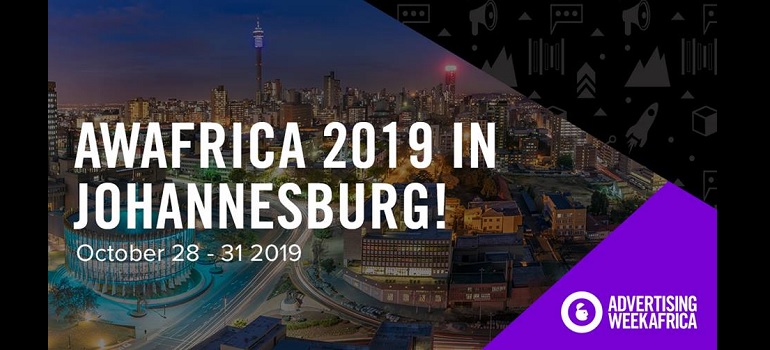
by Carey Finn (@carey_finn) Advertising Week is expanding to Africa in spring this year, adding a sixth installment to the significant annual global event series for marketing, advertising, brand and technology professionals. From Monday 28 October to Thursday 31 October, Johannesburg will welcome attendees from across the continent and beyond for four days of thought-leadership keynotes, seminars, workshops, networking and exchange.
The other editions of Advertising Week take place in New York City, London, Tokyo, Mexico City and Sydney across the year. The inaugural African version, which will be held at 1 Fox Johannesburg, has been approximately three years in the making, and is being coordinated by founding organiser and consultancy Stillwell Partners, in collaboration with African marketing network, Republicom Group.
“Originate from Africa”
Says Matt Scheckner, Advertising Week CEO, “Many of the positive cultural shifts that we have seen in arts, music, entertainment and film originate from Africa. It’s the perfect time to provide the international platform to share authentic African stories and showcase thought-provoking marketing and technological innovations sweeping the continent. It’s an exciting opportunity to bring internationally recognised professionals together with emerging talent to have engagements about how this vibrant continent is shaping global trends.”
Tosin Lanipekun, Advertising Week Africa executive director. Supplied.
According to Advertising Week Africa executive director, Tosin Lanipekun (@toscobot), who is a partner at design and creative agency Image & Time (part of Republicom), the maiden event in South Africa will be special. “We want to showcase the multiplicity and richness of the cultures of the different countries and regions of the continent,” he says. “We also plan to contribute to the growth of businesses and of the continent by providing opportunities for young people in the real economy.”
Lanipekun says that he and his partners were motivated to bring Advertising Week to Africa in part by a desire to address what he identifies as a key challenge: different parts of Africa not working optimally together when it comes to business. Another driving factor has been the need to better share Africa’s diverse creative work and disruptive potential with the rest of the world.
Joburg as launchpad
Joburg pipped other African cities as a launchpad for Advertising Week Africa because it offers a sense of balance between “the real African experience” and “the scale and scope to speak to businesses, industry and different stakeholders,” he says.
Advertising Week Africa is expected to welcome close to 4 000 attendees, of which an estimated 20% will be C-suite executives. Lanipekun adds that there will be a strong focus on supporting junior members of adland, who are often excluded from such events by prohibitive entry fees, in an effort to build talent pipelines into local economies. Ticket prices for October range from R550 for a student pass to R10 350 for a platinum pass.
While the speaker lineup has yet to be confirmed, he says that it will comprise a mix of over 200 African industry leaders and and other influential voices from other key markets across the world. Topics and considerations among the 100-plus events at Advertising Week Africa are expectedto range from timely topics on new technologies such as artificial intelligence (AI), augmented reality (AR), virtual reality (VR) and internet of things (IoT), new agency models and voice technologies to subjects like the changing workplace and job roles, he says.
Dedicated to young people
The first day of the event will be dedicated to young people, with training opportunities provided in the form of masterclasses focused on technology, advertising and marketing, and entrepreneurship, says Lanipekun, adding that internships are also on the cards. With the assistance of governmental and other partners, youth from disadvantaged backgrounds will be offered a chance to participate with sponsorship.
Each day will feature a selection of thought leaders, who will share their perspectives ranging from brands to cultural icons, agencies and technology companies, as part of a series of keynote talks. The workshops are expected to offer intimate teaching and learning experiences, where delegates will be able to interact with presenters.
Further details about Advertising Week Africa 2019 will be released in the coming weeks. Registration and tickets are available on africa.advertisingweek.com.
Carey Finn (@carey_finn) is a writer and editor with a decade and a half of industry experience, having covered everything from ethical sushi in Japan to the technicalities of roofing, agriculture, medical stuff and more. She’s also taught English and journalism, and dabbled in various other communications ventures along the way, including risk reporting. She is a contributing writer to MarkLives.com.
by Marisa Louw (@marisalouw) The decline in South Africa’s economy has resulted in a rise of freelancers and consultants across all industries. But you don’t simply become a freelancer. There are many pitfalls that may be avoided if you know what to look out for.
Regulating your income
Managing a revenue stream is probably the biggest concern for freelancers. Many of us started with a client or two in the bag but what happens when you lose a client? Or when the area you specialise in is not in demand any longer?
To limit the typical ups and downs of the freelancer income, it’s important that you diversify. This not only means offering a broader range of services than what you specialise in but also dividing your time between working and trying to find work.
Two years ago, I enlisted the services of a business coach. He made me realise that, even if I’m in a comfortable financial position, I should never stop exploring new business opportunities. I started approaching my freelance profession like a salesperson — setting targets for cold calls and new-business meetings and working towards a specific financial goal, not just for this month but mapped out for the entire year.
This approach requires immense discipline and it’s not easy to maintain the energy required to do this. But it is worth it.
Managing your time
Because it’s difficult to estimate whether you will have work next month or not, freelancers tend to accept more work than they have the capacity for. To avoid burnout, and to ensure you meet all your clients’ deadlines, it’s vital that you plan your time carefully. As you gain experience as a freelancer, you will get to know how long each job takes to execute. But the main trick is to always overestimate.
It’s further important that you know your worth. Don’t spend days on a job with a large scope if the financial rewards are small.
Linked to this is the hourly fee structure, which I disagree with. As freelancers, we should be paid based on the value we add to the client’s business, not for time we spend doing the work. If I can solve your business problem in two weeks, and someone else can solve the same problem in four weeks, why should I be paid less?
The dreadful admin
If you think freelancing will release you from doing the dreaded admin, think again! As a freelancer, you’re running a business. You’re responsible for marketing, new business development, office administration, and billing. On top of that, you need to do accounting and bookkeeping and become familiar with contract law, not to mention all the tax regulations and the preparation for submitting your tax returns as a provisional taxpayer.
Thankfully, many freelance bookkeepers offer all these services at affordable rates, but you must keep a meticulous record of your income and expenses.
~•~•~
The pitfalls of being a freelancer are many, but they can be managed and even avoided. The only thing you need to do is take the blindfolds off. Approach your journey as a freelancer with purpose, with your eyes wide open, and you will reap the rewards.
Marisa “eM” Louw (@marisalouw) is an independent marketing professional from Johannesburg. Her marketing career spans 24 years: 12 years in corporate marketing, four years at an agency, and the past eight years as an entrepreneur. She specialises in publicity, content creation, social media strategies and management, and campaign/project management.
“Motive” is a by-invitation-only column on MarkLives.com. Contributors are picked by the editors but generally don’t form part of our regular columnist lineup, unless the topic is off-column.

 Carey Finn (@carey_finn) is a writer and editor with a decade and a half of industry experience, having covered everything from ethical sushi in Japan to the technicalities of roofing, agriculture, medical stuff and more. She’s also taught English and journalism, and dabbled in various other communications ventures along the way, including risk reporting. As a contributing writer to MarkLives.com, her new regular column “Q5” aims to hone in on strategic insights, analysis and data through punchy interviews with experts in media, marketing and design.