The Invincible Blindness Of Advertisers

by  Bob Hoffman (@adcontrarian), San Francisco Bay Sometimes it is hard to overstate the cluelessness of the advertising and marketing industries.

We are exquisitely sensitive to every little gimmick or fad that pops up, and completely oblivious to dramatic, powerful change when it occurs.

The largest consuming group in the history of the world is moving into new territory and marketers are paying no attention. This change is vastly more important to business than mobile strategies or social media or content creation, or any of the other bonehead sideshows we are obsessed with.

The youngest members of the baby boom generation, the generation that changed marketing and essentially invented consumerism, are now turning 50. The oldest members are now over 65. These people are the financial powerhouse that drives our economy.

They control over 75% of the nation’s wealth. They account for 50% of all consumer spending. They buy 62% of all new cars. They dominate 94% of all CPG categories. They are the target for 5% of all advertising!

Between now and 2030, while the drooled-over 18-49 segment is expected to grow 12%, the 50+ segment will grow at 3 times that rate.

Nielsen says “Boomers are the most valuable generation in the history of marketing.“ Yet the marketing industry essentially ignores them.

When it deigns to talk to them, it treats them as if they are a bundle of maladies that need remediation.

How can this be? The answer is simple. Marketing “leaders” are mostly mediocre lemmings who live on the fumes of fads and on leftover legends.

80% of all workers in the professional and business services sector are under 55. They are completely out of touch with the reality of who the consuming public is. They cannot see beyond their own noses and their own narcissistic vision of who buys things and why.

These people are frantically pissing away money and resources developing mobile Facebook apps for the .1% of the population who might ever use them and completely ignoring the people who actually buy the things they sell.

They operate under a set of fictitious beliefs about people over 50.

  • That they are more (or less) brand loyal than younger consumers. Nonsense.
  • That they are more price-conscious than younger consumers. Also nonsense.
  • That they spend less money than younger people. Major nonsense.

But of all the delusions that are summoned forth to justify their out-of-date, ossified addiction to youth, perhaps the most pervasive and ridiculous is the idea of “lifetime value.” Or, as the legend goes, if you get ’em young you’ll have ’em for life.

Every time someone with a functioning brain points out that people over 50 are a way better target for most advertisers, some knucklehead drags out a variant of the “lifetime value” fairy tale. Last week, the stupidity of this argument was exposed in a study published by the journal Science.

According to The New York Times a team of psychologists released a study which discredited what they call “the end of history illusion” i.e., the illusion that things will remain as they currently are and we will stay like we are now.  

“..when asked to predict what their personalities and tastes would be like in 10 years, people of all ages consistently played down the potential changes ahead… People seemed to be much better at recalling their former selves than at imagining how much they would change in the future.”

Why? According to one of the authors of the study we simply do not realize “how transient our preferences and values are…” 

The “end of history illusion” is the intellectual fallacy behind the “lifetime value” fantasy.

The idea that someone who is 20 today will be wearing the same clothes, driving the same car, drinking the same beverages, shopping in the same stores in 20 years is absurd. Yet this is the rationale marketers use to justify the vacuous strategy of chasing young people and ignoring the people who have and spend most of the money.

The marketing and advertising industries have feasted on the 18-49 group for several decades. What they do not yet comprehend is that the people who made the 18-49 group so valuable have left the building.

That game is over. A new game has begun. And today’s dopey marketers are too busy admiring their “likes” to notice it.

– The Ad Contrarian is Bob Hoffman, ceo of Hoffman/Lewis advertising in San Francisco and St. Louis. Hoffman is the author of The Ad Contrarian and 101 Contrarian Ideas About Advertising. Reprinted from his blog The Ad Contrarian.

– Industry profiles you’ll make time for. Sign up for our free newsletter!

Tech Law: Social media insight — Randi Zuckerberg and contextual privacy

by Paul Jacobson (@pauljacobson) One of the biggest ironies of the 2012 holiday season was Randi Zuckerberg’s family photo being tweeted by her sister’s Facebook friend, Callie Schweitzer, and the resulting privacy debate. If you missed it, Buzzfeed has a pretty detailed account of what happened which includes the photo that was tweeted and the initial exchange between Zuckerberg and Schweitzer on Twitter.

Zuckerberg regards this as a matter of “human decency” and much of the debate only has focused on Facebook’s privacy controls, questions about the correct etiquette to follow when posting content about other people online and the irony that Mark Zuckerberg’s sister fell prey to this apparent privacy slight. A far more interesting issue which this controversy highlights is privacy’s contextual nature. Zuckerberg published the photo to her Facebook Timeline and shared it with a limited group of people (either “Friends of Friends” or just to her Friends but with her sister tagged with the result that Schweitzer was able to see the photo as Zuckerberg’s sister’s friend). Schweitzer then shared the photo on Twitter which, as you know, has two privacy options: completely public or closed and private.

randi

While Facebook has fairly nuanced privacy controls with a degree of complexity, Twitter allows users to either keep their profiles public (in which case anyone can see what you tweet, for the most part) or closed and only accessible to approved users. The privacy paradigms are very different and by tweeting the photo originally shared with a limited group of people on Facebook, Schweitzer basically crossed the streams and took Zuckerberg’s photo out of its original context where her expectation was that only the people she chose to share it with would see it and published it in a very public forum not limited to just those people Zuckerberg chose.

This is largely about Zuckerberg’s legitimate expectation of privacy which, in our law, is a fundamental consideration for determining whether a person’s right to privacy has been infringed. The seminal case on the right to privacy in South Africa is the Constitutional Court case of Bernstein and Others v Bester NO and Others. The Constitutional Court said that the right to privacy is informed largely by a legitimate expectation of privacy which, in turn, means that a person must establish that:

he or she has a subjective expectation of privacy and that the society has recognized that expectation as objectively reasonable.

The subjective component means that a person can’t have an expectation of privacy where that person has consented to have his or her privacy invaded. The objective component introduces a requirement for reasonableness when assessing an apparent privacy violation. There is a notion of a “continuum of privacy interests” which is a helpful application of this idea of a legitimate expectation of privacy. The Court in the Bernstein case said the following:

The truism that no right is to be considered absolute, implies that from the outset of interpretation each right is always already limited by every other right accruing to another citizen. In the context of privacy this would mean that it is only the inner sanctum of a person, such as his/her family life, sexual preference and home environment, which is shielded from erosion by conflicting rights of the community. This implies that community rights and the rights of fellow members place a corresponding obligation on a citizen, thereby shaping the abstract notion of individualism towards identifying a concrete member of civil society. Privacy is acknowledged in the truly personal realm, but as a person moves into communal relations and activities such as business and social interaction, the scope of personal space shrinks accordingly.

This is an explanation for why people in the public eye have a different legitimate expectation of privacy than people who are deeply private and secretive. A person’s legitimate expectation of privacy is determined by their level of publicity and the consents they have given to invasions of their privacy. This further complicates Zuckerberg’s position given that she was Facebook’s head marketing executive while she was there and, given her brother’s notoriety, she remains very much in the spotlight as an Internet celebrity of sorts.

Leaving aside Zuckerberg’s arguable status as a person in the public eye, taking her photo out of its original context and sharing it in a different and very public forum likely exceeded her legitimate expectation of privacy. Her expectation was that only the people she chose to share the photo with on Facebook would see it, not everyone on Twitter and, subsequently, everyone who saw the photo in the many news reports on the controversy.

As many commentators have mentioned, this story is, to a degree, an indictment of Facebook’s convoluted privacy controls. In some respects Facebook’s privacy controls are complex because they are an attempt to cater for very granular sharing choices (for example, share only with Facebook friends but allow a friend tagged in a photo to share with her friends, thereby extending the share – likely what occurred here). They are certainly more intelligible today than they have been in the past but the options available to the person doing the sharing contrasted with the controls available to the person given access to that content creates opportunties for sharing that often exceed the user’s original intention.

Context is an underappreciated and vital aspect of privacy. It is implicit in the legitimate expectation of privacy and it is becoming a particularly tricky factor in an interconnected social Web. To paraphrase Shrek:

There is a lot more to privacy than you think. Privacy is like onions. Onions have layers.

Paul Jacobson is founder and director of Web•Tech•Law. Web•Tech•Law / CC BY-SA 2.5

– Industry news you’ll make time for. Sign up for our free newsletter!

Ad of the Year with Oresti Patricios – The best ad of 2012

MarkLives Ad of the Year with Oresti Patricios – The best ad of 2012

Happy 2013 and a prayer to the ‘gods’ of advertising – may the new year bring us all a slew of local campaigns that are imaginative, entertaining, hard-working and impactful. Now’s a good time to choose the best ad and advertiser for the year that’s left us, and it is a fairly easy choose. That’s because one brand consistently stood head and shoulders above the rest with a series of outstanding adverts that combined to make an incredibly powerful statement about South Africa and being South African. For me, that brand was Nando’s – but to explain why I need to offer some context.

Culturally and politically, 2012 was a year of great rifts and antagonisms. The national discourse boiled with ANC infighting and party-political mud-slinging, and the nature of our national ‘debate’ was characterised by the ad hominem. Name calling and public attacks on people’s reputations were pretty much the order of the day.

Unfortunately we came no closer to achieving tolerance in the race debate either. The year closed as it started – with yet another public fracas that followed a letter entitled ‘Dear White People’, which was written by activist film maker and writer Gillian Schutte. What followed was an emotionally-driven storm which culminated in a public spat between Schutte and Max du Preez, in which the feminist author called the former founder of Vrye Weekblad a ‘fascist liberal’ and a misogynist, while one of Schutte’s acolytes called du Preez ‘just an old white Afrikaans male piece of shit’.

In between the e-toll wars continued with Cosatu squaring up against the ANC, the Malema and Zuma feud continued right up until Mangaung, and civil society continued its showdown against various government departments.

Conflict and spurring reached murderous heights with the assassination of local politicians in the North West, Mpumalanga and KwaZulu-Natal.

In a year so saturated with violence (both real violence, and the violence that saturates our public discourse), it becomes hard to remember who and what we are. The focus is strongly flooded by the Tsunami of news that appreciating our culture and who we are as South Africans becomes divorced or abstracted from our experience of our world.

At times it can feel a bit like being the deer caught in the proverbial headlights of the ongoing car that’s hurtling toward you at breakneck speed. The beautiful bush is all around you, but all you’re worried about are those two, round orbs. You can step out of the light at any minute and disappear into the beautiful, lush, dense darkness of the bush that surrounds you – but all you can do is stare and fixate. The violence of the national discourse becomes consuming or overwhelming.

That is why Nando’s wins the advertisement and the advertiser of the year, hands down.

The fowl people have never shied away from the controversial or from taking risks. Nando’s goes where angels fear to tread, rolls up its sleeves nando's diversity adway past its elbows and gets its hands dirty with the issues that affect all our lives. This is a fairly dangerous path for a brand because it can so easily backfire if you misread the cultural cues or create advertising that isn’t finely in tune with cultural sensitivities. Let’s face it, it is much easier to sit back and create advertising that’s divorced from cultural tensions and difficult realities.

But Nando’s has won its cultural strips from being in society’s mosh pit, and that’s why we love the brand. It is part of who we are and the relationships that we forge in our fiery society.

More so, in 2012 it held up a mirror to us with its campaign #25reasons, which reminded us why South Africa is such a great country.But the ad of the year must go to Nando’s diversity advert which uses the brand’s trademark sense of humour to create a telling epiphany about what it means to be South African. Congratulations to Nando’s and its awesome advertising agency Black River FC for a truly courageous campaign for the chicken people in 2012. A special mention must also go to Retroviral, the Jozi digital communications company that handled the crowd-sourced and social media aspect of Nando’s #25reasons campaign.

We live in a young democracy and like many other young or emerging nations the formation of new class, power and economic relations will not be without struggle or conflict. In the robust and rowdy discourse that surrounds this process it is very cool that Nando’s has reminded of what’s made us who we are.

Ad of the Week is published on MarkLives every Wednesday. See past selections here.
Oresti Patricios is the CEO of brand and reputation analysis company Ornico.

– Industry profiles you’ll make time for. Sign up for our free newsletter!

2012 Big Reads: The 10 best read stories of 2012

We started listing the 30 most trafficked stories on MarkLives in 2012 on Monday and yesterday we hit the top 20.  Today we publish the 10 best-read stories published on MarkLives during 2012.

10 The biggest circulating consumer magazines in SA (November update)
The ABC has released circulation statistics for the period July 2012 to September 2012. Here are a couple of numbers that popped out for us. We also updated our list of the biggest circulating consumer magazines in SA!

9 The agency blueprint that rocked the ad market
Two years ago the scene was radically different for Mike Abel, who had just returned from a stint in Australia, to start his own agency. As any agency person departing that market for these home shores will tell you, the locals instantly starts talking tail between the legs, didn’t cut it, running for home wounded stuff. The 2010 edition of the Financial Mail’s AdFocus simply ignored him and his new agency, M&C Saatchi Abel.

He hired a bunch of high-profile, high salary partners into a start-up business, which had yet to sign a single client. How much money can one man burn?

8 The biggest circulating consumer magazines in SA (August update)
The ABC has released circulation statistics for the period April 2012 to June 2012. Here are a couple of numbers that popped out for us. We also updated our list of the biggest circulating consumer magazines in SA!

7 Cell C puts new agency decision on review
Cell C has put its new agency appointments, which was formally announced to the media and industry on February 10, under review. Cell C had announced the appointment of FoxP2, King James, Prima Plus and Trigger/Isobar as its ad agencies.

In a rather terse statement Karin Fourie, Senior Manager: Public and Media Relations at Cell C, stated that “the new CEO is currently reviewing the appointment of an agency or agencies” and refused to comment further or to respond to a request to clarify the one-liner.

6 Capitec’s 6 P’s of marketing
Today’s consumer is bad news for the banking industry. They are an unhappy bunch, as the Global banking survey 2011 by Ernst & Young revealed, when it found that nearly half of SA’s banking consumers felt unsatisfied with the service they experience from their bank.

Service quality was given as the primary motivation for switching banks by 96% of South African customers according to Ernst & Young who also found that South African customers are the most sensitive to price, with 57% citing it as a main reason for a change of bank.

It’s easy to hate banks. The bureaucracy, the hidden costs, the soulless, soul destroying slog of resolving any issue that doesn’t fit the clearly templated existence of their customer “support” personnel, the stupid office hours…

5 Thorsten Heins interview Pt 2: Secrets of BlackBerry 10
In the second part of this interview, RIM CEO Thorsten Heins tells Arthur Goldstuck (@art2gee) about competing with Apple, how the BlackBerry’s notorious freezes have been overcome, and reveals the company’s secret weapon.

4 In SA Samsung tablet sales figures are closing in on iPad numbers
The days of the iPad’s dominance of the tablet market are numbered. Until recently, more than two thirds of tablets sold across the world have been made by Apple. That has afforded the manufacturer the luxury of dictating the direction of the market, from size to functionality to case studies of ideal uses.

But that is all about to change. And the South African market offers a good indication of the coming shift in the balance of tablet power.

3 EXCLUSIVE: Cell C drops King James, FoxP2 – retains Ogilvy
Cell C has decided to drop King James and FoxP2 as its advertising agencies. Cell C had announced in February that it had appointed FoxP2, King James, Prima Plus and Trigger/Isobar as its ad agencies. King James and FoxP2 were to replace Ogilvy Johannesburg. Ogilvy will now be retaining the Cell C business.

The news in February that FoxP2 and King James would take over the account had hardly been announced when the account move was frozen. Alan Knott-Craig had been appointed new Chief Executive Officer of Cell C and had not been party to the decision on the new agency appointments, while Cell C brand and marketing communications executive Mandy Waddington, who presided over the agency appointment process, left the company.

2 The most popular mobile phone in South Africa is …
Mainstream media tend to be heavily focused on the very latest, very shiniest phones on the market, or on the very coolest apps that feed these phones. At the Mobile World Congress in Barcelona this week, it is all about what can dazzle the most. As a result, no one seems to notice the humble devices that truly underpin this market.

So, despite only 20% of phones in use in South Africa being smartphones, the category gets 99% of the attention. Yet, 32-million South Africans use devices called “feature phones”, the regular phones that can’t be upgraded.

1 BBC interview with father of Chad le Clos and why it is a loss for the free Internet
In a stunning victory South African swimmer Chad le Clos took gold in the 200m butterfly at London 2012. Le Clos’s father, Bert, was being interviewed by the BBC shortly after Le Clos received his medal. His father, emotional and excited at once, gave an interview pundits in the States have referred to as the “media moment of the games so far.”

South Africans accessing the BBC website wanting to watch the interview with the father of their newly minted national hero will receive nothing but the le clos farther bbc interviewfollowing message “Cannot play media. Sorry, this media is not available in your territory.”

chad le clos

– Industry profiles you’ll make time for. Sign up for our free newsletter!

2012 Big Reads: The 20 best read stories of 2012

We started listing the 30 most trafficked stories on MarkLives in 2012 yesterday and today we hit the top 20.  The 10 best-read stories will be published Wednesday. Any guesses ? Tweet them to @marklives!

20 Justin Bieber in a penis suit just another day in the office for ZANews
I’m trying to figure out what the two, ahem, balls attached to the front of the fluffy pink bunny suit could possibly indicate.

“Oh – that was for our Halloween edition. It’s a penis and we put  Justin Bieber in it,” says a voice from somewhere to my right.

I’m in the costume room of the only in show in SA that would feature a giant penis  sporting the Bieber’s face on air – or as the ZANews website puts it ” the only news show more ghastly than the SABC.” It’s ZANews producer Thierry Cassuto and his teams’ literal take on the boy-man as an over-exposed sex symbol.

justin bieber

19 MarkLives refused media accreditation to The Loerie Award shows (again)
MarkLives (or to be more precise, me) have been refused media accreditation to the award shows of the 2012 Loerie Awards.

Lebogang Mohaule, Media Assistant at The Loerie Awards, confirmed that no accreditation to the two main award events would be forthcoming. Mohaule offered a single seminar pass for the rather grandiosely named International Seminar of Creativity taking place on Friday 21 September at Cape Town’s City Hall instead. I would also have access to “online press kits & official image gallery.”

Mohaule claims the Loeries “are following the same accreditation process used by the Cannes Lion Festival of Creativity” in which accreditation “is not based on the type of media you represent, rather [on] the planned media coverage.”

18 A collaborative approach to architecture
by Nashid Nabian and Carlo Ratti (a speaker at the 2012 Design Indaba) of MIT SENSEable City Lab The 1965 exhibition Architecture Without Architects, shown at the Museum of Modern Art, and the accompanying book Architecture Without Architects: A Short Introduction to Non-pedigreed Architecture by Bernard Rudofsky, provided a unique view into what Rudofsky defined as “communal vernacular,” “anonymous,” “spontaneous,” “indigenous,” “rural,” “non-formal,” “non-classified,” or “non-pedigreed” architecture.

The focus of the exhibition was on architecture created by anonymous, untutored builders who used their good sense to handle practical problems in a synergetic relationship with the environment, implicitly criticizing the narrow orthodoxy of a discipline preoccupied with “architectural nobility” and the work of individual masters.

The message of the exhibit and the accompanying publication was that the philosophy and know-how of these builders, and their understanding of the potential and the limits of architecture, present an enormous, untapped source of inspiration. In architectures without architects, the inhabited environments are inspired and directly shaped by their inhabitants.

17 Top 10 of 2012: Magazine covers we love
I love countdowns! Best of this. Worst of that. Richest people. Newsmakers of the Year. Car of the Year. List it and I’ll read that article. So I’m especially thrilled to  present to you a countdown of the Top 10 South African covers for 2012 as selected by Mediaslut.

16 Chad and Bert le Clos opens Virgin Active’s 100th club
The headline should have read CHAD SHIRTLESS.

Virgin Active has opened its 100th club in Balfour Park Mall Gauteng. We thought the T-shirts for Olympic medallist Chad le Clos and his dad (and social media phenom) Bert was spot on.

15 Capitec’s marketing team on the Capitec way
Members of Capitec’s marketing team on the Capitec way

Pieter Marais –  Head of Marketing

“In a recent brand discussion Gus Silber said about Capitec Bank “they are not like other banks”.  This statement says more about the other banks than what it says about Capitec Bank.  The same goes for marketing.  In my thinking about the Capitec Bank brand I apply the motto – don’t think like other marketers.  There are many marketing offers coming through one’s inbox and marketing articles and seminars preach more of the same.  Our success lies in cutting through the clutter.  We are however fortunate to work on a brand that allows free thinking outside the banking category box.”

14 Naspers to benefit from Facebook IPO
In Internet circles, the world as we know it is the one in which social media dominates most of our online activity, and every business is told it must be part of it. Yet no one knows what it’s really worth, how to work it to maximum advantage or how important it will be in a few years’ time.

In 2012, some of that uncertainty will be dispelled by one single event. It will be the year of Facebook being listed on the stock market, in what the Americans call an Initial Public offering, or IPO.

13 Magazine covers we love (this week)! March 29

MarkLives.com runs a regular slot featuring the best local and international magazine covers every week. We recognise well thought out, powerful and interesting (and hopefully all three in one) magazine covers and celebrate the mix of pragmatism, creativity and personal taste that created each of them.

12 Magazine covers we love (this week)! Feb 24

MarkLives.com runs a regular slot featuring the best local and international magazine covers every week. We recognise well thought out, powerful and interesting (and hopefully all three in one) magazine covers and celebrate the mix of pragmatism, creativity and personal taste that created each of them.

11 Rocket Internet enters SA market with Zando, numerous ecommerce plays
Zando, a new online fashion ecommerce play funded by Germany-based Rocket Internet, launched three months ago and is literally aiming to rocket through the online retail market to be in the same league like services such as Kalahari.net and Takelot.com.

The offices in the Black River Park office complex in Cape Town seem threadbare but are bustling with people – they number well over a 100 Eugen Petersenalready, according to Eugen Petersen, MD and co-founder at Zando.

– Industry profiles you’ll make time for. Sign up for our free newsletter!

The rise of “independent pitch consultants” and how to deal with them

by Odette van der Haar (@odette_roper) Changes in the business landscape have resulted in the procurement department becoming more and more involved in the management of tenders and pitches to source advertising and communications agencies.  In the past, the procurement of suitable agency partners was left to the marketing department whose knowledge and expertise regarding the business of advertising and communications was heavily relied upon.

Unfortunately, these days it is deemed a “conflict of interest” for marketing departments to be closely involved in the procurement and selection of agency partners. Therefore, in the name of good corporate governance, procurement and supply chain management are more often than not mandated to run tender and pitch processes when sourcing agency partners. Furthermore, a lack of knowledge, experience and understanding of the business of advertising and communications, as well as how agency partners function complicates tender and pitch processes and has created the need for assistance from “independent consultants”.

These independent consultants are individuals or companies that are meant to be neutral and unbiased, with extensive knowledge and experience in the business of advertising and communications. They act as advisors to the procurement and supply chain management departments in order to bridge the knowledge and experience gap for agency partner sourcing, evaluation and negotiation.

Procurement departments need to ensure that all parties including the independent consultants are treated fairly during tenders and pitches.  This includes checking with the ACA, which is the industry body of the advertising and communications sector in South Africa, for any applicable industry rules, guidelines and standards which are generally provided free of charge.

The ACA has a  number of tools available to clients, agencies and consultants including rules to be applied when procuring from the advertising and communications sector, best practice guidelines for bids ranging from information on planning for bids, drafting of specifications/briefs, the structure of the evaluation panel, short-listing of bids, pitch presentations, informing bidders of the outcome, cancellation of bids and templates for RFI documents, brief documents, case studies, agency remuneration and client and agency contracts to name a few.

Furthermore, building good relationships between procurement and marketing departments will certainly benefit any company. After all, distancing the very people who are to work with the selected agency is counter-productive.  Finally, it is vital to ensure that the same perceived conflict of interest that displaces the marketing department from a tender and pitch process does not arise because the consultant is not truly independent.

Some consultants are paid annual subscriptions by agencies to have their companies recommended to potential clients.  These same potential clients also pay the consultants to act as an independent facilitator of their tender and pitch process, to ensure an unbiased or neutral selection of an agency partner.  When consultants are paid by agencies and clients, one cannot help but question whose interests the consultants serve.

Ultimately, the pitch process is the first step in what should be a long-term and mutually beneficial client- agency partnership.  The tender and pitch process therefore sets the tone and chemistry for the partnership.  If all the parties involved feel that that they were treated not just fairly, but that their views were considered in the process, it sets a firm foundation for a successful partnership in place.

In a nutshell, there are many factors to consider when sourcing an agency partner – the use of an independent consultant is merely one such factor. However, before incurring consultancy fees, clients are welcome to contact the ACA for free advice and guidance in order to make informed decisions and possibly to learn a bit more about the business of advertising and communications.

– Odette van der Haar (nee Roper) is the CEO of the Association for Communication and Advertising (ACA) which is the recognised industry body of the advertising and communications profession in South Africa.

Weekly Top 10: Fastest rising search terms from South Africans on Google

With the help of Google Trends we are publishing the top 10 searched for phrases (minus the sexy stuff of course) by South Africans on Google over the previous seven days.

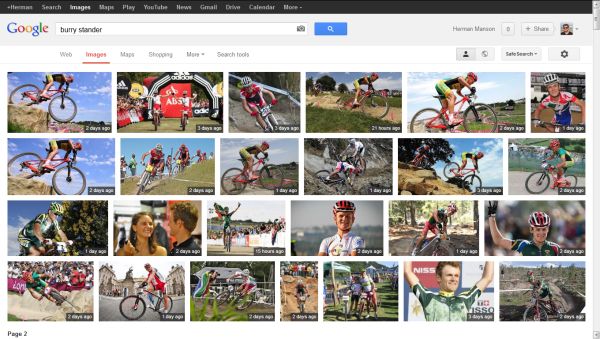
burry stander

Fast Rising Searches

burry stander Breakout
kim kardashian +350%
matric results +350%
happy new year +250%
matric results 2012 +250%
unisa +130%
cricket +110%
jobs +60%
sars +60%
beeld +50%

Top 10 search terms

1. facebook
2. youtube
3. gumtree
4. google
5. you
6. fnb
7. gmail
8. absa
9. games
10. jobs
11. standard bank
12. matric results
13. game
14. weather
15. yahoo
16. facebook login
17. music
18. whatsapp
19. unisa
20. matric results 2012

Top 10 search terms minus social media/mail/search

1. gumtree
2. fnb
3. absa
4. games
5. jobs
6. standard bank
7. matric results
8. game
9. weather
10. music

(For past data click here)

* Google Trends is intended for general analysis of volume patterns.
* When you see Breakout listed instead of an actual percentage, it means that the search term has experienced a change in growth greater than 5000%.

2012 Big Reads: The 30 best read stories of 2012

We list the 30 most trafficked stories on MarkLives in 2012 starting with numbers 30-21 today and ending with numbers 10-1 on Wednesday.

30 Bad news for newspapers gets worse
The ABC has released circulation statistics for the period July 2012 to September 2012. Here are a couple of numbers that stood out in terms of newspaper circulations.

29 EXCLUSIVE: Draftfcb acquires Hellocomputer
Draftfcb has acquired independent digital agency Hellocomputer. The move follows widespread industry speculation that the two parties were about to announce a deal. A letter to clients went out this afternoon at 15h00 while staff was informed at about 15h30.

Hello Computer was launched in 2005 by its ECD Mark Tomlinson. Draftfcb’s digital arm Mesh Interactive will fold into Hellocomputer taking the agency to a total of 80 people in Johannesburg and Cape Town. The Hello Computer name has also changed format to Hellocomputer. The size of the deal has not been made public.

MarkLives asked John Dixon, CEO at Draftfcb South Africa, what the deals means for his agency.

28 So What Have The Loeries Done For You Lately?
by Justin Gomes Charl Thom* recently wrote a piece on advertising awards that got me thinking about the role the Loerie Awards have played in my career – not only from a creative’s perspective, but from the viewpoint of someone who started an agency seven years ago. It made for some interesting reminiscing.

27 EXCLUSIVE: Ninety9cents lands Capitec, sees 43% growth y/y

Cape Town headquartered agency ninety9cents has landed the ATL Capitec account* – probably the most exciting banking brand any agency can hope to work on. Capitec, it’s estimated, spends R80 – R100 million on advertising through a year.

The account win follows a financially sound year for the agency in which it grew revenue by 43% year on year – the second year revenue growthAndrew Brand has exceeded 40%. Revenue now stands at around R59 million.

26 Magazine covers we love (to have and to hold) May 17
MarkLives.com runs a regular slot featuring the best local and international magazine covers every week. We recognise well thought out, powerful and interesting (and hopefully all three in one) magazine covers and celebrate the mix of pragmatism, creativity and personal taste that created each of them.

25 EXCLUSIVE: Hellocomputer – “we’ll continue to fight the fight from the inside”
Draftfcb acquired award-winning independent digital agency Hellocomputer earlier today. MarkLives talks to David Moffat, Managing Director at Hellocomputer, about the future of his agency within the Draftfcb South Africa Group.

Hellocomputer - David and Mark

24 South Africa’s top 10 most popular YouTube videos in 2012 – Made and Viewed by SA!
The most popular YouTube video results for 2012 are out. The list shows the South African videos that recorded the largest number of views on the popular social media platform over the past year. The list is ranked in order of South African popularity, determined by views.

23 Internet Access in South Africa to hit 20% penetration by 2013
The following is a tweetnote presentation  – 10 tweets on the same topic – on the Internet Access in SA 2012 study for the 2012 Netprophet conference recently held in Cape Town.

22 Thorsten Heins interview Pt 1: BlackBerry in Africa
In this interview RIM CEO Thorsten Heins tells us why BlackBerry 10 will restore faith among both consumers and investors and what makes the African market special.

21 Top 10 of 2012: The worst magazine covers of the year
It’s impossible for us to see all the covers published during 2012 so we’re sure that are worse covers out there.  This is a selections of covers we found or that readers sent us. If one of your covers were selected – it’s nothing personal! Remember that you can leave a comment to let us know if you agree, or think we totally missed the mark…

– Industry profiles you’ll make time for. Sign up for our free newsletter!

#MagLoveTop10: The sexiest magazine covers of 2012

MarkLives.com runs a regular slot featuring the best local and international magazine covers every week. We recognise well thought out, powerful and interesting (and hopefully all three in one) magazine covers and celebrate the mix of pragmatism, creativity and personal taste that created each of them. By media blogger MediaSlut.

Previous TOP 10 lists:

What makes a cover sexy? Some people like just a bit of skin, others the whole shebang.

Special mention: Marie Claire South Africa, March 2012

Marie COVER_MARCH2012_4Col BW.indd

There’s no denying that Jenna Petersen is extremely hot, or that Jack Parow is extremely zef. Together they somehow made this cover work, and eventhough Jack brings down the Sexy-o-meter on the cover, it’s worthy Special Mention. It’s all for a good cause anyway.

10. Playboy South Africa, November 2012   

Playboy 11 November 2012

Lips can be sexy. And these definitely are!

9. Men’s Health South Africa, April 2012  

Men's Health

Some like it on, some like it off. Some like the option, and some like the mystery. Men’s Health South Africa gave readers the option with the April 2012 cover… I prefer it off.

8. GQ South Africa, April 2012  

GQ 3 April 2012 Girl

All steamed up. Hottest stomach. Comes in at #8.

7. Esquire, November 2012    

1349708476

Mila Kunis is one sexy lady, and this cover is just amazing (everything from styling to typography and design), and is a hot #7.

6. Interview (Russia and Germany), February 2012

Interview Feb Lana Del Rey Germany


Interview Feb Lana Del Rey Russia

Those bee-stung lips! Interview gave us the priveladge of seeing two options of this cover with Lana del Rey.

5. The Portland Mercury, 7 November 2012    

1352732069

Hey, don’t judge! Some like it dirty and eatable…

4. GUP, Issue 34

GUP 34

Simple. Smoky. Striking.

3. FHM South Africa, February 2012

FHM 2 February 2012

Why this FHM cover out of all the others? It feels un-posed – it feels like an an intimate picture her boyfriend took, and Instagrammed.

2. G Magazine, 2012  

g ano 14 2012

Yup we picked a gay porno title for #2, but if you get turned on by the clever use of fonts you won’t fault us… Then there’s the guy, the tattoo’s, the glasses, the layout. G is for grrrr!

1. Playboy South Africa, April 2012  

Playboy 4 April 2012

Twins. Double the trouble. Double the fun. Double the sexiness. Double the sex. The Jenzen twins were the first twin-Playmates of South Africa, in celebration of Playboy SA’s 2nd year in the market. A fantacy for just about every straight guy and a lot of girls. Everyone wins!

Best of 2012: Best Phones of 2012

Arthur Goldstuck (@art2gee) declares his choice for the Best Phones of 2012.

Our Phone of the Year divided into high-end smartphones, mid-level and low-end smartphones, and feature phones. The list breaks away from the traditional top 3 approaches, as a wide variety of devices have emerged to suit different needs.

High-end smartphones

The Samsung Galaxy S3 sweeps the rug out from under Apple’s feet with a dazzling big screen, gorgeous curves and slick and fast operating system. The HTC One X comes close, but loses marginally in screen size and by the width of a microSD card (which it doesn’t have), despite its near-infinite – okay, make that 32GB – internal storage.  It wins on price, though.

The iPhone 5 stretches for the finishing post, and the long format makes for a great games controller, but a 4” screen still leaves it poky against the two leaders. Ultra-sharp Retina Display redeems it. The iPhone 5 only narrowly beats out the Nokia Lumia 920. It’s already a cliché to say the latter has the best camera of any standard smartphone in the world, but if photos are your thing and you want Windows 8, this is your phone.

Finally, there’s the trusty workhorse, the BlackBerry Torch 9810, which may not be as cool as the rest, but its messaging efficiency is unbeatable. It also whips the rest on price.

1.     Samsung Galaxy S3. 4.8” screen, Android 4.0, 8MP camera and 1.9MP front camera, 1.4GHz quad processor, Wi-Fi hotspot. R6498 (8ta), R7500 (DionWired).

2.     HTC One X. 32GB storage, 4.7” touchscreen, Wi-Fi hotspot. R5800 (see Pricecheck.co.za)

3.     Apple iPhone 5. A6 chip, 4” Retina Display, LTE. R8800 (Vodacom)

4.     Nokia Luma 920, 1.5GHz processor, Windows Phone 8, Wi-Fi hotspot, 4.5” touchscreen, 8.7MP camera with low-light capability, 32GB storage, 2GB RAM, LTE. R7999 (Vodacom)

5.     BlackBerry Torch 9810. 8GB storage, microSD card, capacitive touchscreen, slide-out QWERTY keyboard, Wi-Fi hotspot. R4200 (exCellular)

samsung Galaxy S3

Mid-level smartphones

The Huawei Ascend P1 takes first place in the mid-range by virtue of whipping the high-end phones in the slim stakes, but at a fraction of their price. However, if you’ve seen the new James Bond movie, Skyfall, and survived Q being a geek who doesn’t do gadgets, you may have noticed 007’s choice of phone. The cool kids (read: “sheep”) may not be brandishing a Sony, but the Xperia T comes with a Licence To Be Different. The Lumia 820 is the most compelling Windows 8 phone in the mid-range, and the BlackBerry Bold 9900 still earns the lust of South Africans who think a keyboard is a Good Idea but don’t want to miss out on Touch.

1.     Huawei Ascend P1. Everything Android phones have to offer, comparable to the high-end phones, with FM, but at an absurd price. R1999 (CNA, Edgars)

2.     Sony Xperia T. 13MP camera, NFC, not far behind the top-end, but at a mid-range price. Recommended retail: R6999 (to be announced)

3.     Nokia Lumia 820, 4.3” touchscreen, Windows 8, LTE. Around R6000. (tba)

4.     BlackBerry Bold 9900, 8GB storage, 2.8” capacitive touchscreen, wide QWERTY keyboard. R5999 (Vodacom)

Low-end smartphones

At the low-end of the smartphone range, BlackBerry and Samsung have the most compelling single devices, but Nokia offers the best range and choice:

1.     BlackBerry Curve 9320. 3G, FM radio, 3.2MP camera, microSD card slot. R2299 (Edgars, CNA)

2.     Samsung Galaxy Pocket S5300, Android 2.3, 2MP camera, FM, microSD card slot. R899 (Cellucity)

3.     Nokia Asha 610. Windows 7.5, 5MP camera, 8GB memory, FM. R1999 (CNA, Edgars)

4.     Nokia Asha 311. 3” touch screen, 1GHz processor, 3.2MP camera, Wi-Fi, FM. R1499 (Makro)

5.     Nokia Asha 306. 3” touch screen, 2MP camera, WiFi, FM. R979 (CNA, Edgars)

Feature phones

Samsung is losing SA market share, but it still has some of the best options at both the top and bottom end of the market. For example, at No.1 among feature phones.

1.     Samsung Pusha E1200. Colour screen, FM,  microSD card slot. R129 (Game)

2.     Nokia Asha 201. QWERTY keyboard, 2MP camera, 2.4” QVGA screen, FM, Bluetooth, microSD card slot. R689 (Ackermans)

3.     ZTE S505. It does only three things: voice, SMS and FM radio. R50. (Pick ’n Pay). The killer app is in the wallet.

One phone fits all? Ha!

* Arthur Goldstuck heads up World Wide Worx (www.worldwideworx.com) and is editor-in-chief of Gadget. Follow him on Twitter on @art2gee. Reprinted from Gadget.

Industry news you will make time for. Subscribe here. It’s free!

Online CPD Courses Psychology Online CPD Courses Marketing analytics software Marketing analytics software for small business Business management software Business accounting software Gearbox repair company Makeup artist