
by Paul Jacobson (@pauljacobson) The question of who owns your social media account and can legitimately claim your connections with your communities has popped up again in the last few days. David Graham from Deloitte posed the question on Twitter and David wrote an article for Memeburn titled “Who owns your social media account and community when you resign?”. I wrote about this topic in November 2011 in a post titled “When ex-employees take your Twitter followers away from you” and the topic is still very relevant today. That said, there is another perspective on this issue which neither my or David’s article dealt with: What happens when you introduce your community of followers and connections to a new employer?
Category archives: Tech
Saving NATIVE

by Herman Manson. NATIVE is correcting course after facing some difficult challenges following its entry into the market.
Tech Law: SA law advances dealing with social Web issues in Facebook defamation ruling
by Paul Jacobson (@pauljacobson) The innocuous looking case of H v W which was handed down in the South Gauteng High Court on 30 January 2013 is anything but. Judge Willis’ 30 page judgment recognises the harm a Facebook post can do to a person’s reputation and throws the weight of the Court behind the person defamed (and who can afford the legal fees).
Media Future: Z10 is BlackBerry reinvented
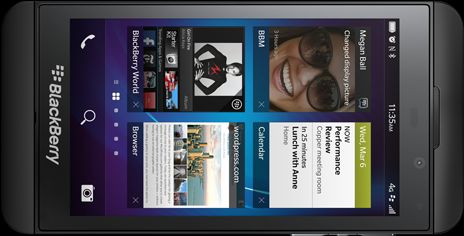
The first phone of the new BlackBerry era will be released in South Africa a month from now. Arthur Goldstuck (@art2gee) gives his initial impressions of using the Z10.
The long-awaited resurrection of BlackBerry has begun, with a single phone model released. Another is on the way, with promises of half a dozen to follow, all on the back of the new BlackBerry 10 operating system on which the company has staked its future.
The first of the new generation of BlackBerry devices, the top-of-the-range Z10 touchscreen phone, was unveiled last Wednesday night. A second model, the Q10 with QWERTY keyboard, was briefly introduced but not demonstrated. The Z10 was released in the United Kingdom on Thursday, but will only arrive in South Africa on 1 March. The crucial US market will receive the device at the same time as South African outlets.
Meanwhile, a few advance units arrived in the country last week, providing the opportunity to get to know the device through using it in the real world, rather than through prototypes and demos. Consider this a preview, ahead of more in depth and comparative reviews.
The most surprising feature of the Z10 is not how well it lines up, visually, alongside the rival high-end phones from Apple and Samsung. That was always a minimum requirement.
The big surprise is how appealing BlackBerry has made the user experience.
Tech Law: Is WHATSAPP violating your privacy rights?

by Paul Jacobson (@pauljacobson) he popular mobile and multi-platform messaging service, WhatsApp, was investigated recently by the Office of the Privacy Commissioner of Canada and the Dutch Data Protection Authority for apparent violations of Canadian and Dutch privacy laws. The investigation found a number of violations and the Canadian Privacy Commissioner released an update on 28 January 2013 reporting back on the violations which have since been addressed and those which remain unresolved.
Data mapping puts paid to marketing in the dark

by Gill Moodie (@GrubstreetSA) I went to a very interesting presentation of research last week by World Wide Worx’s Arthur Goldstuck and the MapIT MD, Etienne Louw, into data mapping and how many SA companies are doing it and for what reasons (mostly vehicle tracking).
So it was slightly out of my field of coverage but Arthur’s research is always interesting so off I went.
It struck me during the presentation that there is the germ of something very interesting going on in marketing today – and more companies should be using it.
Just as millions of online publishers throughout the world – like me – can study Google analytics (in real time, nog al) and see exactly how many people are hitting one’s site, which pages they are reading, what devices they are using and where they are coming from (e.g. Twitter or Facebook or Google searches), so can marketers, media planners and advertisers use digital mapping to analyse exactly how many people – and of which LSM profiles – are seeing their ads in print campaigns.
Louw told us (munching breakfast with a crew of amiable geeks in a function room at the Nellie in Cape Town) that MapIT – which is owned by Times Media Group and TomTom – did an analysis recently for a company of an ad campaign in a knock-and-drop newspaper. What MapIT did was overlay the newspaper’s delivery area with census and LSM stats (as I understood it).
Media Future: Watchwords for consumer tech in 2013 will be “thinner” and “bigger”

y Arthur Goldstuck (@art2gee) The watchwords for consumer technology in 2013 will be “thinner” and “bigger”. If that sounds like a contradiction, it’s only because the hi-tech industry itself is wrestling with contradictory demands in two key areas of gadgetry: TV sets and cellphones. In particular, the consumer is demanding ever-thinner and lighter devices, while expecting ever-bigger screens.
That is a given when it comes to TV sets, but there has long been an assumption by market commentators that phones would always get smaller.
Apple, for example, clung tenaciously to its 3.5” screen size through the iPhone 3, 4 and 4S, it only relented a little in expanding the iPhone 5 to a 4” screen. It was trounced in the market, however, by Samsung’s Galaxy S3 with its 4.8” screen. At the same time, the first so-called “phablet” (phone/tablet), the Samsung Note, was a surprise success with its oversized 5.3” screen.
One of the big questions that the recent International CES (Consumer Electronics Show) in Las Vegas was expected to answer was whether this push for higher screen sizes was a firm trend, or whether small remained cool.
Is “The Like’s” 15 Minutes Up?
by Bob Hoffman (@adcontrarian), San Francisco Bay The half-life of online marketing miracles is notoriously short.
Is it possible that “the like” is about to join the podcast, the widget, and the QR code in the Museum Of Make-Believe Marketing Miracles?
It sure seems that way. There has been a whole lot of chatter lately about the dubious value of likes. While this chatter is about 2 years overdue, I guess it’s better than never.
First, Business Insider had a piece recently about Facebook’s new Giraffe Search. It was called, “Graph Search Is Really A Plan To Rescue The Like.”
They said that Facebook introduced Giraffe Searchbecause “recently it (the like) has fallen out of favor with advertisers.”
Next a blogger, engineer, and entrepreneur named Steve Cheney called the like a “con.” He went on to say that in the case of almost half the Facebook likes “there is no true affinity between the like and the object” and, in fact, most likes were bought by bribes.
Weekly Top 10: Fastest rising search terms from South Africans on Google

With the help of Google Trends we are publishing the top 10 searched for phrases (minus the sexy stuff of course) by South Africans on Google over the previous seven days. Sport and the Golden Globes dominates our fastest rising web searches chart this week.
Fastest rising web searches
golden globes 2013 Breakout
www.tshwane.gov.za Breakout
lance armstrong +1,100%
cape verde +750%
australian open +550%
two oceans marathon +200%
afcon +190%
afcon 2013 +120%
weather sa +60%
sasol +50%
‘Native advertising’ digital magic of the hour

You ready for the new online advertising miracle?
The digital advertising hype-cycle is growing shorter all the time. Apparently the online lemmingocracy has grown tired of “content” as the digital magic of the hour. Now it’s all about “native advertising.”
What is native advertising? Well, according to Solve Media…
“Native advertising refers to a specific mode of monetization that aims to augment user experience by providing value through relevant content delivered in-stream.”
Oh. Okay.
Now let’s pretend for a minute that we live on the planet Earth and we talk in a language that is comprehensible. Here’s what that BS means:
Native advertising is advertising that is pretending to be something else.