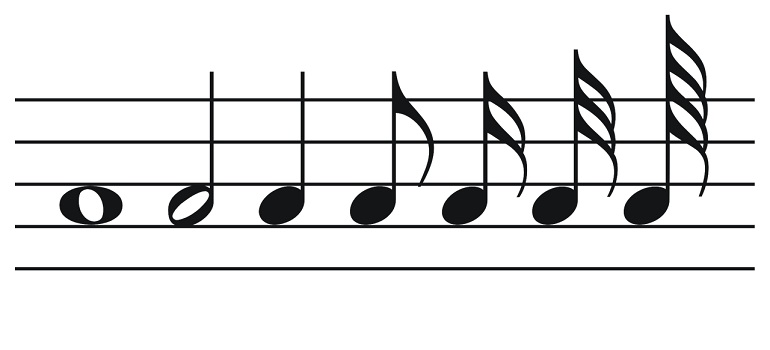

by Martin MacGregor (@MartMacG) In the brilliant film Amadeus, about the life of Mozart, there is a scene which should be shown to anyone who is scared of criticism.
The emperor has just come backstage after Mozart’s first performance to him of a new concerto. Sensing the potential jealousies of his other composers, he downplays the genius of what he has just heard and looks to find a weakness. What he lands on is the cutting “Well, there are simply too many notes.”
Mozart, aghast, replies, “Which notes, exactly, would you like me to remove?”
I often think of this scene in that heady moment after I have presented what I think is a beautifully crafted media strategy to a client. The response I have heard more than a number of times: “Well, it feels like there are just too many media.” I always feel as if this is typical of marketers falling into the same trap as when they put their marketing plans together. It is as easy to be media-centric as it is to be brand-centric, whereas we all know the consumer experience is something completely different.
Liberating
We use a great definition for media which is “anywhere where people and ideas meet”. I find this liberating as it opens up the breadth of potential touchpoints to reach a consumer. But it also talks to the random nature of those interactions. If you map out a typical consumer journey, the list of screens, sounds, places and spaces becomes long.
So my response to clients is very simple: it’s not about minimising the number of media — it’s about maximising the potential interactions, however few or many media that takes. In fact, to base a decision upon the number of media is extremely dangerous.
What is interesting is that, in a recent study by the Advertising Research Foundation in the US, it found that 29% of all campaigns relied upon just one medium. And an astounding 60% relied upon two or less.
Detriment
This type of thinking is a remnant of the “high production cost/high media investment to get ROI” advertising era and the feeling that media need to be ‘done properly’. This is usually backed up by lots of analysis that spit out minimum-spend thresholds that will guarantee competitive advantage. What it does do very successfully is to encourage clients to spend more — and usually mostly on TV, to the detriment of other media.
What the same study also showed, however, is that key to advertising effectiveness is multiple media platforms, not number of exposures. Gaining a huge number of exposures on one medium did little to effect change — spreading spend across media did.
Unfortunately, I can’t claim to be the genius Mozart was, and I know for certain all my plans are not brilliant. But just like he knew exactly the right number of notes that made music perfection, I am going to do my best to convince my clients that, if they listen to the consumer, they will as well.
 Martin MacGregor (@MartMacG) is managing director of Connect, an M&C Saatchi Company, with offices in Johannesburg and Cape Town. Martin has spent 18 years in the industry, and has previously worked at Ogilvy and was MD of MEC Nota Bene in Cape Town. He contributes the monthly “Media Redefined” column, in which he challenges norms in the media space, to MarkLives.com.
— MarkLives’ round-up of top ad and media industry news and opinion in your mailbox every Monday and Thursday. Sign up here!