

by DK Badenhorst. If you are not a fan of superheroes, I’ll probably have to allow a few seconds for your eyes to return from the back of your head. After all, superheroes are for kids, right?
But keep in mind that the first DC comic, the one where Superman smashes a gangster car and sends a villain running out the bottom-left corner, was popular among working men before it was the spoils of upper-class kids.
 Preceded the internet
Superman preceded the internet. And the biggest revolution in distribution of information prior to the internet was the Gutenberg press. Comics were printed entertainment, and the closest the average man could get to the escapism now afforded to us by Facebook, 9Gag and YouTube.
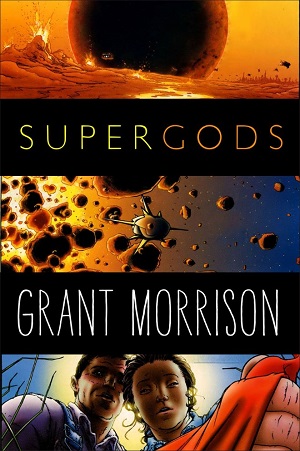
“Batman was born of the deliberate reversal of everything in the Superman Dynamic.” — Grant Morrison, “Supergods”.
From this quote, comic book writer Morrison goes on to explain how Batman truly is the inverse of Superman.
Superman is an alien with superhuman strength, a bright costume and who grew up as a farmer’s son. Batman is a human with no super powers, a dull costume and who grew up as a billionaire’s son. Superman loved Lois Lane from a distance; Batman was a womaniser. Superman had a boss, Batman had a butler. Morrison’s list goes on.
Change vs adjustment
In interviews, Morrison talks about how Superman has changed over the decades to suit his times, an example I’ve often used to demonstrate how a brand can adjust to reflect relevant values. Batman goes through little change; instead, it’s his villains who adjust (follow the Joker through his movies). Whom Superman is adapts; what Batman fights against changes.
It’s remarkable to see how the sun god and the dark knight oppose each other, almost as if the first two superheroes marked the territory in which the others can develop.
Morrison’s title “Supergods” is also appropriate. The Greek Pantheon provides us with a framework that, if not prescribes DC comics, at least provides a loose framework. Superman is something like Hercules or Zeus. Batman is a bit like Hades.
The DC and Marvel worlds sort of reflect each other, and then the Greek and Roman pantheons overlap. There’s also not a lot of work to do if you want to match Carl Jung, founder of analytic psychology, to the pantheons and the hero lists.
We create the gods
It would, then, seem that we create the gods and not the other way around. In the case of Marvel and DC, we know this — but the Greeks and Romans might have disagreed.
It’s for this reason that I’m a huge fan of archetype work. There’s reason to believe that there is a rather rigid chassis underneath our thinking, almost like that ladder-like shape that forms the basis of a car. We can shape it into something really beautiful and unique but, underneath it all, is a simple and immovably rigid structure.
But how would this manifest in a portfolio? What would actually happen if we applied this to a brand? The answer arrived in an almost textbook way when I was going through international advertising a few days ago.
It’s cherry-picked from Superman language. Something magnificent, sent from the sky to save us from ourselves. The ramp is that sort of past-futuristic construction (like the pyramids), so colossal that it would only make economic sense in a time where slavery was really ok in the most-advanced regions of the world.
And then, of course, the car is red — bright Superman red.
Superman fought for truth, for what is right and for survival of what is good — all lofty ideals. Batman battled psychopaths and schizophrenics in gritty warehouses. Metropolis is a modern bustling city; Gotham is a dark underworld. Superman flies high in the sky; Batman struts around basements.
So, too, the A7 Sportback is introduced in a basement to the sound of the sinister voice of a lonely gramophone.
It’s a bit eerie. Something is out of place. Then, the A7, not entirely unlike the Batmobile, glides in. It meets the antagonist — the-old fashioned way of making a presence — and cheekily knocks it of the table. The gramophone’s voice winds up into a surreal and defunct tone before it crashes to the ground. The A7 retracts its wing and glides off — confidently and quietly.
Speak to truths in our lives
It’s unlikely that these two commercials were willfully created off the back of DC comics. Much like the ancient pantheons were not the base for Marvel and DC. It’s more likely that these characters, these archetypes, speak to truths in our lives — it reflects who we are and how we are.
Archetypes give us a fantastic point from which to start, whether it’s Jung’s archetypes, Grimms’ Fairy Tales or just general story characters. They are a prepackaged set of values, rules and expectations that’s been checked against reality, time and time again.
Instead of recreating complicated and plausible characters, we can simply learn from archetypes, adjust to suit our brand and use them as the foundation to create, not a something, but a someone that our target audience will recognise.

DK Badenhorst is a cultural insight and semiotics consultant who brings cultural context and long-term trend insights to brand communication. He contributes the monthly “Brand Culture” column, exploring the value and meaning interaction between brands and society, to MarkLives.com.
— MarkLives’ round-up of top ad and media industry news and opinion in your mailbox every Monday and Thursday. Sign up here!