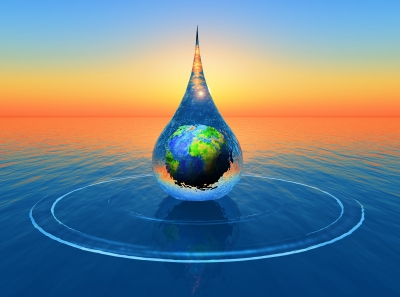

by Colwyn Elder (@colwynelder) As I write this column it is 22 March, marking World Water Day. This is a day to celebrate water, to make a difference for those members of our global population who suffer from water-related issues, and to prepare for how we manage water in the future.
The first World Water Day was designated by the United Nations General Assembly in 1993. But if you’re still unaware of this event 22 years later, don’t worry: you’re not alone.
Raise awareness
My Twitter feed is humming with #WorldWaterDay but only because I’ve asked it to. And while there are lots of tweets from NGOs advocating water saving tips, celebrities trying to raise awareness, and design-led innovations like this edible water bottle that replaces plastic with algae, the level of business engagement appears to be low.
Let’s look at the size of the problem.
“The average American lifestyle is kept afloat by about 2,000 gallons (that’s 7,500 litres) of H2O a day,” writes Stephen Leahy in his recently published book, Your Water Footprint: the shocking facts about how much water we use to make everyday products, “yet about 1.2 billion people live in areas with chronic scarcity, while 2 billion are affected by shortages every year”.
Water footprint
The term “water footprint” refers to the amount of fresh water used to produce the goods and services we consume.
“We’re surrounded by a hidden world of water,” says Leahy, “litres and litres of it are consumed by everything we eat, and everything we use and buy. Cars, furniture, books, dishes, TVs, highways, buildings, jewellery, toys and even electricity would not exist without water. It’s no exaggeration to say that water is far more valuable and useful than oil”.
By representing this virtual water concept in a clear and graphic way, Leahy raises awareness of exactly how much water we use. Ironically, 95% of our water footprint is hidden in the foods we eat:
- 1kg of tomatoes requires 214l of water to produce, while turning this into ketchup requires an additional 316l.
- Producing 1kg beef requires an astonishing 15 415l of water, which means that if a family of four opted for Meatless Mondays, they would save 400 000 liters of water a year!

 Water worn on bodies
In addition to the water we consume as food, there is also the water we wear on our bodies. To produce a cotton t-shirt takes almost 3 000l, while a pair of jeans takes more than 7 600 litres. Which brings me back to World Water Day.
One of the few brands using World Water Day as a platform to connect with customers is Levi Strauss.
Levi’s released its new Life Cycle Assessment as part of an effort to promote more sustainable water usage, simultaneously announcing a massive saving of 1 billion litres of water in its manufacturing process. That’s a lot of water! Enough to provide drinking water for the city of New York for 40 days, London for 38 days and Guangzhou for 24 days.
In addition to the manufacturing process, Levi’s tells us that consumer washing accounts for 23% of the total water used over the lifetime of a pair of jeans.
Global consumer education
For World Water Day, and as part of a global consumer education campaign, Levi’s asks customers whether they‘re “ready to come clean“. The campaign is designed to help people better understand their environmental impact, at the same time asking them to pledge to wash their jeans less often. Chip Berg, Levi’s now infamous CEO-in-dirty-jeans, implores people to wash their jeans after wearing them as many as 10 times.
It’s a big issue and so equally a big opportunity for brands to partner with customers in tackling the problem head on. Levi’s makes a good example of how business and consumers can work together.
Let’s hope World Water Day 2016 sees more positive stories of brands reducing their water footprint, as well as creating positive connections with consumers.

Strategic consultant Colwyn Elder (@colwynelder) brings a global perspective to the issue of sustainability, having lived and worked in London, Tokyo, Amsterdam and Cape Town. She contributes the monthly “Green Sky Thinking” column on sustainability issues to MarkLives.
— MarkLives’ round-up of top ad and media industry news and opinion in your mailbox every Monday and Thursday. Sign up here!