

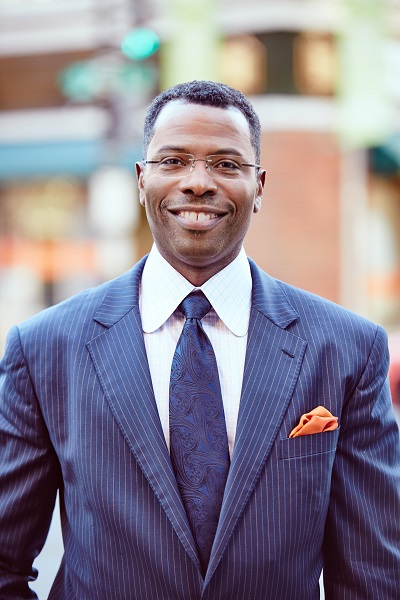
by Herman Manson (@marklives) The International Gay and Lesbian Travel Association (IGLTA) will host Spectrum, its 33rd annual global convention, at the Belmond Mount Nelson Hotel in Cape Town, 14–16 April 2016. One of the convention’s guest speakers is Elliott Ferguson, who serves as president and CEO of Destination DC, the official convention and tourism corporation for Washington, DC. He offers insight into how the US capital approaches destination marketing, as well as reaching out to LGBTQ travellers.
SPECIAL OFFER
African attendees may attend at the special rate of US$275 for the three-day conference,
which includes education, lunches, and evening networking events.
Register at iglta.org/convention and use the code: 16afrreg.
 What would you say are the key factors in managing and running a successful city/region destination-marketing organisation?
Elliott Ferguson: It is important to continuously demonstrate the economic impact of tourism to elected officials and key stakeholders. We constantly work to remind them that tourism supports 75 000 jobs and creates US$725m dollars in tax revenue, which leads to additional funding for resources needed to effectively promote our destination and further economic development.
It is also key to continue to evolve as an organisation. Aside from the iconic monuments and memorials, and the wide range of museums, we are putting a big emphasis on our vibrant neighborhoods throughout our marketing and on our new website. Our DC Cool campaign gives visitors a sense of Washington, DC’s distinct local identity, as well as the history that makes up the nation’s capital.
How extensive is Washington DC’s own destination marketing programme?
EF: Destination DC’s marketing efforts continue to increase year after year, supporting continual growth in visitation to the city. In 2014, DC attracted an all-time record 20.2m visitors: 18.34m domestic and 1.9m overseas, the latter up 16% over 2013.
Our “My DC Cool” campaign provides a look inside our lively neighborhoods and showcases what people love about DC so visitors have inspiration to experience the city like a local. There is uS$9.6bn in physical developments across the district so there is always something new to draw people back to the nation’s capital.
We have Washington, DC representation in our top international markets and even hired a sales manager dedicated specifically to our #1 overseas market — China. Events DC, operators of Walter E Washington Convention Center, helps us further increase our international MICE business.
How do you involve the city’s citizens in building a sustainable local tourism industry?
EF: Tourism supports 75 000 jobs and, without tourism, each household would have to contribute an additional US$2 500 in taxes. These are numbers that have a real impact to the residents of Washington, DC, and it’s a message we reinforce to the local community. We work closely with our local government and our Destination DC members to get this message across.
We also support the pride people have in their hometown. It is important that Washingtonians embrace all that is “cool” about our destination, even if the marketing is in place for non-DC residents.
The DC Cool campaign that launched in December 2013 evolved through the use of the #MyDCcool hashtag. The hashtag allows visitors and locals alike to share their DC experiences through social media. In about six months, more than 18 000 images have been uploaded to Instagram with the #MyDCcool hashtag.
What makes a city a successful convention destination?
EF: Attracting more than 20m visitors each year, Washington, DC is one of the world’s most-talked-about destinations. Offering easy access and navigation through three airports and a world-class public transportation system, Washington, DC has been successful in drawing large corporate gatherings. With a strong infrastructure and leisure-based reputation in place, our dedicated sales and services team works tirelessly to bring meetings to the city year-round.
We work hand-in-hand with the Walter E Washington Convention Center and our hotel community that includes over 130 hotels around the city, totaling more than 30 000 rooms, and that number is growing. Our city’s dynamic dining, attractions and entertainment, along with the prestige of being in the nation’s capital, provide a one-of-a-kind experience attendees. From the magnificent memorials and monuments on the National Mall to must-see sites like the National Gallery of Art, the Library of Congress and the museums of the Smithsonian Institution, there is an assortment of free attractions. Many of Washington, DC’s historic landmarks and photogenic buildings double as event spaces, providing many options for unique venues.
Additionally, with Congress, the National Institutes of Health and many other major non-profits headquartered in Washington, DC, there is access to leaders in politics, media and medical research.
Are any African markets currently viewed as key growth markets for you?
EF: Markets with direct flights to Washington, DC are growth markets for us. South African Airways provides non-stop service between Johannesburg and Washington, DC. We work closely with SAA, Ethiopian Airways and the Metropolitan Washington Airports Authority to ensure those flights are successful with cross-promotional marketing.
We also have a sister-city agreement with Pretoria and Washington, DC that has been in place over 10 years. The goal is to strengthen both capital cities in the areas of economic development, education and cultural projects.
There are also several African embassies in Washington, DC, and DC has the largest population of Ethiopian residents outside of Ethiopia and a large population of Eritreans, Nigerians and Ghanaians, so there is an opportunity for growth there as well.
Do you engage directly with any city/regional/national tourism organisations on the continent at the moment? Are you open to them reaching out to your own organisation?
EF: No, not directly; however, through our sister-city agreement with Pretoria, we do engage in some cultural engagement through student-exchange programs and small business development.
Any advice on best practice in terms of destinations specifically reaching out to LGBT travellers?
EF: It is important for to stay true to who you are as a destination, and DC is a very liberal city with assets that appeal to all demographics. Although we have neighborhoods that are more popular for LGBT-specific nightlife, there is acceptance throughout the entire destination and it’s important to make that known.
Destination DC has created LGBT ads since 2008, including our first LGBT commercial in 2013 for Date Nights DC, a regional campaign inspiring mid-winter getaways throughout the month of February.
It is also necessary to stay informed. We work with other organisations like IGLTA to learn about community trends and tourism needs.
 Herman Manson (@marklives) is the founder and editor of MarkLives.com. He was the inaugural Vodacom Social Media Journalist of the Year in 2011 and has, over his 20-year-plus career, contributed to numerous journals and websites in South Africa and abroad, including AdVantage magazine, Men’s Health, Computer World and African Communications.
— MarkLives’ round-up of top ad and media industry news and opinion in your mailbox every Monday and Thursday days. Sign up here!